



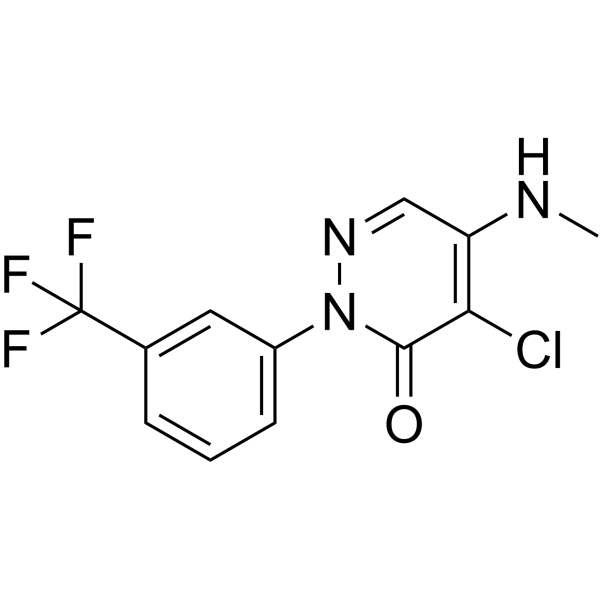
Norflurazon

Based on 1 Customer Validation
Norflurazon (SAN 9789) is a pre-emergence Herbicide. Norflurazon non-competitively inhibits phytoene desaturase by competing with the enzyme cofactor and disrupts carotenoid biosynthesis, thereby leading to chlorophyll photodegradation and chlorosis. Norflurazon inhibits MGDG synthase, CDP-choline phosphotransferase, Omega-3 FAD7 desaturase, and PG delta-3-trans desaturase, and activates LysoPC-acyltransferase and Omega-3 FAD3 desaturase. Norflurazon inhibits photosynthetic membrane organization, mitochondrial respiration, ATP production, PI3K signaling, and ERK1/2 phosphorylation. Norflurazon activates MAPK P38 phosphorylation and ER stress signaling. Norflurazon induces morphological malformations and cardiovascular effects in zebrafish embryos.
Para uso exclusivo en investigación. No vendemos a pacientes.
- Pureza : 99.94%
- No. CAS: 27314-13-2
- Fòrmula: C12H9ClF3N3O
- Peso molecular:303.67
-
Almacenamiento:Powder -20°C, 3 years ; In solvent -80°C, 6 months , -20°C, 1 month

To place orders, for customer services and technical support, please contact: MedChemExpress USA
Tel: 609-228-6898 E-mail: [email protected] [email protected]


-
 Actividad biológica
-
Chemical Information
-
Solvente y solubilidad
- Protocolo
- Pureza y Documentación
- Referencias
-
 Help & FAQs




Actividad biológica
Descripciòn
IC50 & Target
[4]|
ERK1 |
ERK2 |
In Vitro
Norflurazon (100 μM; two weeks) inhibits CDP-choline phosphotransferase activity while activating lysoPC-acyltransferase activity in soybean leaf microsomal membrane fractions[1].
Norflurazon (100 μM; two weeks) inhibits MGDG synthase activity in soybean leaf chloroplastic membrane fractions[1].
Norflurazon (0-10 µM; 96 h) causes concentration-dependent chlorophyll bleaching, with 4 A+ most affected after 96 h[2].
Norflurazon (0-100 μM; 48 h) suppresses proliferation of pTr and pLE cells, with 100 μM reducing proliferation by 53% and 68%, respectively[4].
Norflurazon (0-100 μM; 48 h) increases intracellular calcium levels in pTr and pLE cells, with 100 μM causing a 133% and 141% increase, respectively[4].
Norflurazon (0-100 μM) regulates cell proliferation and growth through the PI3K/MAPK signaling pathways in pTr and pLE cells, activating P38 and inactivating AKT and P70S6K[4].
Norflurazon (0.1-500 μg/plate) is negative for genotoxicity in the Salmonella typhimurium and Saccharomyces cerevisiae D4 reverse gene mutation test[3].
Norflurazon (5-5,000 μg/plate) is negative for genotoxicity in the Salmonella typhimurium and Escherichia coli reverse gene mutation test[3].
Norflurazon (500-10,000 μg/disc) is negative in the Bacillus subtilis Rec assay[3].
Norflurazon (0-100 μM; 48 h) induces cell cycle arrest in pTr and pLE cells, increasing the sub-G1 population by 1.44-fold and 1.35-fold, respectively, at 100 μM[4].
Norflurazon (0-100 μM; 48 h) induces apoptosis in pTr and pLE cells, with a significant 154% increase in apoptosis observed in pLE cells at 100 μM[4].
Norflurazon (0-100 μM; 48 h) induces mitochondrial dysfunction in pTr and pLE cells, increasing the JC-1 monomer percentage by 207% and 203%, respectively, at 100 μM[4].
MedChemExpress (MCE) has not independently confirmed the accuracy of these methods. They are for reference only. Further protocols information, click here.
-
Cell Line:porcine trophectoderm (pTr) and porcine uterine luminal epithelial (pLE) cells
-
Concentration:0, 20, 50, or 100 μM
-
Incubation Time:48 h
-
Result:Decreased cell proliferation at various concentrations.
Reduced proliferation of pTr and pLE cells by 53% and 68%, respectively, at 100 μM.
-
Cell Line:pTr and pLE cells
-
Concentration:0, 20, 50, or 100 μM
-
Incubation Time:48 h
-
Result:Increased the sub-G1 cell population by 1.44-fold and 1.35-fold for pTr and pLE cells, respectively, at 100 μM.
-
Cell Line:pTr and pLE cells
-
Concentration:0, 20, 50, or 100 μM
-
Incubation Time:48 h
-
Result:Increased apoptosis of 119% for pTr cells was not significant while the 154% increase for pLE cells was significant at 100 μM.
In Vivo
Norflurazon (50-100 μM; in embryo medium; daily; 6 h post-fertilization to 96 h post-fertilization) causes developmental defects in zebrafish including reduced hatching rate, shortened body length, yolk sac enlargement, pericardial edema, disrupted brain vasculature, and impaired cardiac looping, with cardiovascular toxicity and apoptosis observed at concentrations of 50 and 100 μM[5].
MedChemExpress (MCE) has not independently confirmed the accuracy of these methods. They are for reference only.
-
Animal Model:CD-1 (HaM/ICR Swiss) (male and female)[3]
-
Dosage:85, 170, 340 ppm
-
Administration:dietary; 18 weeks
-
Result:The reproductive portion of the study did not reveal any indications of adverse effects of the test substance on fertility, reproductive parameters or pup development.
-
Animal Model:wild-type AB strain and transgenic flk1:eGFP line (embryos exposed from 6 h post-fertilization)[5]
-
Dosage:50 μM; 100 μM
-
Administration:in embryo medium; solution replaced daily; 6 h post-fertilization to 96 h post-fertilization
-
Result:Increased the proportion of unhatched live embryos, with hatching rates of 19.4% at 50 μM and 11.1% at 100 μM at 72 hpf compared to 86.1% in controls.
Reduced the relative total body length to 82.1% at 100 μM.
Enlarged the yolk sac size at 50 and 100 μM.
Induced pericardial edema at 100 μM.
Reduced brain vasculature density to 69.1% at 50 μM and 32.7% at 100 μM.
Increased the distance between sinus venosus and bulbus arteriosus at 100 μM, indicating impaired cardiac looping.
Increased fluorescence intensity 1.2-fold at 50 μM and 1.5-fold at 100 μM.


Chemical Information
-
No. CAS 27314-13-2
-
Appearance Solid
-
Peso molecular 303.67
-
Fòrmula C12H9ClF3N3O
-
Color Off-white to light yellow
-
SMILES
O=C1C(Cl)=C(C=NN1C2=CC=CC(C(F)(F)F)=C2)NC
-
Synonyms
SAN 9789
-
Envío
Room temperature in continental US; may vary elsewhere.
-
Almacenamiento
Powder -20°C 3 years In solvent -80°C 6 months -20°C 1 month


Solvente y solubilidad
In Vitro:
DMSO : 125 mg/mL (411.63 mM; ultrasonic and warming and heat to 60°C; Hygroscopic DMSO has a significant impact on the solubility of product, please use newly opened DMSO)
Please refer to the solubility information to select the appropriate solvent. Once prepared, please aliquot and store the solution to prevent product inactivation from repeated freeze-thaw cycles.
Storage method and period of stock solution: -80°C, 6 months; -20°C, 1 month. When stored at -80°C, please use it within 6 months. When stored at -20°C, please use it within 1 month.
Please refer to the solubility information to select the appropriate solvent. Once prepared, please aliquot and store the solution to prevent product inactivation from repeated freeze-thaw cycles.
Storage method and period of stock solution: -80°C, 6 months; -20°C, 1 month. When stored at -80°C, please use it within 6 months. When stored at -20°C, please use it within 1 month.
Concentration (start) × Volume (start) = Concentration (final) × Volume (final)

Protocolo
-
Kinase activity and phosphorylation assays
Kinase activity assays measure the ability of kinases to transfer phosphate groups from ATP to specific substrates, while phosphorylation assays detect the presence and levels of phosphorylated proteins. Common methods include radiolabeled ATP incorporation (e. g. ,), ADP release detection via bioluminescence (e. g. ,[3]), enzyme-linked immunosorbent assays (ELISA) for phospho-specific epitopes (e. g. ,[6]), and microtiter-based formats for high-throughput screening (e. g. ,[8]). The ADP-Glo assay quantifies kinase activity by measuring ADP produced during phosphorylation using a luciferase-based system. Radiometric assays involve autoradiography or scintillation counting after incorporation of 32P-labeled ATP into substrate proteins. ELISA-based approaches rely on phospho-specific antibodies to detect activated kinases in cell lysates or purified samples.
-
Western Blot
Western blotting (WB) is a commonly used experimental method in molecular biology, biochemistry, and immunogenetics for identifying and quantifying target proteins. It combines gel electrophoresis with immunoassay, enabling researchers to analyze protein expression, post-translational modifications, and molecular weight.
-
Protocol for Kinase activity and phosphorylation assays
Kinase activity assays measure transfer of phosphate from ATP to a protein or peptide substrate, generating phosphorylated substrate, ADP, or incorporated radiolabeled phosphate as the readout; phosphorylation assays measure site-specific phosphorylation in cells or tissues as a proxy for kinase-pathway activation, inhibition, or substrate regulation. Phosphorylation can be detected by phospho-specific Western blot, immunoprecipitation kinase assay, phospho-immunofluorescence, phospho-flow cytometry, luminescent ADP detection, radiolabeled ATP incorporation, or reporter-based pathway assays, and these readouts can be applied to cancer cells, primary neurons, mouse tumors, organoids, inflammatory macrophages, ferroptosis studies, and mitophagy studies when the kinase target is biologically relevant.


Pureza y Documentación
-
Ficha de datos (289 KB)
-
SDS (458 KB)
- English - EN (458 KB)
- Français - FR (458 KB)
- Deutsch - DE (458 KB)
- Norwegian - NO (458 KB)
- Español - ES (458 KB)
- Swedish - SV (458 KB)
- Italian - IT (458 KB)
- Korean - KR (458 KB)
- Portuguese - PT (458 KB)
-
Instrucciones de manejo (2659 KB)
Referencias
[1]. Abrous-Belbachir O, et al. Evidence that norflurazon affects chloroplast lipid unsaturation in soybean leaves (Glycine max L.). Journal of agricultural and food chemistry. 2009 Dec 09;57(23):11434-40. [Content Brief]
[4]. Hong T, et al. Norflurazon causes cell death and inhibits implantation-related genes in porcine trophectoderm and uterine luminal epithelial cells. Food and chemical toxicology : an international journal published for the British Industrial Biological Research Association. 2024 Apr;186:114559. [Content Brief]


Complete Stock Solution Preparation Table
Please refer to the solubility information to select the appropriate solvent. Once prepared, please aliquot and store the solution to prevent product inactivation from repeated freeze-thaw cycles.
Storage method and period of stock solution: -80°C, 6 months; -20°C, 1 month. When stored at -80°C, please use it within 6 months. When stored at -20°C, please use it within 1 month.
| Optional Solvent | Concentration Solvent Mass | 1 mg | 5 mg | 10 mg | 25 mg |
|---|---|---|---|---|---|
| DMSO | 1 mM | 3.2930 mL | 16.4652 mL | 32.9305 mL | 82.3262 mL |
| 5 mM | 0.6586 mL | 3.2930 mL | 6.5861 mL | 16.4652 mL | |
| 10 mM | 0.3293 mL | 1.6465 mL | 3.2930 mL | 8.2326 mL | |
| 15 mM | 0.2195 mL | 1.0977 mL | 2.1954 mL | 5.4884 mL | |
| 20 mM | 0.1647 mL | 0.8233 mL | 1.6465 mL | 4.1163 mL | |
| 25 mM | 0.1317 mL | 0.6586 mL | 1.3172 mL | 3.2930 mL | |
| 30 mM | 0.1098 mL | 0.5488 mL | 1.0977 mL | 2.7442 mL | |
| 40 mM | 0.0823 mL | 0.4116 mL | 0.8233 mL | 2.0582 mL | |
| 50 mM | 0.0659 mL | 0.3293 mL | 0.6586 mL | 1.6465 mL | |
| 60 mM | 0.0549 mL | 0.2744 mL | 0.5488 mL | 1.3721 mL | |
| 80 mM | 0.0412 mL | 0.2058 mL | 0.4116 mL | 1.0291 mL | |
| 100 mM | 0.0329 mL | 0.1647 mL | 0.3293 mL | 0.8233 mL |


Norflurazon Related Classifications
HY-114849 Related Classifications
 Powered by Bioz
Keywords
- Norflurazon
- 27314-13-2
- SAN 9789
- SAN9789
- SAN-9789
- Herbicide
- Mitochondrial Metabolism
- ATP Synthase
- PI3K
- ERK
- p38 MAPK
- omega-3 FAD7 desaturase
- zebrafish
- carotenoid biosynthesis
- omega-3 FAD3 desaturase
- phytoene desaturase
- CDP-choline phosphotransferase
- PG delta-3-trans desaturase
- lysoPC-acyltransferase
- C. reinhardtii
- MGDG synthase
- Inhibitor
- inhibitor
- inhibit