



コラーゲン
Based on 1 publication(s) in Google Scholar
Collagen, Type I, from bovine achilles tendon are extracellular matrix proteins and show many applications in food, cosmetic, pharmaceutical and biomedical industries. This product is enzymatically hydrolyzed collagen peptide.
商品は「研究用試薬」です。人や動物の医療用・臨床診断用・食品用の製品ではありません。
研究用途以外に使用した場合、当社は一切の責任を負いかねます。
- CAS 番号: 9007-34-5
-
保管条件:
Please store the product under the recommended conditions in the Certificate of Analysis.

To place orders, for customer services and technical support, please contact: MedChemExpress USA
Tel: 609-228-6898 E-mail: [email protected] [email protected]


-
 生物活性
生物活性
-
化学情報
-
溶剤 & 溶解度
- プロトコル
- 純度とドキュメンテーション
- 参考文献
-
 Help & FAQs


-
HY-D0842
BSA ProteinGlobular Protein -
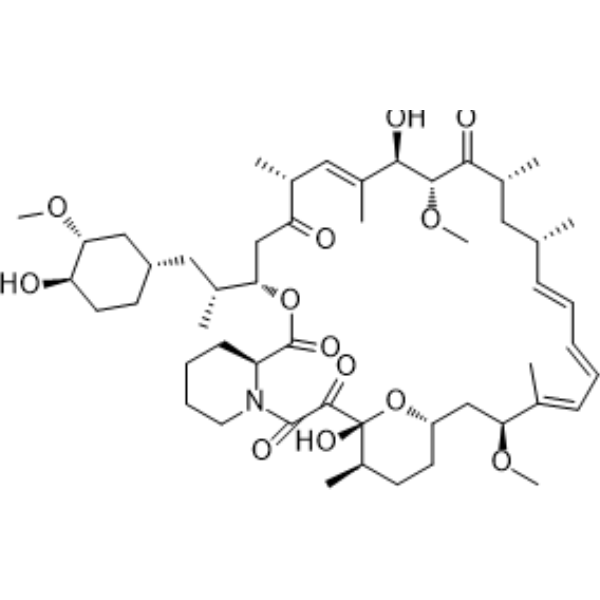
HY-10219
RapamycinmTOR Inhibitor -
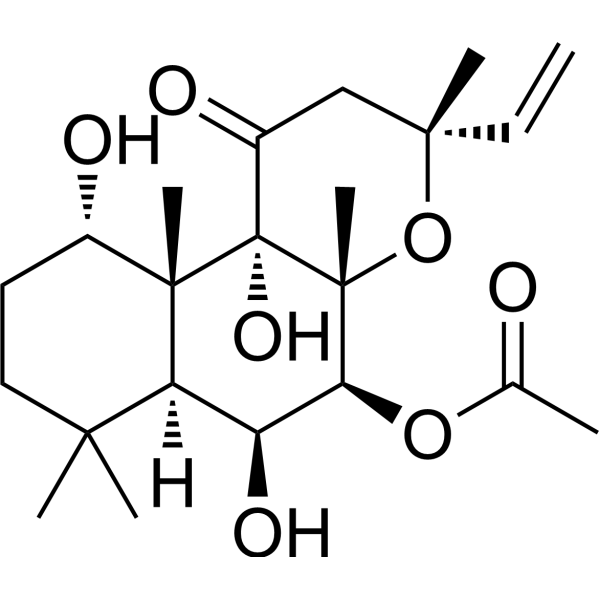
HY-15371
ForskolinAdenylate Cyclase Activator -
HY-P3160
FibronectinTissue Injury Biomarker -

HY-NP010
Type I Collagen, from rat tailCollagen -
HY-NP003
Collagen, Type II, from bovine snout membraneType II Collagen -
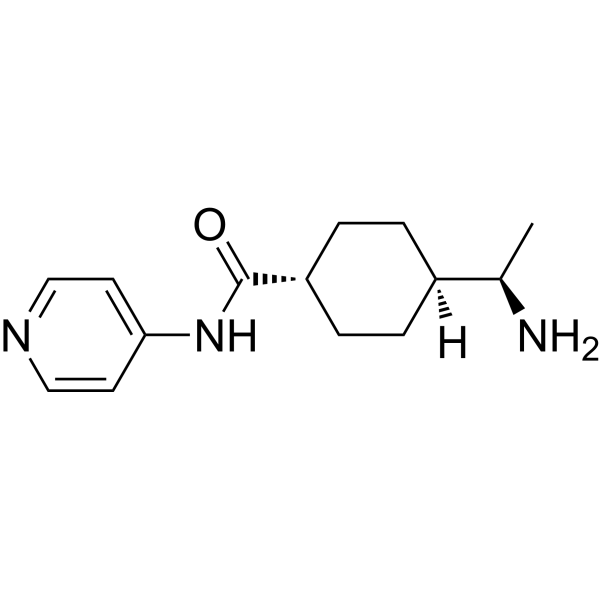
HY-10071
Y-27632ROCK Inhibitor -
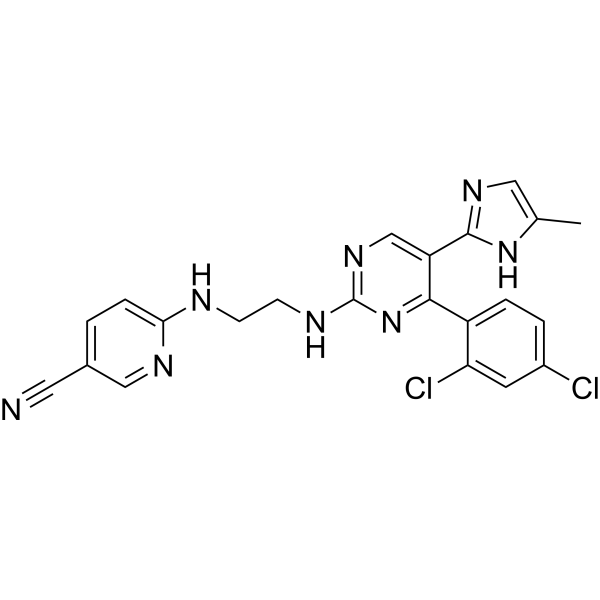
HY-10182
LaduviglusibGSK-3 Inhibitor -
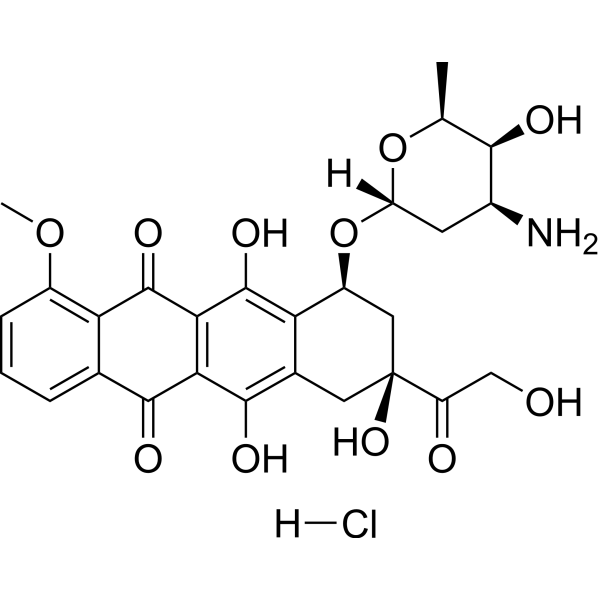
HY-15142
Doxorubicin hydrochlorideTopoisomerase Inhibitor -
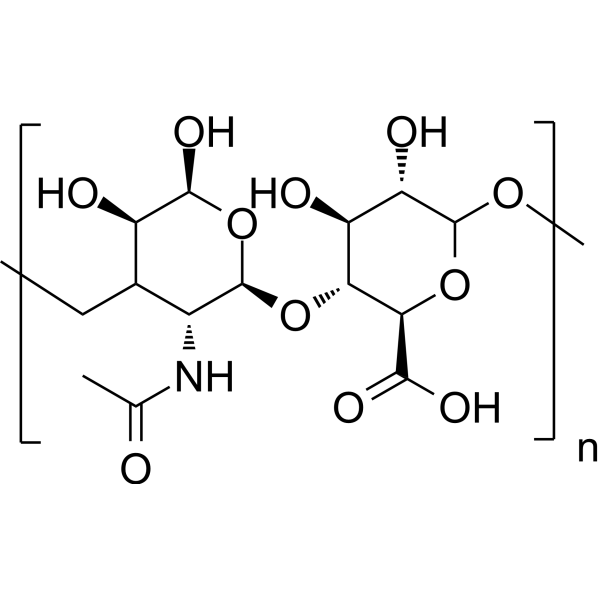
HY-B0633A
Hyaluronic acidGlycosaminoglycan -
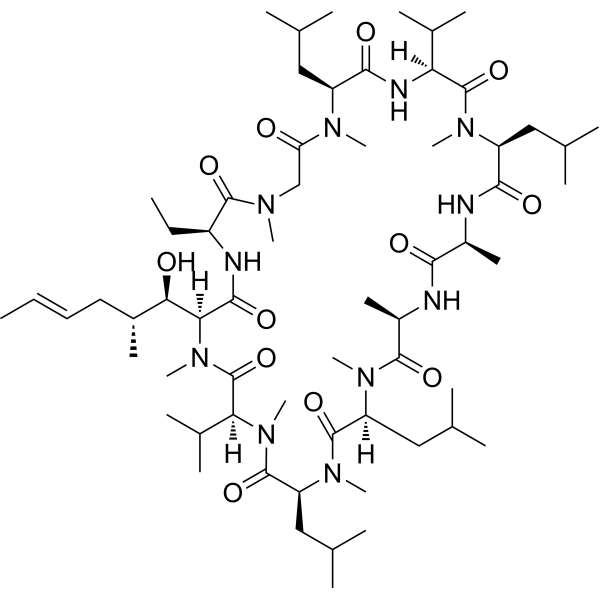
HY-B0579
Cyclosporin ACalcineurin Inhibitor -
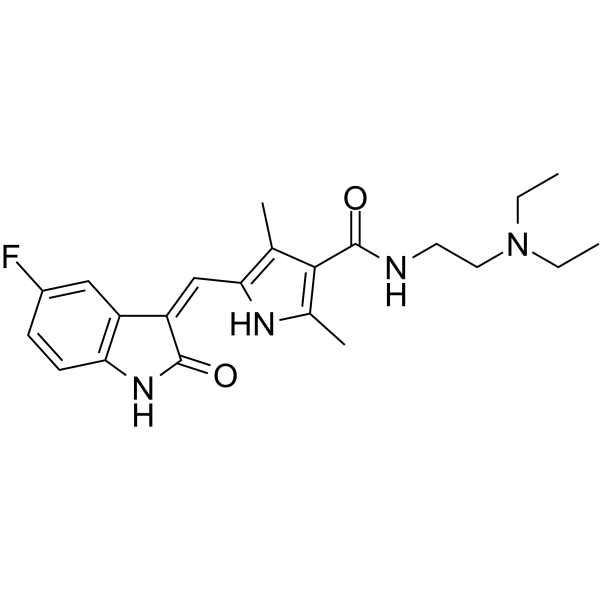
HY-10255A
SunitinibMulti-targeted RTK Inhibitor
MedChemExpress(MCE)の使用を引用している文献 Collagen, Type I, from bovine achilles tendon
More

生物活性
製品説明
体内実験
Collagen (hydrolyzed form, 3.8-38 mg/150 mg mixture would, p.o., daily, 7-16 weeks) shows chondroprotective and anti-inflammatory effects in murine posttraumatic osteoarthritis[3].
MedChemExpress (MCE) has not independently confirmed the accuracy of these methods. They are for reference only.


化学情報
-
CAS 番号 9007-34-5
-
性状 Solid
-
Color White to light yellow
-
SMILES
[Collagen, Type I, from bovine achilles tendon]
-
別名
Collagens
-
輸送条件
Room temperature in continental US; may vary elsewhere.
-
保管条件
Please store the product under the recommended conditions in the Certificate of Analysis.


Publications (1)
-
Journal Impact Factor
-
Most Recent


溶剤 & 溶解度
体外:
H2O : ≥ 100 mg/mL
* "≥" means soluble, but saturation unknown.


純度とドキュメンテーション
-
データシート (264 KB)
-
SDS (393 KB)
- English - EN (393 KB)
- Français - FR (393 KB)
- Deutsch - DE (393 KB)
- Norwegian - NO (393 KB)
- Español - ES (393 KB)
- Swedish - SV (393 KB)
- Italian - IT (393 KB)
- Korean - KR (393 KB)
- Portuguese - PT (393 KB)
-
取扱説明書 (2659 KB)
参考文献
[1]. Sorushanova A, et al. The Collagen Suprafamily: From Biosynthesis to Advanced Biomaterial Development. Adv Mater. 2019 Jan;31(1):e1801651. [Content Brief]
[2]. Guillerminet F, et al. Hydrolyzed collagen improves bone status and prevents bone loss in ovariectomized C3H/HeN mice. Osteoporos Int. 2012 Jul;23(7):1909-19. [Content Brief]
[3]. Dar QA, et al. Daily oral consumption of hydrolyzed type 1 collagen is chondroprotective and anti-inflammatory in murine posttraumatic osteoarthritis. PLoS One. 2017 Apr 6;12(4):e0174705. [Content Brief]

Calculators
濃度 (開始) × 体積 (開始) = 濃度 (終了) × 体積 (終了)


Collagen, Type I, from bovine achilles tendon 関連分類
HY-P2738 関連分類
 Powered by Bioz