



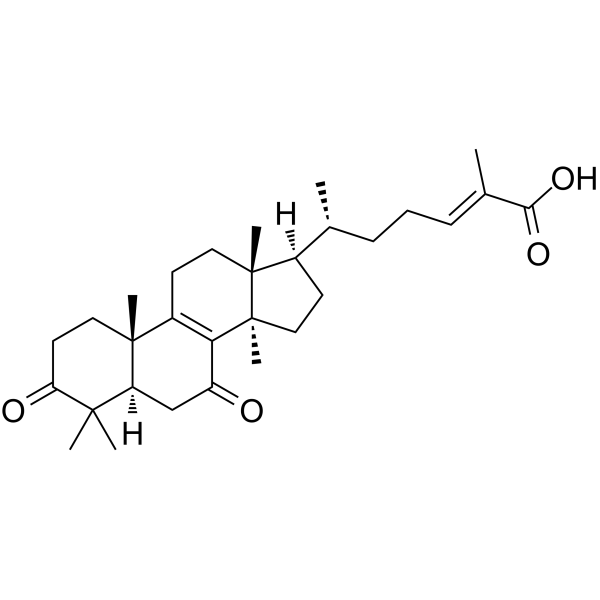
Ganoderic acid DM
Based on 1 publication(s) in Google Scholar
Ganoderic acid DM, a natural triterpenoid isolated from Ganoderma lucidum, induces DNA damage, G1 cell cycle arrest and apoptosis in human breast cancer cells. Ganoderic acid DM as a specific inhibitor of osteoclastogenesis.
연구목적의 판매만을 진행합니다. 환자를 대상으로 한 판매는 하지 않습니다.
- Purity : 99.87%
- CAS No.: 173075-45-1
- 화학식: C30H44O4
- 분자량:468.67
-
보관:
4°C, protect from light
* In solvent : -80°C, 6 months; -20°C, 1 month (protect from light)

To place orders, for customer services and technical support, please contact: MedChemExpress USA
Tel: 609-228-6898 E-mail: [email protected] [email protected]


-
 Biological Activity
-
Chemical Information
-
용액&용해도
- Protocol
- 순도&문서
- References
-
 Help & FAQs


-
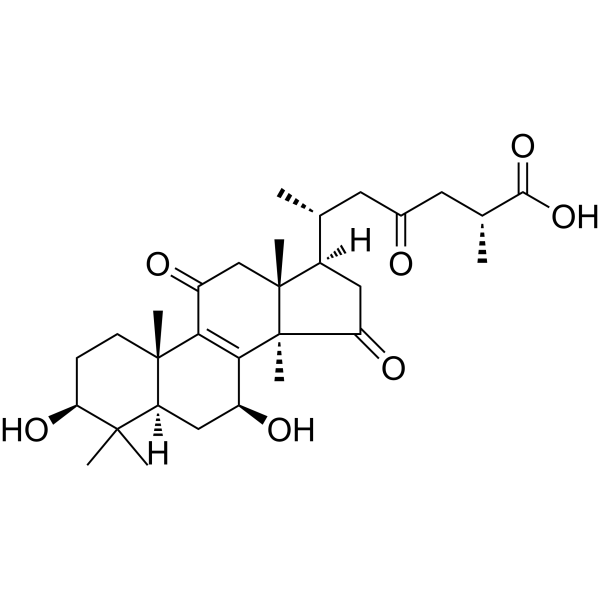
HY-N2006
Ganoderic acid BHIV Protease Inhibitor -
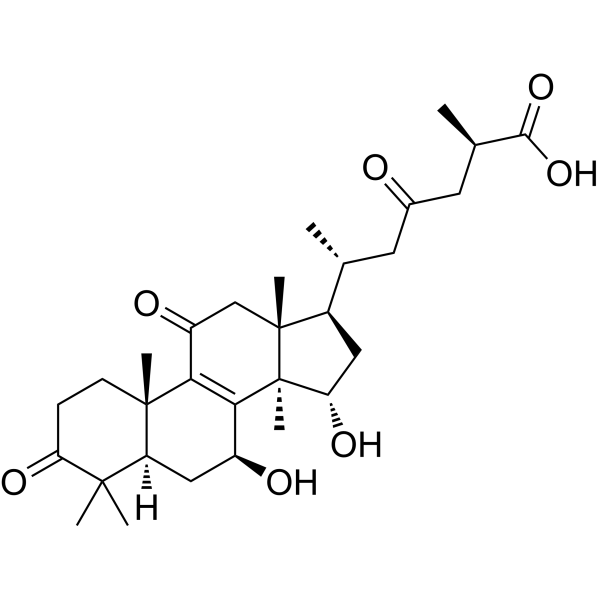
HY-N1447
Ganoderic acid AAutophagy Inducer -
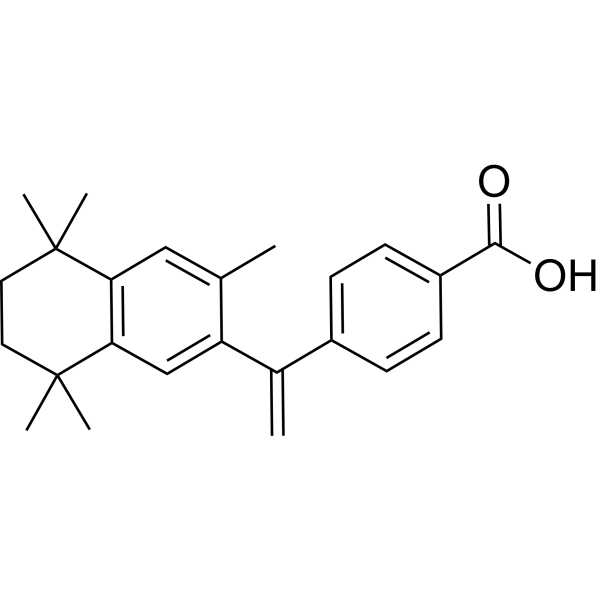
HY-14171
BexaroteneRXR Agonist -
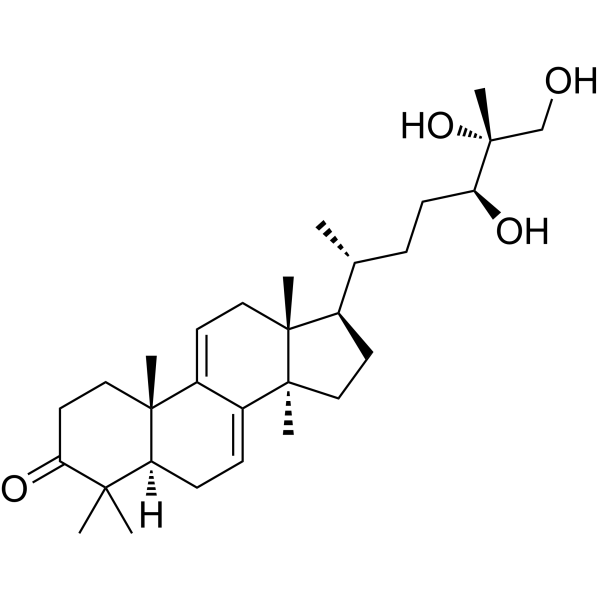
HY-N1506
GanodermanontriolAnti-Inflammatory Agent -
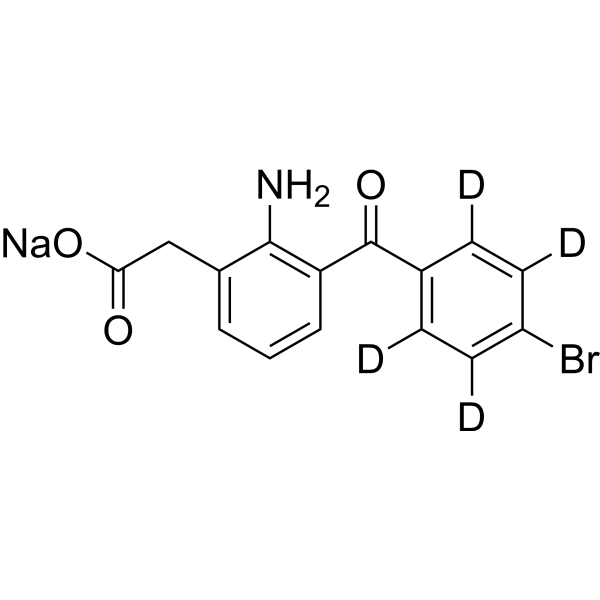
HY-B1888AS
Bromfenac-d4 sodiumStable Isotope -
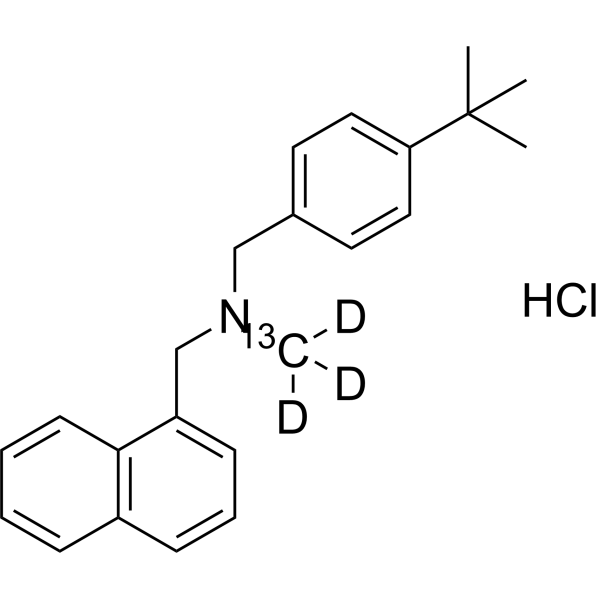
HY-17396S
Butenafine-13C,d3 hydrochlorideStable Isotope -

HY-14171R
Bexarotene (Standard)RXR Agonist -

HY-139174
(S)-DO271ABHD12 Control Probe -
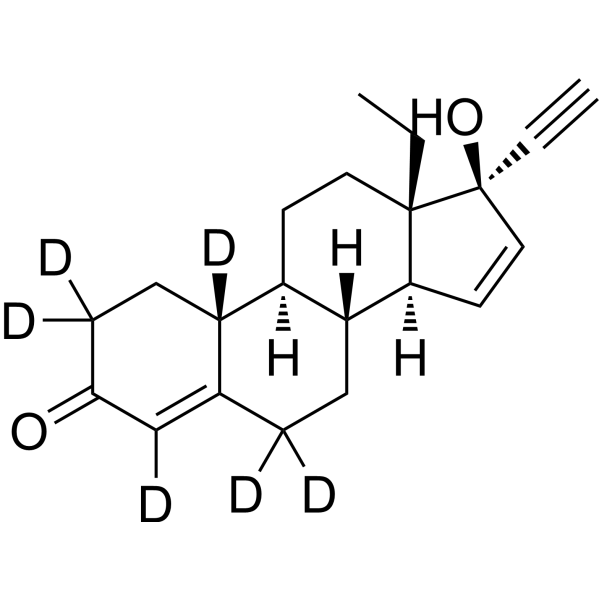
HY-B0110S
Gestodene-d6Stable Isotope -
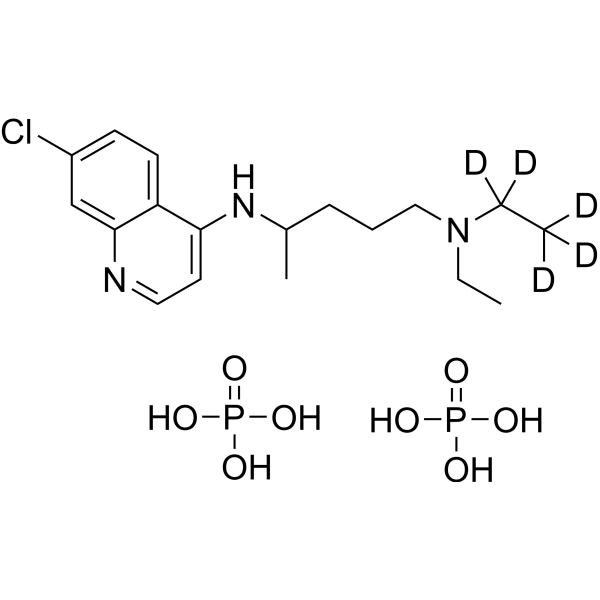
HY-17589S
Chloroquine-d5 diphosphateStable Isotope -

HY-Z1769
S-Desmethyl-S-(2-hydroxy-2-methylpropyl) Rosuvastatin calciumImpurity reference
Publications Citing Use of MedChemExpress (MCE) Ganoderic acid DM
More

Biological Activity
제품 설명
In Vitro
Ganoderic acid DM (GADM) effectively inhibits cell proliferation and colony formation in MCF-7 human breast cancer cells, which was much stronger than that of MDA-MB-231 breast cancer cells[1].
Ganoderic acid DM especially suppresses the expression of c-Fos and nuclear factor of activated T cells c1 (NFATc1). Ganoderic acid DM markedly suppressed the expression of cathepsin K and TRAP mRNA[2].
Ganoderic acid DM induces autophagic apoptosis in non-small cell lung cancer cells by inhibiting the PI3K/Akt/mTOR activity[3].
MedChemExpress (MCE) has not independently confirmed the accuracy of these methods. They are for reference only.
-
Cell Line:MCF-7 and MDA-MB-231 cells.
-
Concentration:0-100 μM.
-
Incubation Time:48 h.
-
Result:Decreased the cell viability in breast cancer cells.
-
Cell Line:RAW-D cells.
-
Concentration:0-100 μg/mL.
-
Incubation Time:0-100 μg/mL.
-
Result:Clearly suppressed osteoclastogenesis from the RAW 264 cell D-clone.
- Detection of Apoptosis
- TUNEL staining for apoptotic DNA fragmentation
- Flow cytometric DNA-content cell-cycle staining
- Annexin V plus membrane-impermeant dye apoptosis staining
- BrdU Incorporation Assay
- Apoptosis Solutions
- Protocol for Cell Cycle
- Breast Cancer Modeling
- Genotoxicity/Mutagenicity Study
- Osteoclast differentiation from monocyte/macrophage precursors


Chemical Information
-
CAS No. 173075-45-1
-
Appearance Solid
-
분자량 468.67
-
화학식 C30H44O4
-
Color White to off-white
-
SMILES
C[C@]12C3=C(CC[C@@]1([C@@](CC2)([H])[C@H](C)CC/C=C(C)/C(O)=O)C)[C@@]4([C@@](C(C)(C(CC4)=O)C)([H])CC3=O)C
-
Structure Classification
-
Initial Source
-
선적
Room temperature in continental US; may vary elsewhere.
-
보관
4°C, protect from light
* In solvent : -80°C, 6 months; -20°C, 1 month (protect from light)


Publications (1)
-
Journal Impact Factor
-
Most Recent
-
Biotechnol Appl Biochem
Elucidating the protective mechanism of ganoderic acid DM on breast cancer based on network pharmacology and in vitro experimental validation. [Abstract]2025 Apr;72(2):415-436. PMID: 39318248


용액&용해도
In Vitro:
DMSO : 50 mg/mL (106.68 mM; Need ultrasonic; Hygroscopic DMSO has a significant impact on the solubility of product, please use newly opened DMSO)
Please refer to the solubility information to select the appropriate solvent. Once prepared, please aliquot and store the solution to prevent product inactivation from repeated freeze-thaw cycles.
Storage method and period of stock solution: -80°C, 6 months; -20°C, 1 month (protect from light). When stored at -80°C, please use it within 6 months. When stored at -20°C, please use it within 1 month.
Please refer to the solubility information to select the appropriate solvent. Once prepared, please aliquot and store the solution to prevent product inactivation from repeated freeze-thaw cycles.
Storage method and period of stock solution: -80°C, 6 months; -20°C, 1 month (protect from light). When stored at -80°C, please use it within 6 months. When stored at -20°C, please use it within 1 month.
Concentration (start) × Volume (start) = Concentration (final) × Volume (final)
In Vivo:
Select the appropriate dissolution method based on your experimental animal and administration route.
- For the following dissolution methods, please ensure to first prepare a clear stock solution using an In Vitro approach and then sequentially add co-solvents:
- To ensure reliable experimental results, the clarified stock solution can be appropriately stored based on storage conditions. As for the working solution for In Vivo experiments, it is recommended to prepare freshly and use it on the same day.
- The percentages shown for the solvents indicate their volumetric ratio in the final prepared solution. If precipitation or phase separation occurs during preparation, heat and/or sonication can be used to aid dissolution.
Add each solvent one by one: 10% DMSO 40% PEG300 5% Tween-80 45% Saline
Solubility: 1.25 mg/mL (2.67 mM); Suspended solution; Need ultrasonic
This protocol yields a suspended solution of 1.25 mg/mL. Suspended solution can be used for oral and intraperitoneal injection.
Taking 1 mL working solution as an example, add 100 μL DMSO stock solution (12.5 mg/mL) to 400 μL PEG300, and mix evenly; then add 50 μL Tween-80 and mix evenly; then add 450 μL Saline to adjust the volume to 1 mL.
Preparation of Saline: Dissolve 0.9 g sodium chloride in ddH₂O and dilute to 100 mL to obtain a clear Saline solution.
Add each solvent one by one: 10% DMSO 90% (20% SBE-β-CD in Saline)
Solubility: ≥ 1.25 mg/mL (2.67 mM); Clear solution
This protocol yields a clear solution of ≥ 1.25 mg/mL (saturation unknown).
Taking 1 mL working solution as an example, add 100 μL DMSO stock solution (12.5 mg/mL) to 900 μL 20% SBE-β-CD in Saline, and mix evenly.
Preparation of 20% SBE-β-CD in Saline (4°C, storage for one week): 2 g SBE-β-CD powder is dissolved in 10 mL Saline, completely dissolve until clear.
In Vivo Dissolution Calculator
Please enter the basic information of animal experiments:
-
-
-
-
Recommended: Prepare an additional quantity of animals to account for potential losses during experiments.
Please enter your animal formula composition:
-
%DMSO +
Recommended: Keep the proportion of DMSO in working solution below 2% if your animal is weak.
-
%+
-
+%Tween-80 + +
-
%Saline +
The co-solvents required include: DMSO, . All of co-solvents are available by MedChemExpress (MCE). , Tween 80. All of co-solvents are available by MedChemExpress (MCE).
Working solution concentration: 0.22 mg/mL
Method for preparing stock solution: mg drug dissolved in μL DMSO. Stock solution concentration: mg/mL. * In solvent : -80°C, 6 months; -20°C, 1 month (protect from light)
1. Take μL DMSO stock solution;
2. Add μL .
μL , mix evenly;
3. Then add μL Tween 80, mix evenly;
4. Then add μL
Please ensure that the stock solution in the first step is dissolved to a clear state, and add co-solvents in sequence. You can use ultrasonic heating (ultrasonic cleaner, recommended frequency 20-40 kHz), vortexing, etc. to assist dissolution.


순도&문서
-
Data Sheet (275 KB)
-
SDS (393 KB)
- English - EN (393 KB)
- Français - FR (393 KB)
- Deutsch - DE (393 KB)
- Norwegian - NO (393 KB)
- Español - ES (393 KB)
- Swedish - SV (393 KB)
- Italian - IT (393 KB)
- Korean - KR (393 KB)
- Portuguese - PT (393 KB)
-
Handling Instructions (2659 KB)
References
[1]. Guo-Sheng Wu, et al. Ganoderic acid DM, a natural triterpenoid, induces DNA damage, G1 cell cycle arrest and apoptosis in human breast cancer cells. Fitoterapia. 2012 Mar;83(2):408-14. [Content Brief]
[2]. Ichiko Miyamoto, et al. Regulation of osteoclastogenesis by ganoderic acid DM isolated from Ganoderma lucidum. Eur J Pharmacol. 2009 Jan 5;602(1):1-7. [Content Brief]
[3]. Junbo Xia, et al. Ganoderic acid DM induces autophagic apoptosis in non-small cell lung cancer cells by inhibiting the PI3K/Akt/mTOR activity. Chem Biol Interact. 2020 Jan 25;316:108932. [Content Brief]


Complete Stock Solution Preparation Table
Please refer to the solubility information to select the appropriate solvent. Once prepared, please aliquot and store the solution to prevent product inactivation from repeated freeze-thaw cycles.
Storage method and period of stock solution: -80°C, 6 months; -20°C, 1 month (protect from light). When stored at -80°C, please use it within 6 months. When stored at -20°C, please use it within 1 month.
| Optional Solvent | Concentration Solvent Mass | 1 mg | 5 mg | 10 mg | 25 mg |
|---|---|---|---|---|---|
| DMSO | 1 mM | 2.1337 mL | 10.6685 mL | 21.3370 mL | 53.3424 mL |
| 5 mM | 0.4267 mL | 2.1337 mL | 4.2674 mL | 10.6685 mL | |
| 10 mM | 0.2134 mL | 1.0668 mL | 2.1337 mL | 5.3342 mL | |
| 15 mM | 0.1422 mL | 0.7112 mL | 1.4225 mL | 3.5562 mL | |
| 20 mM | 0.1067 mL | 0.5334 mL | 1.0668 mL | 2.6671 mL | |
| 25 mM | 0.0853 mL | 0.4267 mL | 0.8535 mL | 2.1337 mL | |
| 30 mM | 0.0711 mL | 0.3556 mL | 0.7112 mL | 1.7781 mL | |
| 40 mM | 0.0533 mL | 0.2667 mL | 0.5334 mL | 1.3336 mL | |
| 50 mM | 0.0427 mL | 0.2134 mL | 0.4267 mL | 1.0668 mL | |
| 60 mM | 0.0356 mL | 0.1778 mL | 0.3556 mL | 0.8890 mL | |
| 80 mM | 0.0267 mL | 0.1334 mL | 0.2667 mL | 0.6668 mL | |
| 100 mM | 0.0213 mL | 0.1067 mL | 0.2134 mL | 0.5334 mL |


Ganoderic acid DM Related Classifications
HY-120140 Related Classifications
 Powered by Bioz