



Otaplimastat

Based on 1 Customer Validation
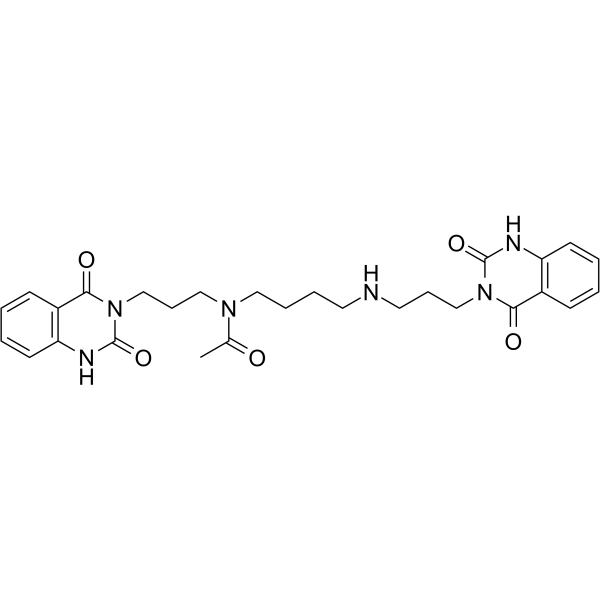
Otaplimastat (SP-8203), a matrix metalloproteinase (MMP) inhibitor, blocks N-methyl-D-aspartate (NMDA) receptor-mediated excitotoxicity in a competitive manner. Otaplimastat also exhibits anti-oxidant activity. Otaplimastat can be used for the research of brain ischemic injury.
For research use only. We do not sell to patients.
- Purity : 98.11%
- CAS No.: 1176758-04-5
- Formula: C28H34N6O5
- Molecular Weight:534.61
-
Storage:Powder -20°C, 3 years , 4°C, 2 years ; In solvent -80°C, 6 months , -20°C, 1 month

To place orders, for customer services and technical support, please contact: MedChemExpress USA
Tel: 609-228-6898 E-mail: [email protected] [email protected]


-
 Biological Activity
-
Chemical Information
-
Solvent & Solubility
- Protocols
- Purity & Documentation
- References
-
 Help & FAQs


-
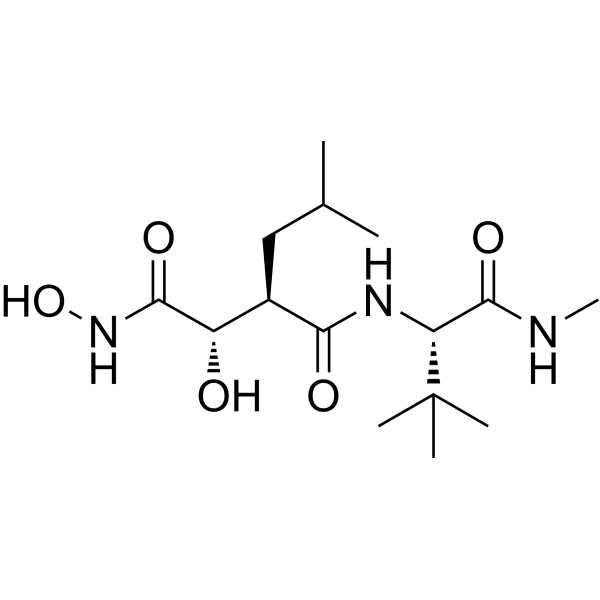
HY-12169
MarimastatMMP Inhibitor -
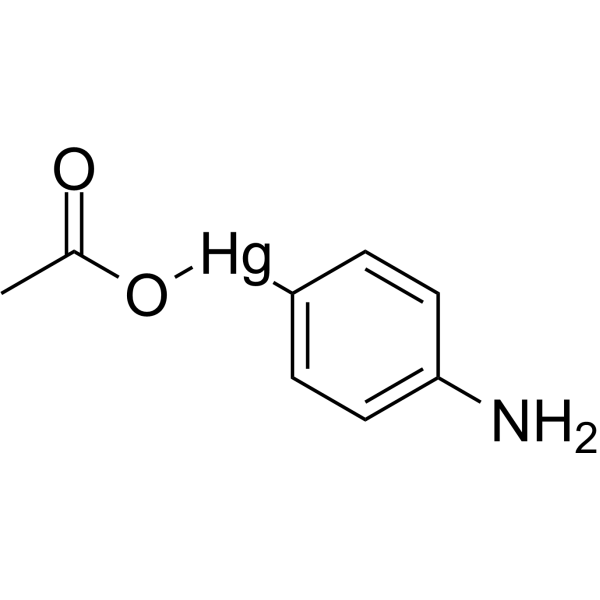
HY-148905
p-Aminophenylmercuric acetateMatrix Metalloproteinases Activator -
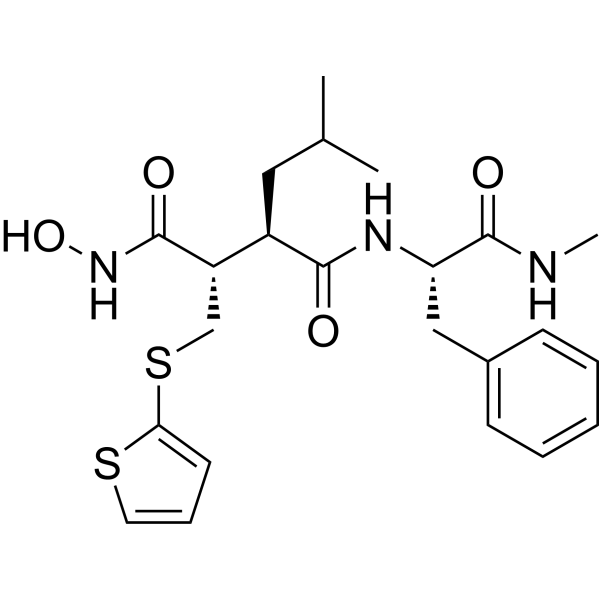
HY-13564
BatimastatMMP Inhibitor -

HY-109097R
Otaplimastat (Standard)Reference Standard -
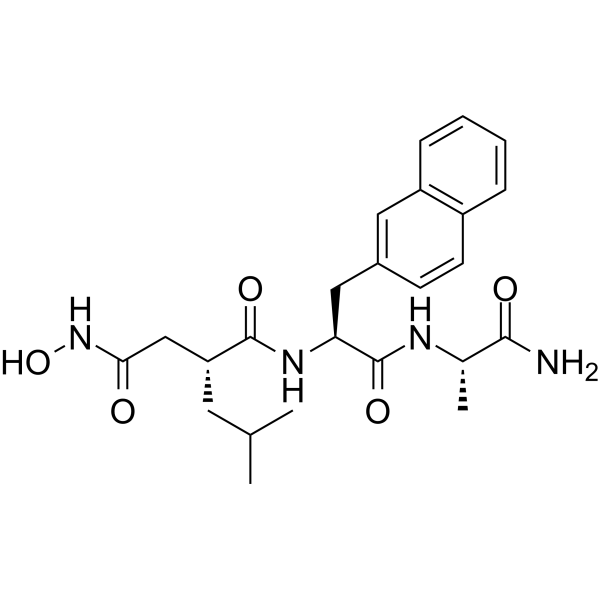
HY-118694
TAPI-0TACE/MMP Inhibitor -
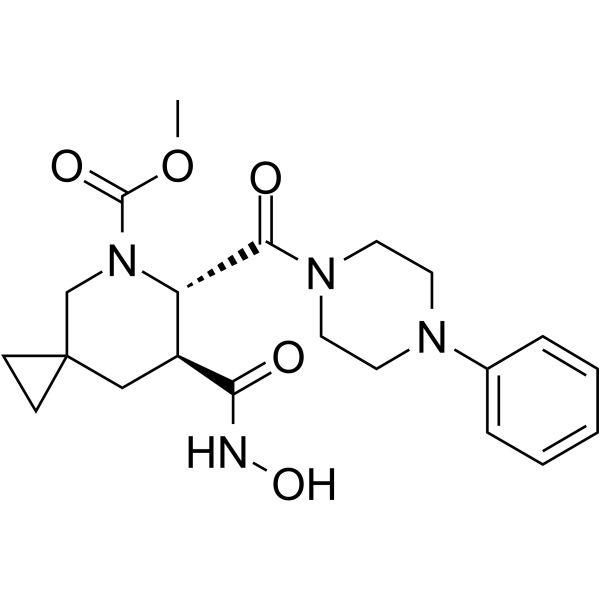
HY-10293
AderbasibADAM10/17 Inhibitor -
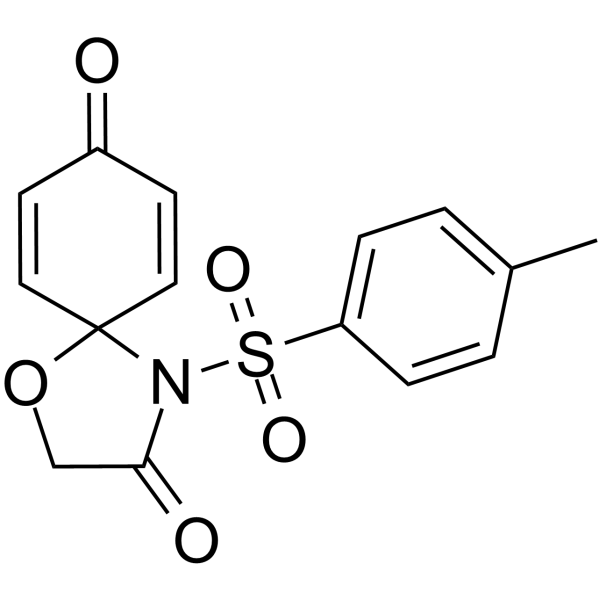
HY-146754
MMP2-IN-1MMP2 Inhibitor -
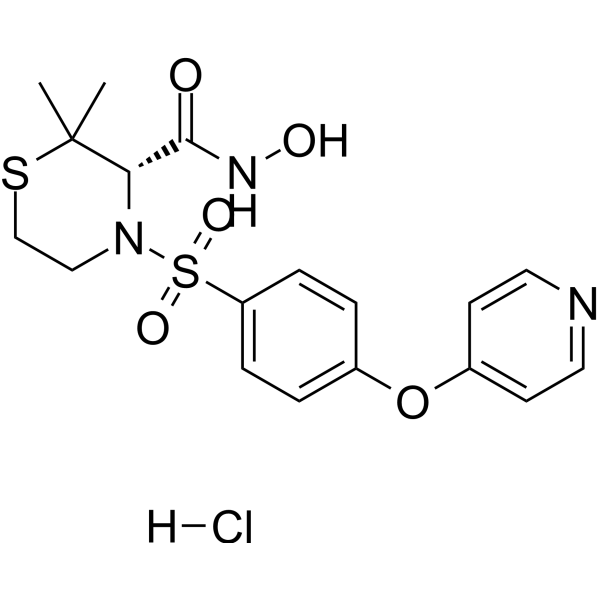
HY-12170A
Prinomastat hydrochlorideMMP Inhibitor -
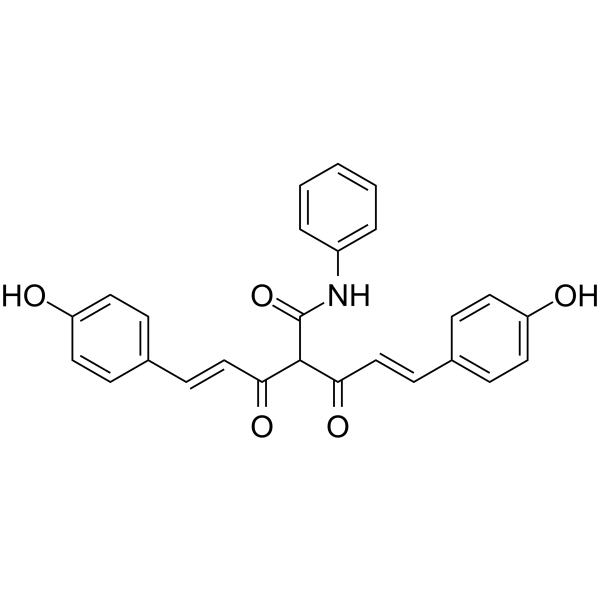
HY-120793
CMC2.24Ras/MMPs Inhibitor -
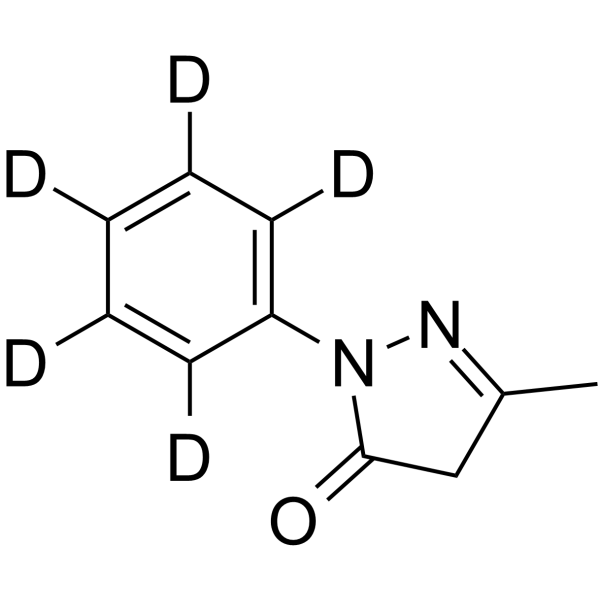
HY-B0099S
Edaravone-d5Stable Isotope -
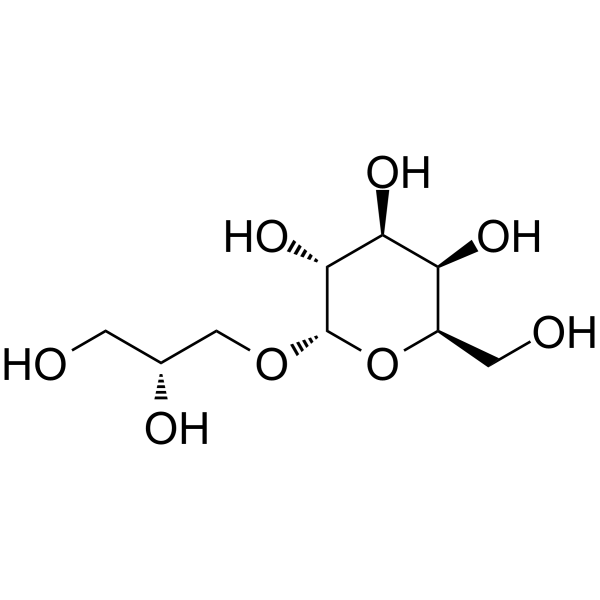
HY-N10176
D-IsofloridosideROS/MMP Inhibitor -

HY-13564R
Batimastat (Standard)MMP Inhibitor
All iGluR Isoforms
More

Biological Activity
Description
IC50 & Target
[1]|
NMDA Receptor |
MMP |
In Vitro
Otaplimastat (87.5-350 μM; 20 min) protects neuronal cells against NMDA-induced cell death in a competitive manner[1].
Otaplimastat (350 μM) inhibits Ca2+ influx following activation of NMDA receptors in primary cultured neuron[1].
Otaplimastat (2-200 μM; pretreated for 4 h) significantly suppresses H2O2-induced cell death and reactive oxygen species production[2].
MedChemExpress (MCE) has not independently confirmed the accuracy of these methods. They are for reference only. Further protocols information, click here.
In Vivo
Otaplimastat (5-10 mg/kg; i.p. daily for 10 days) attenuates impairment of stroke-induced motor function[2].
MedChemExpress (MCE) has not independently confirmed the accuracy of these methods. They are for reference only.
-
Animal Model:Male Wistar rats (280-310 g, 9 weeks) were induced transient middle cerebral artery (MCA) occlusion[1]
-
Dosage:10, 20 mg/kg
-
Administration:I.p. before 30 min and after an hour of the MCA-occlusion operation
-
Result:Significantly reduced infarct volume.
Improved spatial learning and memory impairments.
Clinical Trial
| NCT Number | Sponsor | Condition | Start Date |
Phase

|
|---|---|---|---|---|
| NCT01329991 | Plexxikon| | 2011-05 | PHASE1 |


Chemical Information
-
CAS No. 1176758-04-5
-
Appearance Solid
-
Molecular Weight 534.61
-
Formula C28H34N6O5
-
Color Off-white to light yellow
-
SMILES
CC(N(CCCN1C(NC2=C(C=CC=C2)C1=O)=O)CCCCNCCCN3C(NC4=C(C=CC=C4)C3=O)=O)=O
-
Synonyms
SP-8203
-
Shipping
Room temperature in continental US; may vary elsewhere.
-
Storage
Powder -20°C 3 years 4°C 2 years In solvent -80°C 6 months -20°C 1 month


Solvent & Solubility
In Vitro:
DMSO : 100 mg/mL (187.05 mM; Need ultrasonic; Hygroscopic DMSO has a significant impact on the solubility of product, please use newly opened DMSO)
Please refer to the solubility information to select the appropriate solvent. Once prepared, please aliquot and store the solution to prevent product inactivation from repeated freeze-thaw cycles.
Storage method and period of stock solution: -80°C, 6 months; -20°C, 1 month. When stored at -80°C, please use it within 6 months. When stored at -20°C, please use it within 1 month.
Please refer to the solubility information to select the appropriate solvent. Once prepared, please aliquot and store the solution to prevent product inactivation from repeated freeze-thaw cycles.
Storage method and period of stock solution: -80°C, 6 months; -20°C, 1 month. When stored at -80°C, please use it within 6 months. When stored at -20°C, please use it within 1 month.
Concentration (start) × Volume (start) = Concentration (final) × Volume (final)

Protocols
-
Mitochondrial membrane-potential fluorescent assay
Mitochondrial membrane potential fluorescent assays estimate ΔΨm in living cells using lipophilic cationic dyes such as TMRM, TMRE, rhodamine 123, and JC-1, which accumulate in mitochondria according to membrane polarization; loss of signal after FCCP or CCCP treatment is interpreted as mitochondrial depolarization. TMRM/TMRE and rhodamine 123 are commonly used for semi-quantitative live-cell microscopy or flow cytometry, while JC-1 can report a shift from red aggregate fluorescence to green monomer fluorescence during depolarization; interpretation requires controls because dye concentration, quenching mode, cell type, dye efflux, and mitochondrial mass can affect fluorescence independently of ΔΨm.
-
Mitochondrial membrane-potential and mitochondrial mass staining
Mitochondrial membrane potential staining measures the electrochemical polarization across the mitochondrial inner membrane in live cells using lipophilic cationic fluorescent probes; early rhodamine-based work showed that selective mitochondrial dye accumulation is lost when the mitochondrial transmembrane potential is dissipated. JC-1 reports mitochondrial polarization by shifting from green monomer fluorescence to red J-aggregate fluorescence as dye concentration increases within energized mitochondria; therefore, the red/green fluorescence ratio is used as a relative readout of mitochondrial membrane potential. TMRE or TMRM staining provides a single-channel relative readout because these cationic rhodamine esters accumulate in polarized mitochondria, and lower fluorescence indicates reduced mitochondrial polarization when acquisition and dye-loading conditions are controlled. Mitochondrial mass staining is commonly performed with MitoTracker Green FM or related MitoTracker dyes as


Purity & Documentation
-
Data Sheet (271 KB)
-
SDS (252 KB)
- English - EN (252 KB)
- Français - FR (252 KB)
- Deutsch - DE (252 KB)
- Norwegian - NO (252 KB)
- Español - ES (252 KB)
- Swedish - SV (252 KB)
- Italian - IT (252 KB)
- Korean - KR (252 KB)
- Portuguese - PT (252 KB)
-
Handling Instructions (2659 KB)
References
[1]. Noh SJ, et, al. SP-8203 shows neuroprotective effects and improves cognitive impairment in ischemic brain injury through NMDA receptor. Pharmacol Biochem Behav. 2011 Nov;100(1):73-80. [Content Brief]
[2]. Noh SJ, et, al. SP-8203 reduces oxidative stress via SOD activity and behavioral deficit in cerebral ischemia. Pharmacol Biochem Behav. 2011 Mar;98(1):150-4. [Content Brief]
[3]. Kim JS, et, al. Safety and Efficacy of Otaplimastat in Patients with Acute Ischemic Stroke Requiring tPA (SAFE-TPA): A Multicenter, Randomized, Double-Blind, Placebo-Controlled Phase 2 Study. Ann Neurol. 2020 Feb;87(2):233-245. [Content Brief]


Complete Stock Solution Preparation Table
Please refer to the solubility information to select the appropriate solvent. Once prepared, please aliquot and store the solution to prevent product inactivation from repeated freeze-thaw cycles.
Storage method and period of stock solution: -80°C, 6 months; -20°C, 1 month. When stored at -80°C, please use it within 6 months. When stored at -20°C, please use it within 1 month.
| Optional Solvent | Concentration Solvent Mass | 1 mg | 5 mg | 10 mg | 25 mg |
|---|---|---|---|---|---|
| DMSO | 1 mM | 1.8705 mL | 9.3526 mL | 18.7052 mL | 46.7631 mL |
| 5 mM | 0.3741 mL | 1.8705 mL | 3.7410 mL | 9.3526 mL | |
| 10 mM | 0.1871 mL | 0.9353 mL | 1.8705 mL | 4.6763 mL | |
| 15 mM | 0.1247 mL | 0.6235 mL | 1.2470 mL | 3.1175 mL | |
| 20 mM | 0.0935 mL | 0.4676 mL | 0.9353 mL | 2.3382 mL | |
| 25 mM | 0.0748 mL | 0.3741 mL | 0.7482 mL | 1.8705 mL | |
| 30 mM | 0.0624 mL | 0.3118 mL | 0.6235 mL | 1.5588 mL | |
| 40 mM | 0.0468 mL | 0.2338 mL | 0.4676 mL | 1.1691 mL | |
| 50 mM | 0.0374 mL | 0.1871 mL | 0.3741 mL | 0.9353 mL | |
| 60 mM | 0.0312 mL | 0.1559 mL | 0.3118 mL | 0.7794 mL | |
| 80 mM | 0.0234 mL | 0.1169 mL | 0.2338 mL | 0.5845 mL | |
| 100 mM | 0.0187 mL | 0.0935 mL | 0.1871 mL | 0.4676 mL |


Otaplimastat Related Classifications
HY-109097 Related Classifications
 Powered by Bioz