



Revaprazan hydrochloride
Based on 2 publication(s) in Google Scholar
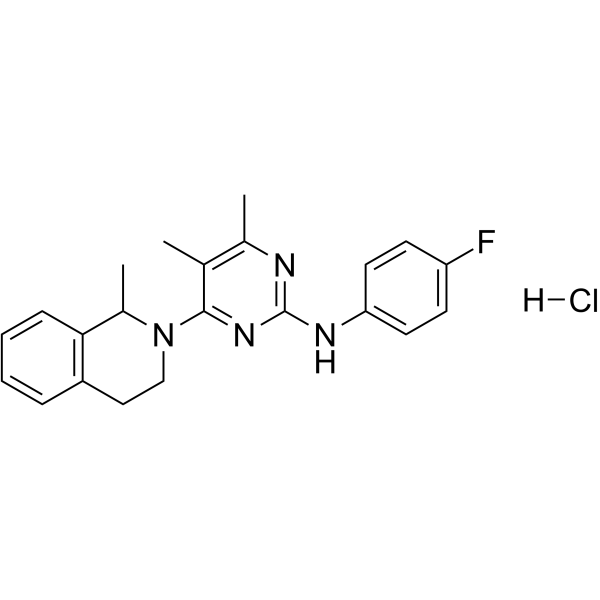
Revaprazan hydrochloride is reversible proton pump inhibitor. Revaprazan hydrochloride can inhibit gastric acid secretion and protect gastric mucosa. Revaprazan hydrochloride can inhibit IkappaB-alpha degradation as well as Akt inactivation, resulting in attenuation of H. pylori-induced COX-2 expression. Revaprazan hydrochloride can be used for the researches of infection and inflammmation, such as H. pylori-infected gastric inflammation and gastric ulcer.
연구목적의 판매만을 진행합니다. 환자를 대상으로 한 판매는 하지 않습니다.
- Purity : 99.98%
- CAS No.: 178307-42-1
- 화학식: C22H24ClFN4
- 분자량:398.90
-
보관:
4°C, sealed storage, away from moisture
* In solvent : -80°C, 6 months; -20°C, 1 month (sealed storage, away from moisture)

To place orders, for customer services and technical support, please contact: MedChemExpress USA
Tel: 609-228-6898 E-mail: [email protected] [email protected]


-
 Biological Activity
-
Chemical Information
-
용액&용해도
- Protocol
- 순도&문서
- References
-
 Help & FAQs


-
HY-B2145
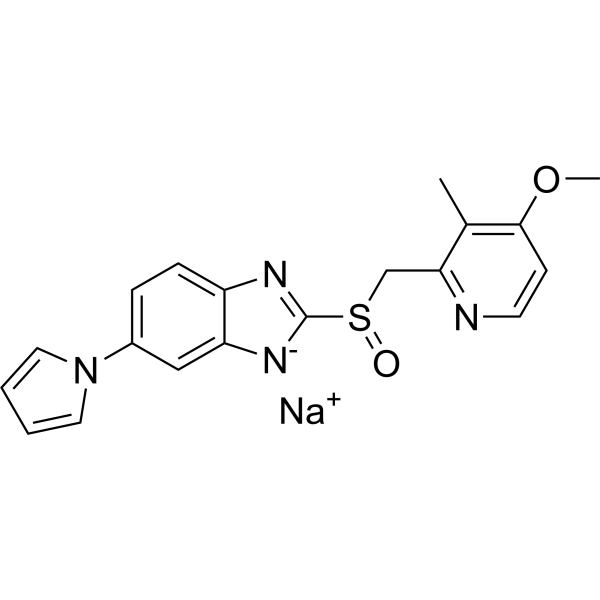
Ilaprazole sodiumProton Pump Inhibitor -
HY-17507A
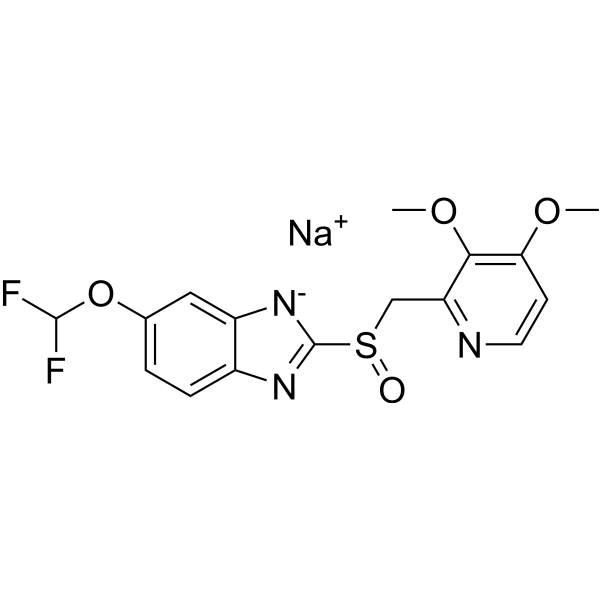
Pantoprazole sodiumProton Pump Inhibitor -
HY-123593
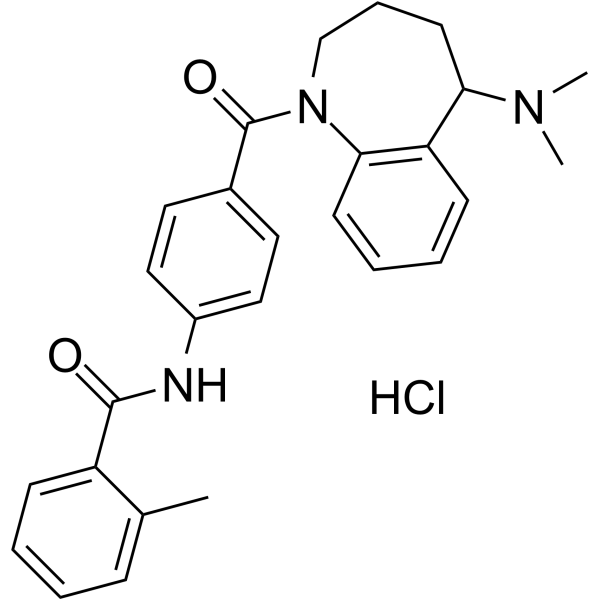
Mozavaptan hydrochlorideVasopressin V2 Receptor Antagonist -
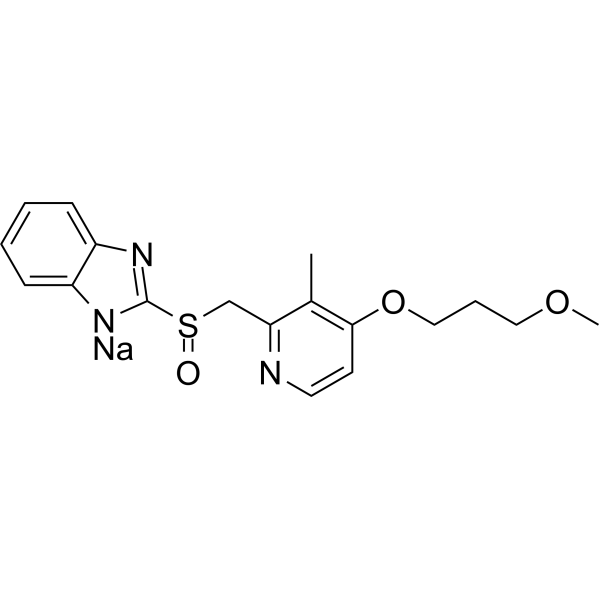
HY-B0656A
Rabeprazole sodiumPump Inhibitor -
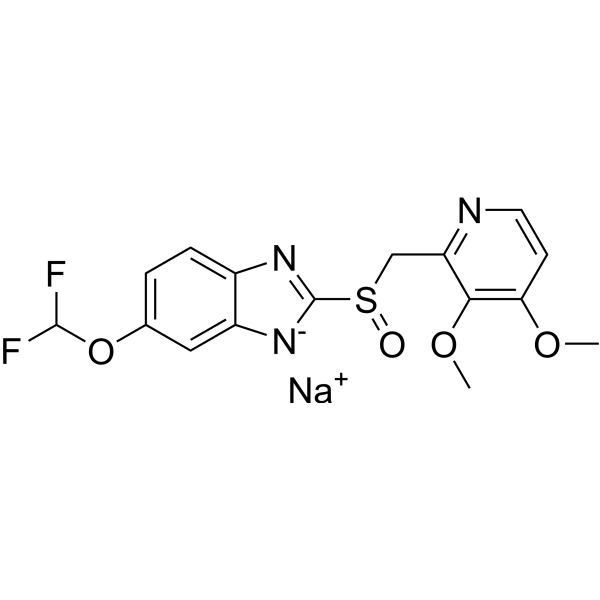
HY-17507AR
Pantoprazole sodium (Standard)Proton Pump Inhibitor -
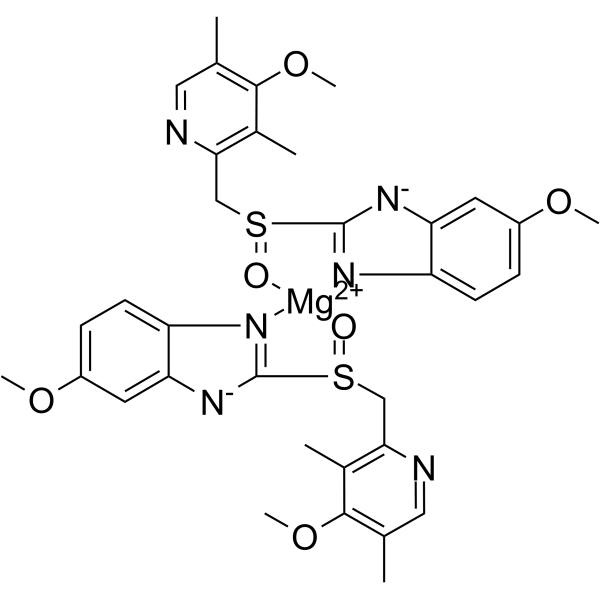
HY-B1446
Esomeprazole magnesiumH+, K+-ATPase Inhibitor -
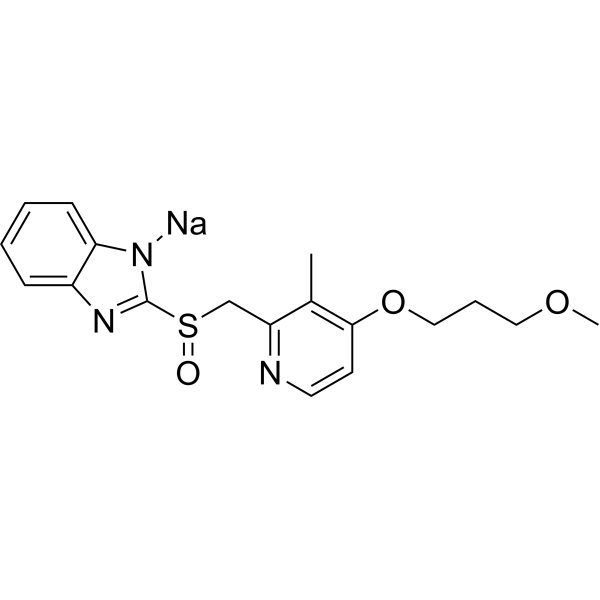
HY-B0656AR
Rabeprazole sodium (Standard)Pump Inhibitor -
HY-B0103A
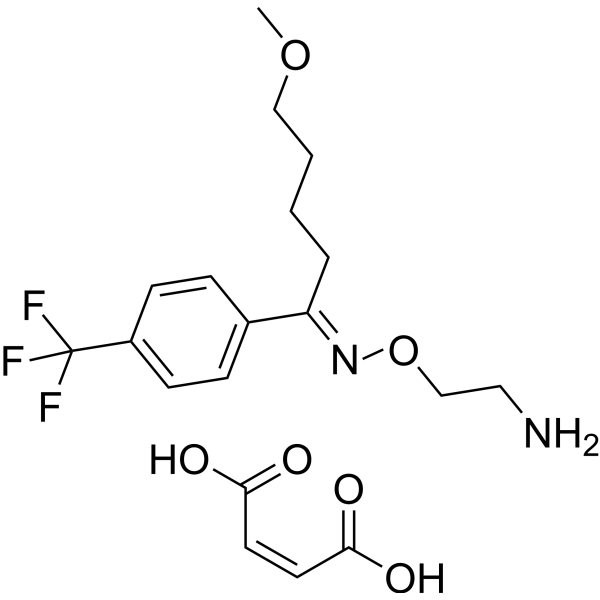
Fluvoxamine maleateSerotonin Transporter Inhibitor -
HY-B1287
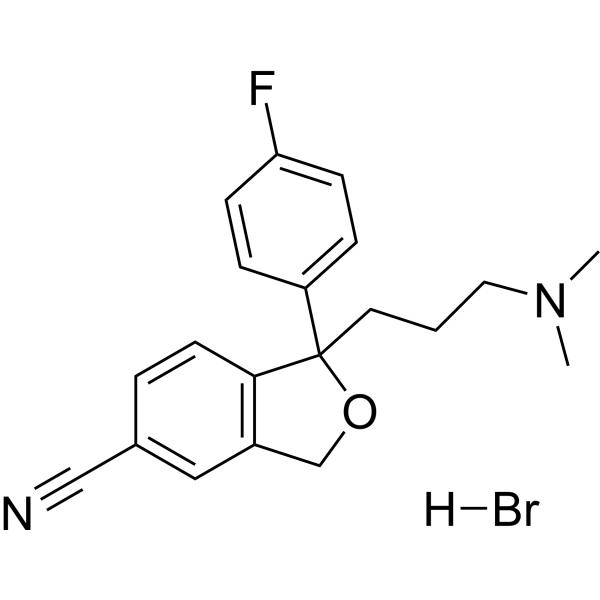
Citalopram hydrobromideSelective Serotonin Reuptake Inhibitor -
HY-B1287R
Citalopram hydrobromide (Standard) -

HY-B0103AR
Fluvoxamine maleate (Standard)Serotonin Transporter Inhibitor
Publications Citing Use of MedChemExpress (MCE) Revaprazan hydrochloride
More

Biological Activity
제품 설명
IC50 & Target
[1]|
COX-2 |
In Vitro
Revaprazan hydrochloride (5-20 μM, 24 h) reduces H. pylori-stimulated COX-2 expression and activity in AGS cells[1].
Revaprazan hydrochloride (5-20 μM, 24 h) inhibits transcription activity of NF-κB in H. pylori-stimulated AGS cells[1].
Revaprazan hydrochloride (5-20 μM, 24 h) improves the retarded cell growth in H. pylori-stimulated AGS cells[1].
MedChemExpress (MCE) has not independently confirmed the accuracy of these methods. They are for reference only.
-
Cell Line:H. pylori-stimulated AGS cells
-
Concentration:5 and 20 μM
-
Incubation Time:24 h
-
Result:Reduced COX-2 expression.
Inhibited transcription activity of NF-κB.
Inactivated ERK and Akt phosphorylation.


Chemical Information
-
CAS No. 178307-42-1
-
Appearance Solid
-
분자량 398.90
-
화학식 C22H24ClFN4
-
Color White to off-white
-
SMILES
CC1=C(C)C(N2C(C)C3=C(C=CC=C3)CC2)=NC(NC4=CC=C(F)C=C4)=N1.[H]Cl
-
선적
Room temperature in continental US; may vary elsewhere.
-
보관
4°C, sealed storage, away from moisture
* In solvent : -80°C, 6 months; -20°C, 1 month (sealed storage, away from moisture)


Publications (2)
-
Journal Impact Factor
-
Most Recent
-
Pharmaceuticals (Basel)
Combined In Silico and In Vitro Evidence Supporting an Aurora A Kinase Inhibitory Role of the Anti-Viral Drug Rilpivirine and an Anti-Proliferative Influence on Cancer Cells. [Abstract]2022 Sep 25;15(10):1186. PMID: 36297298 -
BMC Microbiol
In vitro combination effects and mechanisms of Revaprazan with Triazole antifungal drugs on Aspergillus. [Abstract]2025 Nov 5;25(1):715. PMID: 41194018


용액&용해도
In Vitro:
DMSO : 8.33 mg/mL (20.88 mM; Need ultrasonic; Hygroscopic DMSO has a significant impact on the solubility of product, please use newly opened DMSO)
H2O : < 0.1 mg/mL (insoluble)
Please refer to the solubility information to select the appropriate solvent. Once prepared, please aliquot and store the solution to prevent product inactivation from repeated freeze-thaw cycles.
Storage method and period of stock solution: -80°C, 6 months; -20°C, 1 month (sealed storage, away from moisture). When stored at -80°C, please use it within 6 months. When stored at -20°C, please use it within 1 month.
Please refer to the solubility information to select the appropriate solvent. Once prepared, please aliquot and store the solution to prevent product inactivation from repeated freeze-thaw cycles.
Storage method and period of stock solution: -80°C, 6 months; -20°C, 1 month (sealed storage, away from moisture). When stored at -80°C, please use it within 6 months. When stored at -20°C, please use it within 1 month.
Concentration (start) × Volume (start) = Concentration (final) × Volume (final)
In Vivo:
Select the appropriate dissolution method based on your experimental animal and administration route.
- For the following dissolution methods, please ensure to first prepare a clear stock solution using an In Vitro approach and then sequentially add co-solvents:
- To ensure reliable experimental results, the clarified stock solution can be appropriately stored based on storage conditions. As for the working solution for In Vivo experiments, it is recommended to prepare freshly and use it on the same day.
- The percentages shown for the solvents indicate their volumetric ratio in the final prepared solution. If precipitation or phase separation occurs during preparation, heat and/or sonication can be used to aid dissolution.
Add each solvent one by one: 10% DMSO 40% PEG300 5% Tween-80 45% Saline
Solubility: ≥ 1.56 mg/mL (3.91 mM); Clear solution
This protocol yields a clear solution of ≥ 1.56 mg/mL (saturation unknown).
Taking 1 mL working solution as an example, add 100 μL DMSO stock solution (15.6 mg/mL) to 400 μL PEG300, and mix evenly; then add 50 μL Tween-80 and mix evenly; then add 450 μL Saline to adjust the volume to 1 mL.
Preparation of Saline: Dissolve 0.9 g sodium chloride in ddH₂O and dilute to 100 mL to obtain a clear Saline solution.
Add each solvent one by one: 10% DMSO 90% (20% SBE-β-CD in Saline)
Solubility: ≥ 1.56 mg/mL (3.91 mM); Clear solution
This protocol yields a clear solution of ≥ 1.56 mg/mL (saturation unknown).
Taking 1 mL working solution as an example, add 100 μL DMSO stock solution (15.6 mg/mL) to 900 μL 20% SBE-β-CD in Saline, and mix evenly.
Preparation of 20% SBE-β-CD in Saline (4°C, storage for one week): 2 g SBE-β-CD powder is dissolved in 10 mL Saline, completely dissolve until clear.
In Vivo Dissolution Calculator
Please enter the basic information of animal experiments:
-
-
-
-
Recommended: Prepare an additional quantity of animals to account for potential losses during experiments.
Please enter your animal formula composition:
-
%DMSO +
Recommended: Keep the proportion of DMSO in working solution below 2% if your animal is weak.
-
%+
-
+%Tween-80 + +
-
%Saline +
The co-solvents required include: DMSO, . All of co-solvents are available by MedChemExpress (MCE). , Tween 80. All of co-solvents are available by MedChemExpress (MCE).
Working solution concentration: 0.22 mg/mL
Method for preparing stock solution: mg drug dissolved in μL DMSO. Stock solution concentration: mg/mL. * In solvent : -80°C, 6 months; -20°C, 1 month (sealed storage, away from moisture)
1. Take μL DMSO stock solution;
2. Add μL .
μL , mix evenly;
3. Then add μL Tween 80, mix evenly;
4. Then add μL
Please ensure that the stock solution in the first step is dissolved to a clear state, and add co-solvents in sequence. You can use ultrasonic heating (ultrasonic cleaner, recommended frequency 20-40 kHz), vortexing, etc. to assist dissolution.


순도&문서
-
Data Sheet (272 KB)
-
SDS (393 KB)
- English - EN (393 KB)
- Français - FR (393 KB)
- Deutsch - DE (393 KB)
- Norwegian - NO (393 KB)
- Español - ES (393 KB)
- Swedish - SV (393 KB)
- Italian - IT (393 KB)
- Korean - KR (393 KB)
- Portuguese - PT (393 KB)
-
Handling Instructions (2659 KB)
References
[1]. Lee JS, et al. Revaprazan, a novel acid pump antagonist, exerts anti-inflammatory action against Helicobacter pylori-induced COX-2 expression by inactivating Akt signaling. J Clin Biochem Nutr. 2012 Sep;51(2):77-83. [Content Brief]
[2]. Kim HK, et al. Clinical trial: inhibitory effect of revaprazan on gastric acid secretion in healthy male subjects. J Gastroenterol Hepatol. 2010 Oct;25(10):1618-25. [Content Brief]


Complete Stock Solution Preparation Table
Please refer to the solubility information to select the appropriate solvent. Once prepared, please aliquot and store the solution to prevent product inactivation from repeated freeze-thaw cycles.
Storage method and period of stock solution: -80°C, 6 months; -20°C, 1 month (sealed storage, away from moisture). When stored at -80°C, please use it within 6 months. When stored at -20°C, please use it within 1 month.
| Optional Solvent | Concentration Solvent Mass | 1 mg | 5 mg | 10 mg | 25 mg |
|---|---|---|---|---|---|
| DMSO | 1 mM | 2.5069 mL | 12.5345 mL | 25.0689 mL | 62.6723 mL |
| 5 mM | 0.5014 mL | 2.5069 mL | 5.0138 mL | 12.5345 mL | |
| 10 mM | 0.2507 mL | 1.2534 mL | 2.5069 mL | 6.2672 mL | |
| 15 mM | 0.1671 mL | 0.8356 mL | 1.6713 mL | 4.1782 mL | |
| 20 mM | 0.1253 mL | 0.6267 mL | 1.2534 mL | 3.1336 mL |


Revaprazan hydrochloride Related Classifications
HY-N7067 Related Classifications
 Powered by Bioz