
1041 Results for "

Acid Red

" in MedChemExpress (MCE) Product Catalog:
Products (1041)

1041 Results for "Acid Red" in MCE Product Catalog:

Cat. No.: HY-D1470
CAS No.: 210832-86-3
Target:  

Fluorescent Dye

Research Areas:  

Others

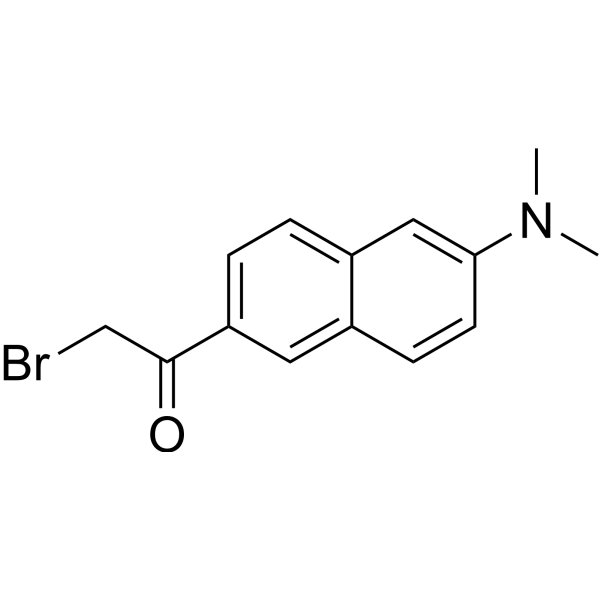
BADAN is a thiol-reactive, environment-sensitive fluorescent probe used for site-specific labeling of protein cysteine residues to detect protein topology, local polarity, protein-lipid interactions, and conformational changes. The bromoacetyl group of BADAN covalently binds to cysteine thiols, and its fluorescence originates from the intramolecular charge transfer (ICT) excited state. The emission peak position varies with the polarity of the surrounding medium: it blue-shifts to approximately 488 nm in nonpolar environments (such as the hydrophobic core of lipid bilayers) and red-shifts to approximately 496-507 nm in polar environments (such as aqueous phases), independent of enzymes, pH, or membrane potential. Ex = 380-402 nm; Em = 400-600 nm .
loading...
    loading...
Cat. No.: HY-D3109
CAS No.: 148043-22-5
Target:  

Fluorescent Dye

Research Areas:  

Others

pH-Ap-1 is a fluorescent probe used for ratiometric monitoring of pH fluctuations during autophagy in living cells, and it can detect intracellular pH changes in the autophagy process. For fluorescence detection of pH-Ap-1, its excitation wavelength is 475 nm, with an emission wavelength of 538 nm under alkaline conditions and 645 nm under acidic conditions. For intracellular imaging, excitation is performed at 488 nm: the emission light ranging from 500-550 nm is collected via the green channel corresponding to 538 nm, while the emission light ranging from 625-750 nm is collected via the red channel corresponding to 645 nm. pH-Ap-1 exhibits excellent photostability and chemical stability .
loading...
    loading...
Cat. No.: HY-D3443
Target:  

Fluorescent Dye

Research Areas:  

Cancer

NR-HOCl-TFMU is a HOCl-gated phosphonite fluorescent probe based on the Nebraska Red scaffold. NR-HOCl-TFMU undergoes HOCl-triggered oxidative ring-opening of the spirocyclic thioether and phosphonite hydrolysis to synchronously release the near-infrared reporter group NR666-MSA (Ex 666 nm/Em 698 nm) and the cargo TFMU (Ex 405 nm/Em 510 nm) . NR-HOCl-TFMU enables HOCl-selective fluorescence imaging and cargo release monitoring in vitro, in live cells and in vivo, and exerts gated selective cytotoxicity in HOCl-positive cells. NR-HOCl-TFMU can be used for studies related to acute myeloid leukemia .
loading...
    loading...
Cat. No.: HY-DY1006
CAS No.: 25535-16-4
Propidium Iodide (PI) (solution) is a nuclear staining agent that stains DNA. Propidium Iodide is an analogue of ethidine bromide that emits red fluorescence upon embedding in double-stranded DNA. Propidium Iodide cannot pass through living cell membranes, but it can pass through damaged cell membranes to stain the nucleus. Propidium Iodide has a fluorescence wavelength of 493/617 nm and a wavelength of 536/635 nm after Mosaic with DNA. Propidium Iodide is commonly used in the detection of apoptosis (apoptosis) or necrosis (necrosis) , and is often used in flow cytometry analysis.
Solvent and Concentration: Sterile water: 1 mg/mL
The 1 mL volume is defined as the base specification. All larger sizes correspond to incremental volumes of this base.
loading...
    loading...
Cat. No.: HY-DY1111
CAS No.: 1539318-40-5
Target:  

DNA Stain

Research Areas:  

Neurological Disease

DFHBI-2T solution is a membrane-permeable, RNA aptamer-activated fluorescent probe (Ex/Em=500 nm/523 nm), with a Kd value of 1300 nM for the RNA aptamer Spinach2. DFHBI-2T solution binds to Spinach2, converting the fluorophore to a fluorescent state, stabilizing its planar structure to facilitate the radiative fluorescence decay pathway, and forming a complex with red-shifted excitation and emission peaks. DFHBI-2T solution can be used for RNA imaging in live cells. It is also applicable to research related to fragile X-associated tremor/ataxia syndrome .
Solvent and concentration: DMSO: 5 mM
loading...
    loading...
Cat. No.: HY-NP0144
Synonyms: WGA (Fluorescein)
Succinylated Wheat Germ Agglutinin (Fluorescein) (WGA (Fluorescein)) is a fluorescent lectin that acts as a probe to specifically bind biomolecules. Succinylated Wheat Germ Agglutinin (Fluorescein) binds to cell surface glycoconjugates containing N-acetylglucosamine. Succinylated Wheat Germ Agglutinin (Fluorescein) is a selective agglutinating agent targeting specific red blood cells, thymocytes, splenocytes and lymphocytes. Succinylated Wheat Germ Agglutinin (Fluorescein) binds to fibroblasts and lymphocytes via dual binding sites in a temperature-dependent, saturable manner. Succinylated Wheat Germ Agglutinin (Fluorescein) can be used for quantitative studies of cell surface receptor glycoconjugates (Ex=495 nm, Em=515 nm) .
loading...
    loading...
Cat. No.: HY-W088068
CAS No.: 68988-92-1
Wright's stain is a composite cell stain that mainly binds to intracellular nucleic acids, proteins and other components through thiazine dyes (such as methylene blue) and eosin. Wright's stain is pH-dependent (optimal pH 6.4-6.7) and achieves cell morphology resolution by differentially staining the cytoplasm and nucleus. Under alkaline conditions, thiazine dyes bind to nucleic acids to form purple, and acidic eosin binds to cytoplasmic proteins to form red, which can form contrasting cell morphological features. Wright's stain can clearly display the fine structures of blood cells and bone marrow cells (such as nuclear chromatin and granules) and quickly evaluate cell morphological abnormalities .
loading...
    loading...
Cat. No.: HY-P71267
Purity:  ≥ 95%, as determined by reducing SDS-PAGE.
Synonyms: RRM2; FLJ25102; Prev. C2orf48; Chromosome 2 Open Reading Frame 48; Ribonucleoside-Diphosphate Reductase Subunit M2; Uncharacterized Protein C2orf48; Ribonucleotide Reductase Small Subunit; RR2M; Ribonucleotide Reductase Small Chain; R2; Ribonucleotide Red
Species:  
Human
Source:  
HEK293
loading...
    loading...
Cat. No.: HY-P700578
Purity:  ≥ 90%, as determined by reducing SDS-PAGE.
Synonyms: PKLR; Pyruvate Kinase, Liver And Blood Cell; Pyruvate Kinase L/R; Pyruvate Kinase Isozymes R/L; Pyruvate Kinase, Liver And RBC; Pyruvate Kinase Isozyme R/L; Red Cell/Liver Pyruvate Kinase; Pyruvate Kinase Isoform 1; R-Type/L-Type Pyruvate Kinase; Pyruvate
Species:  
Rat
Source:  
P. pastoris
loading...
    loading...
Cat. No.: HY-P10881
CAS No.: 2758595-29-6
Research Areas:  

Metabolic Disease

Ganipatide is a 1-31-Glucose-dependent insulinotropic polypeptide. Ganipatide is promising for research of diabetes .
loading...
    loading...
Cat. No.: HY-125959R
CAS No.: 313649-08-0
Target:  

Apoptosis

Ucf-101 (Standard) is the analytical standard of Ucf-101. This product is intended for research and analytical applications. Ucf-101 is a selective and competitive inhibitor of pro-apoptotic protease Omi/HtrA2, with an IC50 of 9.5 μM for His-Omi. Ucf-101 exhibits very little activity against various other serine proteases (IC50>200 μM). Ucf-101 has a natural red fluorescence at 543 nm that is used to monitor its ability to enter mammalian cells. Ucf-101 has a significant cardioprotective effect against MI/R injury and also has certain neuroprotective effect .
loading...
    loading...
Cat. No.: HY-133535
CAS No.: 2093120-32-0
Synonyms: PA-JF646-NHS
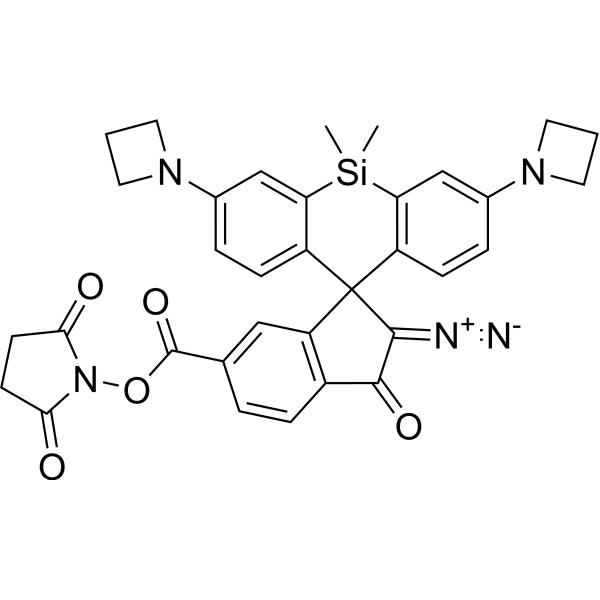
PA Janelia Fluor 646, SE (PA-JF646-NHS) is a photo-activatable fluorescent dye. PA Janelia Fluor 646, SE is a far-red light-excited, 405 nm-activated NHS ester-based dye. Janelia Fluor fluorescent dyes can be chemically conjugated to the specific HaloTag substrate (a chloroalkane ligand) to form a fluorescent ligand, rather than binding directly to the HaloTag protein itself. PA Janelia Fluor 646, SE can achieve extremely low background and single-molecule-level ultra-high-resolution imaging through photo-controlled switching, making it a powerful tool for live cell super-resolution microscopy technology (Ex/Em = 646/664 nm).
loading...
    loading...
Cat. No.: HY-173054
CAS No.: 3099249-36-9
Target:  

Bacterial

Research Areas:  

Infection

FtsZ-IN-12 (Compound 16e) is the inhibitor for filamentous temperature-sensitive mutant Z (FtsZ) that promotes the polymerization of FtsZ protein, inhibits its GTPase activity, thereby interfering with bacterial cell division process. FtsZ-IN-12 exhibits boardspectrum antibacterial activity that inhibits B. subtilis ATCC9372, B. pumilus CMCC63202, S. aureus ATCC25923, E. coli BW25113 and A. baumannii ATCC19606 with MIC of 0.062-1 μg/mL. FtsZ-IN-12 inhibits the formation of bacterial biofilms and exhibits a clearing effect on mature biofilms. FtsZ-IN-12 exhibits bactericidal activity without hemolytic toxicity to mammalian red blood cells (15 mg/kg) .
loading...
    loading...
Cat. No.: HY-B2235B
CAS No.: 8002-43-5
Synonyms: L-α-Phosphatidylcholine (egg yolk, Type XVI-E), 99%, lyophilized powder; 1,2-Diacyl-sn-glycero-3-phosphocholine (egg yolk, Type XVI-E), 99%; egg yolk Lecithins, Type XVI-E, 99%
L-α-Lecithin (egg yolk, Type XVI-E), 99% (L-α-Phosphatidylcholine (egg yolk, Type XVI-E), 99%) is an active biomaterial. L-α-Lecithin (egg yolk, Type XVI-E), 99% forms liposomes with compounds (PF or BA). L-α-Lecithin (egg yolk, Type XVI-E), 99% increases membrane fluidity and affects microemulsion stability and fluorescence intensity stained with Nile red (HY-D0718). L-α-Lecithin (egg yolk, Type XVI-E), 99% It can be used for cell membrane structure research, biological membrane potential research, and liposome research .
loading...
    loading...
Cat. No.: HY-D0922
CAS No.: 1284240-77-2
Target:  

Fluorescent Dye

Research Areas:  

Others

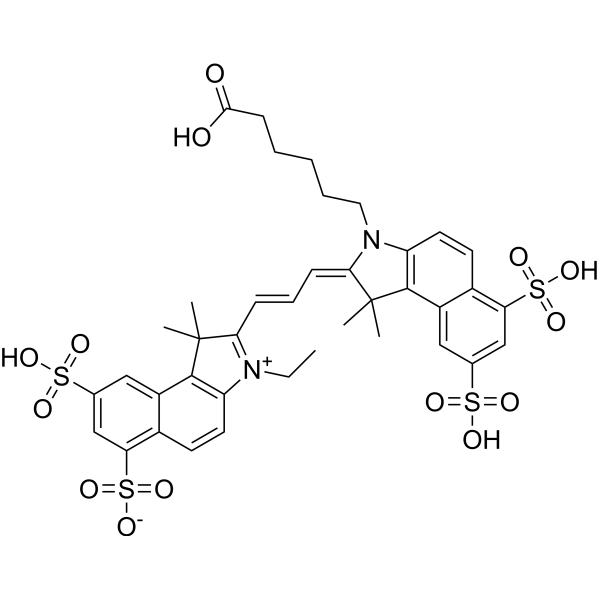
Cy3.5 is a cyanine-based red fluorescent dye (Ex/Em ≈ 560-581/600-612 nm). After covalent conjugation with proteins, Cy3.5 exhibits extraordinary fluorescence enhancement with minimal quenching even at high labeling ratios. Cy3.5 can form a FRET dye pair with Cy5.5, which maintains stable FRET efficiency in various biochemical buffers and deoxygenated systems. Cy3.5 is applicable to studies related to fluorescent labeling of antibodies/proteins, single-molecule FRET imaging of double-stranded DNA and nucleosomes, SPION functionalization, in vivo tracing, and other relevant research .
loading...
    loading...
Cat. No.: HY-D0922A
Target:  

Fluorescent Dye

Research Areas:  

Others

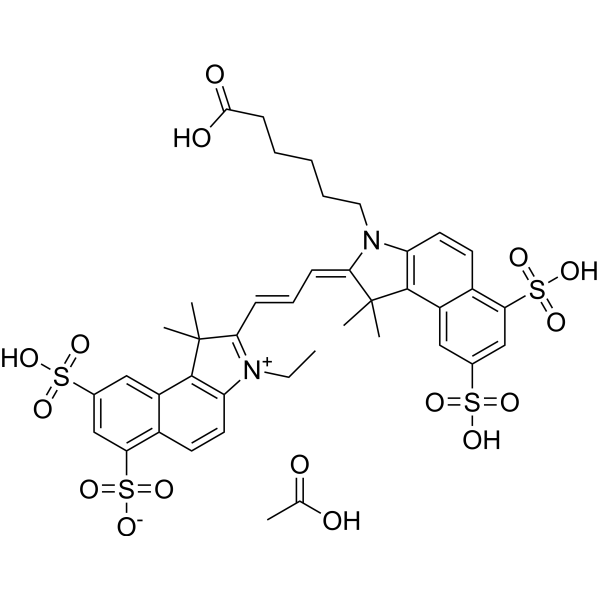
Cy3.5 acetate is a cyanine-based red fluorescent dye (Ex/Em ≈ 560-581/600-612 nm). After covalent conjugation with proteins, Cy3.5 acetate exhibits extraordinary fluorescence enhancement with minimal quenching even at high labeling ratios. Cy3.5 acetate can form a FRET dye pair with Cy5.5, which maintains stable FRET efficiency in various biochemical buffers and deoxygenated systems. Cy3.5 acetate is applicable to studies related to fluorescent labeling of antibodies/proteins, single-molecule FRET imaging of double-stranded DNA and nucleosomes, SPION functionalization, in vivo tracing, and other relevant research .
loading...
    loading...
Cat. No.: HY-W718178
CAS No.: 152-84-1
Ruberythric acid is a natural product found in madder (Rubia tinctorum). Acid treatment induces hydrolysis of Ruberythric acid, producing pentose-containing sugar residues and alizarin. Ruberythric acid inhibits stimulus-induced phosphorylation of IKK, IκBα and p65 in the NF-κB pathway, regulates tight junction integrity, suppresses stimulus-induced MLCK activation and myosin light chain phosphorylation, reduces tight junction disruption associated with cytoskeletal contraction, alleviates stimulus-induced increase in intestinal permeability, and prevents stimulus-induced redistribution of tight junction proteins. Ruberythric acid forms red salts when dissolved in alkali and can be used as a dye. Ruberythric acid is applicable to research related to inflammatory bowel disease .
loading...
    loading...
Cat. No.: HY-121365
CAS No.: 71522-58-2
Target:  

Bacterial

Research Areas:  

Infection

Forphenicinol is an immunomodulator and a derivative of the bacterial metabolite forphenicine. It increases the phagocytosis of yeast by peritoneal macrophages isolated from thioglycolate-stimulated mice. Forphenicinol (100 μg/animal) prevents cyclophosphamide-induced suppression of delayed-type hypersensitivity (DTH), as well as enhances DTH in response to the hapten oxazolone or sheep red blood cells in mice. It enhances the bactericidal activity of macrophages against P. aeruginosa in mice when administered at a dose of 0.5 mg/kg.2 Forphenicinol (15.6-1,000 μg/animal) increases survival in a mouse model of P. aeruginosa infection. It also inhibits tumor growth in S180 sarcoma and IMC carcinoma mouse xenograft models when administered at doses ranging from 0.05 to 5 mg/kg per day.
loading...
    loading...
Cat. No.: HY-138659
CAS No.: 2042192-00-5
Purity:  95.29%
Synonyms: JF646, Tetrazine
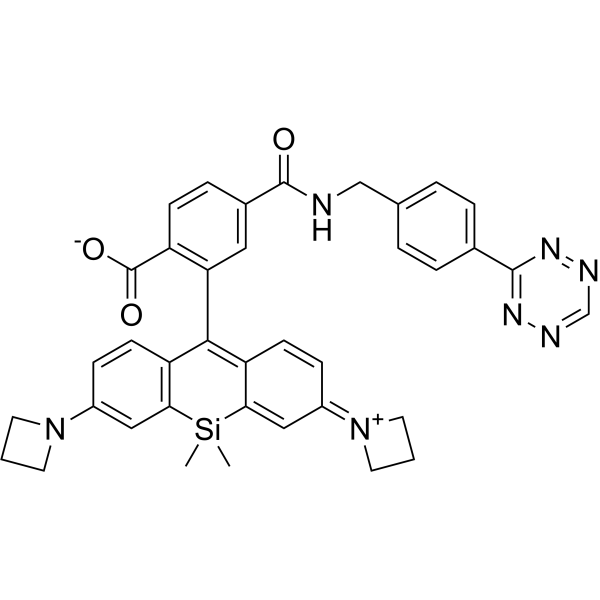
Janelia Fluor 646, Tetrazine (JF646, Tetrazine) a red fluorescent dye that contains a tetrazine group. JF646, Tetrazine can be used in cellular imaging . Janelia Fluor fluorescent dyes can be chemically conjugated to the specific HaloTag substrate (a chloroalkane ligand) to form a fluorescent ligand, rather than binding directly to the HaloTag protein itself. Janelia Fluor products are licensed under U.S. Pat. Nos. 9,933,417, 10,018,624 and 10,161,932 and other patents from Howard Hughes Medical Institute. Janelia Fluor 646, Tetrazine is a click chemistry reagent, it contains a Tetrazine group that can undergo an inverse electron demand Diels-Alder reaction (iEDDA) with molecules containing TCO groups (Ex/Em = 646/664 nm).
loading...
    loading...
Cat. No.: HY-183522
CAS No.: 3986-98-9
Target:  

Carbonic Anhydrase

Research Areas:  

Cancer

Thiocoumarin is a carbonic anhydrase (CA) inhibitor, with Ki values of 0.047 μM, 0.042 μM, and 0.1 μM against hCA IX, mCA XIII, and hCA I, respectively; its Ki values against hCA IV, mCA XV, hCA II, hCA VA, hCA VB, hCA VI, hCA VII, hCA XII, and hCA XIV are 4.1, 4.8, 6.2, 8.4, 7.5, 8.8, 7.3, 8.7, and 7.4 μM, respectively . As a photocage molecule, Thiocoumarin undergoes photolysis upon illumination to release the caged molecule, and it exhibits red-shifted absorption properties and rapid photolysis kinetics. Thiocoumarin can be used in cancer-related research .
loading...
    loading...

