
22 Results for "

ASCT

" in MedChemExpress (MCE) Product Catalog:
Products (22)

22 Results for "ASCT" in MCE Product Catalog:

  • Targets Recommended:
34
34 Publications Verification
Cat. No.: HY-112683
CAS No.: 1855871-76-9
Purity:  99.88%
Target:  

ASCT

Research Areas:  

Cancer

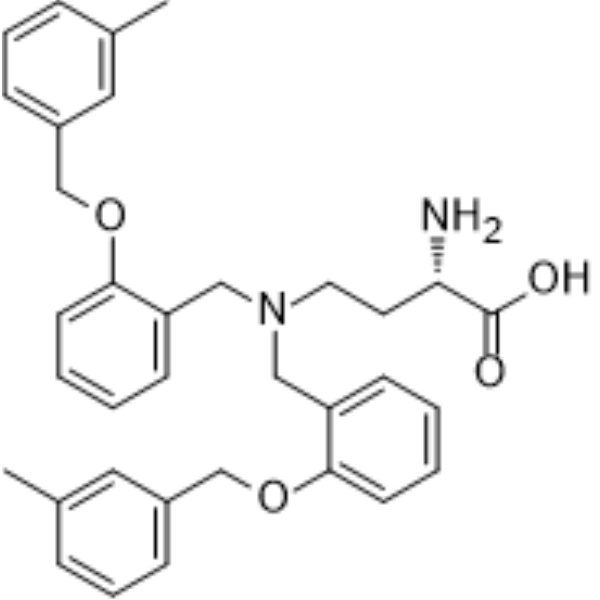
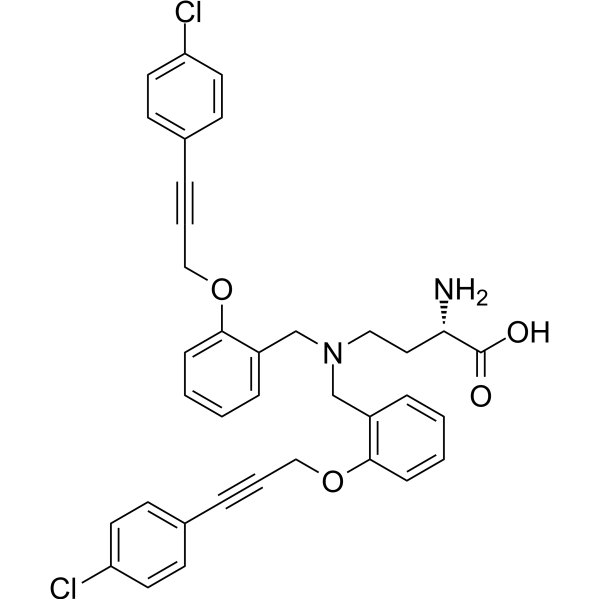
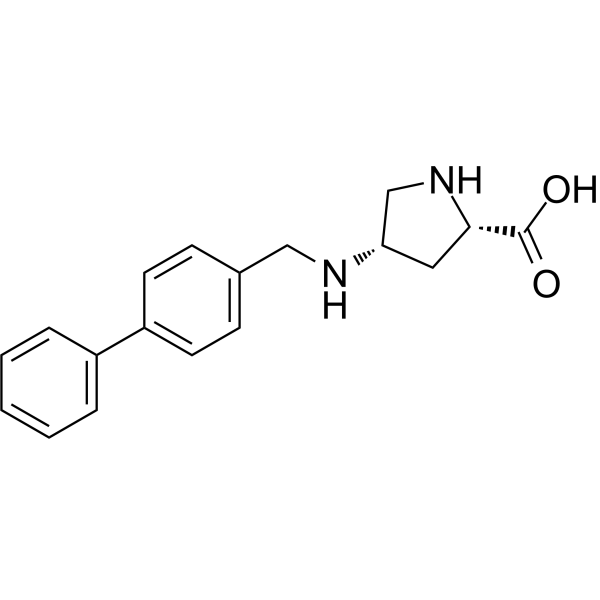
V-9302 is a competitive antagonist of transmembrane glutamine flux. V-9302 selectively and potently targets the amino acid transporter ASCT2 (SLC1A5) not ASCT1. V-9302 inhibits ASCT2-mediated glutamine uptake (IC50=9.6 μM) in HEK-293 cells .
loading...
    loading...
34
34 Publications Verification
Cat. No.: HY-112683A
CAS No.: 2416138-42-4
Purity:  99.10%
Target:  

ASCT

Research Areas:  

Cancer

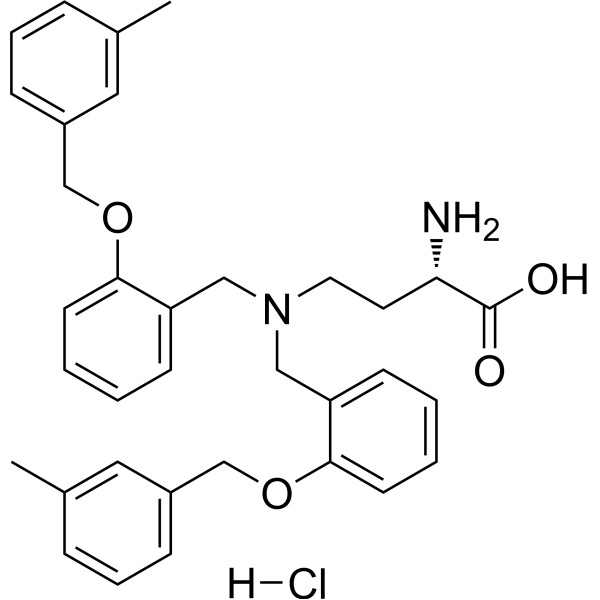
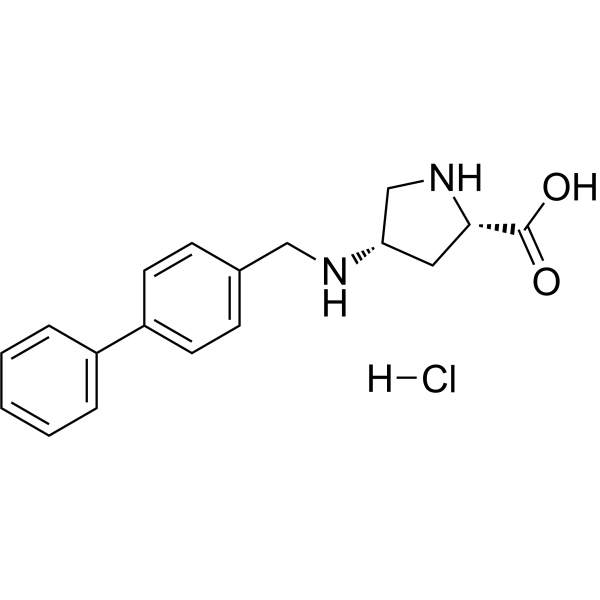
V-9302 hydrochloride is a competitive antagonist of transmembrane glutamine flux. V-9302 hydrochloride selectively and potently targets the amino acid transporter ASCT2 (SLC1A5) not ASCT1. V-9302 hydrochloride inhibits ASCT2-mediated glutamine uptake (IC50=9.6 µM) in HEK-293 cells .
loading...
    loading...
7
7 Cited Publications
Cat. No.: HY-W011391
CAS No.: 67953-08-6
Target:  

Apoptosis ASCT

Research Areas:  

Cancer

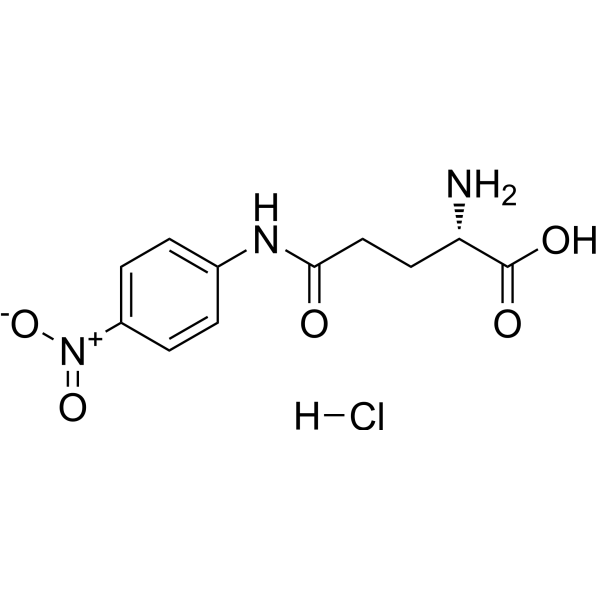
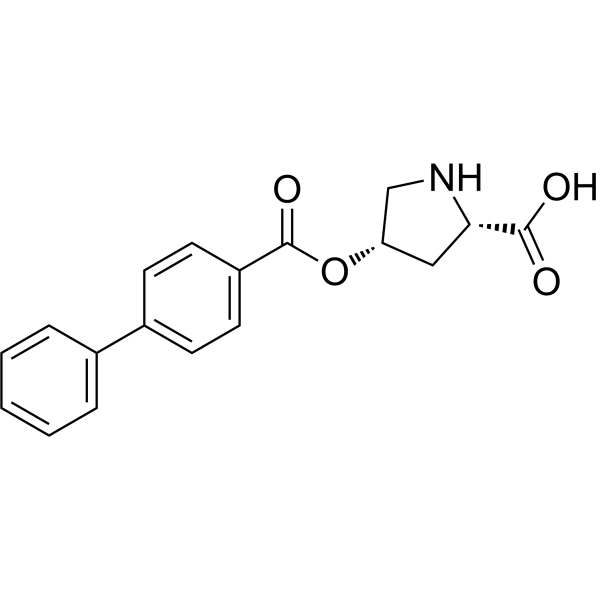
GPNA hydrochloride is a well known substrate of the enzyme γ-glutamyltransferase (GGT). GPNA hydrochloride is a specific glutamine (Gln) transporter ASCT2 inhibitor. GPNA hydrochloride also inhibit Na +-dependent carriers, such as SNAT family (SNAT1/2/4/5), and the Na +-independent leucine transporters LAT1/2. GPNA reversibly induces apoptosis in A549 cells .
loading...
    loading...
4
4 Cited Publications
Cat. No.: HY-N0327
CAS No.: 129277-38-9
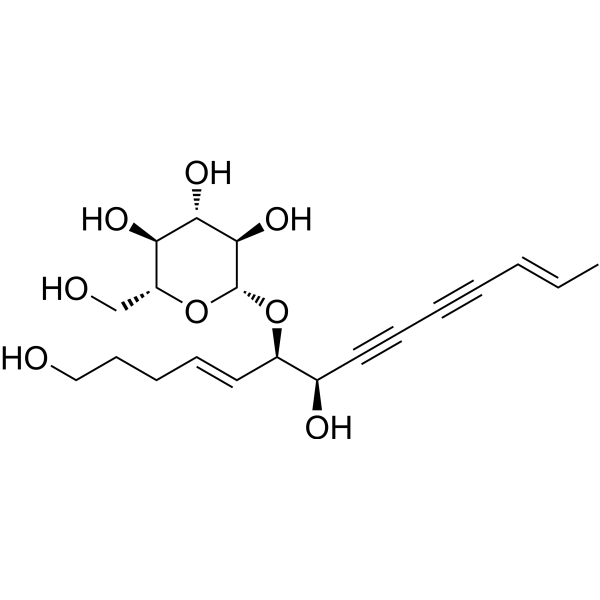
Lobetyolin, a bioactive compound, is derived from Codonopsis pilosula. Lobetyolin has anti-inflammatory, anti-oxidative and xanthine oxidase inhibiting activities. Lobetyolin also induces the apoptosis via the inhibition of ASCT2-mediated glutamine metabolism . Lobetyolin is a click chemistry reagent, it contains an Alkyne group and can undergo copper-catalyzed azide-alkyne cycloaddition (CuAAc) with molecules containing Azide groups.
loading...
    loading...
2
2 Cited Publications
Cat. No.: HY-19867A
CAS No.: 1191450-19-7
Synonyms: TG-0054 hydrobromide
Target:  

CXCR

Research Areas:  

Cardiovascular Disease Cancer

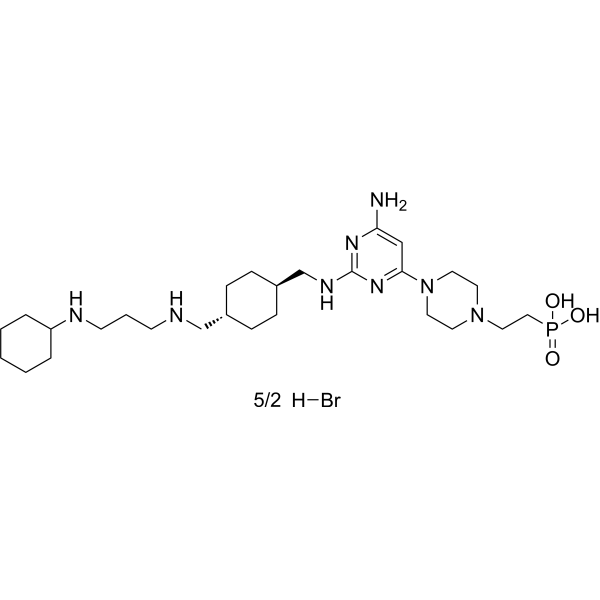
Burixafor (TG-0054) hydrobromide is a potent CXCR4 antagonist with a pIC50 of 7.4. Burixafor hydrobromide inhibits the binding of CXCL12 to CXCR4, antagonizes CXCL12-induced recruitment of Gαᵢ and β-arrestin2, and blocks the downstream Gαᵢ-mediated inhibitory effect on cAMP signal transduction. Burixafor hydrobromide mobilizes CD34 + hematopoietic stem/progenitor cells (HSPC) from the bone marrow to the peripheral blood. Burixafor hydrobromide can be used for research on autologous hematopoietic stem cell transplantation (ASCT) .
loading...
    loading...
Cat. No.: HY-P99654
CAS No.: 2245205-37-0
Synonyms: INT-001

Target:  

Inhibitory Antibodies

Research Areas:  

Cancer

Idactamab (INT-001) is an IgG1-κ antibody with in vivo activity across a spectrum of hematological malignancies. Idactamab can be used for prepare MEDI7247, a potent and specific ADC, targeting ASCT2 (SLC1A5) .
loading...
    loading...
Cat. No.: HY-163198
CAS No.: 3032651-18-3
Research Areas:  

Cancer

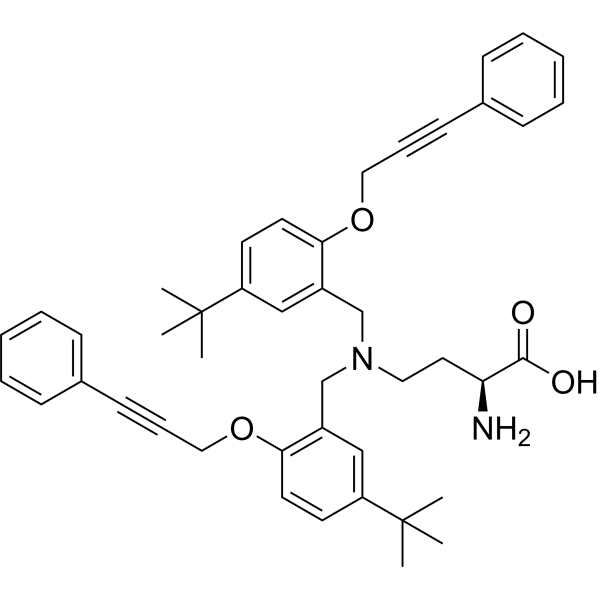
ASCT2-IN-1 (compound 20k) is an ASCT2 inhibitor with IC50 values of 5.6 μM and 3.5 μM in cells A549 and HEK293, respectively. ASCT2-IN-1 induces cell apoptosis. ASCT2-IN-1 inhibits tumor growth .
loading...
    loading...
Cat. No.: HY-146242
CAS No.: 2768663-51-8
Purity:  98.37%
Target:  

EAAT ASCT

Research Areas:  

Cancer

SN05 is a potent amino acid transport (AAT) inhibitor with Ki values of 2.77 μM, 0.73 μM, 0.87 μM, 3.7 μM, 7.25 μM, 7.23 μM and 2.22 μM for hASCT1, rASCT2, hASCT2, EAAT1, EAAT2, EAAC1 and EAAT5, respectively. SN05 can be used in the study of cancer .
loading...
    loading...
Cat. No.: HY-163199
CAS No.: 3032651-29-6
Research Areas:  

Cancer

ASCT2-IN-2 (compound 25e) is an ASCT2 inhibitor with IC50 of 5.14 μM. ASCT2-IN-2 regulates amino acid metabolism as well as mTOR signaling and thereby induces cell apoptosis. ASCT2-IN-2 inhibits tumor growth .
loading...
    loading...
Cat. No.: HY-34611
CAS No.: 25691-37-6
Synonyms: N-Boc-L-2,4-diaminobutyric acid; Boc-Dab-OH
Target:  

Drug Intermediate ASCT

Research Areas:  

Neurological Disease Cancer

Boc-L-2,4-Diaminobutyric acid (N-Boc-L-2,4-diaminobutyric acid; Boc-Dab-OH) is a versatile synthetic starting material with a cleavable protecting group. Boc-L-2,4-Diaminobutyric acid not only reduces the backbone cleavage rate by protecting the side-chain γ-amino group, but also triggers intramolecular cyclization of self-immolative linkers under acidic cleavage conditions, thus constructing stimuli-responsive materials. Boc-L-2,4-Diaminobutyric acid is also an important building block for bioactive molecules. It can be used in the synthesis of ASCT2 (SLC1A5) inhibitors and carboxynorspermine, and can also serve as an internal standard to support the quantitative detection of specific intracellular amino acids by UPLC-QQQ-MS .
loading...
    loading...
Cat. No.: HY-144354S
CAS No.: 51494-04-3
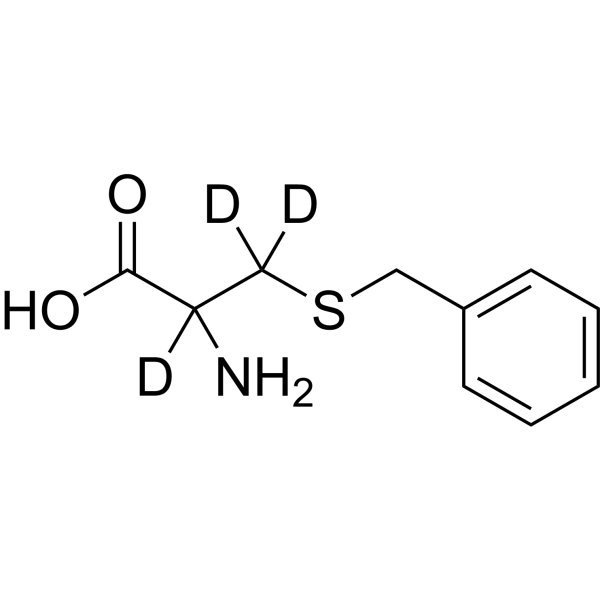
S-Benzyl-DL-cysteine-2,3,3-d3 is a deuterium labeled Benzylcysteine. Benzylcysteine is an ASCT2 inhibitor that binds to ASCT2 with an apparent Ki of 780 μM. Benzylcysteine inhibit ASCT2 function based on a competitive mechanism, indicating that Benzylcysteine binds to the substrate-binding site of ASCT2 .
loading...
    loading...
Cat. No.: HY-146241
CAS No.: 2768663-14-3
Purity:  99.26%
Target:  

EAAT ASCT

Research Areas:  

Cancer

SN40 is a potent amino acid transport (AAT) inhibitor with Kis of 7.29 μM, 2.42 μM, 2.94 μM, 5.55 μM, 24.43 μM and 5.55 μM for rat ASCT2, human ASCT2, EAAT1, EAAT2, EAAC1 and EAAT5, respectively. SN40 can be used for researching anticancer .
loading...
    loading...
Cat. No.: HY-13739
CAS No.: 58994-96-0
Synonyms: MCNU
Research Areas:  

Cancer

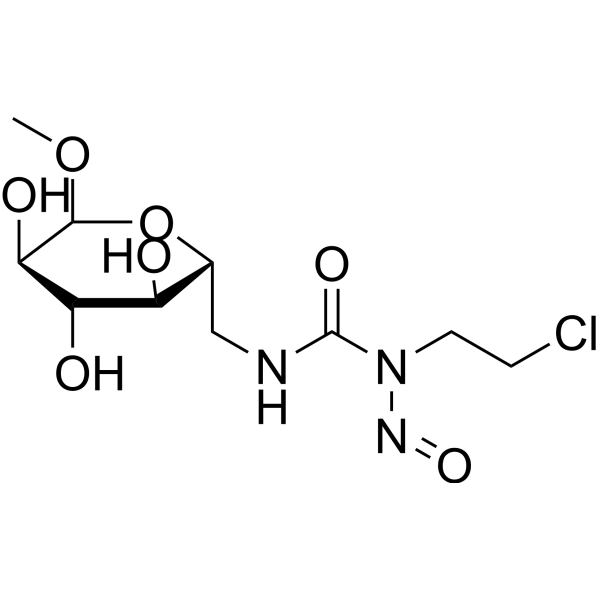
Ranimustine (MCNU) is a nitrosourea alkylating agent, can be used for research of chronic myelogenous leukemia and polycythemia vera .
loading...
    loading...
Cat. No.: HY-146241B
CAS No.: 2768663-15-4
Purity:  98.00%
Target:  

EAAT ASCT

Research Areas:  

Others

SN40 hydrochloride is a potent amino acid transport (AAT) inhibitor with Kis of 7.29 μM, 2.42 μM, 2.94 μM, 5.55 μM, 24.43 μM and 5.55 μM for rat ASCT2, human ASCT2, EAAT1, EAAT2, EAAC1 and EAAT5, respectively. SN40 hydrochloride can be used for researching anticancer .
loading...
    loading...
Cat. No.: HY-120879
CAS No.: 1609258-91-4
Target:  

Dopamine Receptor

Research Areas:  

Neurological Disease

PF2562 (Example 6), a dopamine D1 ligand, ascts as a dopamine D1 agonist or partial agonist. PF2562 binds to human D1 receptor with a Ki of 113 nM. PF2562 exhibits activity against human D1 cAMP with an EC50 of 568 nM in HTRF assay .
loading...
    loading...
Cat. No.: HY-78162
CAS No.: 567-35-1
Target:  

ASCT

cis-L-3-Hydroxyproline is an Alanine-Serine-Cysteine transporter 2 (ASCT2, SLC1A5) substrate that can induces inwardly-directed anion current, and forms key interactions with ASCT2 binding site residues including Asn471.cis-L-3-Hydroxyproline can be used for the research of melanoma .
loading...
    loading...
Cat. No.: HY-P703196
Purity:  ≥ 95%, as determined by reducing SDS-PAGE.
Synonyms: ASCT2; M7V1; RDR; RDRC
Species:  
Source:  
loading...
    loading...
Cat. No.: HY-14889
CAS No.: 222727-43-7
Research Areas:  

Cancer

Fluciclovine is an amino acid analogue that can enter cells by targeting the amino acid transporters on the cell surface (mainly ASCT2 and LAT1). After being labeled with ¹⁸F, ¹⁸F-fluciclovine can be used as an imaging agent for positron emission tomography (PET) for prostate diagnosis imaging .
loading...
    loading...
Cat. No.: HY-P704158
Purity:  ≥ 90%, as determined by reducing SDS-PAGE.
Synonyms: Neutral amino acid transporter B(0); SLC1A5; ATB(0); Baboon M7 virus receptor; RD114/simian type D retrovirus receptor; Sodium-dependent neutral amino acid transporter type 2; Solute carrier family 1 member5; ASCT2; M7V1; RDR; RDRC; AAAT; ASCT2M7VS1; M7V1ATBO; R16; RD114; RDRCFLJ31068
Species:  
Source:  
loading...
    loading...
Cat. No.: HY-19867
CAS No.: 1191448-17-5
Synonyms: TG-0054
Target:  

CXCR

Research Areas:  

Cancer

Burixafor (TG-0054) is a potent CXCR4 antagonist with a pIC50 of 7.4. Burixafor inhibits the binding of CXCL12 to CXCR4, antagonizes CXCL12-induced recruitment of Gαᵢ and β-arrestin2, and blocks the downstream Gαᵢ-mediated inhibitory effect on cAMP signal transduction. Burixafor mobilizes CD34 + hematopoietic stem/progenitor cells (HSPC) from the bone marrow to the peripheral blood. Burixafor can be used for research on autologous hematopoietic stem cell transplantation (ASCT) .
loading...
    loading...

