



Phoenixin-20

Based on 1 Customer Validation
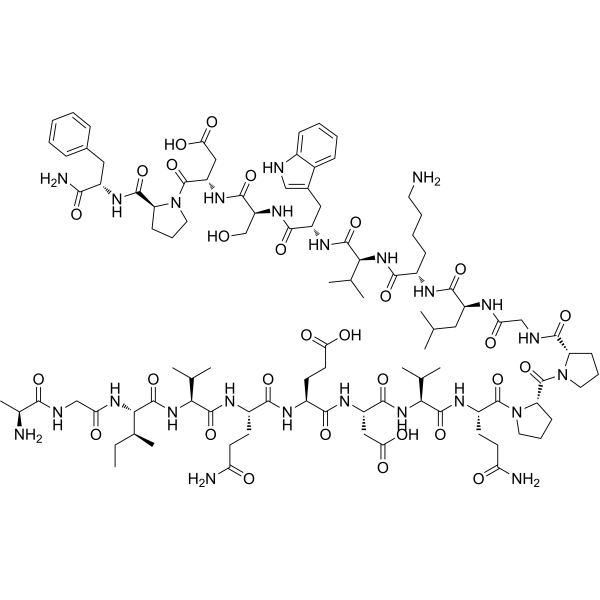
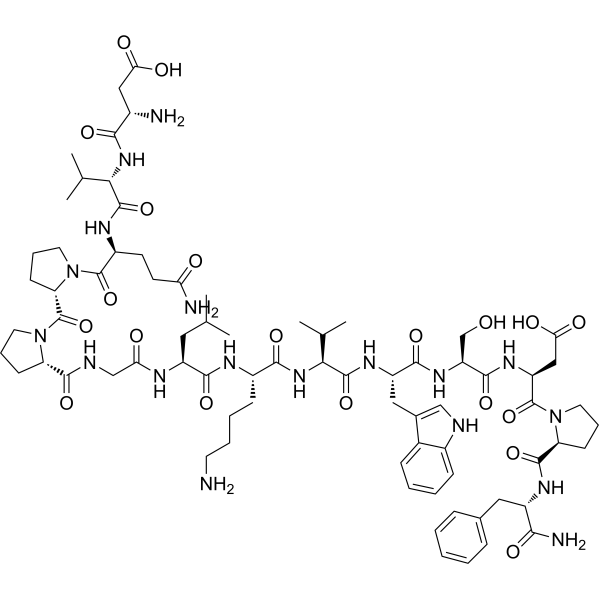
Phoenixin-20 (PNX-20) is a neuropeptide that activates GPR173. Phoenixin-20 inhibits LPS-induced TLR-4/MyD88/NF-κB signaling, pro-inflammatory cytokines, adhesion molecules, MMPs, and cytotoxicity. Phoenixin-20 increases SIRT1 and inhibits NLRP3/ASC/caspase-1, oxidative stress, and IL-1β/IL-18. Phoenixin-20 alleviates ox-LDL-induced endothelial dysfunction, monocyte adhesion, adhesion molecules, cytokines, NADPH oxidase/NOX-4, and ROS. Phoenixin-20 promotes GPR173/STAT6-mediated anti-inflammatory polarization of microglia and neuroprotection. Phoenixin-20 can be used in research on dental pulp infection, pulmonary arterial hypertension, atherosclerosis, neuroinflammation, anxiety, and neurodegenerative diseases.
For research use only. We do not sell to patients.
- Purity : 99.66%
- CAS No.: 1415039-77-8
- Formula: C101H153N25O29
- Molecular Weight:2181.45
-
Storage:
Sealed storage, away from moisture and light.
Powder -80°C, 2 years , -20°C, 1 year* In solvent : -80°C, 6 months; -20°C, 1 month (sealed storage, away from moisture and light)

To place orders, for customer services and technical support, please contact: MedChemExpress USA
Tel: 609-228-6898 E-mail: [email protected] [email protected]


-
 Biological Activity
-
Chemical Information
-
Solvent & Solubility
- Protocols
- Purity & Documentation
- References
-
 Help & FAQs


All Caspase Isoforms
More

Biological Activity
Description
|
GPR173 |
TLR4 |
NF-κB |
MyD88 |
SIRT1 |
NLRP3 |
Caspase-1 |
ASC |
IL-1β |
IL-18 |
NOX4 |
STAT6 |
In Vitro
Phoenixin-20 (15-30 nM; 24 h) attenuates LPS-induced cytotoxicity by reducing LDH release in hDPCs[1].
Phoenixin-20 (15-30 nM; 24 h) inhibits LPS-induced IL-6 and MCP-1 production in hDPCs at both mRNA and protein levels[1].
Phoenixin-20 (10-20 nM) reduces inflammatory cytokine secretion in hypoxia-treated human PMECs[2].
Phoenixin-20 (10-20 nM; 24 h) inhibits LPS-induced IL-1β and IL-18 secretion in BV2 microglial cells[6].
Phoenixin-20 (20 nM; 24 h) inhibits LPS-induced IL-1β and IL-18 production in BV2 microglia, a process that requires SIRT1 activity, and this effect can be abolished by Nicotinamide (1 mM)[6].
Phoenixin-20 (15-30 nM; 24 h) inhibits LPS-induced VCAM-1 and ICAM-1 expression in hDPCs[1].
Phoenixin-20 (15-30 nM; 24 h) inhibits LPS-induced MMP-2 and MMP-9 expression in hDPCs[1].
Phoenixin-20 (1-100 nM; 1-24 h) upregulated vitellogenin, esr2a, esr2b, and shbg mRNA expression in zebrafish liver (ZFL) cells, supporting a vitellogenic effect[9].
Phoenixin-20 (10-100 ng/mL; 24 h) stimulates oocyte maturation in zebrafish stage III follicles by increasing germinal vesicle breakdown[9].
Phoenixin-20 (5-20 nM; 48 h) dose-dependently induces PGC-1α mRNA and protein in M17 cells[10].
Phoenixin-20 (5-20 nM; 48 h) dose-dependently induces NRF-1 and TFAM mRNA and protein in M17 cells[10].
Phoenixin-20 (48 h) enhances mitochondrial respiration rate and ATP production in M17 cells[10].
Phoenixin-20 increases GPR173 mRNA approximately threefold and GPR173 protein approximately 2.5-fold in M17 cells[10].
Phoenixin-20 (15-30 nM; 24 h) inhibits LPS-induced TLR-4 and MyD88 expression in hDPCs[1].
Phoenixin-20 (15-30 nM; 24 h) inhibits LPS-induced NF-κB activation by suppressing p65 nuclear translocation and NF-κB reporter gene activity in hDPCs[1].
Phoenixin-20 (15-30 nM; 24 h) lost its inhibitory effect on LPS-induced MMP-2, MMP-9, and NF-κB activation in GPR173-silenced hDPCs, indicating that this effect requires GPR173[1].
Phoenixin-20-induced M2 polarization of BV2 microglia depends on GPR173, as GPR173 knockdown abolishes the induced expression of M2 markers[7].
Phoenixin-20 (10-20 nM) reduces MDA levels and increases SOD activity in hypoxia-treated human PMECs[2].
Phoenixin-20 (10-20 nM; 24 h) inhibits LPS-induced NOX-4 and TxNIP mRNA and restores SIRT1 mRNA in BV2 microglial cells[6].
Phoenixin-20 (10-20 nM; 24 h) inhibits LPS-induced protein expression of NOX-4, TxNIP, NLRP3, ASC, and cleaved caspase-1 (P10) and restores SIRT1 protein in BV2 microglial cells[6].
Phoenixin-20 (10-20 nM; 24 h) dose-dependently inhibits LPS-induced intracellular ROS production in BV2 microglial cells[6].
Phoenixin-20 (10-20 nM) inhibits NLRP3/ASC signaling and upregulates SIRT1 in hypoxia-treated human PMECs[2].
Phoenixin-20 (20 nM; 24 h) inhibition of NLRP3/ASC in hypoxia-treated human PMECs is mediated by SIRT1[2].
Phoenixin-20 (20 nM; 24 h) inhibits LPS-induced NLRP3 expression in BV2 microglial cells, an effect that depends on SIRT1 activity and can be abolished by Nicotinamide (HY-B0150) (1 mM)[6].
Phoenixin-20 (10-20 nM; 24 h) reduces ox-LDL-induced adhesion of THP-1 monocytes to HAECs, with a more pronounced reduction at 20 nM[3].
Phoenixin-20 (10-20 nM; 24 h) reduces ox-LDL-induced ICAM-1 and VCAM-1 expression in HAECs, with 20 nM producing a stronger inhibitory effect[3].
Phoenixin-20 (10-20 nM; 24 h) ameliorates ox-LDL-induced IL-1β, IL-8, and MCP-1 expression and secretion in HAECs[3].
Phoenixin-20 (10-20 nM; 24 h) reduces ox-LDL-induced ROS production and NOX-4 expression in HAECs[3].
Phoenixin-20 (10-20 nM; 24 h) inhibits ox-LDL-induced NF-κB activation in HAECs, and 20 nM Phoenixin-20 also reduces p-IκBα and restores total IκBα levels[3].
Phoenixin-20 (20 nM; 6 h) promotes M2 polarization in BV2 microglia, increasing Fizz1, Arg-1, YM1, IL-10, and p-STAT6[7].
Phoenixin-20 (1-100 nM; 1-2 h) regulates the mRNA expression of genes involved in glucose transport, glycolysis, gluconeogenesis, and glycogen metabolism in zebrafish liver (ZFL) cells[8].
Phoenixin-20 (100 nM; 1.5 h) increases the glycolysis-related ATP production rate in zebrafish liver (ZFL) cells without altering the total ATP production rate[8].
Phoenixin-20 (10 nM; 48 h) promotes mitochondrial biogenesis in M17 cells by increasing mtDNA/nDNA, Tomm22/Timm50/Atp5d/Ndufs3 mRNA, and NDUFB8 protein[10].
Phoenixin-20 (5-20 nM; 48 h) activates CREB, and inhibition of CREB by H89 (10 μM) prevents its effects on mitochondrial regulators and biogenesis in M17 cells[10].
MedChemExpress (MCE) has not independently confirmed the accuracy of these methods. They are for reference only.
-
Cell Line:human dental pulp cells (hDPCs)
-
Concentration:15 and 30 nM
-
Incubation Time:24 h (with 20 μg/mL LPS)
-
Result:At 15 and 30 nM, decreased LPS-induced LDH release in a dose-responsive manner.
-
Cell Line:Human pulmonary microvascular endothelial cells (PMECs)
-
Concentration:20 nM
-
Incubation Time:24 h
-
Result:Hypoxia-induced increases in NLRP3 and ASC were repressed at 20 nM, but this repression was reversed by SIRT1 knockdown.
-
Cell Line:BV2 microglial cells
-
Concentration:10 nM and 20 nM
-
Incubation Time:24 h
-
Result:LPS-induced NOX-4 mRNA was dose-responsively suppressed.
LPS-induced TxNIP mRNA was dose-responsively inhibited.
LPS-induced repression of SIRT1 mRNA was robustly ameliorated.
20 nM produced the greatest inhibition where noted.
-
Cell Line:BV2 microglial cells
-
Concentration:10 nM and 20 nM
-
Incubation Time:24 h
-
Result:LPS-induced NOX-4 protein was suppressed.
LPS-induced TxNIP protein was dose-responsively inhibited.
LPS-induced NLRP3, ASC, and cleaved caspase-1 (P10) were significantly suppressed.
20 nM showed the greatest inhibitory effect.
LPS-induced repression of SIRT1 protein was robustly ameliorated.
-
Cell Line:BV2 microglial cells
-
Concentration:10 nM and 20 nM
-
Incubation Time:24 h
-
Result:LPS-induced production of IL-1β and IL-18 was inhibited.
-
Cell Line:BV2 microglial cells
-
Concentration:20 nM (Phoenixin-20); 1 μg/mL (LPS); 1 mM (nicotinamide)
-
Incubation Time:24 h
-
Result:SIRT1 activation blockage by Nicotinamide completely abolished the inhibitory effect on LPS-induced NLRP3 expression.
-
Cell Line:BV2 microglial cells
-
Concentration:20 nM (Phoenixin-20); 1 μg/mL (LPS); 1 mM (nicotinamide)
-
Incubation Time:24 h
-
Result:SIRT1 activation blockage completely abolished the inhibitory effect on LPS-induced IL-1β and IL-18 production.
-
Cell Line:BV2 murine microglial cells
-
Concentration:20 nM (with 10 ng/mL IL-4)
-
Incubation Time:6 h
-
Result:Increased Fizz1, Arg-1, YM1, and IL-10 expression.
Increased p-STAT6 levels.
In Vivo
Phoenixin-20 (4 mg/kg; s.c.) elicits repetitive scratching behavior in male Swiss-Webster mice with pruritus[5].
Phoenixin-20 (2 µg per mouse; i.c.v. into the lateral cerebral ventricle; consecutive injection before and after induction; initiated 24 h before MCAO and maintained during the experiment) reduces brain infarction and neurological deficit and promotes an M2-like microglial marker profile in C57BL/6 MCAO mice[7].
Phoenixin-20 (100 ng/g body weight; injected; daily; 28 days) attenuates hypoxia-induced PAH in male rats, reducing hemodynamic and remodeling parameters and suppressing inflammation, oxidative stress, and NLRP3 signaling in lung tissue[2].
MedChemExpress (MCE) has not independently confirmed the accuracy of these methods. They are for reference only.
-
Animal Model:male, 7-9 weeks[2]
-
Dosage:100 ng/g body weight
-
Administration:injected; daily; 28 days
-
Result:RVSP was maintained around 20 mmHg.
mPAP was 19.17 mmHg.
RV/LV+S was 0.27.
W% was 22.16%.
TNF-α was 15.02 pg/mL.
IL-6 was around 37 pg/mL.
MCP-1 was 11.96 pg/mL.
MDA was 1.09 nmol/mg protein.
SOD activity was 67.3 U/mg protein.
-
Animal Model:male, 7-9 weeks[2]
-
Dosage:100 ng/g body weight
-
Administration:injected; daily; 28 days
-
Result:RVSP was 26.53 mmHg.
mPAP was 25.24 mmHg.
RV/LV+S was 0.31.
W% was 30.33%.
TNF-α was 22.96 pg/mL.
IL-6 was 45.32 pg/mL.
MCP-1 was 14.25 pg/mL.
MDA was 1.32 nmol/mg protein.
SOD activity was 56.4 U/mg protein.
-
Animal Model:Swiss-Webster (male, 20-25 g)[5]
-
Dosage:4 mg/kg
-
Administration:s.c.; to nape of the neck; 30 min
-
Result:Evoked 57 scratching bouts (n = 7) across 30 min.
Latency was 3-5 min and duration was 10-15 min.
-
Animal Model:C57BL/6 (male, 8-12 weeks, 25-30 g)[7]
-
Dosage:2 µg per mouse (25-30 g body weight)
-
Administration:i.c.v. into the lateral cerebral ventricle; consecutive injection before and after induction; initiated 24 h before MCAO and maintained during the experiment
-
Result:Brain infarction volume was approximately 17%, compared with about 33% in placebo MCAO mice.
Neurological deficit score averaged 17%, compared with about 33% in placebo MCAO mice.
After three days, peri-infarct brain tissue had lower CD11b, CD86, iNOS, TNF-α, and IL-6 expression and higher Fizz1, Arg-1, YM1, and IL-10 expression than placebo MCAO mice.
- Phagocytosis Functional Assay
- Research Protocol for Infectious Diseases
- LPS-Induced Endotoxemia/Systemic Inflammation
- Cell Cytotoxicity Assay
- Mammalian live/dead viability and cytotoxicity staining
- ROS/oxidative-stress fluorescent staining
- Apoptosis Solutions
- Research Protocol for Cardiovascular Diseases
- Research Protocol for Inflammation-related Diseases
- Research Protocol for Neurological Diseases
- Cell Viability Determination by MTT Colorimetric Assay
- Pyroptosis Solutions


Chemical Information
-
CAS No. 1415039-77-8
-
Appearance Solid
-
Molecular Weight 2181.45
-
Formula C101H153N25O29
-
Color White to off-white
-
Synonyms
PNX-20
-
Sequence
Ala-Gly-Ile-Val-Gln-Glu-Asp-Val-Gln-Pro-Pro-Gly-Leu-Lys-Val-Trp-Ser-Asp-Pro-Phe-NH2
-
Sequence Shortening
AGIVQEDVQPPGLKVWSDPF-NH2
-
Shipping
Room temperature in continental US; may vary elsewhere.
-
Storage
Sealed storage, away from moisture and light
Powder -80°C 2 years -20°C 1 year * In solvent : -80°C, 6 months; -20°C, 1 month (sealed storage, away from moisture and light)


Solvent & Solubility
In Vitro:
DMSO : 50 mg/mL (22.92 mM; Need ultrasonic; Hygroscopic DMSO has a significant impact on the solubility of product, please use newly opened DMSO)
Please refer to the solubility information to select the appropriate solvent. Once prepared, please aliquot and store the solution to prevent product inactivation from repeated freeze-thaw cycles.
Storage method and period of stock solution: -80°C, 6 months; -20°C, 1 month (sealed storage, away from moisture and light). When stored at -80°C, please use it within 6 months. When stored at -20°C, please use it within 1 month.
Please refer to the solubility information to select the appropriate solvent. Once prepared, please aliquot and store the solution to prevent product inactivation from repeated freeze-thaw cycles.
Storage method and period of stock solution: -80°C, 6 months; -20°C, 1 month (sealed storage, away from moisture and light). When stored at -80°C, please use it within 6 months. When stored at -20°C, please use it within 1 month.
Concentration (start) × Volume (start) = Concentration (final) × Volume (final)


Purity & Documentation
-
Data Sheet (324 KB)
-
SDS (252 KB)
- English - EN (252 KB)
- Français - FR (252 KB)
- Deutsch - DE (252 KB)
- Norwegian - NO (252 KB)
- Español - ES (252 KB)
- Swedish - SV (252 KB)
- Italian - IT (252 KB)
- Korean - KR (252 KB)
- Portuguese - PT (252 KB)
-
Handling Instructions (2659 KB)
References
[5]. Cowan A, et al. Phoenixin: A candidate pruritogen in the mouse. Neuroscience. 2015 Dec 03;310:541-8.
[9]. Rajeswari JJ, et al. Phoenixin-20 Stimulates mRNAs Encoding Hypothalamo-Pituitary-Gonadal Hormones, is Pro-Vitellogenic, and Promotes Oocyte Maturation in Zebrafish. Scientific reports. 2020 Apr 14;10(1):6264. [Content Brief]
[10]. Yang Y, et al. Phoenixin 20 promotes neuronal mitochondrial biogenesis via CREB-PGC-1α pathway. Journal of molecular histology. 2020 Apr;51(2):173-181. [Content Brief]


Complete Stock Solution Preparation Table
Please refer to the solubility information to select the appropriate solvent. Once prepared, please aliquot and store the solution to prevent product inactivation from repeated freeze-thaw cycles.
Storage method and period of stock solution: -80°C, 6 months; -20°C, 1 month (sealed storage, away from moisture and light). When stored at -80°C, please use it within 6 months. When stored at -20°C, please use it within 1 month.
| Optional Solvent | Concentration Solvent Mass | 1 mg | 5 mg | 10 mg | 25 mg |
|---|---|---|---|---|---|
| DMSO | 1 mM | 0.4584 mL | 2.2921 mL | 4.5841 mL | 11.4603 mL |
| 5 mM | 0.0917 mL | 0.4584 mL | 0.9168 mL | 2.2921 mL | |
| 10 mM | 0.0458 mL | 0.2292 mL | 0.4584 mL | 1.1460 mL | |
| 15 mM | 0.0306 mL | 0.1528 mL | 0.3056 mL | 0.7640 mL | |
| 20 mM | 0.0229 mL | 0.1146 mL | 0.2292 mL | 0.5730 mL |


Phoenixin-20 Related Classifications
HY-P5763 Related Classifications
 Powered by Bioz
Keywords
- Phoenixin-20
- 1415039-77-8
- PNX-20
- Phoenixin20
- Phoenixin 20
- PNX20
- PNX 20
- Toll-like Receptor (TLR)
- MyD88
- NF-κB
- Sirtuin
- NOD-like Receptor (NLR)
- ASCT
- Caspase
- Interleukin Related
- NADPH Oxidase
- Reactive Oxygen Species (ROS)
- STAT
- GPR173
- NLRP3
- SIRT1
- TLR-4
- atherosclerosis
- mitochondrial biogenesis
- neuroinflammation
- oxidative stress
- Inhibitor
- inhibitor
- inhibit