
1. Search Result
Search Result
Results for "

AvfkbB peptidyl-prolyl cis/trans isomerase

" in MedChemExpress (MCE) Product Catalog:

1465

Inhibitors & Agonists

1

Screening Libraries

13

Fluorescent Dyes

115

Biochemical Assay Reagents

26

Peptides

2

MCE Kits

4

Inhibitory Antibodies

432

Natural
Products

77

Recombinant Proteins

143

Isotope-Labeled Compounds

48

Antibodies

16

Click Chemistry

20

Oligonucleotides

2

GMP Molecules

Cat. No. Product Name Target Research Areas Chemical Structure
  • HY-W004500
    All-trans-retinal
    3 Publications Verification

    Endogenous Metabolite Apoptosis Metabolic Disease
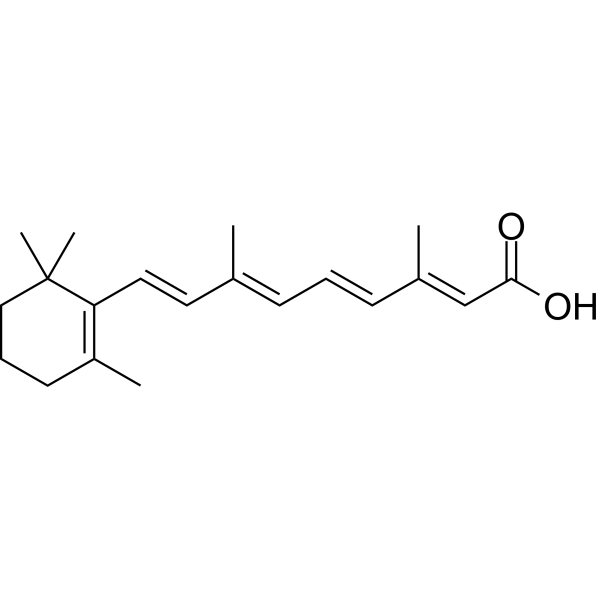
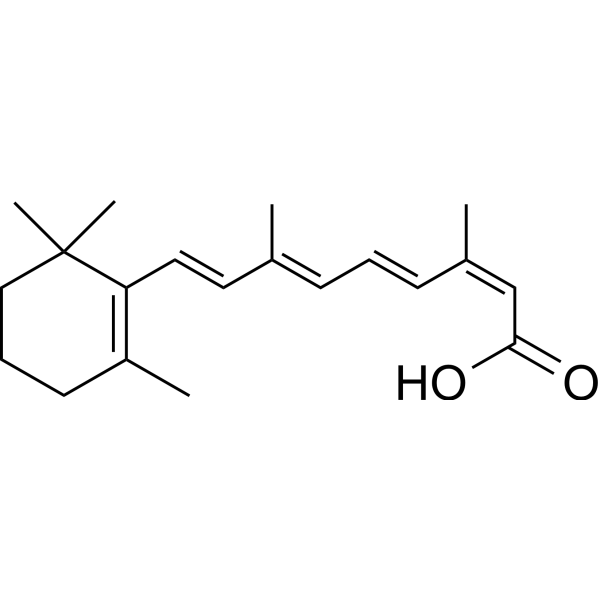
    All-trans-retinal is an vitamin A metabolite in the retina, and is produced following photo-isomerization of the visual chromophore 11-cis-Retinal. All-trans-retinal is cleared from photoreceptors by ATP-binding cassette transporter (ABCA4) and all-trans-retinol dehydrogenase (RDH). All-trans-retinal induces Bax activation via DNA damage to mediate retinal cell apoptosis .
    All-trans-retinal
  • HY-139361
    Sulfopin
    3 Publications Verification

    PIN1-3

    PIN1 Cancer
    Sulfopin (PIN1-3) is a highly selective covalent inhibitor of Pin1 with an apparent Ki of 17 nM. Sulfopin blocks Myc-driven tumors in vivo. The peptidyl-prolyl isomerase, Pin1, is exploited in cancer to activate oncogenes and inactivate tumor suppressors .
    Sulfopin
  • HY-139426
    ML-SI3
    5+ Cited Publications

    ML-SI3 (cis/trans mix)

    Parasite TRP Channel Cardiovascular Disease Neurological Disease
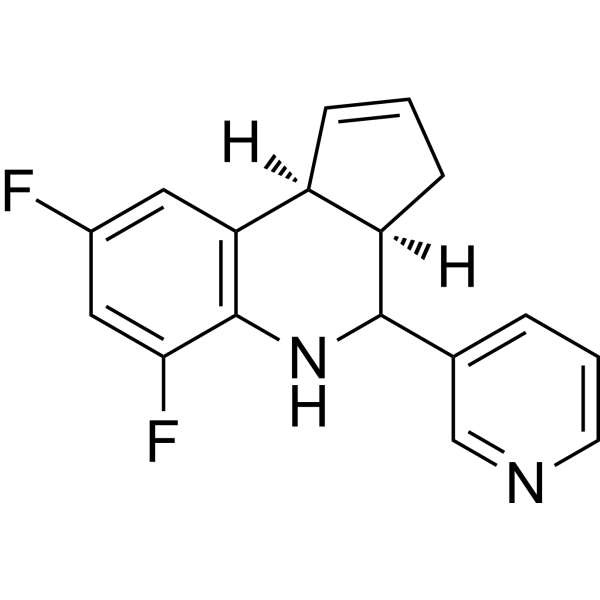
    ML-SI3 is a mixture of cis/trans ML-SI3 (HY-139426A), which is a TRPML1/2 channel inhibitor with IC50s of 4.7 μM and 1.7 μM, respectively. ML-SI3 also inhibits lysosomal calcium efflux and blocks downstream TRPML1-mediated autophagy. The cis/trans ML-SI3 (HY-139426A) components of ML-SI3 are TRPML2 activators with EC50s of 3.3 μM and 9.4 μM, respectively .
    ML-SI3
  • HY-116711

    11-cis Retinaldehyde; 11-cis Vitamin A aldehyde

    Drug Derivative Endogenous Metabolite Neurological Disease
    11-cis-Retinal (11-cis Retinaldehyde; 11-cis Vitamin A aldehyde), oxidized form of 11-cis-Retinol (HY-W587807), is a naturally occurring visual component. 11-cis-Retinal binds to opsin in the mammalian visual system as an inverse agonist forming the inactive conformation of rhodopsin. 11-cis-Retinal plays a crucial role in vision, growth and development. 11-cis-Retinal can restore visual function in moths with visual impairments. 11-cis-Retinal can restore retinal function in an early-age LCA2 retinal degeneration 12 mouse model .
    11-cis-Retinal
  • HY-P4202

    Suc-AEPF-pNA

    Biochemical Assay Reagents Others
    Suc-Ala-Glu-Pro-Phe-pNA (Suc-AEPF-pNA) is a chromogenic substrate for the peptidyl-prolyl isomerase Pin1. Suc-Ala-Glu-Pro-Phe-pNA is used to evaluate the inhibitory effect of target compounds on Pin1, the catalytic activity of Pin1, and other related assays .
    Suc-Ala-Glu-Pro-Phe-pNA
  • HY-P4581

    Suc-ALPF-pNA

    FKBP Others
    Suc-Ala-Leu-Pro-Phe-pNA (Suc-ALPF-pNA) is a synthetic polypeptide substrate that targets FK506-binding protein (FKBP). Suc-Ala-Leu-Pro-Phe-pNA can be used to determine peptidyl-prolyl cis-trans isomerase activity via the chymotrypsin-coupled assay. Suc-Ala-Leu-Pro-Phe-pNA serves as a substrate for human FK506-binding protein hFKBP-12 in the chymotrypsin-FKBP coupled PPIase assay. Suc-Ala-Leu-Pro-Phe-pNA is applicable for the detection and research of PPIase activity .
    Suc-Ala-Leu-Pro-Phe-pNA
  • HY-W000800

    Bacterial Infection
    cis,cis-Muconic acid is a dicarboxylic acid produced by Saccharomyces cerevisiae. cis,cis-Muconic acid shows pH-dependent toxicity against Saccharomyces cerevisiae CEN.PK113-7D. cis,cis-Muconic acid can be used as intermediate for the production of various plastics and polymers .
    cis,cis-Muconic acid
  • HY-116037

    Biochemical Assay Reagents Others
    cis-10-Heptadecenoic acid is a cis-fatty acid. cis-10-Heptadecenoic acid synthesizes polyhydroxy-chain alkanoates under the action of 2, 4-dienyl-CoA reductase and Delta3, Delta2-enyl-CoA isomerase .
    cis-10-Heptadecenoic acid
  • HY-116716
    PIN1 inhibitor API-1
    1 Publications Verification

    MicroRNA Cancer
    PIN1 inhibitor API-1 is a specific Pin1 (peptidyl-prolyl cis-trans isomerase NIMA-interacting 1) inhibitor (API-1) with an IC50 of 72.3 nM. PIN1 inhibitor API-1 directly and specifically binds to the Pin1 peptidyl-prolyl isomerase (PPIase) domain and potently inhibits Pin1 cis-trans isomerizing activity. PIN1 inhibitor API-1 retains the active conformation of pXPO5 and restores the ability of pXPO5 to transport pre-miRNAs from nucleus to cytoplasm, thus up-regulating the anticancer miRNA biogenesis to suppress both in vitro and in vivo hepatocellular carcinoma development .
    PIN1 inhibitor API-1
  • HY-W016813

    Parasite Infection
    trans-Aconitic acid is an orally active aconitase inhibitor that non-competitively inhibits the conversion of citric acid to cis-aconitic acid and competitively inhibits the conversion of cis-aconitic acid to isocitric acid. trans-Aconitic acid inhibits the growth of Leishmania donovani promastigotes, the transformation of Leishmania donovani amastigotes to promastigotes, and the in vitro proliferation of Leishmania donovani amastigotes within macrophages in vitro. trans-Aconitic acid can be used in research related to visceral leishmaniasis (kala-azar) .
    trans-Aconitic acid
  • HY-107425A

    PROTACs Epigenetic Reader Domain Cancer
    cis-MZ 1 is a cis isomer of meso-zeaxanthin, a xanthophyll carotenoid component of total zeaxanthin measured in serum and egg yolks.cis-MZ 1 is a triphenyltin benzoate that adopts either a tetrahedral monomeric structure (I) or a trans-SnR3O2 polymeric structure (III), with structure determined by a balance of steric and electronic factors .
    cis-MZ 1
  • HY-113247

    Drug Metabolite Others
    trans-trans-Muconic acid is a urinary metabolite of Benzene. trans-trans-Muconic acid serves as a urinary biomarker for occupational benzene exposure .
    trans-trans-Muconic acid
  • HY-129554

    cis-9,10-Epoxyoctadecanoic acid

    Endogenous Metabolite Others
    cis-9,10-Epoxystearic acid (cis-9,10-Epoxyoctadecanoic acid) is an endogenous metabolite that can be found in plasma and urine .
    cis-​9,​10-​Epoxystearic acid
  • HY-P2931

    TPI

    Biochemical Assay Reagents Metabolic Disease Cancer
    Triosephosphate isomerase (TPI) is a biocatalyst that interconverts dihydroxyacetone phosphate and D-glyceraldehyde-3-phosphate. Triosephosphate isomerase utilises Glu167 as catalytic base, mediates proton shuttling, and stabilises a cis-enediolate intermediate via loop-6 and loop-7 closure to shield its catalytic site. Triosephosphate isomerase can be used for the research of triosephosphate isomerase deficiency .
    Triosephosphate isomerase
  • HY-E70308

    Endogenous Metabolite Others
    Glucose isomerase (immobilized) is glucose isomerase, which catalyzes the reversible isomerization of D-glucose and D-xylose into D-fructose and D-xylulose, respectively. Glucose isomerase (immobilized) can be used to produce fructose syrup under high-temperature conditions above 90 ℃. Glucose isomerase (immobilized) is widely distributed in prokaryotes .
    Glucose isomerase (immobilized)
  • HY-W127515

    Violet leaf aldehyde

    Environmental Pollutants Biochemical Assay Reagents Others
    Trans-2, cis-6-NonadienalIt is an organic compound belonging to aldehydes. It has a strong, pungent smell and is commonly found in a variety of foods, including fruits and vegetables. Trans-2, cis-6-NonadienalIt has a variety of applications in the flavor and fragrance industry, especially as a fragrance agent in products such as perfume, cologne and air fresheners. In addition, it can also be used as an intermediate in the synthesis of various chemicals and drugs.
    Trans-2,cis-6-Nonadienal
  • HY-135163

    (5E)-Latanoprost; 5,6-trans-Latanoprost

    Prostaglandin Receptor Others
    trans-Latanoprost (5,6-trans-Latanoprost) is the trans isomer of Latanoprost (HY-B0577). trans-Latanoprost is promising for research of glaucoma and high eye pressure .
    trans-Latanoprost
  • HY-P2918

    GPI; Phosphoglucose isomerase

    Endogenous Metabolite Metabolic Disease Cancer
    Phosphoglucose Isomerase, Rabbit muscle (GPI), i.e., phosphoglucose isomerase/phosphoglucoisomerase (PGI) or phosphohexose isomerase (PHI), is often used in biochemical studies. Glucose 6-phosphate isomeras is a highly conserved glycolytic and dimeric enzyme. Glucose 6-phosphate isomeras catalyzes the reversible isomerization of glucose-6-phosphate to fructose-6-phosphate .
    Phosphoglucose Isomerase, Rabbit muscle
  • HY-N0684A

    cis-Phylloquinone; cis-Phytomenadione

    Drug Isomer Cardiovascular Disease
    cis-Vitamin K1 (cis-Phylloquinone; cis-Phytomenadione) is an isomer of Vitamin K1 (HY-N0684) that can be used for the synthesis of Vitamin K1 (HY-N0684) .
    cis-Vitamin K1
  • HY-133823

    C16:1 (cis-11/trans-11) Fatty acid

    Endogenous Metabolite Metabolic Disease
    11-Hexadecenoic acid is a monounsaturated fatty acid. 11-cis-Hexadecenoic acid and 11-trans-hexadecenoic acid have been found in ewe milk fat, and levels of each increase with dietary lipid supplementation of linseed, sunflower, olive, or fish oils. 11-trans-Hexadecenoic acid has also been found in intramuscular fat samples isolated from male and female foals. This product is a mixture of 11-cis- and 11-trans-hexadecenoic acids.
    11-Hexadecenoic acid
  • HY-119254A

    Epigenetic Reader Domain Metabolic Disease
    trans-BAY-850 is the trans isomer of BAY-850 (HY-119254). BAY-850 is a potent and isoform selective ATPase family AAA domain-containing protein 2 (ATAD2) inhibitor, with an IC50 of 166 nM.
    trans-BAY-850
  • HY-W128533

    2-Octen-1-ylsuccinic anhydride

    Biochemical Assay Reagents Others
    2-Octen-1-ylsuccinic anhydride, mixture of cis and trans (2-Octen-1-ylsuccinic anhydride) can be used to prepare amphiphilic pectin oligosaccharide (POS) derivatives .
    2-Octen-1-ylsuccinic anhydride,mixture of cis and trans
  • HY-W012192

    (E,E)-Dibenzylideneacetone; trans,trans-Dibenzalacetone

    Parasite Infection
    trans,trans-Dibenzylideneacetone ((E,E)-Dibenzylideneacetone) (compound A1) is a dibenzylideneacetone with a week antimalarial activity. trans,trans-Dibenzylideneacetone inhibits P. falciparum 3D7 strain with an IC50 of 213.41 μM .
    trans,trans-Dibenzylideneacetone
  • HY-P4359

    PIN1 Others
    Suc-AEPF-AMC is a peptide substrate of Pin1 and Par14 peptidyl prolyl isomerase .
    Suc-AEPF-AMC
  • HY-P2927

    PDI Cardiovascular Disease
    Protein disulfide isomerase is a prototypic thiol isomerase that catalyzes the formation and cleavage of thiol-disulfide bonds during protein folding in the endoplasmic reticulum (ER). Protein disulfide isomerase can be used for the study of cardiovascular diseases .
    Protein disulfide isomerase
  • HY-145670

    Akt MDM-2/p53 Cancer
    cis,trans-Germacrone is a isomer of Germacrone (HY-N0440). Germacrone exhibits a wide range of antitumor, antioxidant and anti-inflammatory effects. Germacrone inhibits lung cancer cell proliferation and alters the Akt/MDM2/p53. Germacrone also arrests cell cycle at G1/S phase .
    cis,trans-Germacrone
  • HY-116037A

    Others Others
    trans-10-Heptadecenoic acid is a trans-fatty acid. trans-10-Heptadecenoic acid synthesizes polyhydroxy-chain alkanoates under the action of 2, 4-dienyl-CoA reductase and Delta3, Delta2-enyl-CoA isomerase. In the absence of 2, 4-dienyl-CoA reductase, trans-10-Heptadecenoic acid is degraded by enyl-CoA hydratase II of the multifunctional enzyme (MFE). trans-10-Heptadecenoic acid leads to massive intracellular carbon outflow through reductase dependent and direct MFE dependent pathways .
    trans-10-Heptadecenoic acid
  • HY-P2930

    Biochemical Assay Reagents Others
    Peptidylprolyl isomerase is an enzyme that catalyzes the cis-trans isomerization of peptidylprolyl amino groups. Peptidylprolyl isomerase may be involved in cellulase modification. Peptidylprolyl isomerase also functions as a chaperone protein .
    Peptidylprolyl isomerase
  • HY-E70022

    Others Others
    D-Mannose isomerase (PsMaSeAF) is a carbohydrate isomerase catalyzing the reversible isomerization of d-mannose to d-fructose. D-Mannose isomerase (PsMaSeAF) belongs to the N-acylglucosamine 2-epimerase (AGE) superfamily along with AGE, cellobiose 2-epimerase (CE), and aldose-ketose isomerase (AKI) .
    D-Mannose isomerase (PsMaSeAF)
  • HY-128592

    PIN1 Cancer
    TAB29 is a potent inhibitor of peptidyl-prolyl cis-trans isomerase NIMA-interacting 1 (Pin1) with an IC50 of 874 nM, possesses therapeutic potential for human cancers .
    TAB29
  • HY-P3480

    Fluorescent Dye Others
    H-Trp-Phe-Tyr-Ser(PO3H2)-Pro-Arg-pNA is a chromogenic substrate for Pin1. Pin1 is an essential and conserved mitotic peptidyl-prolyl isomerase, and can recognize the phosphoserine-proline bonds present in mitotic phosphoproteins .
    H-Trp-Phe-Tyr-Ser(PO3H2)-Pro-Arg-pNA
  • HY-N8356A

    9-cis-Retinyl palmitate

    Endogenous Metabolite Others
    9-cis-Vitamin A palmitate (9-cis-Retinyl palmitate) is a 9-cis isomer formed by vitamin A palmitate in corn flakes. 9-cis-Vitamin A palmitate has a biological activity of 26% of all-trans-vitamin A palmitate, the most biologically ac-tive form of vitamin A .
    9-cis-Vitamin A palmitate
  • HY-P2886

    Phosphoriboisomerase

    Biochemical Assay Reagents Others
    Ribose-5-phosphate isomerase (Phosphoriboisomerase) exists widely in microorganisms, animals and plants. It is the first enzyme in the non-oxidative phase of the pentose phosphate pathway (PPP) and also a key enzyme in the Calvin cycle (photosynthetic carbon fixation). Ribose-5-phosphate isomerase catalyzes the reversible isomerization between D-ribulose-5-phosphate (Ru5P) and D-ribose-5-phosphate (R5P). Ribose-5-phosphate isomerase acts as a multifunctional biocatalyst for rare sugar production. Ribose-5-phosphate isomerase serves as a target for antitrypanosomal agents .
    Ribose-5-phosphate isomerase
  • HY-P2918B

    Endogenous Metabolite Metabolic Disease
    Phosphoglucose isomerase, bacillus stearothermophilus is a highly conserved glycolytic and dimeric enzyme. Phosphoglucose isomerase, bacillus stearothermophilus catalyzes the reversible isomerization of glucose-6-phosphate to fructose-6-phosphate .
    Phosphoglucose isomerase, Baker's Yeast
  • HY-P2918A

    Endogenous Metabolite Metabolic Disease
    Phosphoglucose isomerase, bacillus stearothermophilus is a highly conserved glycolytic and dimeric enzyme. Phosphoglucose isomerase, bacillus stearothermophilus catalyzes the reversible isomerization of glucose-6-phosphate to fructose-6-phosphate .
    Phosphoglucose isomerase, bacillus stearothermophilus
  • HY-CE01647

    cis-3-Octenoyl-coenzyme A

    Biochemical Assay Reagents Metabolic Disease
    cis-3-Octenoyl-CoA (cis-3-Octenoyl-coenzyme A) is a coenzyme A derivative .
    cis-3-Octenoyl-CoA
  • HY-W749980
    Coronaric acid
    1 Publications Verification

    cis-9,10-Epoxy-cis-12-octadecenoic acid

    Drug Derivative Metabolic Disease
    Coronaric acid (cis-9,10-Epoxy-cis-12-octadecenoic acid) is an ester product.
    Coronaric acid
  • HY-170766

    PIN1 Others
    PIN1 inhibitor 4 (compound 6a) is a covalent inhibitor of peptidyl-prolyl isomerase Pin1, with IC50=3.15 μM .
    PIN1 inhibitor 4
  • HY-167579

    Biochemical Assay Reagents
    4-trans,7-cis,10-cis,13-cis,16-cis,19-cis-Docosahexaenoic acid is a kind of biochemical reagent.
    4-trans,7-cis,10-cis,13-cis,16-cis,19-cis-Docosahexaenoic acid
  • HY-125182

    Cyclophilin HCV Infection
    SMCypI C31 is a non-peptidic cyclophilin inhibitor with potent peptidyl-prolyl cis/trans isomerases (PPIase) inhibitory activity (IC50 of 0.1 µM). SMCypI C31 shows pangenotype anti-HCV activity with EC50s ranging from 1.20 to 7.76 μM for genotype 1a, 1b, 2a, 3a, and 5a HCV subgenomic replicons (HCV-SGRs) and chimeric genotype 2a/4a HCV-SGRs. SMCypI C31 disrupts the cyclophilin A-NS5A interaction .
    SMCypI C31
  • HY-143902

    PIN1 Cancer
    ZL-Pin01 is a high potent covalent Pin1 (Peptidyl-Prolyl Isomerase NIMA-Interacting-1) inhibitor. ZL-Pin01 shows potent disruption of the Pin1-substrate interaction with an IC50 of 1.33 μM .
    ZL-Pin01
  • HY-CE00784

    2-trans-9,12,15,18-all-cis-Tetracosapentaenoyl-coenzyme A

    Biochemical Assay Reagents Metabolic Disease
    2-trans-9,12,15,18-all-cis-Tetracosapentaenoyl-CoA (2-trans-9,12,15,18-all-cis-Tetracosapentaenoyl-coenzyme A) is a coenzyme A derivative.
    2-trans-9,12,15,18-all-cis-Tetracosapentaenoyl-CoA
  • HY-143903

    PIN1 Cancer
    ZL-Pin13 is a high potent cell-active covalent inhibitor targeting the Pin1 (Peptidyl-Prolyl Isomerase NIMA-Interacting-1) with an IC50 of 67 nM. ZL-Pin13 effectively inhibits the proliferation and downregulated the Pin1 substrates in MDA-MB-231 cells .
    ZL-Pin13
  • HY-W700726

    Isotope-Labeled Compounds Others
    cis-Atovaquone-d5 (contains 10% trans isomer) is the deuterium labeled cis-Atovaquone.
    cis-Atovaquone-d5 (contains 10% trans isomer)
  • HY-P10411

    Bacterial Infection
    BING is an antimicrobial peptide that can be isolated from Japanese medaka fish. BING shows a broad-spectrum toxicity against pathogenic bacteria including drug-resistant strains. BING induces a deregulation of periplasmic peptidyl-prolyl isomerases in gram-negative bacteria, and reduces the RNA level of cpxR, which plays a crucial role in the development of antimicrobial resistance .
    BING
  • HY-W127515S

    Violet leaf aldehyde-13C2

    Biochemical Assay Reagents Isotope-Labeled Compounds Others
    trans-2,cis-6-Nonadienal- 13C2 is 13C labeled trans-2,cis-6-Nonadienal (HY-W127515). Trans-2, cis-6-NonadienalIt is an organic compound belonging to aldehydes. It has a strong, pungent smell and is commonly found in a variety of foods, including fruits and vegetables. Trans-2, cis-6-NonadienalIt has a variety of applications in the flavor and fragrance industry, especially as a fragrance agent in products such as perfume, cologne and air fresheners. In addition, it can also be used as an intermediate in the synthesis of various chemicals and drugs.
    trans-2,cis-6-Nonadienal-13C2
  • HY-CE00760

    2,4-Decadienoyl-coenzyme A

    Biochemical Assay Reagents Metabolic Disease
    2-trans-4-cis-Decadienoyl-CoA (2,4-Decadienoyl-coenzyme A) is an unsaturated fatty acyl-CoA.
    2-trans-4-cis-Decadienoyl-CoA
  • HY-12135

    Polo-like Kinase (PLK) PIN1 STAT Cancer
    Poloxipan is a pan-specific polo-like kinase (PLK) inhibitor that can inhibit a non-catalytic region at the C-terminus called the Polo-box domain (PBD) found in kinases. The IC50 values for Poloxipan against the PBDs of PLK-1/2/3 are 3.2 μM, 1.7 μM, and 3.0 μM, respectively. Poloxipan also inhibits other phospho-tyrosine binding domains, such as the forkhead-associated (FHA) domain of CHK-2, the WW domain of peptidyl-prolyl cis/trans isomerase (PIN1), and the phospho-tyrosine binding domains of STAT1/3/5 and lymphocyte-specific protein tyrosine kinase's SH2 domain. Poloxipan can be used in cancer research .
    Poloxipan
  • HY-151892S

    Isotope-Labeled Compounds Others
    Glimepiride-d4(phenylethyl-α,α,β,β-d4)(cis/trans) is the deuterium labeled .
    Glimepiride-d4(phenylethyl-α,α,β,β-d4)(cis/trans)
  • HY-P4202A

    Suc-AEPF-pNA TFA

    Biochemical Assay Reagents Others
    Suc-Ala-Glu-Pro-Phe-pNA (Suc-AEPF-pNA ) TFA is a chromogenic substrate for the peptidylprolyl isomerase Pin1. Suc-Ala-Glu-Pro-Phe-pNA TFA can be used to evaluate the inhibitory effect of the target compound on Pin1, and catalytic activity of Pin1, etc .
    Suc-Ala-Glu-Pro-Phe-pNA TFA

Inquiry Online

Your information is safe with us. * Required Fields.

Salutation


Country or Region *

Applicant Name *


Organization Name *

Department *


Email Address *


Product Name *

Cat. No.


Requested quantity *

Phone Number *


Remarks

Inquiry Online

Inquiry Information

Product Name:
Cat. No.:
Quantity:
MCE Japan Authorized Agent:

