Search Result
Results for "
Chelators
" in MedChemExpress (MCE) Product Catalog:
177
Biochemical Assay Reagents
9
Isotope-Labeled Compounds
| Cat. No. |
Product Name |
Target |
Research Areas |
Chemical Structure |
-
- HY-D0861
-
|
|
Biochemical Assay Reagents
|
Inflammation/Immunology
|
|
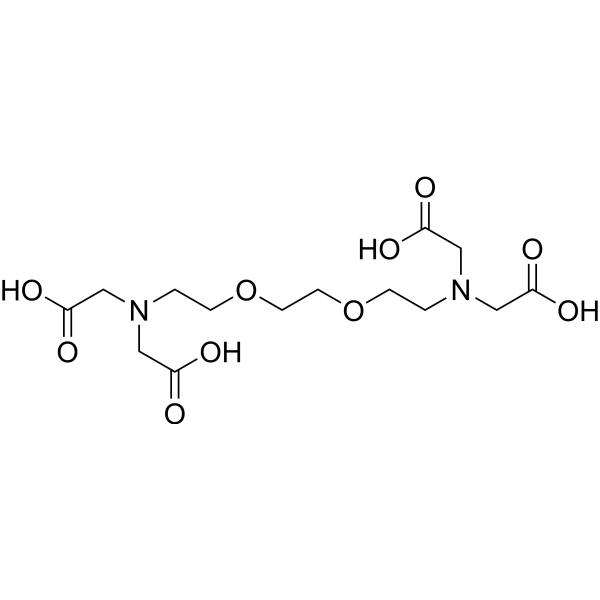
EGTA is a cell-impermeant specific calcium ion chelator. EGTA has an apparent calcium dissociation constant (Kd) of 60.5 nM at physiological pH (7.4) and has very high specificity for Ca 2+ over Mg 2+ (Mg 2+ Kd 1-10 mM). EGTA significantly inhibits the substrate adherence capacity of inflammatory macrophages .
|
-
-
- HY-100168
-
|
|
Phospholipase
|
Others
|
|
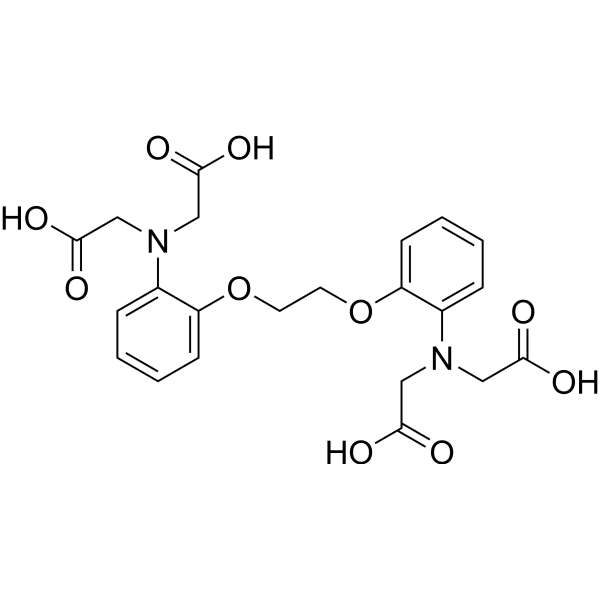
BAPTA is a selective and cell-impermeant chelator for calcium. BAPTA has high selectivity against magnesium and calcium. BAPTA can also inhibit phospholipase C activity independently of their role as Ca 2+ chelators .
|
-
-
- HY-17359
-
|
ICL 670
|
Bacterial
Ferroptosis
|
Cancer
|
|
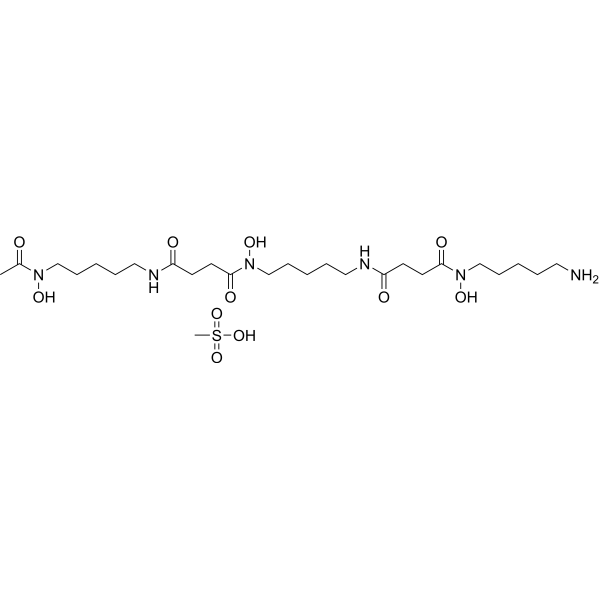
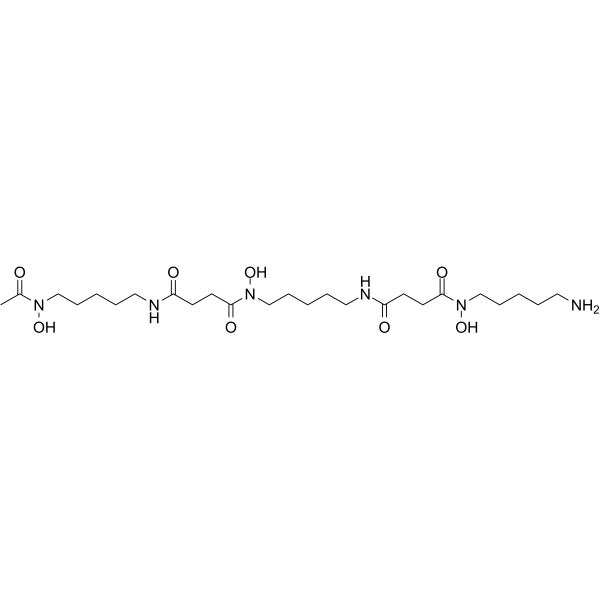
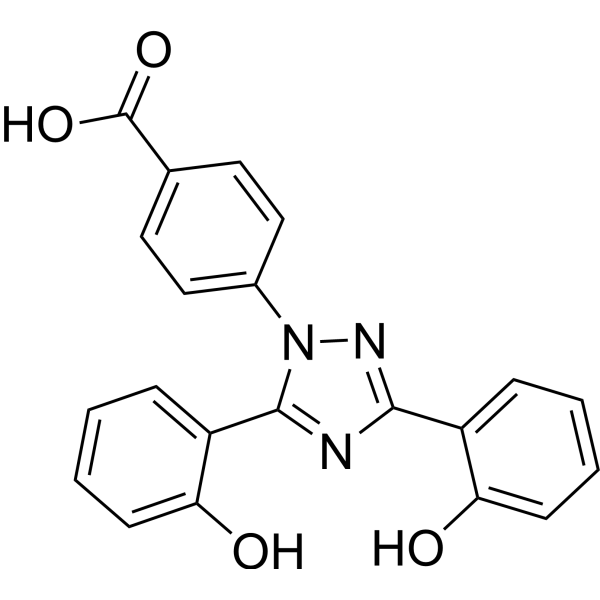
Deferasirox (ICL 670) is an orally available iron chelator used for the management of transfusional iron overload .
|
-
-
- HY-D0973
-
|
EGTA Acetoxymethyl ester
|
Biochemical Assay Reagents
|
Neurological Disease
|
|
EGTA-AM is a membrane permeable form of EGTA, can be passively loaded into cells to generate intracellular EGTA; EGTA-AM is also a Ca 2+ chelator with slow chelating dynamics.
|
-
-
- HY-159181
-
|
|
Biochemical Assay Reagents
|
Others
|
|
p-NCS-Bz-DOTA-GA is a bifunctional chelator. p-NCS-Bz-DOTA-GA can be used as a versatile linker in targeted molecular imaging for both PET/SPECT and MRI applications .
|
-
-
- HY-D0261
-
-
-
- HY-N0928
-
|
|
Apoptosis
|
Inflammation/Immunology
Cancer
|
|
Mimosine, a tyrosine analog , can act as an antioxidant by its potent iron-binding activity . Mimosine is a known chelator of Fe(III) . Mimosine induces apoptosis through metal ion chelation, mitochondrial activation and ROS production in human leukemic cells . Anti-cancer, antiinflammation.
|
-
-
- HY-16739
-
-
-
- HY-100168A
-
|
|
Phospholipase
|
Others
|
|
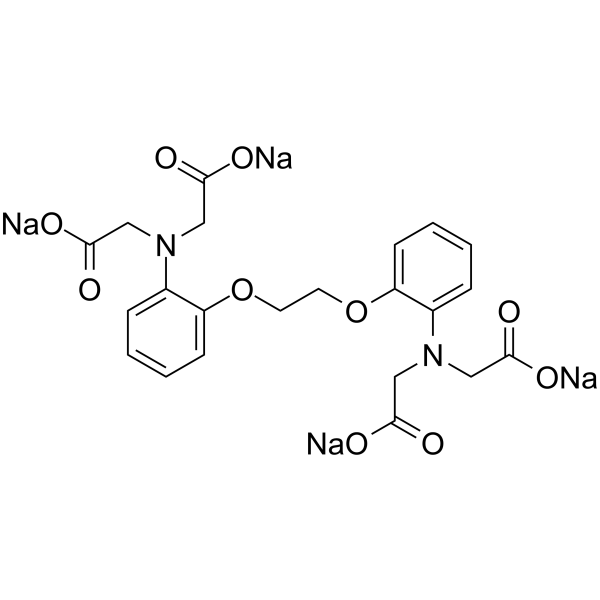
BAPTA tetrasodium is a selective and cell-impermeant chelator for calcium. BAPTA tetrasodium has high selectivity against magnesium and calcium. BAPTA can also inhibit phospholipase C activity independently of their role as Ca 2+ chelators .
|
-
-
- HY-133513
-
|
(±)-H3L28
|
Drug Derivative
|
Cancer
|
|
(±)-H3RESCA-TFP ((±)-H3L28) is a tetrafluorophenyl ester derivative of restrained complexing agent (RESCA). (±)-H3RESCA-TFP can be used to conjugate the chelator with a biomolecule via amine coupling (e.g., N terminus and/or the ε-amino groups of lysine) .
|
-
-
- HY-138123
-
|
|
Biochemical Assay Reagents
|
Others
|
|
Fmoc-Glu(OtBu)-OSu is used for synthesizing N3S chelators and double branched and triple branched carboxyl terminated polyethylene glycol reagents .
|
-
-
- HY-128370
-
|
Ca-DTPA trisodium salt hydrate
|
CMV
|
Infection
|
|
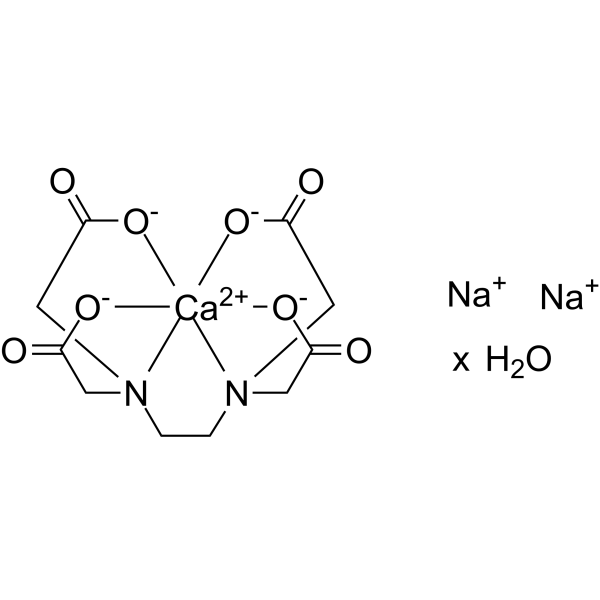
Calcium trinatrium diethylenetriaminepentaacetic acid hydrate (Ca-DTPA trisodium salt hydrate) is a metal chelator and a useful antidote (such as acute cadmium intoxication). Diethylenetriaminepentaacetic acid calcium trisodium salt hydrate is a nontoxic inhibitor of CMV replication .
|
-
-
- HY-20512
-
|
|
Biochemical Assay Reagents
|
Others
|
|
N,N'-Dibenzylethylenediamine forms chelator with metals. N,N'-Dibenzylethylenediamine interacts with penicillin, forms a stable and tasteless salt of penicillin .
|
-
-
- HY-131060
-
|
CN328
|
Ferroptosis
|
Others
|
|
CN128 hydrochloride (CN328) is an orally active and selective iron chelator. CN128 is used for the research of β-thalassemia .
|
-
-
- HY-W539916
-
-
-
- HY-D0861A
-
|
|
Biochemical Assay Reagents
|
Inflammation/Immunology
|
|
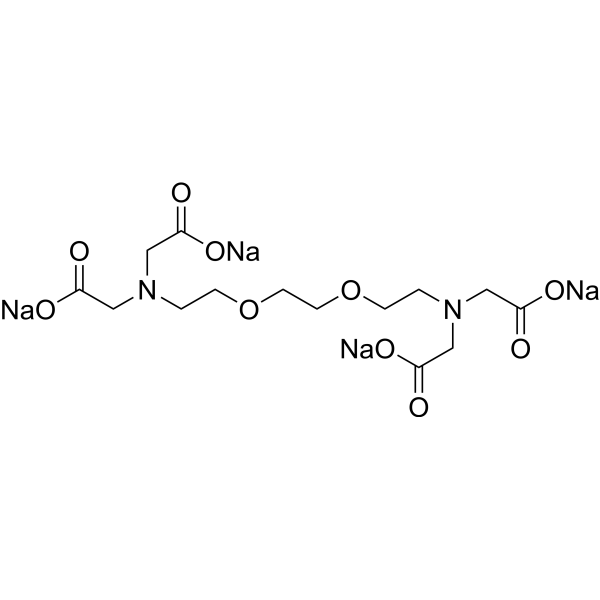
EGTA tetrasodium is a cell-impermeant specific calcium ion chelator. EGTA tetrasodium has an apparent calcium dissociation constant (Kd) of 60.5 nM at physiological pH (7.4) and has very high specificity for Ca 2+ over Mg 2+ (Mg 2+ Kd 1-10 mM). EGTA tetrasodium significantly inhibits the substrate adherence capacity of inflammatory macrophages .
|
-
-
- HY-108260
-
|
GT-56-252
|
Ferroptosis
|
Cardiovascular Disease
|
|
Deferitrin (GT-56-252), a desferrithiocin (DFT) analogue, is an orally active trident iron chelator. Deferitrin is used for chronic iron overload due to transfusional therapy. Deferitrin has the potential for beta-thalassemia major .
|
-
-
- HY-100168B
-
|
|
Phospholipase
|
Others
|
|
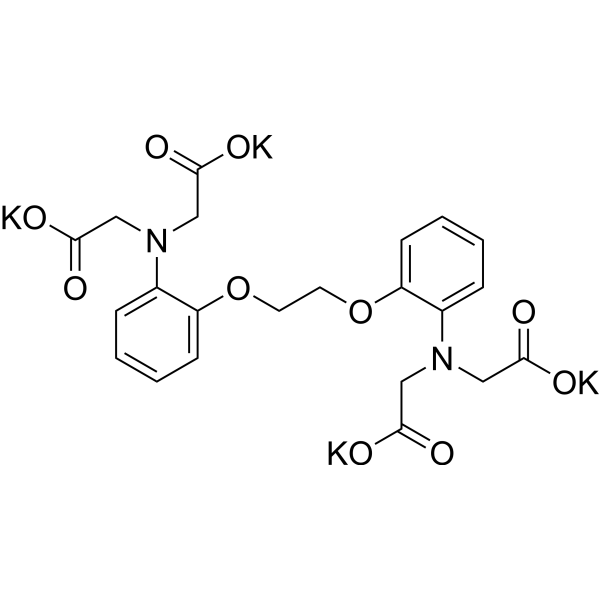
BAPTA tetrapotassium is a selective and cell-impermeant chelator for calcium. BAPTA has high selectivity against magnesium and calcium. BAPTA tetrapotassium can also inhibit phospholipase C activity independently of their role as Ca 2+ chelators .
|
-
-
- HY-W749603
-
|
|
Biochemical Assay Reagents
Radionuclide-Drug Conjugates (RDCs)
|
Cancer
|
|
Fmoc-L-Lys-mono-amide-DOTA-tris(t-Bu ester) is a bifunctional chelator (Bifunctional Chelator; BFC) and a macrocyclic DOTA derivative used for tumor pre-targeting. Fmoc-L-Lys-mono-amide-DOTA-tris(t-Bu ester) can be used for conjugation of peptides and radionuclides.
|
-
-
- HY-100133A
-
|
|
Integrin
|
Cancer
|
|
DOTA-ADIBO TFA is a DOTA-derived bifunctional chelator (BFC) that allows drug conjugation via an uncatalyzed, copper-free cycloaddition reaction. DOTA-ADIBO TFA enables the construction of fusion chelator systems that can be further used to synthesize radiotracers after Cu[64] modification. Positron emission tomography imaging of tumors expressing integrin αvβ6 .
|
-
-
- HY-114837
-
|
|
Ferroptosis
|
Cancer
|
|
HBED is a potent iron chelator. HBED can be used to study transfusional iron overload .
|
-
-
- HY-D0179
-
|
|
Biochemical Assay Reagents
|
Infection
Cardiovascular Disease
|
|
Cyclam is a metal chelator that forms metal complexes with a variety of metal ions. Cyclam metal complexes exhibits anti-HIV (such as AMD3100), nitric oxide (NO) releasing and scavenging (such as Zn(II)-Cyclam and Ru(II)-Cyclam), and SOD mimetic (such as Mn(III)-Cyclam and Zn(II)-Cyclam) activities .
|
-
-
- HY-W678394
-
|
|
Biochemical Assay Reagents
|
Others
|
|
DOTA-Thiolis a bifunctional chelator (Bifunctional Chelator; BFC) and a macrocyclic DOTA derivative used for tumor pre-targeting. DOTA-Thiol can be used for conjugation of peptides and radionuclides.
|
-
-
- HY-48876
-
|
|
Biochemical Assay Reagents
|
Others
|
|
p-NH2-Bn-DOTAis a bifunctional chelator (Bifunctional Chelator; BFC) and a macrocyclic DOTA derivative used for tumor pre-targeting. p-NH2-Bn-DOTA can be used for conjugation of peptides and radionuclides.
|
-
-
- HY-124452
-
|
Desferrioxamine E; Nocardamin
|
Bacterial
|
Others
|
|
Nocardamine (Deferrioxamine E)is an iron carrier/Iron chelator with antimicrobial activity .
|
-
-
- HY-W102590
-
|
|
Biochemical Assay Reagents
|
Others
|
|
DOTMP is a bifunctional chelator. Bifunctional chelating agents are used to stably link the radiometal to the carrier moiety of the radiopharmaceutical .
|
-
-
- HY-D1746
-
EDTA-AM
2 Publications Verification
EDTA acetoxymethyl ester; Ethylenediaminetetraacetic acid acetoxymethyl ester
|
Biochemical Assay Reagents
Mitosis
|
Others
|
|
EDTA-AM (ethylenediaminetetraacetic acid, acetoxymethyl ester) is the membrane-permeant form of the metal chelator EDTA (HY-Y0682). Live cells passively load EDTA-AM by incubating with EDTA-AM. Once internalized, cytoplasmic esterase decomposes AM esters, releasing the active ligand EDTA, which isolates metal ions within the cell. EDTA-AM induces an arrest of mitotic progression and chromosome decondensation .
|
-
-
- HY-W782078
-
-
-
- HY-W717779
-
|
|
Biochemical Assay Reagents
|
Others
|
|
4-Aminobutyl-DOTAis a bifunctional chelator (Bifunctional Chelator; BFC) and a macrocyclic DOTA derivative used for tumor pre-targeting. 4-Aminobutyl-DOTA can be used for conjugation of peptides and radionuclides.
|
-
-
- HY-A0074
-
|
tetra-tBu-DTPA
|
Biochemical Assay Reagents
|
Others
|
|
DTPA-tetra (t-Bu ester)is a bifunctional chelator (Bifunctional Chelator; BFC) and a macrocyclic DPTA derivative used for tumor pre-targeting. DTPA-tetra (t-Bu ester) can be used for conjugation of peptides and radionuclides.
|
-
-
- HY-W717800A
-
-
-
- HY-159180
-
-
-
- HY-126164
-
|
|
Biochemical Assay Reagents
|
Others
|
|
LK 614 is a membrane permeable iron chelator that can be used to study the protective effects against L-Histidine (HY-N0832)-induced cell damage .
|
-
-
- HY-45290
-
|
|
Biochemical Assay Reagents
|
Others
|
|
trans-1,2-Cyclohexanediaminetetraacetic acid is a commonly used aminopolycarboxylic acid and a strong chelator of heavy metal ions .
|
-
-
- HY-W717743
-
-
-
- HY-W004649
-
|
|
Biochemical Assay Reagents
|
Others
|
|
Tris-BOC-cyclen is a bifunctional chelator. Bifunctional chelating agentscan be used to stably link the radiometal to the carrier moiety of the radiopharmaceutical .
|
-
-
- HY-156035
-
-
-
- HY-W717830
-
|
|
Biochemical Assay Reagents
|
Others
|
|
CB-Cyclamis a bifunctional chelator (Bifunctional Chelator; BFC), which is a main chain Cyclen derivative of the macrocyclic ligand tetradecane. CB-Cyclam can be used for conjugation of peptides and radionuclides.
|
-
-
- HY-W451440
-
-
-
- HY-158066
-
-
-
- HY-160607
-
|
|
Radionuclide-Drug Conjugates (RDCs)
Exosomes
|
Others
|
|
MMA-NODAGA is a chelator for site-specific labeling of targeting proteins containing unpaired cysteine. MMA-NODAGA can be used to conjugate with exosome and 64Cu in image with positron emission tomography (PET) <[2].
|
-
-
- HY-126905
-
|
NSC328784
|
Reactive Oxygen Species (ROS)
|
Cancer
|
|
ZMC3 (NSC328784) is a zinc chelator. ZMC3 shows Zinc metallochaperone properties. ZMC3 shows enhanced sensitivity in p53-R175H mutant cells. ZMC3 increases the cell ROS level .
|
-
-
- HY-W110776
-
|
Bis(8-quinolinolato)zinc(II) hydrate; Zinc 8-hydroxyquinolinate
|
Biochemical Assay Reagents
|
Others
|
|
Zinc oxinate (Zinc 8-hydroxyquinolinate) is a metal chelator that stabilizes zinc complexes by forming pentacoordinate or hexacoordinate adducts. Zinc oxinate is promising for research of zinc quantification .
|
-
-
- HY-131673A
-
|
|
Biochemical Assay Reagents
|
Others
|
|
(S)-p-SCN-Bn-TCMC (hydrochloride)is a bifunctional chelator (Bifunctional Chelator; BFC) and a macrocyclic DOTA derivative used for tumor pre-targeting. (S)-p-SCN-Bn-TCMC (hydrochloride) can be used for conjugation of peptides and radionuclides.
|
-
-
- HY-148646A
-
|
|
Biochemical Assay Reagents
|
Others
|
|
p-NH2-CHX-A"-DTPA (hydrochloride hydrate)is a bifunctional chelator (Bifunctional Chelator; BFC) and a macrocyclic DPTA derivative used for tumor pre-targeting. p-NH2-CHX-A"-DTPA (hydrochloride hydrate) can be used for conjugation of peptides and radionuclides.
|
-
-
- HY-132927B
-
-
-
- HY-124712
-
|
|
Bacterial
|
Infection
|
|
Divin, a potent chelator of iron, is a potent inhibitor of bacterial cell division with bacteriostatic effect in Gram-negative and Gram-positive bacteria. Divin disrupts the assembly of late division proteins, reduces peptidoglycan remodeling at the division site, and blocks compartmentalization of the cytoplasm .
|
-
-
- HY-W767164
-
|
|
Biochemical Assay Reagents
|
Cardiovascular Disease
|
|
Deferiprone O-β-D-glucuronide sodium is a novel orally active iron chelator. Deferiprone O-β-D-glucuronide sodium can be used to investigate its ability to reduce iron burden in patients with β-thalassemia .
|
-
-
- HY-158070
-
-
-
- HY-W283556
-
|
|
Biochemical Assay Reagents
|
Cancer
|
|
DO2A-tert-butyl ester is a bifunctional chelator (BFC) that can be used for the coupling of peptides and radionuclides. DO2A-tert-butyl ester can be used in the development of radionuclide imaging tracers .
|
-
- HY-163200
-
|
|
Cuproptosis
|
Neurological Disease
|
|
Cu(I) chelator 1 (Compound LH2) is a chelator which targets the Cu(I) redox state. Cu(I) chelator 1 prevents ROS production .
|
-
- HY-101672
-
|
FBS 0701
|
Ferroptosis
Parasite
|
Infection
|
|
Deferitazole (FBS 0701) is an orally active iron chelator. Deferitazole shows antimalarial activity and
Can be used for study of malaria .
|
-
- HY-D1641
-
|
|
Fluorescent Dye
|
Others
|
|
5,5'-Dimethyl BAPTA tetrapotassium is a water-soluble, extracellular membrane metal chelator with relative selectivity for calcium ions .
|
-
- HY-164591
-
-
- HY-138134
-
-
- HY-W088413
-
|
|
Biochemical Assay Reagents
|
Others
|
|
DOTA-amideis a bifunctional chelator (Bifunctional Chelator; BFC) and a macrocyclic DOTA derivative used for tumor pre-targeting. DOTA-amide can be used for conjugation of peptides and radionuclides.
|
-
- HY-W250844A
-
|
|
Biochemical Assay Reagents
|
Others
|
|
DO3A (trisodium)is a bifunctional chelator (Bifunctional Chelator; BFC) and a macrocyclic DOTA derivative used for tumor pre-targeting. DO3A (trisodium) can be used for conjugation of peptides and radionuclides.
|
-
- HY-128890A
-
|
|
Biochemical Assay Reagents
|
Others
|
|
DOTA-NHS-ester (hexafluorophosphate TFA)is a bifunctional chelator (Bifunctional Chelator; BFC) and a macrocyclic DOTA derivative used for tumor pre-targeting. DOTA-NHS-ester (hexafluorophosphate TFA) can be used for conjugation of peptides and radionuclides.
|
-
- HY-W782087A
-
|
|
Biochemical Assay Reagents
|
Others
|
|
p-SCN-Bn-PCTA (hydrochloride)is a bifunctional chelator (Bifunctional Chelator; BFC) and a macrocyclic DPTA derivative used for tumor pre-targeting. p-SCN-Bn-PCTA (hydrochloride) can be used for conjugation of peptides and radionuclides.
|
-
- HY-156138A
-
|
|
Biochemical Assay Reagents
|
Others
|
|
CB-TE2A (tetrahydrochloride)is a bifunctional chelator (Bifunctional Chelator; BFC), which is a TETA derivative of the macrocyclic ligand tetradecane backbone. CB-TE2A (tetrahydrochloride) can be used for conjugation of peptides and radionuclides.
|
-
- HY-D1636
-
|
|
Fluorescent Dye
|
Others
|
|
5-Nitro BAPTA is a calcium chelator, combinded with 2-Me-substituted TM ( as a fluorescent moiety), can be used to form a red fluorescent probe (CaTM-2 AM), for imaging of cytoplasmic Ca 2+ in cultured living cells. 5-Nitro BAPTA is a building block used in the synthesis of Ca 2+ specific chelators, Ca 2+ buffers, and fluorescent Ca 2+ indicators .
|
-
- HY-N8707
-
|
|
Parasite
HDAC
NF-κB
|
Infection
Inflammation/Immunology
Cancer
|
|
Homobutein a natural chalcones (can be found in many medicinal plants, fruits, vegetables, spices and nuts), is a potent HDACs/NF-κB dual inhibitor with IC50s of 190 and 38 μM, respectively. Homobutein also a chelator of iron (II and III) cations, shows various activities, including anticancer, anti-inflammatory, antiparasite and antioxidation .
|
-
- HY-N0928R
-
|
|
Reference Standards
Apoptosis
|
Inflammation/Immunology
Cancer
|
|
Mimosine, a tyrosine analog , can act as an antioxidant by its potent iron-binding activity . Mimosine is a known chelator of Fe(III) . Mimosine induces apoptosis through metal ion chelation, mitochondrial activation and ROS production in human leukemic cells . Anti-cancer, antiinflammation.
|
-
- HY-100168R
-
|
|
Reference Standards
Phospholipase
|
Others
|
|
BAPTA (Standard) is the analytical standard of BAPTA. This product is intended for research and analytical applications. BBAPTA is a selective and cell-impermeant chelator for calcium. BAPTA, as calcium indicator, has high selectivity against magnesium and calcium. BAPTA is widely used as an intracellular buffer for investigating the effects of Ca 2+ release from intracellular stores or influx via Ca 2+-permeable channels in the plasma membrane. BAPTA can also inhibit phospholipase C activity independently of their role as Ca 2+ chelators .
|
-
- HY-W088413A
-
|
|
Biochemical Assay Reagents
|
Cancer
|
|
DOTA-amide (dihydrate) is a Bifunctional Chelators (BFCs). DOTA-amide (dihydrate) binds to the Affibody molecule ZHER2:S1. Its complex binds specifically to HER2 and can be used to detect bone metastases, which are common in prostate cancer .
|
-
- HY-16913
-
-
- HY-132927A
-
-
- HY-138269A
-
|
CHX-A''-DTPA-NCS hydrochloride
|
Biochemical Assay Reagents
|
Others
|
|
Barzuxetan (hydrochloride)is a bifunctional chelator (Bifunctional Chelator; BFC) and a macrocyclic DPTA derivative used for tumor pre-targeting. Barzuxetan (hydrochloride) can be used for conjugation of peptides and radionuclides.
|
-
- HY-134418A
-
-
- HY-100168AR
-
|
|
Reference Standards
Phospholipase
|
Others
|
|
BAPTA tetrasodium (Standard) is the analytical standard of BAPTA tetrasodium. This product is intended for research and analytical applications. BAPTA tetrasodium is a selective and cell-impermeant chelator for calcium. BAPTA tetrasodium, as calcium indicator, has high selectivity against magnesium and calcium. BAPTA tetrasodium is widely used as an intracellular buffer for investigating the effects of Ca 2+ release from intracellular stores or influx via Ca 2+-permeable channels in the plasma membrane. BAPTA tetrasodium can also inhibit phospholipase C activity independently of their role as Ca 2+ chelators .
|
-
- HY-W717782
-
|
|
Biochemical Assay Reagents
|
Others
|
|
Bz-DTPA (hydrochloride)is a bifunctional chelator (Bifunctional Chelator; BFC) and a macrocyclic DPTA derivative used for tumor pre-targeting. Bz-DTPA (hydrochloride) can be used for conjugation of peptides and radionuclides.
|
-
- HY-W726767
-
|
|
Biochemical Assay Reagents
|
Others
|
|
DO2Ais a bifunctional chelator (Bifunctional Chelator; BFC) and a macrocyclic DOTA derivative used for tumor pre-targeting. DO2A can be used for conjugation of peptides and radionuclides.
|
-
- HY-W087027A
-
-
- HY-158077
-
|
(R)-tetraMe-DOTA
|
Biochemical Assay Reagents
|
Others
|
|
(R)-tetraMe-Tetraxetanis a bifunctional chelator (Bifunctional Chelator; BFC) and a macrocyclic DOTA derivative used for tumor pre-targeting. (R)-tetraMe-Tetraxetan can be used for conjugation of peptides and radionuclides.
|
-
- HY-158071
-
|
|
Biochemical Assay Reagents
|
Others
|
|
p-SCN-Bn-HEHA (hydrochloride)is a bifunctional chelator (Bifunctional Chelator; BFC) and a macrocyclic DPTA derivative used for tumor pre-targeting. p-SCN-Bn-HEHA (hydrochloride) can be used for drug conjugation.
|
-
- HY-W717781A
-
|
|
Biochemical Assay Reagents
|
Others
|
|
p-NH?-Bn-DTPA (hydrochloride)is a bifunctional chelator (Bifunctional Chelator; BFC) and a macrocyclic DPTA derivative used for tumor pre-targeting. p-NH?-Bn-DTPA (hydrochloride) can be used for conjugation of peptides and radionuclides.
|
-
- HY-W782088A
-
|
|
Biochemical Assay Reagents
|
Others
|
|
p-NH?-Bn-PCTA (hydrochloride)is a bifunctional chelator (Bifunctional Chelator; BFC) and a macrocyclic DPTA derivative used for tumor pre-targeting. p-NH?-Bn-PCTA (hydrochloride) can be used for conjugation of peptides and radionuclides.
|
-
- HY-W749627
-
-
- HY-W802013
-
|
|
Biochemical Assay Reagents
|
Others
|
|
DOTA-4AMPis a bifunctional chelator (Bifunctional Chelator; BFC) and a macrocyclic DOTA derivative used for tumor pre-targeting. DOTA-4AMP can be used for conjugation of peptides and radionuclides.
|
-
- HY-158068
-
|
|
Biochemical Assay Reagents
|
Others
|
|
Maleimido-mono-amide-DTPA (TFA)is a bifunctional chelator (Bifunctional Chelator; BFC) and a macrocyclic DPTA derivative used for tumor pre-targeting. Maleimido-mono-amide-DTPA (TFA) can be used for conjugation of peptides and radionuclides.
|
-
- HY-W717833
-
-
- HY-W782075
-
|
|
Biochemical Assay Reagents
|
Others
|
|
p-NO2-Bn-DOTAis a bifunctional chelator (Bifunctional Chelator; BFC) and a macrocyclic DOTA derivative used for tumor pre-targeting. p-NO2-Bn-DOTA can be used for conjugation of peptides and radionuclides.
|
-
- HY-W717742
-
|
|
Biochemical Assay Reagents
|
Others
|
|
p-NO2-Bn-Cyclenis a bifunctional chelator (Bifunctional Chelator; BFC), which is a derivative of the macrocyclic ligand dodecane backbone Cyclen. p-NO2-Bn-Cyclen can be used for conjugation of peptides and radionuclides.
|
-
- HY-158069
-
|
|
Biochemical Assay Reagents
|
Others
|
|
p-NH?-Bn-DTPA-penta (t-Bu ester)is a bifunctional chelator (Bifunctional Chelator; BFC) and a macrocyclic DPTA derivative used for tumor pre-targeting. p-NH?-Bn-DTPA-penta (t-Bu ester) can be used for conjugation of peptides and radionuclides.
|
-
- HY-W460274
-
|
|
Biochemical Assay Reagents
|
Others
|
|
4-Aminobutyl-DOTA-tris(t-butyl ester)is a bifunctional chelator (Bifunctional Chelator; BFC) and a macrocyclic DOTA derivative used for tumor pre-targeting. 4-Aminobutyl-DOTA-tris(t-butyl ester) can be used for conjugation of peptides and radionuclides.
|
-
- HY-W250929
-
|
|
Biochemical Assay Reagents
|
Others
|
|
Maleimido-mono-amide-DOTA-tris(t-Bu ester)is a bifunctional chelator (Bifunctional Chelator; BFC) and a macrocyclic DOTA derivative used for tumor pre-targeting. Maleimido-mono-amide-DOTA-tris(t-Bu ester) can be used for conjugation of peptides and radionuclides.
|
-
- HY-W749614
-
-
- HY-W782081
-
|
|
Biochemical Assay Reagents
|
Others
|
|
p-SCN-Bn-oxo-DO3Ais a bifunctional chelator (Bifunctional Chelator; BFC) and a macrocyclic DOTA derivative used for tumor pre-targeting. p-SCN-Bn-oxo-DO3A can be used for conjugation of peptides and radionuclides.
|
-
- HY-171561
-
|
|
Biochemical Assay Reagents
|
Others
|
|
DOTAM-Maleimide triTFA is a bifunctional chelator, combining the DOTAM structure with a maleimide group for efficient thiol coupling. DOTAM-Maleimide triTFA forms stable complexes with radiometals, promising for applications in molecular imaging and radiotherapy .
|
-
- HY-W717760
-
|
|
Biochemical Assay Reagents
|
Others
|
|
p-NH2-Bn-DOTA-tetra(t-Bu ester)is a bifunctional chelator (Bifunctional Chelator; BFC) and a macrocyclic DOTA derivative used for tumor pre-targeting. p-NH2-Bn-DOTA-tetra(t-Bu ester) can be used for conjugation of peptides and radionuclides.
|
-
- HY-W782080
-
|
|
Biochemical Assay Reagents
|
Others
|
|
p-NH2-Bn-oxo-DO3Ais a bifunctional chelator (Bifunctional Chelator; BFC) and a macrocyclic DOTA derivative used for tumor pre-targeting. p-NH2-Bn-oxo-DO3A can be used for conjugation of peptides and radionuclides.
|
-
- HY-W402032
-
|
|
Biochemical Assay Reagents
|
Others
|
|
Bis-Cbz-cyclen is a bifunctional chelator. Bifunctional chelating agents are used to stably link the radiometal to the carrier moiety of the radiopharmaceutical .
|
-
- HY-E70382
-
|
|
Phosphatase
Biochemical Assay Reagents
|
Others
|
|
Shrimp Alkaline Phosphatase (SAP), a nucleotide phosphatase, can catalyze the removal of 5′ phosphates from nucleic acid templates. Shrimp Alkaline Phosphatase is readily inactivated in the absence of chelators and is widely used phosphatases in molecular cloning .
|
-
- HY-170433
-
|
|
Apoptosis
Ferroptosis
|
Cancer
|
|
DefNEtTrp is a Fe dual chelator ligand, consisting of the Def and Trp moieties. DefNEtTrp exhibits potent and broad-spectrum antiproliferative and cell death behavior in cancer cell lines. DefNEtTrp induces both apoptosis and ferroptosis and has cytotoxicity with an IC50 value of 0.77 μM .
|
-
- HY-160078
-
|
|
Biochemical Assay Reagents
|
Metabolic Disease
|
|
Deferiprone O-β-D-glucuronide is a novel orally active iron chelator. Deferiprone O-β-D-glucuronide can be used to investigate its ability to reduce iron burden in patients with β-thalassemia .
|
-
- HY-100168BR
-
|
|
Reference Standards
Phospholipase
|
Others
|
|
BAPTA tetrapotassium (Standard) is the analytical standard of BAPTA tetrapotassium (HY-100168B). This product is intended for research and analytical applications. BAPTA tetrapotassium is a selective and cell-impermeant chelator for calcium. BAPTA tetrapotassium, as calcium indicator, has high selectivity against magnesium and calcium. BAPTA tetrapotassium is widely used as an intracellular buffer for investigating the effects of Ca 2+ release from intracellular stores or influx via Ca 2+-permeable channels in the plasma membrane. BAPTA tetrapotassium can also inhibit phospholipase C activity independently of their role as Ca 2+ chelators .
|
-
- HY-179678
-
|
|
Biochemical Assay Reagents
|
Others
|
|
Macropa-PEG4-TPF (Compound 7g) is a bifunctional chelator. Macropa-PEG4-TPF can be conjugated to lysine residues on YS5, with an average of about 2.6 chelators per antibody. Macropa-PEG4-TPF can be used for PET imaging studies .
|
-
- HY-W778574
-
|
|
Phospholipase
|
Cardiovascular Disease
Others
Neurological Disease
|
|
BAPTA tetracesium is a selective and cell-impermeant chelator for calcium. BAPTA tetracesium has high selectivity against magnesium and calcium. BAPTA tetracesium can also inhibit phospholipase C activity independently of their role as Ca 2+ chelators .
|
-
- HY-108194
-
|
|
Biochemical Assay Reagents
|
Others
|
|
CGP 46700 (Compound 49) is an orally active iron chelator, that exhibits high affinity for iron, removes iron from ferritin and human serum transferrin. CGP 46700 promotes iron excretion in a mouse iron overload model .
|
-
- HY-N17729
-
|
|
Reactive Oxygen Species (ROS)
|
Others
|
|
Michelenolide is an antioxidant and ferrous ion chelator. Michelenolide can be found in the stems of Michelia alba, with moderate antioxidant activity, moderate ferrous ion chelating properties .
|
-
- HY-158072
-
|
|
Biochemical Assay Reagents
Radionuclide-Drug Conjugates (RDCs)
|
Cancer
|
|
DOTAM-NHS-ester is a bifunctional chelator and a macrocyclic DOTA derivative used for tumor pre-targeting. DOTAM-NHS-ester combines the efficient metal chelating ability of DOTAM macrocyclic ligands with the bioconjugation function of NHS ester active groups, and can be widely used in the biomedical field for metal labeling, molecular imaging and drug delivery development .
|
-
- HY-156038
-
|
|
Biochemical Assay Reagents
|
Others
|
|
(S)-p-SCN-Bn-DOTA is a bifunctional chelator (BFC), a macrocyclic DOTA derivative for tumor pretargeting. (S)-p-SCN-Bn-DOTA can be used for the conjugation of peptides and radionuclides, such as as a linker for In-111 labeled radioimmunoconjugates (RICs) for single photon emission tomography (SPECT) and in vitro biodistribution studies .
|
-
- HY-W004544
-
|
1,10-Phenanthroline
|
Environmental Pollutants
MMP
|
Others
|
|
o-Phenanthroline (1,10-Phenanthroline), a metal chelator, prevents the induction of chromosomal aberrations in streptozotocin-treated cells. o-Phenanthroline (1,10-Phenanthroline) forms a red chelate with Fe 2+ that absorbs maximally at 510 nm. o-Phenanthroline (1,10-Phenanthroline) is also a MMP inhibitor .
|
-
- HY-100545
-
BAPTA-AM
Maximum Cited Publications
125 Publications Verification
|
Potassium Channel
|
Cardiovascular Disease
|
|
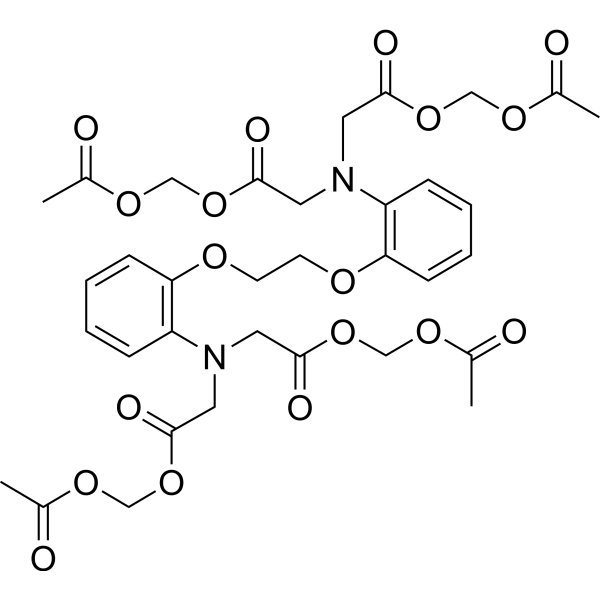
BAPTA-AM is a well-known membrane permeable Ca 2+ chelator. BAPTA-AM inhibits hERG channels, hKv1.3 and hKv1.5 channels in HEK 293 cells with IC50s of 1.3 μM, 1.45 μM and 1.23 μM, respectively .
|
-
- HY-W011060
-
|
4,7,13,16,21,24-Hexaoxa-1,10-diazabicyclo[8.8.8]hexacosane
|
Biochemical Assay Reagents
|
Others
|
|
Cryptand 2.2.2 (4,7,13,16,21,24-Hexaoxa-1,10-diazabicyclo[8.8.8]hexacosane) is a metal ion chelator. Cryptand 2.2.2 forms stable mononuclear, protonated and dinuclear complexes with copper (II) ions; forms protonated complexes with hydrogen ions; and also forms stable complexes with Zn 2+, Co 2+, Ni 2+, Cd 2+, Hg 2+ and Pb 2+ ions. Cryptand 2.2.2 can be used for the preparation of nanoparticles, transition metal compounds, etc.
|
-
- HY-B0658A
-
|
Zinc(II) acetate dihydrate, ACS, 98%
|
Biochemical Assay Reagents
|
Others
|
|
Zinc acetate dihydrate, ACS, 98% (Zinc (II) acetate dihydrate, ACS, 98%) acts as a metal chelator and an intestinal metallothionein inducer. Zinc acetate dihydrate, ACS, 98% induces intestinal metallothionein synthesis and shortens the course of the common cold. Zinc acetate dihydrate, ACS, 98% is applicable to the research of copper metabolism disorder-related diseases, the common cold and Wilson's disease, as well as protein experiments .
|
-
- HY-116767
-
|
Block lipid transport-1
|
HCV
|
Metabolic Disease
Inflammation/Immunology
|
|
BLT-1, a thiosemicarbazone copper chelator, is a selective scavenger receptor B, type 1 (SR-BI) inhibitor. BLT-1 inhibits the transfer of lipids between high-density lipoproteins (HDL) and cells mediated by SR-BI. BLT-1 is a potent HCV entry inhibitor .
|
-
- HY-D0836
-
|
Ethylenediaminetetraacetic acid dipotassium dihydrate
|
DNA/RNA Synthesis
|
Others
|
|
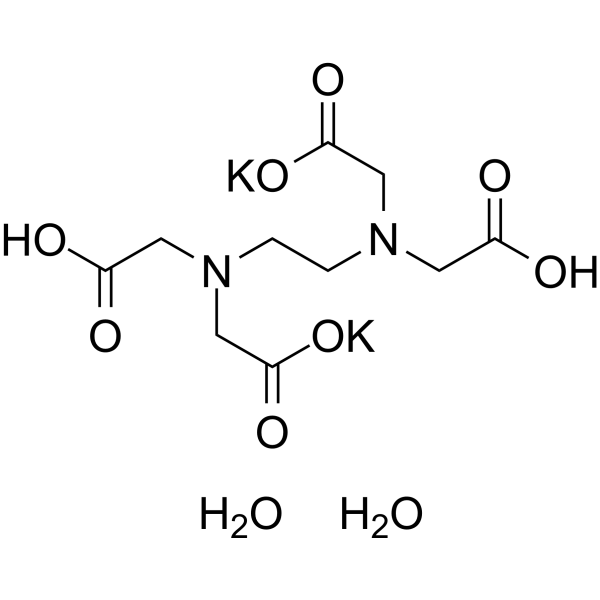
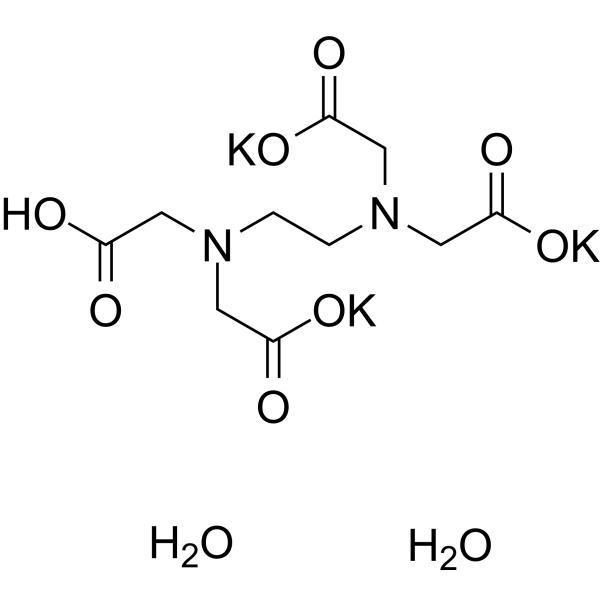
EDTA dipotassium dihydrate is a metal ion chelator that forms stable and water-soluble chelates with a variety of metal ions. EDTA dipotassium is commonly used as a blood anticoagulant, which can effectively prevent blood coagulation and maintain the morphology and function of cells in blood samples. In the industrial field, EDTA dipotassium can be used to remove the adverse effects of metal ions and prevent oxidation and deterioration caused by metal ions .
|
-
- HY-100545R
-
|
|
Reference Standards
Potassium Channel
|
Cardiovascular Disease
|
|
BAPTA-AM (Standard) is the analytical standard of BAPTA-AM. This product is intended for research and analytical applications. BAPTA-AM is a well-known membrane permeable Ca2+ chelator. BAPTA-AM inhibits hERG channels, hKv1.3 and hKv1.5 channels in HEK 293 cells with IC50s of 1.3 μM, 1.45 μM and 1.23 μM, respectively .
|
-
- HY-164575B
-
|
|
Radionuclide-Drug Conjugates (RDCs)
PSMA
|
Cancer
|
|
NH2-NODAGA hydrochloride is a NODAGA-type metal chelator that can bind to radionuclides to prepare radionuclide conjugates (RDCs). NH2-NODAGA hydrochloride can react with diethyl squarate in 0.5M phosphate buffer to obtain NODAGA.SA. NODAGA.SA can target L-lysine urea-L-glutamate (KuE), which is a key structure of prostate-specific membrane antigen (PSMA). NODAGA.SA.KuE can bind [68]Ga and can be used for PET examination of NMRInu/nu nude mice bearing LNCaP tumors.
|
-
- HY-W782083
-
|
|
Biochemical Assay Reagents
Radionuclide-Drug Conjugates (RDCs)
Bombesin Receptor
EGFR
|
Cancer
|
|
p-SCN-Bn-NOTA trihydrochloride is a macrocyclic chelator. p-SCN-Bn-NOTA trihydrochloride can be covalently coupled to molecules such as peptides through the thiocyanate group to form hexacoordinate copper (such as 64Cu) complexes. p-SCN-Bn-NOTA trihydrochloride specifically binds to GRPR or EGFR highly expressed on the surface of tumor cells, mediating tumor enrichment of radioactive probes. p-SCN-Bn-NOTA trihydrochloride can be used to study malignant tumors expressing GRPR or EGFR, such as prostate cancer and colorectal cancer .
|
-
- HY-W755033
-
-
- HY-16912
-
|
SP-420
|
Ferroptosis
|
Metabolic Disease
|
|
Petadeferitrin (SP-420) is a tridentate iron chelator belonging to the class of iron chelators, with orally activity. Petadeferitrin can be used in research related to β-thalassemia .
|
-
- HY-131036
-
|
|
Monoamine Oxidase
|
Neurological Disease
|
|
MAO-IN-M30 dihydrochloride is an orally active, brain-permeable, and brain selective irreversible MAO-A (IC50=37 nM) and MAO-B (IC50=57 nM) inhibitor. MAO-IN-M30 dihydrochloride is a potent iron chelator and radical scavenger. MAO-IN-M30 dihydrochloride has a neuroprotective effect against Dexamethasone-induced brain cell apoptosis. MAO-IN-M30 dihydrochloride also exhibits neurorestorative activity in post MPTP and lactacystin models of Parkinson's disease . MAO-IN-M30 (dihydrochloride) is a click chemistry reagent, it contains an Alkyne group and can undergo copper-catalyzed azide-alkyne cycloaddition (CuAAc) with molecules containing Azide groups.
|
-
- HY-135433
-
-
- HY-N15797
-
-
- HY-N15779
-
-
- HY-N15813
-
-
- HY-W017165
-
|
|
Biochemical Assay Reagents
|
Others
|
|
Sodium malonate hydrate is a complexing agent for the determination of beryllium and copper. Sodium malonate hydrate is a kind of biological materials or organic compounds that are widely used in life science research .
|
-
- HY-132927
-
-
- HY-13950
-
-
- HY-N15914
-
-
- HY-18973
-
-
- HY-120391
-
|
|
Biochemical Assay Reagents
|
Others
|
|
LiLo is a new bifunctional chelator that has the activity of forming kinetically stable chelates with metal ions (such as indium). After using LiLo to bind indium-111 to monoclonal antibodies, the in vitro stability and in vivo biodistribution of the conjugates are superior to those using other chelators.
|
-
- HY-D0855
-
-
- HY-12691
-
-
- HY-100329
-
|
|
Ferroptosis
|
Others
|
|
CGP 65015 is an oral iron chelator, which can mobilize iron deposits.
|
-
- HY-156776
-
|
|
Ferroptosis
|
Others
|
|
HAPSBC is an S-benzyl iron chelator that mobilizes intracellular 59Fe distribution .
|
-
- HY-B2153
-
|
|
Cuproptosis
Bacterial
|
Infection
|
|
Tetraethylenepentamine pentahydrochloride is an orally active copper chelator and copper mobilizer. Tetraethylenepentamine pentahydrochloride exhibits growth inhibitory and hypolipidemic properties. Tetraethylenepentamine pentahydrochloride significantly increases urinary copper excretion and reduces renal copper accumulation in copper overload models, but does not significantly alter hepatic copper levels. Tetraethylenepentamine pentahydrochloride exerts growth inhibitory effects on Candida albicans and Fluconazole (HY-B0101)-resistant strains, and can be widely used in studies related to Wilson's disease and Candida infections .
|
-
- HY-N14930
-
|
|
Others
|
Cardiovascular Disease
|
|
Aeruginoic acid is a pyochelin biosynthetic byproduct, is an iron chelator. Aeruginoic acid exhibits hypotensivee activity .
|
-
- HY-18670
-
-
- HY-P10137
-
-
- HY-132851
-
|
|
ADC Payload
|
Cancer
|
|
Corixetan is a highly efficient thorium chelator. Corixetan can efficiently complex Th-227 with sufficient in vivo stability .
|
-
- HY-147962
-
|
|
Cholinesterase (ChE)
HDAC
|
Neurological Disease
|
|
COX-2-IN-23 (compound A10) is a potent both AChE and HDAC inhibitor with IC50 values of 0.12 and 0.23 nM. COX-2-IN-23 exhibits antioxidant activity and metal chelating properties. COX-2-IN-23 can be used in alzheimer's disease research .
|
-
- HY-121872
-
|
|
MMP
|
Neurological Disease
|
|
DP-b99 is a chelator of zinc and calcium ions that acts selectively within cell membranes and has neuroprotective properties in animal models of stroke.
|
-
- HY-164574
-
|
|
Radionuclide-Drug Conjugates (RDCs)
|
Cancer
|
|
BCN-DOTA is a cyclooctyne-linked DOTA chelator that can be radiolabeled with zirconium-89 as a radionuclide-labeled drug conjugate (RDC) to target specific biomolecules, cells, or tissues.
|
-
- HY-159888
-
|
|
Cholinesterase (ChE)
|
Neurological Disease
|
|
SON38 is a copper chelator capable of chelating divalent copper. SON38 can inhibit the activity of cholinesterases and has potential applications in Alzheimer's disease research .
|
-
- HY-D1759
-
|
|
Fluorescent Dye
|
Others
|
|
Fura-4F AM is a cell-permeant fluorescent calcium indicator. Upon entering the cell, this probe is hydrolyzed by cytosilic esterases and trapped as the active chelator.
|
-
- HY-N11874
-
|
|
Bacterial
|
Infection
|
|
Staphyloferrin A is a carboxylate-type siderophore, as well as an iron (III) chelator and a HtsA ligand with high binding affinity for iron (III). Staphyloferrin A can be used in studies of bacterial infections .
|
-
- HY-17359S
-
-
- HY-164577
-
|
|
Radionuclide-Drug Conjugates (RDCs)
|
Cancer
|
|
BCN-DOTA-GA is a cyclooctyne-linked DOTA chelator that can be labeled with radioactive zirconium-89 and used as a radionuclide-labeled drug conjugate (RDC) to target specific biomolecules, cells or tissues.
|
-
- HY-17359R
-
|
ICL 670 (Standard)
|
Reference Standards
Bacterial
Ferroptosis
|
Cancer
|
|
Deferasirox (Standard) is the analytical standard of Deferasirox. This product is intended for research and analytical applications. Deferasirox (ICL 670) is an orally available iron chelator used for the management of transfusional iron overload .
|
-
- HY-153551
-
|
|
Biochemical Assay Reagents
|
Cancer
|
|
HBED-CC-tris(tert-butyl ester) is a derivative of HBED-CC and a bifunctional chelator. HBED-CC-tris(tert-butyl ester) can be used in the research of radiolabeling and compounds for tumor-assisted diagnosis .
|
-
- HY-145888
-
|
|
Amyloid-β
|
Neurological Disease
|
|
Antioxidant agent-2 (comp 3c), an BBB-penetrated antioxidant agent and a selective metal ions chelator, presents good neuroprotective effect and hepatoprotective effect for the study of Alzheimer’s disease .
|
-
- HY-122939
-
|
|
Radionuclide-Drug Conjugates (RDCs)
|
Cancer
|
|
MAIPGG is a bifunctional chelator and an intermediate in the synthesis of radionuclide drug conjugates (RDCs). MAIPGG can be for the radiolabeling of a variety of monoclonal antibodies with 99mTc or 186Re, which then can be used for radioimmunodetection and radioimmunotherapy of cancer .
|
-
- HY-183600
-
-
- HY-104058
-
|
Green 488 BAPTA 1AM
|
Fluorescent Dye
|
Others
|
|
BAPTA Green 1AM (Oregon Green 488 BAPTA 1AM) is a fluorescent Ca 2+ indicator that consists of a green fluorescent probe OG 488 and a cell-permeable Ca 2+ chelator BAPTA AM.
|
-
- HY-P11837
-
|
|
Biochemical Assay Reagents
|
Cancer
|
|
NECT-224 is a bifunctional chelator and a nectin-4 targeting peptide conjugate. NECT-224 can be used as a PET imaging agent when labeled with 64Cu or 68Ga .
|
-
- HY-153551A
-
|
|
Biochemical Assay Reagents
|
Others
|
|
HBED-CC-tris(tert-butyl ester) TFA is a derivative of HBED-CC and a bifunctional chelator. HBED-CC-tris(tert-butyl ester) TFA can be used in the research of radiolabeling and compounds for tumor-assisted diagnosis .
|
-
- HY-131326
-
|
|
Biochemical Assay Reagents
|
Cancer
|
|
DOTA-tris(tBu)ester NHS ester is a bifunctional precursor to a DOTA-based chelating agent. DOTA-tris(tBu)ester NHS ester can be used to label primary amines (R-NH2) of proteins, amine-modified oligonucleotides, and other amine-containing molecules, and upon deprotection forms stable complexes with metal ions for applications in molecular imaging .
|
-
- HY-17359S1
-
-
- HY-182242
-
|
|
c-Myc
|
Cancer
|
|
AGB-374 is an orally active NDUFS7 inhibitor. AGB-374 destabilizes NDUFS7 protein and inhibits oxidative phosphorylation by targeting mitochondrial complex I. AGB-374 reduces MYC protein levels in colon cancer cells in vivo and delays tumor growth in syngeneic mouse models of colon cancer. AGB-374 synergistically enhances the cytotoxicity of copper chelators against cancer cells. AGB-374 cooperates with copper chelators to downregulate MYC and NDUFS7 protein levels in cancer cells. AGB-374 can be used for the research of colon cancer .
|
-
- HY-201263
-
|
|
Biochemical Assay Reagents
|
Cancer
|
|
p-SCN-Bn-TCMC is a bifunctional chelator. Its cyclen backbone binds Hg 2+, while its isothiocyanate group allows for conjugation to biomolecules. p-SCN-Bn-TCMC can be used in the research of prostate cancer .
|
-
- HY-131673
-
|
|
Biochemical Assay Reagents
|
Others
|
|
p-SCN-Bn-TCMC tetrahydrochloride is a bifunctional chelator that exhibits high reactivity due to its powerful TCMC component, making it effective for binding radio-isotopic heavy metal ions, which are essential in radio-diagnostic imaging applications.
|
-
- HY-183864
-
|
|
Biochemical Assay Reagents
|
Cancer
|
|
PYTA(tBu)4-GA(Li) is a PYTA-derived bifunctional chelator and can be used for actinium-225 radiolabeling. PYTA(tBu)4-GA(Li) can be used for the research of cancer .
|
-
- HY-110075
-
|
|
Apoptosis
|
Cardiovascular Disease
|
|
Dexrazoxane monohydrochloride is the hydrochloride of Dexrazoxane (HY-B0581). Dexrazoxane can prevent or reduce cardiac damage and is an iron chelator and apoptosis inducer. Dexrazoxane has cardioprotective, anti-inflammatory, antioxidant, anti-tumor and neuroprotective activities and inhibits ferroptosis .
|
-
- HY-171561G
-
|
|
Biochemical Assay Reagents
|
Others
|
|
DOTAM-Maleimide triTFA (GMP) is DOTAM-Maleimide triTFA (HY-171561) produced by using GMP guidelines. GMP small molecules works appropriately as an auxiliary reagent for cell therapy manufacture. DOTAM-Maleimide triTFA is a bifunctional chelator .
|
-
- HY-P10273
-
-
- HY-164569
-
|
|
Radionuclide-Drug Conjugates (RDCs)
|
Cancer
|
|
NH2 DOTA-GA is a DOTA-based metal chelator that can be used to prepare radionuclide drug conjugates (RDCs) whose carboxylic acid groups can complex metal ions, for example, NH2 DOTA-GA complexes Gd(III) ions.
|
-
- HY-P11761
-
|
|
EGFR
|
Cancer
|
|
HYNIC-H10F is a conjugate of HER2-targeting peptide H10F and bifunctional chelator HYNIC. HYNIC-H10F can be used in breast cancer-related research .
|
-
- HY-174447
-
|
|
PARP
|
Cancer
|
|
ADP-ribose/PARP-IN-1 (Compound Ex.16) is a conjugated compound. ADP-ribose/PARP-IN-1 contains disease targeting moieties, PARP inhibitor moieties, cleavable linkers, chelators. ADP-ribose/PARP-IN-1 targets specific targets through the disease targeting moiety and selectively delivers PARP inhibitors to tumor cells. The cleavable linker of ADP-ribose/PARP-IN-1 releases the PARP inhibitor under appropriate conditions, inhibiting PARP to prevent DNA damage repair, while the radionuclide carried by the chelator exerts a killing effect. ADP-ribose/PARP-IN-1 can be used in the research of prostate cancer .
|
-
- HY-P10273A
-
|
|
Radionuclide-Drug Conjugates (RDCs)
Biochemical Assay Reagents
|
Cancer
|
|
DOTA-Octreotide TFA is composed of chelator DOTA and Octreotide (HY-P0036). DOTA-Octreotide TFA is used for research of cancer through combination with radioactive elements. DOTA-Octreotide TFA can be used for the synthesis/research of Radionuclide-Drug Conjugates (RDCs) .
|
-
- HY-W012898
-
|
Biacetyl dioxime
|
Biochemical Assay Reagents
|
Others
|
|
Dimethylglyoxime (Biacetyl dioxime) belongs to the class of oximes and consists of two acetyl groups attached to a nitrogen atom, which in turn is attached to another nitrogen atom through a diimine bond. Dimethylglyoxime is a specific chelator of Ni that inhibits or slows the aggregation of Aβ peptides in vitro .
|
-
- HY-164588
-
|
|
Radionuclide-Drug Conjugates (RDCs)
|
Cancer
|
|
NH2-PEG4-NODA-GA is a NODA-type metal chelator that can bind to radionuclides to prepare radionuclide drug conjugates (RDCs). RDCs have the ability to specifically target biomolecules and can be used in medical imaging or therapy.
|
-
- HY-178241
-
|
|
Biochemical Assay Reagents
|
Cancer
|
|
3tBu-Crown TFA is a chelator. 3tBu-Crown TFA chelates radiometals and couples to biological targeting moieties to facilitate targeted delivery of chelated radiometals.3tBu-Crown TFA can be used for the research of cancer .
|
-
- HY-169298
-
|
|
Ferroptosis
|
Cancer
|
|
Ferroptosis-IN-15 (compound 12) is a potent inhibitor of ferroptosis, with the EC50s of 0.76 and 0.67 μM in A375 cells and 786-O cells, respectively.Ferroptosis-IN-15 is a potential iron chelator and radical trapping antioxidant .
|
-
- HY-126907
-
-
- HY-159943
-
|
|
Cholinesterase (ChE)
|
Neurological Disease
|
|
ROS151 is an AChE inhibitor, with IC50s of 14 nM (hAChE), 1.68 μM (eqBChE), 8.17 μM (hFAAH) respectively. ROS151 is also a chelator of Fe 3+ and Cu 2+. ROS151 can be used for research of Alzheimer's disease .
|
-
- HY-W241345
-
|
|
Radionuclide-Drug Conjugates (RDCs)
|
Cancer
|
|
DOTA-bis(tert-butyl)ester is a DOTA-based metal chelator that can bind to radionuclides and is used to prepare radionuclide conjugates (RDCs). DOTA-bis(tert-butyl)ester can be conjugated with different salts to form different metal chelators, such as (HY-B1244) hydrochloride to obtain DOTA-MN2. DOTA-MN2 can be reacted with [67]Ga-citrate to obtain radiolabeling. When (67)Ga-DOTA-MN2 is incubated in phosphate buffer solution or mouse plasma for 24 hours, it does not undergo significant decomposition. In the biodistribution experiment of NFSa tumor mice, it has high tumor uptake and rapid plasma clearance, and is a good material for SPECT and PET studies.
|
-
- HY-W035520
-
|
|
Biochemical Assay Reagents
|
Others
|
|
HBED dihydrochloride is an orally active and hexadentate phenolic aminocarboxylate iron chelator. HBED refers to N, N'-bis(2-hydroxybenzyl)ethylenediamine-N,N'-diacetic acid, inducing iron excretion in primates. HBED dihydrochloride has the potential to be used as an alternative to desferriamine for iron chelation therapy .
|
-
- HY-103528
-
|
Salicylidene salicylhydrazide
|
GABA Receptor
|
Neurological Disease
Inflammation/Immunology
|
|
SCS (Salicylidene salicylhydrazide) is a potent, allosteric and selective inhibitor of β1-containing GABAA receptors with an IC50 of 32 nM against α2β1γ1θ by VIPR measurement. SCS is also a chelator of metal ions .
|
-
- HY-D1639
-
|
|
Fluorescent Dye
|
Others
|
|
5,5'-Dibromo BAPTA tetrapotassium is a calcium chelator, can be formulated into a buffer with a defined calcium ion concentration. 5,5'-Dibromo BAPTA tetrapotassium can control the concentration of calcium ions inside and outside the cell and can be used in studies of calcium physiological activity .
|
-
- HY-Y1841
-
|
1,10-Phenanthroline monohydrate
|
MOFs
MMP
|
Others
|
|
o-Phenanthroline (1,10-Phenanthroline) monohydrate, a metal chelator, prevents the induction of chromosomal aberrations in streptozotocin-treated cells. o-Phenanthroline monohydrate forms a red chelate with Fe 2+ that absorbs maximally at 510 nm. o-Phenanthroline (1,10-Phenanthroline) monohydrate is also a MMP inhibitor .
|
-
- HY-Y1841R
-
|
|
Reference Standards
MMP
|
Others
|
|
o-Phenanthroline (1,10-Phenanthroline) monohydrate, a metal chelator, prevents the induction of chromosomal aberrations in streptozotocin-treated cells. o-Phenanthroline monohydrate forms a red chelate with Fe2+ that absorbs maximally at 510 nm. o-Phenanthroline (1,10-Phenanthroline) monohydrate is also a MMP inhibitor .
|
-
- HY-P10729
-
|
|
Radionuclide-Drug Conjugates (RDCs)
|
Cancer
|
|
DOTA-Bombesin (1-14) is composed of chelator DOTA and Bombesin (HY-P0195). DOTA-Bombesin (1-14) is used for research of cancer through combination with radioactive elements. DOTA-Bombesin (1-14) can be used for the synthesis/research of Radionuclide-Drug Conjugates (RDCs) .
|
-
- HY-100202
-
|
TPEDA
|
MOFs
Reactive Oxygen Species (ROS)
Apoptosis
Autophagy
|
Cancer
|
|
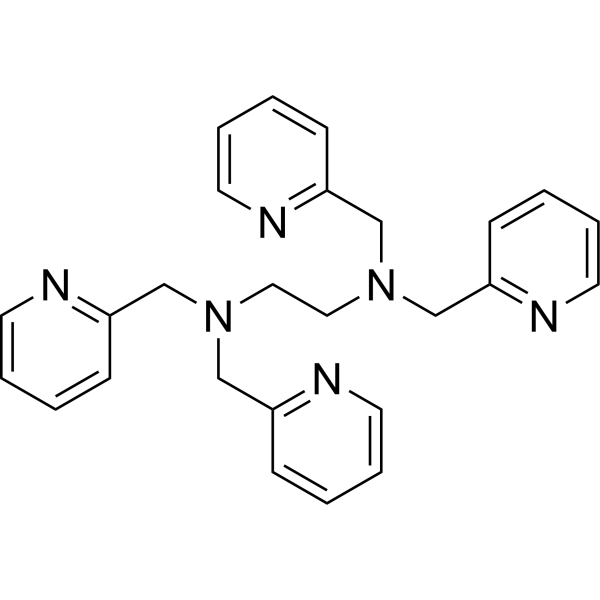
TPEN (TPEDA) is a specific cell-permeable heavy metal chelator. TPEN has a higher affinity for Zn 2+, but a lower affinity for Mg 2+ and Ca 2+. TPEN induces DNA damage and increases intracellular ROS production. TPEN also inhibits cell proliferation and induces apoptosis .
|
-
- HY-W005561
-
|
|
Amino Acid Derivatives
|
Others
|
|
H-Dab(Boc)-OMe hydrochloride is an N-terminally protected diaminobutyric acid containing two protecting groups: methoxy (OMe) and tert-butyloxycarbonyl (Boc). H-Dab(Boc)-OMe hydrochloride can be used to synthesize the bifunctional chelator H3Dpaa that can rapidly complex 68Ga under physiological conditions .
|
-
- HY-D1643
-
|
|
Biochemical Assay Reagents
|
Others
|
|
5,5'-Dinitro BAPTA AM is a membrane-permeant, high-affinity calcium chelator, it can be used for investigation of the role of cytosolic Ca 2+. 5,5'-Dinitro BAPTA AM can be loaded by incubation into live cells, and is cleaved by cytosolic esterases to liberate the active tetra-carboxylate ligand .
|
-
- HY-P10729A
-
|
|
Radionuclide-Drug Conjugates (RDCs)
|
Cancer
|
|
DOTA-Bombesin (1-14) TFA is composed of chelator DOTA and Bombesin (HY-P0195). DOTA-Bombesin (1-14) TFA is used for research of cancer through combination with radioactive elements. DOTA-Bombesin (1-14)TFA can be used for the synthesis/research of Radionuclide-Drug Conjugates (RDCs) .
|
-
- HY-W011118
-
|
|
Radionuclide-Drug Conjugates (RDCs)
|
Cancer
|
|
DTPA anhydride is a bifunctional chelator whose anhydride can react with amino groups in proteins (such as lysine residues) to form stable amide bonds. DTPA anhydride can also bind to radionuclides to synthesize radionuclide-labeled drug conjugates (RDCs). RDCs have the ability to specifically target biomolecules and can be used in medical imaging or therapy.
|
-
- HY-164364B
-
|
|
FAP
|
Cancer
|
|
DOTAGA.(SA.FAPi)2 analogue TFA is a DOTAGA.(SA.FAPi)2 TFA (HY-164364A) analogue, in which the ligand and the chelator are identical to those of DOTAGA.(SA.FAPi)2 TFA. DOTAGA.(SA.FAPi)2 TFA is a potent dimeric fibroblast-activation protein inhibitor (FAPi) .
|
-
- HY-120743
-
|
|
Biochemical Assay Reagents
|
Metabolic Disease
|
|
Triplin is a copper chelator, Triplin perturbs copper ion transport involved in the interaction of RAN1 and ATX1. Triplin suppresses the toxic effects of excess copper ions on plant root growth. Triplin increases the RNA expression of ERF1. Triplin acts through the ethylene signal transduction pathway. Triplin also is a bacterial pore-former .
|
-
- HY-113354
-
|
|
Endogenous Metabolite
|
Neurological Disease
|
|
Anserine, a methylated form of Carnosine, is an orally active, natural Histidine-containing dipeptide found in skeletal muscle of vertebrates. Anserine is not cleaved by serum carnosinase and act as biochemical buffers, chelators, antioxidants, and anti-glycation agents. Anserine has blood-brain barrier permeability, and improves memory functions in Alzheimer's disease (AD)-model mice .
|
-
- HY-149090
-
|
|
Cholinesterase (ChE)
Monoamine Oxidase
|
Neurological Disease
|
|
AChE/BuChE/MAO-B-IN-2 (compound 4b) is a potent AChE/BuChE inhibitor and showed good blood brain barrier (BBB) permeability in vitro with an IC50 value of 5.3 μM, 12.4 μM, 1.9±0.08 μM, for AChE, BuChE, huMAO-B, respectively. AChE/BuChE/MAO-B-IN-2 (compound 4b) can inhibit excess AChE/BuChE in Alzheimer's disease (AD) brain. AChE/BuChE/MAO-B-IN-2 (compound 4b) can be used in anti-Alzheimer's research .
|
-
- HY-P99239
-
|
HUJ-591; TLX591
|
PSMA
Radionuclide-Drug Conjugates (RDCs)
|
Cancer
|
|
Rosopatamab (HuJ591) is a humanized antiPSMA IgG1 monoclonal antibody that can be used in cancer research, especially prostate cancer. Rosopatamab can be linked to the low-energy beta-emitting radioisotope lutetium-177 ( 177Lu) through the bifunctional chelator DOTA-NHS ester to obtain a radioimmunoconjugate that targets malignant prostate cells with high efficiency .
|
-
- HY-B0300
-
|
D-(-)-Penicillamine
|
Cuproptosis
Drug Metabolite
|
Inflammation/Immunology
Cancer
|
|
Penicillamine (D-(-)-Penicillamine) is a penicillin metabolic degradation product, can be used as a heavy metal chelator. Penicillamine increases free copper and increases oxidative stress. Penicillamine has effect of seizures through nitric oxide/NMDA pathways. Penicillamine is a potential immune modulator. Penicillamine can be used for the research of Wilson disease, rheumatoid arthritis, and cystinuria .
|
-
- HY-113354S
-
|
|
Endogenous Metabolite
|
Neurological Disease
|
|
Anserine-d4 is the deuterium labeled Anserine. Anserine, a methylated form of Carnosine, is an orally active, natural Histidine-containing dipeptide found in skeletal muscle of vertebrates. Anserine is not cleaved by serum carnosinase and act as biochemical buffers, chelators, antioxidants, and anti-glycation agents. Anserine improves memory functions in Alzheimer's disease (AD)-model mice .
|
-
- HY-167814S
-
|
|
Isotope-Labeled Compounds
Biochemical Assay Reagents
|
Metabolic Disease
|
|
Deferiprone-d3 3-O-Beta-D-Glucuronide Sodium Salt is the deuterium labeled Deferiprone O-β-D-glucuronide (HY-160078). Deferiprone O-β-D-glucuronide is a novel orally active iron chelator. Deferiprone O-β-D-glucuronide shows the capability of reducing the iron burden in patients with β-thalassemia .
|
-
- HY-P10846
-
|
|
Isotope-Labeled Compounds
|
Cardiovascular Disease
|
|
HYNIC-CTP is a conjugate of HYNIC and CTP (cardiac-targeting peptide). HYNIC-CTP can bind with the radionuclide 99mTc through HYNIC acting as a chelator, forming 99mTc-HYNIC-CTP. 99mTc-HYNIC-CTP is specifically taken up by the heart and used for cardiac imaging, thereby facilitating research into heart diseases .
|
-
- HY-14603
-
-
- HY-W087187
-
|
|
Radionuclide-Drug Conjugates (RDCs)
Biochemical Assay Reagents
|
Infection
Cancer
|
|
DOTAGA-anhydride is a DOTA-based metal chelator that can bind to radionuclides and is used to prepare radionuclide drug conjugates (RDCs). DOTAGA-anhydride has been successfully used for labeling antibodies (e.g., Trastuzumab (HY-P9907)). DOTAGA-anhydride can be used for the synthesis of a bimodal tag for Single-photon emission computed tomography (SPECT) or PET/optical imaging .
|
-
- HY-159768A
-
|
|
Radionuclide-Drug Conjugates (RDCs)
FAP
|
Neurological Disease
Cancer
|
|
DOTAGA.Glu.(FAPi) 2 is a FAPI homodimer in which a central glutamic acid (Glu) linker connects FAPI and a chelator. Radiolabeled with gallium- 68, lutetium- 177 or terbium- 161, DOTAGA.Glu.(FAPi) 2 is applicable to FAP-positive cancer PET imaging studies. DOTAGA.Glu.(FAPi) 2 is suitable for research related to prostate adenocarcinoma and recurrent glioblastoma multiforme .
|
-
- HY-P6351
-
|
|
Integrin
|
Cancer
|
|
c(avb6)-DOTA TFA is a conjugate of the αvβ6 integrin selective peptide ring modified with DOTA chelator. The Lu(III) complex of c(avb6)-DOTA TFA has a comparable affinity for αvβ6 integrin (IC50=0.8 nM) and can be used as a tumor diagnostic .
|
-
- HY-164732
-
|
|
Amino Acid Derivatives
Biochemical Assay Reagents
|
Others
|
|
Fmoc-Lys (DOTA)-OH is an Fmoc-protected Lysine derivative with metal-chelating properties, containing the macrocyclic chelator DOTA. Fmoc-Lys (DOTA)-OH undergoes metallation with Tb or Lu. Fmoc-Lys (DOTA)-OH utilizes metal coordination to protect the carboxyl groups of DOTA. Fmoc-Lys (DOTA)-OH can be used in solid-phase peptide synthesis research .
|
-
- HY-D0716
-
Fluo-3AM
Maximum Cited Publications
12 Publications Verification
Fluo-3-pentaacetoxymethyl ester
|
Fluorescent Dye
|
Others
|
|
Fluo-3 AM is a fluorecent Ca 2+ chelator, with high affinity for calcium. Fluo-3 AM can specifically identify intracellular calcium ions, with high sensitivity, low cytotoxicity, increased AM acetylmethyl ester can enter the cell well, after being sheared by the intracellular esterase stay in the cell to bind to calcium ions, produce strong fluorescence .
|
-
- HY-W012788
-
Maltol
2 Publications Verification
|
Environmental Pollutants
Endogenous Metabolite
Apoptosis
|
Infection
Neurological Disease
|
|
Maltol, a type of aromatic compound, is an antioxidant agent. Maltol enhances neural function by mitigating oxidative stress and cell apoptosis. Maltol is an inhibitor of oxidative damage in nerve cells and is effective in preventing diabetic peripheral neuropathy (DPN). Maltol is used extensively as a safe flavoring agent and food preservative. Maltol is a metal ion chelator that can be used in the field of catalysis, cosmetics, and medicine .
|
-
- HY-186106
-
|
|
Bacterial
|
Infection
|
|
3-Deoxyanguibactin is a siderophore and Fe(III) chelator/iron delivery agent. 3-Deoxyanguibactin binds Fe(III) with 2:1 stoichiometry in liquid phase, delivers iron into Acinetobacter baumannii cells, and relies on the BauA outer membrane receptor and bau transport system for cellular entry. 3-Deoxyanguibactin can be used for the research of acinetobacter baumannii infection .
|
-
- HY-W105699
-
|
Ethylenediaminetetraacetic acid tetrasodium tetrahydrate
|
Environmental Pollutants
Biochemical Assay Reagents
|
Others
|
|
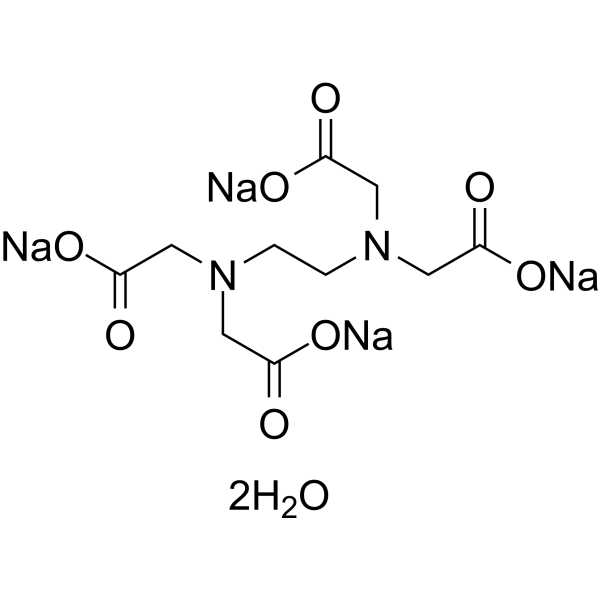
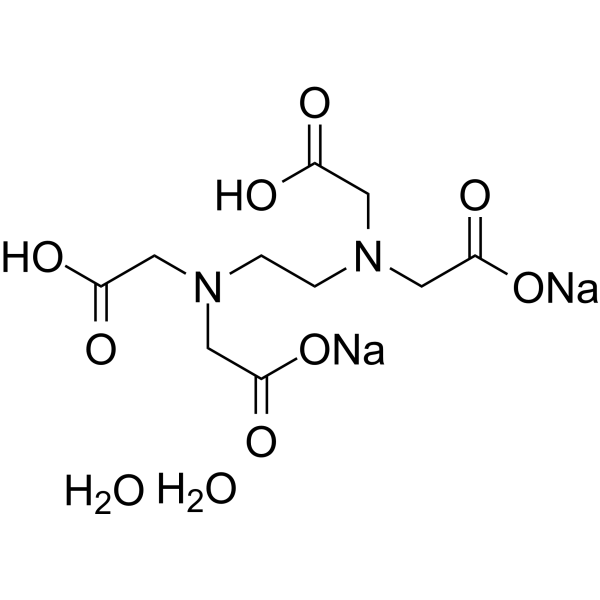
EDTA tetrasodium tetrahydrate is a metal chelator (binds to metal divalent and trivalent cations including calcium), which shows activities of anticoagulant and anti-hypercalcemic. EDTA tetrasodium tetrahydrate decreases the metal ion-catalyzed oxidative damage to proteins, and allows maintenance of reducing environment during protein purification. EDTA tetrasodium tetrahydrate can also decrease the formation of disulfide bonds .
|
-
- HY-103528R
-
|
Salicylidene salicylhydrazide (Standard)
|
Reference Standards
GABA Receptor
|
Neurological Disease
Inflammation/Immunology
|
|
SCS (Standard) is the analytical standard of SCS (HY-103528). This product is intended for research and analytical applications. SCS (Salicylidene salicylhydrazide) is a potent, allosteric and selective inhibitor of β1-containing GABAA receptors with an IC50 of 32 nM against α2β1γ1θ by VIPR measurement. SCS is also a chelator of metal ions .
|
-
- HY-W004544S
-
|
1,10-Phenanthroline-d8
|
Isotope-Labeled Compounds
MMP
|
Others
|
|
o-Phenanthroline-d8 is the deuterium labeled o-Phenanthroline. o-Phenanthroline (1,10-Phenanthroline), a metal chelator, prevents the induction of chromosomal aberrations in streptozotocin-treated cells. o-Phenanthroline (1,10-Phenanthroline) forms a red chelate with Fe2+ that absorbs maximally at 510 nm. o-Phenanthroline (1,10-Phenanthroline) is also a MMP inhibitor .
|
-
- HY-101902
-
|
Quin-2 acetoxymethyl ester
|
Fluorescent Dye
|
Others
|
|
Quin-2AM is a fluorecent Ca 2+ chelator, with high affinity for calcium. Quin-2AM can specifically identify intracellular calcium ions, with high sensitivity, low cytotoxicity, increased AM acetylmethyl ester can enter the cell well, after being sheared by the intracellular esterase stay in the cell to bind to calcium ions, produce strong fluorescence .
|
-
- HY-113354S1
-
|
|
Isotope-Labeled Compounds
|
Neurological Disease
|
|
Anserine-d4 hydrochloride is the deuterium labeled Anserine (HY-113354). Anserine, a methylated form of Carnosine, is an orally active, natural Histidine-containing dipeptide found in skeletal muscle of vertebrates. Anserine is not cleaved by serum carnosinase and act as biochemical buffers, chelators, antioxidants, and anti-glycation agents. Anserine improves memory functions in Alzheimer's disease (AD)-model mice .
|
-
- HY-D1498
-
|
|
Fluorescent Dye
|
Others
|
|
Mag-Fluo-4 AM is a fluorecent Ca 2+ chelator, with high affinity for calcium. Mag-Fluo-4 AM can specifically identify intracellular calcium ions, with high sensitivity, low cytotoxicity, increased AM acetylmethyl ester can enter the cell well, after being sheared by the intracellular esterase stay in the cell to bind to calcium ions, produce strong fluorescence .
|
-
- HY-113354R
-
|
|
Reference Standards
Endogenous Metabolite
|
Neurological Disease
|
|
Anserine (Standard) is the analytical standard of Anserine. This product is intended for research and analytical applications. Anserine, a methylated form of Carnosine, is an orally active, natural Histidine-containing dipeptide found in skeletal muscle of vertebrates. Anserine is not cleaved by serum carnosinase and act as biochemical buffers, chelators, antioxidants, and anti-glycation agents. Anserine improves memory functions in Alzheimer's disease (AD)-model mice[1][2].
|
-
- HY-144659
-
|
|
Beta-lactamase
Apoptosis
Bacterial
|
Infection
|
|
Metallo-β-lactamase-IN-5 (compound 5c) is a potent metallo-β-lactamases (MBL) inhibitor. Metallo-β-lactamase-IN-5 shows inhibitory activity against MBLs NDM-1 and VIM-1. Metallo-β-lactamase-IN-5 inhibits HUVECs with an IC50 of 45 μg/mL. Metallo-β-lactamase-IN-5 plus Imipenem exhibits synergistic antimicrobial activity .
|
-
- HY-12406
-
VLX600
2 Publications Verification
|
Oxidative Phosphorylation
Mitochondrial Metabolism
Autophagy
|
Cancer
|
|
VLX600 is an iron-chelating inhibitor of oxidative phosphorylation (OXPHOS). VLX600 causes mitochondrial dysfunction and induces a strong shift to glycolysis. VLX600 displays selective cytotoxic activity against malignant cell and induces autophagy. Anticancer activity .
|
-
- HY-114243
-
|
|
NF-κB
JNK
Caspase
Apoptosis
|
Neurological Disease
Cancer
|
|
DpC is a selective, orally active iron chelator with anticancer activity. DpC acts on signaling pathway-related targets such as JNK, NF-κB, and its activity is competitively inhibited by another iron chelator Dp44mT (HY-18973). By chelating intracellular iron and copper ions in tumor cells to form redox-active complexes, DpC induces oxidative stress, activates the JNK, NF-κB pathways and downregulates IκBα, upregulates the expressions of neuroglobin and cytoglobin, activates caspase 3/9 to induce tumor cell apoptosis. It also overcomes P-glycoprotein-mediated multidrug resistance through a lysosome-targeting mechanism, and exhibits broad-spectrum synergistic effects when combined with various chemotherapeutic agents. DpC inhibits tumor metastasis and increases TNF-α levels in the tumor microenvironment to enhance endogenous immune responses. DpC is applicable to the research of various malignancies including neuroblastoma, pancreatic cancer, prostate cancer, lung cancer, and breast cancer .
|
-
- HY-Y0682S1
-
|
EDTA-d16
|
Isotope-Labeled Compounds
|
Neurological Disease
|
|
Ethylenediaminetetraacetic acid-d16 is the deuterium labeled Ethylenediaminetetraacetic acid . Ethylenediaminetetraacetic acid (EDTA) is a metal chelators (binds to metal divalent and trivalent cations including calcium), which shows activities of anticoagulant and anti-hypercalcemic. Ethylenediaminetetraacetic acid decreases the metal ion-catalyzed oxidative damage to proteins, and allows maintenance of reducing environment during protein purification. Ethylenediaminetetraacetic acid can also decrease the formation of disulfide bonds .
|
-
- HY-117410
-
|
PSMA-617
|
Drug-Linker Conjugates for ADC
|
Cancer
|
|
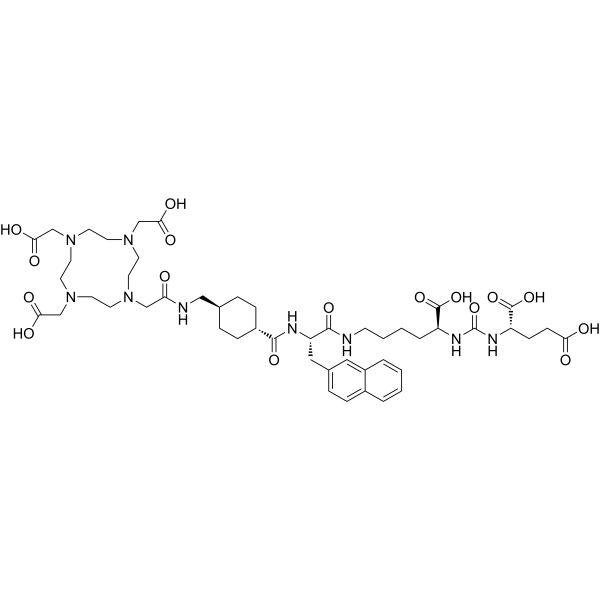
Vipivotide tetraxetan (PSMA-617) is a high potent prostate-specific membrane antigen (PSMA) inhibitor, with a Ki of 0.37 nM. Vipivotide tetraxetan (PSMA-617) is designed consisting of three components: the pharmacophore Glutamate-urea-Lysine, the chelator DOTA able to complex both 68Ga or 177Lu, and a linker connecting these two entities. Glutamate-urea-Lysine is the selective pharmacophore to bind to prostate specific membrane antigen.
|
-
- HY-157977
-
|
|
Biochemical Assay Reagents
Radionuclide-Drug Conjugates (RDCs)
MMP
|
Cancer
|
|
DOTA-GA-maleimide is a bifunctional chelator with protein conjugation and radiometal chelation capabilities. DOTA-GA-maleimide forms stable complexes with 111In and conjugates with proteins via maleimide chemistry. DOTA-GA-maleimide conjugates with LFn, enabling 111In radiolabeling of LFn through direct or pre-labeling strategies. Radiolabeled LFn is applicable to MMP activity imaging studies. DOTA-GA-maleimide is used in cancer research .
|
-
- HY-100202R
-
|
TPEDA (Standard)
|
Reactive Oxygen Species (ROS)
Reference Standards
Apoptosis
Autophagy
|
Cancer
|
|
TPEN (Standard) is the analytical standard of TPEN (HY-100202). This product is intended for research and analytical applications. TPEN (TPEDA) is a specific cell-permeable heavy metal chelator. TPEN has a higher affinity for Zn2+, but a lower affinity for Mg2+ and Ca2+. TPEN induces DNA damage and increases intracellular ROS production. TPEN also inhibits cell proliferation and induces apoptosis .
|
-
- HY-Y0682S
-
|
EDTA-d12
|
Isotope-Labeled Compounds
|
Neurological Disease
|
|
Ethylenediaminetetraacetic acid-d12 is the deuterium labeled Ethylenediaminetetraacetic acid . Ethylenediaminetetraacetic acid (EDTA) is a metal chelators (binds to metal divalent and trivalent cations including calcium), which shows activities of anticoagulant and anti-hypercalcemic. Ethylenediaminetetraacetic acid decreases the metal ion-catalyzed oxidative damage to proteins, and allows maintenance of reducing environment during protein purification. Ethylenediaminetetraacetic acid can also decrease the formation of disulfide bonds .
|
-
- HY-W686216
-
|
|
Dopamine Receptor
|
Neurological Disease
|
|
VK-28 is a blood-brain barrier-permeable iron chelator. VK-28 inhibits mitochondrial membrane lipid peroxidation and the iron-dependent generation of reactive hydroxyl radicals. VK-28 exhibits neuroprotective activity and protects rats against 6-OHDA-induced striatal dopaminergic damage. VK-28 can be used in studies related to Parkinson's disease .
|
-
- HY-114758
-
|
|
Biochemical Assay Reagents
Ferrochelatase
|
Cardiovascular Disease
|
|
Pyridoxal isonicotinoyl hydrazone is an orally active and lipophilic iron-specific chelator that acts as a non-competitive inhibitor of ferrochelatase (FECH) by binding iron ions. Pyridoxal isonicotinoyl hydrazone disrupts heme biosynthesis, leading to reduced FECH stability and increased protoporphyrin IX (PPIX) accumulation. Pyridoxal isonicotinoyl hydrazone is promising for research of iron-overload diseases (e.g., β-thalassemia) .
|
-
- HY-P10743
-
|
|
Radionuclide-Drug Conjugates (RDCs)
PSMA
|
Cancer
|
|
BQ7876 is a probe targeting prostate-specific membrane antigen (PSMA) that contains a DOTA chelator. BQ7876, after being radiolabeled with radionuclide (177Lu), functions in both radionuclide imaging and tumor cell destruction by specifically binding to PSMA. BQ7876 shows potential for research in the field of metastatic castration-resistant prostate cancer (mCRPC) . BQ7876 can be used for the synthesis/research of Radionuclide-Drug Conjugates (RDCs).
|
-
- HY-DY1095
-
|
Fluo-3-pentaacetoxymethyl ester (solution)
|
Fluorescent Dye
|
Others
|
Fluo-3AM (solution) is a fluorecent Ca 2+ chelator, with high affinity for calcium. Fluo-3 AM can specifically identify intracellular calcium ions, with high sensitivity, low cytotoxicity, increased AM acetylmethyl ester can enter the cell well, after being sheared by the intracellular esterase stay in the cell to bind to calcium ions, produce strong fluorescence . Solvent and concentration: DMSO: 5 mM
|
-
- HY-B0300R
-
|
D-(-)-Penicillamine (Standard)
|
Cuproptosis
Reference Standards
Drug Metabolite
|
Inflammation/Immunology
Cancer
|
|
Penicillamine (Standard) is the analytical standard of Penicillamine. This product is intended for research and analytical applications. Penicillamine (D-(-)-Penicillamine) is a penicillin metabolic degradation product, can be used as a heavy metal chelator. Penicillamine increases free copper and increases oxidative stress. Penicillamine has effect of seizures through nitric oxide/NMDA pathways. Penicillamine is a potential immune modulator. Penicillamine can be used for the research of Wilson disease, rheumatoid arthritis, and cystinuria .
|
-
- HY-W250119
-
|
EDTA disodium calcium salt hydrate; Ethylenediaminetetraacetic acid disodium calcium salt hydrate
|
Biochemical Assay Reagents
Fungal
Mitochondrial Metabolism
|
Infection
|
|
Calcium disodium edetate hydrate (EDTA disodium calcium salt hydrate) is a metal chelator and antifungal agent. Calcium disodium edetate hydrate chelates Mn 2+, damages mitochondria, and interferes with carbohydrate metabolic pathways, particularly the synthesis of pyruvate in glycolysis. Calcium disodium edetate hydrate inhibits Penicillium digitatum and delays conidial germination. Calcium disodium edetate (hydrate) enhances the host defense system of citrus fruits. Calcium disodium edetate hydrate is applicable to research related to citrus green mold .
|
-
- HY-40309
-
|
|
Biochemical Assay Reagents
|
Others
|
|
Dibenzo-18-crown-6 is a biochemical reagent that can be used as a biological material or organic compound for life science related research.
|
-
- HY-W127836
-
|
(S)-1-(4-Aminoxyacetamidobenzyl)ethylenediaminetetraacetic acid
|
Biochemical Assay Reagents
|
Others
|
|
(S)-1-(4-Aminoxyacetamidobenzyl)ethylenediaminetetraacetic Acid is a biochemical reagent that can be used as a biological material or organic compound for life science related research.
|
-
- HY-W052750
-
|
|
Biochemical Assay Reagents
|
|
|
5-Carboxy-2-thiouracil is a compound with antitumor activity that can form complexes with metal ions, thereby exhibiting significant biological effects.
|
-
- HY-Y0682R
-
|
EDTA (Standard)
|
Biochemical Assay Reagents
Reference Standards
Bacterial
SOD
|
Cardiovascular Disease
Neurological Disease
Cancer
|
|
Ethylenediaminetetraacetic acid (Standard) is the analytical standard of Ethylenediaminetetraacetic acid. This product is intended for research and analytical applications. Ethylenediaminetetraacetic acid (EDTA) is a kind of metal chelating agent (binds to bivalent and trivalent metal cations, including calcium). Ethylenediaminetetraacetic acid has antibacterial, anti-inflammatory, antioxidant, anti-hypercalcemia and anticoagulant activities. Ethylenediaminetetraacetic acid decreases the metal ion-catalyzed oxidative damage to proteins, and allows maintenance of reducing environment during protein purification. Ethylenediaminetetraacetic acid can alleviate the liver fibrosis. Ethylenediaminetetraacetic acid can be used for coronary artery disease and neural system disease research [4] .
|
-
- HY-W128312
-
-
- HY-W109973
-
|
L-(+)-Tartaric acid diammonium
|
Endogenous Metabolite
|
Cardiovascular Disease
|
|
L-Tartaric acid diammonium (L-(+) -tartaric acid) is an orally active weak organic acid that can be isolated from grapes. L-Tartaric acid diammonium has vasodilatory and antihypertensive effects. L-Tartaric acid diammonium can be used as flavorings and antioxidants in a range of foods and beverages. L-Tartaric acid diammonium can be used in laser frequency doubling and optical limiting applications .
|
-
- HY-Y0262B
-
-
- HY-Y0682
-
|
EDTA
|
Environmental Pollutants
Biochemical Assay Reagents
Bacterial
SOD
|
Cardiovascular Disease
Neurological Disease
Cancer
|
|
Ethylenediaminetetraacetic acid (EDTA) is a kind of metal chelating agent (binds to bivalent and trivalent metal cations, including calcium). Ethylenediaminetetraacetic acid has antibacterial, anti-inflammatory, antioxidant, anti-hypercalcemia and anticoagulant activities. Ethylenediaminetetraacetic acid decreases the metal ion-catalyzed oxidative damage to proteins, and allows maintenance of reducing environment during protein purification. Ethylenediaminetetraacetic acid can alleviate the liver fibrosis. Ethylenediaminetetraacetic acid can be used for coronary artery disease and neural system disease research .
|
-
- HY-W555991
-
|
|
Biochemical Assay Reagents
|
|
|
2',3'-O-Isopropylidene-6-mercaptopurine riboside is a compound with excellent metal complexing activity. 2',3'-O-Isopropylidene-6-mercaptopurine riboside can be used to study the mechanism of metal complexing.
|
-
- HY-W087947
-
|
Ethylenediaminetetraacetic acid dihydrate tripotassium
|
Bacterial
SOD
|
Cardiovascular Disease
Neurological Disease
Cancer
|
|
EDTA dihydrate tripotassium (Ethylenediaminetetraacetic acid dihydrate tripotassium) is a kind of metal chelating agent (binds to bivalent and trivalent metal cations, including calcium). EDTA dihydrate tripotassium has antibacterial, anti-inflammatory, antioxidant, anti-hypercalcemia and anticoagulant activities. EDTA dihydrate tripotassium decreases the metal ion-catalyzed oxidative damage to proteins, and allows maintenance of reducing environment during protein purification. EDTA dihydrate tripotassium can alleviate the liver fibrosis. EDTA dihydrate tripotassium can be used for coronary artery disease and neural system disease research .
|
-
- HY-21323R
-
|
|
Biochemical Assay Reagents
Reference Standards
|
Others
|
|
Isophthalic acid (Standard) is the analytical standard of Isophthalic acid. This product is intended for research and analytical applications. Isophthalic acid is a kind of biological materials or organic compounds that are widely used in life science research .
|
-
- HY-W127831
-
|
|
Biochemical Assay Reagents
|
Others
|
|
2-Aminomethyl-15-crown-5 is a biochemical reagent that can be used as a biological material or organic compound for life science related research.
|
-
- HY-W105875
-
-
- HY-W103245
-
|
B18C6
|
Biochemical Assay Reagents
|
Others
|
|
Benzo-18-crown-6-ether (B18C6) is a crown ether compound. Benzo-18-crown-6-ether can be applied to the research of biological materials, analytical chemistry and other fields .
|
-
- HY-W106012
-
-
- HY-W691498
-
-
- HY-W108801
-
|
|
Biochemical Assay Reagents
|
|
|
α-D-Glucoheptonic acid sodium is a compound that modulates the immune system, has chelating activity, and can be used in the preparation of cleaning agents.
|
-
- HY-163966R
-
|
|
Biochemical Assay Reagents
Reference Standards
|
Others
|
|
Decarboxyl ofloxacin (Standard) is the analytical standard of Decarboxyl ofloxacin. This product is intended for research and analytical applications. (±)-myo-Inositol-1-phosphate is a biochemical assay reagent.
|
-
- HY-131926
-
-
- HY-167181
-
-
- HY-111413
-
|
|
Integrin
|
Cancer
|
|
c(phg-isoDGR-(NMe)k) is a selective and potent α5β1-integrin ligand with an IC50 of 2.9 nM .
|
-
- HY-W013851
-
|
|
Environmental Pollutants
Biochemical Assay Reagents
|
Others
|
|
EDTA-OH is a chelating agent, which forms thermodynamically stable chelates with metal ions like calcium, magnesium, iron, zinc and copper . EDTA-OH exhibits ability of phytoremediation in heavy-metal-contaminated soils . EDTA-OH is able to cross brain-blood barrier .
|
-
- HY-D0850
-
|
Sodium tartrate dibasic dihydrate; Sodium tartrate dihydrate
|
Phosphatase
Endogenous Metabolite
|
Cardiovascular Disease
|
|
Tartaric acid disodium dehydrate (L-(+) -tartaric acid) is an orally active weak organic acid that can be isolated from grapes. Tartaric acid disodium dehydrate has vasodilatory and antihypertensive effects. Tartaric acid disodium dehydrate can be used as flavorings and antioxidants in a range of foods and beverages. Tartaric acid disodium dehydrate can be used in laser frequency doubling and optical limiting applications .
|
-
- HY-W539893
-
|
NODAG
|
Biochemical Assay Reagents
|
Cancer
|
|
NODAGA-tris(t-Bu ester) (NODAG) is a NODAGA derivative. NODAGA-tris(t-Bu ester) can be used to label peptides, antibodies, etc., and subsequently radiolabeled for PET imaging .
|
-
- HY-W015236
-
|
Triglycine
|
Biochemical Assay Reagents
|
Others
|
|
H-Gly-Gly-Gly-OH, also known as Triglycine, is a tripeptide composed of glycine, glycine and glycine, which are linked by peptide bonds. Often used as a model compound in the study of protein structure and function. Glycylglycylglycine also acts as a neurotransmitter in the central nervous system and has been shown to have antioxidant properties. Furthermore, it may have potential research roles in various diseases such as cancer, diabetes and neurodegenerative diseases.
|
-
- HY-W031536R
-
|
2-Oxoimidazolidine, 96% (Standard)
|
Biochemical Assay Reagents
Reference Standards
|
Others
|
|
2-Imidazolidone, 96% (Standard) is the analytical standard of 2-Imidazolidone, 96%. This product is intended for research and analytical applications. 2-Imidazolidone, 96% is a chelating agent that forms complexes with metal ions, enabling its use in catalytic processes.
|
-
- HY-107921
-
|
EDTA calcium disodium salt,98%; Adsorbonac,98%
|
Environmental Pollutants
Biochemical Assay Reagents
|
Others
|
|
EDTA Calcium disodium, 98% (EDTA calcium disodium salt, 98%; Adsorbonac, 98%) is a chelating agent for calcium and other metal ions, preventing them from participating in chemical reactions. It can effectively remove metal ions from solutions, preventing them from interfering with experimental processes.
|
-
- HY-B0812
-
|
SSA dihydrate
|
Biochemical Assay Reagents
|
Cancer
|
|
5-Sulfosalicylic acid dihydrate is a sulfonated salicylic acid derivative. 5-Sulfosalicylic acid dihydrate is effective against the breast cancer cell line, MCF-7, with less toxicity . 5-Sulfosalicylic acid dihydrate has antioxidant activities .
|
-
- HY-W008951
-
|
EDTMP
|
Radionuclide-Drug Conjugates (RDCs)
|
Neurological Disease
Cancer
|
|
Ethylenediaminetetramethylenephosphonic acid (EDTMP) is a bone-targeted chelating agent. Ethylenediaminetetramethylenephosphonic acid sodium‘s phosphonic acid groups possess a unique ability to bind with high affinity to hydroxyapatite in bone, and can form radioactive compounds with 153Sm and 177Lu. Ethylenediaminetetramethylenephosphonic acid is used to study palliative therapy for pain associated with multiple bone metastatic cancers .
|
-
- HY-W127802
-
|
(Rac)-(Bromoacetamidophenylmethyl)ethylenediaminetetraacetic acid
|
Biochemical Assay Reagents
|
Others
|
|
(Rac)-EDTA-bromoacetamidophenylmethyl is a biochemical reagent that can be used as a biological material or organic compound for life science related research.
|
-
- HY-Y0682AR
-
|
EDTA disodium dihydrate (Standard)
|
Biochemical Assay Reagents
Reference Standards
Bacterial
SOD
|
Cardiovascular Disease
Neurological Disease
Cancer
|
|
Ethylenediaminetetraacetic acid (disodium dihydrate) (Standard) is the analytical standard of Ethylenediaminetetraacetic acid (disodium dihydrate). This product is intended for research and analytical applications. Ethylenediaminetetraacetic acid (EDTA) disodium dehydrate is a kind of metal chelating agent (binds to bivalent and trivalent metal cations, including calcium). Ethylenediaminetetraacetic acid disodium dehydrate has antibacterial, anti-inflammatory, antioxidant, anti-hypercalcemia and anticoagulant activities. Ethylenediaminetetraacetic acid disodium dehydrate decreases the metal ion-catalyzed oxidative damage to proteins, and allows maintenance of reducing environment during protein purification. Ethylenediaminetetraacetic acid disodium dehydrate can alleviate the liver fibrosis. Ethylenediaminetetraacetic acid disodium dehydrate can be used for coronary artery disease and neural system disease research [4] .
|
-
- HY-W111522
-
|
di-Sodium hydrogen phosphite, 98%
|
Biochemical Assay Reagents
|
Others
|
|
Sodium phosphite dibasic pentahydrate, 98% (di-Sodium hydrogen phosphite, 98%) is an inorganic phosphorus source and an alkali metal salt of phosphorous acid. Sodium phosphite dibasic pentahydrate, 98% acts as a catalyst for the butanetetracarboxylic acid-based crosslinking reaction of cotton cellulose .
|
-
- HY-W140537
-
|
|
Biochemical Assay Reagents
|
Others
|
|
EDTA diammonium salt hydrate, 97% is a derivative of ethylenediaminetetraacetic acid (EDTA), commonly used as a chelating agent in various applications due to its ability to bind with various metal ions and form stable complexes.
|
-
- HY-W008563
-
-
- HY-W749867
-
|
Calcium disodium EDTA dihydrate
|
Bacterial
|
Infection
Others
|
|
CaⅡ-EDTA disodium dihydrate (Calcium disodium EDTA dihydrate) is an orally active metal chelating reagent, exhibits bactericidal activities against periodontal pathogens Aggregatibacter actinomycetemcomitans, Prevotella intermedia and Porphyromonas gingivalis . CaⅡ-EDTA disodium dihydrate is effective chelating antidotes for lead- and cadmium poisoning .
|
-
- HY-157917
-
|
|
Biochemical Assay Reagents
|
Others
|
|
Nitro-PAPS disodium dihydrate is a highly sensitive colometric reagent for Fe(II) detection with a maximal absorption wavelength of 592 nm. Nitro-PAPS disodium dihydrate is suitable for the determination of Fe(II) in serum and also be used to determine micro molar levels of Cu, Zn, Ni, Co and V .
|
-
- HY-W007451
-
|
|
Biochemical Assay Reagents
|
Others
|
|
15-Crown-5 is a biochemical reagent that can be used as a biological material or organic compound for life science related research.
|
-
- HY-W127779
-
|
|
Biochemical Assay Reagents
|
Others
|
|
Deferasirox iron complex is a biochemical reagent that can be used as a biological material or organic compound for life science related research.
|
-
- HY-W130354
-
|
|
Biochemical Assay Reagents
|
Others
|
|
Cucurbituril is a container molecule resembling a hollow pumpkin, with two identical inlets at each end and a hydrophobic cavity in the middle. Cucurbiturils have unique chemical properties that allow them to selectively encapsulate guest molecules such as drugs or catalysts within their cavities, shielding them from the surrounding environment. Cucurbituril has important potential applications in various fields such as drug delivery, catalysis and materials science.
|
-
- HY-W025784R
-
|
Sodium tetraphenylborate (Standard); Tetraphenylboron sodium (Standard)
|
Reference Standards
Bacterial
|
Infection
|
|
(Sodium tetraphenylborate; Tetraphenylboron sodium) (Standard) is the analytical standard of Kalibor (HY-W025784). This product is intended for research and analytical applications. Kalibor is a boron-based salt and antibacterial agent. Kalibor exerts activity against Neisseria meningitidis and Neisseria gonorrhoeae. Kalibor facilitates boron uptake by Neisseria meningitidis cells. Kalibor reduces bacterial burden in a mouse model of Neisseria meningitidis bacteremia. Kalibor can be used for the research of bacterial infection, such as meningococcal bacteremia .
|
-
- HY-W004563
-
|
|
Biochemical Assay Reagents
|
Others
|
|
Neocuproine is an organic compound commonly used as a complexing reagent and copper ion detector. It can form stable complexes with copper ions, and can play a catalytic role in certain chemical reactions and analytical methods. In addition, this compound is also widely used in some biomedical fields, such as in the study of copper metabolism disorders and neurodegenerative diseases
|
-
- HY-W127785R
-
|
N,N-Dimethyldodecan-1-amine oxide (Standard); Dodecyldimethylamine oxide (Standard)
|
Biochemical Assay Reagents
Reference Standards
|
Others
|
|
N,N-Dimethyldodecylamine N-oxide (Standard) is the analytical standard of N-ethyl-N-oxido-dodecan-1-amine. This product is intended for research and analytical applications. N,N-Dimethyldodecylamine N-oxide is an amine oxide surfactant commonly used as a detergent, emulsifier and wetting agent in various industrial processes, especially in personal care products and household cleaning in the production of agents. N,N-Dimethyldodecylamine N-oxide has unique chemical properties that make it an effective ingredient in many product formulations to help reduce surface tension and enhance cleaning power.
|
-
- HY-W127785
-
|
N,N-Dimethyldodecan-1-amine oxide; Dodecyldimethylamine oxide
|
Environmental Pollutants
Biochemical Assay Reagents
|
Others
|
|
N,N-Dimethyldodecylamine N-oxide is an amine oxide surfactant commonly used as a detergent, emulsifier and wetting agent in various industrial processes, especially in personal care products and household cleaning in the production of agents. N,N-Dimethyldodecylamine N-oxide has unique chemical properties that make it an effective ingredient in many product formulations to help reduce surface tension and enhance cleaning power.
|
-
- HY-D0180
-
|
18C6; 1,4,7,10,13,16-Hexaoxacyclooctadecane
|
Bacterial
|
Infection
|
|
18-Crown-6-ether is a type of crown ether compound and a specific structure dissociating agent. 18-Crown-6-ether can compete with K + for binding to G-quadruplexes, disrupting their stable structure to regulate the functions of related systems. 18-Crown-6-ether combines with K + and other metal ions to achieve precise ion transmembrane transport. 18-Crown-6-ether can act as an "susceptibility substrate" for the multi-drug efflux pump EmrE (a bacterial multidrug resistance transporter), ultimately inhibiting bacterial growth. 18-Crown-6-ether can be used in microcapsule controlled release and the research on developing antibacterial enhancers .
|
-
- HY-157926
-
|
|
Biochemical Assay Reagents
|
Others
|
|
Nitroso-PSAP is a sensitive and specific chromogenic reagent for iron (Fe 2+), which is used for the colorimetric determination of iron in blood after mineralization with periodic acid. TNitroso-PSAP chelates with iron (Fe 2+) to produce a green complex (λmax=756 nm, Epsilon = 4.5 x 10 < sup > 4 < / sup > dm < sup > 3 < / sup > mol < sup > 1 < / sup > cm < sup > 1 < / sup >) .
|
-
- HY-W031536
-
|
2-Oxoimidazolidine, 96%
|
Biochemical Assay Reagents
|
Others
|
|
2-Imidazolidone, 96% is a chelating agent that forms complexes with metal ions, enabling its use in catalytic processes.
|
-
- HY-W105700
-
|
EDTA sodium hydrate
|
Biochemical Assay Reagents
Bacterial
SOD
|
Cardiovascular Disease
Neurological Disease
Cancer
|
|
Ethylenediaminetetraacetic acid (EDTA) sodium hydrate is a kind of metal chelating agent (binds to bivalent and trivalent metal cations, including calcium). Ethylenediaminetetraacetic acid sodium hydrate has antibacterial, anti-inflammatory, antioxidant, anti-hypercalcemia and anticoagulant activities. Ethylenediaminetetraacetic acid sodium hydrate decreases the metal ion-catalyzed oxidative damage to proteins, and allows maintenance of reducing environment during protein purification. Ethylenediaminetetraacetic acid sodium hydrate can alleviate the liver fibrosis. Ethylenediaminetetraacetic acid sodium hydrate can be used for coronary artery disease and neural system disease research .
|
-
- HY-158065
-
-
- HY-W013718
-
|
|
Biochemical Assay Reagents
|
Others
|
|
TTHA is an aminopolycarboxylic acid chelating agent with preferential affinity for lighter (lower atomic number) rare earth element (REE) ions. TTHA binds to REE ions through chelation as the primary coordination mechanism .
|
-
- HY-W015236R
-
|
Triglycine (Standard)
|
Biochemical Assay Reagents
Reference Standards
|
Others
|
|
H-Gly-Gly-Gly-OH (Standard) is the analytical standard of H-Gly-Gly-Gly-OH. This product is intended for research and analytical applications. H-Gly-Gly-Gly-OH, also known as Triglycine, is a tripeptide composed of glycine, glycine and glycine, which are linked by peptide bonds. Often used as a model compound in the study of protein structure and function. Glycylglycylglycine also acts as a neurotransmitter in the central nervous system and has been shown to have antioxidant properties. Furthermore, it may have potential research roles in various diseases such as cancer, diabetes and neurodegenerative diseases.
|
-
- HY-158067
-
|
DFO-DBCO
|
Biochemical Assay Reagents
Radionuclide-Drug Conjugates (RDCs)
|
Cancer
|
|
Deferoxamine-DBCO is a bifunctional chelating agent. Deferoxamine-DBCO efficiently chelates with radioactive metals (such as 89Zr) through the DFO structure to achieve radiolabeling. Deferoxamine-DBCO undergoes a metal-free Huisgen cycloaddition reaction with azide-containing biomolecules (such as siRNA, monoclonal antibodies) under bioorthogonal conditions through the DBCO structure to achieve targeted coupling. Deferoxamine-DBCO has efficient metal chelating ability and specific bioorthogonal reaction activity. Deferoxamine-DBCO can be used for targeted radioactive imaging studies of tumors .
|
-
- HY-W007369A
-
|
|
Biochemical Assay Reagents
|
Others
|
|
BARF (sodium dihydrate) is a biochemical reagent that can be used as a biological material or organic compound for life science related research .
|
-
- HY-Y0682A
-
|
EDTA disodium dihydrate
|
Environmental Pollutants
Biochemical Assay Reagents
Bacterial
SOD
|
Cardiovascular Disease
Neurological Disease
Cancer
|
|
Ethylenediaminetetraacetic acid (EDTA) disodium dehydrate is a kind of metal chelating agent (binds to bivalent and trivalent metal cations, including calcium). Ethylenediaminetetraacetic acid disodium dehydrate has antibacterial, anti-inflammatory, antioxidant, anti-hypercalcemia and anticoagulant activities. Ethylenediaminetetraacetic acid disodium dehydrate decreases the metal ion-catalyzed oxidative damage to proteins, and allows maintenance of reducing environment during protein purification. Ethylenediaminetetraacetic acid disodium dehydrate can alleviate the liver fibrosis. Ethylenediaminetetraacetic acid disodium dehydrate can be used for coronary artery disease and neural system disease research .
|
-
- HY-W094712
-
|
|
Biochemical Assay Reagents
|
Others
|
|
Potassium oxalate monohydrate is a biochemical reagent that can be used as a biological material or organic compound for life science related research.
|
-
- HY-W008585
-
-
- HY-W127776
-
|
Ethylenediaminetetraacetic acid zinc disodium tetrahydrate
|
Biochemical Assay Reagents
|
Others
|
|
Zn(II)-EDTA (Ethylenediaminetetraacetic acid zinc) disodium tetrahydrate is a coordinating agent. Zn(II)-EDTA disodium tetrahydrate coordinates with Zn 2+ to modify its solvated structure, provides pre-synthesized EDTA-Zn complexes that release Zn 2+ to repair zinc anode defects under interfacial electric field, adsorbs onto zinc anode surface to block oxygen and water molecules, inhibits corrosion and hydrogen evolution reactions, promotes uniform Zn 2+ deposition, suppresses zinc dendrite formation, and modulates the hydrogen bonding network within the electrolyte. Zn(II)-EDTA disodium tetrahydrate acts as an electrolyte additive to enhance reversibility and stability of zinc anodes in aqueous zinc-ion batteries .
|
-
- HY-111413A
-
|
|
Integrin
|
Cancer
|
|
c(phg-isoDGR-(NMe)k) TFA is a selective and potent α5β1-integrin ligand with an IC50 of 2.9 nM .
|
-
- HY-W129975
-
-
- HY-W018746
-
|
Ethylenediaminetetraacetic acid disodium
|
Environmental Pollutants
Biochemical Assay Reagents
|
Others
|
|
EDTA disodium salt, also known as ethylenediaminetetraacetic acid disodium, belongs to the chelating agent category, which is formed by chelating a central metal ion with four carboxylate groups and two amine groups. This compound, with its ability to bind and chelate metal ions such as calcium, magnesium and iron, is commonly used in a variety of applications, including industrial, medical and research settings. It is used as a preservative in food and beverage, as a stabilizer in medicine, as a chelating agent in water treatment, and as a reagent in biochemical and biomedical research. In addition, EDTA disodium salt has been studied for potential research effects such as improving heavy metal poisoning and cardiovascular disease.
|
-
- HY-W115799
-
-
- HY-W127774
-
|
Ethylenediaminetetraacetic acid hydrate sodium
|
Biochemical Assay Reagents
Bacterial
SOD
|
Cardiovascular Disease
Neurological Disease
Cancer
|
|
EDTA (Ethylenediaminetetraacetic acid) hydrate sodium is a kind of metal chelating agent (binds to bivalent and trivalent metal cations, including calcium). EDTA hydrate sodium has antibacterial, anti-inflammatory, antioxidant, anti-hypercalcemia and anticoagulant activities. EDTA hydrate sodium decreases the metal ion-catalyzed oxidative damage to proteins, and allows maintenance of reducing environment during protein purification. EDTA hydrate sodium can alleviate the liver fibrosis. Ethylenediaminetetraacetic acid can be used for coronary artery disease and neural system disease research .
|
-
- HY-W009722A
-
|
Ditiocarb sodium trihydrate, ACS, 99.0%
|
HIV
Biochemical Assay Reagents
|
Infection
|
|
Sodium diethylcarbamodithioate trihydrate, ACS, 99.0% (Ditiocarb sodium trihydrate, ACS, 99.0%) is a copper reagent. The reaction with Cu 2+ solution resulted in the formation of a complex, which increased the copper displacement precipitation rate. Sodium diethylcarbamodithioate trihydrate, ACS, 99.0% can reduce HIV infection and can be used in adjuvant immune research of high-risk breast cancer .
|
-
- HY-W127804
-
-
- HY-W073183
-
|
|
Biochemical Assay Reagents
|
Others
|
|
Dibenzo-24-crown-8-ether is a phase transfer catalyst that can reduce H 2PtCl 6·6H 2O and FeCl 2·4H 2O in a thermal system to synthesize 17 nm monodispersed iron-platinum (FePt) alloy nanoparticles .
|
-
- HY-157915
-
|
Tetrakis[3,5-bis(1,1,1,3,3,3-hexafluoro-2-methoxy-2-propyl)phenyl]borate, sodium salt, trihydrate
|
Biochemical Assay Reagents
|
Others
|
|
HFPB (Compound 2) is a type of cation exchanger with high lipophilicity and acid resistivity, which can be used in membrane electrode research .
|
-
- HY-W273209
-
-
- HY-159184
-
-
- HY-W133934A
-
|
|
Biochemical Assay Reagents
|
Others
|
|
EDTA magnesium disodium, 99% is a chelating agent with the ability to effectively bind metal ions (including calcium, magnesium, and iron) and remove them from solution.
|
-
- HY-W127798
-
-
- HY-W009048
-
|
DCH18C6; Perhydrodibenzo-18-crown-6
|
Biochemical Assay Reagents
|
Others
|
|
Dicyclohexano-18-crown-6-ether (DCH18C6) is an excellent strontium chelating agent. Dicyclohexano-18-crown-6-ether exhibits favorable extraction capacity and selectivity toward Sr (II). After chemical modification, Dicyclohexano-18-crown-6-ether is covalently bonded to an organosilicon matrix via co-condensation. DCH18C6-functionalized organosilicon materials are expected to be applied to the extraction and separation of strontium from radioactive waste liquid .
|
-
- HY-W127835
-
|
Ethylenediaminetetraacetic acid iron sodium hydrate
|
Biochemical Assay Reagents
|
Others
|
|
EDTA iron sodium hydrate is a biochemical reagent that can be used as a biological material or organic compound for life science related research.
|
-
- HY-166984
-
-
- HY-W025784
-
|
Sodium tetraphenylborate; Tetraphenylboron sodium
|
Bacterial
|
Infection
|
|
Kalibor (Sodium tetraphenylborate; Tetraphenylboron sodium) is a boron-based salt and antibacterial agent. Kalibor exerts activity against Neisseria meningitidis and Neisseria gonorrhoeae. Kalibor facilitates boron uptake by Neisseria meningitidis cells. Kalibor reduces bacterial burden in a mouse model of Neisseria meningitidis bacteremia. Kalibor can be used for the research of bacterial infection, such as meningococcal bacteremia .
|
-
- HY-21323
-
-
- HY-157924
-
|
Bis[(benzo-15-crowN-5)-4-methyl]pimelate
|
Biochemical Assay Reagents
|
Others
|
|
Bis(benzo-15-crown-5) (Bis[(benzo-15-crowN-5)-4-methyl]pimelate) is a biochemical assay reagent, and can be used for chemical synthesis .
|
-
- HY-W008948
-
|
|
Biochemical Assay Reagents
|
Others
|
|
Bis(L-tartaric acid) 18-crown-6 is a biochemical reagent that can be used as a biological material or organic compound for life science related research.
|
-
- HY-W009722
-
|
Ditiocarb sodium trihydrate
|
HIV
Biochemical Assay Reagents
|
Infection
|
|
Sodium diethylcarbamodithioate (Ditiocarb sodium) trihydrate is a copper reagent. The reaction with Cu 2+ solution resulted in the formation of a complex, which increased the copper displacement precipitation rate. Sodium diethylcarbamodithioate trihydrate can reduce HIV infection and can be used in adjuvant immune research of high-risk breast cancer .
|
-
- HY-W127793
-
|
(S)-1-(p-Bromoacetamidobenzyl)ethylenediaminetetraacetic acid
|
Biochemical Assay Reagents
|
Others
|
|
EDTA-p-Bromoacetamido benzyl ((S)-1-(p-Bromoacetamidobenzyl)ethylenediaminetetraacetic acid) is a compound of EDTA and phenylbromoacetamide that can be coupled to antibodies .
|
-
- HY-W018746R
-
|
Ethylenediaminetetraacetic acid disodium (Standard)
|
Biochemical Assay Reagents
Reference Standards
|
Others
|
|
EDTA (disodium) (Standard) is the analytical standard of EDTA (disodium). This product is intended for research and analytical applications. EDTA disodium salt, also known as ethylenediaminetetraacetic acid disodium, belongs to the chelating agent category, which is formed by chelating a central metal ion with four carboxylate groups and two amine groups. This compound, with its ability to bind and chelate metal ions such as calcium, magnesium and iron, is commonly used in a variety of applications, including industrial, medical and research settings. It is used as a preservative in food and beverage, as a stabilizer in medicine, as a chelating agent in water treatment, and as a reagent in biochemical and biomedical research. In addition, EDTA disodium salt has been studied for potential research effects such as improving heavy metal poisoning and cardiovascular disease.
|
-
- HY-163966
-
-
- HY-159183
-
-
- HY-W088011B
-
-
- HY-D0850R
-
|
Sodium tartrate dibasic dihydrate (Standard); Sodium tartrate dihydrate (Standard)
|
Reference Standards
Phosphatase
Endogenous Metabolite
|
Cardiovascular Disease
|
|
Tartaric acid (disodium dihydrate) (Standard) is the analytical standard of Tartaric acid (disodium dihydrate). This product is intended for research and analytical applications. Tartaric acid disodium dehydrate (L-(+) -tartaric acid) is an orally active weak organic acid that can be isolated from grapes. Tartaric acid disodium dehydrate has vasodilatory and antihypertensive effects. Tartaric acid disodium dehydrate can be used as flavorings and antioxidants in a range of foods and beverages. Tartaric acid disodium dehydrate can be used in laser frequency doubling and optical limiting applications [4].
|
-
- HY-W102545
-
|
|
Biochemical Assay Reagents
|
Others
|
|
Diaza-15-crown-5 extends the lifetime of M intermediates in BR membranes. Diaza-15-crown-5 is a crown ether compound that alters the surface charge of BR membranes. Diaza-15-crown-5 changes the surface charge of the BR film. and overall membrane stability. Diaza-15-crown-5 allows the M state to be maintained for a longer period of time .
|
-
- HY-107870
-
-
- HY-W127839
-
|
Ethylenediaminetetraacetic acid dipotassium magnesium
|
Biochemical Assay Reagents
|
Others
|
|
Ethylenediaminetetraacetic acid dipotassium magnesium salt is a biochemical reagent that can be used as a biological material or organic compound for life science related research.
|
-
- HY-Y0569H
-
|
|
Biochemical Assay Reagents
|
Others
|
|
Magnesium D-gluconate hydrate, 98% is a strong chelating agent that chelates calcium, iron, aluminum, copper, and other heavy metal anions.
|
-
- HY-W134005
-
|
Ethylenediaminetetraacetic acid magnesium disodium tetrahydrate
|
Phosphatase
|
Others
|
|
Mg(Ⅱ)-EDTA disodium tetrahydrate is a reversible non-covalent activator of fructose diphosphatase (Km=0.9 μM). Mg(Ⅱ)-EDTA disodium tetrahydrate synergistically activates fructose diphosphatase with free Mg 2+, promotes the hydrolysis of fructose-1,6-bisphosphate at pH≤8, and plays a role in enhancing the activity of key enzymes in gluconeogenesis .
|
-
- HY-Y0286A
-
-
- HY-W582564
-
|
Ethylenediaminetetraacetic acid copper disodium tetrahydrate
|
Biochemical Assay Reagents
|
Others
|
|
Cu(Ⅱ)-EDTA disodium tetrahydrate, a typical contaminant in industrial wastewater, is an EDTA-complexed heavy metal. Cu(Ⅱ)-EDTA disodium tetrahydrate can be used in research on the recovery of heavy metal resources from mixed wastewater .
|
-
- HY-W250574
-
-
- HY-W076042
-
|
Sodium tetrakis(4-fluorophenyl)borate dihydrate
|
Biochemical Assay Reagents
|
Others
|
|
Cesibor dihydrate is an additive salt used in ion-selective electrodes (ISEs) and micro ion-selective field effect transistors (μ-ISFETs) to enhance or modulate their selective responses to specific ions .
|
-
- HY-Y0262A
-
|
Ethanedioic acid diammonium monohydrate
|
Environmental Pollutants
Endogenous Metabolite
|
Infection
Inflammation/Immunology
|
Oxalic acid (Ethanedioic acid) diammonium monohydrate is a dicarboxylic acid found in a wide variety of plants. Oxalic acid diammonium monohydrate shows antioxidant acyivity and suppresses lipid peroxidation. Oxalic acid diammonium monohydrate is a pathogenicity factor for sclerotinia sclerotiorum, and suppresses the oxidative burst of the host plant. Oxalic acid diammonium monohydrate exerts acaricidal activity. Oxalic acid can be used for the researches of sclerotinia disease varroatosis and inflammatory diseases .
|
-
- HY-157914
-
|
6,6-Dibenzyl-1,4,8,11-tetraoxacyclotetradecane
|
Biochemical Assay Reagents
|
Others
|
|
Dibenzyl-14-crown-4 (6,6-Dibenzyl-1,4,8,11-tetraoxacyclotetradecane) is a crown ether derivate, which serves as neutral carrier in PVC ion-selective electrode, improves the Li + selectivity against Na + and K + .
|
-
- HY-169268
-
|
|
Amyloid-β
|
Neurological Disease
|
|
Aβ-IN-10 (Compound Alz -5) is a bifunctional copper chelator and an inhibitor for beta-amyloid (Aβ), that interacts with Aβ aggregates and reduces the neurotoxicity. Aβ-IN-10 exhibits antioxidant efficacy, reveals moderate cytotoxicity with the presence of CuCl2 in SH-SY5Y and HepG2 with IC50 of 65.5, 31.2 μM. Aβ-IN-10 reduces the increase of cell stiffness caused by Aβ .
|
-
- HY-W339484
-
|
|
Biochemical Assay Reagents
|
Others
|
|
1-Ethyl-2-methyl-3-hydroxypyrid-4-one is an α-ketohydroxypyridinium iron chelator with high specificity for iron and no specific activity against other metal ions such as copper, zinc, calcium and magnesium. In rabbits with iron overload, 1-Ethyl-2-methyl-3-hydroxypyrid-4-one increased iron excretion after oral or parenteral administration.
|
-
- HY-120475
-
PBT434
2 Publications Verification
ATH434
|
α-synuclein
|
Neurological Disease
|
|
PBT434 is a potent, orally active and cross the blood-brain barrier α-synuclein aggregation inhibitor. PBT434 can be used as a iron chelator and modulates transcellular iron trafficking. PBT434 inhibits iron-mediated redox activity and iron-mediated aggregation of α-synuclein. PBT434 prevents the loss of substantia nigra pars compacta neurons (SNpc). PBT434 has the potential for the research of Parkinson’s disease (PD) .
|
-
- HY-W012788R
-
|
|
Reference Standards
Endogenous Metabolite
Apoptosis
|
Infection
Neurological Disease
|
|
Maltol (Standard) is the analytical standard of Maltol. This product is intended for research and analytical applications. Maltol, a type of aromatic compound, is an antioxidant agent. Maltol enhances neural function by mitigating oxidative stress and cell apoptosis. Maltol is an inhibitor of oxidative damage in nerve cells and is effective in preventing diabetic peripheral neuropathy (DPN). Maltol is used extensively as a safe flavoring agent and food preservative. Maltol is a metal ion chelator that can be used in the field of catalysis, cosmetics, and medicine .
|
-
- HY-W012788S
-
|
|
Isotope-Labeled Compounds
Endogenous Metabolite
Apoptosis
|
Infection
Neurological Disease
|
|
Maltol-d3 is a deuterium labeled Maltol (HY-W012788). Maltol, a type of aromatic compound, is an antioxidant agent. Maltol enhances neural function by mitigating oxidative stress and cell apoptosis. Maltol is an inhibitor of oxidative damage in nerve cells and is effective in preventing diabetic peripheral neuropathy (DPN). Maltol is used extensively as a safe flavoring agent and food preservative. Maltol is a metal ion chelator that can be used in the field of catalysis, cosmetics, and medicine .
|
-
- HY-P10913
-
|
|
Bacterial
|
Infection
|
|
HYNIC-UBI29-41 is composed of a bifunctional chelator HYNIC and an antimicrobial peptide UBI 29-41 (HY-P10364) (HY-P10364). HYNIC-UBI29-41 retains the antibacterial properties of UBI 29-41, and exhibits good affinity to Gram-positive and Gram-negative bacteria. HYNIC-UBI29-41 can be used as an imaging agent for bacterial infection detection in mouse models, when labeled with the radioactive element technetium (99mTc) .
|
-
- HY-P10913A
-
|
|
Bacterial
|
Infection
|
|
HYNIC-UBI29-41 TFA is composed of a bifunctional chelator HYNIC and an antimicrobial peptide UBI 29-41 (HY-P10364). HYNIC-UBI29-41 TFA retains the antibacterial properties of UBI 29-41, and exhibits good affinity to Gram-positive and Gram-negative bacteria. HYNIC-UBI29-41 TFA can be used as an imaging agent for bacterial infection detection in mouse models, when labeled with the radioactive element technetium (99mTc) .
|
-
- HY-B0988
-
-
- HY-B1625
-
-
- HY-183538
-
|
|
Necroptosis
Reactive Oxygen Species (ROS)
Mitochondrial Metabolism
Mixed Lineage Kinase
RIP kinase
|
Cancer
|
|
Necroptosis inducer 2 is a necroptosis inducer and copper chelator. Necroptosis inducer 2 chelates intracellular free copper ions, disrupts redox homeostasis, elevates ROS levels, disrupts mitochondrial membrane potential, and induces cancer cell necroptosis. Necroptosis inducer 2 upregulates the necroptosis markers p-MLKL and p-RIP3 expression. Necroptosis inducer 2 exhibits anti-tumor activity in mice. Necroptosis inducer 2 can be used for the research of cancer, such as triple-negative breast cancer .
|
-
- HY-186088
-
|
|
Drug Intermediate
|
Others
|
|
DOTA-tris (t-Bu) ester-PEG3-C2-amine (Compound 9) is a conjugate of DOTA-based chelator and linker, bearing tris (t-Bu) ester and PEG3-C2-amine functional groups. DOTA-tris (t-Bu) ester-PEG3-C2-amine can be conjugated to payloads via bioorthogonal click chemistry for targeted delivery .
|
-
- HY-B1005
-
|
8-Quinolinol
|
Environmental Pollutants
Antibiotic
Bacterial
|
Cancer
|
|
8-Hydroxyquinoline (8-Quinolinol) is a lipophilic metal chelator that can be used as a fungicide .8-Hydroxyquinoline shows the MIC range of 27.56-55.11 μM (4-8 μg/mL) against the clinical isolates of Neisseria gonorrhoeae. 8-Hydroxyquinoline can bind to copper form complexes and transport copper into cells. 8-Hydroxyquinoline increases in the number of micronucleated polychromatic erythrocytes and can also make hair depigmented in mice .
|
-
- HY-W012683
-
|
|
Biochemical Assay Reagents
|
Cancer
|
|
Iminodiacetic acid is a metal ion chelator targeting Cr 6+, Cd 2+, Ni 2+, and Pb 2+. Iminodiacetic acid selectively and irreversibly binds metal ions through the coordination of carboxyl and imino groups, reduces the toxicity of metal ions and promotes their adsorption and separation. Iminodiacetic acid has the functions of heavy metal ion removal and coordination complex stabilization. Iminodiacetic acid is often used in environmental pollution control (such as heavy metal adsorption in water) and coordination chemistry (such as metal ion detection and separation) research .
|
-
- HY-120475A
-
|
ATH434 mesylate
|
α-synuclein
|
Neurological Disease
|
|
PBT434 methanesulfonate is a potent, orally active and cross the blood-brain barrier α-synuclein aggregation inhibitor. PBT434 methanesulfonate can be used as a iron chelator and modulates transcellular iron trafficking. PBT434 methanesulfonate inhibits iron-mediated redox activity and iron-mediated aggregation of α-synuclein. PBT434 methanesulfonate prevents the loss of substantia nigra pars compacta neurons (SNpc). PBT434 methanesulfonate has the potential for the research of Parkinson’s disease (PD) .
|
-
- HY-D1637
-
|
|
Fluorescent Dye
|
Others
|
|
5-Nitro BAPTA tetramethyl ester is a calcium chelator. 5-Nitro BAPTA tetramethyl ester involves in the two-photon probe synthesis, and is used for real-time imaging of intracellular calcium ions, calcium waves monitoring at a depth of 100-300 μm in liver tissues for 1100-4000 s. 5-Nitro BAPTA tetramethyl ester, together with fluorescent compound 2-Me-substituted TM, can be used to form a red fluorescent probe (CaTM-2 AM) .
|
-
- HY-W012683R
-
|
|
Biochemical Assay Reagents
Reference Standards
|
Cancer
|
|
Iminodiacetic acid is a metal ion chelator targeting Cr6+, Cd2+, Ni2+, and Pb2+. Iminodiacetic acid selectively and irreversibly binds metal ions through the coordination of carboxyl and imino groups, reduces the toxicity of metal ions and promotes their adsorption and separation. Iminodiacetic acid has the functions of heavy metal ion removal and coordination complex stabilization. Iminodiacetic acid is often used in environmental pollution control (such as heavy metal adsorption in water) and coordination chemistry (such as metal ion detection and separation) research .
|
-
- HY-156991
-
|
NODA-GA-NHS ester
|
EGFR
Radionuclide-Drug Conjugates (RDCs)
|
Cancer
|
|
NODAGA-NHS (NODA-GA-NHS ester) is the activated ester form of the NODAGA chelator. NODAGA-NHS conjugates with Trastuzumab (HY-P9907) to form NODAGA-Trastuzumab, a conjugate that can chelate 64Cu for the preparation of radiotracers. NODAGA-NHS covalently binds to the amino group of lactosamine derivatives to form radiotracer precursors. [ 64Cu]NODAGA-trastuzumab enables PET imaging of tumors expressing HER2. NODAGA-NHS is used in studies of HER2-positive breast cancer and ovarian adenocarcinoma .
|
-
- HY-164576
-
|
NODA-Bz-SCN
|
Radionuclide-Drug Conjugates (RDCs)
|
Cancer
|
|
NCS-MP-NODA (NODA-Bz-SCN) is a bifunctional chelator that can be used to bind to the labeled peptide DK222 with high specificity for PD-L1. The corresponding fluorinated radioactive is synthesized by the aluminum fluoride method, and NCS-MP-NODA targets DK222 to obtain the radioactive analog [18/19F]DK222. [18F]DK222 can quantify PD-L1 in vivo via PET tracking in xenograft models of multiple cancer types.
|
-
- HY-P10978
-
|
|
PD-1/PD-L1
|
Cancer
|
|
NK224 is a peptide-based radiotracer targeting human PD-L1, with dual-radionuclide ( 68Ga and 18F) labeling compatibility enabled by the NOTA chelator. NK224 exhibits high binding affinity to PD-L1, with an IC50 value of 2.45 nM. NK224 visualizes intrapatient tumor heterogeneity and dynamically monitors PD-L1 target occupancy during immunotherapy. NK224 can be used for the study of non-small cell lung cancer (NSCLC) .
|
-
- HY-P11638
-
|
|
Mitochondrial Metabolism
|
Neurological Disease
Inflammation/Immunology
|
|
Mitochondrial-targeted peptide BP29 is a mitochondria-targeted iron chelator linked to a mitochondria-homing SS-peptide. Mitochondrial-targeted peptide BP29 protects human primary skin fibroblasts against ultraviolet A-induced oxidative damage to mitochondrial membranes, ATP depletion, and necrotic cell death. Mitochondrial-targeted peptide BP29 prevents hydrogen peroxide-induced oxidative stress and cytotoxicity in both healthy and Friedreich's ataxia skin fibroblasts. Mitochondrial-targeted peptide BP29 can be used for the research of Friedreich's ataxia .
|
-
- HY-158125
-
|
|
PSMA
|
Cancer
|
|
PSMA binder-2 is a ligand for PSMA and can be used to synthesize Ac-PSMA-trillium. Ac-PSMA-trillium is a suitable PSMA-targeting compound with improved PSMA binding properties and pharmacokinetic properties. PSMA ligands have different biological applications after being modified with different radioactive isotopes. If labeled with 111In, it can be used as DOTA chelating agent and imaging agent. Or labeled with 225Ac as a Macropa chelator for targeted radionuclide therapy (TRT) in the study of metastatic castration-resistant prostate cancer (mCRPC) .
|
-
- HY-P11638A
-
|
|
Mitochondrial Metabolism
|
Neurological Disease
Inflammation/Immunology
|
|
Mitochondrial-targeted peptide BP29 acetate is a mitochondria-targeted iron chelator linked to a mitochondria-homing SS-peptide. Mitochondrial-targeted peptide BP29 acetate protects human primary skin fibroblasts against ultraviolet A-induced oxidative damage to mitochondrial membranes, ATP depletion, and necrotic cell death. Mitochondrial-targeted peptide BP29 acetate prevents hydrogen peroxide-induced oxidative stress and cytotoxicity in both healthy and Friedreich's ataxia skin fibroblasts. Mitochondrial-targeted peptide BP29 acetate can be used for the research of Friedreich's ataxia .
|
-
- HY-149418
-
|
|
HDAC
Cholinesterase (ChE)
Tau Protein
|
Neurological Disease
|
|
BChE/HDAC6-IN-2 (compound 29a) is a dual inhibitor of BChE and HDAC6 with IC50s of 1.8 nM and 71.0 nM, respectively. BChE/HDAC6-IN-2 has prominently neuroprotective effects and reactive oxygen species (ROS) scavenging activity. BChE/HDAC6-IN-2 is also an effective chelator of metal ion (Fe 2+ and Cu 2+). BChE/HDAC6-IN-2 inhibits phosphorylation of tau, and exhibits moderate immunomodulatory effect.
|
-
- HY-115973
-
|
|
Cholinesterase (ChE)
|
Neurological Disease
|
|
AChE-IN-11 (compound 5C) is a triple inhibitor targeting AChE/MAO-B/BACE1 (IC50=7.9 μM, 9.9 μM, 8.3 μM, respectively) and a selective metal ion chelators. AChE-IN-11 exhibits mixed AChE inhibitory effects, binding to both CAS and PAS of AChE. AChE-IN-11 also exhibits good antioxidant activity (ORAC=2.5 eq) and potential neuroprotective effects in Alzheimer's disease .
|
-
- HY-B0988R
-
|
Desferrioxamine B mesylate (Standard); DFOM (Standard)
|
Reference Standards
Autophagy
HIF/HIF Prolyl-Hydroxylase
Reactive Oxygen Species (ROS)
Apoptosis
Akt
|
Infection
Neurological Disease
Metabolic Disease
Inflammation/Immunology
Cancer
|
|
Deferoxamine (mesylate) (Standard) is the analytical standard of Deferoxamine (mesylate). This product is intended for research and analytical applications. Deferoxamine mesylate (Deferoxamine B mesylate) is an iron chelator (binds to Fe(III) and many other metal cations), is widely used to reduce iron accumulation and deposition in tissues. Deferoxamine mesylate upregulates HIF-1α levels with good antioxidant activity. Deferoxamine mesylate also shows anti-proliferative activity, can induce apoptosis and autophagy in cancer cells. Deferoxamine mesylate can be used in studies of diabetes, neurodegenerative diseases as well as anti-cancer and anti-COVID-19 .
|
-
- HY-120475B
-
|
ATH434 free base
|
α-synuclein
|
Neurological Disease
|
|
PBT434 (ATH434) free base is a potent, orally active and cross the blood-brain barrier α-synuclein aggregation inhibitor. PBT434 free base can be used as a iron chelator and modulates transcellular iron trafficking. PBT434 free base inhibits iron-mediated redox activity and iron-mediated aggregation of α-synuclein. PBT434 free base prevents the loss of substantia nigra pars compacta neurons (SNpc). PBT434 free base has the potential for the research of Parkinson’s disease (PD) .
|
-
- HY-164575
-
|
|
Radionuclide-Drug Conjugates (RDCs)
PSMA
|
Cancer
|
|
NH2-NODAGA is a NODAGA-type metal chelator that can bind to radionuclides to prepare radionuclide conjugates (RDCs). NH2-NODAGA can react with diethyl squarate in 0.5M phosphate buffer to obtain NODAGA.SA. NODAGA.SA can target L-lysine urea-L-glutamate (KuE), which is a key structure of prostate-specific membrane antigen (PSMA). NODAGA.SA.KuE can bind [68]Ga and can be used for PET examination of NMRInu/nu nude mice bearing LNCaP tumors.
|
-
- HY-W087187G
-
|
|
Radionuclide-Drug Conjugates (RDCs)
|
Cancer
|
|
DOTAGA-anhydride (GMP) is DOTAGA-anhydride (HY-W087187) produced by using GMP guidelines. GMP small molecules works appropriately as an auxiliary reagent for cell therapy manufacture. DOTAGA-anhydride is a DOTA-based metal chelator that can bind to radionuclides and is used to prepare radionuclide drug conjugates (RDCs). DOTAGA-anhydride has been successfully used for labeling antibodies (e.g., Trastuzumab (HY-P9907)). DOTAGA-anhydride can be used for the synthesis of a bimodal tag for Single-photon emission computed tomography (SPECT) or PET/optical imaging .
|
-
- HY-W718262
-
|
(Rac)-CGP 52547
|
Antibiotic
Fungal
Bacterial
|
Infection
Cancer
|
|
Dihydroaeruginoic acid ((Rac)-CGP 52547), an antifungal antibiotic, is a thiazoline iron chelator. Dihydroaeruginoic acid is the condensation product of salicylate and one cysteine residue. Dihydroaeruginoic acid chelates Fe(III), inhibits DNA replication via ribonucleotide reductase, induces G1/S cell cycle block, reduces leukemia cell clonogenic viability. Dihydroaeruginoic acid inhibits phytopathogenic fungi and bacteria, suppresses Candida albicans development, and inhibits Agrobacterium tumefaciens biofilm formation via extracellular iron sequestration. Dihydroaeruginoic acid can be used for the research of phytopathogenic fungal and bacterial infections, and leukemia .
|
-
- HY-164575A
-
|
|
Radionuclide-Drug Conjugates (RDCs)
PSMA
|
Cancer
|
|
NH2-NODAGA TFA is a NODAGA-type metal chelator that can bind to radionuclides to prepare radionuclide conjugates (RDCs). NH2-NODAGA TFA can react with diethyl squarate in 0.5M phosphate buffer to obtain NODAGA.SA. NODAGA.SA can target L-lysine urea-L-glutamate (KuE), which is a key structure of prostate-specific membrane antigen (PSMA). NODAGA.SA.KuE can bind [68]Ga and can be used for PET examination of NMRInu/nu nude mice bearing LNCaP tumors.
|
-
- HY-P10781
-
|
|
Radionuclide-Drug Conjugates (RDCs)
PSMA
|
Cancer
|
|
PSMA-D5 has a binding affinity for PSMA with a Ki of 0.21 nM and can be used for PSMA tracing after radiolabeling. PSMA-D5 ([68Ga]-labeled) contains a DOTA chelator, allowing convenient labeling with therapeutic radionuclides such as 177Lu and 225Ac. PSMA-D5 ([68Ga]-labeled) shows excellent pharmacokinetic properties, exhibiting remarkable tumor uptake in 22Rv1 tumors . PSMA-D5 can be used for the synthesis/research of Radionuclide-Drug Conjugates (RDCs).
|
-
- HY-B1625R
-
|
Deferoxamine B (Standard); Deferriferrioxamine B (Standard); Deferrioxamine (Standard)
|
Reference Standards
HIF/HIF Prolyl-Hydroxylase
Reactive Oxygen Species (ROS)
Apoptosis
Akt
Autophagy
|
Infection
Neurological Disease
Metabolic Disease
Inflammation/Immunology
Cancer
|
|
Deferoxamine (Standard) is the analytical standard of Deferoxamine. This product is intended for research and analytical applications. Deferoxamine (Deferoxamine B) is an iron chelator (binds to Fe(III) and many other metal cations), is widely used to reduce iron accumulation and deposition in tissues. Deferoxamine upregulates HIF-1α levels with good antioxidant activity. Deferoxamine also shows anti-proliferative activity, can induce apoptosis and autophagy in cancer cells. Deferoxamine can be used in studies of diabetes, neurodegenerative diseases as well as anti-cancer and anti-COVID-19 .
|
-
- HY-B1005R
-
|
8-Quinolinol (Standard)
|
Reference Standards
Bacterial
Antibiotic
|
Cancer
|
|
8-Hydroxyquinoline (Standard) is the analytical standard of 8-Hydroxyquinoline. This product is intended for research and analytical applications. 8-Hydroxyquinoline (8-Quinolinol) is a lipophilic metal chelator that can be used as a fungicide .8-Hydroxyquinoline shows the MIC range of 27.56-55.11 μM (4-8 μg/mL) against the clinical isolates of Neisseria gonorrhoeae. 8-Hydroxyquinoline can bind to copper form complexes and transport copper into cells. 8-Hydroxyquinoline increases in the number of micronucleated polychromatic erythrocytes and can also make hair depigmented in mice .
|
-
- HY-178271
-
|
|
Drug Intermediate
|
Cancer
|
|
P-SCN-Bn-NOTA is a metal chelator and molecular imaging probe precursor that allows radiolabeling with Ga-68. P-SCN-Bn-NOTA can be conjugated to CD70-specific molecules B3, B6, ABDB3 and ABDB6 to form NOTA-labeled derivatives. P-SCN-Bn-NOTA is applicable for preclinical PET/CT imaging of CD70-expressing tumors in NCG mouse PDX models. P-SCN-Bn-NOTA can be used in studies related to CD70-positive tumors .
|
-
- HY-128747A
-
|
|
Drug Derivative
Drug Intermediate
Antibiotic
|
Cardiovascular Disease
Inflammation/Immunology
|
|
α-D-Glucose-1-phosphate disodium hydrate is a derivative of D-glucose (HY-B0389). α-D-Glucose-1-phosphate disodium hydrate serves as a starting material for glucuronic acid synthesis. Glucuronic acid acts as a Ca 2+ chelator and also functions as a biosynthetic substrate for the production of linear maltooligosaccharides or α,α-trehalose. α-D-Glucose-1-phosphate disodium hydrate can be used as a cytostatic compound, Antibiotic, and immunosuppressant essential for heart disease management. α-D-Glucose-1-phosphate disodium hydrate is applicable to the research of heart disease .
|
-
- HY-P11486
-
-
- HY-W423191
-
|
4-O-α-D-Glucopyranosyl-D-gluconic acid
|
Nuclear Factor of activated T Cells (NFAT)
Bacterial
|
Infection
Metabolic Disease
|
|
Maltobionic acid (4-O-α-D-Glucopyranosyl-D-gluconic acid) is an orally active oligosaccharide and iron chelator with antibacterial activity. Maltobionic acid inhibits the expression of NFATc1, suppresses osteoclast differentiation, inhibits bone resorption, and increases serum calcitonin levels. Maltobionic acid protects mammalian cells from hydrogen peroxide (H2O2)-induced oxidative damage; resists fermentation by the gut microbiota; and exhibits anti-digestive and anti-fermentative properties. Maltobionic acid can be used in research related to osteoporosis, bacterial infections, and constipation .
|
-
- HY-178221
-
|
|
Drug Intermediate
|
Cancer
|
|
(S)-P-SCN-BN-NOTA is a bifunctional chelating agent that can covalently link the radioactive nuclide ⁶⁴Cu with the ZPDGFRβ affibody, thereby constructing a molecular probe [⁶⁴Cu]Cu-NOTA-ZPDGFRβ for positron emission tomography .
|
-
- HY-165381
-
|
|
MDM-2/p53
|
Cancer
|
|
ZMC2 is a thiosemicarbazone-class metal ion chelator and zinc ionophore with a human mutant p53 R175H binding Ka of 27.4 nM.ZMC2 binds Fe, Cu, Mn, Zn, and other transition metals.ZMC2 facilitates zinc transport across membranes.ZMC2 restores zinc binding to zinc-deficient p53 mutants, restoring wild-type structure and function, including site-specific DNA binding.ZMC2 generates reactive oxygen species (ROS).ZMC2 can be used for the research of cancer .
|
-
- HY-163879
-
|
|
Monoamine Oxidase
Reactive Oxygen Species (ROS)
Ferroptosis
|
Neurological Disease
|
|
hMAO-B-IN-9 (Compound 25c) is a non-competitive inhibitor for monoamine oxidase B (MAO-B) with an IC50 of 1.58 µM (hMAO-B). hMAO-B-IN-9 forms complex with iron ions as a chelator, and inhibits Erastin (HY-15763)-induced ferroptosis. hMAO-B-IN-9 exhibits antioxidant activity by downregulating the level of reactive oxygen species (ROS). hMAO-B-IN-9 improves cognitive function in mice, without significant toxicity (30 mg/kg). hMAO-B-IN-9 is blood-brain barrier permeable, according to the in silico prediction .
|
-
- HY-W1129940
-
|
|
Radionuclide-Drug Conjugates (RDCs)
|
Cancer
|
|
p-SCN-Macropa is a bifunctional macrocyclic chelator featuring macrocyclic polyamine skeletons and thiocyanate (-SCN) reactive moieties. p-SCN-Macropa can conjugate with monoclonal antibodies including Nimotuzumab (HY-P9968), Rituximab (HY-P9913) and Trastuzumab (HY-P9907)-PEG6-DM1 for 225Ac radiolabeling to construct radioimmunoconjugates. p-SCN-Macropa is applicable for the research of colorectal cancer, HER2-positive breast cancer, TROP-2-positive cancers, and PSMA-positive cancers .
|
-
- HY-P10744
-
|
|
Radionuclide-Drug Conjugates (RDCs)
PSMA
|
Cancer
|
|
BQ7859 is a probe targeting PSMA that contains a NOTA chelator and demonstrates excellent imaging performance. BQ7859 can be labeled with various radionuclides, such as 68Ga, 18F, 55Co, and 111In. In a mouse prostate cancer xenograft model, BQ7859 (labeled with 111In) efficiently accumulates in tumor regions in a PSMA-dependent manner and provides high-contrast tumor imaging. BQ7859 shows potential for research in prostate cancer imaging, particularly in positron emission tomography (PET) and single-photon emission computed tomography (SPECT) . BQ7859 can be used for the synthesis/research of Radionuclide-Drug Conjugates (RDCs).
|
-
- HY-144790
-
|
|
Amyloid-β
Cholinesterase (ChE)
Monoamine Oxidase
|
Neurological Disease
|
|
AChE-IN-12 is a potent and blood-brain barrier (BBB) penetrant acetylcholinesterase (AChE) with IC50s of 0.41 μM and 1.88 μM for rat AChE and electric eel AChE. AChE-IN-12 is also a good antioxidant (ORAC = 3.3 eq), selective metal chelator and huMAO-B inhibitor (IC50 = 8.8 μM). AChE-IN-12 has remarkable inhibition of self- and Cu 2+-induced Aβ1-42 aggregation, as well as exhibits a good neuroprotective effect. AChE-IN-12 can be used for researching Alzheimer’s disease .
|
-
- HY-126823
-
|
PGSK diacetate (5/6-mixture)
|
Fluorescent Dye
|
Others
|
|
Phen green SK (PGSK) diacetate (PGSK diacetate (5/6-mixture)) is a metal ion-sensitive fluorescent probe that can penetrate cell membranes. Phen green SK (PGSK) diacetate can react with a variety of metal ions, including Fe 2+, Cd 2+, Co 2+, Ni 2+, Zn 2+, etc. Phen green SK (PGSK) diacetate chelates Fe 2+, resulting in fluorescence quenching, which can be restored when a membrane-permeable chelator is added, thereby reflecting the changes in the intracellular chelatable iron pool. The excitation/emission maxima of Phen green SK diacetate are 507/532 nm, respectively .
|
-
- HY-153552A
-
|
|
FAP
|
Cancer
|
|
NH2-UAMC1110 TFA is an aminobutoxy derivative of the fibroblast activation protein (FAP) inhibitor UAMC1110 (HY-100684), and is a precursor compound for the synthesis of FAP inhibitor probes, not directly used in bioactivity experiments. For example, NH2-UAMC1110 TFA is involved in the synthesis of the radiotracer FAPI-QS, which exhibits high tumor selectivity and high dose effect, and has been used in tumor diagnosis. NH2-UAMC1110 TFA structurally incorporates an active amino group, allowing it to form covalent bonds with various molecules (such as DOTA, DATA5m, radionuclide chelators, etc.) to synthesize molecular imaging probes or targeted compounds with the ability to target FAP. NH2-UAMC1110 TFA specifically binds to the FAP active site, inhibiting its proline-selective serine protease activity (including dipeptidyl peptidase and endopeptidase activity), blocking FAP-mediated tissue remodeling-related processes. Its key activity is high targeting and high affinity, and its core function is to act as a targeting module coupled with bifunctional chelators (such as DOTA, DATA5m). NH2-UAMC1110 TFA can be applied to diagnostic imaging studies of tumors expressing FAP (such as colorectal cancer, pancreatic cancer, etc.), and also provides molecular tools for targeted research of FAP-related diseases with high FAP expression, such as fibrosis and arthritis .
|
-
- HY-153552
-
|
|
FAP
|
Cancer
|
|
NH2-UAMC1110 is an aminobutoxy derivative of the fibroblast activation protein (FAP) inhibitor UAMC1110 (HY-100684), and is a precursor compound for the synthesis of FAP inhibitor probes, not directly used in bioactivity experiments. For example, NH2-UAMC1110 is involved in the synthesis of the radiotracer FAPI-QS, which exhibits high tumor selectivity and high dose-response, and has been used for tumor diagnosis. NH2-UAMC1110 introduces an active amino group into its structure, enabling it to form covalent bonds with various molecules (such as DOTA, DATA5m, radionuclide chelators, etc.), thereby synthesizing molecular imaging probes or targeted compounds with the ability to target FAP. NH2-UAMC1110 specifically binds to the FAP active site, inhibiting its proline-selective serine protease activity (including dipeptidyl peptidase and endopeptidase activity), blocking FAP-mediated tissue remodeling processes. Its key activity is high targeting and high affinity, and its core function is to be coupled with bifunctional chelators (such as DOTA, DATA5m) as a targeting module. NH2-UAMC1110 can be applied to diagnostic imaging studies of tumors expressing FAP (such as colorectal cancer, pancreatic cancer, etc.), and also provides molecular tools for targeted research of FAP-related diseases with high FAP expression, such as fibrosis and arthritis .
|
-
- HY-129200
-
|
|
Endogenous Metabolite
|
Others
|
|
Aspergillomarasmine A is a natural aminopolycarboxylic acid with potent inhibitory activity against class B metallo-β-lactamases (MBLs). Aspergillomarasmine A inactivates MBLs by removing a catalytic Zn2+ cofactor. Aspergillomarasmine A acts as a selective Zn2+ scavenger, promoting the dissociation of the metal cofactor, thereby indirectly inactivating NDM-1. Aspergillomarasmine A causes the loss of Zn2+ ions from the low-affinity binding site of NDM-1. The action of Aspergillomarasmine A results in the rapid degradation of Zn2+-deficient NDM-1, thereby enhancing its potency as a β-lactam enhancer. The mechanism of Aspergillomarasmine A has broad applicability among different Zn2+ chelators .
|
-
- HY-12723
-
|
(-)-Apomorphine
|
Dopamine Receptor
Monoamine Oxidase
Reactive Oxygen Species (ROS)
JNK
ERK
Amyloid-β
Tau Protein
MMP
|
Neurological Disease
Inflammation/Immunology
Endocrinology
Cancer
|
|
Apomorphine ((-)-Apomorphine) is a potent dopamine receptor agonist. Apomorphine also inhibit MAO-A and MAO-B. Apomorphine exerts neuroprotective effect and can relax rat corpus cavernosum. Apomorphine can inhibit ROS production, DNA fragmentation and inibit JNK and ERK1/2 phosphorylation. Apomorphine can enhance degradation of intracellular Aβ40 and Aβ42, reduces tau protein levels and inhibit MMP-9 expression. Apomorphine is a highly potent radical scavenger and iron chelator. Apomorphine can be used for the researches of dementia, parkinson's disease, alzheimer disease, breast carcinoma, and erectile dysfunction .
|
-
- HY-177995
-
|
Monoisoamyl meso-2,3-dimercaptosuccinic acid
|
Reactive Oxygen Species (ROS)
SOD
|
Neurological Disease
Cancer
|
|
MiADMSA (Monoisoamyl meso-2,3-dimercaptosuccinic acid) is an orally active thiol chelator that can effectively remove heavy metals such as arsenic and lead from the body of animals. Arsenic binds with two vicinal sulfhydryl groups available in MiADMSA leading to marked reduction in body arsenic burden and also marked reduction in various oxidative stress parameters and antioxidant enzymes like-ROS, nitrite, TBARS, GSH, SOD and catalase. MiADMSA attenuates urinary bladder carcinogenesis, protects against oxidative stress, ameliorates copper-induced histopathology, reverses neurotoxicity, and is safe in animals. MiADMSA can be used in studies of bladder cancer, arsenic, and lead-induced developmental neurotoxicity .
|
-
- HY-W047709
-
|
THEED; THEEN
|
Biochemical Assay Reagents
Bacterial
Fungal
|
Infection
Cancer
|
|
N,N,N',N'-Tetrakis(2-hydroxyethyl)ethylenediamine (THEED; THEEN) is a tetrapodal pentadentate chelating ligand that functions as a chelator to form stable complexes with metal ions. N,N,N',N'-Tetrakis(2-hydroxyethyl)ethylenediamine serves as a versatile building block for organic synthesis, a reagent for metal extraction, and an auxiliary for catalytic reactions. N,N,N',N'-Tetrakis(2-hydroxyethyl)ethylenediamine-derived metal complexes exhibit antibacterial, antifungal, and anticancer activities. N,N,N',N'-Tetrakis(2-hydroxyethyl)ethylenediamine and its metal complexes can be used for research related to breast cancer, leukemia, various bacterial and fungal infections .
|
-
- HY-12723R
-
|
(-)-Apomorphine (Standard)
|
Reference Standards
Dopamine Receptor
Monoamine Oxidase
Reactive Oxygen Species (ROS)
JNK
ERK
Amyloid-β
Tau Protein
MMP
|
Neurological Disease
Inflammation/Immunology
Endocrinology
Cancer
|
|
Apomorphine ((-)-Apomorphine) (Standard) is the analytical standard of Apomorphine (HY-12723). This product is intended for research and analytical applications. Apomorphine is a potent dopamine receptor agonist. Apomorphine also inhibit MAO-A and MAO-B. Apomorphine exerts neuroprotective effect and can relax rat corpus cavernosum. Apomorphine can inhibit ROS production, DNA fragmentation and inibit JNK and ERK1/2 phosphorylation. Apomorphine can enhance degradation of intracellular Aβ40 and Aβ42, reduces tau protein levels and inhibit MMP-9 expression. Apomorphine is a highly potent radical scavenger and iron chelator. Apomorphine can be used for the researches of dementia, parkinson's disease, alzheimer disease, breast carcinoma, and erectile dysfunction .
|
-
- HY-164575C
-
|
|
Drug Isomer
|
Cancer
|
|
(S)-NH2-NODAGA hydrochloride is the S isomer of NH2-NODAGA hydrochloride (HY-164575B). NH2-NODAGA hydrochloride is a NODAGA-type metal chelator that can bind to radioactive nuclides to prepare nuclide conjugates (RDC). NH2-NODAGA hydrochloride can react with diethyl fumarate in 0.5M phosphoric acid buffer to obtain NODAGA.SA. NODAGA.SA can target L-lysine urea-L-glutamic acid (KuE), and KuE is a key structure of prostate-specific membrane antigen (PSMA). NODAGA.SA.KuE can bind [68]Ga and can be used for PET examination in NMRInu/nu nude mice carrying LNCaP tumors.
|
-
- HY-146669
-
|
|
Cholinesterase (ChE)
|
Neurological Disease
|
|
BChE-IN-6 (compound 12) is a potent BChE inhibitor, with a Ki of 0.182 μM. BChE-IN-6 shows chelating capacity on Zn 2+. BChE-IN-6 can be used for Alzheimer’s disease (AD) research .
|
-
- HY-W722277A
-
|
|
Interleukin Related
NADH Dehydrogenase
TNF Receptor
JAK
STAT
IRAK
|
Inflammation/Immunology
|
|
LCC-12 (formate) is a copper (II) chelator and a derivative of the biguanide metformin (HY-B0627). LCC-12 (formate) reduces its hydrogen peroxide-dependent oxidation of NADH to NAD+. LCC-12 (formate) reduces IL-1β, IL-2, IL-6, IL-8, and TNF-α levels, as well as JAK2, STAT2, and IL-1 receptor-associated kinase 4 (IRAK4) levels in primary human cytokine-activated monocyte-derived macrophages (MDMs). LCC-12 (formate) reduces the number of CD80+ and CD86+ cytokine-activated MDMs. LCC-12 LCC-12 (formate) improves survival in a mouse model of sepsis induced by LPS or cecal ligation and puncture .
|
-
- HY-W1113135
-
|
|
Biochemical Assay Reagents
|
Others
|
|
Carboxymethyl-β-cyclodextrin sodium salt is a negatively charged β-cyclodextrin derivative, as well as a metal ion chelator and solubilizing reagent. Carboxymethyl-β-cyclodextrin sodium salt forms stable aqueous complexes with Ba 2+, Ca 2+, Cd 2+, Ni 2+, Pb 2+, Sr 2+, and Zn 2+ ions. Carboxymethyl-β-cyclodextrin sodium salt derived hydrogel carriers support oral insulin delivery via paracellular permeation across Caco-2 monolayers and produce sustained hypoglycemic effects in diabetic mice. Carboxymethyl-β-cyclodextrin sodium salt can be conjugated onto folate-modified BSA nanoparticles to boost folate receptor-mediated endocytosis, elevate intracellular anticancer drug uptake and trigger cell apoptosis. Carboxymethyl-β-cyclodextrin sodium salt can be utilized for chiral separation in capillary electrophoresis, development of nanoscale drug carriers and nucleic acid transfection research .
|
-
- HY-N19795
-
|
|
Antibiotic
Bacterial
|
Infection
|
|
Desferritriacetylfusigen is a desferrisideramine antibiotic found in Aspergillus deflectus and bacterial growth inhibitor. Desferritriacetylfusigen induces strong iron deficiency in sensitive bacteria to block growth, with activity abolished by iron (III) addition. Desferritriacetylfusigen exhibits medium-dependent bacterial growth inhibition, with no or weak activity against yeasts and fungi. can be used for research on bacterial infection .
|
-
- HY-100138
-
|
|
Radionuclide-Drug Conjugates (RDCs)
ADC Linker
|
Cancer
|
|
2-Aminoethyl-mono-amide-DOTA-tris(tBu ester) is a metal chelator precursor containing a DOTA macrocyclic structure. DOTA can form highly stable complexes with metal ions (such as 68Ga, 177Lu) through four nitrogen atoms and four carboxylic acid groups to mediate targeted delivery of radionuclides. The tert-butyl ester group (tBu ester) of 2-Aminoethyl-mono-amide-DOTA-tris(tBu ester) also protects the carboxylic acid group during synthesis, and forms a free carboxyl group after deprotection reaction for coupling with targeting molecules (such as antibodies, peptides). 2-Aminoethyl-mono-amide-DOTA-tris(tBu ester) may be combined with tumor pre-targeting systems through bioorthogonal reactions (such as reverse electron demand Diels-Alder reaction) to study radioactive imaging or therapy of tumor tissues, and is mainly used in tumor pre-targeting research in the field of nuclear medicine .
|
-
- HY-158118
-
|
|
DNA-PK
|
Cancer
|
|
Lys(CO-C3-p-I-Ph)-OMe is a pharmacokinetic modifier (PK modifier) that can improve the PK properties of PSMA ligand molecules (such as Ac-PSMA-trillium). Lys(CO-C3-p-I-Ph)-OMe can increase the residence time of Ac-PSMA-trillium in plasma by increasing its binding capacity to albumin. Lys(CO-C3-p-I-Ph)-OMe also reduces salivary gland absorption of Ac-PSMA-trillium, potentially extending its half-life. Ac-PSMA-trillium is a suitable PSMA-targeting compound that has different biological applications after modification with different radioactive isotopes. If labeled with 111In, it can be used as DOTA chelating agent and imaging agent. Or labeled with 225Ac as a Macropa chelator for targeted radionuclide therapy (TRT) in the study of metastatic castration-resistant prostate cancer (mCRPC) .
|
-
- HY-W783351
-
|
Coppersensor 790 acetoxymethyl ester
|
Fluorescent Dye
|
Metabolic Disease
|
|
CS790AM (Coppersensor 790 acetoxymethyl ester) is a cell-permeable, Cu +-targeted near-infrared fluorescent probe (λabs=760 nm, λem=790 nm) applicable to live cells. CS790AM can cross lipophilic cell membranes, and is converted into negatively charged CS790 under the action of intracellular esterases to be retained, thus enabling highly sensitive, reversible "turn-on" detection of labile Cu + pools in live cells and mice. CS790AM possesses excellent biocompatibility and selectivity, avoids interference from other metal ions, shows no obvious toxicity, and can be rapidly cleared. CS790AM allows long-term longitudinal monitoring of individual mice, visualizes copper levels in internal organs and isolated livers, and effectively evaluates abnormal copper accumulation in Wilson's disease models (Atp7b -/-) as well as dynamic changes after chelator treatment. CS790AM can be used for research on Wilson's disease and related copper metabolic disorders .
|
-
- HY-183361
-
|
|
Bacterial
Elastase
|
Infection
|
|
Antibiofilm agent-22 is an FpvA receptor-targeting antibacterial agent. Antibiofilm agent-22 chelates iron, disrupts las, pqs, and rhl pathways, reduces elastase, pyocyanin, and rhamnolipid production, and induces bacterial iron starvation. Antibiofilm agent-22 can be used for the research of Pseudomonas aeruginosa infection .
|
-
- HY-100138R
-
|
|
Radionuclide-Drug Conjugates (RDCs)
ADC Linker
Reference Standards
|
Cancer
|
|
2-Aminoethyl-mono-amide-DOTA-tris(tBu ester) (Standard) is the analytical standard of 2-Aminoethyl-mono-amide-DOTA-tris(tBu ester) (HY-100138). This product is intended for research and analytical applications. 2-Aminoethyl-mono-amide-DOTA-tris(tBu ester) is a metal chelator precursor containing a DOTA macrocyclic structure. DOTA can form highly stable complexes with metal ions (such as 68Ga, 177Lu) through four nitrogen atoms and four carboxylic acid groups to mediate targeted delivery of radionuclides. The tert-butyl ester group (tBu ester) of 2-Aminoethyl-mono-amide-DOTA-tris(tBu ester) also protects the carboxylic acid group during synthesis, and forms a free carboxyl group after deprotection reaction for coupling with targeting molecules (such as antibodies, peptides). 2-Aminoethyl-mono-amide-DOTA-tris(tBu ester) may be combined with tumor pre-targeting systems through bioorthogonal reactions (such as reverse electron demand Diels-Alder reaction) to study radioactive imaging or therapy of tumor tissues, and is mainly used in tumor pre-targeting research in the field of nuclear medicine .
|
-
- HY-D1639A
-
-
- HY-W157376
-
|
|
Bacterial
Antibiotic
Drug Intermediate
|
Infection
Cancer
|
|
PAMAM Dendrimer G0.0 amine is a pore-forming channel antagonist, including anthrax toxin protective antigen 63 (PA63, IC50 = 231 nM) and C. botulinum C2 toxin subunit (C2IIa, IC50 = 940 nM). At concentrations of 10 and 20 µM, PAMAM Dendrimer G0.0 amine reduces C2 toxin-induced death in HeLa cells. Additionally, PAMAM Dendrimer G0.0 amine is a chelator of nickel. In complexes with polysulfone membrane-bound chitosan, PAMAM Dendrimer G0.0 amine selectively captures and stores carbon dioxide (CO2) in a gas-feed system. PAMAM Dendrimer G0.0 amine has been used in the synthesis of PAMAM Dendrimer G0.5 Carboxylate (CAS 339334-01-9) and PAMAM Dendrimer G1.0 Amine (CAS 142986-44-5). PAMAM Dendrimer G0.0 amine can be used in research related to infections, cancer, and drug delivery systems .
|
-
| Cat. No. |
Product Name |
Type |
-
- HY-D0716
-
Fluo-3AM
Maximum Cited Publications
12 Publications Verification
Fluo-3-pentaacetoxymethyl ester
|
Fluorescent Dye
|
|
Fluo-3 AM is a fluorecent Ca 2+ chelator, with high affinity for calcium. Fluo-3 AM can specifically identify intracellular calcium ions, with high sensitivity, low cytotoxicity, increased AM acetylmethyl ester can enter the cell well, after being sheared by the intracellular esterase stay in the cell to bind to calcium ions, produce strong fluorescence .
|
-
- HY-D1498
-
|
|
Fluorescent Dye
|
|
Mag-Fluo-4 AM is a fluorecent Ca 2+ chelator, with high affinity for calcium. Mag-Fluo-4 AM can specifically identify intracellular calcium ions, with high sensitivity, low cytotoxicity, increased AM acetylmethyl ester can enter the cell well, after being sheared by the intracellular esterase stay in the cell to bind to calcium ions, produce strong fluorescence .
|
-
- HY-D1746
-
EDTA-AM
2 Publications Verification
EDTA acetoxymethyl ester; Ethylenediaminetetraacetic acid acetoxymethyl ester
|
Fluorescent Dye
|
|
EDTA-AM (ethylenediaminetetraacetic acid, acetoxymethyl ester) is the membrane-permeant form of the metal chelator EDTA (HY-Y0682). Live cells passively load EDTA-AM by incubating with EDTA-AM. Once internalized, cytoplasmic esterase decomposes AM esters, releasing the active ligand EDTA, which isolates metal ions within the cell. EDTA-AM induces an arrest of mitotic progression and chromosome decondensation .
|
-
- HY-104058
-
|
Green 488 BAPTA 1AM
|
Fluorescent Dye
|
|
BAPTA Green 1AM (Oregon Green 488 BAPTA 1AM) is a fluorescent Ca 2+ indicator that consists of a green fluorescent probe OG 488 and a cell-permeable Ca 2+ chelator BAPTA AM.
|
-
- HY-D1641
-
|
|
Fluorescent Dye
|
|
5,5'-Dimethyl BAPTA tetrapotassium is a water-soluble, extracellular membrane metal chelator with relative selectivity for calcium ions .
|
-
- HY-D1759
-
|
|
Fluorescent Dye
|
|
Fura-4F AM is a cell-permeant fluorescent calcium indicator. Upon entering the cell, this probe is hydrolyzed by cytosilic esterases and trapped as the active chelator.
|
-
- HY-W087187G
-
|
|
Fluorescent Dye
|
|
DOTAGA-anhydride (GMP) is DOTAGA-anhydride (HY-W087187) produced by using GMP guidelines. GMP small molecules works appropriately as an auxiliary reagent for cell therapy manufacture. DOTAGA-anhydride is a DOTA-based metal chelator that can bind to radionuclides and is used to prepare radionuclide drug conjugates (RDCs). DOTAGA-anhydride has been successfully used for labeling antibodies (e.g., Trastuzumab (HY-P9907)). DOTAGA-anhydride can be used for the synthesis of a bimodal tag for Single-photon emission computed tomography (SPECT) or PET/optical imaging .
|
-
- HY-171561G
-
|
|
Fluorescent Dye
|
|
DOTAM-Maleimide triTFA (GMP) is DOTAM-Maleimide triTFA (HY-171561) produced by using GMP guidelines. GMP small molecules works appropriately as an auxiliary reagent for cell therapy manufacture. DOTAM-Maleimide triTFA is a bifunctional chelator .
|
-
- HY-D1639
-
|
|
Fluorescent Dye
|
|
5,5'-Dibromo BAPTA tetrapotassium is a calcium chelator, can be formulated into a buffer with a defined calcium ion concentration. 5,5'-Dibromo BAPTA tetrapotassium can control the concentration of calcium ions inside and outside the cell and can be used in studies of calcium physiological activity .
|
-
- HY-101902
-
|
Quin-2 acetoxymethyl ester
|
Fluorescent Dye
|
|
Quin-2AM is a fluorecent Ca 2+ chelator, with high affinity for calcium. Quin-2AM can specifically identify intracellular calcium ions, with high sensitivity, low cytotoxicity, increased AM acetylmethyl ester can enter the cell well, after being sheared by the intracellular esterase stay in the cell to bind to calcium ions, produce strong fluorescence .
|
-
- HY-D1639A
-
-
- HY-DY1095
-
|
Fluo-3-pentaacetoxymethyl ester (solution)
|
Fluorescent Dye
|
Fluo-3AM (solution) is a fluorecent Ca 2+ chelator, with high affinity for calcium. Fluo-3 AM can specifically identify intracellular calcium ions, with high sensitivity, low cytotoxicity, increased AM acetylmethyl ester can enter the cell well, after being sheared by the intracellular esterase stay in the cell to bind to calcium ions, produce strong fluorescence . Solvent and concentration: DMSO: 5 mM
|
| Cat. No. |
Product Name |
Type |
-
- HY-D0861
-
|
|
Biochemical Assay Reagents
|
|
EGTA is a cell-impermeant specific calcium ion chelator. EGTA has an apparent calcium dissociation constant (Kd) of 60.5 nM at physiological pH (7.4) and has very high specificity for Ca 2+ over Mg 2+ (Mg 2+ Kd 1-10 mM). EGTA significantly inhibits the substrate adherence capacity of inflammatory macrophages .
|
-
- HY-100545
-
BAPTA-AM
Maximum Cited Publications
125 Publications Verification
|
Biochemical Assay Reagents
|
|
BAPTA-AM is a well-known membrane permeable Ca 2+ chelator. BAPTA-AM inhibits hERG channels, hKv1.3 and hKv1.5 channels in HEK 293 cells with IC50s of 1.3 μM, 1.45 μM and 1.23 μM, respectively .
|
-
- HY-100168
-
|
|
Biochemical Assay Reagents
|
|
BAPTA is a selective and cell-impermeant chelator for calcium. BAPTA has high selectivity against magnesium and calcium. BAPTA can also inhibit phospholipase C activity independently of their role as Ca 2+ chelators .
|
-
- HY-Y0682
-
|
EDTA
|
Biochemical Assay Reagents
|
|
Ethylenediaminetetraacetic acid (EDTA) is a kind of metal chelating agent (binds to bivalent and trivalent metal cations, including calcium). Ethylenediaminetetraacetic acid has antibacterial, anti-inflammatory, antioxidant, anti-hypercalcemia and anticoagulant activities. Ethylenediaminetetraacetic acid decreases the metal ion-catalyzed oxidative damage to proteins, and allows maintenance of reducing environment during protein purification. Ethylenediaminetetraacetic acid can alleviate the liver fibrosis. Ethylenediaminetetraacetic acid can be used for coronary artery disease and neural system disease research .
|
-
- HY-W004544
-
|
1,10-Phenanthroline
|
Biochemical Assay Reagents
|
|
o-Phenanthroline (1,10-Phenanthroline), a metal chelator, prevents the induction of chromosomal aberrations in streptozotocin-treated cells. o-Phenanthroline (1,10-Phenanthroline) forms a red chelate with Fe 2+ that absorbs maximally at 510 nm. o-Phenanthroline (1,10-Phenanthroline) is also a MMP inhibitor .
|
-
- HY-Y1841
-
|
1,10-Phenanthroline monohydrate
|
Biochemical Assay Reagents
|
|
o-Phenanthroline (1,10-Phenanthroline) monohydrate, a metal chelator, prevents the induction of chromosomal aberrations in streptozotocin-treated cells. o-Phenanthroline monohydrate forms a red chelate with Fe 2+ that absorbs maximally at 510 nm. o-Phenanthroline (1,10-Phenanthroline) monohydrate is also a MMP inhibitor .
|
-
- HY-D0973
-
|
EGTA Acetoxymethyl ester
|
Biochemical Assay Reagents
|
|
EGTA-AM is a membrane permeable form of EGTA, can be passively loaded into cells to generate intracellular EGTA; EGTA-AM is also a Ca 2+ chelator with slow chelating dynamics.
|
-
- HY-159181
-
|
|
Biochemical Assay Reagents
|
|
p-NCS-Bz-DOTA-GA is a bifunctional chelator. p-NCS-Bz-DOTA-GA can be used as a versatile linker in targeted molecular imaging for both PET/SPECT and MRI applications .
|
-
- HY-W782083
-
|
|
Biochemical Assay Reagents
|
|
p-SCN-Bn-NOTA trihydrochloride is a macrocyclic chelator. p-SCN-Bn-NOTA trihydrochloride can be covalently coupled to molecules such as peptides through the thiocyanate group to form hexacoordinate copper (such as 64Cu) complexes. p-SCN-Bn-NOTA trihydrochloride specifically binds to GRPR or EGFR highly expressed on the surface of tumor cells, mediating tumor enrichment of radioactive probes. p-SCN-Bn-NOTA trihydrochloride can be used to study malignant tumors expressing GRPR or EGFR, such as prostate cancer and colorectal cancer .
|
-
- HY-156038
-
|
|
Biochemical Assay Reagents
|
|
(S)-p-SCN-Bn-DOTA is a bifunctional chelator (BFC), a macrocyclic DOTA derivative for tumor pretargeting. (S)-p-SCN-Bn-DOTA can be used for the conjugation of peptides and radionuclides, such as as a linker for In-111 labeled radioimmunoconjugates (RICs) for single photon emission tomography (SPECT) and in vitro biodistribution studies .
|
-
- HY-D0836
-
|
Ethylenediaminetetraacetic acid dipotassium dihydrate
|
Biochemical Assay Reagents
|
|
EDTA dipotassium dihydrate is a metal ion chelator that forms stable and water-soluble chelates with a variety of metal ions. EDTA dipotassium is commonly used as a blood anticoagulant, which can effectively prevent blood coagulation and maintain the morphology and function of cells in blood samples. In the industrial field, EDTA dipotassium can be used to remove the adverse effects of metal ions and prevent oxidation and deterioration caused by metal ions .
|
-
- HY-20512
-
|
|
Biochemical Assay Reagents
|
|
N,N'-Dibenzylethylenediamine forms chelator with metals. N,N'-Dibenzylethylenediamine interacts with penicillin, forms a stable and tasteless salt of penicillin .
|
-
- HY-W539916
-
|
|
Biochemical Assay Reagents
|
|
Azido-mono-amide-DOTAis a bifunctional chelator (Bifunctional Chelator; BFC) and a macrocyclic DOTA derivative used for tumor pre-targeting. Azido-mono-amide-DOTA can be used for conjugation of peptides and radionuclides.
|
-
- HY-D0861A
-
|
|
Biochemical Assay Reagents
|
|
EGTA tetrasodium is a cell-impermeant specific calcium ion chelator. EGTA tetrasodium has an apparent calcium dissociation constant (Kd) of 60.5 nM at physiological pH (7.4) and has very high specificity for Ca 2+ over Mg 2+ (Mg 2+ Kd 1-10 mM). EGTA tetrasodium significantly inhibits the substrate adherence capacity of inflammatory macrophages .
|
-
- HY-W011060
-
|
4,7,13,16,21,24-Hexaoxa-1,10-diazabicyclo[8.8.8]hexacosane
|
Biochemical Assay Reagents
|
|
Cryptand 2.2.2 (4,7,13,16,21,24-Hexaoxa-1,10-diazabicyclo[8.8.8]hexacosane) is a metal ion chelator. Cryptand 2.2.2 forms stable mononuclear, protonated and dinuclear complexes with copper (II) ions; forms protonated complexes with hydrogen ions; and also forms stable complexes with Zn 2+, Co 2+, Ni 2+, Cd 2+, Hg 2+ and Pb 2+ ions. Cryptand 2.2.2 can be used for the preparation of nanoparticles, transition metal compounds, etc.
|
-
- HY-201263
-
|
|
Biochemical Assay Reagents
|
|
p-SCN-Bn-TCMC is a bifunctional chelator. Its cyclen backbone binds Hg 2+, while its isothiocyanate group allows for conjugation to biomolecules. p-SCN-Bn-TCMC can be used in the research of prostate cancer .
|
-
- HY-Y0262B
-
|
Ethanedioic acid sodium,ACS, 99.5%
|
Biochemical Assay Reagents
|
|
Sodium oxalate is an orally active dispersant and coordination agent. Sodium oxalate causes mitochondrial dysfunction. Sodium oxalate has catalytic enhancing activity. Sodium oxalate induces stable chronic kidney disease. Sodium oxalate induces highly malignant and undifferentiated breast tumors .
|
-
- HY-100168B
-
|
|
Biochemical Assay Reagents
|
|
BAPTA tetrapotassium is a selective and cell-impermeant chelator for calcium. BAPTA has high selectivity against magnesium and calcium. BAPTA tetrapotassium can also inhibit phospholipase C activity independently of their role as Ca 2+ chelators .
|
-
- HY-W749603
-
|
|
Biochemical Assay Reagents
|
|
Fmoc-L-Lys-mono-amide-DOTA-tris(t-Bu ester) is a bifunctional chelator (Bifunctional Chelator; BFC) and a macrocyclic DOTA derivative used for tumor pre-targeting. Fmoc-L-Lys-mono-amide-DOTA-tris(t-Bu ester) can be used for conjugation of peptides and radionuclides.
|
-
- HY-100133A
-
|
|
Biochemical Assay Reagents
|
|
DOTA-ADIBO TFA is a DOTA-derived bifunctional chelator (BFC) that allows drug conjugation via an uncatalyzed, copper-free cycloaddition reaction. DOTA-ADIBO TFA enables the construction of fusion chelator systems that can be further used to synthesize radiotracers after Cu[64] modification. Positron emission tomography imaging of tumors expressing integrin αvβ6 .
|
-
- HY-W035520
-
|
|
Biochemical Assay Reagents
|
|
HBED dihydrochloride is an orally active and hexadentate phenolic aminocarboxylate iron chelator. HBED refers to N, N'-bis(2-hydroxybenzyl)ethylenediamine-N,N'-diacetic acid, inducing iron excretion in primates. HBED dihydrochloride has the potential to be used as an alternative to desferriamine for iron chelation therapy .
|
-
- HY-131926
-
|
Ethylenediaminetetraacetic acid (iron sodium)
|
Biochemical Assay Reagents
|
|
EDTA iron sodium (NaFeEDTA; Sodium iron EDTA) is a biochemical reagent that can be used as a biological material or organic compound for life science related research.
|
-
- HY-W678394
-
|
|
Biochemical Assay Reagents
|
|
DOTA-Thiolis a bifunctional chelator (Bifunctional Chelator; BFC) and a macrocyclic DOTA derivative used for tumor pre-targeting. DOTA-Thiol can be used for conjugation of peptides and radionuclides.
|
-
- HY-48876
-
|
|
Biochemical Assay Reagents
|
|
p-NH2-Bn-DOTAis a bifunctional chelator (Bifunctional Chelator; BFC) and a macrocyclic DOTA derivative used for tumor pre-targeting. p-NH2-Bn-DOTA can be used for conjugation of peptides and radionuclides.
|
-
- HY-124452
-
|
Desferrioxamine E; Nocardamin
|
Biochemical Assay Reagents
|
|
Nocardamine (Deferrioxamine E)is an iron carrier/Iron chelator with antimicrobial activity .
|
-
- HY-W102590
-
|
|
Biochemical Assay Reagents
|
|
DOTMP is a bifunctional chelator. Bifunctional chelating agents are used to stably link the radiometal to the carrier moiety of the radiopharmaceutical .
|
-
- HY-B0658A
-
|
Zinc(II) acetate dihydrate, ACS, 98%
|
Biochemical Assay Reagents
|
|
Zinc acetate dihydrate, ACS, 98% (Zinc (II) acetate dihydrate, ACS, 98%) acts as a metal chelator and an intestinal metallothionein inducer. Zinc acetate dihydrate, ACS, 98% induces intestinal metallothionein synthesis and shortens the course of the common cold. Zinc acetate dihydrate, ACS, 98% is applicable to the research of copper metabolism disorder-related diseases, the common cold and Wilson's disease, as well as protein experiments .
|
-
- HY-100545R
-
|
|
Biochemical Assay Reagents
|
|
BAPTA-AM (Standard) is the analytical standard of BAPTA-AM. This product is intended for research and analytical applications. BAPTA-AM is a well-known membrane permeable Ca2+ chelator. BAPTA-AM inhibits hERG channels, hKv1.3 and hKv1.5 channels in HEK 293 cells with IC50s of 1.3 μM, 1.45 μM and 1.23 μM, respectively .
|
-
- HY-W012898
-
|
Biacetyl dioxime
|
Biochemical Assay Reagents
|
|
Dimethylglyoxime (Biacetyl dioxime) belongs to the class of oximes and consists of two acetyl groups attached to a nitrogen atom, which in turn is attached to another nitrogen atom through a diimine bond. Dimethylglyoxime is a specific chelator of Ni that inhibits or slows the aggregation of Aβ peptides in vitro .
|
-
- HY-W782078
-
|
|
Biochemical Assay Reagents
|
|
Butyne-DOTAis a bifunctional chelator (Bifunctional Chelator; BFC) and a macrocyclic DOTA derivative used for tumor pre-targeting. Butyne-DOTA can be used for conjugation of peptides and radionuclides.
|
-
- HY-W717779
-
|
|
Biochemical Assay Reagents
|
|
4-Aminobutyl-DOTAis a bifunctional chelator (Bifunctional Chelator; BFC) and a macrocyclic DOTA derivative used for tumor pre-targeting. 4-Aminobutyl-DOTA can be used for conjugation of peptides and radionuclides.
|
-
- HY-A0074
-
|
tetra-tBu-DTPA
|
Biochemical Assay Reagents
|
|
DTPA-tetra (t-Bu ester)is a bifunctional chelator (Bifunctional Chelator; BFC) and a macrocyclic DPTA derivative used for tumor pre-targeting. DTPA-tetra (t-Bu ester) can be used for conjugation of peptides and radionuclides.
|
-
- HY-W717800A
-
|
|
Biochemical Assay Reagents
|
|
NO2A-Azide (trihydrochloride)is a bifunctional chelator (Bifunctional Chelator; BFC) and a macrocyclic NOTA derivative used for tumor pre-targeting. NO2A-Azide (trihydrochloride) can be used for conjugation of peptides and radionuclides.
|
-
- HY-159180
-
-
- HY-45290
-
|
|
Biochemical Assay Reagents
|
|
trans-1,2-Cyclohexanediaminetetraacetic acid is a commonly used aminopolycarboxylic acid and a strong chelator of heavy metal ions .
|
-
- HY-W717743
-
|
|
Biochemical Assay Reagents
|
|
DOTAM-mono-acid is a chelator with DOTAM as its core. DOTAM-mono-acid contains a carboxylic acid group that can be activated to form an amide bond with the N-terminus of a peptide. DOTAM-mono-acid can form peptide conjugates for radiometal labeling .
|
-
- HY-158072
-
|
|
Biochemical Assay Reagents
|
|
DOTAM-NHS-ester is a bifunctional chelator and a macrocyclic DOTA derivative used for tumor pre-targeting. DOTAM-NHS-ester combines the efficient metal chelating ability of DOTAM macrocyclic ligands with the bioconjugation function of NHS ester active groups, and can be widely used in the biomedical field for metal labeling, molecular imaging and drug delivery development .
|
-
- HY-W017165
-
|
|
Biochemical Assay Reagents
|
|
Sodium malonate hydrate is a complexing agent for the determination of beryllium and copper. Sodium malonate hydrate is a kind of biological materials or organic compounds that are widely used in life science research .
|
-
- HY-D0855
-
-
- HY-W250119
-
|
EDTA disodium calcium salt hydrate; Ethylenediaminetetraacetic acid disodium calcium salt hydrate
|
Biochemical Assay Reagents
|
|
Calcium disodium edetate hydrate (EDTA disodium calcium salt hydrate) is a metal chelator and antifungal agent. Calcium disodium edetate hydrate chelates Mn 2+, damages mitochondria, and interferes with carbohydrate metabolic pathways, particularly the synthesis of pyruvate in glycolysis. Calcium disodium edetate hydrate inhibits Penicillium digitatum and delays conidial germination. Calcium disodium edetate (hydrate) enhances the host defense system of citrus fruits. Calcium disodium edetate hydrate is applicable to research related to citrus green mold .
|
-
- HY-40309
-
|
|
Biochemical Assay Reagents
|
|
Dibenzo-18-crown-6 is a biochemical reagent that can be used as a biological material or organic compound for life science related research.
|
-
- HY-W105875
-
|
D-Gluconic acid iron(II) salt dihydrate, 98%
|
Biochemical Assay Reagents
|
|
Iron(II) D-gluconate dihydrate, 98% is used for blood coagulation.
|
-
- HY-W004649
-
|
|
Biochemical Assay Reagents
|
|
Tris-BOC-cyclen is a bifunctional chelator. Bifunctional chelating agentscan be used to stably link the radiometal to the carrier moiety of the radiopharmaceutical .
|
-
- HY-W717830
-
|
|
Biochemical Assay Reagents
|
|
CB-Cyclamis a bifunctional chelator (Bifunctional Chelator; BFC), which is a main chain Cyclen derivative of the macrocyclic ligand tetradecane. CB-Cyclam can be used for conjugation of peptides and radionuclides.
|
-
- HY-W451440
-
|
|
Biochemical Assay Reagents
|
|
Butyne-DOTA-tris(t-butyl ester)is a bifunctional chelator (Bifunctional Chelator; BFC) and a macrocyclic DOTA derivative used for tumor pre-targeting. Butyne-DOTA-tris(t-butyl ester) can be used for conjugation of peptides and radionuclides.
|
-
- HY-158066
-
|
|
Biochemical Assay Reagents
|
|
p-NH2-Bn-NOTA (hydrochloride hydrate)is a bifunctional chelator (Bifunctional Chelator; BFC) and a macrocyclic NOTA derivative used for tumor pre-targeting. p-NH2-Bn-NOTA (hydrochloride hydrate) can be used for conjugation of peptides and radionuclides.
|
-
- HY-W087947
-
|
Ethylenediaminetetraacetic acid dihydrate tripotassium
|
Biochemical Assay Reagents
|
|
EDTA dihydrate tripotassium (Ethylenediaminetetraacetic acid dihydrate tripotassium) is a kind of metal chelating agent (binds to bivalent and trivalent metal cations, including calcium). EDTA dihydrate tripotassium has antibacterial, anti-inflammatory, antioxidant, anti-hypercalcemia and anticoagulant activities. EDTA dihydrate tripotassium decreases the metal ion-catalyzed oxidative damage to proteins, and allows maintenance of reducing environment during protein purification. EDTA dihydrate tripotassium can alleviate the liver fibrosis. EDTA dihydrate tripotassium can be used for coronary artery disease and neural system disease research .
|
-
- HY-W109973
-
|
L-(+)-Tartaric acid diammonium
|
Biochemical Assay Reagents
|
|
L-Tartaric acid diammonium (L-(+) -tartaric acid) is an orally active weak organic acid that can be isolated from grapes. L-Tartaric acid diammonium has vasodilatory and antihypertensive effects. L-Tartaric acid diammonium can be used as flavorings and antioxidants in a range of foods and beverages. L-Tartaric acid diammonium can be used in laser frequency doubling and optical limiting applications .
|
-
- HY-W106012
-
-
- HY-131673A
-
|
|
Biochemical Assay Reagents
|
|
(S)-p-SCN-Bn-TCMC (hydrochloride)is a bifunctional chelator (Bifunctional Chelator; BFC) and a macrocyclic DOTA derivative used for tumor pre-targeting. (S)-p-SCN-Bn-TCMC (hydrochloride) can be used for conjugation of peptides and radionuclides.
|
- HY-148646A
-
|
|
Biochemical Assay Reagents
|
|
p-NH2-CHX-A"-DTPA (hydrochloride hydrate)is a bifunctional chelator (Bifunctional Chelator; BFC) and a macrocyclic DPTA derivative used for tumor pre-targeting. p-NH2-CHX-A"-DTPA (hydrochloride hydrate) can be used for conjugation of peptides and radionuclides.
|
- HY-158070
-
- HY-W283556
-
|
|
Biochemical Assay Reagents
|
|
DO2A-tert-butyl ester is a bifunctional chelator (BFC) that can be used for the coupling of peptides and radionuclides. DO2A-tert-butyl ester can be used in the development of radionuclide imaging tracers .
|
- HY-138134
-
|
|
Biochemical Assay Reagents
|
|
NOTPis a bifunctional chelator (Bifunctional Chelator; BFC) and a macrocyclic NOTA derivative used for tumor pre-targeting. NOTP can be used for conjugation of peptides and radionuclides.
|
- HY-W088413
-
|
|
Biochemical Assay Reagents
|
|
DOTA-amideis a bifunctional chelator (Bifunctional Chelator; BFC) and a macrocyclic DOTA derivative used for tumor pre-targeting. DOTA-amide can be used for conjugation of peptides and radionuclides.
|
- HY-W250844A
-
|
|
Biochemical Assay Reagents
|
|
DO3A (trisodium)is a bifunctional chelator (Bifunctional Chelator; BFC) and a macrocyclic DOTA derivative used for tumor pre-targeting. DO3A (trisodium) can be used for conjugation of peptides and radionuclides.
|
- HY-128890A
-
|
|
Biochemical Assay Reagents
|
|
DOTA-NHS-ester (hexafluorophosphate TFA)is a bifunctional chelator (Bifunctional Chelator; BFC) and a macrocyclic DOTA derivative used for tumor pre-targeting. DOTA-NHS-ester (hexafluorophosphate TFA) can be used for conjugation of peptides and radionuclides.
|
- HY-W782087A
-
|
|
Biochemical Assay Reagents
|
|
p-SCN-Bn-PCTA (hydrochloride)is a bifunctional chelator (Bifunctional Chelator; BFC) and a macrocyclic DPTA derivative used for tumor pre-targeting. p-SCN-Bn-PCTA (hydrochloride) can be used for conjugation of peptides and radionuclides.
|
- HY-156138A
-
|
|
Biochemical Assay Reagents
|
|
CB-TE2A (tetrahydrochloride)is a bifunctional chelator (Bifunctional Chelator; BFC), which is a TETA derivative of the macrocyclic ligand tetradecane backbone. CB-TE2A (tetrahydrochloride) can be used for conjugation of peptides and radionuclides.
|
- HY-W128312
-
- HY-W555991
-
|
|
Biochemical Assay Reagents
|
|
2',3'-O-Isopropylidene-6-mercaptopurine riboside is a compound with excellent metal complexing activity. 2',3'-O-Isopropylidene-6-mercaptopurine riboside can be used to study the mechanism of metal complexing.
|
- HY-W103245
-
|
B18C6
|
Biochemical Assay Reagents
|
|
Benzo-18-crown-6-ether (B18C6) is a crown ether compound. Benzo-18-crown-6-ether can be applied to the research of biological materials, analytical chemistry and other fields .
|
- HY-W127831
-
|
|
Biochemical Assay Reagents
|
|
2-Aminomethyl-15-crown-5 is a biochemical reagent that can be used as a biological material or organic compound for life science related research.
|
- HY-100168R
-
|
|
Biochemical Assay Reagents
|
|
BAPTA (Standard) is the analytical standard of BAPTA. This product is intended for research and analytical applications. BBAPTA is a selective and cell-impermeant chelator for calcium. BAPTA, as calcium indicator, has high selectivity against magnesium and calcium. BAPTA is widely used as an intracellular buffer for investigating the effects of Ca 2+ release from intracellular stores or influx via Ca 2+-permeable channels in the plasma membrane. BAPTA can also inhibit phospholipase C activity independently of their role as Ca 2+ chelators .
|
- HY-W088413A
-
|
|
Biochemical Assay Reagents
|
|
DOTA-amide (dihydrate) is a Bifunctional Chelators (BFCs). DOTA-amide (dihydrate) binds to the Affibody molecule ZHER2:S1. Its complex binds specifically to HER2 and can be used to detect bone metastases, which are common in prostate cancer .
|
- HY-138269A
-
|
CHX-A''-DTPA-NCS hydrochloride
|
Biochemical Assay Reagents
|
|
Barzuxetan (hydrochloride)is a bifunctional chelator (Bifunctional Chelator; BFC) and a macrocyclic DPTA derivative used for tumor pre-targeting. Barzuxetan (hydrochloride) can be used for conjugation of peptides and radionuclides.
|
- HY-134418A
-
|
|
Biochemical Assay Reagents
|
|
NOTA (trihydrochloride)is a bifunctional chelator (Bifunctional Chelator; BFC) and a macrocyclic NOTA derivative used for tumor pre-targeting. NOTA (trihydrochloride) can be used for conjugation of peptides and radionuclides.
|
- HY-W717782
-
|
|
Biochemical Assay Reagents
|
|
Bz-DTPA (hydrochloride)is a bifunctional chelator (Bifunctional Chelator; BFC) and a macrocyclic DPTA derivative used for tumor pre-targeting. Bz-DTPA (hydrochloride) can be used for conjugation of peptides and radionuclides.
|
- HY-W726767
-
|
|
Biochemical Assay Reagents
|
|
DO2Ais a bifunctional chelator (Bifunctional Chelator; BFC) and a macrocyclic DOTA derivative used for tumor pre-targeting. DO2A can be used for conjugation of peptides and radionuclides.
|
- HY-W087027A
-
|
|
Biochemical Assay Reagents
|
|
Maleimide-NOTA (TFA)is a bifunctional chelator (Bifunctional Chelator; BFC) and a macrocyclic NOTA derivative used for tumor pre-targeting. Maleimide-NOTA (TFA) can be used for conjugation of peptides and radionuclides.
|
- HY-158077
-
|
(R)-tetraMe-DOTA
|
Biochemical Assay Reagents
|
|
(R)-tetraMe-Tetraxetanis a bifunctional chelator (Bifunctional Chelator; BFC) and a macrocyclic DOTA derivative used for tumor pre-targeting. (R)-tetraMe-Tetraxetan can be used for conjugation of peptides and radionuclides.
|
- HY-158071
-
|
|
Biochemical Assay Reagents
|
|
p-SCN-Bn-HEHA (hydrochloride)is a bifunctional chelator (Bifunctional Chelator; BFC) and a macrocyclic DPTA derivative used for tumor pre-targeting. p-SCN-Bn-HEHA (hydrochloride) can be used for drug conjugation.
|
- HY-W717781A
-
|
|
Biochemical Assay Reagents
|
|
p-NH?-Bn-DTPA (hydrochloride)is a bifunctional chelator (Bifunctional Chelator; BFC) and a macrocyclic DPTA derivative used for tumor pre-targeting. p-NH?-Bn-DTPA (hydrochloride) can be used for conjugation of peptides and radionuclides.
|
- HY-W782088A
-
|
|
Biochemical Assay Reagents
|
|
p-NH?-Bn-PCTA (hydrochloride)is a bifunctional chelator (Bifunctional Chelator; BFC) and a macrocyclic DPTA derivative used for tumor pre-targeting. p-NH?-Bn-PCTA (hydrochloride) can be used for conjugation of peptides and radionuclides.
|
- HY-W749627
-
|
|
Biochemical Assay Reagents
|
|
NO2A-Butyneis a bifunctional chelator (Bifunctional Chelator; BFC) and a macrocyclic NOTA derivative used for tumor pre-targeting. NO2A-Butyne can be used for conjugation of peptides and radionuclides.
|
- HY-W802013
-
|
|
Biochemical Assay Reagents
|
|
DOTA-4AMPis a bifunctional chelator (Bifunctional Chelator; BFC) and a macrocyclic DOTA derivative used for tumor pre-targeting. DOTA-4AMP can be used for conjugation of peptides and radionuclides.
|
- HY-158068
-
|
|
Biochemical Assay Reagents
|
|
Maleimido-mono-amide-DTPA (TFA)is a bifunctional chelator (Bifunctional Chelator; BFC) and a macrocyclic DPTA derivative used for tumor pre-targeting. Maleimido-mono-amide-DTPA (TFA) can be used for conjugation of peptides and radionuclides.
|
- HY-W717833
-
|
|
Biochemical Assay Reagents
|
|
NO2A-(t-Bu ester)is a bifunctional chelator (Bifunctional Chelator; BFC) and a macrocyclic NOTA derivative used for tumor pre-targeting. NO2A-(t-Bu ester) can be used for conjugation of peptides and radionuclides.
|
- HY-W782075
-
|
|
Biochemical Assay Reagents
|
|
p-NO2-Bn-DOTAis a bifunctional chelator (Bifunctional Chelator; BFC) and a macrocyclic DOTA derivative used for tumor pre-targeting. p-NO2-Bn-DOTA can be used for conjugation of peptides and radionuclides.
|
- HY-W717742
-
|
|
Biochemical Assay Reagents
|
|
p-NO2-Bn-Cyclenis a bifunctional chelator (Bifunctional Chelator; BFC), which is a derivative of the macrocyclic ligand dodecane backbone Cyclen. p-NO2-Bn-Cyclen can be used for conjugation of peptides and radionuclides.
|
- HY-158069
-
|
|
Biochemical Assay Reagents
|
|
p-NH?-Bn-DTPA-penta (t-Bu ester)is a bifunctional chelator (Bifunctional Chelator; BFC) and a macrocyclic DPTA derivative used for tumor pre-targeting. p-NH?-Bn-DTPA-penta (t-Bu ester) can be used for conjugation of peptides and radionuclides.
|
- HY-W460274
-
|
|
Biochemical Assay Reagents
|
|
4-Aminobutyl-DOTA-tris(t-butyl ester)is a bifunctional chelator (Bifunctional Chelator; BFC) and a macrocyclic DOTA derivative used for tumor pre-targeting. 4-Aminobutyl-DOTA-tris(t-butyl ester) can be used for conjugation of peptides and radionuclides.
|
- HY-W250929
-
|
|
Biochemical Assay Reagents
|
|
Maleimido-mono-amide-DOTA-tris(t-Bu ester)is a bifunctional chelator (Bifunctional Chelator; BFC) and a macrocyclic DOTA derivative used for tumor pre-targeting. Maleimido-mono-amide-DOTA-tris(t-Bu ester) can be used for conjugation of peptides and radionuclides.
|
- HY-W749614
-
|
|
Biochemical Assay Reagents
|
|
NO2A-Butyne-bis(t-Butyl ester)is a bifunctional chelator (Bifunctional Chelator; BFC) and a macrocyclic NOTA derivative used for tumor pre-targeting. NO2A-Butyne-bis(t-Butyl ester) can be used for conjugation of peptides and radionuclides.
|
- HY-W782081
-
|
|
Biochemical Assay Reagents
|
|
p-SCN-Bn-oxo-DO3Ais a bifunctional chelator (Bifunctional Chelator; BFC) and a macrocyclic DOTA derivative used for tumor pre-targeting. p-SCN-Bn-oxo-DO3A can be used for conjugation of peptides and radionuclides.
|
- HY-W717760
-
|
|
Biochemical Assay Reagents
|
|
p-NH2-Bn-DOTA-tetra(t-Bu ester)is a bifunctional chelator (Bifunctional Chelator; BFC) and a macrocyclic DOTA derivative used for tumor pre-targeting. p-NH2-Bn-DOTA-tetra(t-Bu ester) can be used for conjugation of peptides and radionuclides.
|
- HY-W782080
-
|
|
Biochemical Assay Reagents
|
|
p-NH2-Bn-oxo-DO3Ais a bifunctional chelator (Bifunctional Chelator; BFC) and a macrocyclic DOTA derivative used for tumor pre-targeting. p-NH2-Bn-oxo-DO3A can be used for conjugation of peptides and radionuclides.
|
- HY-W402032
-
|
|
Biochemical Assay Reagents
|
|
Bis-Cbz-cyclen is a bifunctional chelator. Bifunctional chelating agents are used to stably link the radiometal to the carrier moiety of the radiopharmaceutical .
|
- HY-171561G
-
|
|
Biochemical Assay Reagents
|
|
DOTAM-Maleimide triTFA (GMP) is DOTAM-Maleimide triTFA (HY-171561) produced by using GMP guidelines. GMP small molecules works appropriately as an auxiliary reagent for cell therapy manufacture. DOTAM-Maleimide triTFA is a bifunctional chelator .
|
- HY-Y1841R
-
|
|
Biochemical Assay Reagents
|
|
o-Phenanthroline (1,10-Phenanthroline) monohydrate, a metal chelator, prevents the induction of chromosomal aberrations in streptozotocin-treated cells. o-Phenanthroline monohydrate forms a red chelate with Fe2+ that absorbs maximally at 510 nm. o-Phenanthroline (1,10-Phenanthroline) monohydrate is also a MMP inhibitor .
|
- HY-W052750
-
|
|
Biochemical Assay Reagents
|
|
5-Carboxy-2-thiouracil is a compound with antitumor activity that can form complexes with metal ions, thereby exhibiting significant biological effects.
|
- HY-W127836
-
|
(S)-1-(4-Aminoxyacetamidobenzyl)ethylenediaminetetraacetic acid
|
Biochemical Assay Reagents
|
|
(S)-1-(4-Aminoxyacetamidobenzyl)ethylenediaminetetraacetic Acid is a biochemical reagent that can be used as a biological material or organic compound for life science related research.
|
- HY-Y0682R
-
|
EDTA (Standard)
|
Biochemical Assay Reagents
|
|
Ethylenediaminetetraacetic acid (Standard) is the analytical standard of Ethylenediaminetetraacetic acid. This product is intended for research and analytical applications. Ethylenediaminetetraacetic acid (EDTA) is a kind of metal chelating agent (binds to bivalent and trivalent metal cations, including calcium). Ethylenediaminetetraacetic acid has antibacterial, anti-inflammatory, antioxidant, anti-hypercalcemia and anticoagulant activities. Ethylenediaminetetraacetic acid decreases the metal ion-catalyzed oxidative damage to proteins, and allows maintenance of reducing environment during protein purification. Ethylenediaminetetraacetic acid can alleviate the liver fibrosis. Ethylenediaminetetraacetic acid can be used for coronary artery disease and neural system disease research [4] .
|
- HY-W011425A
-
|
Nitrilotris(methylenephosphonic acid), trisodium salt
|
Biochemical Assay Reagents
|
|
NTPO trisodium is a DNA damage inducer, causing genomic DNA damage and fragmentation, activating ATR-mediated cell cycle checkpoints. The DNA damaging effects of NTPO trisodium are abrogated by base excision repair (BER) but not nucleotide excision repair (NER) .
|
- HY-21323R
-
|
|
Biochemical Assay Reagents
|
|
Isophthalic acid (Standard) is the analytical standard of Isophthalic acid. This product is intended for research and analytical applications. Isophthalic acid is a kind of biological materials or organic compounds that are widely used in life science research .
|
- HY-W691498
-
|
|
Biochemical Assay Reagents
|
|
Sodiumα-glucoheptonate, 97% is a multifunctional chelating agent capable of forming stable complexes with various metal ions.
|
- HY-W108801
-
|
|
Biochemical Assay Reagents
|
|
α-D-Glucoheptonic acid sodium is a compound that modulates the immune system, has chelating activity, and can be used in the preparation of cleaning agents.
|
- HY-167181
-
- HY-100168BR
-
|
|
Biochemical Assay Reagents
|
|
BAPTA tetrapotassium (Standard) is the analytical standard of BAPTA tetrapotassium (HY-100168B). This product is intended for research and analytical applications. BAPTA tetrapotassium is a selective and cell-impermeant chelator for calcium. BAPTA tetrapotassium, as calcium indicator, has high selectivity against magnesium and calcium. BAPTA tetrapotassium is widely used as an intracellular buffer for investigating the effects of Ca 2+ release from intracellular stores or influx via Ca 2+-permeable channels in the plasma membrane. BAPTA tetrapotassium can also inhibit phospholipase C activity independently of their role as Ca 2+ chelators .
|
- HY-163966R
-
|
|
Biochemical Assay Reagents
|
|
Decarboxyl ofloxacin (Standard) is the analytical standard of Decarboxyl ofloxacin. This product is intended for research and analytical applications. (±)-myo-Inositol-1-phosphate is a biochemical assay reagent.
|
- HY-111413
-
- HY-W013851
-
|
|
Biochemical Assay Reagents
|
|
EDTA-OH is a chelating agent, which forms thermodynamically stable chelates with metal ions like calcium, magnesium, iron, zinc and copper . EDTA-OH exhibits ability of phytoremediation in heavy-metal-contaminated soils . EDTA-OH is able to cross brain-blood barrier .
|
- HY-D0850
-
|
Sodium tartrate dibasic dihydrate; Sodium tartrate dihydrate
|
Biochemical Assay Reagents
|
|
Tartaric acid disodium dehydrate (L-(+) -tartaric acid) is an orally active weak organic acid that can be isolated from grapes. Tartaric acid disodium dehydrate has vasodilatory and antihypertensive effects. Tartaric acid disodium dehydrate can be used as flavorings and antioxidants in a range of foods and beverages. Tartaric acid disodium dehydrate can be used in laser frequency doubling and optical limiting applications .
|
- HY-W539893
-
|
NODAG
|
Biochemical Assay Reagents
|
|
NODAGA-tris(t-Bu ester) (NODAG) is a NODAGA derivative. NODAGA-tris(t-Bu ester) can be used to label peptides, antibodies, etc., and subsequently radiolabeled for PET imaging .
|
- HY-W015236
-
|
Triglycine
|
Biochemical Assay Reagents
|
|
H-Gly-Gly-Gly-OH, also known as Triglycine, is a tripeptide composed of glycine, glycine and glycine, which are linked by peptide bonds. Often used as a model compound in the study of protein structure and function. Glycylglycylglycine also acts as a neurotransmitter in the central nervous system and has been shown to have antioxidant properties. Furthermore, it may have potential research roles in various diseases such as cancer, diabetes and neurodegenerative diseases.
|
- HY-W031536R
-
|
2-Oxoimidazolidine, 96% (Standard)
|
Biochemical Assay Reagents
|
|
2-Imidazolidone, 96% (Standard) is the analytical standard of 2-Imidazolidone, 96%. This product is intended for research and analytical applications. 2-Imidazolidone, 96% is a chelating agent that forms complexes with metal ions, enabling its use in catalytic processes.
|
- HY-107921
-
|
EDTA calcium disodium salt,98%; Adsorbonac,98%
|
Biochemical Assay Reagents
|
|
EDTA Calcium disodium, 98% (EDTA calcium disodium salt, 98%; Adsorbonac, 98%) is a chelating agent for calcium and other metal ions, preventing them from participating in chemical reactions. It can effectively remove metal ions from solutions, preventing them from interfering with experimental processes.
|
- HY-B0812
-
|
SSA dihydrate
|
Biochemical Assay Reagents
|
|
5-Sulfosalicylic acid dihydrate is a sulfonated salicylic acid derivative. 5-Sulfosalicylic acid dihydrate is effective against the breast cancer cell line, MCF-7, with less toxicity . 5-Sulfosalicylic acid dihydrate has antioxidant activities .
|
- HY-W008951
-
|
EDTMP
|
Biochemical Assay Reagents
|
|
Ethylenediaminetetramethylenephosphonic acid (EDTMP) is a bone-targeted chelating agent. Ethylenediaminetetramethylenephosphonic acid sodium‘s phosphonic acid groups possess a unique ability to bind with high affinity to hydroxyapatite in bone, and can form radioactive compounds with 153Sm and 177Lu. Ethylenediaminetetramethylenephosphonic acid is used to study palliative therapy for pain associated with multiple bone metastatic cancers .
|
- HY-W127802
-
|
(Rac)-(Bromoacetamidophenylmethyl)ethylenediaminetetraacetic acid
|
Biochemical Assay Reagents
|
|
(Rac)-EDTA-bromoacetamidophenylmethyl is a biochemical reagent that can be used as a biological material or organic compound for life science related research.
|
- HY-Y0682AR
-
|
EDTA disodium dihydrate (Standard)
|
Biochemical Assay Reagents
|
|
Ethylenediaminetetraacetic acid (disodium dihydrate) (Standard) is the analytical standard of Ethylenediaminetetraacetic acid (disodium dihydrate). This product is intended for research and analytical applications. Ethylenediaminetetraacetic acid (EDTA) disodium dehydrate is a kind of metal chelating agent (binds to bivalent and trivalent metal cations, including calcium). Ethylenediaminetetraacetic acid disodium dehydrate has antibacterial, anti-inflammatory, antioxidant, anti-hypercalcemia and anticoagulant activities. Ethylenediaminetetraacetic acid disodium dehydrate decreases the metal ion-catalyzed oxidative damage to proteins, and allows maintenance of reducing environment during protein purification. Ethylenediaminetetraacetic acid disodium dehydrate can alleviate the liver fibrosis. Ethylenediaminetetraacetic acid disodium dehydrate can be used for coronary artery disease and neural system disease research [4] .
|
- HY-W111522
-
|
di-Sodium hydrogen phosphite, 98%
|
Biochemical Assay Reagents
|
|
Sodium phosphite dibasic pentahydrate, 98% (di-Sodium hydrogen phosphite, 98%) is an inorganic phosphorus source and an alkali metal salt of phosphorous acid. Sodium phosphite dibasic pentahydrate, 98% acts as a catalyst for the butanetetracarboxylic acid-based crosslinking reaction of cotton cellulose .
|
- HY-W140537
-
|
|
Biochemical Assay Reagents
|
|
EDTA diammonium salt hydrate, 97% is a derivative of ethylenediaminetetraacetic acid (EDTA), commonly used as a chelating agent in various applications due to its ability to bind with various metal ions and form stable complexes.
|
- HY-W008563
-
- HY-W749867
-
|
Calcium disodium EDTA dihydrate
|
Biochemical Assay Reagents
|
|
CaⅡ-EDTA disodium dihydrate (Calcium disodium EDTA dihydrate) is an orally active metal chelating reagent, exhibits bactericidal activities against periodontal pathogens Aggregatibacter actinomycetemcomitans, Prevotella intermedia and Porphyromonas gingivalis . CaⅡ-EDTA disodium dihydrate is effective chelating antidotes for lead- and cadmium poisoning .
|
- HY-157917
-
|
|
Biochemical Assay Reagents
|
|
Nitro-PAPS disodium dihydrate is a highly sensitive colometric reagent for Fe(II) detection with a maximal absorption wavelength of 592 nm. Nitro-PAPS disodium dihydrate is suitable for the determination of Fe(II) in serum and also be used to determine micro molar levels of Cu, Zn, Ni, Co and V .
|
- HY-W007451
-
|
|
Biochemical Assay Reagents
|
|
15-Crown-5 is a biochemical reagent that can be used as a biological material or organic compound for life science related research.
|
- HY-W127779
-
|
|
Biochemical Assay Reagents
|
|
Deferasirox iron complex is a biochemical reagent that can be used as a biological material or organic compound for life science related research.
|
- HY-W130354
-
|
|
Biochemical Assay Reagents
|
|
Cucurbituril is a container molecule resembling a hollow pumpkin, with two identical inlets at each end and a hydrophobic cavity in the middle. Cucurbiturils have unique chemical properties that allow them to selectively encapsulate guest molecules such as drugs or catalysts within their cavities, shielding them from the surrounding environment. Cucurbituril has important potential applications in various fields such as drug delivery, catalysis and materials science.
|
- HY-W025784R
-
|
Sodium tetraphenylborate (Standard); Tetraphenylboron sodium (Standard)
|
Biochemical Assay Reagents
|
|
(Sodium tetraphenylborate; Tetraphenylboron sodium) (Standard) is the analytical standard of Kalibor (HY-W025784). This product is intended for research and analytical applications. Kalibor is a boron-based salt and antibacterial agent. Kalibor exerts activity against Neisseria meningitidis and Neisseria gonorrhoeae. Kalibor facilitates boron uptake by Neisseria meningitidis cells. Kalibor reduces bacterial burden in a mouse model of Neisseria meningitidis bacteremia. Kalibor can be used for the research of bacterial infection, such as meningococcal bacteremia .
|
- HY-W004563
-
|
|
Biochemical Assay Reagents
|
|
Neocuproine is an organic compound commonly used as a complexing reagent and copper ion detector. It can form stable complexes with copper ions, and can play a catalytic role in certain chemical reactions and analytical methods. In addition, this compound is also widely used in some biomedical fields, such as in the study of copper metabolism disorders and neurodegenerative diseases
|
- HY-W127785R
-
|
N,N-Dimethyldodecan-1-amine oxide (Standard); Dodecyldimethylamine oxide (Standard)
|
Biochemical Assay Reagents
|
|
N,N-Dimethyldodecylamine N-oxide (Standard) is the analytical standard of N-ethyl-N-oxido-dodecan-1-amine. This product is intended for research and analytical applications. N,N-Dimethyldodecylamine N-oxide is an amine oxide surfactant commonly used as a detergent, emulsifier and wetting agent in various industrial processes, especially in personal care products and household cleaning in the production of agents. N,N-Dimethyldodecylamine N-oxide has unique chemical properties that make it an effective ingredient in many product formulations to help reduce surface tension and enhance cleaning power.
|
- HY-W127785
-
|
N,N-Dimethyldodecan-1-amine oxide; Dodecyldimethylamine oxide
|
Biochemical Assay Reagents
|
|
N,N-Dimethyldodecylamine N-oxide is an amine oxide surfactant commonly used as a detergent, emulsifier and wetting agent in various industrial processes, especially in personal care products and household cleaning in the production of agents. N,N-Dimethyldodecylamine N-oxide has unique chemical properties that make it an effective ingredient in many product formulations to help reduce surface tension and enhance cleaning power.
|
- HY-D0180
-
|
18C6; 1,4,7,10,13,16-Hexaoxacyclooctadecane
|
Biochemical Assay Reagents
|
|
18-Crown-6-ether is a type of crown ether compound and a specific structure dissociating agent. 18-Crown-6-ether can compete with K + for binding to G-quadruplexes, disrupting their stable structure to regulate the functions of related systems. 18-Crown-6-ether combines with K + and other metal ions to achieve precise ion transmembrane transport. 18-Crown-6-ether can act as an "susceptibility substrate" for the multi-drug efflux pump EmrE (a bacterial multidrug resistance transporter), ultimately inhibiting bacterial growth. 18-Crown-6-ether can be used in microcapsule controlled release and the research on developing antibacterial enhancers .
|
- HY-157926
-
|
|
Biochemical Assay Reagents
|
|
Nitroso-PSAP is a sensitive and specific chromogenic reagent for iron (Fe 2+), which is used for the colorimetric determination of iron in blood after mineralization with periodic acid. TNitroso-PSAP chelates with iron (Fe 2+) to produce a green complex (λmax=756 nm, Epsilon = 4.5 x 10 < sup > 4 < / sup > dm < sup > 3 < / sup > mol < sup > 1 < / sup > cm < sup > 1 < / sup >) .
|
- HY-W031536
-
|
2-Oxoimidazolidine, 96%
|
Biochemical Assay Reagents
|
|
2-Imidazolidone, 96% is a chelating agent that forms complexes with metal ions, enabling its use in catalytic processes.
|
- HY-W105700
-
|
EDTA sodium hydrate
|
Biochemical Assay Reagents
|
|
Ethylenediaminetetraacetic acid (EDTA) sodium hydrate is a kind of metal chelating agent (binds to bivalent and trivalent metal cations, including calcium). Ethylenediaminetetraacetic acid sodium hydrate has antibacterial, anti-inflammatory, antioxidant, anti-hypercalcemia and anticoagulant activities. Ethylenediaminetetraacetic acid sodium hydrate decreases the metal ion-catalyzed oxidative damage to proteins, and allows maintenance of reducing environment during protein purification. Ethylenediaminetetraacetic acid sodium hydrate can alleviate the liver fibrosis. Ethylenediaminetetraacetic acid sodium hydrate can be used for coronary artery disease and neural system disease research .
|
- HY-158065
-
|
|
Biochemical Assay Reagents
|
|
Azido-mono-amide-DOTA-tris(t-Bu ester) is a biochemical assay reagent, and is a click chemistry reagent .
|
- HY-W013718
-
|
|
Biochemical Assay Reagents
|
|
TTHA is an aminopolycarboxylic acid chelating agent with preferential affinity for lighter (lower atomic number) rare earth element (REE) ions. TTHA binds to REE ions through chelation as the primary coordination mechanism .
|
- HY-W015236R
-
|
Triglycine (Standard)
|
Biochemical Assay Reagents
|
|
H-Gly-Gly-Gly-OH (Standard) is the analytical standard of H-Gly-Gly-Gly-OH. This product is intended for research and analytical applications. H-Gly-Gly-Gly-OH, also known as Triglycine, is a tripeptide composed of glycine, glycine and glycine, which are linked by peptide bonds. Often used as a model compound in the study of protein structure and function. Glycylglycylglycine also acts as a neurotransmitter in the central nervous system and has been shown to have antioxidant properties. Furthermore, it may have potential research roles in various diseases such as cancer, diabetes and neurodegenerative diseases.
|
- HY-158067
-
|
DFO-DBCO
|
Biochemical Assay Reagents
|
|
Deferoxamine-DBCO is a bifunctional chelating agent. Deferoxamine-DBCO efficiently chelates with radioactive metals (such as 89Zr) through the DFO structure to achieve radiolabeling. Deferoxamine-DBCO undergoes a metal-free Huisgen cycloaddition reaction with azide-containing biomolecules (such as siRNA, monoclonal antibodies) under bioorthogonal conditions through the DBCO structure to achieve targeted coupling. Deferoxamine-DBCO has efficient metal chelating ability and specific bioorthogonal reaction activity. Deferoxamine-DBCO can be used for targeted radioactive imaging studies of tumors .
|
- HY-W007369A
-
|
|
Biochemical Assay Reagents
|
|
BARF (sodium dihydrate) is a biochemical reagent that can be used as a biological material or organic compound for life science related research .
|
- HY-Y0682A
-
|
EDTA disodium dihydrate
|
Biochemical Assay Reagents
|
|
Ethylenediaminetetraacetic acid (EDTA) disodium dehydrate is a kind of metal chelating agent (binds to bivalent and trivalent metal cations, including calcium). Ethylenediaminetetraacetic acid disodium dehydrate has antibacterial, anti-inflammatory, antioxidant, anti-hypercalcemia and anticoagulant activities. Ethylenediaminetetraacetic acid disodium dehydrate decreases the metal ion-catalyzed oxidative damage to proteins, and allows maintenance of reducing environment during protein purification. Ethylenediaminetetraacetic acid disodium dehydrate can alleviate the liver fibrosis. Ethylenediaminetetraacetic acid disodium dehydrate can be used for coronary artery disease and neural system disease research .
|
- HY-W094712
-
|
|
Biochemical Assay Reagents
|
|
Potassium oxalate monohydrate is a biochemical reagent that can be used as a biological material or organic compound for life science related research.
|
- HY-W008585
-
- HY-W127776
-
|
Ethylenediaminetetraacetic acid zinc disodium tetrahydrate
|
Biochemical Assay Reagents
|
|
Zn(II)-EDTA (Ethylenediaminetetraacetic acid zinc) disodium tetrahydrate is a coordinating agent. Zn(II)-EDTA disodium tetrahydrate coordinates with Zn 2+ to modify its solvated structure, provides pre-synthesized EDTA-Zn complexes that release Zn 2+ to repair zinc anode defects under interfacial electric field, adsorbs onto zinc anode surface to block oxygen and water molecules, inhibits corrosion and hydrogen evolution reactions, promotes uniform Zn 2+ deposition, suppresses zinc dendrite formation, and modulates the hydrogen bonding network within the electrolyte. Zn(II)-EDTA disodium tetrahydrate acts as an electrolyte additive to enhance reversibility and stability of zinc anodes in aqueous zinc-ion batteries .
|
- HY-111413A
-
- HY-W129975
-
|
Boron trioxide,99.98% trace metals basis
|
Biochemical Assay Reagents
|
|
Boric anhydride,99.98% trace metals basis (Boron trioxide,99.98% trace metals basis) is a kind of biochemical reagent.
|
- HY-W018746
-
|
Ethylenediaminetetraacetic acid disodium
|
Biochemical Assay Reagents
|
|
EDTA disodium salt, also known as ethylenediaminetetraacetic acid disodium, belongs to the chelating agent category, which is formed by chelating a central metal ion with four carboxylate groups and two amine groups. This compound, with its ability to bind and chelate metal ions such as calcium, magnesium and iron, is commonly used in a variety of applications, including industrial, medical and research settings. It is used as a preservative in food and beverage, as a stabilizer in medicine, as a chelating agent in water treatment, and as a reagent in biochemical and biomedical research. In addition, EDTA disodium salt has been studied for potential research effects such as improving heavy metal poisoning and cardiovascular disease.
|
- HY-W115799
-
|
Ethylenediaminetetraacetic acid (disodium manganese)
|
Biochemical Assay Reagents
|
|
Disodium manganese EDTA is a biochemical reagent that can be used as a biological material or organic compound for life science related research.
|
- HY-W127774
-
|
Ethylenediaminetetraacetic acid hydrate sodium
|
Biochemical Assay Reagents
|
|
EDTA (Ethylenediaminetetraacetic acid) hydrate sodium is a kind of metal chelating agent (binds to bivalent and trivalent metal cations, including calcium). EDTA hydrate sodium has antibacterial, anti-inflammatory, antioxidant, anti-hypercalcemia and anticoagulant activities. EDTA hydrate sodium decreases the metal ion-catalyzed oxidative damage to proteins, and allows maintenance of reducing environment during protein purification. EDTA hydrate sodium can alleviate the liver fibrosis. Ethylenediaminetetraacetic acid can be used for coronary artery disease and neural system disease research .
|
- HY-W009722A
-
|
Ditiocarb sodium trihydrate, ACS, 99.0%
|
Biochemical Assay Reagents
|
|
Sodium diethylcarbamodithioate trihydrate, ACS, 99.0% (Ditiocarb sodium trihydrate, ACS, 99.0%) is a copper reagent. The reaction with Cu 2+ solution resulted in the formation of a complex, which increased the copper displacement precipitation rate. Sodium diethylcarbamodithioate trihydrate, ACS, 99.0% can reduce HIV infection and can be used in adjuvant immune research of high-risk breast cancer .
|
- HY-W127804
-
- HY-W073183
-
|
|
Biochemical Assay Reagents
|
|
Dibenzo-24-crown-8-ether is a phase transfer catalyst that can reduce H 2PtCl 6·6H 2O and FeCl 2·4H 2O in a thermal system to synthesize 17 nm monodispersed iron-platinum (FePt) alloy nanoparticles .
|
- HY-157915
-
|
Tetrakis[3,5-bis(1,1,1,3,3,3-hexafluoro-2-methoxy-2-propyl)phenyl]borate, sodium salt, trihydrate
|
Biochemical Assay Reagents
|
|
HFPB (Compound 2) is a type of cation exchanger with high lipophilicity and acid resistivity, which can be used in membrane electrode research .
|
- HY-W273209
-
- HY-159184
-
- HY-W133934A
-
|
|
Biochemical Assay Reagents
|
|
EDTA magnesium disodium, 99% is a chelating agent with the ability to effectively bind metal ions (including calcium, magnesium, and iron) and remove them from solution.
|
- HY-W127798
-
|
|
Biochemical Assay Reagents
|
|
[S-Methanethiosulfonylcysteaminyl]ethylenediamine-N,N,N',N'-tetraacetic acid is a biochemical assay reagent.
|
- HY-W009048
-
|
DCH18C6; Perhydrodibenzo-18-crown-6
|
Biochemical Assay Reagents
|
|
Dicyclohexano-18-crown-6-ether (DCH18C6) is an excellent strontium chelating agent. Dicyclohexano-18-crown-6-ether exhibits favorable extraction capacity and selectivity toward Sr (II). After chemical modification, Dicyclohexano-18-crown-6-ether is covalently bonded to an organosilicon matrix via co-condensation. DCH18C6-functionalized organosilicon materials are expected to be applied to the extraction and separation of strontium from radioactive waste liquid .
|
- HY-W127835
-
|
Ethylenediaminetetraacetic acid iron sodium hydrate
|
Biochemical Assay Reagents
|
|
EDTA iron sodium hydrate is a biochemical reagent that can be used as a biological material or organic compound for life science related research.
|
- HY-166984
-
- HY-W025784
-
|
Sodium tetraphenylborate; Tetraphenylboron sodium
|
Biochemical Assay Reagents
|
|
Kalibor (Sodium tetraphenylborate; Tetraphenylboron sodium) is a boron-based salt and antibacterial agent. Kalibor exerts activity against Neisseria meningitidis and Neisseria gonorrhoeae. Kalibor facilitates boron uptake by Neisseria meningitidis cells. Kalibor reduces bacterial burden in a mouse model of Neisseria meningitidis bacteremia. Kalibor can be used for the research of bacterial infection, such as meningococcal bacteremia .
|
- HY-21323
-
|
|
Biochemical Assay Reagents
|
|
Isophthalic acid is a kind of biological materials or organic compounds that are widely used in life science research .
|
- HY-157924
-
|
Bis[(benzo-15-crowN-5)-4-methyl]pimelate
|
Biochemical Assay Reagents
|
|
Bis(benzo-15-crown-5) (Bis[(benzo-15-crowN-5)-4-methyl]pimelate) is a biochemical assay reagent, and can be used for chemical synthesis .
|
- HY-W008948
-
|
|
Biochemical Assay Reagents
|
|
Bis(L-tartaric acid) 18-crown-6 is a biochemical reagent that can be used as a biological material or organic compound for life science related research.
|
- HY-W009722
-
|
Ditiocarb sodium trihydrate
|
Biochemical Assay Reagents
|
|
Sodium diethylcarbamodithioate (Ditiocarb sodium) trihydrate is a copper reagent. The reaction with Cu 2+ solution resulted in the formation of a complex, which increased the copper displacement precipitation rate. Sodium diethylcarbamodithioate trihydrate can reduce HIV infection and can be used in adjuvant immune research of high-risk breast cancer .
|
- HY-W127793
-
|
(S)-1-(p-Bromoacetamidobenzyl)ethylenediaminetetraacetic acid
|
Biochemical Assay Reagents
|
|
EDTA-p-Bromoacetamido benzyl ((S)-1-(p-Bromoacetamidobenzyl)ethylenediaminetetraacetic acid) is a compound of EDTA and phenylbromoacetamide that can be coupled to antibodies .
|
- HY-W018746R
-
|
Ethylenediaminetetraacetic acid disodium (Standard)
|
Biochemical Assay Reagents
|
|
EDTA (disodium) (Standard) is the analytical standard of EDTA (disodium). This product is intended for research and analytical applications. EDTA disodium salt, also known as ethylenediaminetetraacetic acid disodium, belongs to the chelating agent category, which is formed by chelating a central metal ion with four carboxylate groups and two amine groups. This compound, with its ability to bind and chelate metal ions such as calcium, magnesium and iron, is commonly used in a variety of applications, including industrial, medical and research settings. It is used as a preservative in food and beverage, as a stabilizer in medicine, as a chelating agent in water treatment, and as a reagent in biochemical and biomedical research. In addition, EDTA disodium salt has been studied for potential research effects such as improving heavy metal poisoning and cardiovascular disease.
|
- HY-163966
-
- HY-159183
-
- HY-W088011B
-
- HY-D0850R
-
|
Sodium tartrate dibasic dihydrate (Standard); Sodium tartrate dihydrate (Standard)
|
Biochemical Assay Reagents
|
|
Tartaric acid (disodium dihydrate) (Standard) is the analytical standard of Tartaric acid (disodium dihydrate). This product is intended for research and analytical applications. Tartaric acid disodium dehydrate (L-(+) -tartaric acid) is an orally active weak organic acid that can be isolated from grapes. Tartaric acid disodium dehydrate has vasodilatory and antihypertensive effects. Tartaric acid disodium dehydrate can be used as flavorings and antioxidants in a range of foods and beverages. Tartaric acid disodium dehydrate can be used in laser frequency doubling and optical limiting applications [4].
|
- HY-W102545
-
|
|
Biochemical Assay Reagents
|
|
Diaza-15-crown-5 extends the lifetime of M intermediates in BR membranes. Diaza-15-crown-5 is a crown ether compound that alters the surface charge of BR membranes. Diaza-15-crown-5 changes the surface charge of the BR film. and overall membrane stability. Diaza-15-crown-5 allows the M state to be maintained for a longer period of time .
|
- HY-107870
-
- HY-W127839
-
|
Ethylenediaminetetraacetic acid dipotassium magnesium
|
Biochemical Assay Reagents
|
|
Ethylenediaminetetraacetic acid dipotassium magnesium salt is a biochemical reagent that can be used as a biological material or organic compound for life science related research.
|
- HY-Y0569H
-
|
|
Biochemical Assay Reagents
|
|
Magnesium D-gluconate hydrate, 98% is a strong chelating agent that chelates calcium, iron, aluminum, copper, and other heavy metal anions.
|
- HY-W134005
-
|
Ethylenediaminetetraacetic acid magnesium disodium tetrahydrate
|
Biochemical Assay Reagents
|
|
Mg(Ⅱ)-EDTA disodium tetrahydrate is a reversible non-covalent activator of fructose diphosphatase (Km=0.9 μM). Mg(Ⅱ)-EDTA disodium tetrahydrate synergistically activates fructose diphosphatase with free Mg 2+, promotes the hydrolysis of fructose-1,6-bisphosphate at pH≤8, and plays a role in enhancing the activity of key enzymes in gluconeogenesis .
|
- HY-Y0286A
-
|
Carbonic acid diammonium, 99.999% trace metals basis
|
Biochemical Assay Reagents
|
|
Diammonium carbonate, 99.999% trace metals basis is a biochemical reagent and a buffer component .
|
- HY-W582564
-
|
Ethylenediaminetetraacetic acid copper disodium tetrahydrate
|
Biochemical Assay Reagents
|
|
Cu(Ⅱ)-EDTA disodium tetrahydrate, a typical contaminant in industrial wastewater, is an EDTA-complexed heavy metal. Cu(Ⅱ)-EDTA disodium tetrahydrate can be used in research on the recovery of heavy metal resources from mixed wastewater .
|
- HY-W250574
-
|
NOTA-bis(t-Butyl ester)
|
Biochemical Assay Reagents
|
|
NOTA-bis (tBu) ester is a derivative of NOTA (HY-134418). NOTA-bis (tBu) ester is radiolabeled with 68Ga to form ZD2-( 68Ga-NOTA) after conjugation with ZD2. ZD2-( 68Ga-NOTA) can be used for PET imaging studies of pancreatic cancer .
|
- HY-W076042
-
|
Sodium tetrakis(4-fluorophenyl)borate dihydrate
|
Biochemical Assay Reagents
|
|
Cesibor dihydrate is an additive salt used in ion-selective electrodes (ISEs) and micro ion-selective field effect transistors (μ-ISFETs) to enhance or modulate their selective responses to specific ions .
|
- HY-Y0262A
-
|
Ethanedioic acid diammonium monohydrate
|
Biochemical Assay Reagents
|
Oxalic acid (Ethanedioic acid) diammonium monohydrate is a dicarboxylic acid found in a wide variety of plants. Oxalic acid diammonium monohydrate shows antioxidant acyivity and suppresses lipid peroxidation. Oxalic acid diammonium monohydrate is a pathogenicity factor for sclerotinia sclerotiorum, and suppresses the oxidative burst of the host plant. Oxalic acid diammonium monohydrate exerts acaricidal activity. Oxalic acid can be used for the researches of sclerotinia disease varroatosis and inflammatory diseases .
|
- HY-157914
-
|
6,6-Dibenzyl-1,4,8,11-tetraoxacyclotetradecane
|
Biochemical Assay Reagents
|
|
Dibenzyl-14-crown-4 (6,6-Dibenzyl-1,4,8,11-tetraoxacyclotetradecane) is a crown ether derivate, which serves as neutral carrier in PVC ion-selective electrode, improves the Li + selectivity against Na + and K + .
|
- HY-W087187G
-
|
|
Biochemical Assay Reagents
|
|
DOTAGA-anhydride (GMP) is DOTAGA-anhydride (HY-W087187) produced by using GMP guidelines. GMP small molecules works appropriately as an auxiliary reagent for cell therapy manufacture. DOTAGA-anhydride is a DOTA-based metal chelator that can bind to radionuclides and is used to prepare radionuclide drug conjugates (RDCs). DOTAGA-anhydride has been successfully used for labeling antibodies (e.g., Trastuzumab (HY-P9907)). DOTAGA-anhydride can be used for the synthesis of a bimodal tag for Single-photon emission computed tomography (SPECT) or PET/optical imaging .
|
- HY-W423191
-
|
4-O-α-D-Glucopyranosyl-D-gluconic acid
|
Biochemical Assay Reagents
|
|
Maltobionic acid (4-O-α-D-Glucopyranosyl-D-gluconic acid) is an orally active oligosaccharide and iron chelator with antibacterial activity. Maltobionic acid inhibits the expression of NFATc1, suppresses osteoclast differentiation, inhibits bone resorption, and increases serum calcitonin levels. Maltobionic acid protects mammalian cells from hydrogen peroxide (H2O2)-induced oxidative damage; resists fermentation by the gut microbiota; and exhibits anti-digestive and anti-fermentative properties. Maltobionic acid can be used in research related to osteoporosis, bacterial infections, and constipation .
|
- HY-D1639A
-
| Cat. No. |
Product Name |
Target |
Research Area |
-
- HY-P10137
-
-
- HY-P10729A
-
|
|
Radionuclide-Drug Conjugates (RDCs)
|
Cancer
|
|
DOTA-Bombesin (1-14) TFA is composed of chelator DOTA and Bombesin (HY-P0195). DOTA-Bombesin (1-14) TFA is used for research of cancer through combination with radioactive elements. DOTA-Bombesin (1-14)TFA can be used for the synthesis/research of Radionuclide-Drug Conjugates (RDCs) .
|
-
- HY-P6351
-
|
|
Integrin
|
Cancer
|
|
c(avb6)-DOTA TFA is a conjugate of the αvβ6 integrin selective peptide ring modified with DOTA chelator. The Lu(III) complex of c(avb6)-DOTA TFA has a comparable affinity for αvβ6 integrin (IC50=0.8 nM) and can be used as a tumor diagnostic .
|
-
- HY-P10273A
-
|
|
Radionuclide-Drug Conjugates (RDCs)
Biochemical Assay Reagents
|
Cancer
|
|
DOTA-Octreotide TFA is composed of chelator DOTA and Octreotide (HY-P0036). DOTA-Octreotide TFA is used for research of cancer through combination with radioactive elements. DOTA-Octreotide TFA can be used for the synthesis/research of Radionuclide-Drug Conjugates (RDCs) .
|
-
- HY-P10913
-
|
|
Bacterial
|
Infection
|
|
HYNIC-UBI29-41 is composed of a bifunctional chelator HYNIC and an antimicrobial peptide UBI 29-41 (HY-P10364) (HY-P10364). HYNIC-UBI29-41 retains the antibacterial properties of UBI 29-41, and exhibits good affinity to Gram-positive and Gram-negative bacteria. HYNIC-UBI29-41 can be used as an imaging agent for bacterial infection detection in mouse models, when labeled with the radioactive element technetium (99mTc) .
|
-
- HY-P10781
-
|
|
Radionuclide-Drug Conjugates (RDCs)
PSMA
|
Cancer
|
|
PSMA-D5 has a binding affinity for PSMA with a Ki of 0.21 nM and can be used for PSMA tracing after radiolabeling. PSMA-D5 ([68Ga]-labeled) contains a DOTA chelator, allowing convenient labeling with therapeutic radionuclides such as 177Lu and 225Ac. PSMA-D5 ([68Ga]-labeled) shows excellent pharmacokinetic properties, exhibiting remarkable tumor uptake in 22Rv1 tumors . PSMA-D5 can be used for the synthesis/research of Radionuclide-Drug Conjugates (RDCs).
|
-
- HY-W005561
-
|
|
Amino Acid Derivatives
|
Others
|
|
H-Dab(Boc)-OMe hydrochloride is an N-terminally protected diaminobutyric acid containing two protecting groups: methoxy (OMe) and tert-butyloxycarbonyl (Boc). H-Dab(Boc)-OMe hydrochloride can be used to synthesize the bifunctional chelator H3Dpaa that can rapidly complex 68Ga under physiological conditions .
|
-
- HY-P10978
-
|
|
PD-1/PD-L1
|
Cancer
|
|
NK224 is a peptide-based radiotracer targeting human PD-L1, with dual-radionuclide ( 68Ga and 18F) labeling compatibility enabled by the NOTA chelator. NK224 exhibits high binding affinity to PD-L1, with an IC50 value of 2.45 nM. NK224 visualizes intrapatient tumor heterogeneity and dynamically monitors PD-L1 target occupancy during immunotherapy. NK224 can be used for the study of non-small cell lung cancer (NSCLC) .
|
-
- HY-P10273
-
-
- HY-P10743
-
|
|
Radionuclide-Drug Conjugates (RDCs)
PSMA
|
Cancer
|
|
BQ7876 is a probe targeting prostate-specific membrane antigen (PSMA) that contains a DOTA chelator. BQ7876, after being radiolabeled with radionuclide (177Lu), functions in both radionuclide imaging and tumor cell destruction by specifically binding to PSMA. BQ7876 shows potential for research in the field of metastatic castration-resistant prostate cancer (mCRPC) . BQ7876 can be used for the synthesis/research of Radionuclide-Drug Conjugates (RDCs).
|
-
- HY-P10913A
-
|
|
Bacterial
|
Infection
|
|
HYNIC-UBI29-41 TFA is composed of a bifunctional chelator HYNIC and an antimicrobial peptide UBI 29-41 (HY-P10364). HYNIC-UBI29-41 TFA retains the antibacterial properties of UBI 29-41, and exhibits good affinity to Gram-positive and Gram-negative bacteria. HYNIC-UBI29-41 TFA can be used as an imaging agent for bacterial infection detection in mouse models, when labeled with the radioactive element technetium (99mTc) .
|
-
- HY-P10253
-
|
|
Peptides
|
Others
|
|
Homo-phytochelatin is heavy metal chelator presented in legumes .
|
-
- HY-P10846
-
|
|
Isotope-Labeled Compounds
|
Cardiovascular Disease
|
|
HYNIC-CTP is a conjugate of HYNIC and CTP (cardiac-targeting peptide). HYNIC-CTP can bind with the radionuclide 99mTc through HYNIC acting as a chelator, forming 99mTc-HYNIC-CTP. 99mTc-HYNIC-CTP is specifically taken up by the heart and used for cardiac imaging, thereby facilitating research into heart diseases .
|
-
- HY-P10744
-
|
|
Radionuclide-Drug Conjugates (RDCs)
PSMA
|
Cancer
|
|
BQ7859 is a probe targeting PSMA that contains a NOTA chelator and demonstrates excellent imaging performance. BQ7859 can be labeled with various radionuclides, such as 68Ga, 18F, 55Co, and 111In. In a mouse prostate cancer xenograft model, BQ7859 (labeled with 111In) efficiently accumulates in tumor regions in a PSMA-dependent manner and provides high-contrast tumor imaging. BQ7859 shows potential for research in prostate cancer imaging, particularly in positron emission tomography (PET) and single-photon emission computed tomography (SPECT) . BQ7859 can be used for the synthesis/research of Radionuclide-Drug Conjugates (RDCs).
|
-
- HY-P11837
-
|
|
Biochemical Assay Reagents
|
Cancer
|
|
NECT-224 is a bifunctional chelator and a nectin-4 targeting peptide conjugate. NECT-224 can be used as a PET imaging agent when labeled with 64Cu or 68Ga .
|
-
- HY-P11761
-
|
|
EGFR
|
Cancer
|
|
HYNIC-H10F is a conjugate of HER2-targeting peptide H10F and bifunctional chelator HYNIC. HYNIC-H10F can be used in breast cancer-related research .
|
-
- HY-P11638
-
|
|
Mitochondrial Metabolism
|
Neurological Disease
Inflammation/Immunology
|
|
Mitochondrial-targeted peptide BP29 is a mitochondria-targeted iron chelator linked to a mitochondria-homing SS-peptide. Mitochondrial-targeted peptide BP29 protects human primary skin fibroblasts against ultraviolet A-induced oxidative damage to mitochondrial membranes, ATP depletion, and necrotic cell death. Mitochondrial-targeted peptide BP29 prevents hydrogen peroxide-induced oxidative stress and cytotoxicity in both healthy and Friedreich's ataxia skin fibroblasts. Mitochondrial-targeted peptide BP29 can be used for the research of Friedreich's ataxia .
|
-
- HY-P11638A
-
|
|
Mitochondrial Metabolism
|
Neurological Disease
Inflammation/Immunology
|
|
Mitochondrial-targeted peptide BP29 acetate is a mitochondria-targeted iron chelator linked to a mitochondria-homing SS-peptide. Mitochondrial-targeted peptide BP29 acetate protects human primary skin fibroblasts against ultraviolet A-induced oxidative damage to mitochondrial membranes, ATP depletion, and necrotic cell death. Mitochondrial-targeted peptide BP29 acetate prevents hydrogen peroxide-induced oxidative stress and cytotoxicity in both healthy and Friedreich's ataxia skin fibroblasts. Mitochondrial-targeted peptide BP29 acetate can be used for the research of Friedreich's ataxia .
|
-
- HY-P11486
-
| Cat. No. |
Product Name |
Target |
Research Area |
Image |
-
- HY-P99239
-
|
HUJ-591; TLX591
|
PSMA
Radionuclide-Drug Conjugates (RDCs)
|
Cancer
|
|
Rosopatamab (HuJ591) is a humanized antiPSMA IgG1 monoclonal antibody that can be used in cancer research, especially prostate cancer. Rosopatamab can be linked to the low-energy beta-emitting radioisotope lutetium-177 ( 177Lu) through the bifunctional chelator DOTA-NHS ester to obtain a radioimmunoconjugate that targets malignant prostate cells with high efficiency .
|
-
(5)
| Cat. No. |
Product Name |
Category |
Target |
Chemical Structure |
-
- HY-B0300
-
-
-
- HY-113354
-
-
-
- HY-N0928
-
-
-
- HY-W012788
-
-
-
- HY-N11874
-
-
-
- HY-W012683
-
-
-
- HY-128747A
-
-
-
- HY-N14930
-
-
-
- HY-N8707
-
-
-
- HY-N0928R
-
-
-
- HY-W012788R
-
-
-
- HY-W012683R
-
|
|
Alkaloids
Other Alkaloids
Endogenous metabolite
Source Classification
|
Biochemical Assay Reagents
Reference Standards
|
|
Iminodiacetic acid is a metal ion chelator targeting Cr6+, Cd2+, Ni2+, and Pb2+. Iminodiacetic acid selectively and irreversibly binds metal ions through the coordination of carboxyl and imino groups, reduces the toxicity of metal ions and promotes their adsorption and separation. Iminodiacetic acid has the functions of heavy metal ion removal and coordination complex stabilization. Iminodiacetic acid is often used in environmental pollution control (such as heavy metal adsorption in water) and coordination chemistry (such as metal ion detection and separation) research .
|
-
-
- HY-16913
-
-
-
- HY-N15779
-
-
-
- HY-N15914
-
-
-
- HY-113354R
-
-
-
- HY-B0300R
-
|
D-(-)-Penicillamine (Standard)
|
Structural Classification
Microorganisms
Ketones, Aldehydes, Acids
Source Classification
|
Cuproptosis
Reference Standards
Drug Metabolite
|
|
Penicillamine (Standard) is the analytical standard of Penicillamine. This product is intended for research and analytical applications. Penicillamine (D-(-)-Penicillamine) is a penicillin metabolic degradation product, can be used as a heavy metal chelator. Penicillamine increases free copper and increases oxidative stress. Penicillamine has effect of seizures through nitric oxide/NMDA pathways. Penicillamine is a potential immune modulator. Penicillamine can be used for the research of Wilson disease, rheumatoid arthritis, and cystinuria .
|
-
-
- HY-129200
-
|
|
Human Gut Microbiota Metabolites
Microorganisms
Endogenous metabolite
Source Classification
|
Endogenous Metabolite
|
|
Aspergillomarasmine A is a natural aminopolycarboxylic acid with potent inhibitory activity against class B metallo-β-lactamases (MBLs). Aspergillomarasmine A inactivates MBLs by removing a catalytic Zn2+ cofactor. Aspergillomarasmine A acts as a selective Zn2+ scavenger, promoting the dissociation of the metal cofactor, thereby indirectly inactivating NDM-1. Aspergillomarasmine A causes the loss of Zn2+ ions from the low-affinity binding site of NDM-1. The action of Aspergillomarasmine A results in the rapid degradation of Zn2+-deficient NDM-1, thereby enhancing its potency as a β-lactam enhancer. The mechanism of Aspergillomarasmine A has broad applicability among different Zn2+ chelators .
|
-
-
- HY-N17729
-
-
-
- HY-N15797
-
-
-
- HY-N15813
-
-
-
- HY-N19795
-
|
|
Structural Classification
Microorganisms
Antibiotics
Source Classification
|
Antibiotic
Bacterial
|
|
Desferritriacetylfusigen is a desferrisideramine antibiotic found in Aspergillus deflectus and bacterial growth inhibitor. Desferritriacetylfusigen induces strong iron deficiency in sensitive bacteria to block growth, with activity abolished by iron (III) addition. Desferritriacetylfusigen exhibits medium-dependent bacterial growth inhibition, with no or weak activity against yeasts and fungi. can be used for research on bacterial infection .
|
-
| Cat. No. |
Product Name |
Chemical Structure |
-
- HY-Y0682S
-
|
|
|
Ethylenediaminetetraacetic acid-d12 is the deuterium labeled Ethylenediaminetetraacetic acid . Ethylenediaminetetraacetic acid (EDTA) is a metal chelators (binds to metal divalent and trivalent cations including calcium), which shows activities of anticoagulant and anti-hypercalcemic. Ethylenediaminetetraacetic acid decreases the metal ion-catalyzed oxidative damage to proteins, and allows maintenance of reducing environment during protein purification. Ethylenediaminetetraacetic acid can also decrease the formation of disulfide bonds .
|
-
-
- HY-113354S
-
|
|
|
Anserine-d4 is the deuterium labeled Anserine. Anserine, a methylated form of Carnosine, is an orally active, natural Histidine-containing dipeptide found in skeletal muscle of vertebrates. Anserine is not cleaved by serum carnosinase and act as biochemical buffers, chelators, antioxidants, and anti-glycation agents. Anserine improves memory functions in Alzheimer's disease (AD)-model mice .
|
-
-
- HY-Y0682S1
-
|
|
|
Ethylenediaminetetraacetic acid-d16 is the deuterium labeled Ethylenediaminetetraacetic acid . Ethylenediaminetetraacetic acid (EDTA) is a metal chelators (binds to metal divalent and trivalent cations including calcium), which shows activities of anticoagulant and anti-hypercalcemic. Ethylenediaminetetraacetic acid decreases the metal ion-catalyzed oxidative damage to proteins, and allows maintenance of reducing environment during protein purification. Ethylenediaminetetraacetic acid can also decrease the formation of disulfide bonds .
|
-
-
- HY-17359S
-
|
|
|
Deferasirox-d4 is the deuterium labeled Deferasirox. Deferasirox (ICL 670) is an orally available iron chelator used for the management of transfusional iron overload .
|
-
-
- HY-17359S1
-
|
|
|
Deferasirox- 13C6 (ICL 670- 13C6) is 13C labeled Deferasirox. Deferasirox (ICL 670) is an orally available iron chelator used for the management of transfusional iron overload .
|
-
-
- HY-167814S
-
|
|
|
Deferiprone-d3 3-O-Beta-D-Glucuronide Sodium Salt is the deuterium labeled Deferiprone O-β-D-glucuronide (HY-160078). Deferiprone O-β-D-glucuronide is a novel orally active iron chelator. Deferiprone O-β-D-glucuronide shows the capability of reducing the iron burden in patients with β-thalassemia .
|
-
-
- HY-W004544S
-
|
|
|
o-Phenanthroline-d8 is the deuterium labeled o-Phenanthroline. o-Phenanthroline (1,10-Phenanthroline), a metal chelator, prevents the induction of chromosomal aberrations in streptozotocin-treated cells. o-Phenanthroline (1,10-Phenanthroline) forms a red chelate with Fe2+ that absorbs maximally at 510 nm. o-Phenanthroline (1,10-Phenanthroline) is also a MMP inhibitor .
|
-
-
- HY-113354S1
-
|
|
|
Anserine-d4 hydrochloride is the deuterium labeled Anserine (HY-113354). Anserine, a methylated form of Carnosine, is an orally active, natural Histidine-containing dipeptide found in skeletal muscle of vertebrates. Anserine is not cleaved by serum carnosinase and act as biochemical buffers, chelators, antioxidants, and anti-glycation agents. Anserine improves memory functions in Alzheimer's disease (AD)-model mice .
|
-
-
- HY-W012788S
-
|
|
|
Maltol-d3 is a deuterium labeled Maltol (HY-W012788). Maltol, a type of aromatic compound, is an antioxidant agent. Maltol enhances neural function by mitigating oxidative stress and cell apoptosis. Maltol is an inhibitor of oxidative damage in nerve cells and is effective in preventing diabetic peripheral neuropathy (DPN). Maltol is used extensively as a safe flavoring agent and food preservative. Maltol is a metal ion chelator that can be used in the field of catalysis, cosmetics, and medicine .
|
-
| Cat. No. |
Product Name |
|
Classification |
-
- HY-W539916
-
|
|
|
Azide
|
|
Azido-mono-amide-DOTAis a bifunctional chelator (Bifunctional Chelator; BFC) and a macrocyclic DOTA derivative used for tumor pre-targeting. Azido-mono-amide-DOTA can be used for conjugation of peptides and radionuclides.
|
-
- HY-158067
-
|
DFO-DBCO
|
|
DBCO
|
|
Deferoxamine-DBCO is a bifunctional chelating agent. Deferoxamine-DBCO efficiently chelates with radioactive metals (such as 89Zr) through the DFO structure to achieve radiolabeling. Deferoxamine-DBCO undergoes a metal-free Huisgen cycloaddition reaction with azide-containing biomolecules (such as siRNA, monoclonal antibodies) under bioorthogonal conditions through the DBCO structure to achieve targeted coupling. Deferoxamine-DBCO has efficient metal chelating ability and specific bioorthogonal reaction activity. Deferoxamine-DBCO can be used for targeted radioactive imaging studies of tumors .
|
-
- HY-131036
-
|
|
|
Alkynes
|
|
MAO-IN-M30 dihydrochloride is an orally active, brain-permeable, and brain selective irreversible MAO-A (IC50=37 nM) and MAO-B (IC50=57 nM) inhibitor. MAO-IN-M30 dihydrochloride is a potent iron chelator and radical scavenger. MAO-IN-M30 dihydrochloride has a neuroprotective effect against Dexamethasone-induced brain cell apoptosis. MAO-IN-M30 dihydrochloride also exhibits neurorestorative activity in post MPTP and lactacystin models of Parkinson's disease . MAO-IN-M30 (dihydrochloride) is a click chemistry reagent, it contains an Alkyne group and can undergo copper-catalyzed azide-alkyne cycloaddition (CuAAc) with molecules containing Azide groups.
|
-
- HY-W782078
-
|
|
|
Alkynes
|
|
Butyne-DOTAis a bifunctional chelator (Bifunctional Chelator; BFC) and a macrocyclic DOTA derivative used for tumor pre-targeting. Butyne-DOTA can be used for conjugation of peptides and radionuclides.
|
-
- HY-W717800A
-
|
|
|
Azide
|
|
NO2A-Azide (trihydrochloride)is a bifunctional chelator (Bifunctional Chelator; BFC) and a macrocyclic NOTA derivative used for tumor pre-targeting. NO2A-Azide (trihydrochloride) can be used for conjugation of peptides and radionuclides.
|
-
- HY-W451440
-
|
|
|
Alkynes
|
|
Butyne-DOTA-tris(t-butyl ester)is a bifunctional chelator (Bifunctional Chelator; BFC) and a macrocyclic DOTA derivative used for tumor pre-targeting. Butyne-DOTA-tris(t-butyl ester) can be used for conjugation of peptides and radionuclides.
|
-
- HY-W749627
-
|
|
|
Alkynes
|
|
NO2A-Butyneis a bifunctional chelator (Bifunctional Chelator; BFC) and a macrocyclic NOTA derivative used for tumor pre-targeting. NO2A-Butyne can be used for conjugation of peptides and radionuclides.
|
-
- HY-W749614
-
|
|
|
Alkynes
|
|
NO2A-Butyne-bis(t-Butyl ester)is a bifunctional chelator (Bifunctional Chelator; BFC) and a macrocyclic NOTA derivative used for tumor pre-targeting. NO2A-Butyne-bis(t-Butyl ester) can be used for conjugation of peptides and radionuclides.
|
-
- HY-158065
-
|
|
|
Azide
|
|
Azido-mono-amide-DOTA-tris(t-Bu ester) is a biochemical assay reagent, and is a click chemistry reagent .
|
| Cat. No. |
Product Name |
|
Classification |
-
- HY-Y0682A
-
|
EDTA disodium dihydrate
|
|
Antioxidants
Chelating Agents
|
|
Ethylenediaminetetraacetic acid (EDTA) disodium dehydrate is a kind of metal chelating agent (binds to bivalent and trivalent metal cations, including calcium). Ethylenediaminetetraacetic acid disodium dehydrate has antibacterial, anti-inflammatory, antioxidant, anti-hypercalcemia and anticoagulant activities. Ethylenediaminetetraacetic acid disodium dehydrate decreases the metal ion-catalyzed oxidative damage to proteins, and allows maintenance of reducing environment during protein purification. Ethylenediaminetetraacetic acid disodium dehydrate can alleviate the liver fibrosis. Ethylenediaminetetraacetic acid disodium dehydrate can be used for coronary artery disease and neural system disease research .
|
-
- HY-W012788
-
Maltol
2 Publications Verification
|
|
Sweetening Agents
Flavoring Agents
|
|
Maltol, a type of aromatic compound, is an antioxidant agent. Maltol enhances neural function by mitigating oxidative stress and cell apoptosis. Maltol is an inhibitor of oxidative damage in nerve cells and is effective in preventing diabetic peripheral neuropathy (DPN). Maltol is used extensively as a safe flavoring agent and food preservative. Maltol is a metal ion chelator that can be used in the field of catalysis, cosmetics, and medicine .
|
-
- HY-D0850
-
|
Sodium tartrate dibasic dihydrate; Sodium tartrate dihydrate
|
|
Chelating Agents
|
|
Tartaric acid disodium dehydrate (L-(+) -tartaric acid) is an orally active weak organic acid that can be isolated from grapes. Tartaric acid disodium dehydrate has vasodilatory and antihypertensive effects. Tartaric acid disodium dehydrate can be used as flavorings and antioxidants in a range of foods and beverages. Tartaric acid disodium dehydrate can be used in laser frequency doubling and optical limiting applications .
|
| Cat. No. |
Product Name |
Target |
Research Areas |
Chemical Structure |
-
- HY-171561G
-
|
|
Biochemical Assay Reagents
|
Others
|
|
DOTAM-Maleimide triTFA (GMP) is DOTAM-Maleimide triTFA (HY-171561) produced by using GMP guidelines. GMP small molecules works appropriately as an auxiliary reagent for cell therapy manufacture. DOTAM-Maleimide triTFA is a bifunctional chelator .
|
-
-
- HY-W087187G
-
|
|
Radionuclide-Drug Conjugates (RDCs)
|
Cancer
|
|
DOTAGA-anhydride (GMP) is DOTAGA-anhydride (HY-W087187) produced by using GMP guidelines. GMP small molecules works appropriately as an auxiliary reagent for cell therapy manufacture. DOTAGA-anhydride is a DOTA-based metal chelator that can bind to radionuclides and is used to prepare radionuclide drug conjugates (RDCs). DOTAGA-anhydride has been successfully used for labeling antibodies (e.g., Trastuzumab (HY-P9907)). DOTAGA-anhydride can be used for the synthesis of a bimodal tag for Single-photon emission computed tomography (SPECT) or PET/optical imaging .
|
-
Your information is safe with us. * Required Fields.
Inquiry Information
- Product Name:
- Cat. No.:
- Quantity:
- MCE Japan Authorized Agent:

