1. Search Result
Search Result
Results for "

Cytochrome

" in MedChemExpress (MCE) Product Catalog:

745

Inhibitors & Agonists

5

Screening Libraries

13

Fluorescent Dye

11

Biochemical Assay Reagents

12

Peptides

1

MCE Kits

144

Natural
Products

18

Recombinant Proteins

73

Isotope-Labeled Compounds

61

Antibodies

7

Click Chemistry

4

Oligonucleotides

2

GMP Molecules

Targets Recommended:
Cat. No. Product Name Target Research Areas Chemical Structure
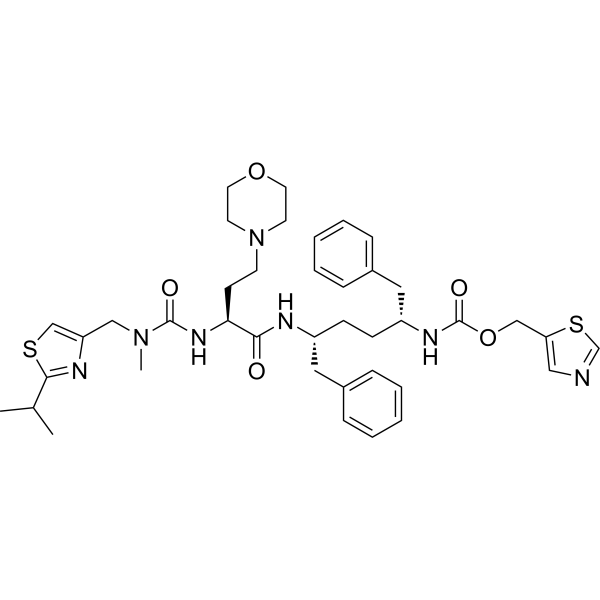
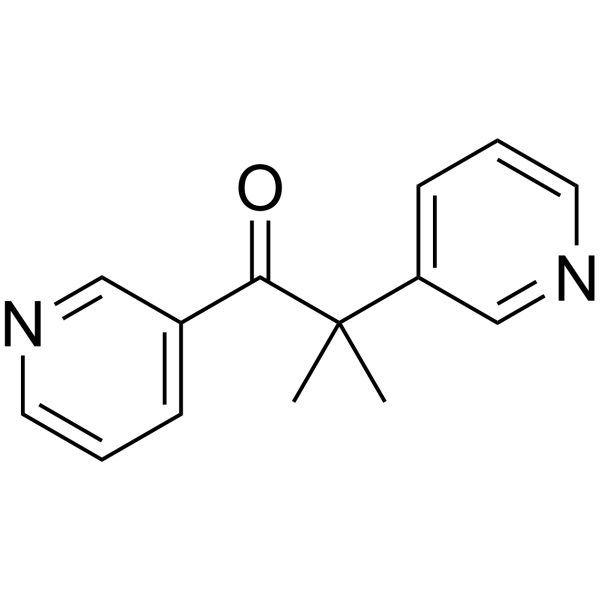
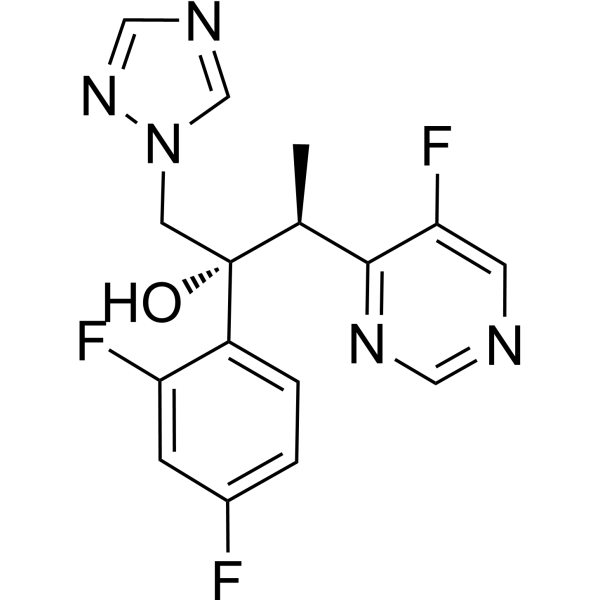
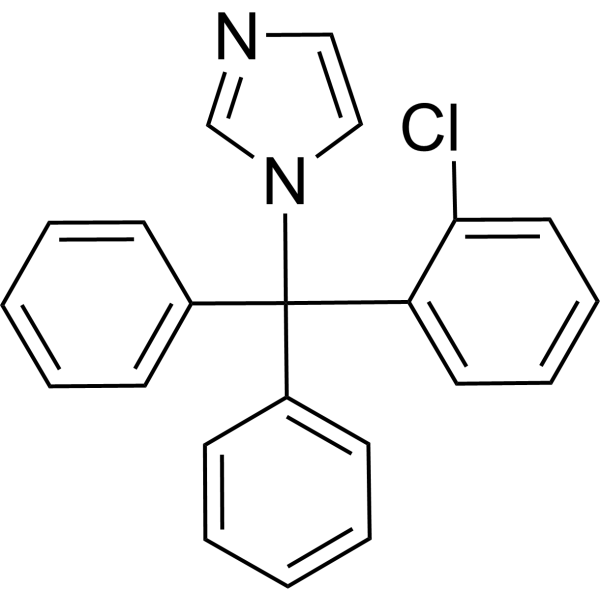
  • HY-125857
    Cytochrome C
    1 Publications Verification

    Biochemical Assay Reagents Apoptosis Reactive Oxygen Species (ROS) Metabolic Disease
    Cytochrome C is a multi-functional enzyme involving in life and death decisions of the cell. Cytochrome C is essential in mitochondrial electron transport and intrinsic type II apoptosis .
    Cytochrome C
  • HY-B1184A

    (+)-Mephenytoin

    Cytochrome P450 Neurological Disease
    (S)-Mephenytoin ((+)-Mephenytoin) is an anticonvulsive agent. (S)-Mephenytoin is a substrate of the cytochrome P450 (CYP) isoform CYP2C19. (S)-Mephenytoin can be used for the analysis of cytochrome P450 metabolism .
    (S)-Mephenytoin
  • HY-125857C

    Biochemical Assay Reagents Apoptosis Reactive Oxygen Species (ROS) Caspase Metabolic Disease
    Cytochrome C (bovine heart) is composed of 104 amino acids and is a nuclear-encoded mitochondrial protein. Cytochrome C (bovine heart) acts as an effective ROS scavenger, but when combined with the cofactor p66Shc, it promotes the generation of ROS to initiate apoptosis. Cytochrome C (bovine heart) can act as a single electron carrier .
    Cytochrome C (bovine heart)
  • HY-17643
    Oteseconazole
    1 Publications Verification

    VT-1161

    Fungal Cytochrome P450 Infection
    Oteseconazole (VT-1161) is a potent and orally active anti-fungal agent. Oteseconazole potently binds to and inhibits Candida albicans cytochrome P45051 (CYP51) activity (Kd ≤39 nM), shows no obvious effect on human CYP51. Oteseconazole also can be used for the research of dermatophytes .
    Oteseconazole
  • HY-15550

    Drug Metabolite Neurological Disease Inflammation/Immunology
    4'-Hydroxy diclofenac is an orally active metabolite of Diclofenac (HY-15036) by cytochrome P450 2C9 (CYP2C9). 4'-Hydroxy diclofenac has anti-inflammatory and analgesic properties .
    4'-Hydroxy diclofenac
  • HY-131723
    Pregnenolone 16α-carbonitrile
    5+ Cited Publications

    Pregnane X Receptor (PXR) Cytochrome P450 Metabolic Disease
    Pregnenolone 16α-carbonitrile is an orally active prototypical and effective rodent-PXR activator. Pregnenolone 16α-carbonitrile, a synthetic steroid, induces cytochrome P450 3A expression. Pregnenolone 16α-carbonitrile exhibits increased resistance to subsequent stressful insults .
    Pregnenolone 16α-carbonitrile
  • HY-100386
    Ticlopidine
    3 Publications Verification

    PCR 5332

    NTPDase Cytochrome P450 Cardiovascular Disease
    Ticlopidine (PCR 5332), an antithrombotic proagent, acts as an allosteric, noncompetitive inhibitor of CD39 with the IC50 of 81.7 μM. Ticlopidine blocks several NTPDase isoenzymes with IC50s of 170 μM and 149 μM for NTPDase2 and NTPDase3, respectively. Ticlopidine is an inhibitor of CYP2C19 human liver cytochrome. Ticlopidine inhibits CYP2C9 and CYP3A4 with IC50s of 26.0 and 32.3 μM, respectively.
    Ticlopidine
  • HY-125857A

    Biochemical Assay Reagents Apoptosis Caspase Metabolic Disease
    Cytochrome C (equine heart) is composed of 104 amino acids and is a nuclear-encoded mitochondrial protein. Cytochrome C (equine heart) is involved in mitochondrial electron transport and intrinsic type II apoptosis. Cytochrome C (equine heart) can act as a single electron carrier .
    Cytochrome C (equine heart)
  • HY-B1751B
    Quinine sulfate
    5+ Cited Publications

    Parasite Potassium Channel Cytochrome P450 Infection Cardiovascular Disease Cancer
    Quinidine sulfate is an antiarrhythmic agent. Quinidine sulfate is a potent, orally active, selective cytochrome P450db inhibitor. Quinidine sulfate is also a K + channel blocker with an IC50 of 19.9 μM. Quinidine sulfate can be used for malaria research .
    Quinine sulfate
  • HY-W015273
    3-Indoleacrylic acid
    1 Publications Verification

    Reactive Oxygen Species (ROS) Metabolic Disease
    3-Indoleacrylic acid is a high-efficient antialgal agent. 3-Indoleacrylic acid increases reactive oxygen species (ROS) production, and inhibits the functions of all the nutrient assimilating genes, down-regulated ribulose-1,5-bisphosphate carboxylase/oxygenase II, and cytochrome f genes in P. donghaiense .
    3-Indoleacrylic acid
  • HY-B1151

    BAY-e 6975

    Environmental Pollutants Fungal Infection
    Climbazole (BAY-e 6975) is a potent antifungal agent. Climbazole also is a potent inducer of rat hepatic cytochrome P450 .
    Climbazole
  • HY-D0055
    3-Cyano-7-ethoxycoumarin
    1 Publications Verification

    Cytochrome P450 Others
    3-Cyano-7-ethoxycoumarin is a fluorescent cytochrome P-450 substrate that generates a blue fluorescent product upon enzymatic cleavage. 3-Cyano-7-ethoxycoumarin is used to detect the activity of mixed-function oxidases in isolated rat hepatocytes. 3-Cyano-7-ethoxycoumarin serves as a biological dye and indicator for research .
    3-Cyano-7-ethoxycoumarin
  • HY-13568

    LRCL 3794

    Cytochrome P450 COX Lipoxygenase PGE synthase Inflammation/Immunology
    Benoxaprofen (LRCL 3794) is a nonsteroidal anti-inflammatory agent that blocks the biosynthesis of inflammatory mediators such as leukotrienes and prostaglandins by inhibiting 5-LOX, PGH2 synthase and cytochrome P-450. Benoxaprofen exhibits significant toxicity: it not only alters cellular redox status, uncouples oxidative phosphorylation and disrupts calcium ion homeostasis, but also causes liver injury through the formation of covalent adducts between its active metabolites and hepatic proteins. Benoxaprofen shows strong phototoxicity under ultraviolet irradiation, and induces erythrocyte lysis, mast cell degranulation and histamine release. Benoxaprofen is widely used in studies of urticaria and related phototoxic mechanisms .
    Benoxaprofen
  • HY-W006230

    Cytochrome P450 Cancer
    Anthraflavic acid specifically inhibits the activity of cytochrome P-448 without affecting phenobarbital-induced cytochrome P-450 or NADPH-dependent cytochrome c reduction. Anthraflavic acid inhibits cytosolic metabolic pathways, blocks the microsomal and cytosolic activation of IQ, and reduces the metabolic activation level of Glu-P-I. Anthraflavic acid may exert anticancer activity by inhibiting the metabolic activation of chemical carcinogens. Anthraflavic acid is applicable to cancer-related research .
    Anthraflavic acid
  • HY-A0069

    Histamine Receptor Cytochrome P450 Neurological Disease Metabolic Disease
    Doxylamine succinate is a first-generation antihistamine and acts as a histamine H1 receptor antagonist. Doxylamine succinate is orally active, possessing analgesic and hypnotic activities. Doxylamine succinate enhances the activities of CYP2B, CYP2A, CYP3A and thyroxine-glucuronosyltransferase via promoting substrate hydroxylation and thyroxine metabolic pathways. Doxylamine succinate decreases serum thyroxine (T4) level and elevates serum thyroid-stimulating hormone (TSH) level. Doxylamine succinate induces liver enlargement and increases the activities of hepatic microsomal cytochrome P450, cytochrome b5 and NADPH-cytochrome c reductase. Doxylamine succinate can be used for the research of nausea, allergy, insomnia .
    Doxylamine succinate
  • HY-22024
    5-Hydroxyflavone
    2 Publications Verification

    5-OH-Flavone

    Cytochrome P450 Others
    5-Hydroxyflavone (5-OH-Flavone) is a flavonoid compound that undergoes oxidation-mediated conversion to 5,7-dihydroxyflavone and 5,6,7-trihydroxyflavone by human cytochrome P450 enzymes .
    5-Hydroxyflavone
  • HY-W014018

    PPO; DPO; POP

    Fluorescent Dye Others
    2,5-Diphenyloxazole (PPO; DPO; POP) is a fluorescent dye, as well as a substrate and metabolite precursor of cytochrome P-450 (cytochrome P-448/P1-450). 2,5-Diphenyloxazole serves as a scintillator .
    2,5-Diphenyloxazole
  • HY-N9348A

    Glutathione S-transferase Cytochrome P450 Metabolic Disease
    Glucoraphenin potassium is an orally effective glucosinolate. Glucoraphenin potassium can be isolated from radish sprouts. Glucoraphenin potassium enhances the enzymatic activity of Glutathione S-transferase. Glucoraphenin potassium enhances the activity of cytochrome P450-related monooxygenase .
    Glucoraphenin potassium
  • HY-B2012

    DPX-H6573

    Environmental Pollutants Fungal Infection
    Flusilazole (DPX-H6573) is a broad-spectrum fungicide and cytochrome P-450 inhibitor that can be used in studies related to fungal infections .
    Flusilazole
  • HY-W027773

    MFC

    Cytochrome P450 Fluorescent Dye Others
    7-Methoxy-4-(trifluoromethyl)coumarin (MFC) is a fluorescent substrate for cytochrome P450 and can quantify CYP activity .
    7-Methoxy-4-(trifluoromethyl)coumarin
  • HY-N9608

    3β-Hydroxy-5α-cholestan-6-one

    Cytochrome P450 Others
    6-Ketocholestanol is a recoupler for mitochondria, chromatophores and cytochrome oxidase proteoliposomes. 6-Ketocholestanol increases the membrane dipole potential .
    6-Ketocholestanol
  • HY-148430

    Cytochrome P450 Cancer
    4-Pyridylmethyl adamantanecarboxamide (Compound 11) is an Aromatase inhibitor with an IC50 of 1.5 μM against hAromatase. 4-Pyridylmethyl adamantanecarboxamide inhibits the C17,20-lyase activity of testicular cytochrome P45017α with an IC50 of 1600 nM, and also inhibits the 17α-hydroxylase activity of this enzyme with an IC50 of 7700 nM. 4-Pyridylmethyl adamantanecarboxamide can be used in the research of prostate cancer .
    4-Pyridylmethyl adamantanecarboxamide
  • HY-125857B

    Biochemical Assay Reagents Apoptosis Caspase Metabolic Disease
    Cytochrome C (Saccharomyces cerevisiae) is a type C cytochrome located in the intermembrane space of the mitochondria. As an electron carrier, Cytochrome C (Saccharomyces cerevisiae) transfers electrons between complex III (cytochrome c reductase) and complex IV (cytochrome c oxidase, CIV) of the respiratory chain. Cytochrome C (Saccharomyces cerevisiae) can play a crucial role in triggering apoptosis by being released from the mitochondria into the cytosol .
    Cytochrome C (Saccharomyces cerevisiae)
  • HY-D0091

    Fluorescent Dye Others
    7-Ethoxy-4-trifluoromethylcoumarin is a fluorescent substrate of various enzymes of the cytochrome P450 superfamily
    7-Ethoxy-4-trifluoromethylcoumarin
  • HY-B1184AR

    (+)-Mephenytoin (Standard)

    Reference Standards Cytochrome P450 Neurological Disease
    (S)-Mephenytoin (Standard) is the analytical standard of (S)-Mephenytoin. This product is intended for research and analytical applications. (S)-Mephenytoin ((+)-Mephenytoin) is an anticonvulsive agent. (S)-Mephenytoin is a substrate of the cytochrome P450 (CYP) isoform CYP2C19. (S)-Mephenytoin can be used for the analysis of cytochrome P450 metabolism .
    (S)-Mephenytoin (Standard)
  • HY-106547

    GABA Receptor Neurological Disease
    Rilmazafone (450191S) is an orally active sleep inducer. Rilmazafone targets cytochrome P-450b and cytochrome P-450e. Rilmazafone induces hepatic drug-metabolizing enzyme activity in rats, mice and dogs. Rilmazafone is applicable for insomnia-related research .
    Rilmazafone
  • HY-162066

    Parasite Infection
    DNDI-6174 is an orally active Leishmania cytochrome b (Qi site of cytochrome bc1 complex/complex III) inhibitor. DNDI-6174 binds to the Qi site of Leishmania cytochrome b, inhibits cytochrome bc1 complex activity in the parasite's electron transport chain across promastigote and axenic amastigote stages. DNDI-6174 reduces parasite burden in rodent models, inhibits growth of various Leishmania species, drug-resistant clinical isolates, and Trypanosoma cruzi, with marginal activity against Trypanosoma brucei. DNDI-6174 can be used for the research of visceral leishmaniasis, cutaneous leishmaniasis .
    DNDI-6174
  • HY-P3586

    Hunter-killer peptide ao; Prohibitin-targeting peptide 1; prohibitin-TP01; Adipotide

    Apoptosis Cancer
    HKPao (Hunter-killer peptide ao) is a biologically active peptide. HKPao (Hunter-killer peptide ao) has anti-obesity and anti-tumor pro-apoptotic activity to cause release of cytochrome c from vesicles .
    HKPao
  • HY-131452

    Cytochrome P450 Cancer
    1-Ethynylpyrene is an aryl acetylenic inhibitor of cytochromes P450 1A1, 1A2, and 2B1 with IC50s of 0.18, 0.32, and 0.04 μM, respectively . 1-Ethynylpyrene is a click chemistry reagent, it contains an Alkyne group and can undergo copper-catalyzed azide-alkyne cycloaddition (CuAAc) with molecules containing Azide groups.
    1-Ethynylpyrene
  • HY-114759
    MS-PPOH
    1 Publications Verification

    Cytochrome P450 Neurological Disease Metabolic Disease Cancer
    MS-PPOH is a potent and selective cytochrome P450 (CYP) epoxygenase inhibitor . MS-PPOH inhibits CYP2C8 and CYP2C9 with IC50s of 15 and 11 μM, respectively . MS-PPOH is a click chemistry reagent, it contains an Alkyne group and can undergo copper-catalyzed azide-alkyne cycloaddition (CuAAc) with molecules containing Azide groups.
    MS-PPOH
  • HY-132178B

    Biochemical Assay Reagents Metabolic Disease
    Cytochrome C oxidase (complex IV) (EC 7.1.1.9) is the unique terminal oxidase of the mitochondrial respiratory chain (RC) in mammals. Cytochrome C oxidase is made up of thirteen subunits that catalyze the transfer of electrons from ferro-cytochrome c to molecular oxygen .
    Cytochrome C oxidase
  • HY-150574

    Cytochrome P450 Infection
    CYP3A4-IN-1 (compound 5a) is a potent cytochrome P450 3A4 (CYP3A4) inhibitor with an IC50 value of 0.085 µM .
    CYP3A4-IN-1
  • HY-126983

    Epoxybergamottin

    Cytochrome P450 Others
    6',7'-Epoxybergamottin is a metabolism of Penicillium digitatum. 6',7'-Epoxybergamottin can be used in study the cytochrome P450 3A4 inhibitory activity .
    6',7'-Epoxybergamottin
  • HY-122330

    Kelocyanor

    Cytochrome P450 Others
    Dicobalt edetate (Kelocyanor) is a cobalt compound that is an antidote for hydrocyanic acid (cyanide) poisoning. Dicobalt edetate can form a stable complex with cyanide ions, thereby reducing the binding of cyanide ions to cytochrome oxidase, thereby preventing cyanide from inhibiting cellular respiration .
    Dicobalt edetate
  • HY-117532

    PCB 118

    Pyroptosis Cancer
    PenCB (PCB 118) could induces pyroptosis by priming and activating NFκB-dependent NLRP3 inflammasome. PCB 118 induces oxidative stress and pyroptosis are dependent on Aryl hydrocarbon receptor (AhR) activation and subsequent cytochrome P450 1A1 upregulation .
    PenCB
  • HY-D0147

    Pentoxyresorufin

    Bacterial Infection
    Resorufin pentyl ether (Pentoxyresorufin) is a Resazurin (HY-111391) analogue. Resorufin pentyl ether can function as a substrate probe to characterize and differentiate between a variety of inducers of cytochromes P-450. Resorufin pentyl ether has bactericidal activity against N. gonorrhoeae .
    Resorufin pentyl ether
  • HY-148368

    Bcl-2 Family Apoptosis Cancer
    CYD-4-61 is a novel Bax activator used for breast cancer research. CYD-4-61 inhibits triple-negative breast cancer MDA-MB-231 and ER-positive breast cancer MCF-7 cell lines proliferation. CYD-4-61 activates Bax protein to induce cytochrome c release and regulate apoptotic biomarkers, leading to cancer cell apoptosis .
    CYD-4-61
  • HY-110073

    Apoptosis Inflammation/Immunology Cancer
    iMAC2 hydrochloride is a potent MAC (mitochondrial apoptosis-induced channel) inhibitor, with an IC50 of 28 nM and a LD50 of 15000 nM. iMAC2 hydrochloride shows anti-apoptotic effect. iMAC2 hydrochloride blocks cytochrome c release .
    iMAC2 hydrochloride
  • HY-W012568

    Reactive Oxygen Species (ROS) Others
    1-Methoxynaphthalene is used as the substrate to investigate the activity of cytochrome c peroxidase (CcP). 1-Methoxynaphthalene also can be used to synthesize prenyl naphthalen-ols .
    1-Methoxynaphthalene
  • HY-150092

    Drug Metabolite Cardiovascular Disease
    8(S),9(R)-EET is an eicosanoid product of Arachidonic acid (AA; HY-109590) by cytochromes P450. 8(S),9(R)-EET dilates canine epicardial arterioles in a concentration-dependent manner with an EC50 value of 121 nM .
    8(S),9(R)-EET
  • HY-15550R

    Reference Standards Drug Metabolite Neurological Disease Inflammation/Immunology
    4'-Hydroxy diclofenac (Standard) is the analytical standard of 4'-Hydroxy diclofenac. This product is intended for research and analytical applications. 4'-Hydroxy diclofenac is an orally active metabolite of Diclofenac (HY-15036) by cytochrome P450 2C9 (CYP2C9). 4'-Hydroxy diclofenac has anti-inflammatory and analgesic properties .
    4'-Hydroxy diclofenac (Standard)
  • HY-N11546

    Cytochrome P450 Bacterial Fungal Infection Cancer
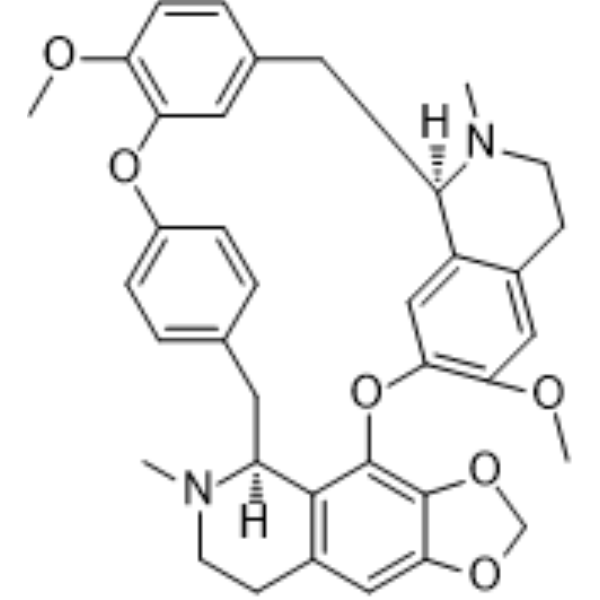
    Sapindoside B is a substance with hepatoprotective activity, and also acts as a cytochrome P-450 (cytochrome P-450) inhibitor, antibacterial agent and membrane-disrupting agent. Sapindoside B reversibly inhibits the content of cytochrome P-450 in liver microsomes, suppresses the phenobarbital-induced increase in enzyme content, reduces the production of active metabolites mediated by cytochrome P-450, and alleviates hepatotoxic injury. Sapindoside B binds to Cutibacterium acnes lipase, reduces lipase activity, inhibits biofilm formation, and decreases bacterial adhesion. Sapindoside B exhibits cytotoxicity against human cancer, liver cancer, leukemia and glioblastoma cells. Sapindoside B inhibits mycelial growth of phytopathogenic fungal strains, possesses antibacterial activity against dermatophytes, and also has hemolytic/membrane-lytic activity. Sapindoside B can be used in research related to liver injury, Cutibacterium acnes biofilm-associated infections, gastric cancer, carcinoma, promyelocytic leukemia, glioblastoma, apple scab and grape gray mold .
    Sapindoside B
  • HY-132178

    Endogenous Metabolite Metabolic Disease Cancer
    Cytochrome P450 is a family of monooxygenase enzymes that catalyzes the conversion of fatty acids to terminal alkenes using hydrogen peroxide as a cosubstrate. Cytochrome P450 as membrane-bound hemoproteins, plays important roles in the detoxification of drugs, cellular metabolism, and homeostasis .
    Cytochrome P450
  • HY-135161

    Drug Metabolite Others
    EDDP perchlorate is an N-desmethyl metabolite of Methadone by intestinal, hepatic, and cytochrome P450 (CYP) 3A4 .
    EDDP perchlorate
  • HY-W715444

    Antibiotic Fungal Mitochondrial Metabolism Infection
    Mucidin is an antifungal antibiotic that inhibits electron-transfer reactions in the cytochrome bc1 complex of the mitochondrial respiratory chain .
    Mucidin
  • HY-103272

    Apoptosis Inflammation/Immunology Cancer
    iMAC2 is a potent MAC inhibitor with an IC50 of 28 nM and an LD50 of 15000 nM. iMAC2 shows anti-apoptotic effect. iMAC2 blocks cytochrome c release .
    iMAC2
  • HY-100638

    NPC

    Drug Metabolite Cancer
    RPR132595A (NPC) is an active metabolite of CPT-11, which is generated by cytochrome P-450 3A4 (CYP3A4) and finally excreted through urine .
    RPR132595A
  • HY-B1751C

    Parasite Cytochrome P450 Potassium Channel Infection
    Quinidine hydrobromide is an antiarrhythmic agent. Quinidine is a potent, orally active, selective cytochrome P450db inhibitor. Quinidine hydrobromide is also a K + channel blocker with an IC50 of 19.9 μM. Quinidine hydrobromide can be used for malaria research .
    Quinine hydrobromide
  • HY-N1282R

    Reference Standards Glutathione S-transferase Cytochrome P450 Cancer
    Seneciphylline (Standard) is the analytical standard of Seneciphylline. This product is intended for research and analytical applications. Seneciphylline is a toxic pyrrolizidine alkaloid in Gynura japonica . Seneciphylline significantly increases the activities of epoxide hydrase and glutathione-S-transferase but causes reduction of cytochrome P-450 and related monooxygenase activities .
    Seneciphylline (Standard)
  • HY-147721

    Bacterial Infection
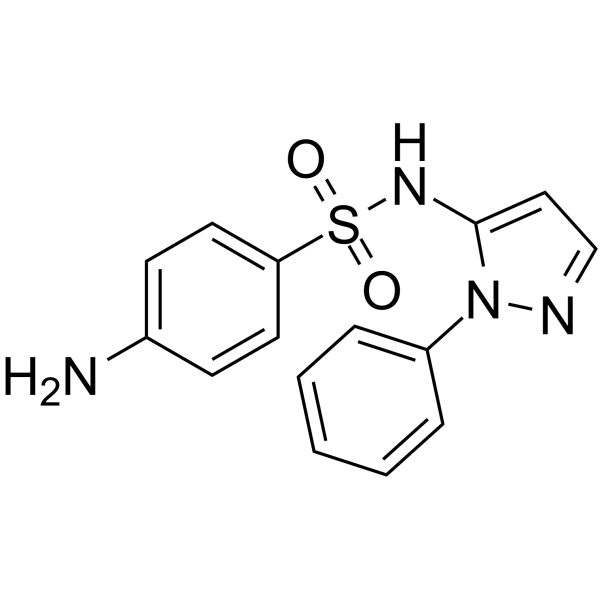
    Dihydropteroate synthase-IN-1 (compound 5g) is a potent dihydropteroate synthase (DHPS) inhibitor. Dihydropteroate synthase-IN-1 shows antimicrobial activities and antifungal activity. Dihydropteroate synthase-IN-1 inhibits cytochromes P450. Dihydropteroate synthase-IN-1 can bu used as diagnostic radio imaging material .
    Dihydropteroate synthase-IN-1

Inquiry Online

Your information is safe with us. * Required Fields.

Salutation


Country or Region *

Applicant Name *


Organization Name *

Department *


Email Address *


Product Name *

Cat. No.


Requested quantity *

Phone Number *


Remarks

Inquiry Online

Inquiry Information

Product Name:
Cat. No.:
Quantity:
MCE Japan Authorized Agent:

