1. Search Result
Search Result
Results for "

Epilepsy

" in MedChemExpress (MCE) Product Catalog:

332

Inhibitors & Agonists

5

Screening Libraries

4

Fluorescent Dye

7

Biochemical Assay Reagents

13

Peptides

2

Inhibitory Antibodies

34

Natural
Products

34

Isotope-Labeled Compounds

2

Click Chemistry

1

GMP Molecules

Cat. No. Product Name Target Research Areas Chemical Structure
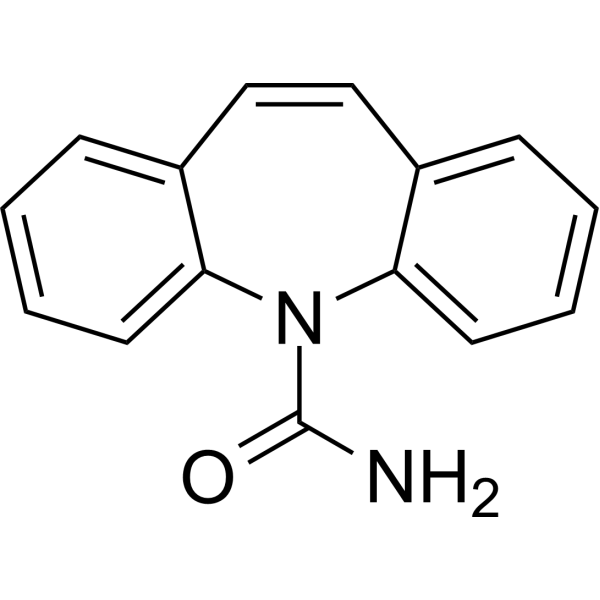
  • HY-B0246
    Carbamazepine
    15+ Cited Publications

    CBZ; NSC 169864

    Sodium Channel Autophagy Mitophagy Potassium Channel Calcium Channel HDAC Neurological Disease Cancer
    Carbamazepine is an orally active pressure-sensitive sodium ion channel blocker with an IC50 of 131 μM. Carbamazepine blocks voltage gated Na +, Ca 2+, and K + channels, and is also a HDAC inhibitor (IC50: 2 μM). Carbamazepine is an anticonvulsant and can be used for research of epilepsy and neuropathic pain .
    Carbamazepine
  • HY-B0495
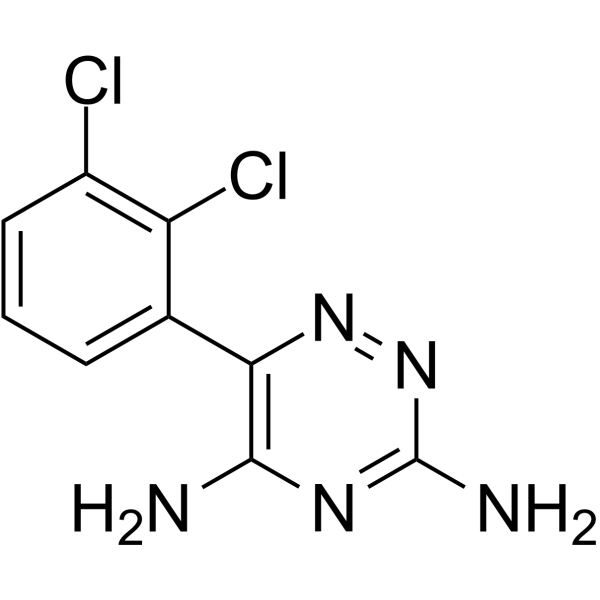
    Lamotrigine
    5+ Cited Publications

    LTG; BW430C

    Sodium Channel Autophagy Neurological Disease Cancer
    Lamotrigine (BW430C) is a potent and orally active anticonvulsant or antiepileptic agent. Lamotrigine selectively blocks voltage-gated Na + channels, stabilizing presynaptic neuronal membranes and inhibiting glutamate release. Lamotrigine can be used for the research of epilepsy, focal seizure, et al .
    Lamotrigine
  • HY-W015309
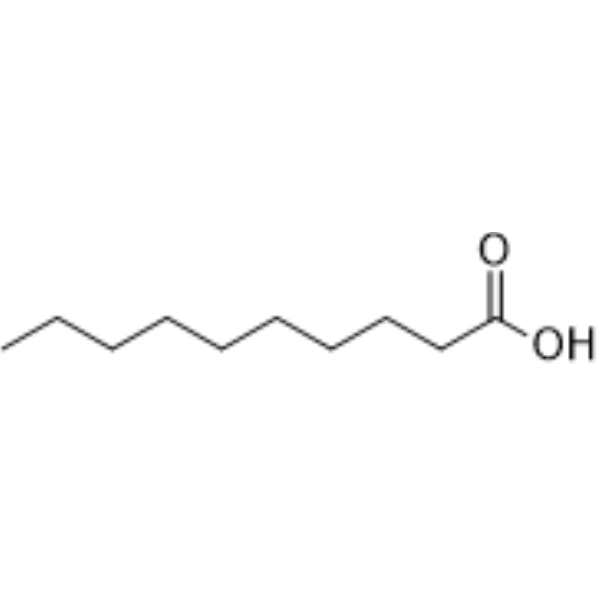
    Decanoic acid
    4 Publications Verification

    Environmental Pollutants Endogenous Metabolite iGluR Glutaminase c-Met/HGFR Tyrosinase Neurological Disease Metabolic Disease Cancer
    Decanoic acid is a key component of the medium-chain triglyceride (MCT) found in coconut oil. Decanoic acid is a brain-penetrant and non-competitive inhibitor of AMPA receptor showing antiseizure activity in rats. Decanoic acid reduces tyrosinase activity and inhibits melanosome maturation. Decanoic acid suppresses the phosphorylation of c-Met and induced apoptosis in hepatocellular carcinoma (HCC) cells by inhibiting the expression of various oncogenic proteins, which is promising for research in the field of mTORC1 signaling, HCC and epilepsy .
    Decanoic acid
  • HY-W010155
    Tryptophol
    2 Publications Verification

    Indole-3-ethanol

    Endogenous Metabolite Apoptosis Caspase Bacterial Infection Cardiovascular Disease Neurological Disease Metabolic Disease Inflammation/Immunology
    Tryptophol is an aromatic alcohol and secondary metabolite produced by microorganisms. Tryptophol induces apoptosis and cleavage of caspase-8. Tryptophol inhibits Cunninghamella blakesleeana biofilm. Tryptophol has anti-phage infection, biofilm formation regulation, anti-inflammatory, hemolytic, sleep induction, temperature change, seizure susceptibility and immune regulation activities. Tryptophol is used in the research of African trypanosomiasis, sleep disorders, epilepsy .
    Tryptophol
  • HY-109123

    TAK-935; OV935

    Cytochrome P450 Neurological Disease
    Soticlestat (TAK-935; OV935) is a first-in-class, potent, selective, and orally active cholesterol 24-hydroxylase (CH24H) inhibitor. Soticlestat has the potential for epilepsy syndromes research .
    Soticlestat
  • HY-B1487

    Tricyclamol hydrochloride; (±)-Procyclidine hydrochloride

    iGluR mAChR Neurological Disease
    Procyclidine (Tricyclamol, (±)-Procyclidine) hydrochloride , an anticholinergic agent, is a muscarinic receptor antagonist that also has the properties of an N-methyl-D-aspartate (NMDA) antagonist. Procyclidine hydrochloride can be used in studies of Parkinson's disease and related psychiatric disorders such as Soman-induced epilepsy .
    Procyclidine hydrochloride
  • HY-P1775

    EC 4.2.1.1

    Carbonic Anhydrase Neurological Disease Metabolic Disease Cancer
    Carbonic anhydrase, Bovine erythrocytes (EC 4.2.1.1) is ubiquitous zinc-containing metalloenzyme present in prokaryotes and eukaryotes. Carbonic anhydrase can catalyze reversible conversion of carbon dioxide to bicarbonate and protons. Carbonic anhydrase can be used for the research of cancer, glaucoma, obesity and epilepsy .

    Carbonic anhydrase, Bovine erythrocytes
  • HY-111751
    JNJ-61432059
    1 Publications Verification

    iGluR Neurological Disease
    JNJ-61432059 is a blood-brain barrier-permeable, orally active TARP γ-8-associated AMPAR modulator with anticonvulsant activity. JNJ-61432059 negatively regulates GluA1 and positively modulates GluA2-containing AMPARs. JNJ-61432059 exerts potent protective effects in rodent epilepsy models. JNJ-61432059 is applicable for epilepsy-related research .
    JNJ-61432059
  • HY-B0419
    Manidipine
    3 Publications Verification

    Calcium Channel Interleukin Related Cardiovascular Disease Neurological Disease Endocrinology
    Manidipine is an orally active calcium channel antagonist. Manidipine regulates the expression of cytokines (IL-1β, IL-6). Manidipine has a hypotensive effect. Manidipine can be used in the study of cardiovascular diseases (such as hypertension, myocardial ischemia-reperfusion injury, ventricular hypertrophy), kidney diseases (such as glomerular diseases), and epilepsy .
    Manidipine
  • HY-172318

    NKCC Neurological Disease
    IAMA-6 is a selective NKCC1 inhibitor with neuroprotective effects. IAMA-6 can be used for the study of brain conditions, including drug-resistant epilepsy (e.g. temporal lobe epilepsy (TLE) and Dravet syndrome (DrS)), autism spectrum disorders (ASD) and Down syndrome (DoS) .
    IAMA-6
  • HY-W014325

    Framidice 3

    TRP Channel Endogenous Metabolite Neurological Disease Metabolic Disease Cancer
    TRPM8 agonist WS-3 is an specific agonist of TRPM8 with an EC50 of 3.7 μM. TRPM8 agonist WS-3 inhibits epileptic seizures through a TRPM8 dependent mechanism. TRPM8 agonist WS-3 can be used for research on epilepsy and other conditions .
    TRPM8 agonist WS-3
  • HY-110192
    ML 297
    1 Publications Verification

    VU 0456810; CID 56642816

    Potassium Channel Neurological Disease
    ML 297 (VU 0456810) is a potent and selective GIRK1/2 activator, with an EC50 of 0.16 μM. ML 297 can cross the blood-brain barrier with brain-to-plasma ratio of 0.2 in mice model (i.p.). ML 297 is potential for the treatment of epilepsy .
    ML 297
  • HY-132189

    P-glycoprotein Neurological Disease
    Laniquidar is a non-competitive P-gp inhibitor with an IC50 of 0.51 μM. Laniquidar binds to the P-gp transporter with high affinity and exhibits low activity as a substrate. Laniquidar is applicable to epilepsy-related research .
    Laniquidar
  • HY-B1642
    Ethotoin
    2 Publications Verification

    Peganone

    Sodium Channel Neurological Disease
    Ethotoin (Peganone) is an orally active anticonvulsant agent used in epilepsy research, Ethotoin is a hydantoin, similar to phenytoin .
    Ethotoin
  • HY-137840

    Carboxypeptidase Cancer
    Hippuryl-L-phenylalanine is a substrate of carboxypeptidase. Carboxypeptidase is a protease enzyme that related with obesity, epilepsy and neurodegeneration. Hippuryl-L-phenylalanine can be used for the determination of carboxypeptidase activity .
    Hippuryl-L-phenylalanine
  • HY-B0246R

    CBZ (Standard); NSC 169864 (Standard)

    Reference Standards Sodium Channel Autophagy Mitophagy Potassium Channel Calcium Channel HDAC Neurological Disease Cancer
    Carbamazepine (Standard) is the analytical standard of Carbamazepine. This product is intended for research and analytical applications. Carbamazepine is an orally active pressure-sensitive sodium ion channel blocker with an IC50 of 131 μM. Carbamazepine blocks voltage gated Na +, Ca 2+, and K + channels, and is also a HDAC inhibitor (IC50: 2 μM). Carbamazepine is an anticonvulsant and can be used for research of epilepsy and neuropathic pain .
    Carbamazepine (Standard)
  • HY-152166

    Sodium Channel Neurological Disease
    NaV1.2/1.6 channel blocker-1 is a potent NaV1.2/1.6 channel blocker, with IC50s of 9.8 and 24.4 μM for rNaV1.6 and hNaV1.2, respectively. NaV1.2/1.6 channel blocker-1 can be used for the research of generalized epilepsy .
    NaV1.2/1.6 channel blocker-1
  • HY-P1775A

    Carbonic Anhydrase Neurological Disease Metabolic Disease Cancer
    Carbonic anhydrase isoenzyme is the isoenzyme of Carbonic anhydrase (HY-P1775). Carbonic anhydrase isoenzyme is ubiquitous zinc-containing metalloenzyme present in prokaryotes and eukaryotes. Carbonic anhydrase isoenzyme catalyzes reversible conversion of carbon dioxide to bicarbonate and protons, and can be used for the research of cancer, glaucoma, obesity and epilepsy .
    Carbonic anhydrase (isoenzyme)
  • HY-10585R
    Valproic acid (Standard)
    45+ Cited Publications

    VPA (Standard); 2-Propylpentanoic acid (Standard); Dipropylacetic acid (Standard)

    Reference Standards Organoid HDAC Autophagy Mitophagy HIV Notch Apoptosis Endogenous Metabolite Infection Neurological Disease Metabolic Disease Cancer
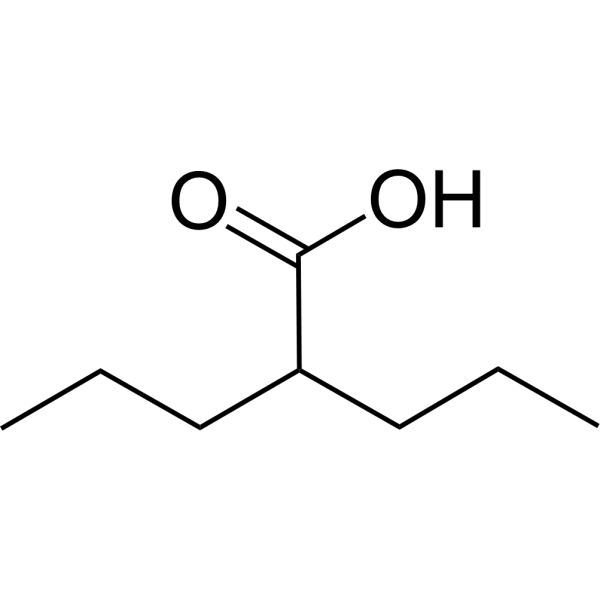
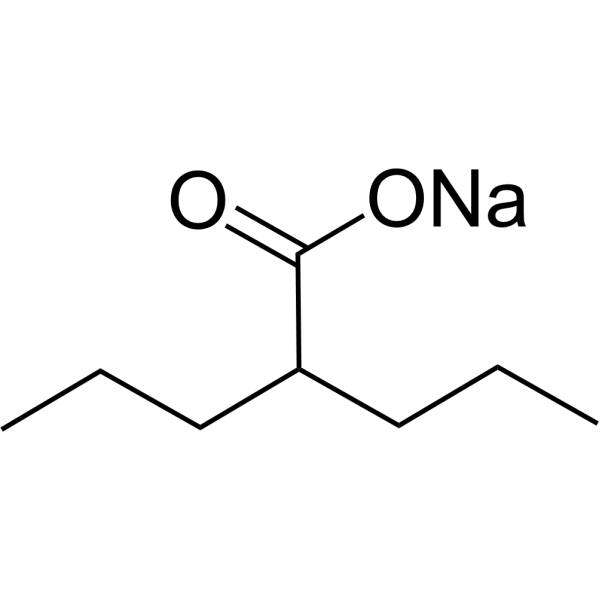
    Valproic acid (Dipropylacetic Acid) (Standard) is an analytical standard for valproic acid. This product is intended for research and analytical applications. Valproic acid is an orally active HDAC inhibitor (IC50=0.5-2 mM), inhibits the activity of HDAC1 (IC50=400 μM), and induces the degradation of HDAC2. Valproic acid activates Notch1 signaling and inhibits the proliferation of small cell lung cancer (SCLC) cells. Valproic acid is used in the study of epilepsy, bipolar disorder, metabolic diseases, HIV infection, and migraine .
    Valproic acid (Standard)
  • HY-119810
    Seletracetam
    1 Publications Verification

    Ucb 44212

    Synaptic Vesicle Proteins Neurological Disease
    Seletracetam (Ucb 44212), as an analog of the antiepileptic agent Levetiracetam, is a SV2A modulator for the research of epilepsy .
    Seletracetam
  • HY-14948
    Carisbamate
    1 Publications Verification

    RWJ-333369

    Sodium Channel Neurological Disease
    Carisbamate (RWJ-333369) is an orally active neuromodulator. Carisbamate prevents the development and production of epilep-like discharges and has a neuroprotective effect after in vitro epilepticus-like injury. Carisbamate has good antiepileptic activity in genetic models of generalized and nonconvulsive epilepsy .
    Carisbamate
  • HY-B0495R
    Lamotrigine (Standard)
    5+ Cited Publications

    LTG (Standard); BW430C (Standard)

    Reference Standards Sodium Channel Neurological Disease
    Lamotrigine (Standard) is the analytical standard of Lamotrigine. This product is intended for research and analytical applications. Lamotrigine (BW430C) is a potent and orally active anticonvulsant or antiepileptic agent. Lamotrigine selectively blocks voltage-gated Na + channels, stabilizing presynaptic neuronal membranes and inhibiting glutamate release. Lamotrigine can be used for the research of epilepsy, focal seizure, et al .
    Lamotrigine (Standard)
  • HY-175668

    Potassium Channel Neurological Disease
    IDOR-1104-0086 is an orally active Kv7 potassium channel opener with an EC50 of 210 nM that can cross blood-brain barrier. IDOR-1104-0086 displays strong selectivity against the hERG channel with an IC20 of 25 μM. IDOR-1104-0086 exhibits efficacy in two rodent models of epilepsy and a favorable tolerability profile. IDOR-1104-0086 can used for the study of epilepsy .
    IDOR-1104-0086
  • HY-123671

    Neuropeptide Y Receptor Neurological Disease
    CYM2503 is a putative GalR2-positive allosteric modulator. CYM2503 increases the latency to first electrographic seizure and decreases the total time in seizure. CYM2503 also attenuates electroshock-induced seizures in mice. Galanin receptors type 1 (GalR1) and/or type 2 (GalR2) represent unique pharmacological targets for the research of seizures and epilepsy .
    CYM2503
  • HY-N9502

    Endogenous Metabolite Neurological Disease
    Linalool oxide is a monoterpene and found in aromatic plant essential oils and is a secondary metabolite in elongating wheat plants. Linalool oxide has antinociceptive, anticonvulsant, and anxiolytic activity. Linalool oxide can be used for the research of pain, epilepsy, anxiety disorders .
    Linalool oxide
  • HY-W048995

    Endogenous Metabolite Neurological Disease
    D-6-Oxo-pipecolinic acid is the D-enantiomer of 6-Oxo-pipecolinic acid. 6-Oxo-pipecolinic acid is the biomarkers associated with pyridoxine-dependent epilepsy (PDE-ALDH7A1) .
    D-6-Oxo-pipecolinic acid
  • HY-100783B

    (+)-Bicuculline methobromide

    GABA Receptor Neurological Disease
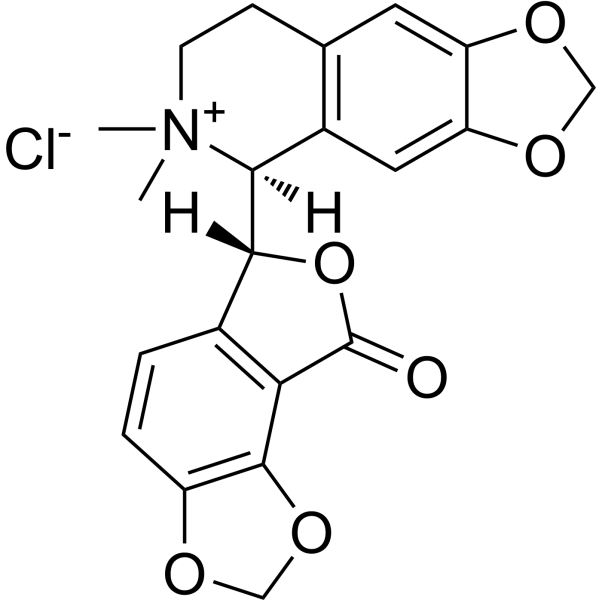
    Bicuculline methobromide is a selective GABAA Receptor antagonist with an IC50 value of 3 μM. Bicuculline methobromide induces clonic tonic convulsions in mammals and can also be used to block Ca 2+ activated potassium channels. Bicuculline methobromide can be used in studies of epilepsy and other related psychiatric disorders .
    Bicuculline methobromide
  • HY-14836

    JZP 4

    Calcium Channel Sodium Channel Neurological Disease
    Elpetrigine (JZP 4) is a potent calcium and sodium channel blocker. Elpetrigine has anticonvulsant, antidepressant, antimania and anxiolytic effects. Elpetrigine can be used in the research of epilepsy and bipolar disorder .
    Elpetrigine
  • HY-Y0669R

    Reference Standards Endogenous Metabolite YAP Glutathione Peroxidase Ferroptosis Neurological Disease Metabolic Disease Inflammation/Immunology
    Pipecolic acid (Standard) is the analytical standard of Pipecolic acid. This product is intended for research and analytical applications. Pipecolic acid is a metabolite of lysine and an important precursor for many useful microbial secondary metabolites. Pipecolic acid slows ferroptosis in diabetic retinopathy by inhibiting the YAP-GPX4 signaling pathway. In addition, Pipecolic acid can be used as a diagnostic marker for pyridoxine-dependent epilepsy .
    Pipecolic acid (Standard)
  • HY-106822

    AO-33; (±)-Losigamone; LSG

    Sodium Channel Chloride Channel Neurological Disease
    Losigamone (AO-33) is an orally active antiepileptic compound. Losigamone blocks sodium channel. Losigamone stimulates the neuronal chloride channel and enhance chloride influx. Losigamone potentiates GABA-mediated responses and reduces epileptiform activity induced by chloride channel antagonists. Losigamone can be used for epilepsy research .
    Losigamone
  • HY-W103317

    Indoxazene

    Drug Intermediate Neurological Disease
    1,2-Benzisoxazole (Indoxazene) is a potential substrate of rabbit liver aldehyde oxidase. 1,2-Benzisoxazole was used in the discovery and development of zonisamide (HY-B0124) for the study of epilepsy and Parkinson's disease .
    1,2-Benzisoxazole
  • HY-105860

    BGG 492

    iGluR Neurological Disease
    Selurampanel (BGG 492) is an orally active and competitive AMPA receptor antagonist with an IC50 of 190 nM. Selurampanel has reasonable blood-brain barrier penetration. Selurampanel can be used for epilepsy research .
    Selurampanel
  • HY-B1487R

    Tricyclamol hydrochloride (Standard); (±)-Procyclidine hydrochloride (Standard)

    Reference Standards iGluR mAChR Neurological Disease
    Procyclidine (hydrochloride) (Standard) is the analytical standard of Procyclidine (hydrochloride). This product is intended for research and analytical applications. Procyclidine (Tricyclamol, (±)-Procyclidine) hydrochloride , an anticholinergic agent, is a muscarinic receptor antagonist that also has the properties of an N-methyl-D-aspartate (NMDA) antagonist. Procyclidine hydrochloride can be used in studies of Parkinson's disease and related psychiatric disorders such as Soman-induced epilepsy .
    Procyclidine hydrochloride (Standard)
  • HY-P3709

    p62 E1/E2/E3 Enzyme Neurological Disease
    TRAF6 peptide is a specific TRAF6-p62 inhibitor. TRAF6 peptide potently abrogates NGF-dependent TrkA ubiquitination. TRAF6 peptide has good research potential in neurological diseases such as alzheimer's disease (AD), parkinson's, ALS, head trauma, epilepsy and stroke .
    TRAF6 peptide
  • HY-130155

    AMPK Neurological Disease
    AMPK activator C2 is a potent allosteric AMPK activator that is promising for research of epilepsy and convulsions .
    AMPK activator C2
  • HY-150541

    Calcium Channel Neurological Disease
    IAA65 is a potent T-type calcium channel inhibitor with a IC50 value of 18.9 µM. IAA65 can be used for epilepsy research .
    IAA65
  • HY-105115

    ZK 112119

    GABA Receptor Neurological Disease
    Abecarnil (ZK 112119) is a ligand or a partial agonist for benzodiazepine (BZ) receptor. Abecarnil possesses anxiolytic and anticonvulsant properties. Abecarnil can act as a positive allosteric modulator of GABAA receptor. Abecarnil inhibits the binding of the BZ [3H]lormetazepam to rat cerebral cortex membranes, with an IC50 of 0.82 nM. Abecarnil can be used for epilepsy research .
    Abecarnil
  • HY-B1487A

    Tricyclamol; (±)-Procyclidine

    mAChR iGluR Neurological Disease
    Procyclidine (Tricyclamol; (±)-Procyclidine), an anticholinergic agent, is a muscarinic receptor antagonist that also has the properties of an N-methyl-D-aspartate (NMDA) antagonist. Procyclidine can be used in studies of Parkinson's disease and related psychiatric disorders such as Soman-induced epilepsy .
    Procyclidine
  • HY-160083

    Potassium Channel Neurological Disease
    KCC2 Modulator-3 (Example 54) is a KCC2 modulator with an EC50 of 0.253  μM. KCC2 Modulator-3 can be used for neurological disorders research, such as epilepsy, neuropathic pain and Rett's syndrme .
    KCC2 Modulator-3
  • HY-145761

    iGluR Neurological Disease
    AMPA-IN-1 is a potent inhibitor of AMPA receptor. AMPA receptors are receptors that are widely expressed in the brain, and play a central role in the regulation of fast excitatory synaptic transmission and synaptic plasticity. AMPA-IN-1 has the potential for the research of various central diseases including epilepsy (extracted from patent WO2017082288A1, compound 14) .
    AMPA-IN-1
  • HY-176065

    Sodium Channel Neurological Disease
    Nav1.2-IN-1 (compound 5i), a 3-(1,2,3,6-tetrahydropyridine)-4-azaindole derivative, is a potent and selective Nav1.2 inhibitor. Nav1.2-IN-1 induces a reduction in the peak amplitude of Nav1.2 currents with an IC50 value of 7.79 μM. Nav1.2-IN-1 exhibits antiepileptic activity. Nav1.2-IN-1 shows high anticonvulsant effect and low neurotoxicity in subcutaneous Pentetrazole (sc-PTZ)-induced epilepsy mode .
    Nav1.2-IN-1
  • HY-P3709A

    p62 E1/E2/E3 Enzyme Neurological Disease
    TRAF6 peptide TFA is a specific TRAF6-p62 inhibitor. TRAF6 peptide TFA potently abrogates NGF-dependent TrkA ubiquitination. TRAF6 peptide TFA has good research potential in neurological diseases such as alzheimer's disease (AD), parkinson's, ALS, head trauma, epilepsy and stroke .
    TRAF6 peptide TFA
  • HY-103308

    Potassium Channel Neurological Disease
    TRAM-39 is a selective blocker of intermediate conductance Ca2+-activated K+ (IKCa) channels. TRAM-39 inhibits KCa3.1 channel with an IC50 value of 60 nM. TRAM-39 can be used for the research of ataxia, epilepsy, memory disorders, schizophrenia and Parkinson’s disease .
    TRAM-39
  • HY-149422

    Fluorescent Dye Neurological Disease
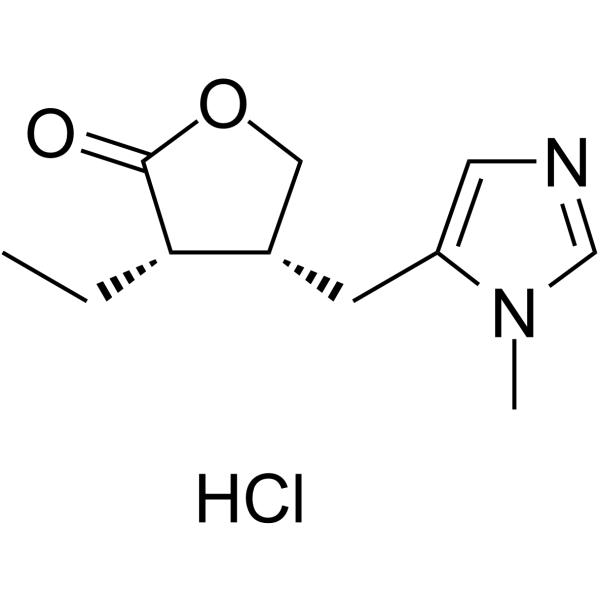
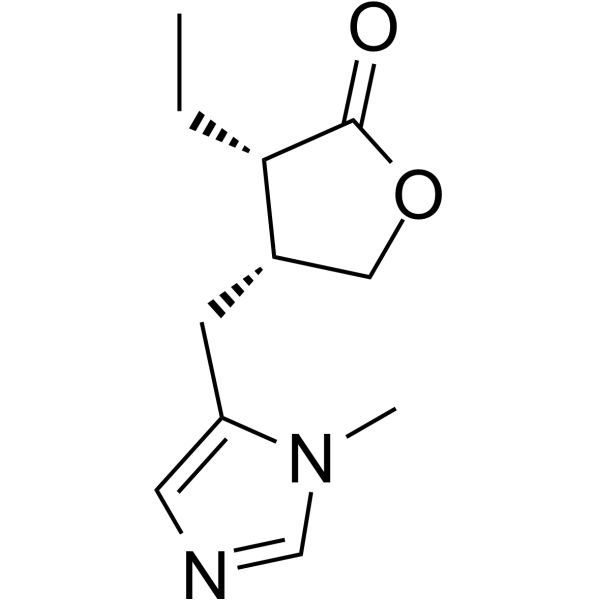
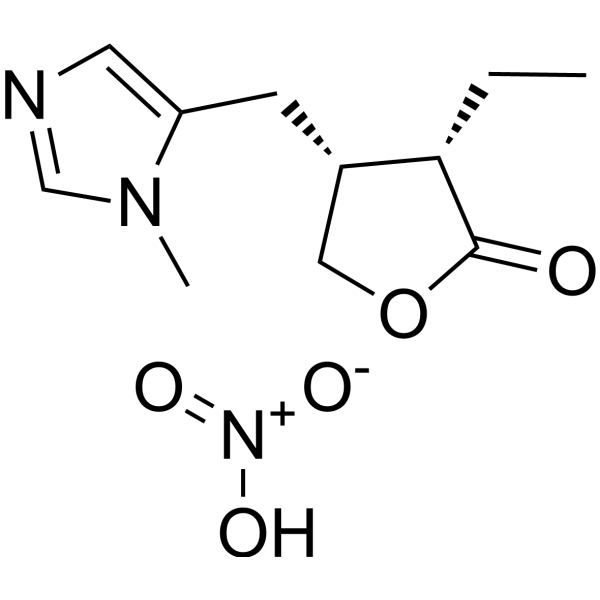
    NIR-FP is a near-infrared fluorescent probe with high sensitivity and selectivity for superoxide anion O 2-. O 2- is the main precursor of ROS, and ferroptosis-mediated epilepsy models can be dynamically tracked by detecting O 2-. Ferroptosis-mediated epilepsy models include: kainic acid (HY-N2309)-induced chronic epilepsy model, Pentylenetetrazole-induced acute epilepsy model, and pilocarpine (HY-B0726A)-induced epilepsy model .
    NIR-FP
  • HY-119915

    M-144; Themisone

    Others Neurological Disease
    Atrolactamide (M-144) is a potent anticonvulsant. Atrolactamide can be used for the research of epilepsy .
    Atrolactamide
  • HY-177302

    mGluR Neurological Disease
    mGluR2 modulator 6 (Compound 25-a) is a mGluR2 modulator. mGluR2 modulator 6 has anticonvulsant activity in the 6Hz epilepsy model, and the effect is better when combined with Levetiracetam (HY-B0106). mGluR2 modulator 6 can be used in the research of epilepsy .
    mGluR2 modulator 6
  • HY-179093

    Potassium Channel Neurological Disease
    KCNT1-IN-3 (Compound 31) is a KCNT1 inhibitor with an IC50 value of 30 nM against the wild-type human KCNT1. KCNT1-IN-3 can be used in the research of epilepsy .
    KCNT1-IN-3
  • HY-119810A

    Ucb 44212 lithium

    HIV Neurological Disease
    Seletracetam (Ucb 44212) lithium, as an analog of the antiepileptic agent Levetiracetam, is a SV2A modulator for the research of epilepsy .
    Seletracetam lithium
  • HY-119810B

    Ucb 44212 lithium bromide

    Synaptic Vesicle Proteins Neurological Disease
    Seletracetam (Ucb 44212) lithium bromide, an analog of the antiepileptic agent Levetiracetam, is a SV2A modulator for the research of epilepsy .
    Seletracetam lithium bromide
  • HY-105844

    BAX 422Z

    Drug Derivative Neurological Disease
    Albutoin (BAX 422Z), an anticonvulsant agent, is a thiohydantoin derivative used for the research of grand mal epilepsies .
    Albutoin

Inquiry Online

Your information is safe with us. * Required Fields.

Salutation


Country or Region *

Applicant Name *


Organization Name *

Department *


Email Address *


Product Name *

Cat. No.


Requested quantity *

Phone Number *


Remarks

Inquiry Online

Inquiry Information

Product Name:
Cat. No.:
Quantity:
MCE Japan Authorized Agent:

