1. Search Result
Search Result
Results for "

G2 phase

" in MedChemExpress (MCE) Product Catalog:

522

Inhibitors & Agonists

3

Fluorescent Dye

9

Biochemical Assay Reagents

2

Peptides

3

Inhibitory Antibodies

65

Natural
Products

10

Isotope-Labeled Compounds

5

Click Chemistry

1

GMP Molecules

Cat. No. Product Name Target Research Areas Chemical Structure
  • HY-N1428
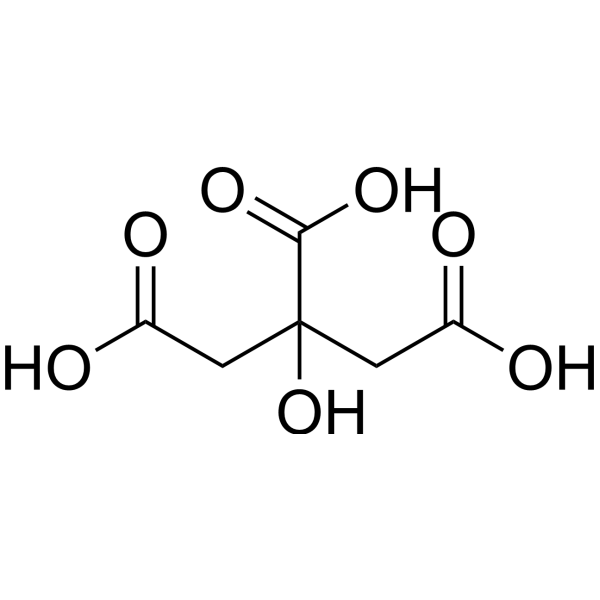
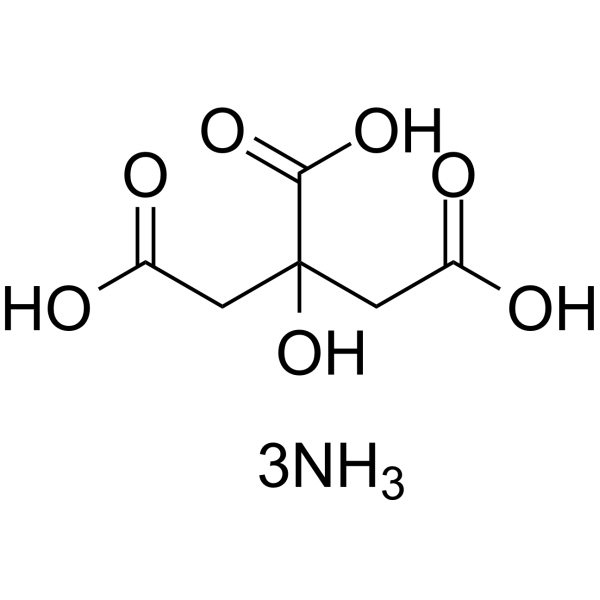
    Citric acid
    Maximum Cited Publications
    34 Publications Verification

    Environmental Pollutants Endogenous Metabolite Bacterial Apoptosis Infection Cardiovascular Disease Metabolic Disease Inflammation/Immunology Cancer
    Citric acid is a natural preservative and food tartness enhancer. Citric acid induces apoptosis and cell cycle arrest at G2/M phase and S phase in HaCaT cells. Citric acid cause oxidative damage of the liver by means of the decrease of antioxidative enzyme activities. Citric acid is also an acidulant, emulsifier, sequestrant and buffering agent widely used across many industries .
    Citric acid
  • HY-13442A
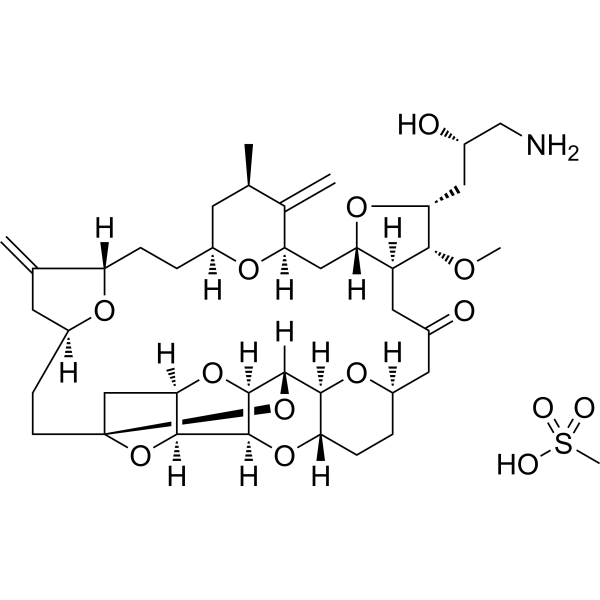
    Eribulin mesylate
    5+ Cited Publications

    B1939 mesylate; E7389 mesylate; ER-086526 mesylate

    Microtubule/Tubulin Apoptosis Cancer
    Eribulin mesylate is an inhibitor for microtubule. Eribulin mesylate inhibits the proliferation of cancer cell LM8 and Dunn, inhibits the cell migration of LM8, arrests the cell cycle at G2/M phase, and induces apoptosis in LM8. Eribulin mesylate exhibits antitumor efficacy in mouse model .
    Eribulin mesylate
  • HY-N6722
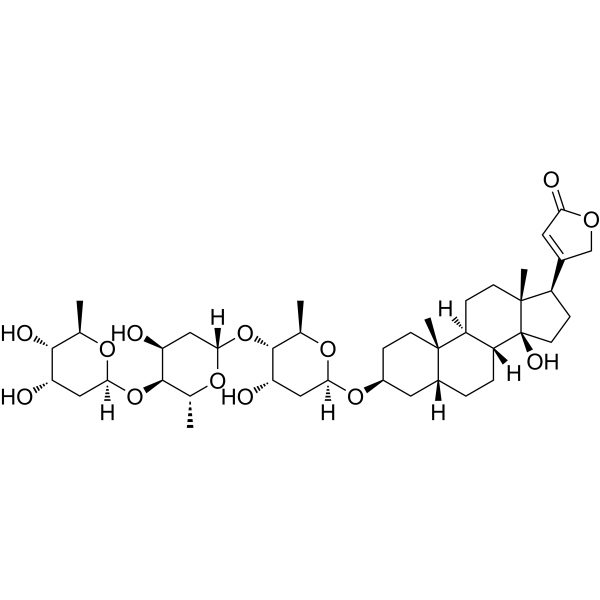
    Swainsonine
    1 Publications Verification

    Tridolgosir

    Apoptosis Antibiotic Infection Cancer
    Swainsonine (Tridolgosir) is an natural indolizidine alkaloid, a potent and reversible α-mannosidase inhibitor. Swainsonine induces apoptosis and cell cycle arrest at G2/M phase. Swainsonine shows anti-tumor activity .
    Swainsonine
  • HY-10222
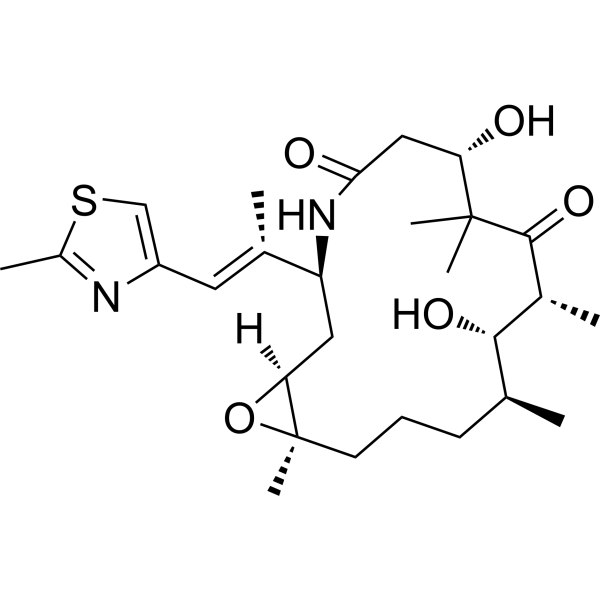
    Ixabepilone
    5+ Cited Publications

    BMS-247550; Aza-epothilone B

    Microtubule/Tubulin Apoptosis Bacterial Cancer
    Ixabepilone (BMS-247550) is an orally bioavailable microtubule inhibitor, which binds to tubulin and promotes tubulin polymerization and microtubule stabilization, thereby arrests cells in the G2-M phase of the cell cycle and induces tumor cell apoptosis.
    Ixabepilone
  • HY-N0421
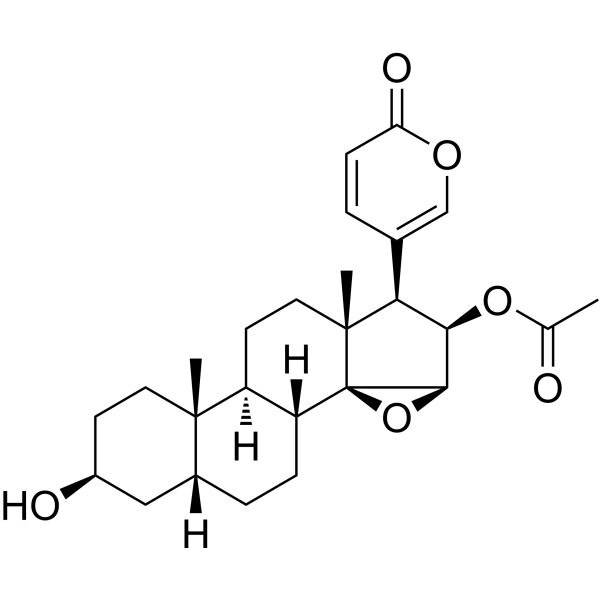
    Cinobufagin
    5+ Cited Publications

    Cinobufagine

    Apoptosis Neurological Disease Cancer
    Cinobufagin is an anticancer agent that can be secreted by the Asiatic toad Bufo gargarizans. Cinobufagin induces the cell cycle arrests in the G1 phase or G2/M phase, leading to apoptosis in cancer cells. Cinobufagin inhibits tumor growth in melanoma and glioblastoma multiforme xenograft mouse models .
    Cinobufagin
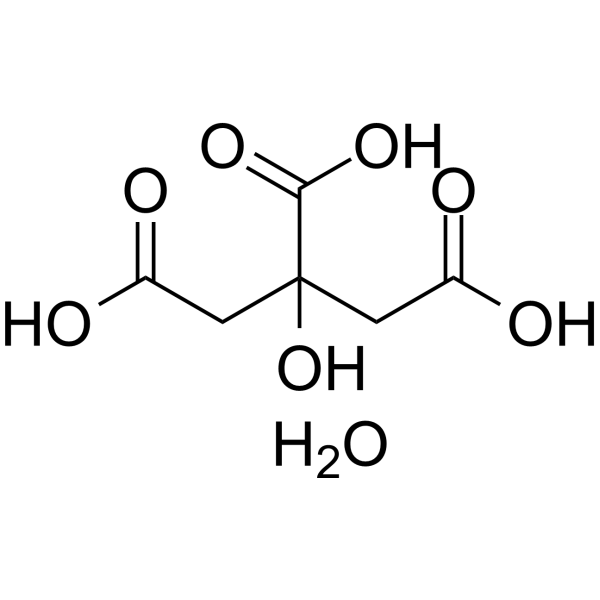
  • HY-N1428A
    Citric acid monohydrate
    5+ Cited Publications

    Environmental Pollutants Endogenous Metabolite Apoptosis Bacterial Infection Cardiovascular Disease Metabolic Disease Inflammation/Immunology Cancer
    Citric acid monohydrate is a natural preservative and food tartness enhancer. Citric acid monohydrate induces apoptosis and cell cycle arrest at G2/M phase and S phase in HaCaT cells. Citric acid monohydrate cause oxidative damage of the liver by means of the decrease of antioxidative enzyme activities. Citric acid monohydrate is also an acidulant, emulsifier, sequestrant and buffering agent widely used across many industries .
    Citric acid monohydrate
  • HY-157913

    Pyruvate Kinase Apoptosis Cancer
    PKM2-IN-6 (compound 7d) is a potent and orally active PKM2 inhibitor with an IC50 value of 23 nM. PKM2-IN-6 induces apoptosis and cell cycle arrest at G2 phase. PKM2-IN-6 reduces the level of PKM1 and PKM2 at the mRNA level. PKM2-IN-6 shows anticancer activity and has the potential for the research of triple-negative breast cancer .
    PKM2-IN-6
  • HY-105930
    Lobaplatin
    5 Publications Verification

    D-19466

    Apoptosis Caspase Bcl-2 Family Cancer
    Lobaplatin (D-19466) is a diastereometric mixture of platinum(II) complexe. Lobaplatin arrests cell cycle at G1 and G2/M phase. Lobaplatin induces apoptosis by increasing expressions of caspase and Bax, decreasing expression of Bcl-2. Lobaplatin can be used for research of cancer .
    Lobaplatin
  • HY-147895
    PCAF-IN-2
    2 Publications Verification

    Histone Acetyltransferase Apoptosis Cancer
    PCAF-IN-2 (compound 17) is a potent PCAF inhibitor with an IC50 value of 5.31 µM. PCAF-IN-2 shows anti-tumour activity. CAF-IN-2 induces apoptosis and arrest the cell cycle at the G2/M phase .
    PCAF-IN-2
  • HY-104013
    Aminopurvalanol A
    1 Publications Verification

    CDK Apoptosis Cancer
    Aminopurvalanol A is a potent, selective, and cell permeable inhibitor of Cyclins/Cdk complexes. Aminopurvalanol A preferentially targets the G2/M-phase transition inhibiting cancer cell differentiation. Aminopurvalanol A causes the inhibition of sperm fertilizing ability via the inhibition of physiological capacitation-dependent actin polymerization .
    Aminopurvalanol A
  • HY-112607

    Microtubule/Tubulin Apoptosis Cancer
    Tubulin inhibitor 1 is a tubulin inhibitor, inhibits tubulin polymerization. Tubulin inhibitor 1 shows potent anti-tumor activity, casues cellular mitotic arrest in the G2/M phase, and induces cellular apoptosis .
    Tubulin inhibitor 1
  • HY-122496

    Syringidin

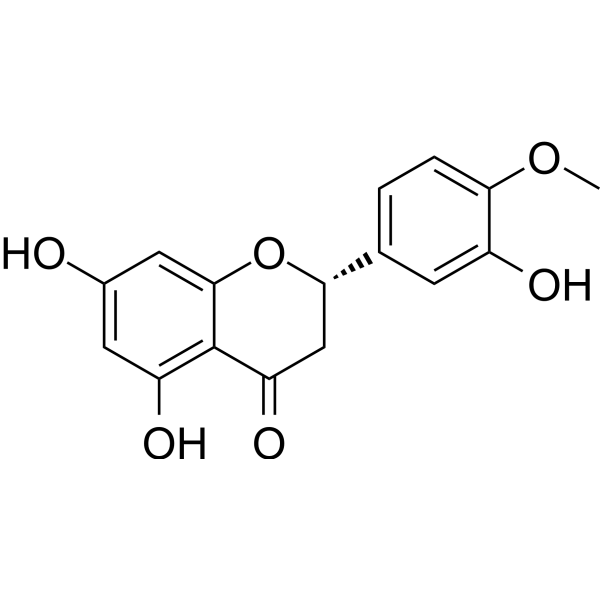
    Apoptosis Cancer
    Malvidin (chloride) is a bioactive compound isolated from grape. Malvidin shows cytotoxicity through the arrest of the G2/M phase of cell cycle and induction of apoptosis. Malvidin can be used for the research of cancer .
    Malvidin chloride
  • HY-149530

    EGFR Apoptosis Cancer
    EGFR-IN-86 (compound 4i) is an EGFR inhibitor (IC50: 1.5 nM) with high activity against glioblastoma. EGFR-IN-86 induces apoptosis and arrests the U87 cell cycle in the G2/M phase .
    EGFR-IN-86
  • HY-155439

    FAK Cancer
    FAK-IN-14 (compound 8d) is a focal adhesion kinase(FAK) inhibitor with an IC50 value of 0.2438 nM. FAK-IN-14 induces U87-MG cell early apoptosis and arrest the cell at the G2/M phase .
    FAK-IN-14
  • HY-W127705
    Quinacrine mustard dihydrochloride
    1 Publications Verification

    Fluorescent Dye Others
    Quinacrine mustard dihydrochloride is a fluorochrome. Quinacrine mustard dihydrochloride as a polycyclic aromatic agent can be used as mutagenic agent induces the mutants of bacteria. Quinacrine mustard dihydrochloride induces cell cycle arrest at G2/M-phase. Quinacrine mustard dihydrochloride has the potential for the research of plant, animal, or human chromosomes .
    Quinacrine mustard dihydrochloride
  • HY-115683

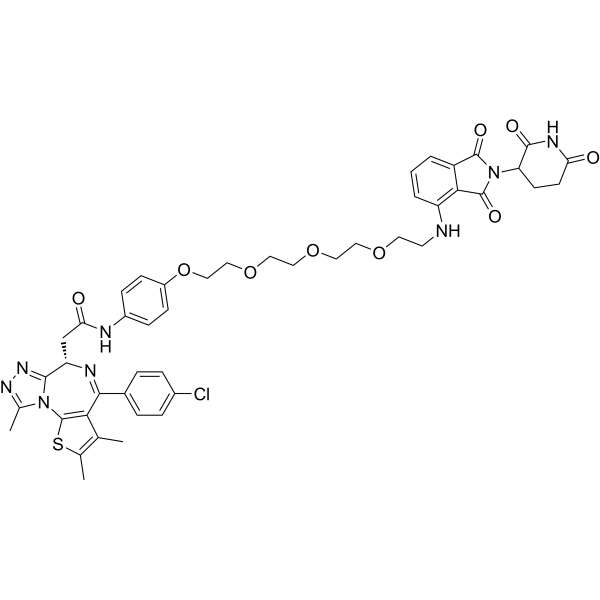
    Apoptosis Cancer
    NUN82647 is a potent cytotoxic compound that inhibits cell cycle at G2 phase and induces apoptosis. NUN82647 can be used for the study of leukemia .
    NUN82647
  • HY-162276

    Reactive Oxygen Species (ROS) DNA/RNA Synthesis Cancer
    Anticancer agent 188 (compound D43) inhibits DNA synthesis in TNBC cells, leading to cell cycle arrest at the G2/M phase. Anticancer agent 188 has anti-cancer viability by inducing ROS-mediated apoptosis and DNA damage .
    Anticancer agent 188
  • HY-124588

    DNA Methyltransferase Cancer
    MC3343, a DNMT inhibitor (EC50 of 5.7 μM) and a strong DNA binder, affects tumor proliferation by blocking OS cells in G1 or G2/M phases and induces osteoblastic differentiation through the specific re-expression of genes regulating this physiological process .
    MC3343
  • HY-146818

    Microtubule/Tubulin Cancer
    Tubulin polymerization-IN-12 is a tubulin polymerization inhibitor (IC50=0.75 μM). Tubulin polymerization-IN-12 arrests cell cycle at G2/M phase, and exhibits cytotoxicity against cancer cells .
    Tubulin polymerization-IN-12
  • HY-149249

    Microtubule/Tubulin Apoptosis Histone Demethylase Cancer
    MY-943 is a potent tubulin polymerization and LSD1 inhibitor with anticancer activity. MY-943 induces G2/M phase arrest and apoptosis, and inhibits cell migration. MY-943 can be used for gastric cancer research .
    MY-943
  • HY-16375

    D-63153

    GnRH Receptor Apoptosis Cancer
    Ozarelix (D-63153) is a GnRH antagonist. Ozarelix induces cell apoptosis and arrests cell in G2/M phase. Ozarelix can be used in the research of prostate cancer .
    Ozarelix
  • HY-125132

    (-)-Agelastatin A; AglA

    Apoptosis Cancer
    Agelastatin A ((-)-Agelastatin A; AglA), a tetracyclic alkaloid isolated from the sponge Agelas dendromorpha, induces apoptosis and arrests cells in the G2/M phase of the cell cycle, exhibiting antitumor activity .
    Agelastatin A
  • HY-123369

    CDK Apoptosis Cancer
    BMI-1026 is a cyclin-dependent kinase 1 (Cdk1) inhibitor with IC50 of 2.3 nM. BMI-1026 induces apoptosis by arresting the G2-M phase .
    BMI-1026
  • HY-147896

    Microtubule/Tubulin Cancer
    Tubulin polymerization-IN-29 (compound 6g) is a potent tubulin polymerization inhibitor. Tubulin polymerization-IN-29 exhibits potent antiproliferative activity. Tubulin polymerization-IN-29 can induce HeLa cells arrest in G2/M phase .
    Tubulin polymerization-IN-29
  • HY-N9968

    Akt Apoptosis Cancer
    Cucurbitacin C is a triterpenoid calabinoid that can be isolated from Cucurbitaceae plants. Cucurbitacin C has anti-cancer activity in vivo and in vitro. Cucurbitacin C can induce cell cycle arrest in G1 or G2/M phase and apoptosis by inhibiting Akt signaling .
    Cucurbitacin C
  • HY-161141

    c-Met/HGFR Cancer
    EGFR/ C-Met-in-2 (Compound H-22) is a dual inhibitor of EGFR/c-Met. EGFR/c-Met-IN-2 inhibits cell proliferation by arresting G2/M phase. EGFR/c-Met-IN-2 has antitumor activity .
    EGFR/c-Met-IN-2
  • HY-15882

    Endogenous Metabolite Cancer
    GNE-783 is a selective CHK1 inhibitor that enhances the activity of gemcitabine. GNE-783 improves the efficacy of anti-metabolite DNA damage drugs by inactivating S-phase and G2-phase cell cycle checkpoints following DNA damage. GNE-783 selectively enhances the chemical synergy of certain drugs in different tumor types, for example, enhancing the activity of temozolomide only in melanoma cell lines .
    GNE-783
  • HY-18626

    Topoisomerase Cancer
    NK 314 is an inhibitor for topoisomerase IIα, which generates the break of DNA double-strand. NK 314 arrests the cell cycle at G2 phase in human acute myeloid leukemia cells, inhibits the proliferation of CEM with IC90 of 55 nM .
    NK 314
  • HY-137005

    Topoisomerase Apoptosis Cancer
    CS1 is a potent DNA Topo II α inhibitor. CS1 displays broad-spectrum in vitro antitumor effects, low toxicity in vivo and potential anti-multidrug resistance capabilities. CS1 leads to DNA damage, cell cycle arrest at G2/M phase and apoptosis .
    CS1
  • HY-126566

    Fungal HDAC Apoptosis Infection Cancer
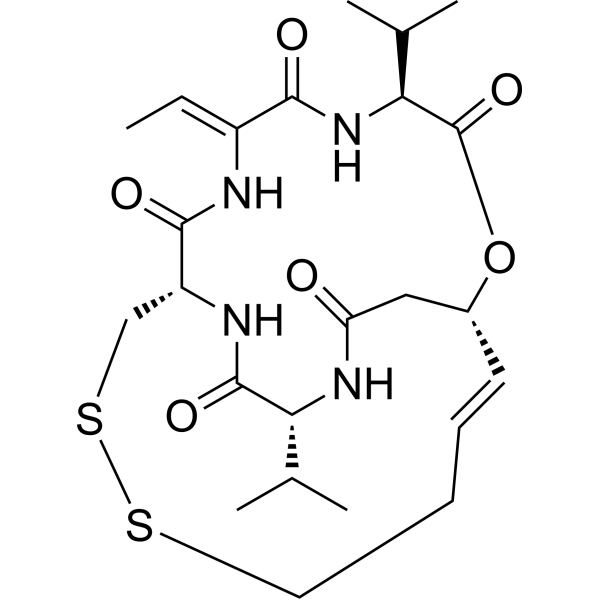
    Trichostatin C is an inhibitor for histone deacetylase (HDAC), induces apoptosis and arrests cell cycle at G2/M phase, and exhibits anticancer activity against lung cancer and urothelial bladder cancer . Trichostatin C induces differentation of Friend leukemic cells . Trichostatin C exhibits antifungal activity .
    Trichostatin C
  • HY-156916

    Microtubule‐associated serine/threonine kinase (MAST) Metabolic Disease
    WAY-230563 (ST045945) is a serine/threonine kinase inhibitor that can block CHK1/CHK2-mediated cell cycle checkpoints. WAY-230563 can induce G2/M phase arrest and DNA damage in tumor cells .
    ST045945
  • HY-133838

    BM41440

    Parasite PKC Infection Cancer
    Ilmofosine (BM41440) is a potent and selective protein kinase C inhibitor. Ilmofosine induces cell cycle arrest at the G2 phase. Ilmofosine also is an anti-leishmanial agent .
    Ilmofosine
  • HY-149630

    VEGFR HDAC Apoptosis Cancer
    VEGFR2/HDAC1-IN-1 (compound 13) is a potent VEGFR-2/HDAC dual inhibitor, with IC50s of 57.83 nM and 9.82 nM, respectively. VEGFR2/HDAC1-IN-1 arrests the cell cycle at the S and G2 phases, and induces apoptosis in HeLa cells. VEGFR2/HDAC1-IN-1 exhibits anti-angiogenic effect .
    VEGFR2/HDAC1-IN-1
  • HY-146316

    Topoisomerase Cancer
    Topoisomerase II inhibitor 6 (Compound 5), a tryptanthrin derivative, is a potent and selective inhibitor of topoisomerase II. Topoisomerase II inhibitor 6 exhibits antiproliferative activity on different tumor cell lines. Topoisomerase II inhibitor 6 blocks the cell cycle of CCRF-CEM in the G2 phase and induces DNA DSB. Topoisomerase II inhibitor 6 has the potential for the research of cancer diseases .
    Topoisomerase II inhibitor 6
  • HY-151155

    Anaplastic lymphoma kinase (ALK) Cancer
    ALK-IN-23 is a potent ALK inhibitor with IC50 values of 1.6 nM, 0.71 nM and 1.3 nM for ALK WT, ALK L1196M and ALK G1202R. ALK-IN-23 can block cell cycle in G2 phase and induce apoptosis. ALK-IN-23 inhibits cancer cell migration and colony formation in vitro. ALK-IN-23 exhibits antitumor activity in H2228 xenograft nude mice model with hypotoxicity .
    ALK-IN-23
  • HY-156183

    MDM-2/p53 ERK Cancer
    Antiproliferative agent-37 (compound 10J) shows anti-proliferative effect by arresting the cells at the G2/M phase of the cell cycle .
    Antiproliferative agent-37
  • HY-138819

    Apoptosis Cancer
    IMB5046 is a microtubule inhibitor that induces apoptosis by blocking the G2/M phase of the cell cycle. IMB5046 has anti-tumor activity .
    IMB5046
  • HY-146189

    Topoisomerase Apoptosis Cancer
    Topoisomerase II inhibitor 9 (Compound 19b) is a Topo II inhibitor with an IC50 of 0.97 μM. Topoisomerase II inhibitor 9 is also a classical DNA-intercalator with an IC50 of 43.51 μM. Topoisomerase II inhibitor 9 arrests the cell cycle at the G2/M phase and induces apoptosis in Hep G‐2 cells .
    Topoisomerase II inhibitor 9
  • HY-N10670

    Methylpluviatolide

    Apoptosis Cancer
    Bursehernin (Methylpluviatolide) is an antitumor agent. Bursehernin induces Apoptosis and cell cycle arrest at G2/M phase. Bursehernin shows anti-proliferative activity .
    Bursehernin
  • HY-N14881

    Bacterial Infection Cancer
    Monorden E has the effect of arresting the cell cycle of Jurket cells in G1 and G2/M phases. Monorden E has anti-Aspergillus niger activity .
    Monorden E
  • HY-N14866

    Bacterial Infection Cancer
    Monorden B has the effect of arresting the cell cycle of Jurket cells in G1 and G2/M phases. Monorden B has anti-Aspergillus niger activity .
    Monorden B
  • HY-N10798

    (-)-Kusunokinin

    Apoptosis Cancer
    Kusunokinin ((-)-Kusunokinin) is a nature product that could be isolated form P. nigrum. Kusunokinin has anticancer activity. Kusunokinin arrests cell cycle at G2/M phase and induce apoptosis .
    Kusunokinin
  • HY-172940

    Apoptosis Cancer
    TBP-134 induce apoptosis primarily through DR5 and causes G2/M phase arrest. TBP-134 can be used in the research for pancreatic tumor .
    TBP-134
  • HY-163444

    Apoptosis Cancer
    Apoptosis inducer 15 (Compound 3) induces cell apoptosis and cell cycle arrest at G2/M phase. Apoptosis inducer 15 is cytotoxicitic without causing DNA fragmentation .
    Apoptosis inducer 15
  • HY-162108

    Apoptosis Cancer
    Antitumor agent-128 (compound 1a) is an antitumor agent that elicits cell cycle arrest in both the G2/M and S phases, triggering apoptosis in A549 cells .
    Antitumor agent-128
  • HY-147824

    Microtubule/Tubulin Apoptosis Cancer
    Tubulin polymerization-IN-22 is a tubulin polymerization inhibitor with an IC50 of 8.1 μM. Tubulin polymerization-IN-22 arrests cell cycle at G2/M phase and induces apoptosis .
    Tubulin polymerization-IN-22
  • HY-147848

    Microtubule/Tubulin Cancer
    Tubulin polymerization-IN-27 (compound 5j) is a tubulin polymerization inhibitor. Tubulin polymerization-IN-27 can arrest cell cycle at G2/M phase and induce apoptosis .
    Tubulin polymerization-IN-27
  • HY-N10394

    Others Cancer
    Metachromins X is a sesquiterpene quinone that arrests the cell cycle progression of HeLa/Fucci2 cells at S/G2/M phase .
    Metachromins X
  • HY-164374

    PAK Cancer
    AK963/40708899 is a potent PAK1 inhibitor. AK963/40708899 suppresses the proliferation of human gastric cancer cells by downregulation of PAK1-NF-κB-cyclinB1 pathway. AK963/40708899 induces cell cycle arrest at G2 phase and reduces the migration and invasion. AK963/40708899 inhibits the formation of filopodia and promots cell adhesion which in turn inhibits invasive potential of gastric cells by negatively regulating PAK1-LIMKl-cofilin and PAK1-ERK-FAK pathways .
    AK963/40708899
  • HY-122151

    Microtubule/Tubulin Apoptosis Cancer
    MPT0B002 is a potent microtubule inhibitor with anticancer activities. MPT0B002 disrupts tubulin polymerization, induces apoptosis, and arrests cell cycle at the G2/M phase .
    MPT0B002

Inquiry Online

Your information is safe with us. * Required Fields.

Salutation


Country or Region *

Applicant Name *


Organization Name *

Department *


Email Address *


Product Name *

Cat. No.


Requested quantity *

Phone Number *


Remarks

Inquiry Online

Inquiry Information

Product Name:
Cat. No.:
Quantity:
MCE Japan Authorized Agent:

