
1. Search Result
Search Result
Results for "

III

" in MedChemExpress (MCE) Product Catalog:

694

Inhibitors & Agonists

1

Screening Libraries

10

Fluorescent Dye

33

Biochemical Assay Reagents

59

Peptides

4

MCE Kits

18

Inhibitory Antibodies

150

Natural
Products

121

Recombinant Proteins

20

Isotope-Labeled Compounds

69

Antibodies

3

Click Chemistry

7

Oligonucleotides

1

GMP Molecules

Cat. No. Product Name Target Research Areas Chemical Structure
  • HY-W094581
    Gold(III) chloride trihydrate
    1 Publications Verification

    Chloroauric acid trihydrate

    Biochemical Assay Reagents Others
    Gold (III) chloride trihydrate is a reducing agent. Gold (III) chromium trihydrate can be used for chemical synthesis of gold nanoparticles (NP) and spirochromene derivatives .
    Gold(III) chloride trihydrate
  • HY-E70005C

    MMP Others
    Collagenase, Type III is a microbially derived matrix metalloproteinases (MMPs) and zinc peptidase. Collagenase, Type III breaksdown collagens1, 4, 9, 10, 14, fibronectin, MMP-9, gelatin, plasminogen, aggrecan,perlecan osteonectin

    Collagenase, Type III
  • HY-16565

    Biochemical Assay Reagents Drug Intermediate Parasite Infection
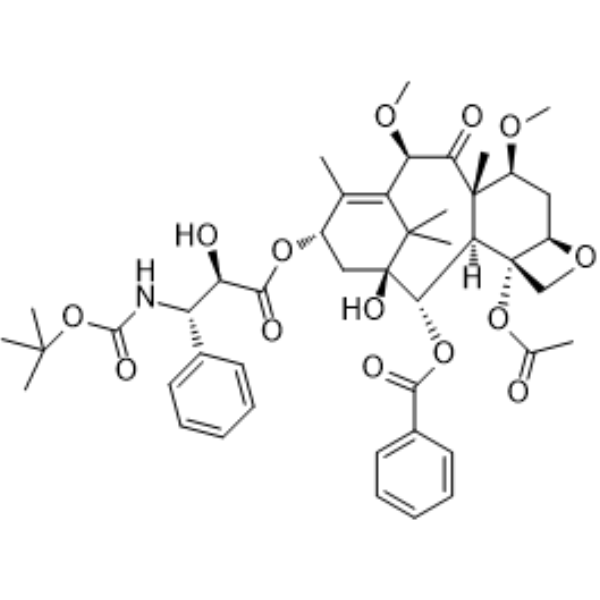
    10-Deacetylbaccatin-III is an intermediate in the preparation process of paclitaxel. 10-Deacetylbaccatin III can be isolated from the dried needles and small branches of the European yew tree (Taxus baccata). 10-Deacetylbaccatin III exhibits antileishmanial activity .
    10-Deacetylbaccatin III
  • HY-D0931

    Sudan Red III; Tetrazobenzene-β-naphthol; 111440 Red

    Environmental Pollutants Fluorescent Dye Others
    Sudan III is a hydrophobic bisazo dye .
    Sudan III
  • HY-N6985
    Baccatin III
    2 Publications Verification

    Others Cancer
    Baccatin III is an orally available, selective inhibitor of the TGF-β1 signaling pathway and myeloid-derived suppressor cell (MDSC) activation. Baccatin III targets the AKT/STAT6 and Smad2/3 pathways, blocking TGF-β1-induced fibroblast differentiation and MDSC-mediated immunosuppression. Baccatin III exerts anti-inflammatory and anti-fibrotic effects by inhibiting macrophage activation and extracellular matrix deposition, and shows potential in the treatment of pulmonary fibrosis and cancer in terms of regulating the tumor immune microenvironment .
    Baccatin III
  • HY-W075903

    Cobalt hexammine trichloride; Hexaamminecobalt trichloride

    Biochemical Assay Reagents SOD Glutathione S-transferase Metabolic Disease Cancer
    Hexaamminecobalt (III) chloride is an orally active cobalt coordination compound. Hexaamminecobalt (III) chloride restores the activities of liver antioxidant enzymes (SOD, Catalase) and detoxification enzyme GST. Hexaamminecobalt (III) chloride restores GSH content and reduces DAG. Hexaamminecobalt (III) chloride impairs renal function. Hexaamminecobalt (III) chloride exerts anti-carcinogenic effects in Diethylnitrosamine (HY-N7434)-induced hepatocarcinoma .
    Hexaamminecobalt(III) chloride
  • HY-N1407

    Cytochrome P450 STAT Infection Inflammation/Immunology
    Polygalaxanthone III is a representative xanthone component of Polygala tenuifolia. Polygalaxanthone III inhibits chlorzoxazone 6-hydroxylation catalyzed by CYP2E1, with an IC50 of 50.56 μM. Polygalaxanthone III repairs skin damage induced by M. furfur via activating STAT3 phosphorylation and exerts anti-inflammatory effects. Polygalaxanthone III can be used for research on M. furfur-related skin damage .
    Polygalaxanthone III
  • HY-W250149

    Biochemical Assay Reagents Cancer
    Chlorophosphonazo III is a cell membrane-permeable contrast agent and spectrophotometric reagent. Chlorophosphonazo III forms stable 1:1 complexes with intracellular calcium, magnesium, uranium, titanium, zirconium, thorium, scandium, equivalent actinides and protactinium. Chlorophosphonazo III generates photoacoustic signals correlated with Ca 2+ concentrations, which is applicable for imaging 3D tumor cell cultures and tumor spheroids. Chlorophosphonazo III exhibits no cytotoxicity, can be used for spectrophotometric detection of target ions, and the absorbance of its complexes remains stable for up to one week within the pH range of 2.2 to 7.0 .
    Chlorophosphonazo III
  • HY-122958

    α-synuclein Neurological Disease
    Peucedanocoumarin III is an α-synuclein fiber depolymerizer with blood-brain barrier permeability. Peucedanocoumarin III depolymerizes β-sheet aggregate structures, promotes aggregate clearance, inhibits β23-induced cytotoxicity, blocks the formation of Lewy body-like inclusions, and prevents dopaminergic neuron loss. Peucedanocoumarin III can be used in studies related to Parkinson's disease .
    Peucedanocoumarin III
  • HY-D0202

    Fluorescent Dye Others
    Arsenazo III is an azo derivative of chromotropic acid, a metal chrome dye, a chelating agent, and a cation complexing agent. Arsenazo III forms stable 1:1 complexes with Ca 2+, Mg 2+, Sr 2+, Ba 2+, K +, and Na +, and its binding affinity for Ca 2+ depends on pH, alkali metal cation concentration, and buffer parameters. Arsenazo III serves as a colorimetric indicator for micromolar ionized Ca 2+ in cells .
    Arsenazo III
  • HY-N0434
    Astragaloside III
    2 Publications Verification

    C-type Lectin-like Receptors (CTLRs) Apoptosis Dengue Virus Infection Cancer
    Astragaloside III is a triterpenoid saponin. Astragaloside III can be extracted from Astragalus root. Astragaloside III increases NKG2D and induces TACE phosphorylation. Astragaloside III induces Apoptosis. Astragaloside III has antiviral activity against dengue serotypes 1 and 3. Astragaloside III has anticancer activity against breast and colon cancer .
    Astragaloside III
  • HY-N2542
    Tubeimoside III
    2 Publications Verification

    Interleukin Related NO Synthase Metabolic Disease Inflammation/Immunology Cancer
    Tubeimoside III is a triterpenoid saponin. Tubeimoside III has anti-inflammatory and antitumor effects. Tubeimoside III has an LD50 of 15 mg/kg by intraperitoneal injection in ICR mice. Tubeimoside III can be used for the research of tumors and inflammatory diseases .
    Tubeimoside III
  • HY-N1083

    Ganhuangenin

    Others Cancer
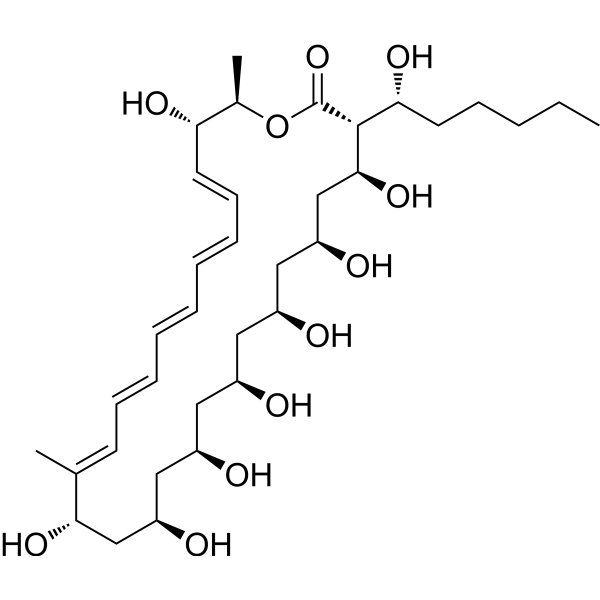
    Viscidulin III is a compound isolated from the roots of Scutellaria planipes (L.) . Viscidulin III can inhibit the proliferation of HL-60 (IC50= 17.4μM). Viscidulin III is a potential natural tumor inhibitor .
    Viscidulin III
  • HY-N0500

    Glycosidase Autophagy Metabolic Disease Endocrinology
    Mogroside III is a triterpenoid glycoside. Mogroside III exhibits maltase inhibitory effect with an IC50 value of 1.6 mM. Mogroside III enhances oocyte developmental potential by promoting autophagy in cumulus cells. Mogroside III, as the active ingredient of the low-polarity glycoside component (L-SGgly), L-SGgly can increase serum GLP-1 levels, improve insulin resistance, and reduce IL-6 levels, and has hypoglycemic, lipid-regulating and anti-inflammatory effects. Mogroside III can be used for the studies of type 2 diabetes mellitus (T2DM) and assisted reproductive technology .
    Mogroside III
  • HY-122965

    FAK Akt Cancer
    Batatasin III, a stilbenoid, inhibits cancer migration and invasion by suppressing epithelial to mesenchymal transition (EMT) and FAK-AKT signals. Batatasin III has anti-cancer activities .
    Batatasin III
  • HY-P1858A

    CRFR Cardiovascular Disease Neurological Disease Endocrinology
    Urocortin III, mouse TFA is a corticotropin-releasing factor (CRF)-related peptide. Urocortin III preferentially binds and activates CRF-R2 . Urocortin III (Ucn3) is a known component of the behavioral stress response system. Urocortin III and CRF-R2 in the medial amygdala regulate complex social dynamics .
    Urocortin III, mouse TFA
  • HY-W021022

    Iridium trichloride hydrate

    Biochemical Assay Reagents Cancer
    Iridium(III) chloride (hydrate) (Iridium trichloride (hydrate)) is a biochemical reagent. Iridium(III) can be used in the research of colon cancer .
    Iridium(III) chloride hydrate
  • HY-N7240

    Others Metabolic Disease
    (Rac)-Juvenile hormone III is a cecropia juvenile hormone and juvenile hormone agonist. (Rac)-Juvenile hormone III induces test insects to retain larval characteristics after the final molt to the adult stage. (Rac)-Juvenile hormone III exhibits juvenile hormone activity in Tenebrio molitor pupae and last-instar nymphs of Oncopeltus fasciatus. (Rac)-Juvenile hormone III possesses morphogenetic activity in insect assays .
    (Rac)-Juvenile hormone III
  • HY-P1858

    CRFR Cardiovascular Disease Neurological Disease Endocrinology
    Urocortin III, mouse is a corticotropin-releasing factor (CRF)-related peptide. Urocortin III preferentially binds and activates CRF-R2 . Urocortin III (Ucn3) is a known component of the behavioral stress response system. Urocortin III and CRF-R2 in the medial amygdala regulate complex social dynamics .
    Urocortin III, mouse
  • HY-115488A

    HIV Infection
    BNM-III-170, CD4-mimeticcompound, is an anti-HIV-1 agent. BNM-III-170 binds to the Phe43 cavity of HIV 1 gp120. BNM-III-170 can inhibits HIV-1 viral entry into target cells. BNM-III-170 can be used for the research of HIV-1 infection .
    BNM-III-170
  • HY-136427

    Nuclear Factor of activated T Cells (NFAT) Inflammation/Immunology
    KRM-III is a potent and orally active T-cell antigen receptor (TCR) inhibitor. KRM-III inhibits TCR- and phorbol myristate acetate/ionomycin-induced activation of nuclear factor of activated T cells (NFAT) and T-cell proliferation with an IC50 of ~5 μM. Anti-inflammatory activity .
    KRM-III
  • HY-D1723
    EthD-III
    1 Publications Verification

    DNA Stain Others
    EthD-III is a nucleic acid probe. EthD-III is a red fluorescent stain that can be used to detect dead cells. EthD-III enters cells with damaged membranes and binds to nucleic acids, resulting in bright red fluorescence in dead cells (Ex/Em=530/645 nm) .
    EthD-III
  • HY-117393
    Bisindolylmaleimide III
    1 Publications Verification

    PKC Cancer
    Bisindolylmaleimide III is a potent and selective inhibitor of protein kinase C (PKC). Bisindolylmaleimide III selectively interacts with either PKCα or ribosomal S6 protein kinase 1 after activation of these kinases .
    Bisindolylmaleimide III
  • HY-P3019

    CRFR Cardiovascular Disease Neurological Disease Endocrinology
    Urocortin III (human) is a corticotropin-releasing factor (CRF)-related peptide. Urocortin III (human) preferentially binds and activates CRF-R2 and has a discrete central nervous system and peripheral distribution. Urocortin III (human) potently binds to type 2 CRF receptors, specifically mCRF (Ki = 13.5 nM) and rCRF (Ki = 21.7 nM), while demonstrating negligible affinity for hCRF1 (Ki >100 nM). Urocortin III (human) mediates somatostatin-dependent negative feedback control of Insulin (human) (HY-P0035) secretion [1][2].
    Urocortin III (human)
  • HY-N0409
    Picroside III
    1 Publications Verification

    Others Inflammation/Immunology
    Picroside III is an iridoid glycoside isolated from Picrorhiza scrophulariiflora (PS), a traditional Chinese medicine .
    Picroside III
  • HY-W412175
    Coproporphyrin III dihydrochloride
    2 Publications Verification

    Zincphyrin dihydrochloride

    Bacterial Infection
    Coproporphyrin III dihydrochloride is a bioactive molecule excreted by nostril- and skin-associated Propionibacterium species that induces aggregation of Staphylococcus aureus (conditions: during early stationary phase growth, low pH: 4-6). Coproporphyrin III dihydrochloride also induces plasma-independent biofilm formation on abiotic surfaces by Staphylococcus aureus. Coproporphyrin III dihydrochloride may be an important mediator of S. aureus accumulation and/or biofilm formation in the nostrils or other sites where Propionibacterium and S. aureus inhabit .
    Coproporphyrin III dihydrochloride
  • HY-N11451

    LNFP-III

    Arginase Aldehyde Dehydrogenase (ALDH) Indoleamine 2,3-Dioxygenase (IDO) Inflammation/Immunology
    Lacto-N-fucopentaose III (LNFP-III) is an immune modulator. Lacto-N-fucopentaose III reduces the severity of experimental autoimmune encephalomyelitis (EAE) and CNS inflammation .
    Lacto-N-fucopentaose III
  • HY-171444

    γ-secretase Amyloid-β Neurological Disease
    GSM III is a γ-Secretase complexe (GSEC) modulator. GSM III significantly regulates amyloid-β (Aβ) length at the extracellular interface between the protease (NCT, PSEN) and the substrate APPC99. GSM III can be used for Alzheimer's disease (AD) research .
    GSM III
  • HY-N8223

    Tyrosinase Cardiovascular Disease
    Viscumneoside III, a dihydroflavone O-glycoside, is a potent tyrosinase inhibitor with an IC50 of 0.5 mM. Viscumneoside III has anti-angina pectoris .
    Viscumneoside III
  • HY-E70579

    DNA/RNA Synthesis Others
    Exonuclease III is a nuclease for specifically targeting double-stranded DNA (dsDNA). Exonuclease III is a DNA repair-associated nuclease with apurinic/apyrimidinic (AP)-endonuclease and 3'→5' exonuclease activities. Exonuclease III cleaves the ssDNA at 5'-bond of phosphodiester from 3' to 5' end by both exonuclease and endonuclease activities .
    Exonuclease III
  • HY-16565R

    Reference Standards Others Cancer
    10-Deacetylbaccatin III (Standard) is the analytical standard of 10-Deacetylbaccatin III. This product is intended for research and analytical applications.
    10-Deacetylbaccatin III (Standard)
  • HY-N7240S

    Isotope-Labeled Compounds Others Others
    Juvenile Hormone III-d3 is the deuterium labeled Juvenile Hormone III. (Rac)-Juvenile Hormone III is a cecropia juvenile hormone and juvenile hormone agonist. (Rac)-Juvenile Hormone III induces test insects to retain larval characteristics after the final molt to the adult stage. (Rac)-Juvenile Hormone III exhibits juvenile hormone activity in Tenebrio molitor pupae and last-instar nymphs of Oncopeltus fasciatus. (Rac)-Juvenile Hormone III possesses morphogenetic activity in insect assays .
    (Rac)-Juvenile Hormone III-d3
  • HY-W854721

    Manganese(III) Protoporphyrin IX Chloride

    Heme Oxygenase (HO) Metabolic Disease
    Mn(III) protoporphyrin IX chloride is a metalloporphyrin. It induces mRNA expression of the genes encoding δ-aminolevulinate synthase and heme oxygenase (HO), enzymes that catalyze the rate-limiting steps of heme biosynthesis and degradation, respectively, in chick embryo liver cells when used at a concentration of 10 μM. Mn(III) protoporphyrin IX chloride-containing nanobialys have been used in magnetic resonance imaging (MRI) of fibrin clots in vitro. It has also been used in the synthesis of Mn(III) protoporphyrin IX-6(7)-glycyl-glycyl-L-histidine methyl ester (MnGGH), a metalloporphyrin conjugate with microperoxidase activity.
    Mn(III) Protoporphyrin IX chloride
  • HY-N12074

    MFLNH III

    Others Others
    Monofucosyllacto-N-hexaose III (MFLNH III) is a kind of neutral human milk oligosaccharides (HMO) .
    Monofucosyllacto-N-hexaose III
  • HY-N11161

    Others Others
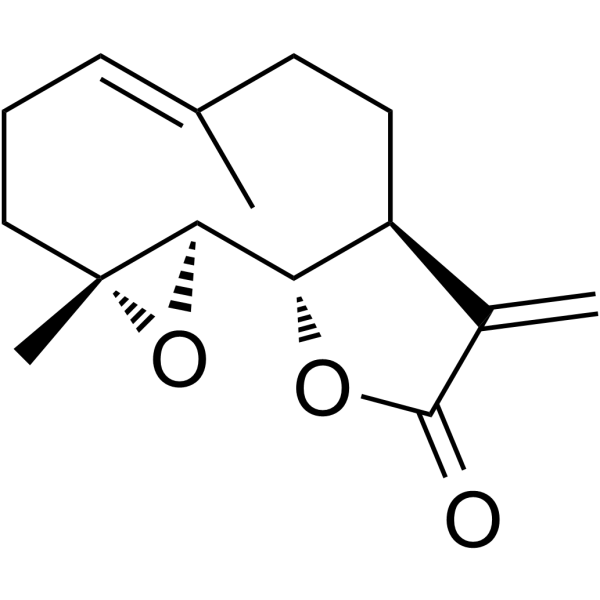
    Solidagolactone III is an active compound. Solidagolactone III can be isolated from Solidago .
    Solidagolactone III
  • HY-157281

    PLIII

    Endogenous Metabolite Drug Derivative MHC Inflammation/Immunology
    Photolumazine III (PLIII) is a microbial metabolite and derivative of Riboflavin (HY-B0456). Photolumazine III binds MR1 with high specificity. Photolumazine III supports efficient TCR binding. Photolumazine III acts as an antigen to activate cells. Responses to Photolumazine III trigger immune reactions .
    Photolumazine III
  • HY-77434

    9-DHAB III; 13-Acetyl-9-dihydrobaccatin III

    Drug Intermediate Cancer
    9-Dihydro-13-acetylbaccatin III (9-DHAB III) is an intermediate for the preparation of paclitaxel analogs.
    9-Dihydro-13-acetylbaccatin III
  • HY-W110917

    Biochemical Assay Reagents Others
    Dimethylsulfonazo III is a potent sulfate indicator. Dimethylsulfonazo III can be used as indicator to test those samples contaminated with potassium or phosphate ions .
    Dimethylsulfonazo III
  • HY-W033823

    Biochemical Assay Reagents Endogenous Metabolite
    Rhodium(III) oxide is an inorganic compound with catalytic activity. Rhodium(III) oxide can be used as an efficient catalyst in catalytic reactions and is often used to promote chemical reactions. Rhodium(III) oxide is also widely used in energy materials, especially in fuel cells and other renewable energy technologies. Rhodium(III) oxide is studied in the field of materials science for the development of new functional materials.
    Rhodium(III) oxide
  • HY-P3910

    Angiotensin Receptor Cardiovascular Disease
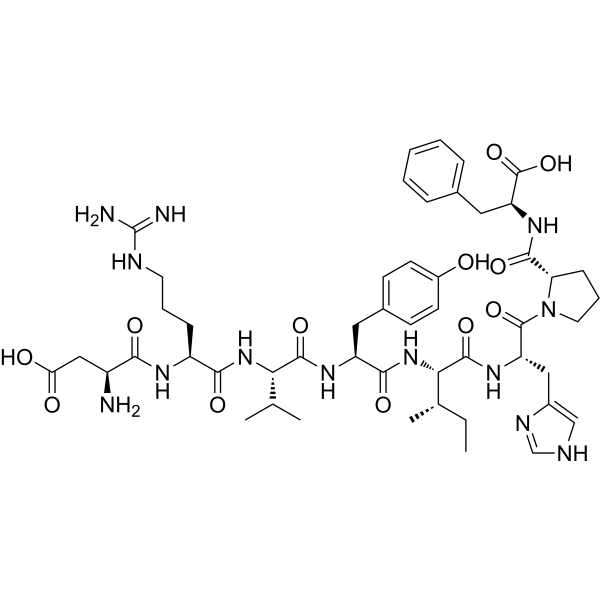
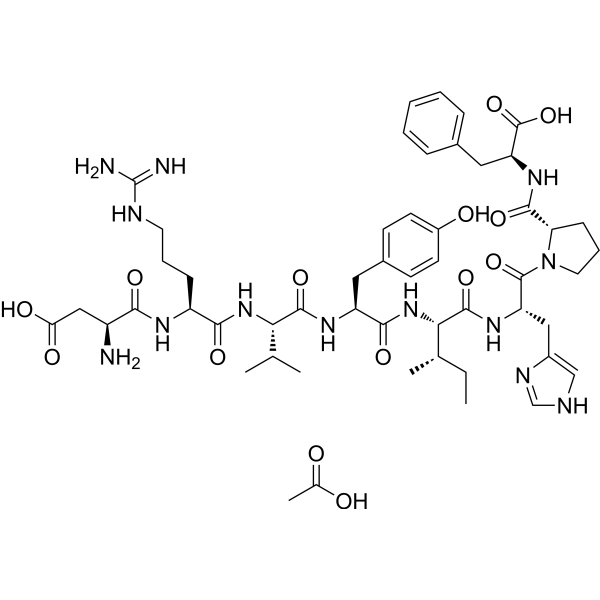
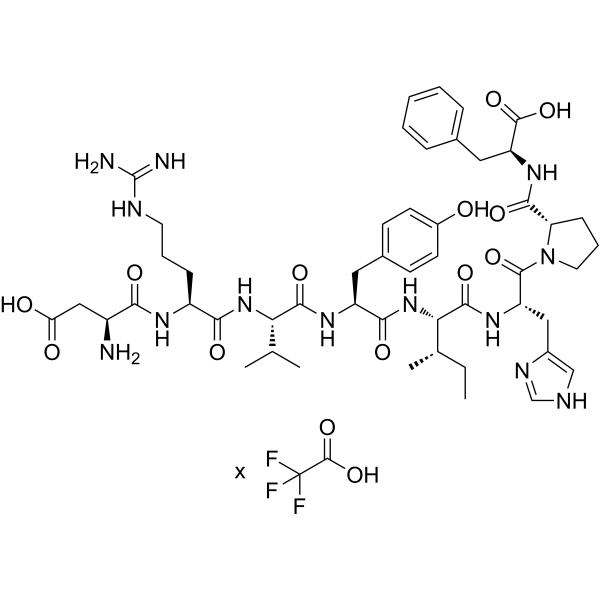
    [Val4] Angiotensin III is an angiotension III peptide. [Val4] Angiotensin III is a potent full agonist of q and βarr2 response, with pEC50 values of 8.31 and 8.44, respectively .
    [Val4] Angiotensin III
  • HY-112475

    Tie FLT3 Cancer
    Flt-3 Inhibitor III is a potent and selective FLT3 kinase inhibitor with an 50 of 50 nM. Flt-3 Inhibitor III shows less active against other kinases. Flt-3 Inhibitor III has anticancer effects .
    Flt-3 Inhibitor III
  • HY-108362

    MOFs Others
    Iron(III) mesotetraphenylporphine chloride is a metal-organic framework (MOF).
    Iron(III) mesotetraphenylporphine chloride
  • HY-N7951

    Others Others
    Aristolochic acid III is a natural product that can be isolated from the leaves of Aristolochia debilis .
    Aristolochic acid III
  • HY-133023

    Biochemical Assay Reagents Others
    Indium(III) Isopropoxide is an organo-metallic compound. Indium(III) Isopropoxide uesd as a hydrogen transfer catalyst for conversion of benzylic alcohols into aldehydes or ketones via Oppenauer oxidation. Indium(III) Isopropoxide also can be used as metal precursor .
    Indium(III) isopropoxide
  • HY-W094381

    Biochemical Assay Reagents Others
    Sodium hexanitrocobaltate(III) is a biochemical reagent.
    Sodium hexanitrocobaltate(III)
  • HY-N7273

    Apoptosis Cancer
    Soyasaponin III, a monodesmodic oleanane triterpenoid, is one of the main potentially bioactive saponins found in soy (Glycine max) and related products. Soyasaponin III can induce apoptosis in Hep-G2 cells .
    Soyasaponin III
  • HY-N2152

    Others Inflammation/Immunology
    Rhodojaponin III is a diterpenoid from the leaves of Rhododendron molle with anti-inflammatory activity .
    Rhodojaponin III
  • HY-N7673

    Others Others
    Gymnoside III is a glucosyloxybenzyl 2-isobutylmalate isolated from the tubers of Gymnadenia conopsea .
    Gymnoside III
  • HY-142655

    Farnesyl Transferase Infection
    Ftase inhibitor III is an anion-dependent Farnesyltransferase inhibitor from a phenotypic screen.
    Ftase inhibitor III
  • HY-115945

    Mitochondrial Metabolism Fungal Infection
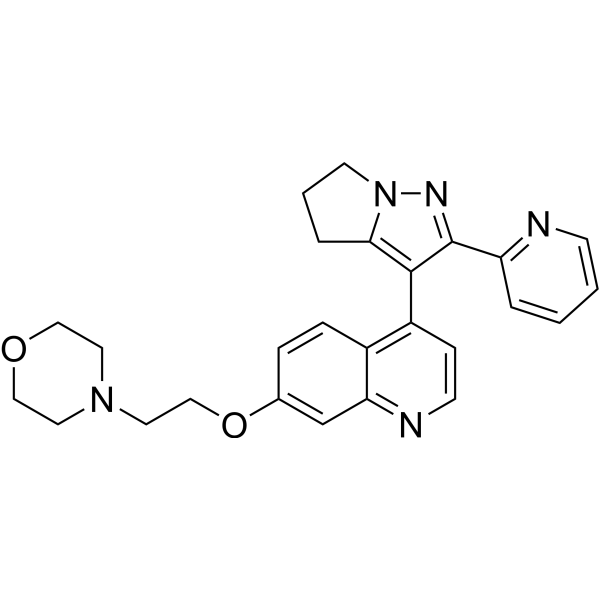
    Complex III-IN-1 (Compd 4c-2) is a complex III inhibitor. Complex III-IN-1 shows antifungal activity with an EC50 of 18.53 mg/L against sclerotinia sclerotiorum .
    Complex III-IN-1

Inquiry Online

Your information is safe with us. * Required Fields.

Salutation


Country or Region *

Applicant Name *


Organization Name *

Department *


Email Address *


Product Name *

Cat. No.


Requested quantity *

Phone Number *


Remarks

Inquiry Online

Inquiry Information

Product Name:
Cat. No.:
Quantity:
MCE Japan Authorized Agent:

