

1. Search Result
Search Result
Results for "

Plasma

" in MedChemExpress (MCE) Product Catalog:

1241

Inhibitors & Agonists

5

Screening Libraries

42

Fluorescent Dye

58

Biochemical Assay Reagents

108

Peptides

6

MCE Kits

25

Inhibitory Antibodies

151

Natural
Products

28

Recombinant Proteins

83

Isotope-Labeled Compounds

13

Antibodies

7

Click Chemistry

33

Oligonucleotides

1

GMP Molecules

Cat. No. Product Name Target Research Areas Chemical Structure
  • HY-41189

    ADC Linker Cancer
    Fmoc-Val-Cit-PAB-PNP is a cleavable ADC linker used in the synthesis of antibody-drug conjugates (ADCs). Fmoc-Val-Cit-PAB-PNP has superior plasma stability comparable to that of non-cleavable linkers .
    Fmoc-Val-Cit-PAB-PNP
  • HY-P2352
    Fetuin, Fetal Bovine Serum
    5 Publications Verification

    Biochemical Assay Reagents Metabolic Disease
    Fetuin, Fetal Bovine Serum is a liver-secreted 64 kDa plasma glycoprotein isolated from fetal bovine serum. Fetuin, Fetal Bovine Serum inhibits trypsin activity and promote cellular attachment, growth, and differentiation .
    Fetuin, Fetal Bovine Serum
  • HY-P3160C

    Biochemical Assay Reagents Infection
    Fibronectin, bovine plasma is a fibronectin derived from bovine plasma. Fibronectin is an extracellular matrix protein that is upregulated and essential in many developmental processes, and also exists in the pathological progression of tissues and wound healing. Fibronectin specifically binds to a large number of molecules, including other components of the extracellular matrix, signaling molecules and cell adhesion molecules. The interaction between cells and fibronectin leads to bidirectional crosstalk, which regulates cell functions and induces cell-dependent changes in the extracellular matrix. Fibronectin, bovine plasma inhibits the production of bovine leukemia virus (BLV) p24 core protein in naturally infected bovine peripheral blood mononuclear cells .
    Fibronectin, bovine plasma
  • HY-P99194
    Evinacumab
    1 Publications Verification

    REGN1500

    ANGPTL Cardiovascular Disease Metabolic Disease
    Evinacumab (REGN1500) is a human anti-ANGPTL3 (angiopoietin-like protein 3) monoclonal antibody (IgG4 class antibody). Evinacumab reduces plasma lipids in dyslipidemic mice by blocking ANGPTL3. Evinacumab can be used in studies of homozygous familial hypercholesterolaemia (HoFH), refractory hypercholesterolaemia (both familial and non-familial) and severe hypertriglyceridaemia .
    Evinacumab
  • HY-E70362

    BCHE, BuChE, PCHE, pseudocholinesterase, Plasma cholinesterase, Acylcholine acyl-hydrolase, Choline esterase, butyryl

    Others Others
    Butyrylcholinesterase (BCHE), Horse Serum (BCHE, BuChE, PCHE, pseudocholinesterase, plasma cholinesterase, Acylcholine acyl-hydrolase, Choline esterase, butyryl) is a biological material or organic compound that can be used in life science research .
    Butyrylcholinesterase (BCHE), Horse Serum
  • HY-132830
    Sebetralstat
    1 Publications Verification

    KVD900

    Kallikrein Metabolic Disease
    Sebetralstat (KVD900) is a plasma kallikrein inhibitor (WO2016083820). Sebetralstat can be used for the research of metabolic diseases .
    Sebetralstat
  • HY-P0074
    GPRP
    3 Publications Verification

    Gly-Pro-Arg-Pro; Pefa 6003

    Thrombin Cardiovascular Disease
    GPRP (Gly-Pro-Arg-Pro; Pefa 6003) is a fibrin polymerization inhibitor that inhibits the interaction between fibrinogen and the platelet membrane glycoprotein Ⅱb/IIIa complex (glycoprotein IIb/IIIa receptor) . GPRP increases the level of free thrombin in activated platelet-rich plasma by reducing the adsorption of thrombin onto fibrin. GPRP inhibits platelet aggregation and prolongs the thrombin-initiated clotting time in plasma. GPRP is applicable for research related to thrombosis and thrombotic diseases .
    GPRP
  • HY-P3469A

    GCGR Metabolic Disease
    Dasiglucagon acetate is a human glucagon analog, and can increase plasma glucose. Dasiglucagon can be used in hypoglycemia research .
    Dasiglucagon acetate
  • HY-NP002L

    Biochemical Assay Reagents Others
    Canine Serum Albumin is a plasma protein derived from dogs. Canine Serum Albumin exhibits greater flexibility than human serum albumin and bovine serum albumin. Serum albumin is a multifunctional protein with exceptional ligand-binding capacity, which enables it to act as a transport molecule for various metabolites, drugs, nutrients, metals and other molecules .
    Canine Serum Albumin
  • HY-114297
    Zymosterol
    2 Publications Verification

    Endogenous Metabolite Others
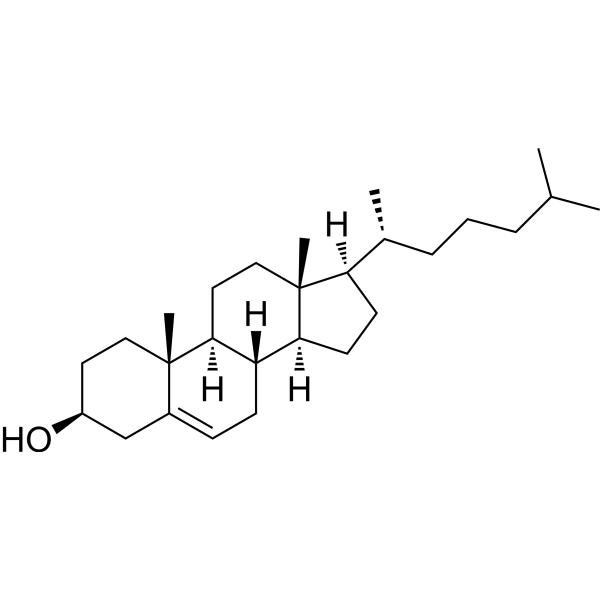
    Zymosterol is a Cholesterol (HY-N0322) biosynthesis metabolite. Zymosterol, a precursor of Cholesterol, is found mostly in the plasma membrane. Zymosterol circulates within the cell .
    Zymosterol
  • HY-113161

    Endogenous Metabolite Cancer
    L-Octanoylcarnitine is a plasma metabolite and a physiologically active form of octanoylcarnitine. L-Octanoylcarnitine can be used for the research of breast cancer .
    L-Octanoylcarnitine
  • HY-145344

    Phosphodiesterase (PDE) Cancer
    ONO-8430506 is an orally bioavailable and potent autotaxin (ATX)/ENPP2 inhibitor with the IC90 of 100 nM for ATX activity in mouse plasma .
    ONO-8430506
  • HY-129467

    2-Hydroxyoleic acid; 2-OHOA; LAM561

    Apoptosis Cancer
    (Rac)-Idroxioleic acid (2-Hydroxyoleic acid) is a synthetic oleic acid (OA) derivative that binds to the plasma membrane and alters lipid organization. (Rac)-Idroxioleic acid has anti-tumor effect .
    (Rac)-Idroxioleic acid
  • HY-P3278
    Caloxin 2A1
    2 Publications Verification

    Proton Pump Metabolic Disease
    Caloxin 2A1 is an extracellular plasma membrane Ca 2+-ATPase (PMCA) peptide inhibitor. Caloxin 2A1 does not affect basal Mg 2+-ATPase or Na +-K +-ATPase .
    Caloxin 2A1
  • HY-B2235C

    Biochemical Assay Reagents Glutathione Peroxidase Metabolic Disease
    L-α-Lecithin (soybean) is an orally active phospholipid. L-α-Lecithin (soybean) increases the bioavailability of Lutein in plasma and eyes of Rattus norvegicus, enhances plasma Glutathione peroxidase activity, and regulates fatty acids in plasma and tissues .
    L-α-Lecithin (soybean)
  • HY-113152

    Endogenous Metabolite Neurological Disease Inflammation/Immunology
    Hypogeic acid is a fatty acid and endogenous metabolite, with a concentration of 50 mg/mL in ethanol. The plasma level of Hypogeic acid is negatively correlated with the prevalence of interstitial lung disease in idiopathic inflammatory myopathy. Hypogeic acid can be used in studies related to idiopathic inflammatory myopathy .
    Hypogeic acid (50mg/ml in ethanol)
  • HY-119577

    Distigmine dibromide

    Cholinesterase (ChE) Neurological Disease
    Ubretid is a potent inhibitor of plasma cholinesterase. Ubretid therefore delays the hydrolysis of suxamethonium and prolongs its action, similar to the effects shown by other anticholinesterase agents, such as pyridostigmine and donepezil. Ubretid has the potential for the research of urinary retention prolongs the effect of suxamethonium. Ubretid is commonly prescribed for the research of myasthenia gravis and for difficulty in emptying the bladder .
    Ubretid
  • HY-W354498

    Endogenous Metabolite Cancer
    L-Octanoylcarnitine hydrochloride is a plasma metabolite and a physiologically active form of octanoylcarnitine. L-Octanoylcarnitine hydrochloride can be used for the research of breast cancer .
    L-Octanoylcarnitine hydrochloride
  • HY-P990095

    REGN5459

    CD3 TNF Receptor Cancer
    Vonsetamig (REGN5459) is a human bispecific antibody targeting BCMA and CD3. Vonsetamig triggers T-cell activation, induces plasma cell depletion, and triggers low-level cytokine release. Vonsetamig can be used for the research of relapsed/refractory multiple myeloma .
    Vonsetamig
  • HY-12089

    CP-529414

    CETP Endocrinology
    Torcetrapib (CP-529414) is a selective, potent cholesteryl ester transfer protein (CETP) inhibitor. A typical inhibition curve for whole human plasma, having a CETP concentration of 37 nM .
    Torcetrapib
  • HY-109183

    TAK-831

    Xanthine Oxidase Others
    Luvadaxistat (TAK-831) is an orally active, highly selective, potent D-amino acid oxidase (DAAO) inhibitor. Luvadaxistat inhibits oxidative deamination of D-serine via the human recombinant DAAO enzyme with an IC50 of 14 nM. Luvadaxistat significantly increases D-serine levels in the rodent brain, plasma, and cerebrospinal fluid. Luvadaxistat has the potential for schizophrenia research .
    Luvadaxistat
  • HY-153115

    Kallikrein Cardiovascular Disease Inflammation/Immunology
    Plasma kallikrein-IN-4 (Example 153) is a plasma kallikrein inhibitor with an IC50 of 0.016 μM against human plasma kallikrein .
    Plasma kallikrein-IN-4
  • HY-12388A

    Desmethylclomipramine hydrochloride; Norclomipramine hydrochloride

    Drug Metabolite Neurological Disease
    N-Desmethyl Clomipramine hydrochloride (Desmethylclomipramine hydrochloride) is a primary plasma N-desmethyl metabolite of Clomipramine. Clomipramine is a tricyclic antidepressant .
    N-Desmethyl clomipramine hydrochloride
  • HY-101998

    Mitochondrial Metabolism Metabolic Disease
    CTP inhibitor (Compound 792949) is a potent and selective CTP inhibitor. CTP inhibitor inhibits the plasma membrane citrate transporter (PMCT) .
    CTP inhibitor
  • HY-100064

    EGFR Cancer
    O-Desmethyl gefitinib is an active metabolite of Gefitinib in human plasma. The formation of O-desmethyl gefitinib is dependent on CYP2D6 activity. O-desmethyl gefitinib inhibits EGFR with an IC50 of 36 nM in subcellular assays .
    O-Desmethyl gefitinib
  • HY-P3278A
    Caloxin 2A1 TFA
    2 Publications Verification

    Proton Pump Metabolic Disease
    Caloxin 2A1 TFA is an extracellular plasma membrane Ca 2+-ATPase (PMCA) peptide inhibitor. Caloxin 2A1 TFA does not affect basal Mg 2+-ATPase or Na +-K +-ATPase .
    Caloxin 2A1 TFA
  • HY-156404
    PM-1
    2 Publications Verification

    Fluorescent Dye Others
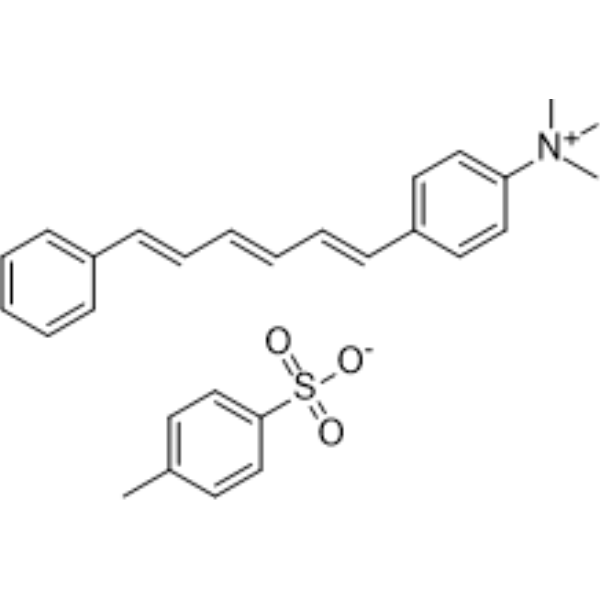
    PM-1, a derivative of Thioflavin-T (ThT; HY-D0218), is a small but highly specific plasma membrane (PM) fluorescent dye for specific and long-time membrane imaging of living and fixed cells. PM-1 is embedded directly into the cell membrane and exhibits a very long retention time on the plasma membrane with a half-life of approximately 15 h. PM-1 can be used in combination with protein labeling probes to study ectodomain shedding and endocytosis processes of cell surface proteins .
    PM-1
  • HY-W141774

    S-Carboxyethylcysteine

    Amino Acid Derivatives Metabolic Disease
    S-(2-Carboxyethyl)-L-cysteine (S-Carboxyethylcysteine) is a non-protein (modified) sulfur amino acid. S-(2-Carboxyethyl)-L-cysteine is present in Acacia seed. S-(2-Carboxyethyl)-L-cysteine can affect the seed’s protein use in rats. S-(2-Carboxyethyl)-L-cysteine suppresses the methionine-induced growth rate, and has a negative effect on the plasma amino acid levels in rats .
    S-(2-Carboxyethyl)-L-cysteine
  • HY-D1091

    Fluorescent Dye Neurological Disease
    DiSBAC2(3) is an anionic membrane-potential-sensitive dye. DiSBAC2(3) is a plasma membrane potential indicator .
    DiSBAC2(3)
  • HY-P3182

    Endogenous Metabolite Cancer
    NADH oxidase is a cyanide-resistant oxidase located on the plasma membrane of animals and plants, which is regulated by growth factors and hormones. NADH oxidase catalyzes the electron transfer from NADH to oxygen, and its activity is closely related to cell growth. The hormone response of NADH oxidase is attenuated in tumor-transformed cells, and it can serve as an anti-tumor target .
    NADH oxidase
  • HY-E70074

    Monoamine Oxidase Neurological Disease
    Monoamine oxidase (EC 1.4.3.4) is an enzyme composed of different polypeptides. Monoamine oxidation catalyzes the oxidative deamination of various biological amines in brain and peripheral tissues by producing hydrogen peroxide. Monoamine oxidase plays an important role in maintaining the regulation of synaptic transmission, emotional behavior and other brain functions .
    Monoamine oxidase, plasma
  • HY-123133

    Kallikrein Inflammation/Immunology
    PKSI-527 is a new, highly selective plasma kallikrein inhibitor. PKSI-527 can suppress collagen-induced arthritis (CIA) by modifying the kallikrein-kinin system .
    PKSI-527
  • HY-D1574

    Fluorescent Dye Others
    C6 NBD Sphingomyelin is a fluorescent short-chain analogue of Sphingomyelin (HY-113498). Chlamydia trachomatis acquires C6 NBD Sphingomyelin endogenously synthesizes from C6-NBD-ceramide and transportes to the chlamydial inclusion. C6 NBD Sphingomyelin can incorporate into the plasma membrane .
    C6 NBD Sphingomyelin
  • HY-NP167

    Biochemical Assay Reagents Others
    Fibrinogen from rat plasma can be used to prepare growth factor solutions.
    Fibrinogen from rat plasma
  • HY-N6574

    Na+/K+ ATPase Cardiovascular Disease Neurological Disease Metabolic Disease
    Marinobufogenin is a strong inhibitor of Na +/K + ATPase that has been identified in mammalian plasma .
    Marinobufogenin
  • HY-W052051

    N-Acetylbenzylamine

    Endogenous Metabolite Others
    N-Benzylacetamide (N-Acetylbenzylamine), as an endogenous metabolite, is the major component of the plasma metabolic profile of Benznidazole (HY-B1548) .
    N-Benzylacetamide
  • HY-143255

    Phosphodiesterase (PDE) Cancer
    Enpp-1-IN-11 (compound 23) is a potent Ecto-nucleotide pyrophosphatase/phosphodiesterases 1 (ENPP1) inhibitor with an Ki value of 45 nM. Enpp-1-IN-11 exhibits low clearance in human and mouse liver microsomes, good plasma stability in human and mouse plasma. Enpp-1-IN-11 can be used for researching anticancer .
    Enpp-1-IN-11
  • HY-N0343A

    p-Formylphenyl-β-D-glucopyranoside; p-Hydroxybenzaldehyde glucoside

    Others Others
    4-Formylpyrnyl-β-D-glucopyranoside (p-Formylphenyl-β-D-glucopyranoside) is a metabolite of Gastrodin (HY-N0115) in rat plasma. 4-Formylpyrnyl-β-D-glucopyranoside can be used to study the effects of multiple doses and food on the pharmacokinetic behavior of oral Gastrodin and its metabolites .
    4-Formylpyrnyl-β-D-glucopyranoside
  • HY-113305

    Endogenous Metabolite Metabolic Disease
    Dopamine 3-O-sulfate mainly exists in plasma and can be used as a biomarker to characterize aromatic amino acid decarboxylase (AADC) deficiency .
    Dopamine 3-O-sulfate
  • HY-P4522

    Biochemical Assay Reagents Others
    Bz-Ala-Arg is a dipeptide. Bz-Ala-Arg is also a substrate of human pancreatic carboxypeptidase B and plasma carboxypeptidase N .
    Bz-Ala-Arg
  • HY-P4522A

    Biochemical Assay Reagents Others
    Bz-Ala-Arg TFA is a dipeptide. Bz-Ala-Arg TFA is also a substrate of human pancreatic carboxypeptidase B and plasma carboxypeptidase N .
    Bz-Ala-Arg TFA
  • HY-W142596

    Liposome Others
    1,2-DImyristoyl-rac-glycero-3-phosphocholine (DMPC), a zwitterionic phospholipid, is chosen as a simple eukaryotic cell membrane, mimicking the neutral charge of the surface membrane of eukaryotic plasma membranes .
    1,2-DImyristoyl-rac-glycero-3-phosphocholine
  • HY-150052

    Kallikrein Cardiovascular Disease Metabolic Disease
    Plasma kallikrein-IN-3 is a plasma kallikrein inhibitor (IC50: 0.15 μM). Plasma kallikrein-IN-3 can be used for hereditary angioedema, diabetic macular edema, and diabetic retinopathy research .
    Plasma kallikrein-IN-3
  • HY-150519

    Factor XI Kallikrein Cardiovascular Disease
    FXIa/Plasma kallikrein-IN-1 is an inhibitor of coagulation factor XIa (FXIa) and plasma kallikrein with Ki values of 187.70 nM and 151.6 nM, respectively. FXIa/Plasma kallikrein-IN-1 can be used in the research of thromboembolic diseases .
    FXIa/Plasma kallikrein-IN-1
  • HY-P3469

    GCGR Metabolic Disease
    Dasiglucagon is a human glucagon analog, and can increase plasma glucose. Dasiglucagon can be used in hypoglycemia research .
    Dasiglucagon
  • HY-16252

    Mylaxen

    Cholinesterase (ChE) Neurological Disease
    Hexafluorenium dibromide (Mylaxen) is a potent cholinesterase (ChE) inhibitor with pI50 value of 6.96 and Ki value of 2.4 nM for human plasma cholinesterase (ChE) .
    Hexafluorenium dibromide
  • HY-W704079

    ​MG(18:0/0:0/0:0); L-(+)-1-Monostearin; 1-Octadecanoyl-sn-glycerol

    Endogenous Metabolite Cardiovascular Disease
    1-Stearoyl-sn-glycerol is (MG(18:0/0:0/0:0); L-(+)-1-Monostearin; 1-Octadecanoyl-sn-glycerol) is a monoglyceride and also a metabolite found in plasma, which can be used in metabolomic analysis of plasma for coronary artery lesions (CAL) .
    1-Stearoyl-sn-glycerol
  • HY-13611

    BN 80915

    Topoisomerase Cancer
    Diflomotecan (BN 80915) is a potent and orally active inhibitor of topoisomerase I. Diflomotecan (BN 80915) causes enhanced plasma stability and has the superior preclinical anti-tumour activity compared with other established compounds .
    Diflomotecan
  • HY-P3169

    CRFR Inflammation/Immunology
    α-Helical Corticotropin Releasing Factor (9-41) is a corticotropin releasing factor (CRF) antagonist. α-Helical Corticotropin Releasing Factor (9-41) decreases plasma growth hormone (GH) values in vivo .
    a-Helical Corticotropin Releasing Factor (9-41)
  • HY-19848

    LBM-642

    PPAR Metabolic Disease
    Cevoglitazar (LBM-642) is an orally active and highly potent PPARα and PPARγ dual agonist. Cevoglitazar can reduce food intake, body weight, and fasting plasma insulin in obese mice and cynomolgus monkeys. Cevoglitazar has the potential for diabetes and obesity-related disorders research .
    Cevoglitazar

Inquiry Online

Your information is safe with us. * Required Fields.

Salutation


Country or Region *

Applicant Name *


Organization Name *

Department *


Email Address *


Product Name *

Cat. No.


Requested quantity *

Phone Number *


Remarks

Inquiry Online

Inquiry Information

Product Name:
Cat. No.:
Quantity:
MCE Japan Authorized Agent:

