
1. Search Result
Search Result
Results for "

accumulation

" in MedChemExpress (MCE) Product Catalog:

1056

Inhibitors & Agonists

4

Screening Libraries

7

Fluorescent Dye

32

Biochemical Assay Reagents

71

Peptides

1

MCE Kits

10

Inhibitory Antibodies

193

Natural
Products

86

Isotope-Labeled Compounds

7

Click Chemistry

15

Oligonucleotides

1

GMP Molecules

Cat. No. Product Name Target Research Areas Chemical Structure
  • HY-156680

    TNG-462

    Histone Methyltransferase Cancer
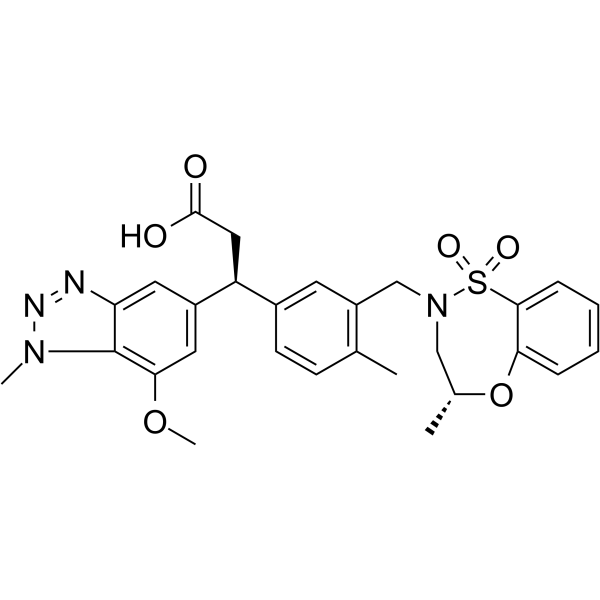
    TNG-462 is an orally active and selective PRMT5 inhibitor with anti-tumor activity against methylthioadenosine phosphorylase (MTAP) deficiency and/or methylthioadenosine (MTA) accumulation cancers .
    Vopimetostat
  • HY-107420
    AY 9944
    5+ Cited Publications

    Endogenous Metabolite Metabolic Disease
    AY 9944 is a specific cholesterol biosynthesis inhibitor. AY 9944 inhibits the 7-dehydro cholesterol Δ7-reductase (DHCR7) enzyme with an IC50 of 13 nM. AY 9944 causes hypocholesterolemia and accumulation of 7DHC. At high doses, AY 9944 inhibits also in cultured embryos sterol Δ7-Δ8 isomerase, which causes the accumulation of cholest-8-en-3β-ol .
    AY 9944
  • HY-133707
    β-Muricholic acid
    1 Publications Verification

    Endogenous Metabolite Metabolic Disease
    β-Muricholic acid is a potent and orally active biliary cholesterol-desaturating agent. β-Muricholic acid prevents cholesterol gallstones. β-Muricholic acid inhibits lipid accumulation. β-Muricholic acid has the potential for the research of nonalcoholic fatty liver disease (NAFLD) .
    β-Muricholic acid
  • HY-P2260
    Tat-beclin 1
    Maximum Cited Publications
    6 Publications Verification

    CHIKV Autophagy HIV Infection
    Tat-beclin 1, a peptide derived from a region of the autophagy protein (beclin 1), is a potent inducer of autophagy and interacts with negative regulator of autophagy, GAPR-1 (GLIPR2). Tat-beclin 1 decreases the accumulation of polyglutamine expansion protein aggregates and the replication of several pathogens (including HIV-1) in vitro, and reduces mortality in mice infected with chikungunya (CHIKV) or West Nile virus (WNV) .
    Tat-beclin 1
  • HY-129126
    NC9
    1 Publications Verification

    Cbz-Lys(Acr)-PEG2-dansyl

    Glutaminase Microtubule/Tubulin Others
    NC9 (Cbz-Lys(Acr)-PEG2-dansyl) is an irreversible transglutaminase (TG) inhibitor. NC9 inhibits osteoblast differentiation and mineralization. NC9 destabilizes microtubules. NC9 can be used for the research of osteoblast differentiation .
    NC9
  • HY-P99317

    LY-2062430

    Amyloid-β Neurological Disease
    Solanezumab (LY-2062430) is a humanized monoclonal IgG1 antibody directed against the mid-domain of the amyloid-β () peptide. Solanezumab binds to the mid-domain of monomeric amyloid-beta to slow brain amyloid accumulation. Solanezumab can be used for the research of Alzheimer’s disease .
    Solanezumab
  • HY-108648

    2-Methylthioadenosine diphosphate trisodium; 2-Methylthio-ADP trisodium

    P2Y Receptor Neurological Disease
    2-Methylthioadenosine diphosphate trisodium is a potent purinergic P2Y receptors agonist, with EC50s of 19, 6.2, and 5 nM for human P2Y13, mouse P2Y13 and human P2Y12, respectively. 2-Methylthioadenosine diphosphate trisodium has pEC50s of 8.29 and 5.75 for human P2Y1 and rat P2Y6, respectively. 2-Methylthioadenosine diphosphate trisodium induces platelet aggregation and shape change, and inhibits cyclic AMP accumulation in platelets exposed to prostaglandin E1 .
    2-MeS-ADP trisodium
  • HY-W018791
    Bifendate
    2 Publications Verification

    DDB

    HBV Autophagy Cytochrome P450 Atg8/LC3 p62 P-glycoprotein Infection Cardiovascular Disease Cancer
    Bifendate (DDB), extracted from Schisandrae chinensis, is an orally active anti-HBV agent against chronic hepatitis B. Bifendate inhibits ATG5-dependent autophagy and attenuates oleic acid-induced lipid accumulation with anti-oxidant properties in vitro. Bifendate can decrease alanine transaminase (ALT) level in mice. Bifendate attenuates hepatic steatosis in cholesterol/bile salt- and high-fat diet-induced hypercholesterolemia in mice. Bifendate potently increases the activity of cytochrome proteins (CYPs) and reverse P-gp-mediated multi-drug resistance (MDR) .
    Bifendate
  • HY-100200
    SMER28
    2 Publications Verification

    Autophagy Cancer
    SMER28 is a positive regulator of autophagy acting via an mTOR-independent mechanism. SMER28 prevents the accumulation of amyloid beta peptide.
    SMER28
  • HY-B1315

    Environmental Pollutants Apoptosis Insecticide Cholinesterase (ChE) Reactive Oxygen Species (ROS) Neurological Disease Inflammation/Immunology
    Carbaryl is the inhibitor for acetylcholinesterase that inhibits the degradation of acetylcholine in the synaptic cleft, leads to the accumulation of acetylcholine and causes neurotoxicity. Carbaryl can be used as an insecticide .
    Carbaryl
  • HY-50001
    Nucleozin
    5+ Cited Publications

    Influenza Virus Infection
    Nucleozin, a potent inhibitor of influenza A virus infection, induces the formation of nucleoprotein (NP) aggregates and antagonizes its nuclear accumulation, leading to cessation of viral replication. Nucleozin impedes influenza A virus replication in vitro with a nanomolar EC50 .
    Nucleozin
  • HY-129143
    Delphinidin-3-sambubioside chloride
    1 Publications Verification

    Dp3‐Sam chloride

    Apoptosis Metabolic Disease Inflammation/Immunology
    Delphinidin-3-sambubioside (Dp3‐Sam) chloride is an anthocyanin that has orally active anti-inflammatory activity. Delphinidin-3-sambubioside chloride inhibits LPS-induced inflammatory factors release. Delphinidin-3-sambubioside chloride also alleviates hepatic lipid accumulation in HFD rats. Delphinidin-3-sambubioside chloride can be isolated from Hibiscus sabdariffa L. .
    Delphinidin-3-sambubioside chloride
  • HY-N7515

    2',4',6'-Trihydroxychalcone

    Bacterial AMPK Infection Metabolic Disease Inflammation/Immunology
    Pinocembrin chalcone (2',4',6'-Trihydroxychalcone) is an antibacterial compound from Helichrysum Trilineatum. Pinocembrin chalcone facilitates AMP-activated protein kinase (AMPK) activation, improves glucose tolerance, increases muscle FAO and reduces fat accumulation in the liver and skeletal muscles in high-fat diet-induced (HFD) diabetic mice. Pinocembrin chalcone is promising for research of gastric ulcers and diabetes .
    Pinocembrin chalcone
  • HY-16642A
    LY2828360
    1 Publications Verification

    Cannabinoid Receptor Neurological Disease
    LY2828360 is a slowly acting but efficacious G protein-biased cannabinoid (CB2) agonist, inhibiting cAMP accumulation and activating ERK1/2 signaling.
    LY2828360
  • HY-13626
    Spisulosine
    1 Publications Verification

    ES-285

    PKC Apoptosis Cancer
    Spisulosine (ES-285) is an antiproliferative (antitumoral) compound of marine origin. Spisulosine inhibits the growth of the prostate PC-3 and LNCaP cells through intracellular ceramide accumulation and PKCζ activation. Spisulosine induces apoptosis in PC-3 and LNCaP cells .
    Spisulosine
  • HY-Y1125

    Pseudothymine

    Endogenous Metabolite Metabolic Disease
    6-Methyluracil (Pseudothymine), a metabolite of Uracil, can be used as an indicator of acetoacetyl-CoA (AACoA) accumulation. 6-Methyluracil exhibits antiradiation effect in vivo .
    6-Methyluracil
  • HY-P5275

    CG-Lipoxyn

    NF-κB Histone Demethylase Metabolic Disease
    Tripeptide-41 (CG-Lipoxyn) is a signal peptide. Tripeptide-41 activates the NF-kB signaling pathway, inhibits the expression of C/EBP and increases cAMP. Tripeptide-41 is an important intracellular signaling factor that causes lipolysis by promoting the hydrolysis of lipids into triglycerides. Tripeptide-41 can be used in cosmetics that targets fat accumulation .
    Tripeptide-41
  • HY-146682

    Aldehyde Dehydrogenase (ALDH) Apoptosis Cancer
    KS100 is a potent ALDH inhibitor with IC50s of 230, 1542, 193 nM for ALDH1A1, ALDH2, and ALDH3A1, respectively. KS100 shows antiproliferative and anticancer effects with low low toxic. KS100 significantly increases ROS activity, lipid peroxidation and toxic aldehyde accumulation. KS10600 induces apoptosis and cell cycle arrest at the G2/M phase .
    KS100
  • HY-W009417

    Environmental Pollutants Glycosidase Metabolic Disease
    Cedryl acetate is an orally active α-glucosidase inhibitor with an IC50 of 94 μM against yeast α-glucosidase. Cedryl acetate reduces high-fat diet-induced body weight gain, visceral fat pad weight, adipocyte hypertrophy, hepatic lipid accumulation, glucose intolerance, insulin resistance and gluconeogenesis. Cedryl acetate can be used in the research of obesity and obesity-related metabolic syndrome .
    Cedryl acetate
  • HY-174311

    Glycosidase Neurological Disease Metabolic Disease
    GT-02216 can bind to GCase allosterically and enhance its activity. GT-02216 enhances the activity of GCase in primary human fibroblasts dose-dependently reduces the accumulation of its substrate, hexosylsphingosine (HexCer). GT-02216 reduces the Tau accumulation in mutant GBA1 fibroblasts. GT-02216 can be used for the study of Parkinson’s disease .
    GT-02216
  • HY-B2140
    Multifungin
    1 Publications Verification

    Bromosalicylchloranilide; Salifungin

    Fungal Bacterial Infection
    Multifungin (Bromochlorosalicylanilide) is an antifungal that treats oral candidiasis . Multifungin prevents the formation and accumulation of Zearalenone and reduces the fungal population in stored-crushed corn .
    Multifungin
  • HY-141866
    Acid Ceramidase-IN-1
    1 Publications Verification

    Ceramidase Neurological Disease
    Acid Ceramidase-IN-1 is orally active and blood-brain barrier penetrant acid ceramidase (AC, ASAH-1) inhibitor (hAC IC50=0.166 μM). Acid Ceramidase-IN-1 reduces AC activity, accumulates ceramide species (Cer (d18:0/16:0), Cer (d18:1/16:0)), and decreases sphingosine levels. Acid Ceramidase-IN-1 can be used for the study of severe neurological lysosomal storage diseases (LSDs) such as Gaucher’s disease (GD) and Krabbe’s disease (KD) .
    Acid Ceramidase-IN-1
  • HY-101333

    (RS)-CPPG

    mGluR Neurological Disease
    CPPG ((RS)-CPPG) is a potent group II/III mGlu receptors antagonist. CPPG exhibits some selectivity (approximately 20 fold) for group III (IC50=2.2 nM) over group II (IC50=46.2 nM) mGlu receptors in the rat cerebral cortex. CPPG has weak effects at group I mGlu receptors .
    CPPG
  • HY-50289
    Sorbinil
    2 Publications Verification

    Aldose Reductase Metabolic Disease
    Sorbinil is an aldose reductase inhibitor (ARI) that prevents the accumulation of sorbitol in cells or animals. Sorbinil is useful in studying diabetes and diabetic complications, reducing AR activity and inhibiting the polyol pathway.
    Sorbinil
  • HY-138820

    HSP Neurological Disease
    SW02 is a potent activator of ATPase activity of Hsp70, with an EC50 of 150 μM. SW02 leads to accumulation of both total tau and phosphorylated tau (pTau) .
    SW02
  • HY-P5815

    Glucagon-like Peptide 1 (1-36) amide (human, rat)

    GLP Receptor GCGR Metabolic Disease
    GLP-1 (1-36) amide (human, rat) (Glucagon-like Peptide 1 (1-36) amide (human, rat) ) is a molecular variant of glucagon-like peptide 1 (GLP-1)-(7-36) amide. GLP-1 (1-36) amide (human, rat) can stimulate [14C]aminopyrine accumulation on enzymatically dispersed enriched rat parietal cells .
    GLP-1 (1-36) amide (human, rat)
  • HY-123402
    GSK3987
    2 Publications Verification

    LXR Metabolic Disease
    GSK3987 is a pan LXRα/β agonist with EC50s of 50 nM, 40 nM for LXRα-SRC1 and LXRβ-SRC1, respectively. GSK3987 increases the expression of ABCA1 and SREBP-1c. GSK3987 induces cellular cholesterol efflux and triglyceride accumulation .
    GSK3987
  • HY-147395

    GPR52 Neurological Disease
    GPR52 agonist-1 is a potent, orally active and blood-brain barrier (BBB) penetrant GPR52 agonist with an pEC50 value of 7.53. GPR52 agonist-1 affects cAMP accumulation through direct interaction with GPR52. GPR52 agonist-1 can significantly suppress Methamphetamine-induced hyperactivity in mice. Antipsychotic activity .
    GPR52 agonist-1
  • HY-146683

    Aldehyde Dehydrogenase (ALDH) Apoptosis Cancer
    KS106 is a potent ALDH inhibitor with IC50s of 334, 2137, 360 nM for ALDH1A1, ALDH2, and ALDH3A1, respectively. KS106 shows antiproliferative and anticancer effects with low low toxic.KS106 significantly increases ROS activity, lipid peroxidation and toxic aldehyde accumulation. KS106 induces apoptosis and cell cycle arrest at the G2/M phase .
    KS106
  • HY-B2153

    Cuproptosis Bacterial Infection
    Tetraethylenepentamine pentahydrochloride is an orally active copper chelator and copper mobilizer. Tetraethylenepentamine pentahydrochloride exhibits growth inhibitory and hypolipidemic properties. Tetraethylenepentamine pentahydrochloride significantly increases urinary copper excretion and reduces renal copper accumulation in copper overload models, but does not significantly alter hepatic copper levels. Tetraethylenepentamine pentahydrochloride exerts growth inhibitory effects on Candida albicans and Fluconazole (HY-B0101)-resistant strains, and can be widely used in studies related to Wilson's disease and Candida infections .
    Tetraethylenepentamine pentahydrochloride
  • HY-129297

    Endogenous Metabolite Metabolic Disease
    CMPF can be found in trace constituent of urine and blood. CMPF is a biomarker of type 2 diabetes. CMPF can act on the β cell and induces impaired mitochondrial function. CMPF decreases glucose-induced ATP accumulation, and induces oxidative stress. CMPF reverses hepatic lipid accumulation and improves insulin sensitivity in obese mice .
    CMPF
  • HY-N0023

    NO Synthase Inflammation/Immunology
    Cistanoside A is a phenylethanoid isolated from Cistanche deserticola, reduces NO accumulation, but shows no effect on iNOS mRNA, iNOS protein levels or iNOS activity. Anti-inflammatory effect .
    Cistanoside A
  • HY-139369
    QD394
    1 Publications Verification

    Reactive Oxygen Species (ROS) Cancer
    QD394 is a reactive oxygen species (ROS) inducer that can induce lipid peroxidation, increase intracellular ROS accumulation, inhibit STAT3 phosphorylation, and induce ferroptosis .
    QD394
  • HY-P5815A

    Glucagon-like Peptide 1 (1-36) amide (human, rat) TFA

    GLP Receptor GCGR Metabolic Disease
    GLP-1 (1-36) amide (human, rat) (Glucagon-like Peptide 1 (1-36) amide (human, rat) ) TFA is a molecular variant of glucagon-like peptide 1 (GLP-1)-(7-36) amide. GLP-1 (1-36) amide (human, rat) TFA can stimulate [14C]aminopyrine accumulation on enzymatically dispersed enriched rat parietal cells .
    GLP-1 (1-36) amide (human, rat) TFA
  • HY-108571

    PPAR Cardiovascular Disease Metabolic Disease
    CP-775146 is a selective PPARα agonist (Ki of 24.5 nM) that binds strongly to the PPARα ligand. CP-775146 has no observable affinity for PPARβ and PPARγ.CP-775146 shows hypolipidemic activity. CP-775146 efficiently alleviates obesity-induced liver damage, prevents lipid accumulation by activating the liver fatty acid β-oxidation pathway .
    CP-775146
  • HY-176236

    LXR Autophagy Metabolic Disease
    Lipophagy inducer 1 is a lipophagy inducer. Lipophagy inducer 1 has activity of reducing lipid droplet accumulation and rescuing cell death. Lipophagy inducer 1 exerts its effects by activating lipophagy, increasing steady-state autophagosome and regulating the LXR signaling pathway. Lipophagy inducer 1 can be used in the study of diabetic nephropathy (DKD) and other diseases related to lipid metabolism disorders .
    Lipophagy inducer 1
  • HY-172157

    HDAC AMPK Metabolic Disease
    HDAC11-IN-2 (compound B6) is a high selective Histone Deacetylase 11 (HDAC11) inhibitor. HDAC11-IN-2 inhibits HDAC11 and HDAC8 with IC50s of 51.1 ×10 -3 μM and 5 μM, respectively. HDAC11-IN-2 inhibits denovolipogenesis (DNL) and promotes fatty acid oxidation, thus mitigating hepaticlipid accumulation and pathological symptoms in MASLD mice. HDAC11-IN-2 enhances the phosphorylation of AMPKα1 at Thr172 through the inhibition of HDAC11, consequently modulating DNL and fatty acid oxidation in the liver .
    HDAC11-IN-2
  • HY-124501

    p-NH2-PE-TFMPP

    5-HT Receptor Neurological Disease
    LY 165163 is a potent 5-HT presynaptic receptor agonist. LY 165163 significantly decreases 5-HTP accumulation and increases DOPA accumulation in the cortex and striatum .
    LY 165163
  • HY-W017448

    N,N-Dimethylpiperidinium chloride; PIX

    Environmental Pollutants Biochemical Assay Reagents Others
    Mepiquat chloride (N,N-Dimethylpiperidinium chloride) is a systemic plant growth regulator. Mepiquat chloride reduces the activity of RuBP carboxylase. Mepiquat chloride decreases plant height, total length of vegetative and fruiting branches, and total leaf area of cotton. Mepiquat chloride reduces the net photosynthetic rate of cotton leaves. Mepiquat chloride promotes starch accumulation in cotton leaves without altering sucrose content .
    Mepiquat chloride
  • HY-146997

    Thyroid Hormone Receptor Metabolic Disease
    TRβ agonist 1 is a selective and mutation-sensitive thyroid hormone receptor β (TRβ) agonist, with an EC50 value of 21 nM. TRβ agonist 1 can be used for researching dyslipidemia, nonalcoholic steatohepatitis (NASH), and resistance to thyroid hormone (RTH) .
    TRβ agonist 1
  • HY-P4127A

    PACAP Receptor Neurological Disease Metabolic Disease Inflammation/Immunology Cancer
    M65 TFA is a deleted peptide of maxadilan (61 a.a.) with deletion of the residues between positions 24 and 42 and is a specific antagonist of PACAP type 1 receptor that inhibits ANP secretion and can be used for relevant researches .
    M65 TFA
  • HY-133707R

    Reference Standards Endogenous Metabolite Metabolic Disease
    Deracoxib (Standard) is the analytical standard of Deracoxib. This product is intended for research and analytical applications. 0
    β-Muricholic acid (Standard)
  • HY-156010

    PPAR Metabolic Disease
    PPARγ-IN-2 (Compound 5a) is a PPARγ inhibitor. PPARγ-IN-2 inhibits TG accumulation in 3T3-L1 preadipocytes (EC50: 0.106 μM). PPARγ-IN-2 inhibits high-cholesterol diet (HFC)-induced obesity and related metabolic syndrome, and reduces lipid accumulation in adipose tissue .
    PPARγ-IN-2
  • HY-145259

    HDAC Histone Demethylase Cancer
    HDAC6-IN-3 (Compound 14), an antiprostate cancer agent, is a potent, orally active HDAC6 inhibitor with IC50s ranging from 0.02-1.54 μM for HDAC1/2/3/6/8/10. HDAC6-IN-3 is also an effective MAO-A (IC50=0.79 μM) and LSD1 inhibitor . HDAC6-IN-3 is a click chemistry reagent, it contains an Alkyne group and can undergo copper-catalyzed azide-alkyne cycloaddition (CuAAc) with molecules containing Azide groups.
    HDAC6-IN-3
  • HY-133100

    Benzyl-ALA hydrochloride

    Endogenous Metabolite Cancer
    5-ALA benzyl ester hydrochloride (Benzyl-ALA hydrochloride) is a protoporphyrin precursor used as a photodetection agent. 5-ALA benzyl ester hydrochloride induces protoporphyrin IX (PPIX) accumulation in colon carcinoma cell lines .
    5-ALA benzyl ester hydrochloride
  • HY-131032

    Adenosine Receptor Others
    KI-7 is an A2B adenosine receptor positive allosteric modulator. KI-7 potentiates the cAMP accumulation induced by the non-selective A2B adenosine receptor agonist NECA (EC50=445.8 nM). KI-7 also potentiates the cAMP accumulation induced by the selective A2B adenosine receptor agonist BAY 60-6583 as well as by adenosine with EC50s of 2390 nM and 2550 nM, respectively .
    KI-7
  • HY-161460

    Ferroptosis Reactive Oxygen Species (ROS) Cardiovascular Disease
    Ferroptosis-IN-7(Compound 26) is a ferroptosis inhibitor which can restore cell viability, reduce iron accumulation and scavenge reactive oxygen species. Ferroptosis-IN-7 can be used for vascular diseases research .
    Ferroptosis-IN-7
  • HY-W440913

    Liposome Fluorescent Dye Cancer
    DSPE-PEG-Cy5, MW 5000 is a fluorescently labeled PEGylated phospholipid with a molecular weight of 5000 Da. After intravenous injection, DSPE-PEG-Cy5, MW 5000 shows only extremely low fluorescence accumulation at tumor sites in orthotopic tumor-bearing mice, and can be used as a negative control for evaluating tumor accumulation of nanoparticles. DSPE-PEG-Cy5, MW 5000 can serve as a fluorescent marker to prepare Cy5-labeled NPs-DPPA and NPs-DPPA (C3F8) for pharmacokinetic and biodistribution studies in mice. DSPE-PEG-Cy5, MW 5000 is widely applicable to research in fields related to triple-negative breast cancer, hepatocellular carcinoma and so on .
    DSPE-PEG5000-Cy5
  • HY-130791

    Drug Derivative Others
    Dioctanoin is a type of diacylglycerol .
    Dioctanoin
  • HY-175725

    Nuclear Hormone Receptor 4A/NR4A Metabolic Disease
    NR4A1 agonist 1 is a NR4A1 agonist with a Ki value of 2.96 μM. NR4A1 agonist 1 exhibits lipid-lowering activity in 3T3-L1 adipocytes, with an EC50 of 0.13 μM, significantly decreasing triglyceride (TG) accumulation and lipid droplet accumulation. NR4A1 agonist 1 can be used for the study of obesity .
    NR4A1 agonist 1

Inquiry Online

Your information is safe with us. * Required Fields.

Salutation


Country or Region *

Applicant Name *


Organization Name *

Department *


Email Address *


Product Name *

Cat. No.


Requested quantity *

Phone Number *


Remarks

Inquiry Online

Inquiry Information

Product Name:
Cat. No.:
Quantity:
MCE Japan Authorized Agent:

