1. Search Result
Search Result
Results for "

and prostate cancers

" in MedChemExpress (MCE) Product Catalog:

962

Inhibitors & Agonists

2

Screening Libraries

8

Fluorescent Dyes

11

Biochemical Assay Reagents

69

Peptides

39

Inhibitory Antibodies

121

Natural
Products

34

Isotope-Labeled Compounds

6

Click Chemistry

11

Oligonucleotides

1

GMP Molecules

Targets Recommended:
Cat. No. Product Name Target Research Areas Chemical Structure
  • HY-145388
    AU-15330
    10+ Cited Publications

    PROTACs SWI/SNF Complex Cancer
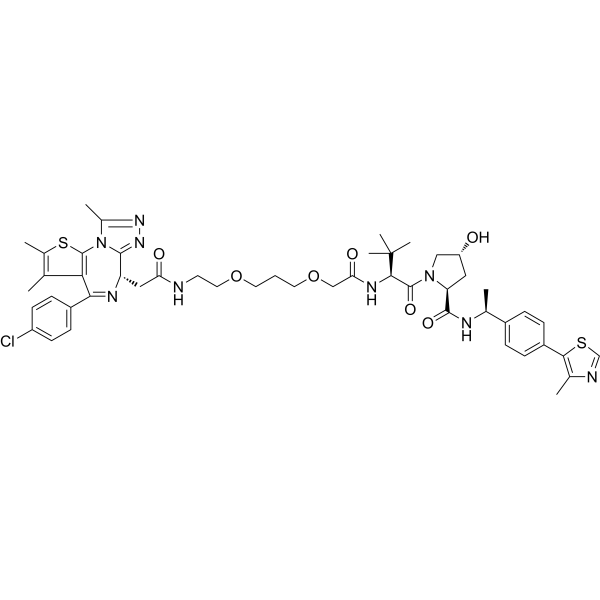
    AU-15330 is a proteolysis-targeting chimera (PROTAC) degrader of the SWI/SNF ATPase subunits, SMARCA2 and SMARCA4. AU-15330 induces potent inhibition of tumour growth in xenograft models of prostate cancer and synergizes with the AR antagonist enzalutamide. AU-15330 induces disease remission in castration-resistant prostate cancer (CRPC) models without toxicity .
    AU-15330
  • HY-14249
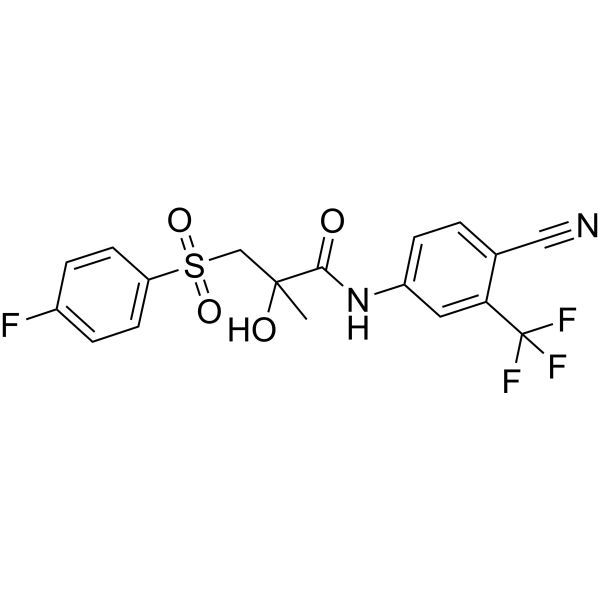
    Bicalutamide
    15+ Cited Publications

    Androgen Receptor Autophagy Cancer
    Bicalutamide is an orally active non-steroidal androgen receptor (AR) antagonist. Bicalutamide can be used for the research of prostate cancer .
    Bicalutamide
  • HY-16706
    Remodelin
    15+ Cited Publications

    Histone Acetyltransferase Cancer
    Remodelin is an orally active and selective inhibitor of acetyltransferase NAT10. Remodelin inhibits NAT10 activitity and slows DNA replication and suppresses growth of prostate cancer cells. Remodelin inhibits the growth of prostate cancer and hepatocellular carcinoma in xenograft model. Remodelin enhances the healthspan in hutchinson-gilford progeria syndrome (HGPS) mouse model .
    Remodelin
  • HY-P99239

    HUJ-591; TLX591

    PSMA Radionuclide-Drug Conjugates (RDCs) Cancer
    Rosopatamab (HuJ591) is a humanized antiPSMA IgG1 monoclonal antibody that can be used in cancer research, especially prostate cancer. Rosopatamab can be linked to the low-energy beta-emitting radioisotope lutetium-177 ( 177Lu) through the bifunctional chelator DOTA-NHS ester to obtain a radioimmunoconjugate that targets malignant prostate cells with high efficiency .
    Rosopatamab
  • HY-13673A
    Goserelin acetate
    1 Publications Verification

    ICI-118630 acetate

    GnRH Receptor Apoptosis Endocrinology Cancer
    Goserelin acetate (ICI-118630 acetate), a decapeptide analogue of gonadotropin-releasing hormone (GnRH/LHRH), functions as a GnRH agonist. Goserelin acetate can be used for the research of breast cancer, epithelial ovarian cancer and prostate cancer .
    Goserelin acetate
  • HY-148761
    Zadavotide guraxetan
    2 Publications Verification

    PSMA I&T; PNT-2002

    PSMA Cancer
    PSMA I&T is an effective inhibitor of prostate-specific membrane antigen (PSMA). PSMA I&T can be used for SPECT/CT imaging and radionuclide studies in triple-negative breast cancer and prostate cancer (PCa) .
    Zadavotide guraxetan
  • HY-176763

    Sec61 Cancer
    KZR-261 is a Sec61 translocase inhibitor. KZR-261 binds directly to the Sec61 channel, thereby inhibiting the biosynthesis of certain Sec61 substrate proteins, including oncogenic factors. KZR-261 activates the endoplasmic reticulum stress response. KZR-261 exhibits broad in vitro anticancer activity. KZR-261 shows antitumor efficacy in mouse models of cancer. KZR-261 can be used for the research of multiple myeloma, colorectal cancer, small cell lung cancer, pancreatic cancer, prostate cancer, non-Hodgkin's lymphoma, and mantle cell lymphoma .
    KZR-261
  • HY-136383
    AZA1
    1 Publications Verification

    Rac1/Cdc42-IN-1

    Ras Apoptosis Cancer
    AZA1 is a potent dual inhibitor of Rac1 and Cdc42. AZA1 induces prostate cancer cells apoptosis and inhibits prostate cancer cells proliferation, migration and invasion .
    AZA1
  • HY-P9992

    BAY-2315497; PSMA-TTC

    PSMA Apoptosis Cancer
    Peligifatamab is a PSMA-targeted α-radioimmunoconjugate with an EC50 of 1.2 nM against human targets. Peligifatamab induces DNA damage, DNA double-strand breaks, cell cycle arrest and apoptosis (Apoptosis) in PSMA-positive prostate cancer cells. Peligifatamab reduces cell viability in a manner dependent on cellular PSMA expression levels. Peligifatamab inhibits tumor growth and tumor-induced abnormal bone growth in prostate cancer bone metastasis models. Peligifatamab exhibits antitumor efficacy in subcutaneous prostate cancer models and xenograft models. Peligifatamab can be used for the research of metastatic castration-resistant prostate cancer .
    Pelgifatamab
  • HY-N10361

    RAR/RXR PPAR Aldose Reductase Cancer
    Drupanin is an orally active and selective AKR1C3 enzyme inhibitor and an RXRα agonist with an EC50 value of 4.8 μM, which is found in green propolis. Drupanin also activates PPARγ moderately. Drupanin induces adipogenesis and elevates aP2 mRNA levels in 3T3-L1 fibroblasts Drupanin has the potential for the research of breast and prostate cancers .
    Drupanin
  • HY-132896

    Histone Demethylase Cancer
    KDM4-IN-3 (Compound 15) is a KDM4 inhibitor (IC50 = 871 nM) that exhibits improved potency in biochemical assays. KDM4-IN-3 is cell-permeable and kills prostate cancer cells at low micro molar concentrations. KDM4-IN-3 inhibits growth of prostate cancer cell lines and increases the H3K9me3 abundance. KDM4-IN-3 can be studied in research for prostate cancer .
    KDM4-IN-3
  • HY-45661

    NUV-422

    CDK Neurological Disease Cancer
    Inixaciclib (NUV-422) is a blood-brain barrier-penetrant inhibitor of CDK2, CDK4 and CDK6. Inixaciclib inhibits cancer cell growth. Inixaciclib induces anti-tumor activity in xenograft models of glioblastoma, CDK4/CDK6 inhibitor-resistant HR + HER2 - metastatic breast cancer, and anti-androgen-resistant prostate cancer. Inixaciclib can be used for the research of relapsed or metastatic castration-resistant prostate cancer .
    Inixaciclib
  • HY-19337
    Ketodarolutamide
    1 Publications Verification

    BAY 1896953; ORM-15341

    Androgen Receptor Cancer
    Ketodarolutamide (ORM-15341) is a potent, high-affinity nonsteroidal competitive full antagonist of androgen receptor (AR). Ketodarolutamide displays a Ki value of 8 nM for rat wild-type AR and an IC50 value of 38 nM in AR-HEK293 cells . Ketodarolutamide inhibits testosterone-induced nuclear translocation of the AR and antagonizes both overexpressed and mutant ARs . Ketodarolutamide specifically suppresses the proliferation of AR-dependent prostate cancer cells and exhibits antitumor activity in models of castration-resistant prostate cancer (CRPC) . Ketodarolutamide is suitable for the mechanistic and therapeutic research of prostate cancer .
    Ketodarolutamide
  • HY-173626

    Androgen Receptor Cancer
    EN1441 is a covalent degrader targeting the androgen receptor (AR) with an EC50 value of 4.2 μM and its truncated variant AR-V7. EN1441 selectively and potently degrades both AR and AR-V7 in androgen-independent prostate cancer cells. EN1441 is promising for research of androgen-independent prostate cancers .
    EN1441
  • HY-13534
    Abarelix
    1 Publications Verification

    R3827; PPI 149

    GnRH Receptor Endocrinology Cancer
    Abarelix (R3827; PPI 149) is a potent gonadotrophin-releasing hormone (GnRH) antagonist, used for prostate cancer treatment.
    Abarelix
  • HY-16079
    AZD3514
    3 Publications Verification

    Androgen Receptor Cancer
    AZD3514 is an orally activie and selective androgen receptor (AR) inhibitor. AZD3514 androgen-dependently and -independently inhibits AR signal. AZD351 down-regulates nuclear AR levels in human LNCaP prostate cancer cells in the absence of androgen with an pIC50 value of 5.75. AZD3514 can be used for the research of prostate cancer .
    AZD3514
  • HY-103591
    DUPA(OtBu)-OH
    1 Publications Verification

    PSMA Cancer
    DUPA(OtBu)-OH is a DUPA precursor. DUPA is used as the targeting moiety to actively deliver Docetaxel (DTX) for treatment of Prostate-Specific Membrane Antigen (PSMA) expressing prostate cancer.
    DUPA(OtBu)-OH
  • HY-110154

    Histone Demethylase Cancer
    NSC636819 is a competitive and selective inhibitor of KDM4A/KDM4B. KDM4A/KDM4B are potential progression factors for prostate cancer. NSC636819 has the potential for the research of cancer diseases, especially prostate cancer .
    NSC636819
  • HY-N15637

    Apoptosis Cancer
    Torularhodin is a carotenoid with anti-cancer activity. Torularhodin induces apopotsis of tumor cells and can be used for the study of prostate cancer .
    Torularhodin
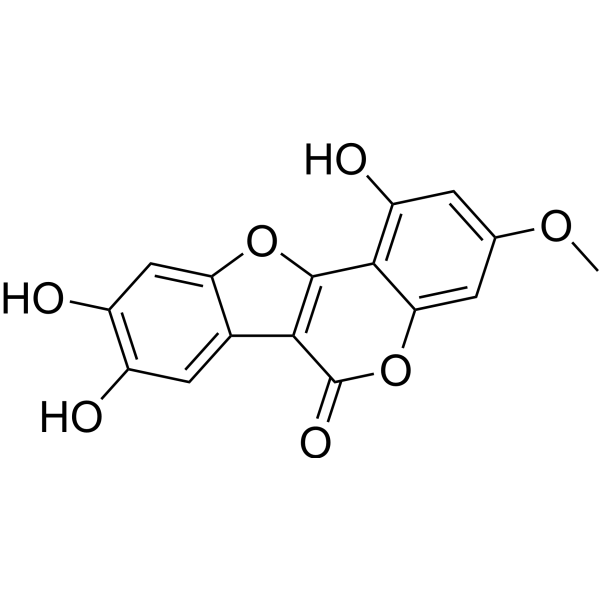
  • HY-N7645

    Trifoside; Prunetin 4′-O-β-D-glucopyranoside

    Others Cancer
    Prunetrin (Trifoside) is a flavonoid identified as a potential anti-prostate cancer agent in in silico screening .
    Prunetrin
  • HY-155994
    PIK5-12d
    1 Publications Verification

    PROTACs PIKfyve Autophagy Cancer
    PIK5-12d is a PROTAC PIKfyve degrader (DC50 = 1.48 nM). PIK5-12d induces massive cytoplasmic vacuolization and blocks autophagic flux in multiple prostate cancer cells. PIK5-12d inhibits prostate cancer cell proliferation. PIK5-12d significantly suppresses tumor proliferation in mice bearing LTL-331R human prostate cancer PDX tumors. PIK5-12d can be used for the study of prostate cancer. (Pink: PIKfyve ligand (HY-175631), Blue: VHL Ligand (HY-125845), Black: Linker, PIKfyve ligand-linker conjugate (HY-175632)) .
    PIK5-12d
  • HY-122678

    Survivin Apoptosis Cancer
    LQZ-7F, a survivin dimerization inhibitor, induces spontaneous apoptosis and synergizes with Docetaxel in prostate cancer cells. LQZ-7F dose-dependently inhibits survival of both PC-3 and C4-2 cells with IC50s of 2.99 and 2.47 µM, respectively .
    LQZ-7F
  • HY-N7148A

    Endogenous Metabolite Cancer
    (±)-γ-Tocopherol is an endogenous metabolite present in Blood that can be used for the research of Prostate Cancer and Endometrial Cancer .
    (±)-γ-Tocopherol
  • HY-P5290

    Radionuclide-Drug Conjugates (RDCs) PSMA Cancer
    HYNIC-PSMA is a ligand for molecular imaging of tumors. Hynic-psma consists of two components: HYNIC (6-hydrazinonicotinamide) and PSMA (Prostate-Specific Membrane Antigen). HYNIC is a compound used to attach radioactive isotopes to targeted molecules, such as 188Re-HYNIC-PSMA. PSMA is a membrane antigen that is specifically expressed on the surface of prostate cancer cells. HYNIC-PSMA can be used in prostate cancer research . HYNIC-PSMA can be used for the synthesis/research of Radionuclide-Drug Conjugates (RDCs).
    HYNIC-PSMA
  • HY-P0013

    D-21074; ORF 23541

    GnRH Receptor Cancer
    Antide (D-21074) is a potent LHRH antagonist. Antide also can be used for the research of prostatic cancer .
    Antide
  • HY-143332

    Epigenetic Reader Domain Cancer
    TRIM24/BRPF1-IN-2 (compound 20l) is a potent TRIM24/BRPF1 dual inhibitor, with IC50 values of 0.98 and 1.16 μM, respectively. TRIM24/BRPF1-IN-2 shows TRIM24/BRPF1 bromodomain binding affinity. TRIM24/BRPF1-IN-2 can be used for prostate cancer research .
    TRIM24/BRPF1-IN-2
  • HY-147526

    Apoptosis Cancer
    RM-581, aminosteroid, is an orally active anticancer agent. RM-581 shows anticancer potency against pancreatic, breast, prostate, and ovarian cancers. RM-581 induces endoplasmic reticulum stress and apoptosis via disturbance of cancer cell cholesterol homeostasis. RM-581 can be used for the research of cancer, such as prostate cancer and breast cancer .
    RM-581
  • HY-121435

    RAR/RXR Akt Apoptosis Drug Derivative TNF Receptor Cancer
    K-8012 is a Sulindac (HY-B0008) analog and RXRα antagonist with an IC50 of 9.2 µM. K-8012 inhibits the activation of AKT. K-8012 induces Apoptosis, redirecting the TNFα signaling pathway from survival to death. K-8012 exerts anticancer activity against lung cancer, prostate cancer, and breast cancer. K-8012 can be used in research related to lung cancer, prostate cancer, breast cancer, and hepatocellular carcinoma .
    K-8012
  • HY-13673

    ICI 118630

    GnRH Receptor Apoptosis Endocrinology Cancer
    Goserelin (ICI 118630), a decapeptide analogue of gonadotropin-releasing hormone (GnRH/LHRH), functions as a GnRH agonist. Goserelin can be used for the research of breast cancer, epithelial ovarian cancer and prostate cancer .
    Goserelin
  • HY-N7924

    Others Inflammation/Immunology Cancer
    Astragenol is an intermediate used for Astragenol derivative synthesis. Astragenol derivatives are promising anti-inflammatory agents for prostate cancer research .
    Astragenol
  • HY-13787

    Akt Ribosomal S6 Kinase (RSK) GSK-3 Cancer
    XL-418 is an orally active dual Akt and p70S6K inhibitor with IC50s of 1 nM for Akt1 and 2 nM for p70S6K. XL-418 inhibits the phosphorylation of ribosomal protein S6 and GSK3β. XL-418 can be used for the study of prostate carcinoma and breast cancer .
    XL-418
  • HY-158498

    FA2 N-linked oligosaccharide; F(6)A2 glycan

    Biochemical Assay Reagents Cancer
    FA2 glycan (G0F) (FA2 N-linked oligosaccharide; F(6)A2 glycan) is a core-fucosylated biantennary N-linked oligosaccharide that serves as a prostate cancer biomarker. The level of FA2 glycan (G0F) is higher in prostate cancer than in benign prostatic hyperplasia, and it is further elevated in advanced prostate cancer with a Gleason score ≥8 compared with both benign prostatic hyperplasia and low-/intermediate-risk prostate cancer. FA2 glycan (G0F) can be used in prostate cancer research .
    FA2 glycan (G0F)
  • HY-16498

    PCK-3145

    Apoptosis PTHR Metabolic Disease Cancer
    Tigapotide (PCK-3145) is a synthetic 15-mer peptide derived from prostate-secretory protein, and acts as an antineoplastic agent. Tigapotide inhibits tumor growth, experimental bone metastasis, and malignancy-associated hypocalcemia. Tigapotide induces apoptosis in prostate cancer cells and tumors, and suppresses the growth of prostate cancer cells. Tigapotide inhibits the production of parathyroid hormone-related protein (PTHrP) in tumors and plasma. Tigapotide reduces plasma calcium levels in hypercalcemic tumor-bearing rats. Tigapotide is applicable for the research of prostate cancer and malignancy-associated hypercalcemia .
    Tigapotide
  • HY-173233

    Polo-like Kinase (PLK) Cancer
    PLK1-IN-14 (Compound Hit-4) is a selective PLK1 inhibitor. It has an IC50 of 22.61 pM against PLK1 and an IC50 of 0.09 nM for inhibiting the proliferation of DU - 145 prostate cancer cells. PLK1-IN-14 can be used in the research of prostate cancer .
    PLK1-IN-14
  • HY-129615

    PSMA Cancer
    MIP-1072 is a small molecule specific prostate-specific membrane antigen (PSMA) inhibitor. MIP-1072 inhibits the glutamate carboxypeptidase activity of PSMA with an Ki value of 4.6 nM. MIP-1072 is promising for research of prostate cancer .
    MIP-1072
  • HY-Y0943

    Drug Metabolite Cancer
    Aldehyde Dehydrogenase Isobutyramide is an orally active liver alcohol dehydrogenase (LADH2) inhibitor. Isobutyramide inhibits ethanol metabolism and enhances differentiation-related gene expression, inducing cell cycle arrest and significantly reducing the growth rate of prostate cancer cells (LNCaP). Isobutyramide is promising for research of advanced prostate cancer .
    Isobutyramide
  • HY-139623

    Androgen Receptor Cancer
    A4B17 is an androgen receptor N-terminal inhibitor for researching androgen-responsive prostate cancer.
    A4B17
  • HY-P1813

    PSA-Peptide

    Prostaglandin Receptor Cancer
    PSA1 (141-150), a prostate specific antigen 1 peptide, is used in the immunotherapy of cancer experiments .
    PSA1 (141-150)
  • HY-122640

    Histone Methyltransferase Cancer
    NPD13668 is an EZH2-mediated gene silencing modulator. NPD13668 inhibits EZH2/PRC2 (polycomb repressive complex 2) activity. NPD13668 reactivates the expression of silenced H3K27me3 target genes together with depletion of the H3K27me3 modification. NPD13668 can be used for the study of prostate cancer and ovarian cancer .
    NPD13668
  • HY-175000

    Ferroptosis Polo-like Kinase (PLK) MDM-2/p53 Endocrinology Cancer
    L14-8 is a potent ferroptosis inducer. L14-8 promotes PLK1 degradation via ubiquitination, increasing TP53 phosphorylation to enhance SAT1 transcription, thereby triggering ferroptosis and cancer cell death. L14-8 can be used for the study of advanced prostate cancer .
    L14-8
  • HY-172562

    PROTACs Epigenetic Reader Domain Cancer
    BTR2004 is a selective BET family (BRD2/3/4) protein PROTAC degrader. BTR2004 forms a ternary complex with BRD proteins and KLHL20, inducing ubiquitination and proteasomal degradation through the UPS pathway. BTR2004 is promising for research of PC3 prostate cancer and MDA-MB-231 breast cancer cell lines. Pink: (+)-JQ1-OH (HY-161125); Blue: BTR2000 (HY-172563); Black: Linker (HY-W015236) .
    BTR2004
  • HY-163609

    PROTACs Aldose Reductase Cancer
    PROTAC AKR1C3 degrader-1 (compound 5) is a potent AKR1C3 PROTAC degrader. PROTAC AKR1C3 degrader-1 decreases the protein expression of AKR1C3, AKR1C1/2, and ARv7. PROTAC AKR1C3 degrader-1 has the potential for the research of prostate cancer. (Blue:ubiquitin E3 ligase cereblon ligand (HY-A0003), Black: linker (HY-163647); Pink: AKR1C3 inhibitor (HY-163610)) .
    PROTAC AKR1C3 degrader-1
  • HY-163468

    Src Cancer
    SRC-3-IN-1 (compound SI-10) is a steroid receptor coactivator 3 (SRC-3) inhibitor (IC50=3.3 μM). SRC-3-IN-1 has good water solubility, oral bioavailability, and improved selectivity profile. SRC-3-IN-1 can be used in prostate cancer research .
    SRC-3-IN-1
  • HY-173476

    TcO-5

    PSMA Cancer
    TcO-ABX474 (TcO-5) is a potent prostate-specific membrane antigen (PSMA) inhibitor with a Kd value of 6.1 nM. TcO-ABX474 inhibits prostate cancer cell growth and metastasis. TcO-ABX474 is promising for research of prostate cancer .
    TcO-ABX474
  • HY-122759

    STAT Survivin Bcl-2 Family Apoptosis Cancer
    CPA7 is a novel Stat3 inhibitor. CPA7 downregulates survivin, Bcl-XL, and Mcl-1. CPA7 induces Apoptosis. CPA7 enhances the radiosensitivity of prostate cancer. CPA7 has anti-cancer effects against prostate cancer .
    CPA-7
  • HY-U00091

    Gestonorone caproate

    Progesterone Receptor Cancer
    Gestonorone Capronate is a progestin for the treatment of benign prostatic hypertrophy and endometrial cancer.
    Gestonorone Capronate
  • HY-P11310

    PSMA Cancer
    PSMA-1-SMCC is a selective binding agent targeting Prostate-Specific Membrane Antigen (PSMA). PSMA-1-SMCC is promising for research of targeted imaging for prostate cancer .
    PSMA-1-SMCC
  • HY-105173

    EP 24332

    GnRH Receptor Histamine Receptor Endocrinology Cancer
    Teverelix (EP 24332) is a GnRH antagonist. Teverelix binds competitively and reversibly to GnRH receptors, thereby suppressing the release of LH and FSH. Teverelix can be used in the research of prostatic hyperplasia, endometriosis, and prostate cancer .
    Teverelix
  • HY-P10951

    (R)-PSMA I&T; (R)-PNT-2002

    PSMA Cancer
    Zadavotide guraxetan (PSMA I&T; PNT-2002) is a prostate-specific membrane antigen (PSMA) inhibitor. Zadavotide guraxetan has antitumor activity and can be used in prostate cancer-targeted research .
    (R)-Zadavotide guraxetan
  • HY-178045

    c-Myc Cancer
    MYC-IN-4 is a MYC inhibitor. MYC-IN-4 impairs MYC/MAX protein-protein interaction (IC50 = 3.06 μM). MYC-IN-4 inhibits MYC-aberrant PC-3 prostate cancer cells with an IC50 of 0.440 μM. MYC-IN-4 demonstrates potent antitumor efficacy in FVB mice bearing Myc-CaP prostate tumor allografts. MYC-IN-4 can be used for the study of prostate cancer .
    MYC-IN-4

Inquiry Online

Your information is safe with us. * Required Fields.

Salutation


Country or Region *

Applicant Name *


Organization Name *

Department *


Email Address *


Product Name *

Cat. No.


Requested quantity *

Phone Number *


Remarks

Inquiry Online

Inquiry Information

Product Name:
Cat. No.:
Quantity:
MCE Japan Authorized Agent:

