34 Results for "

caffeine

" in MedChemExpress (MCE) Product Catalog:
Products (34)

34 Results for "caffeine" in MCE Product Catalog:

2
2 Cited Publications
Cat. No.: HY-W016498
CAS No.: 611-59-6
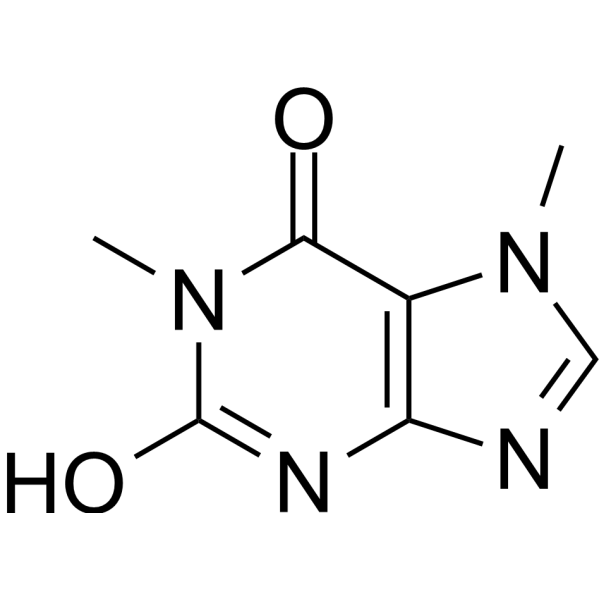
Paraxanthine, a caffeine metabolite, provides protection against Dopaminergic cell death via stimulation of Ryanodine Receptor Channels.
loading...
    loading...
1
1 Cited Publications
Cat. No.: HY-103164
CAS No.: 147700-11-6
Purity:  99.4%
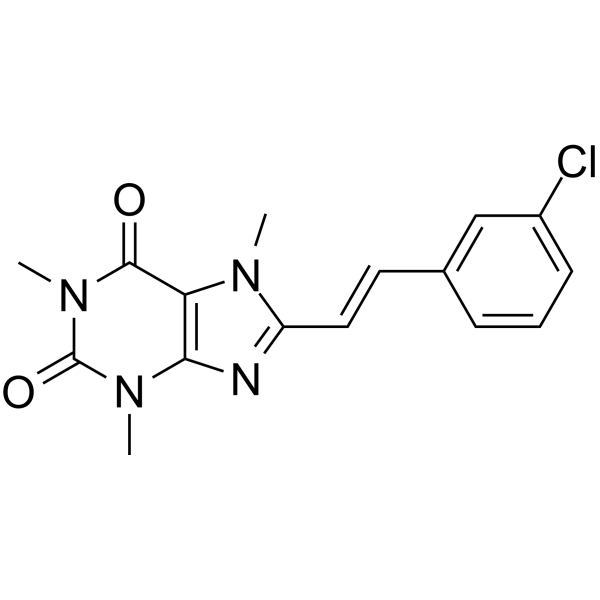
Synonyms: (E)-CSC
(E)-8-(3-Chlorostyryl)caffeine is a selective adenosine A2A receptor antagonist. (E)-8-(3-Chlorostyryl)caffeine inhibits monoamine oxidase B (MAO-B) with a Ki value of 70 nM by a pathway that is independent of its actions on the A2A receptor. (E)-8-(3-Chlorostyryl)caffeine has the potential for Parkinson's disease research .
loading...
    loading...
1
1 Cited Publications
Cat. No.: HY-B1607
CAS No.: 77-38-3
Chlorphenoxamine, an antihistamine and anticholinergic agent is a GPCR antagonist. Chlorphenoxamine inhibits multiple lethal viral diseases, such as SARS-CoV, MERS-CoV, EBOV and malaria. Chlorphenoxamine shows anti-filovirus activity against both EBOV and Marburg virus (MARV) with IC50s of 1.1 μM and 6.2 μM, respectively. Chlorphenoxamine is used for allergic conditions, urticaria, viral diseases and Parkinson’s disease .
loading...
    loading...
Cat. No.: HY-124257
CAS No.: 1117-61-9
Purity:  99.78%
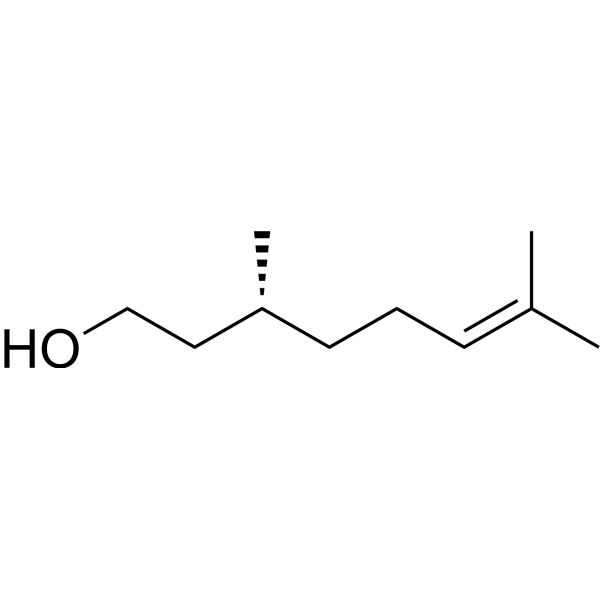
Synonyms: D-Citronellol; (R)-(+)-β-Citronellol
(R)-Citronellol (D-Citronellol) is an alcoholic monoterpene found in geranium essential oil. (R)-Citronellol inhibits degranulation of mast cells and does not affect caffeine bitterness perception. (R)-Citronellol can be used in decorative cosmetics, toiletries as well as in non-cosmetic products .
loading...
    loading...
Cat. No.: HY-111664
CAS No.: 2385-77-5
Purity:  98.72%
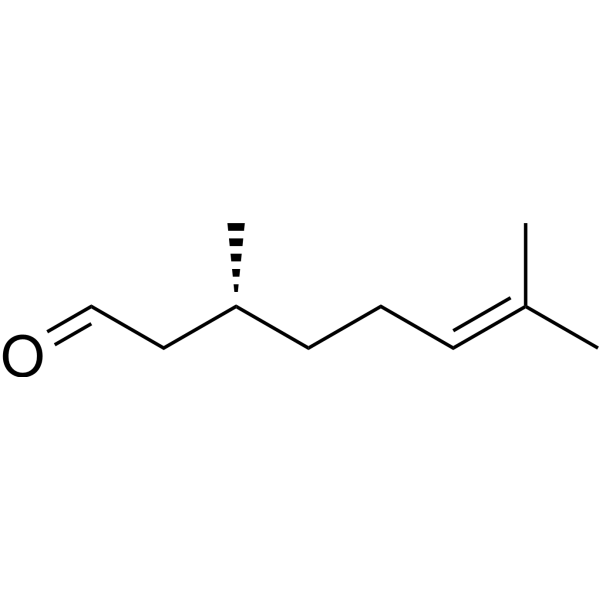
Synonyms: (+)-Citronellal
(R)-(+)-Citronellal ((+)-Citronellal) is a monoterpenoid compound and is one of the main components of essential oils from plants such as lemon grass. (R)-(+)-Citronellal has antibacterial, antifungal, and insecticidal activities. (R)-(+)-Citronellal alleviates the bitterness of caffeine by antagonizing the bitter taste receptors Tas2r43 (IC50 = 84 μM) and Tas2R46. (R)-(+)-Citronellal generates analgesic activity by activating the opioid receptor (broad-spectrum opioid receptor) pathway, and its effect is particularly significant for inflammatory pain .
loading...
    loading...
Cat. No.: HY-D2264
CAS No.: 1632296-13-9
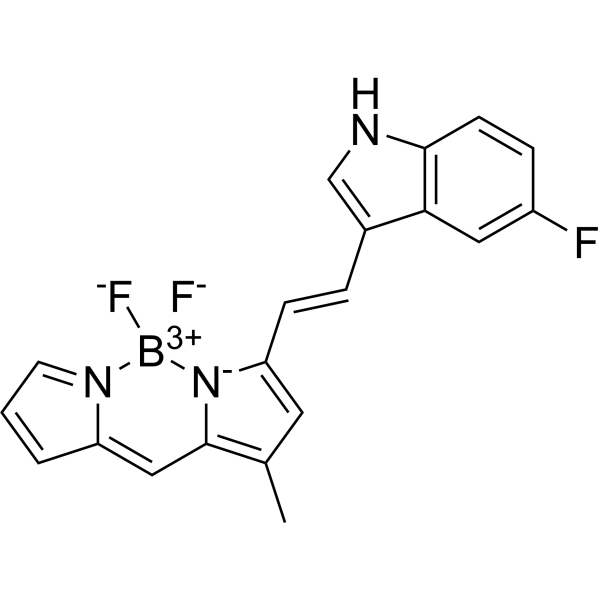
Caffeine orange (Compound 1) is an aqueous-phase fluorescence turn-on sensor for caffeine that is highly selective to caffeine. Caffeine orange makes caffeinated coffee appear orange when exposed to 532 nM of green excitation light. Caffeine orange has excellent photophysical properties such as high extinction coefficient, high light stability and narrow emission bandwidth, which can be used in the research of caffeine detection devices .
loading...
    loading...
Cat. No.: HY-113327
CAS No.: 5415-44-1
Purity:  99.99%
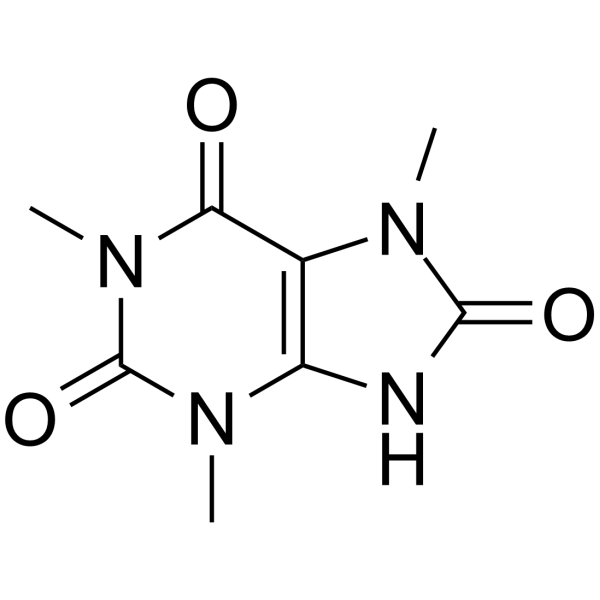
1,3,7-Trimethyluric acid is the metabolite of caffeine. The metabolic ratio 1,3,7-Trimethyluric acid to caffeine can be evaluated as a biomarker to describe variability in CYP3A activity in a cohort .
loading...
    loading...
Cat. No.: HY-W008449
CAS No.: 6136-37-4
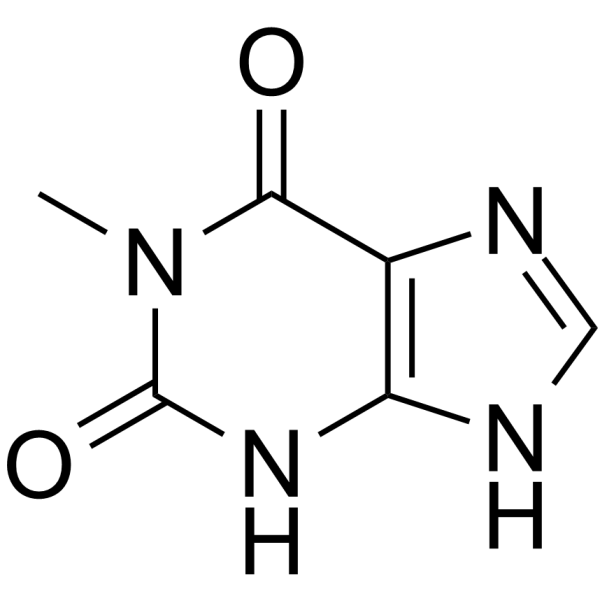
1-Methylxanthine, a caffeine derivative, is an essential human urinary metabolite of caffeine and theophylline (1,3-dimethylxanthine, TP) . 1-Methylxanthine enhances the radiosensitivity of tumor cells .
loading...
    loading...
Cat. No.: HY-126061
CAS No.: 33868-03-0
Purity:  99.82%
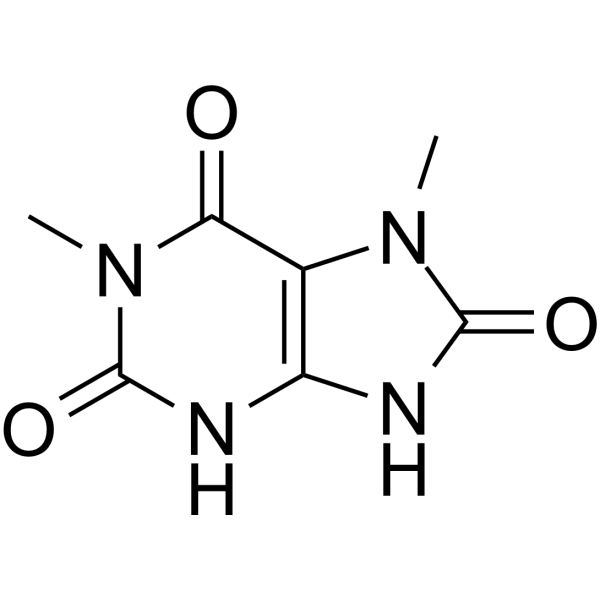
1,7-Dimethyluric acid is an N-methylated uric acid and purine derivative, as well as a caffeine metabolite. When 1,7-Dimethyluric acid is acted upon by peroxidase in the presence of H2O2, it follows the same oxidation pathway to generate a UV-absorbing intermediate, which decays via first-order kinetics. 1,7-Dimethyluric acid can adsorb onto pyrolytic graphite electrodes, but not onto glassy carbon electrodes or platinum electrodes. The N-methylation modification of its pyrimidine ring prevents ring contraction of the diol intermediate, and no NMR evidence of O-alkylation is observed during propylation under the test conditions .
loading...
    loading...
Cat. No.: HY-W178327
CAS No.: 4921-49-7
Target:  

Adenosine Receptor

Research Areas:  

Cancer

8-Chloro caffeine binds to adenosine receptors (Ki = 30 µM). 8-Chloro caffeine potentiates UV-induced chromosomal aberrations in Cl-I Chinese hamster embryonic lung cells. 8-Chloro caffeine is a derivative of the methylxanthine alkaloid caffeine .
loading...
    loading...
Cat. No.: HY-W016498S1
CAS No.: 1173018-79-5
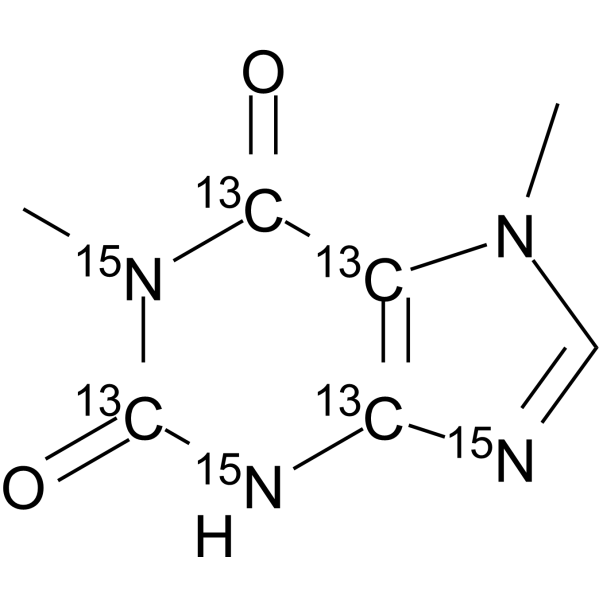
Paraxanthine- 13C4, 15N3 is the 13C-labeled and 15N-labeled Paraxanthine. Paraxanthine, a caffeine metabolite, provides protection against Dopaminergic cell death via stimulation of Ryanodine Receptor Channels.
loading...
    loading...
Cat. No.: HY-113118
CAS No.: 19893-78-8
Purity:  99.34%
Synonyms: 5-Acetylamino-6-amino-3-methyluracil
Target:  

Endogenous Metabolite

Research Areas:  

Others

AAMU (5-Acetylamino-6-amino-3-methyluracil) is the main metabolite of caffeine in the human body .
loading...
    loading...
Cat. No.: HY-W016498S
CAS No.: 117490-41-2
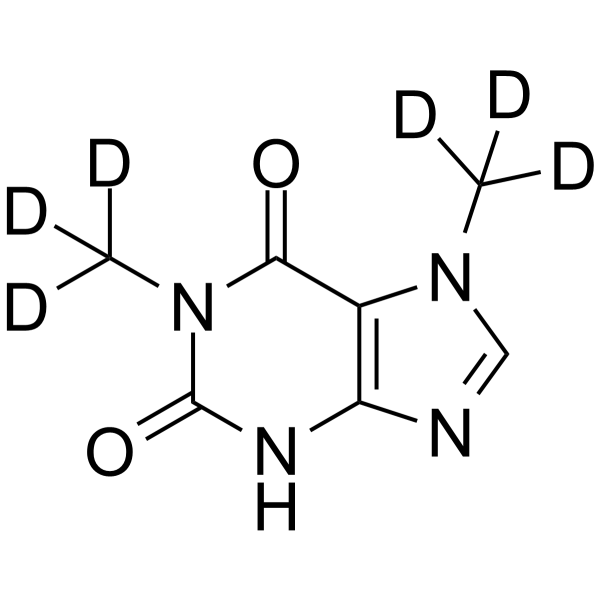
Paraxanthine-d6 is the deuterium labeled Paraxanthine. Paraxanthine, a caffeine metabolite, provides protection against Dopaminergic cell death via stimulation of Ryanodine Receptor Channels.
loading...
    loading...
Cat. No.: HY-W016498R
CAS No.: 611-59-6
Paraxanthine (Standard) is the analytical standard of Paraxanthine. This product is intended for research and analytical applications. Paraxanthine, a caffeine metabolite, provides protection against Dopaminergic cell death via stimulation of Ryanodine Receptor Channels.
loading...
    loading...
Cat. No.: HY-W017389R
CAS No.: 69-89-6
Xanthine (Standard) is the analytical standard of Xanthine. This product is intended for research and analytical applications. Xanthine, a plant alkaloid found in tea, coffee, and cocoa, is a mild stimulant of the central nervous system. Xanthine also acts as an intermediate product on the pathway of purine degradation . In Vitro: A number of stimulants are derived from Xanthine including caffeine and theobromine. Xanthine is a product on the pathway of purine degradation. Xanthine is subsequently converted to uric acid by the action of the Xanthine oxidase enzyme.
loading...
    loading...
Cat. No.: HY-141564
CAS No.: 2837939-81-6
Target:  

Calcium Channel

Research Areas:  

Neurological Disease

RyR1-IN-1 (Compound 1) is a RyR1 inhibitor with an IC50 of 12 nM. RyR1-IN-1 blocks Ca²⁺ release and inhibits muscle tetany caused by caffeine and heat stress. RyR1-IN-1 can completely prevent the increase in body temperature and death caused by isoflurane and heat stress. RyR1-IN-1 can be used for the study of heat stroke .
loading...
    loading...
Cat. No.: HY-W016415
CAS No.: 612-37-3
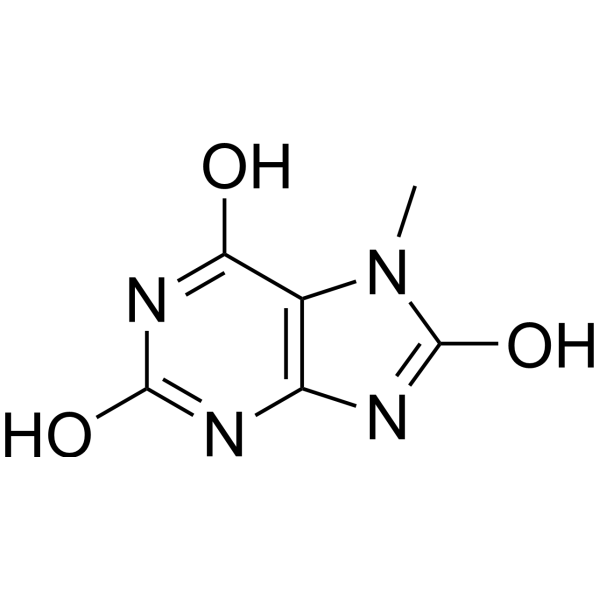
7-Methyluric acid is a metabolite of caffeine. 7-Methyluric acid can be detected in urine .
loading...
    loading...
Cat. No.: HY-N7564
CAS No.: 51168-26-4
Methylliberine is a purine alkaloid metabolite of caffeine with oral activity .
loading...
    loading...
Cat. No.: HY-W008449S
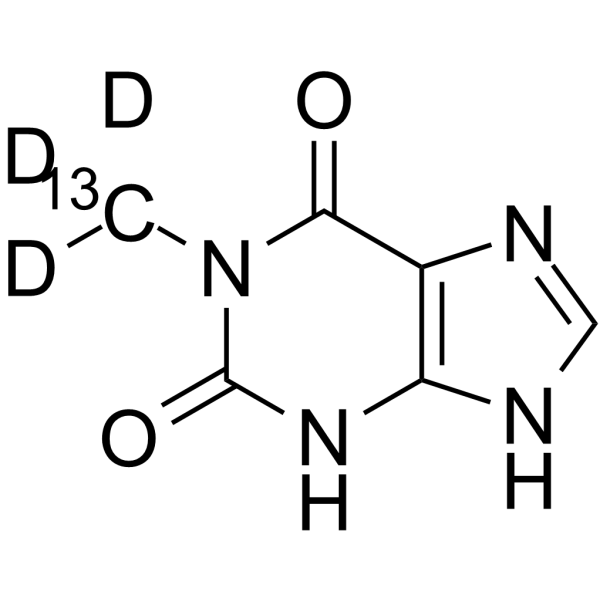
1-Methylxanthine- 13C,d3 is the 13C- and deuterium labeled 1-Methylxanthine. 1-Methylxanthine, a caffeine derivative, is an essential human urinary metabolite of caffeine and theophylline (1,3-dimethylxanthine, TP) . 1-Methylxanthine enhances the radiosensitivity of tumor cells .
loading...
    loading...
Cat. No.: HY-P11633
Target:  

Autophagy

Research Areas:  

Neurological Disease

YLRPEGDW is an orally active sleep-promoting peptide. YLRPEGDW upregulates Autophagy-related genes, increase Autophagy activity. YLRPEGDW could improve Caffeine-induced sleep reduction .
loading...
    loading...

