1. Search Result
Search Result
Results for "

catechol

" in MedChemExpress (MCE) Product Catalog:

76

Inhibitors & Agonists

1

Fluorescent Dye

2

Biochemical Assay Reagents

15

Natural
Products

2

Recombinant Proteins

14

Isotope-Labeled Compounds

1

Antibodies

1

Oligonucleotides

Targets Recommended:
Cat. No. Product Name Target Research Areas Chemical Structure
  • HY-B1473A
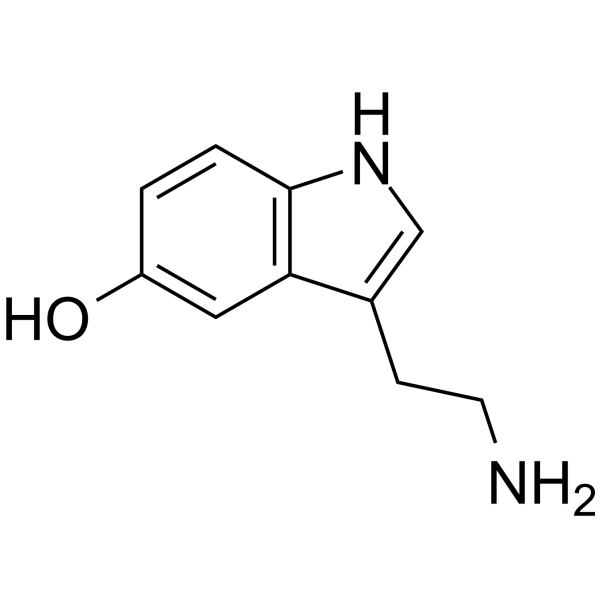
    Serotonin
    Maximum Cited Publications
    31 Publications Verification

    5-Hydroxytryptamine; 5-HT

    5-HT Receptor COMT Endogenous Metabolite Neurological Disease
    Serotonin is a monoamine neurotransmitter in the CNS and an endogenous 5-HT receptor agonist. Serotonin is also a catechol O-methyltransferase (COMT) inhibitor with a Ki of 44 μM.
    Serotonin
  • HY-B1473
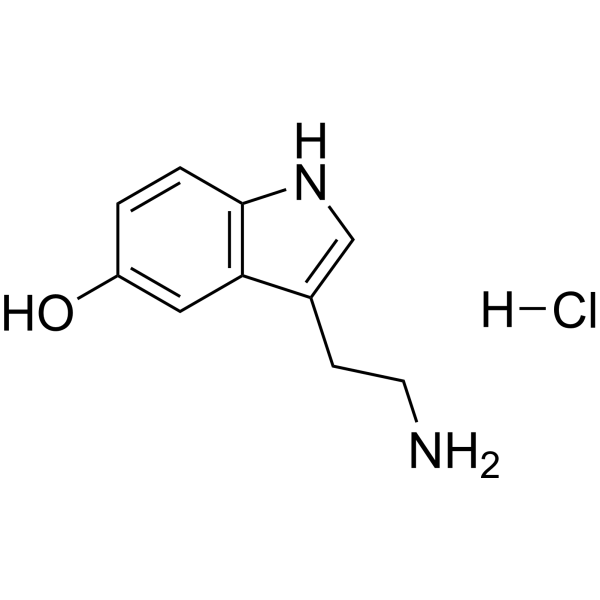
    Serotonin hydrochloride
    Maximum Cited Publications
    31 Publications Verification

    5-Hydroxytryptamine hydrochloride; 5-HT hydrochloride

    5-HT Receptor COMT Endogenous Metabolite Neurological Disease
    Serotonin (5-Hydroxytryptamine) hydrochloride is a monoamine neurotransmitter in the CNS and an endogenous 5-HT receptor agonist, with blood-brain barrier permeability. Serotonin hydrochloride is also a catechol O-methyltransferase (COMT) inhibitor with a Ki of 44 μM.
    Serotonin hydrochloride
  • HY-14280
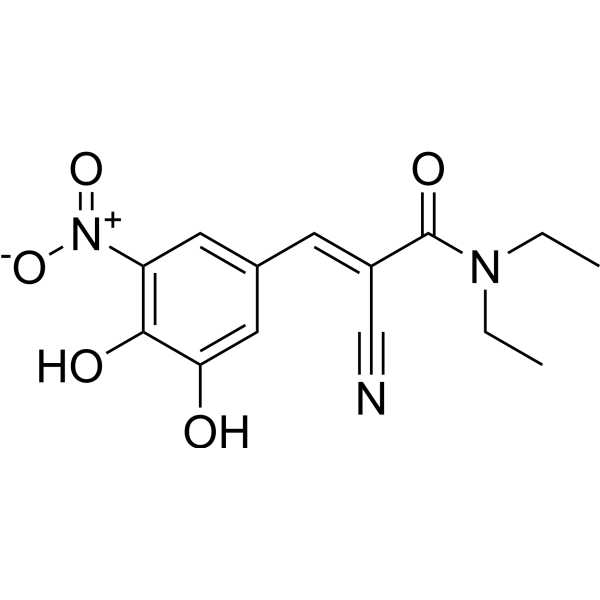
    Entacapone
    5+ Cited Publications

    COMT Neurological Disease Cancer
    Entacapone is a potent, reversible, peripherally acting and orally active catechol-O-methyltransferase (COMT) inhibitor. Entacapone inhibits COMT from rat brain, erythrocytes and liver with IC50 values of 10 nM, 20 nM, and 160 nM, respectively. Entacapone is selective for COMT over other catecholamine metabolizing enzymes, including MAO-A, MAO-B, phenolsulphotransferase M (PST-M) and PST-P (IC50s>50 μM). Entacapone can be used for the research of Parkinson's disease . Entacapone serves as a inhibitor of FTO demethylation with an IC50 of 3.5 μM, can be used for the research of metabolic disorders .
    Entacapone
  • HY-14896
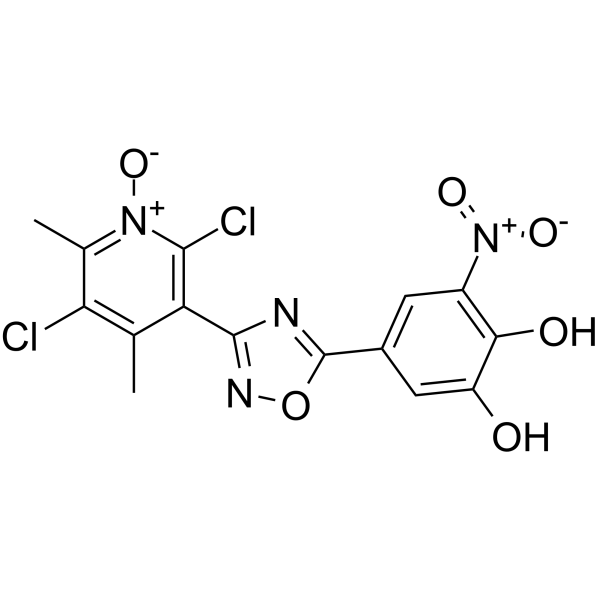
    Opicapone
    3 Publications Verification

    BIA 9-1067

    COMT Neurological Disease
    Opicapone (BIA 9-1067) is a potent third-generation catechol-O-methyltransferase (COMT) inhibitor for the research of Parkinson's disease and motor fluctuations. Opicapone decreases the ATP content of the cells with an IC50 of 98 μM .
    Opicapone
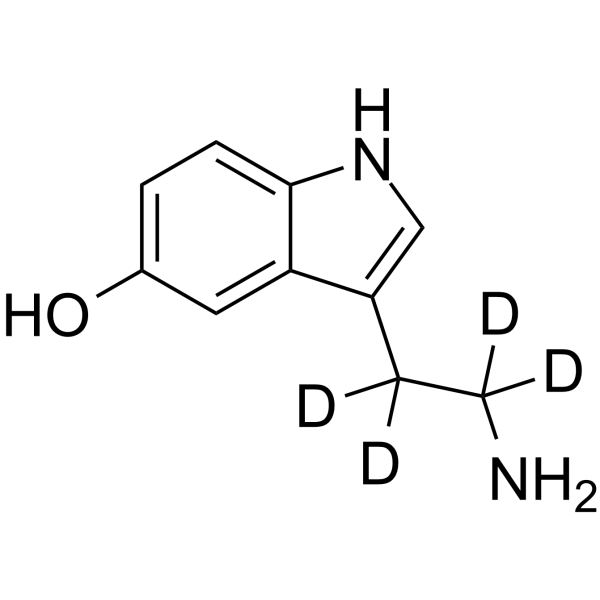
  • HY-B1473AS

    5-Hydroxytryptamine-d4; 5-HT-d4

    Isotope-Labeled Compounds 5-HT Receptor COMT Endogenous Metabolite Neurological Disease
    Serotonin-d4 is deuterium labeled Serotonin. Serotonin is a monoamine neurotransmitter in the CNS and an endogenous 5-HT receptor agonist. Serotonin is also a catechol O-methyltransferase (COMT) inhibitor with a Ki of 44 μM.
    Serotonin-d4
  • HY-W012814

    Endogenous Metabolite Apoptosis Reactive Oxygen Species (ROS) Cardiovascular Disease Inflammation/Immunology Cancer
    4-Methylcatechol is an intermediate in the degradation of some alkylbenzenes and an orally active suicide inhibitor of catechol 2,3-dioxygenase (C23O). 4-Methylcatechol induces apoptosis in melanoma cells through oxidative stress, but some studies have also shown that 4-Methylcatechol is carcinogenic. In addition, 4-Methylcatechol has antiplatelet and blood pressure-lowering activities. 4-Methylcatechol can also inhibit protein oxidation in beef but does not disulfide formation .
    4-Methylcatechol
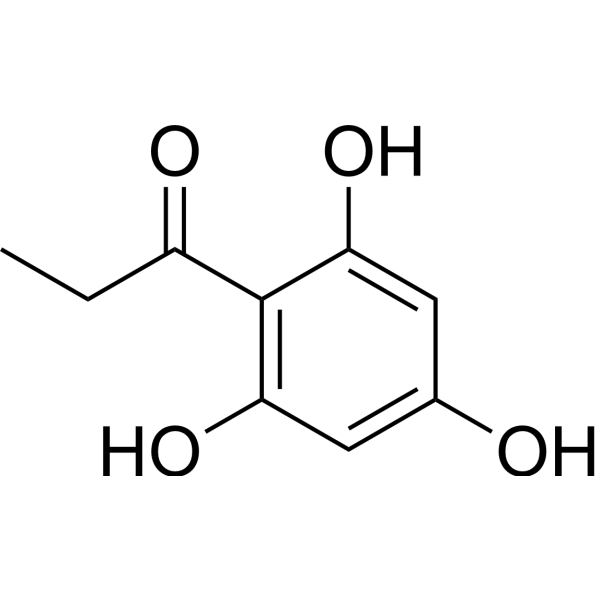
  • HY-100562

    5-HT Receptor COMT Neurological Disease
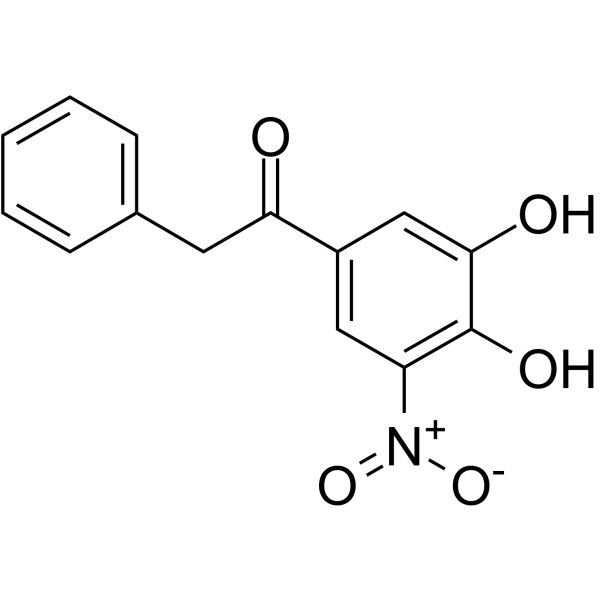
    Flopropione is a 5-HT receptor antagonist and also a catechol-o-methyltransferase (COMT) inhibitor . Flopropione also as an antispasmodic agent .
    Flopropione
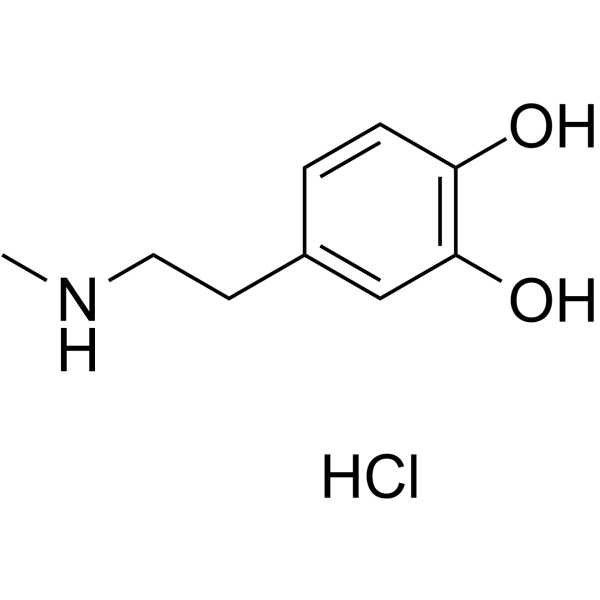
  • HY-W014728
    N-Methyldopamine hydrochloride
    1 Publications Verification

    Dopamine Receptor Cardiovascular Disease Neurological Disease
    N-Methyldopamine hydrochloride is a precursor of adrenaline in the adrenal medulla. N-Methyldopamine hydrochloride is a modification of the dopamine (DA), and retains agonist activity at the DA1 receptor. N-Methyldopamine hydrochloride remains capable of universal surface coating and secondary reactions using the surface catechols. N-Methyldopamine hydrochloride can be used for heart failure research .
    N-Methyldopamine hydrochloride
  • HY-157719

    COMT Others
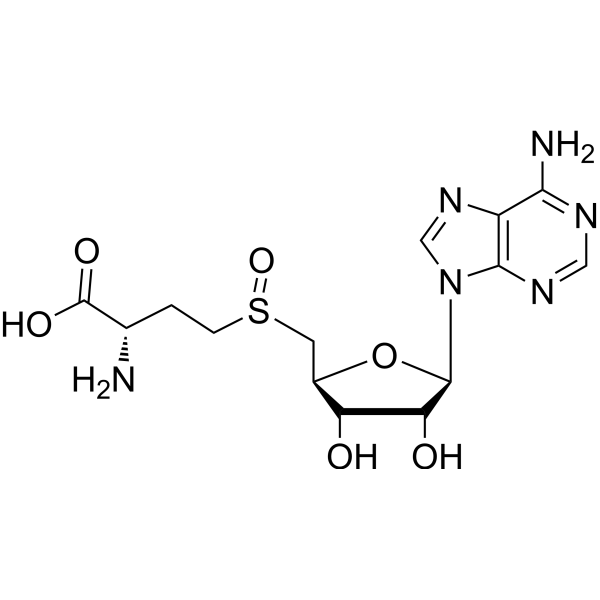
    S-Adenosylhomocysteine sulfoxide is an inhibitor of catechol-O-methyltransferase (COMT) with an IC50 value of 860 μM. S-Adenosylhomocysteine sulfoxide can be used in the research of methylation reaction modulators .
    S-Adenosylhomocysteine sulfoxide
  • HY-133597

    Drug Derivative Others
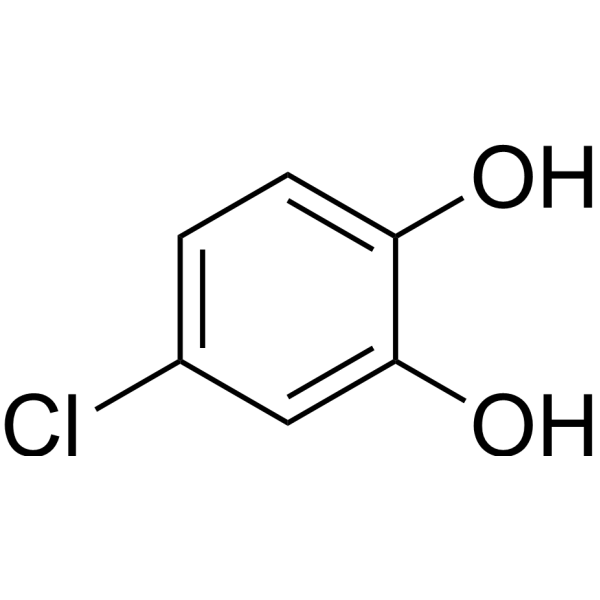
    4-Chlorocatechol is a major degradation product of 4-chloro-2-aminophenol (4C2AP). 4-Chlorocatechol is also a substrate for catechol 1,2-dioxygenases and chlorocatechol dioxygenase .
    4-Chlorocatechol
  • HY-106842

    OR-462

    COMT Neurological Disease Inflammation/Immunology
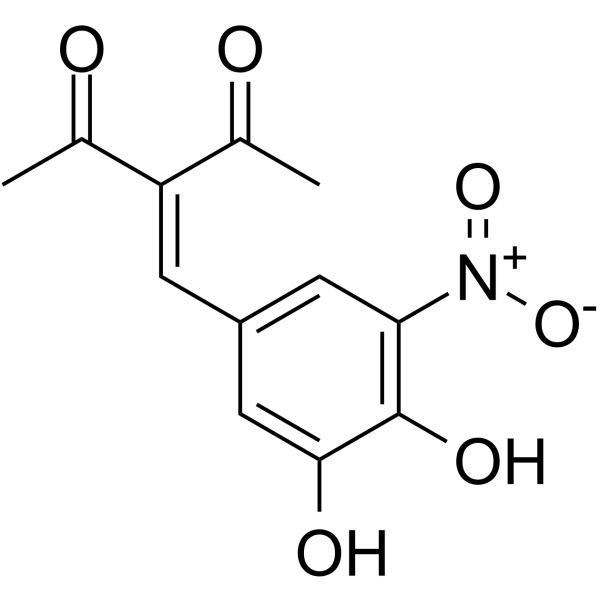
    Nitecapone (OR-462) is an orally active and short-acting catechol-O-methyltransferase (COMT) inhibitor with gastroprotective and antioxidant properties. Nitecapone (OR-462) scavenges reactive oxygen and nitric radicals and prevents lipid peroxidation .
    Nitecapone
  • HY-B1473S

    5-Hydroxytryptamine-d4 hydrochloride; 5-HT-d4 hydrochloride

    Isotope-Labeled Compounds 5-HT Receptor Endogenous Metabolite COMT Others
    Serotonin-d4 (5-Hydroxytryptamine-d4) hydrochloride is the deuterium labeled Serotonin (hydrochloride) (HY-B1473) . Serotonin (5-Hydroxytryptamine) hydrochloride is a monoamine neurotransmitter in the CNS and an endogenous 5-HT receptor agonist. Serotonin hydrochloride is also a catechol O-methyltransferase (COMT) inhibitor with a Ki of 44 μM .
    Serotonin-d4 hydrochloride
  • HY-125339

    COMT Neurological Disease
    Ro 41-0960 is a selective catechol-O-methyltransferase(COMT) inhibitor .
    Ro 41-0960
  • HY-113252
    2-Methoxyestrone
    3 Publications Verification

    Endogenous Metabolite Metabolic Disease
    2-Methoxyestrone is a methoxylated catechol estrogen and metabolite of estrone, with a pKa of 10.81.
    2-Methoxyestrone
  • HY-106405

    BIA 3-202

    COMT Metabolic Disease
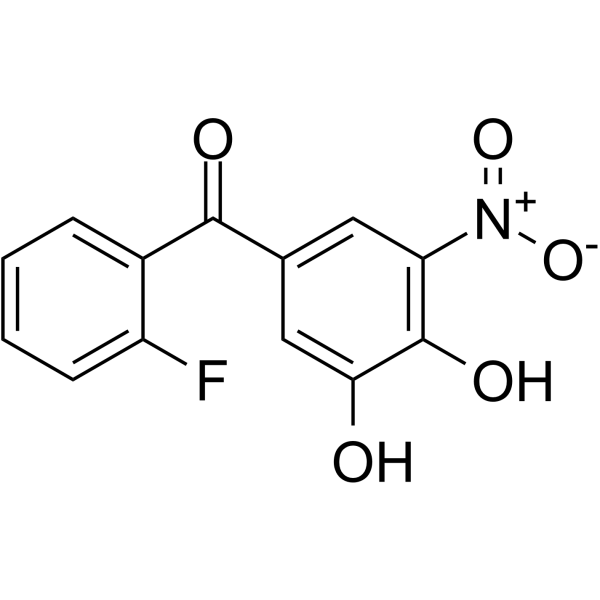
    Nebicapone (BIA 3-202), a reversible catechol-O-methyltransferase (COMT) inhibitor, is mainly metabolized by glucuronidation. Nebicapone is mainly peripherally acting inhibitor that decreases the biotransformation of L-DOPA to 3-O-methyl-DOPA by inhibition of COMT, and it is potential for the treatment of Parkinson's disease .
    Nebicapone
  • HY-D0798

    Fluorescent Dye Others
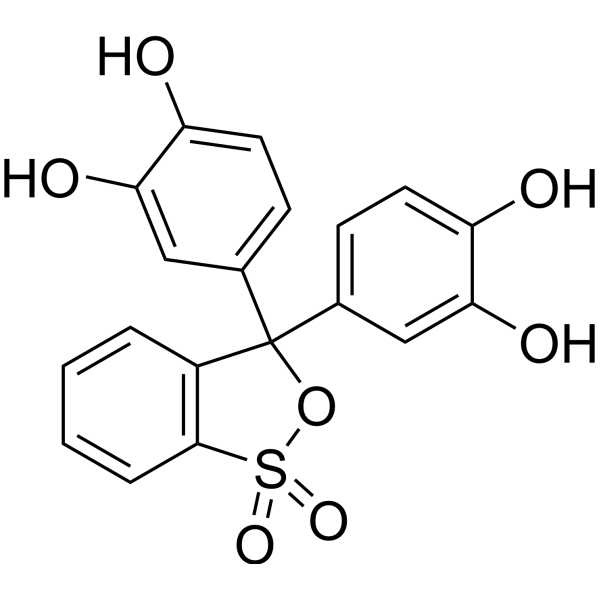
    Catechol violet is an efficient and versatile ligand for Cu(I)-catalyzed C-S coupling reactions. Catechol violet is also a complexometric indicator dye .
    Catechol violet
  • HY-B1481

    Isoetarine mesylate

    Adrenergic Receptor Cardiovascular Disease Inflammation/Immunology
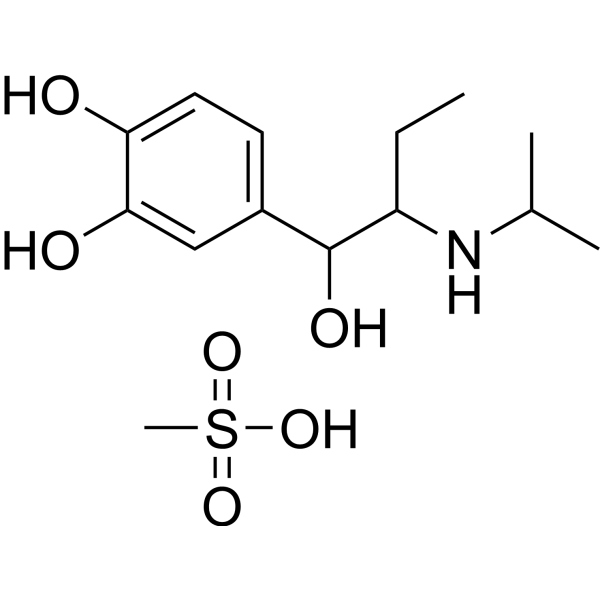
    Isoetharine (Isoetarine) mesylate is an orally active selective agonist of β-adrenergic receptors. Isoetharine mesylate is a catechol-like agent and catechol O-methyltransferase (COMT) mediates its methylation. Isoetharine mesylate can promote the production of cAMP which stimulates the relaxation of smooth muscle cells and can be used as an emphysema, bronchitis and bronchodilator .
    Isoetharine mesylate
  • HY-W006000

    Drug Metabolite Others
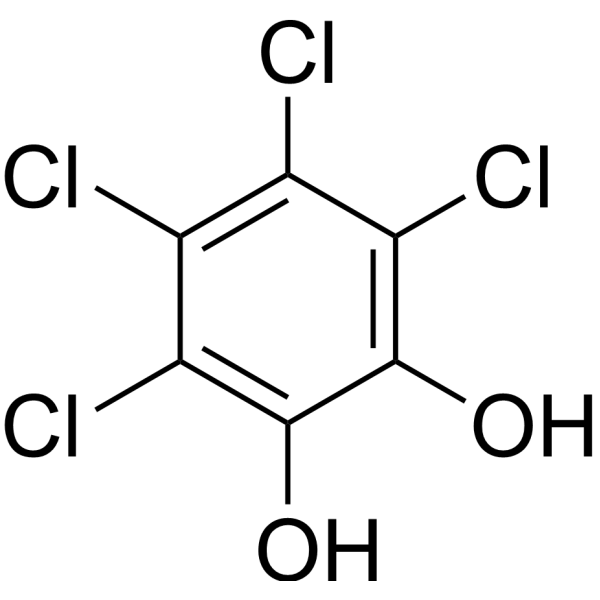
    Tetrachlorocatechol is a metabolite of pentachlorophenol. Tetrachlorocatechol is one of the most toxic chlorinated catechol produced by the chlorobleaching of pulp and frequently found in the kraft pulp mill effluents .
    Tetrachlorocatechol
  • HY-D2344

    3-Benzothiazole-daphnetin

    Fluorescent Dye Others
    3-BTD (3-Benzothiazole-daphnetin) is a Catechol-O-methyltransferase (COMT) two-photon fluorescence probe. 3-BTD can also be used for biological imaging of endogenous COMT in living cells and tissue sections .
    3-BTD
  • HY-100959

    OR-486; 3,5-Dinitropyrocatechol

    COMT Neurological Disease
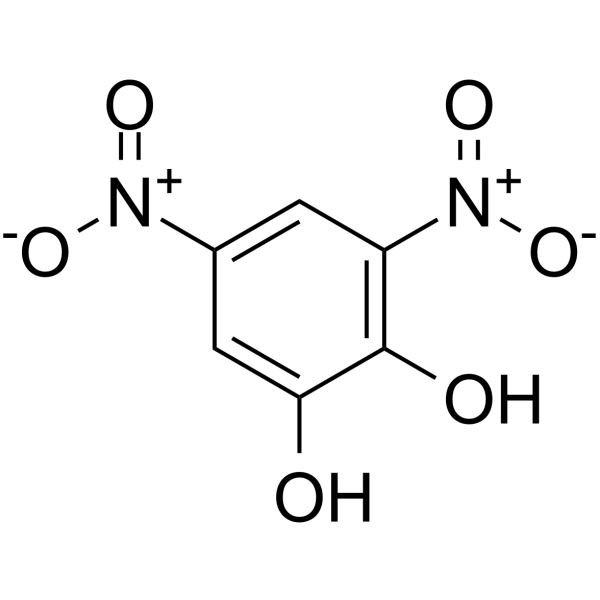
    3,5-Dinitrocatechol (OR-486) is a potent catechol-O-methyltransferase inhibitor, with an IC50 of 12 nM. 3,5-Dinitrocatechol can be used in the preparation of the molybdenum (VI)- 3,5-Dinitrocatechol complex .
    3,5-Dinitrocatechol
  • HY-14280S

    COMT Neurological Disease
    Entacapone-d10 is the deuterium labeled Entacapone. Entacapone is a potent, reversible, peripherally acting and orally active catechol-O-methyltransferase (COMT) inhibitor. Entacapone inhibits COMT from rat brain, erythrocytes and liver with IC50 values of 10 nM, 20 nM, and 160 nM, respectively. Entacapone is selective for COMT over other catecholamine metabolizing enzymes, including MAO-A, MAO-B, phenolsulphotransferase M (PST-M) and PST-P (IC50s>50 μM). Entacapone can be used for the research of Parkinson's disease . Entacapone serves as a inhibitor of FTO demethylation with an IC50 of 3.5 μM, can be used for the research of metabolic disorders .
    Entacapone-d10
  • HY-E70007

    COMT

    Endogenous Metabolite Neurological Disease
    Catechol O-methyltransferase, porcine liver (COMT), the magnesium-dependent transfer of methyl groups from S-adenosyl methionine to a hydroxyl group on dopamine, converting it to 3-methoxytyramine. Catechol O-methyltransferase has two forms in tissues, a soluble form (S-COMT) and a membrane-bound form (MB-COMT). Catechol O-methyltransferase is to regulate epinephrine, norepinephrine, and dopamine levels in the brain .
    Catechol O-methyltransferase, porcine liver
  • HY-117738

    Aminopeptidase sFRP-1 Others
    Benarthin is a catechol-type siderophore isolated from the marine actinomycete Streptomyces YM5-799 that exhibits iron-chelating properties .
    Benarthin
  • HY-113468AR

    3-Methoxy-L-tyrosine (Standard); 3-O-Methyl-L-DOPA (Standard)

    Drug Derivative Interleukin Related Reference Standards Neurological Disease Inflammation/Immunology
    3-O-Methyldopa (Standard) is the analytical standard of 3-O-Methyldopa. This product is intended for research and analytical applications. 3-O-Methyldopa (3-Methoxy-L-tyrosine) is a metabolite of L-DOPA which is formed by catechol-O-methyltransferase (COMT). 3-O-Methyldopa competitively inhibits the pharmacodynamics of l-DOPA and dopamine .
    3-O-Methyldopa (Standard)
  • HY-W012264

    3-Methoxy-L-tyrosine monohydrate; 3-O-Methyl-L-DOPA monohydrate

    COMT Neurological Disease
    3-O-Methyldopa monohydrate (3-Methoxy-L-tyrosine monohydrate) is a significant metabolite of L-DOPA produced through the action of catechol O-methyltransferase (COMT). Unlike its precursor, 3-O-Methyldopa does not serve as a substrate or inhibitor of L-amino acid decarboxylase activity. Additionally, the inhibition of COMT can amplify the anti-Parkinson effects of L-DOPA.
    3-O-Methyldopa monohydrate
  • HY-14280R

    Reference Standards COMT Neurological Disease Cancer
    Entacapone (Standard) is the analytical standard of Entacapone. This product is intended for research and analytical applications. Entacapone is a potent, reversible, peripherally acting and orally active catechol-O-methyltransferase (COMT) inhibitor. Entacapone inhibits COMT from rat brain, erythrocytes and liver with IC50 values of 10 nM, 20 nM, and 160 nM, respectively. Entacapone is selective for COMT over other catecholamine metabolizing enzymes, including MAO-A, MAO-B, phenolsulphotransferase M (PST-M) and PST-P (IC50s>50 µM). Entacapone can be used for the research of Parkinson's disease . Entacapone serves as a inhibitor of FTO demethylation with an IC50 of 3.5 μM, can be used for the research of metabolic disorders .
    Entacapone (Standard)
  • HY-144152S

    Isotope-Labeled Compounds Others
    Catechol sulfate-d4 (sodium) is the deuterium labeled Catechol sulfate sodium .
    Catechol sulfate-d4 sodium
  • HY-B1481A

    Isoetarine

    Adrenergic Receptor Cardiovascular Disease Inflammation/Immunology
    Isoetharine (Isoetarine) is an orally active selective agonist of β-adrenergic receptors. Isoetharine is a catechol-like agent and catechol O-methyltransferase (COMT) mediates its methylation. Isoetharine can promote the production of cAMP which stimulates the relaxation of smooth muscle cells and can be used as an emphysema, bronchitis and bronchodilator .
    Isoetharine
  • HY-121949

    COMT Neurological Disease
    U-0521 is the inhibitor of the catechol-O-methyltransferase (COMT). U-0521 has the potential for the research of Parkinson's disease .
    U-0521
  • HY-B1473R

    5-Hydroxytryptamine hydrochloride (Standard); 5-HT hydrochloride (Standard)

    5-HT Receptor Reference Standards COMT Endogenous Metabolite Neurological Disease
    Serotonin (5-Hydroxytryptamine) (Standard) hydrochloride is the analytical standard of Serotonin hydrochloride (HY-B1473). This product is intended for research and analytical applications. Serotonin (5-Hydroxytryptamine) hydrochloride is a monoamine neurotransmitter in the CNS and an endogenous 5-HT receptor agonist. Serotonin hydrochloride is also a catechol O-methyltransferase (COMT) inhibitor with a Ki of 44 μM.
    Serotonin hydrochloride (Standard)
  • HY-B1473S2

    5-Hydroxytryptamine-13C,D4; 5-HT-13C,D4

    Isotope-Labeled Compounds 5-HT Receptor COMT Endogenous Metabolite Neurological Disease
    Serotonin- 13C,D4 (5-Hydroxytryptamine-13C,D4) is a 13C- and deuterated labeled Serotonin (HY-B1473A). Serotonin is a monoamine neurotransmitter in the CNS and an endogenous 5-HT receptor agonist. Serotonin is also a catechol O-methyltransferase (COMT) inhibitor with a Ki of 44 μM .
    Serotonin-13C,D4
  • HY-W012814R

    Reference Standards Endogenous Metabolite Apoptosis Reactive Oxygen Species (ROS) Cardiovascular Disease Inflammation/Immunology Cancer
    4-Methylcatechol (Standard) is the analytical standard of 4-Methylcatechol. This product is intended for research and analytical applications. 4-Methylcatechol is an intermediate in the degradation of some alkylbenzenes and an orally active suicide inhibitor of catechol 2,3-dioxygenase (C23O). 4-Methylcatechol induces apoptosis in melanoma cells through oxidative stress, but some studies have also shown that 4-Methylcatechol is carcinogenic. In addition, 4-Methylcatechol has antiplatelet and blood pressure-lowering activities. 4-Methylcatechol can also inhibit protein oxidation in beef but does not disulfide formation[1][2][3][4][5][6].
    4-Methylcatechol (Standard)
  • HY-N14935

    Biochemical Assay Reagents Infection
    Agrobactin is a catechol-type siderophore (microbial iron transport compound) .
    Agrobactin
  • HY-N3554

    (+)-catechol 7-β-D-xylopyranoside

    Others Others
    Catechin-7-O-β-D-xylopyranoside is an antioxidant compound with strong DPPH free radical scavenging ability. Catechin-7-O-β-D-xylopyranoside can be extracted from birch inner bark and nepeta stem bark .
    Catechin-7-O-β-D-xylopyranoside
  • HY-W012814S

    Endogenous Metabolite Others
    4-Methylcatechol-d3 is the deuterium labeled 4-Methylcatechol . 4-Methylcatechol, a metabolite of p-toluate, is a substrate as well as a suicide inhibitor of Catechol 2,3-Dioxygenase .
    4-Methylcatechol-d3
  • HY-W012814S1

    Endogenous Metabolite Others
    4-Methylcatechol-d8 is the deuterium labeled 4-Methylcatechol . 4-Methylcatechol, a metabolite of p-toluate, is a substrate as well as a suicide inhibitor of Catechol 2,3-Dioxygenase .
    4-Methylcatechol-d8
  • HY-119943B

    Dopamine Receptor Neurological Disease
    (R)-PF-06256142 is the R enantiomer of PF-06256142 with low active. PF-06256142 is a potent and selective orthosteric D1 receptor agonist that can reduce receptor desensitization relative to dopamine and other catechol-containing agonists .
    (R)-PF-06256142
  • HY-14896R

    BIA 9-1067 (Standard)

    Reference Standards COMT Neurological Disease
    Opicapone (Standard) is the analytical standard of Opicapone. This product is intended for research and analytical applications. Opicapone (BIA 9-1067) is a potent third-generation catechol-O-methyltransferase (COMT) inhibitor for the research of Parkinson's disease and motor fluctuations. Opicapone decreases the ATP content of the cells with an IC50 of 98 μM .
    Opicapone (Standard)
  • HY-W704878

    Isotope-Labeled Compounds COMT Metabolic Disease
    (Z)-Entacapone-d10-1 is the deuterium labeled (Z)-Entacapone (HY-139089). (Z)-Entacapone is a metabolite of the catechol-O-methyltransferase (COMT) inhibitor Entacapone (HY-14280). It is also a potential impurity found in commercial preparations of Entacapone and a degradant of Entacapone formed by UV light exposure.
    (Z)-Entacapone-d10-1
  • HY-W009022

    Biochemical Assay Reagents Others
    Diantipyrylmethane is a chromogenic reagent commonly used for the determination of the contents of metals such as Au (III), Ti (IV), Ir, Fe (III), molybdenum, neodymium, U (IV), iridium, platinum and rhenium via spectrophotometry and extraction photometry. Diantipyrylmethane can also form a fluorescent complex with Er (III) ions, which is applied to the determination of erbium .
    Diantipyrylmethane
  • HY-W401531S

    Dopamine Receptor Endogenous Metabolite Neurological Disease
    (R)-3-O-Methyldopa-d3 is a deuterium labeled (R)-3-O-Methyldopa, and (R)-3-O-Methyldopa is an R-enantiomer of 3-O-Methyldopa. 3-O-Methyldopa is a metabolite of L-DOPA which is formed by catechol-O-methyltransferase (COMT). 3-O-Methyldopa competitively inhibits the pharmacodynamics of L-DOPA and dopamine .
    (R)-3-O-Methyldopa-d3
  • HY-W401531S1

    Dopamine Receptor Endogenous Metabolite Neurological Disease
    (R)-3-O-Methyldopa-d3 (hydrochloride) is a deuterium labeled (R)-3-O-Methyldopa, and (R)-3-O-Methyldopa is an R-enantiomer of 3-O-Methyldopa. 3-O-Methyldopa is a metabolite of L-DOPA which is formed by catechol-O-methyltransferase (COMT). 3-O-Methyldopa competitively inhibits the pharmacodynamics of L-DOPA and dopamine .
    (R)-3-O-Methyldopa-d3 hydrochloride
  • HY-14280A

    COMT Neurological Disease Cancer
    Entacapone sodium salt is a potent, reversible, peripherally acting and orally active catechol-O-methyltransferase (COMT) inhibitor. Entacapone sodium salt inhibits COMT from rat brain, erythrocytes and liver with IC50 values of 10 nM, 20 nM, and 160 nM, respectively. Entacapone sodium salt is selective for COMT over other catecholamine metabolizing enzymes, including MAO-A, MAO-B, phenolsulphotransferase M (PST-M) and PST-P (IC50s>50 µM). Entacapone sodium salt can be used for the research of Parkinson's disease . Entacapone sodium salt serves as as a inhibit of FTO demethylation with an IC50 of 3.5 μM, can be used for the research of metabolic disorders .
    Entacapone sodium salt
  • HY-200444

    Liposome Others
    Lipid catechol is a lipid that forms lipid prodrug nanoassemblies (LPNA) with boronic acid-containing compounds. Lipid catechol is promising for research of drug delivery .
    Lipid catechol
  • HY-125455

    Bacterial Infection
    Ro 41-1879 is a catechol cephalosporin that has antimicrobial activity .
    Ro 41-1879
  • HY-139716

    NF-κB Inflammation/Immunology
    IMD-catechol is a novel imidazoquinolinone-NF-κB immunomodulator dimer that improves efficacy in a CT26 mouse colon carcinoma tumor model while eliciting minimal adjuvant toxicity.
    IMD-catechol
  • HY-148769

    Others Others
    Cefiderocol catechol 3-methoxy is the metabolized product of cefiderocol (HY-17628) in the body .
    Cefiderocol catechol 3-methoxy
  • HY-133598

    DNA/RNA Synthesis Cancer
    3,4,5-Trichlorocatechol is a catechol derivative of pentachlorophenol and induces oxidative DNA lesions .
    3,4,5-Trichlorocatechol
  • HY-171457

    RC-12

    Parasite Drug Derivative Infection
    WR-27653 (RC-12) is a derivative of Catechol with good activity against hypnozoites in the gold-standard Plasmodium cynomolgi-rhesus monkey (Macaca mulatta) model. WR-27653 has antimalarial activity .
    WR-27653
  • HY-E70520

    Biochemical Assay Reagents Inflammation/Immunology Cancer
    Salicylate hydroxylase, Microorganism (EC 1.14.13.1) is a flavin-dependent monooxygenase. Salicylate hydroxylase, Microorganism catalyzes the decarboxylative hydroxylation of salicylate into catechol in the naphthalene degradation pathway in Pseudomonas putida G7. Salicylate hydroxylase, Microorganism has potential biocatalytic applications .
    Salicylate hydroxylase, Microorganism

Inquiry Online

Your information is safe with us. * Required Fields.

Salutation


Country or Region *

Applicant Name *


Organization Name *

Department *


Email Address *


Product Name *

Cat. No.


Requested quantity *

Phone Number *


Remarks

Inquiry Online

Inquiry Information

Product Name:
Cat. No.:
Quantity:
MCE Japan Authorized Agent:

