257 Results for "

cofactor

" in MedChemExpress (MCE) Product Catalog:
Products (257)

257 Results for "cofactor" in MCE Product Catalog:

50
50 Publications Verification
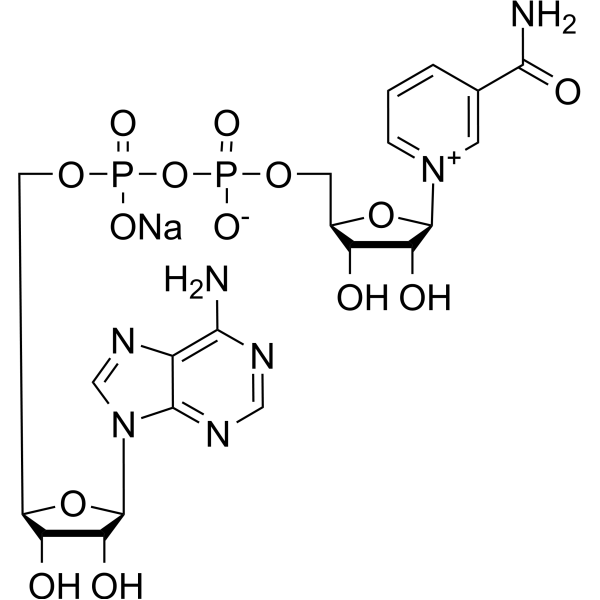
Cat. No.: HY-B0445A
CAS No.: 20111-18-6
Synonyms: β-DPN sodium; β-NAD sodium; β-Nicotinamide Adenine Dinucleotide sodium
NAD sodium is an orally effective cofactor and homeostatic regulator. NAD sodium can be reduced to β-nicotinamide adenine dinucleotide (NADH) during coupling with reactions that oxidize organic substrates. NAD sodium can be converted to β-nicotinamide adenine dinucleotide (NADH) and passes to the inside of mitochondria, which indirectly generates ATP. NAD sodium can be used for the research of non-alcoholic fatty liver disease, obesity, and glucose intolerance .
loading...
    loading...
44
44 Cited Publications
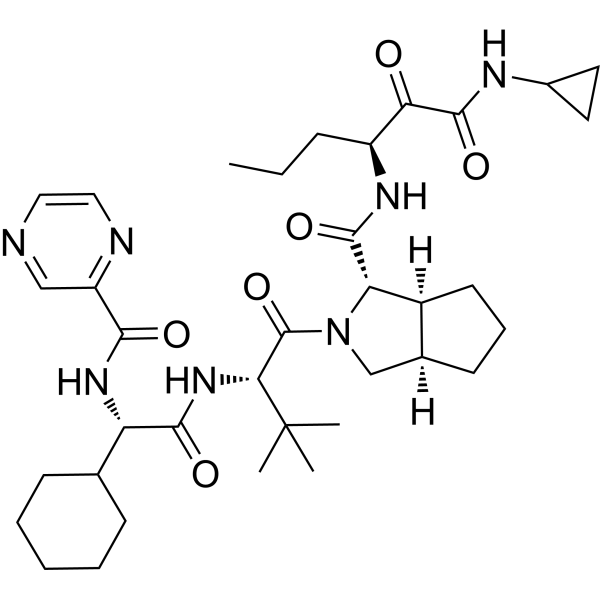
Cat. No.: HY-10235
CAS No.: 402957-28-2
Purity:  99.54%
Synonyms: VX-950
Target:  

HCV Protease HCV SARS-CoV

Research Areas:  

Infection

Telaprevir (VX-950) is a highly selective, reversible, and potent peptidomimetic inhibitor of the HCV NS3-4A protease, the steady-state inhibitory constant (Ki) of Telaprevir is 7 nM against a genotype 1 (H strain) NS3 protease domain plus a NS4A cofactor peptide . Telaprevir inhibits SARS-CoV-2 3CL pro activity .
loading...
    loading...
28
28 Cited Publications
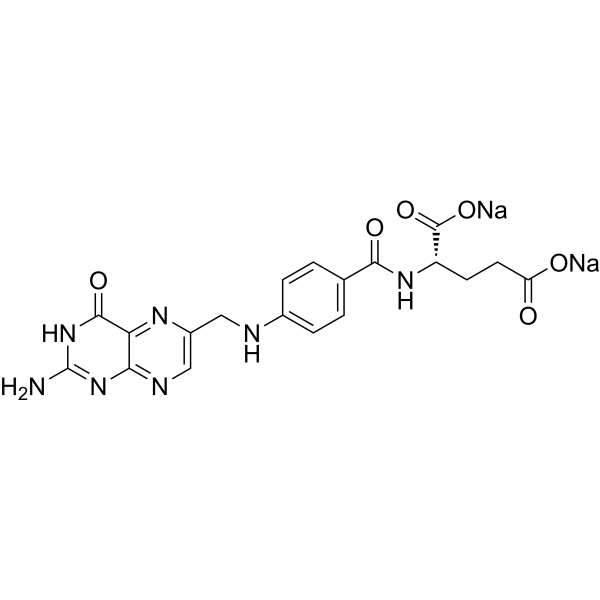
Cat. No.: HY-16637D
CAS No.: 29704-76-5
Synonyms: Vitamin B9 disodium; Vitamin M disodium
Folic acid disodium (Vitamin B9 disodium; Vitamin M disodium) is an orally active disodium salt form of Folic acid (HY-16637) with an intrinsic dissolution rate (IDR) of 4.96·10 5 g/s . Folic acid disodium serves as cofactor in single-carbon transfer reactions and exhibits protective effects against neural tube defects, ischemic events, and cancer. Folate acid disodium overload leads to impaired brain development in embryogenesis and promotes growth of precancerous altered cells. Folic acid deficiency leads to megaloblastic anemia .
loading...
    loading...
23
23 Cited Publications
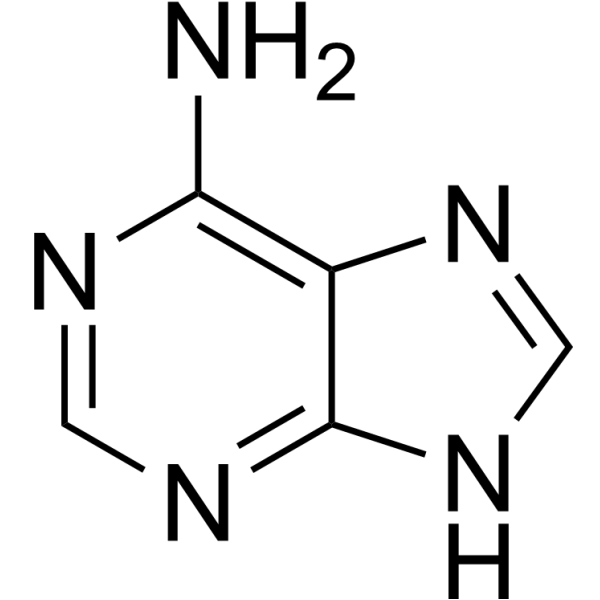
Cat. No.: HY-B0152
CAS No.: 73-24-5
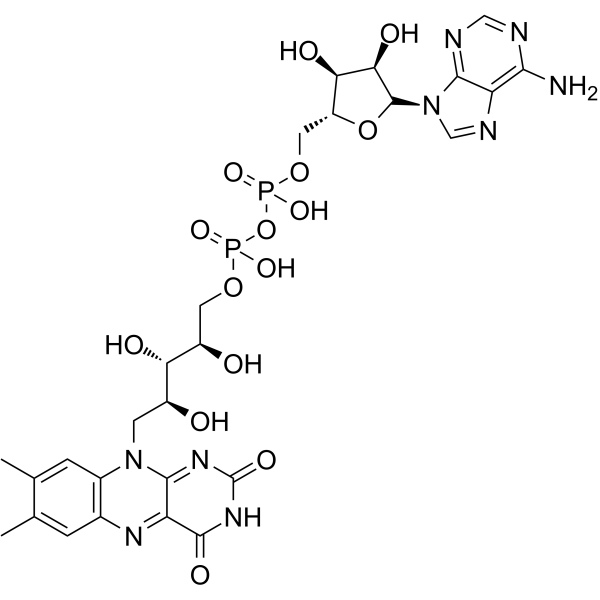
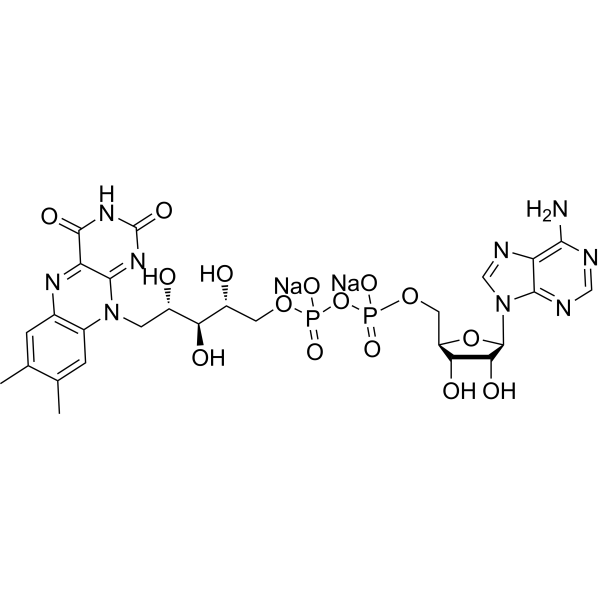
Adenine (6-Aminopurine), a purine, is one of the four nucleobases in the nucleic acid of DNA. Adenine acts as a chemical component of DNA and RNA. Adenine also plays an important role in biochemistry involved in cellular respiration, the form of both ATP and the cofactors (NAD and FAD), and protein synthesis .
loading...
    loading...
23
23 Cited Publications
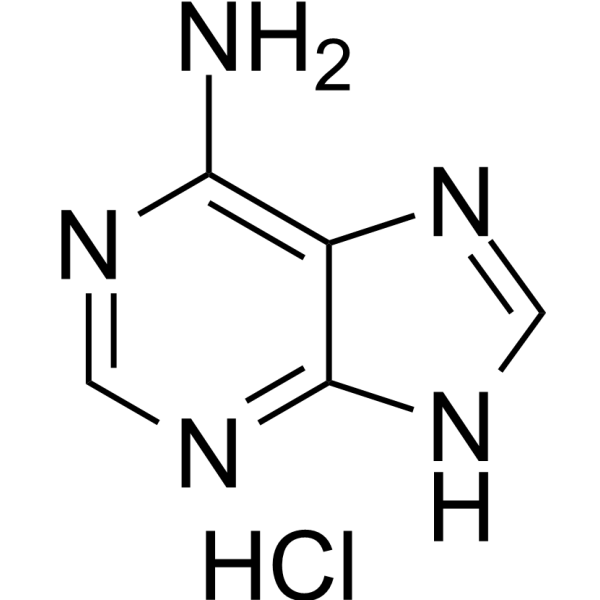
Cat. No.: HY-B0152A
CAS No.: 2922-28-3
Synonyms: 6-Aminopurine hydrochloride; Vitamin B4 hydrochloride
Adenine hydrochloride (6-Aminopurine hydrochloride), a purine, is one of the four nucleobases in the nucleic acid of DNA. Adenine hydrochloride acts as a chemical component of DNA and RNA. Adenine hydrochloride also plays an important role in biochemistry involved in cellular respiration, the form of both ATP and the cofactors (NAD and FAD), and protein synthesis .
loading...
    loading...
23
23 Cited Publications
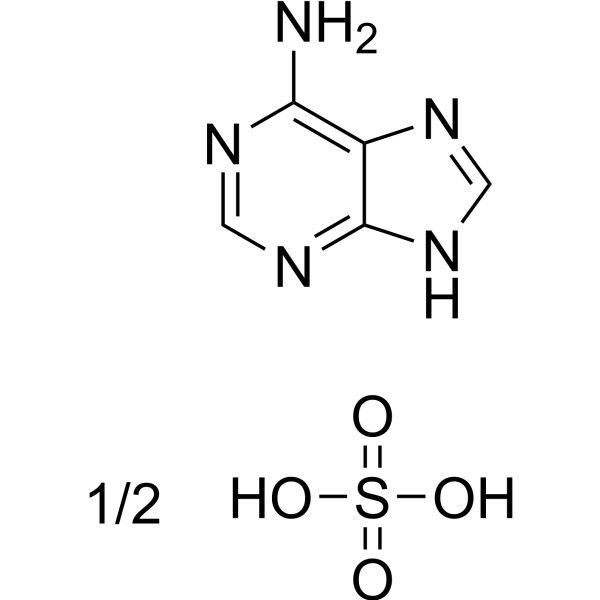
Cat. No.: HY-B0152B
CAS No.: 321-30-2
Synonyms: 6-Aminopurine hemisulfate; Vitamin B4 hemisulfate
Adenine hemisulfate (6-Aminopurine hemisulfate), a purine, is one of the four nucleobases in the nucleic acid of DNA. Adenine hemisulfate acts as a chemical component of DNA and RNA. Adenine hemisulfate also plays an important role in biochemistry involved in cellular respiration, the form of both ATP and the cofactors (NAD and FAD), and protein synthesis .
loading...
    loading...
23
23 Cited Publications
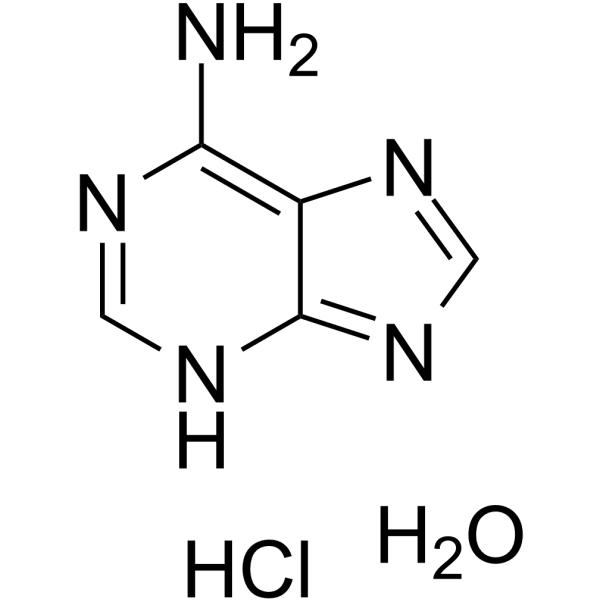
Cat. No.: HY-W015213
CAS No.: 6055-72-7
Adenine monohydrochloride hemihydrate is a hydrochloride derivative of Adenine. Adenine (6-Aminopurine), a purine, is one of the four nucleobases in the nucleic acid of DNA. Adenine acts as a chemical component of DNA and RNA. Adenine also plays an important role in biochemistry involved in cellular respiration, the form of both ATP and the cofactors (NAD and FAD), and protein synthesis .
loading...
    loading...
22
22 Cited Publications
Cat. No.: HY-B0399
CAS No.: 541-15-1
Synonyms: (R)-Carnitine; Levocarnitine
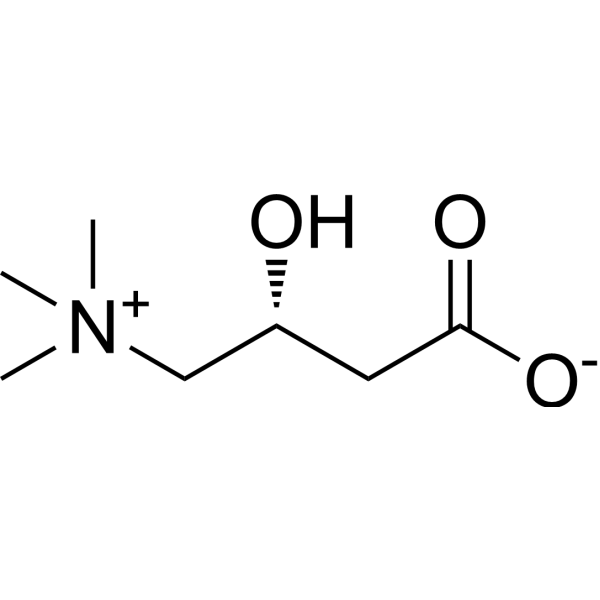
L-Carnitine ((R)-Carnitine), a highly polar, small zwitterion, is an essential co-factor for the mitochondrial β-oxidation pathway. L-Carnitine functions to transport long chain fatty acyl-CoAs into the mitochondria for degradation by β-oxidation. L-Carnitine is an antioxidant. L-Carnitine can ameliorate metabolic imbalances in many inborn errors of metabolism .
loading...
    loading...
22
22 Cited Publications
Cat. No.: HY-B2246
CAS No.: 6645-46-1
Synonyms: (R)-Carnitine hydrochloride; Levocarnitine hydrochloride
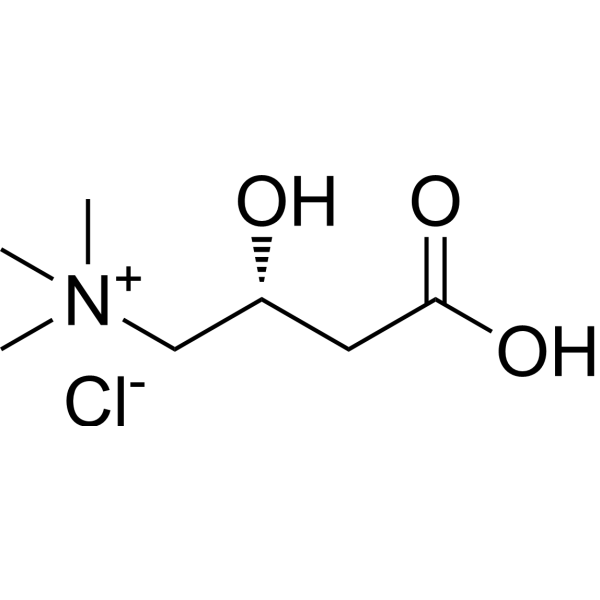
L-Carnitine hydrochloride ((R)-Carnitine hydrochloride), a highly polar, small zwitterion, is an essential co-factor for the mitochondrial β-oxidation pathway. L-Carnitine hydrochloride functions to transport long chain fatty acyl-CoAs into the mitochondria for degradation by β-oxidation. L-Carnitine hydrochloride is an antioxidant. L-Carnitine hydrochloride can ameliorate metabolic imbalances in many inborn errors of metabolism .
loading...
    loading...
22
22 Cited Publications
Cat. No.: HY-W105518
CAS No.: 36687-82-8
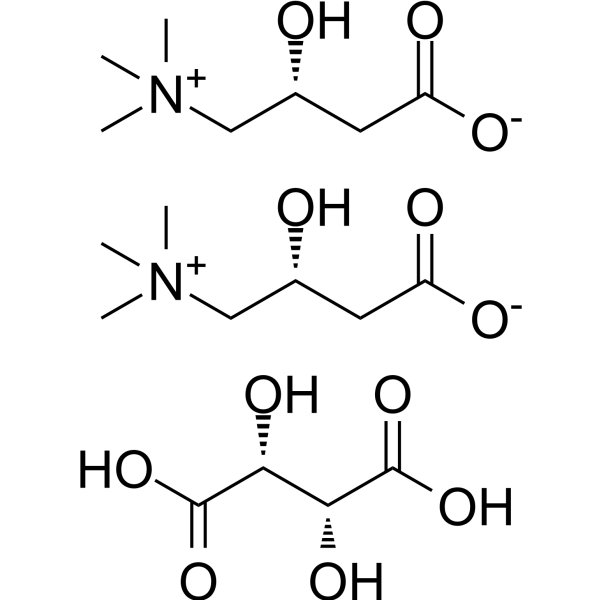
L-Carnitine tartrate is a highly polar, small zwitterion. L-Carnitine tartrate is an essential co-factor for the mitochondrial β-oxidation pathway. L-Carnitine tartrate functions to transport long chain fatty acyl-CoAs into the mitochondria for degradation by β-oxidation. L-Carnitine tartrate is an antioxidant. L-Carnitine tartrate can ameliorate metabolic imbalances in many inborn errors of metabolism [3] .
loading...
    loading...
20
20 Cited Publications
Cat. No.: HY-F0003
CAS No.: 2646-71-1
Research Areas:  

Metabolic Disease Cancer

NADPH tetrasodium salt functions as an important cofactor in a variety of metabolic and biosynthetic pathways. NADPH tetrasodium salt is an endogenous inhibitor of ferroptosis. NADPH tetrasodium salt plays a vital role in the biosynthesis of agents, chiral alcohols, fatty acids and biopolymers, while also being required for lipid biosynthesis, biomass formation, and cell replication .
loading...
    loading...
20
20 Cited Publications
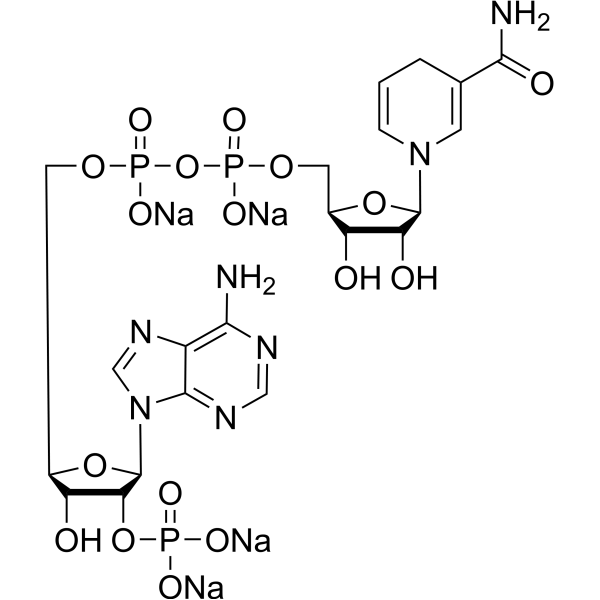
Cat. No.: HY-F0003A
CAS No.: 100929-71-3
Research Areas:  

Metabolic Disease Cancer

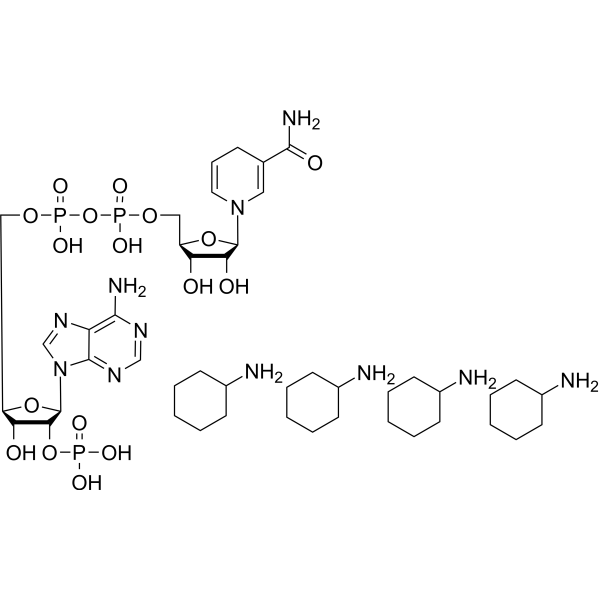
NADPH tetracyclohexanamine functions as an important cofactor in a variety of metabolic and biosynthetic pathways. NADPH tetracyclohexanamine is an endogenous inhibitor of ferroptosis. NADPH tetracyclohexanamine plays a vital role in the biosynthesis of agents, chiral alcohols, fatty acids and biopolymers, while also being required for lipid biosynthesis, biomass formation, and cell replication .
loading...
    loading...
16
16 Cited Publications
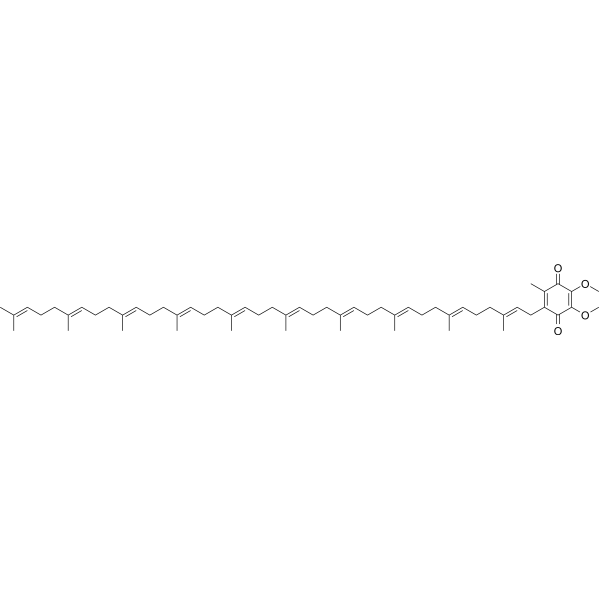
Cat. No.: HY-N0111
CAS No.: 303-98-0
Synonyms: CoQ10; Ubiquinone-10; Ubidecarenone
Coenzyme Q10 is an essential cofactor of the electron transport chain and a potent antioxidant agent.
loading...
    loading...
14
14 Cited Publications
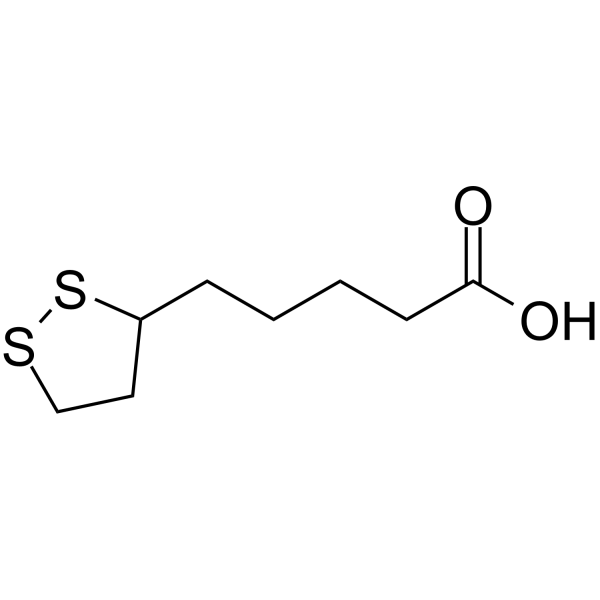
Cat. No.: HY-N0492
CAS No.: 1077-28-7
Synonyms: Thioctic acid; (±)-α-Lipoic acid; DL-α-Lipoic acid
α-Lipoic Acid (Thioctic acid) is an antioxidant, which is an essential cofactor of mitochondrial enzyme complexes. α-Lipoic Acid inhibits NF-κB-dependent HIV-1 LTR activation . α-Lipoic Acid induces endoplasmic reticulum (ER) stress-mediated apoptosis in hepatoma cells . α-Lipoic Acid can be used with CPUL1 (HY-151802) to construct the self-assembled nanoaggregate CPUL1-LA NA, which has improved antitumor efficacy than CPUL1 .
loading...
    loading...
14
14 Cited Publications
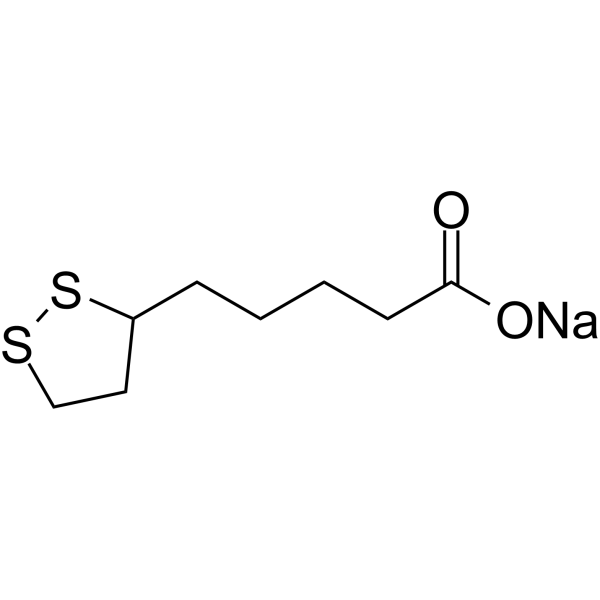
Cat. No.: HY-N0492A
CAS No.: 2319-84-8
Synonyms: Thioctic acid sodium; (±)-α-Lipoic acid sodium; DL-α-Lipoic acid sodium
α-Lipoic Acid (Thioctic acid) sodium is an antioxidant, which is an essential cofactor of mitochondrial enzyme complexes. α-Lipoic Acid sodium inhibits NF-κB-dependent HIV-1 LTR activation . α-Lipoic Acid sodium induces endoplasmic reticulum (ER) stress-mediated apoptosis in hepatoma cells . α-Lipoic Acid sodium can be used with CPUL1 (HY-151802) to construct the self-assembled nanoaggregate CPUL1-LA NA, which has improved antitumor efficacy than CPUL1 .
loading...
    loading...
14
14 Cited Publications
Cat. No.: HY-N0492R
CAS No.: 1077-28-7
Synonyms: Thioctic acid (Standard); (±)-α-Lipoic acid (Standard); DL-α-Lipoic acid (Standard)
α-Lipoic Acid (Standard) is the analytical standard of α-Lipoic Acid. This product is intended for research and analytical applications. α-Lipoic Acid (Thioctic acid) is an antioxidant, which is an essential cofactor of mitochondrial enzyme complexes. α-Lipoic Acid inhibits NF-κB-dependent HIV-1 LTR activation . α-Lipoic Acid induces endoplasmic reticulum (ER) stress-mediated apoptosis in hepatoma cells . α-Lipoic Acid can be used with CPUL1 (HY-151802) to construct the self-assembled nanoaggregate CPUL1-LA NA, which has improved antitumor efficacy than CPUL1 .
loading...
    loading...
11
11 Cited Publications
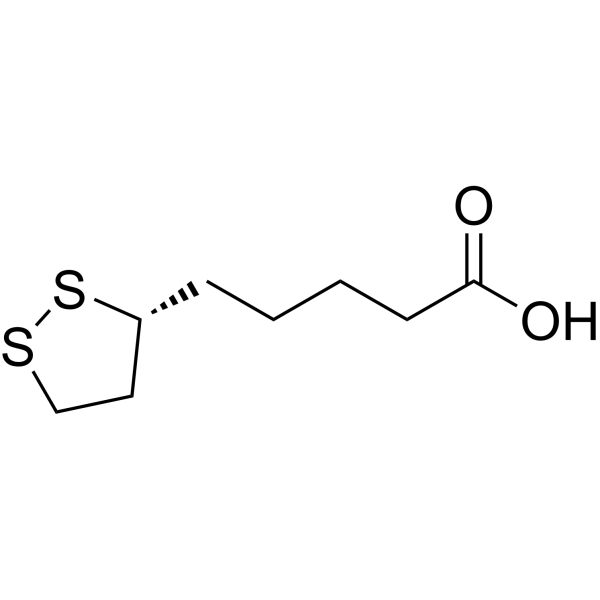
Cat. No.: HY-18733
CAS No.: 1200-22-2
Synonyms: (R)-(+)-α-Lipoic acid; R-(+)-Thioctic acid
Lipoic acid ((R)-(+)-α-Lipoic acid) is an antioxidant, which is an essential cofactor of mitochondrial enzyme complexes. (R)-(+)-α-Lipoic acid is more effective than racemic Lipoic acid.
loading...
    loading...
11
11 Cited Publications
Cat. No.: HY-18733R
CAS No.: 1200-22-2
Synonyms: (R)-(+)-α-Lipoic acid(Standard); R-(+)-Thioctic acid (Standard)
Lipoic acid (Standard) is the analytical standard of Lipoic acid. This product is intended for research and analytical applications. Lipoic acid ((R)-(+)-α-Lipoic acid) is an antioxidant, which is an essential cofactor of mitochondrial enzyme complexes. (R)-(+)-α-Lipoic acid is more effective than racemic Lipoic acid.
loading...
    loading...
9
9 Cited Publications
Cat. No.: HY-100196
CAS No.: 72909-34-3
Purity:  99.82%
Synonyms: PQQ; Methoxatin
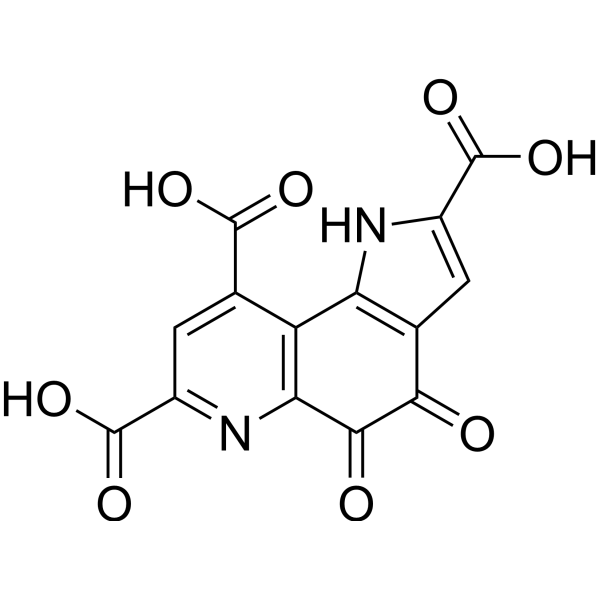
Pyrroloquinoline quinone (PQQ), a redox co-factor, is an anionic, redox-cycling orthoquinone. Pyrroloquinoline quinone is isolated from cultures of methylotropic bacteria and tissues of mammals. Pyrroloquinoline quinone is an essential nutrient for mammals and is important for immune function .
loading...
    loading...
9
9 Cited Publications
Cat. No.: HY-100196A
CAS No.: 122628-50-6
Purity:  ≥98.0%
Synonyms: PQQ disodium salt; Methoxatin disodium salt
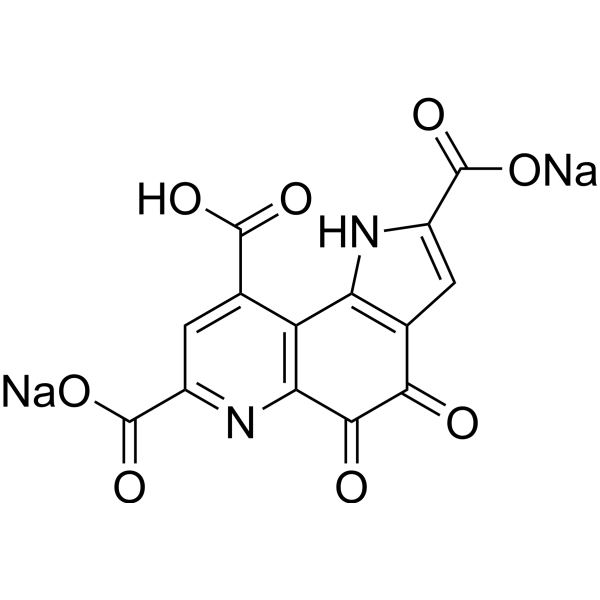
Pyrroloquinoline quinone disodium salt, a redox co-factor, is an anionic, redox-cycling orthoquinone. Pyrroloquinoline quinone disodium salt is isolated from cultures of methylotropic bacteria and tissues of mammals. Pyrroloquinoline quinone disodium salt is an essential nutrient for mammals and is important for immune function .
loading...
    loading...

