1. Search Result
Search Result
Results for "

efflux

" in MedChemExpress (MCE) Product Catalog:

309

Inhibitors & Agonists

6

Screening Libraries

5

Fluorescent Dyes

6

Biochemical Assay Reagents

18

Peptides

1

Inhibitory Antibodies

55

Natural
Products

16

Isotope-Labeled Compounds

Cat. No. Product Name Target Research Areas Chemical Structure
  • HY-50879
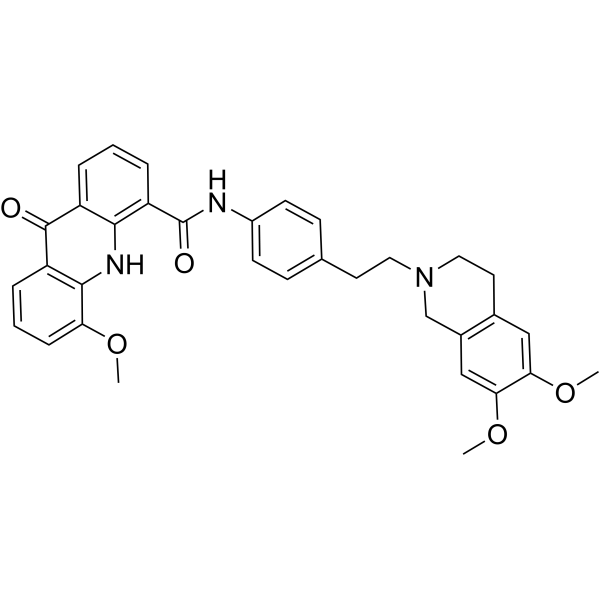
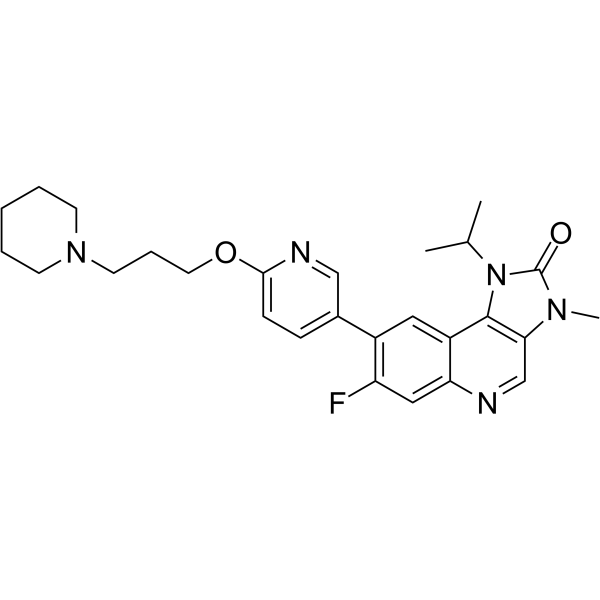
    Elacridar
    Maximum Cited Publications
    31 Publications Verification

    GF120918; GW0918; GG918; GW120918

    P-glycoprotein BCRP Cancer
    Elacridar is an orally active P-glycoprotein (Pgp) and breast cancer resistance protein (BCRP) inhibitor. Elacridar can be used to examine the influence of efflux transporters on agent distribution to brain and the research of cancer .
    Elacridar
  • HY-139665
    VB124
    5+ Cited Publications

    Monocarboxylate Transporter Cardiovascular Disease
    VB124 is an orally active, potent, and selective MCT4 inhibitor. VB124 can specifically inhibit lactate efflux with IC50s of 8.6 nM and 19 nM for lactate import and export in MDA-MB-231 cells, respectively. VB124 is highly selective for MCT4 over MCT1. VB124 can be used for the research of cardiac hypertrophy, heart failure, and metabolism .
    VB124
  • HY-B0388
    Probucol
    2 Publications Verification

    DH-581

    Virus Protease Apoptosis Reactive Oxygen Species (ROS) Glutathione Peroxidase Caspase Infection Neurological Disease Metabolic Disease Inflammation/Immunology Cancer
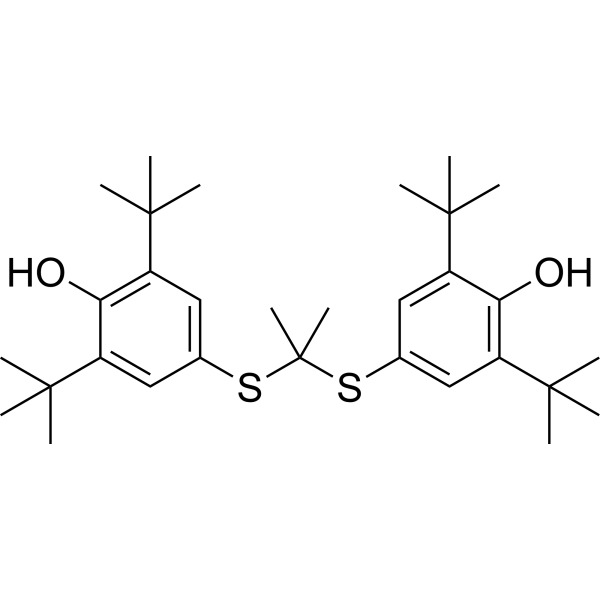
    Probucol (DH-581) is an anti-hyperlipidemic agent. Probucol activates glutathione peroxidase. Probucol promotes low density lipoprotein (LDL) catabolism, inhibits ABCA1-dependent cholesterol efflux, and decreases HDL-C levels. Probucol also has anti-inflammatory, antioxidant and neuroprotective properties. Probucol can be used for researches on bone, cardiovascular, cancer, neurological, and metabolism-related diseases .
    Probucol
  • HY-B0193A
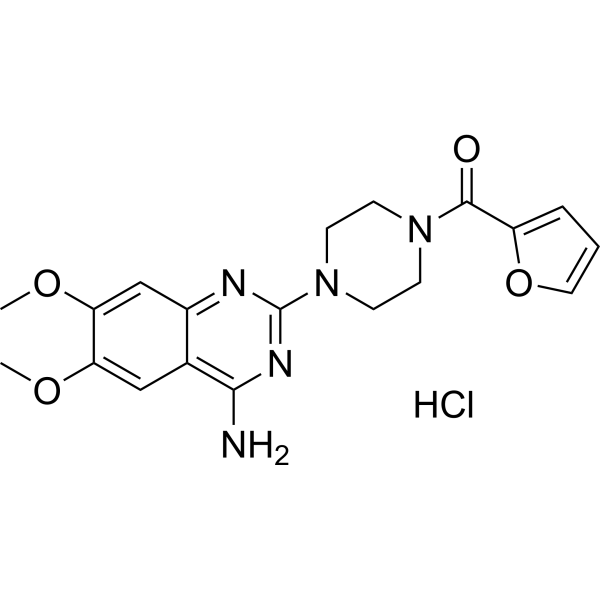
    Prazosin hydrochloride
    15+ Cited Publications

    Adrenergic Receptor Autophagy Cardiovascular Disease Endocrinology Cancer
    Prazosin hydrochloride is a well-tolerated, CNS-active α1-adrenergic receptor antagonist for the research of high blood pressure and alcohol use disorders . Prazosin hydrochloride potently inhibits Norepinephrine (NE)-stimulated 45Ca efflux with an IC50 of 0.15 nM .Prazosin hydrochloride inhibits organic cation transporters OCT-1 and OCT-3 with IC50s of 1.8, and 13 μM, respectively .
    Prazosin hydrochloride
  • HY-101444A
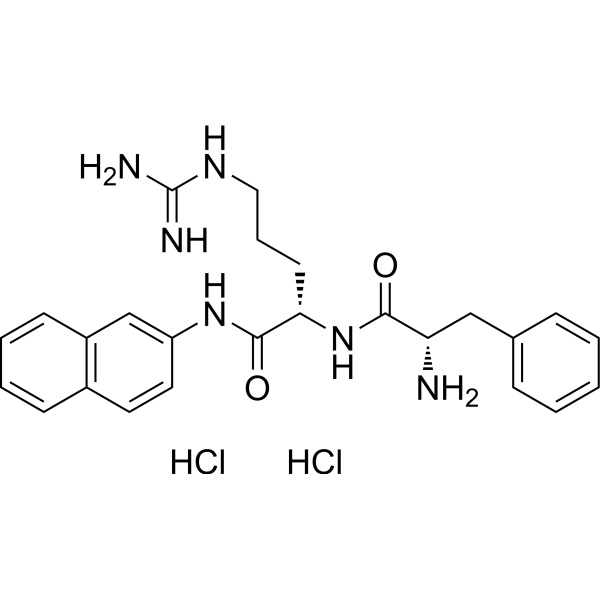
    PAβN dihydrochloride
    Maximum Cited Publications
    11 Publications Verification

    MC-207,110 dihydrochloride; Phe-Arg-β-naphthylamide dihydrochloride

    Bacterial Infection
    PAβN dihydrochloride (MC-207110 dihydrochloride) is an efflux pump inhibitor.
    PAβN dihydrochloride
  • HY-50880
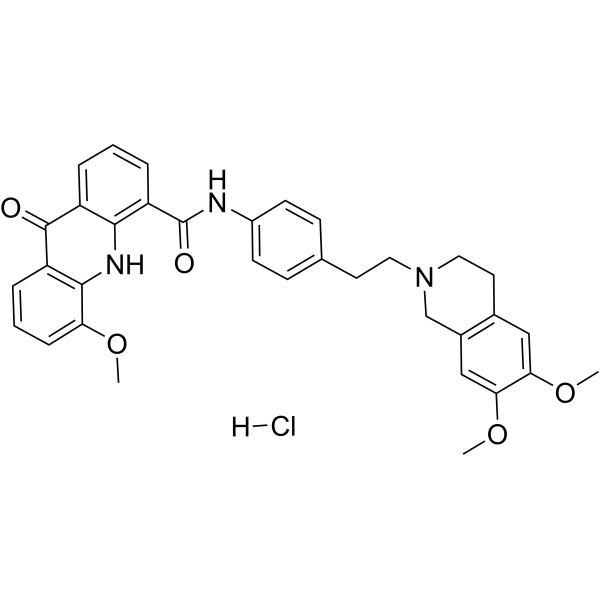
    Elacridar hydrochloride
    Maximum Cited Publications
    31 Publications Verification

    GF120918A

    P-glycoprotein BCRP Cancer
    Elacridar hydrochloride (GF120918A) is an orally active P-glycoprotein (P-gp) and breast cancer resistance protein (BCRP) inhibitor. Elacridar hydrochloride can be used to examine the influence of efflux transporters on agent distribution to brain and it can be used for the research of cancer .
    Elacridar hydrochloride
  • HY-112220
    VIT-2763
    5+ Cited Publications

    Ferroportin Metabolic Disease
    VIT-2763, an oral ferroportin inhibitor, inhibits hepcidin binding to ferroportin and blocks iron efflux. VIT-2763 has the potential in the treatment of β-thalassemia .
    VIT-2763
  • HY-N3308
    Medicarpin
    2 Publications Verification

    Apoptosis Cancer
    Medicarpin is a flavonoid isolated from Medicago sativa. Medicarpin induces apoptosis and overcome multidrug resistance in leukemia P388 cells by modulating P-gp-mediated efflux of agents .
    Medicarpin
  • HY-129098
    DMHCA
    1 Publications Verification

    LXR Metabolic Disease
    DMHCA, a potent and selective LXR agonist, specifically activates the cholesterol efflux arm of the LXR pathway without stimulating triglyceride synthesis. DMHCA has anti-inflammatory effects?and can be used for the research of cholesterol homeostasis diabetes .
    DMHCA
  • HY-132301

    MCT4-IN-1

    Monocarboxylate Transporter Cancer
    MSC-4381 (MCT4-IN-1), a chemical probe, is an orally active and selective monocarboxylate transporter 4 (MCT4/SLC16A3) inhibitor with an IC50 of 77 nM and a Ki of 11 nM. MSC-4381 targets to the cytosolic domain of MCT4. MSC-4381 results in lactate efflux inhibition and reduction of cellular viability in MCT4 high expressing cells. MSC-4381 has the potential for MCT4 transporter inhibition research . MSC-4381 is a click chemistry reagent, it contains an Alkyne group and can undergo copper-catalyzed azide-alkyne cycloaddition (CuAAc) with molecules containing Azide groups.
    MSC-4381
  • HY-107643

    CBLC4H10

    P-glycoprotein Cancer
    Reversan (CBLC4H10) inhibits drug efflux mediated by P-glycoprotein (Pgp) and multidrug resistance protein 1 (MRP1), and exhibits oral activity. Reversan shows activity against glioblastoma multiforme and neuroblastoma models .
    Reversan
  • HY-12758

    BCRP Cancer
    YHO-13351 is an orally active ABCG2 inhibitor . YHO-13351 modulates the function of ABCG2, blocks BCRP-mediated compound efflux, downregulates the expression of breast cancer resistance protein at the post-transcriptional level, and reverses ABCG2-associated tolerance. YHO-13351 restores the toxicity of SN-38 to SN-38-resistant cancer cells and sensitizes cancer cells to Irinotecan. YHO-13351 is a water-soluble prodrug that is rapidly converted to YHO-13177 (HY-12757) in mice. YHO-13351 prolongs the median survival time of mice bearing cancer cell xenografts when combined with IMMU-132. YHO-13351 extends the survival time of tumor-bearing mice and inhibits the growth of xenograft tumors when combined with Irinotecan. YHO-13351 can be used for the research of breast cancer, gastric cancer, BCRP-mediated drug-resistant cancers, and cervical cancer .
    YHO-13351
  • HY-15134

    OC 144-093; OC 144093

    P-glycoprotein Infection Cancer
    ONT-093 (OC 144-093) is a potent and orally active inhibitor of P-glycoprotein pump. ONT-093 inhibits P-gp-mediated ATPase activity with an IC50 of 0.16 μM. ONT-093 can inhibit drug efflux and increase bioavailability. ONT-093 reverses cancer cells multidrug resistance to chemotherapeutic drugs. ONT-093 can be used for the researches of cancer and infection, such as colon cancer and malarial .
    ONT-093
  • HY-N2419
    Erythrodiol
    1 Publications Verification

    Endogenous Metabolite Metabolic Disease
    Erythrodiol is an olive oil component. Erythrodiol promotes Cholesterol efflux (ChE) by selectively inhibiting the degradation of ABCA1 protein. Erythrodiol is a good candidate to be further explored for therapeutic or preventive application in the context of atherosclerosis .
    Erythrodiol
  • HY-100750
    Norverapamil hydrochloride
    1 Publications Verification

    (±)-Norverapamil hydrochloride; D591 hydrochloride

    Calcium Channel P-glycoprotein Drug Metabolite Cardiovascular Disease
    Norverapamil hydrochloride ((±)-Norverapamil hydrochloride), an N-demethylated metabolite of Verapamil, is a L-type calcium channel blocker and a P-glycoprotein (P-gp) function inhibitor .
    Norverapamil hydrochloride
  • HY-B0501

    CP 76136-27

    P-glycoprotein Bacterial Antibiotic Infection
    Danofloxacin mesylate (CP 76136-27) is a fluoroquinolone used as a veterinary drug. Danofloxacin mesylate has a broad spectrum of bactericidal activity, mainly inhibiting the DNA cycloenzyme of the bacteria. In addition, Danofloxacin mesylate is a substrate for ATP-dependent efflux transporters (P-gp and MRP2) .
    Danofloxacin mesylate
  • HY-42034

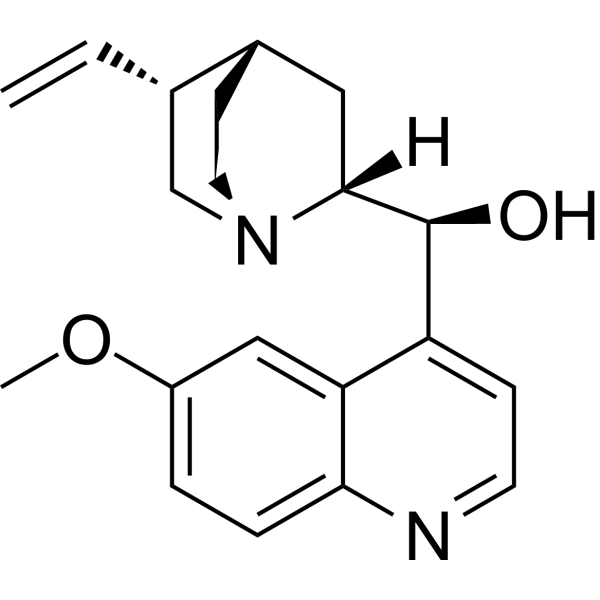
    Dihydroquinine

    Bacterial Parasite Reactive Oxygen Species (ROS) Protein Arginine Deiminase Infection
    Hydroquinine (Dihydroquinine) is an anti-bacterial agent that inhibits both Gram-positive and Gram-negative bacteria. Hydroquinine inhibits the growth of multidrug-resistant pseudomonas aeruginosa via the suppression of the arginine deiminase pathway genes. Hydroquinine inhibits Plasmodium falciparum and Plasmodium berghei. Hydroquinine displays anti-malarial and demelanizing activities. Hydroquinine effectively induces specific RND-type efflux pump systems in Pseudomonas aeruginosa, particularly the MexCD-OprJ and MexXY efflux pumps. Hydroquinine inhibits Pseudomonas aeruginosa adhesion and biofilm formation. Hydroquinine serves as a precursor for derivatives such as C9 epihydroquinine, 9-acetoxy-10,11-dihydroquinine, and 10,11-dihydroquinine monohydrochloride .
    Hydroquinine
  • HY-Y1777

    Drug Derivative Infection
    2-Phenylacetophenone has broad-spectrum efflux pump inhibition activity. 2-Phenylacetophenone is a benzoin derivative used as a photoinitiator in vinyl polymerization .
    2-Phenylacetophenone
  • HY-N2947

    P-glycoprotein Infection Inflammation/Immunology
    Boeravinone B, a dual inhibitor of NorA bacterial efflux pump of Staphylococcus aureus and human P-Glycoprotein, reduces the biofilm formation and intracellular invasion of bacteria. Boeravinone B act as anti-aging and anti-apoptosis phyto-molecules during oxidative stress .
    Boeravinone B
  • HY-128773A
    MRL-494 hydrochloride
    1 Publications Verification

    Bacterial Infection
    MRL-494 hydrochloride, an antibacterial agent, is a inhibitor of β-barrel assembly machine A (BamA) impervious to efflux and the outer membrane permeability barrier. MRL-494 hydrochloride can inhibits Gram-positive (MIC of 12.5 μM for Staphylococcus aureus COL) and Gram-negative (MIC of 25 μM for E. coli JCM158) bacterias .
    MRL-494 hydrochloride
  • HY-P10551

    Transmembrane Glycoprotein NF-κB TNF Receptor Cardiovascular Disease
    ApoA-I mimetic peptide 5A is a synthetic peptide molecule designed based on the structure and function of naturally occurring apolipoprotein A-I (Apo A-I). ApoA-I mimetic peptide 5A can promote the efflux of cholesterol from cells and help reduce the accumulation of cholesterol in cells. ApoA-I mimetic peptide 5A also shows anti-inflammatory activity and can reduce inflammatory markers in blood and tissues. ApoA-I mimetic peptide 5A can be used in the study of cardiovascular diseases .
    ApoA-I mimetic peptide 5A
  • HY-124819

    Bacterial Infection
    D13-9001 is a potent AcrB (AcrAB-TolC efflux pump subunit) and MexB (MexAB-OprM efflux pump subunit) inhibitor with the KD values of 1.15 μM and 3.57 μM in E. coli and P. aeruginosa, respectively . D13-9001 exhibits antibiotic activities .
    D13-9001
  • HY-126940

    Reactive Oxygen Species (ROS) P-glycoprotein Apoptosis Cancer
    Furanodiene is a natural terpenoid isolated from Rhizoma Curcumae. Furanodiene plays anti-cancer effects through anti-angiogenesis and inducing ROS production, DNA strand breaks and apoptosis. Furanodiene suppresseed efflux transporter Pgp (P-glycoprotein) function and reduced Pgp protein level .
    Furanodiene
  • HY-16688A
    RU 24969 succinate
    1 Publications Verification

    5-HT Receptor Neurological Disease
    RU 24969 succinate is a 5-HT receptor agonist with Ki values of 0.38 and 2.5 nM for 5-HT1B and 5-HT1A, respectively. RU 24969 decreases fluid consumption and increases forward locomotion. RU 24969 succinate can be used for the research of neurological disease .
    RU 24969 succinate
  • HY-N0406

    P-glycoprotein Inflammation/Immunology
    2"-O-beta-L-galactopyranosylorientin is extracted from the flowers of Trollius ledebouri. 2"-O-beta-L-galactopyranosylorientin involves transporter mediated efflux in addition to passive diffusion and is the substrate of multidrug resistance protein 2 (MRP2). Anti-inflammatory effect .
    2
  • HY-50879R

    GF120918 (Standard); GW0918 (Standard); GG918 (Standard); GW120918 (Standard)

    P-glycoprotein BCRP Reference Standards Cancer
    Elacridar (Standard) is the analytical standard of Elacridar. This product is intended for research and analytical applications. Elacridar is an orally active P-glycoprotein (Pgp) and breast cancer resistance protein (BCRP) inhibitor. Elacridar can be used to examine the influence of efflux transporters on agent distribution to brain and the research of cancer .
    Elacridar (Standard)
  • HY-156753

    Bacterial Cancer
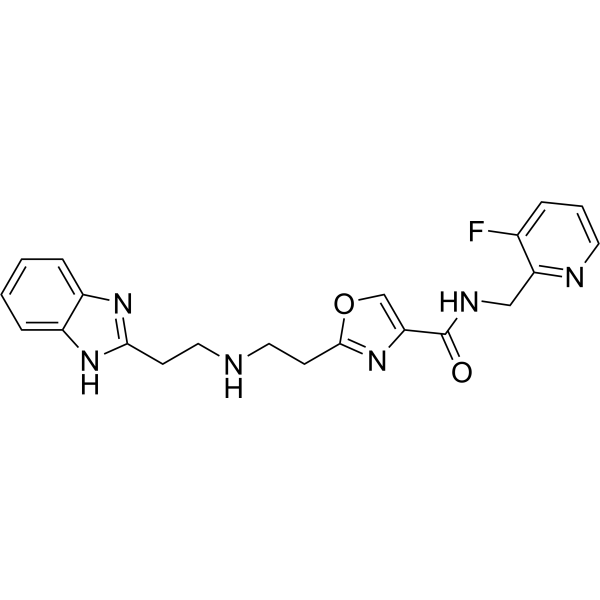
    NorA-IN-1 (Compound 16) is a NorA inhibitor. NorA-IN-1 inhibits NorA efflux pump in everted membrane vesicles. NorA-IN-1 can be used for research of multidrug resistance .
    NorA-IN-1
  • HY-161246

    5-HT Receptor Neurological Disease
    uPSEM792 is a pharmacologically selective effector molecules (PSEM) agonist for PSAM 4-GlyR, with an affinity of Ki of 0.7 nM. uPSEM792 is a substrate for efflux transporters in brains of wild type and dual P-gp and BCRP knockout mice. uPSEM7952 is a possible lead for developing the PET radioligand for PSAM 4-GlyR .
    uPSEM792
  • HY-128038

    Opioid Receptor Neurological Disease
    N-Desmethyl-loperamide is a major metabolite of loperamide, a drug that selectively activates peripheral μopioid receptors with a Ki value of 0.16 nM. N-Desmethyl-loperamide is a substrate of the ATP-dependent efflux transporter P-glycoprotein .
    N-Desmethyl-loperamide
  • HY-W674245

    ATP-binding cassette (ABC) transporters Cardiovascular Disease
    10-Hydroxyhexadecanoic acid is a hydroxy fatty acid found in Camembert cheese. 10-Hydroxyhexadecanoic acid can promote cholesterol efflux from ABCA1 and ABCG1, preventing the accumulation of excess cholesterol in cells. 10-Hydroxyhexadecanoic acid can be used in anti-atherosclerosis research .
    10-Hydroxyhexadecanoic acid
  • HY-112505

    BCRP Cancer
    Efflux inhibitor-1 (compound 2) is a pyrazolo[1,5-a]pyrimidine efflux inhibitor. Efflux inhibitor-1 selectively targets toward ABCG2/BCRP over ABCB1 with IC50s of 0.45 μM and 2.17 μM, respectively .
    Efflux inhibitor-1
  • HY-128773

    Bacterial Infection
    MRL-494, an antibacterial agent, is a inhibitor of β-barrel assembly machine A (BamA) impervious to efflux and the outer membrane permeability barrier. MRL-494 can inhibits Gram-positive (MIC of 12.5 μM for Staphylococcus aureus COL) and Gram-negative (MIC of 25 μM for E. coli JCM158) bacterias .
    MRL-494
  • HY-119172

    Bacterial Infection Inflammation/Immunology Cancer
    NSC-60339, an efflux pump inhibitor and a substrate of AcrAB-TolC, is a polybasic terephthalic acid derivative studied as a potential cancer chemotherapeutic agent .
    NSC-60339
  • HY-W590664

    Endogenous Metabolite Cardiovascular Disease
    C2 Dihydroceramide is a derivative of C2 Ceramide (HY-101180). C2 Dihydroceramide enhances the ABCA1-mediated cholesterol efflux to apolipoprotein A-I (apoA-I) without causing cytotoxicity .
    C2 Dihydroceramide
  • HY-155048

    Bacterial Infection
    BDM91270 (compound 29) is an E. coli AcrAB-TolC efflux pump inhibitor with an EC90 of 0.6 μM for wild-type E. coli AcrB. BDM91270 can be used in the study of Escherichia coli drug resistance .
    BDM91270
  • HY-106525

    Cholinesterase (ChE) Inflammation/Immunology
    Aclatonium napadisylate is a cholinergic agonist. Aclatonium napadisylate can increase amylase release and Ca 2+ efflux. Aclatonium napadisylate can stimulate pancreatic exocrine secretion and increase motility and peristalsis of the gastrointestinal tract. Aclatonium napadisylate can be used for the research of gastrointestinal disorders .
    Aclatonium napadisylate
  • HY-D2262

    Fluorescent Dye Metabolic Disease
    BODIPY-cholesterol conjugate-2 (compound 6) is a BODIPY-cholesterol conjugate. BODIPY-cholesterol conjugate-2 is a useful probe for simultaneous visualization of intracellular cholesterol pools and for monitoring cholesterol efflux from cells to extracellular acceptors. (λex=589 nm, λem=638 nm) .
    BODIPY-cholesterol conjugate-2
  • HY-149812

    Bacterial Parasite Infection
    Efflux pump-IN-4 is an AcrB efflux pump inhibitor, with ability to potentiate the effect of antibiotics. Efflux pump-IN-4 inhibits Nile Red (a known substrate of AcrB) efflux. Efflux pump-IN-4 does not disrupts the bacterial outer membrane nor display toxicity in a nematode model .
    AcrB-IN-4
  • HY-101444

    Bacterial Infection
    MC-207110 is a broad-spectrum efflux pump inhibitor. MC-207110 is active against all three known Mex efflux pumps from P. aeruginosa and their close Escherichia coli efflux pump homolog (AcrAB-TolC). MC-207110 can decrease the intrinsic resistance of P. aeruginosa to fluoroquinolones. MC-207110 can be used for the research of infection .
    MC-207110
  • HY-178111

    Bacterial Infection
    AcrB-IN-6 is an effective AcrB inhibitor. AcrB-IN-6 The compound inhibits the function of bacterial multidrug efflux pumps, thereby significantly enhancing the antibacterial activity of various antibiotics. AcrB-IN-6 achieves 32-fold MIC reductions in wild-type E. coli BW25113. AcrB-IN-6 exhibits excellent synergistic antibacterial effects, low cytotoxicity and hemolytic properties. AcrB-IN-6 can be used for researching anti-resistant bacteria .
    AcrB-IN-6
  • HY-100390

    BCRP Cancer
    (S)-ML753286 is a breast cancer resistance protein (BCRP) inhibitor with an IC50 of 0.6 μM on BCRP efflux transporter.
    (S)-ML753286
  • HY-N11697

    P-glycoprotein Cancer
    α-Cryptoxanthin is a natural carotenoid with anticancer effects. α-Cryptoxanthin inhibits multidrug resistance 1 (MDR1) mediated efflux pump .
    α-Cryptoxanthin
  • HY-157987

    Bacterial Infection
    MBX3135 is an efflux pump inhibitor which can enhance the effect of antibiotics through the AcrB target of bacteria. MBX3135 can be used for research of infection and antibiotics .
    MBX3135
  • HY-N9947

    Bacterial Antibiotic Infection
    Methyl-6-gingerol is an antimicrobial agent derived from Aframomum melegueta that exhibits anti-mycobacterial activity by inhibiting the efflux of toxins within Mycobacterium species .
    Methyl-6-gingerol
  • HY-129279

    Farnesyl Transferase Cancer
    Andrastin A meroterpenoid compound, is a farnesyltransferase inhibitor. Andrastin A inhibits the efflux of anticancer compounds from multidrug-resistant cancer cells. Andrastin A can be isolated from Penicillium species .
    Andrastin A
  • HY-19405

    Neurokinin Receptor Others
    UK-224671 is a potent and selective NK2 receptor antagonist. UK-224671 is affected by P-gp efflux and poor intrinsic membrane permeability, resulting in low oral bioavailability .
    UK-224671
  • HY-162144

    Bacterial Infection
    BDM91288 is an orally active AcrB efflux pump inhibitor of pyridinium piperazine. BDM91288 can enhance the in vivo efficacy of levofloxacin (HY-B0330) in the treatment of Klebsiella pneumoniae pulmonary infection in mouse models .
    BDM91288
  • HY-P10874

    Bacterial Infection
    SMR efflux inhibitor targets the small multidrug resistance (SMR) efflux pump, blocks the interaction of TM4-TM4, and exhibits board-spectrum antibacterial activity .
    SMR efflux inhibitor
  • HY-149811

    Bacterial Parasite Infection
    Efflux pump-IN-3 is an AcrB efflux pump inhibitor, with ability to potentiate the effect of antibiotics. Efflux pump-IN-3 inhibits Nile Red (a known substrate of AcrB) efflux. Efflux pump-IN-3 does not disrupts the bacterial outer membrane nor display toxicity in a nematode model .
    AcrB-IN-3
  • HY-149810

    Bacterial Parasite Infection
    AcrB-IN-2 is an AcrB efflux pump inhibitor, with ability to potentiate the effect of antibiotics. AcrB-IN-22 inhibits Nile Red (a known substrate of AcrB) efflux.AcrB-IN-2 does not disrupts the bacterial outer membrane nor display toxicity in a nematode model .
    AcrB-IN-2

Inquiry Online

Your information is safe with us. * Required Fields.

Salutation


Country or Region *

Applicant Name *


Organization Name *

Department *


Email Address *


Product Name *

Cat. No.


Requested quantity *

Phone Number *


Remarks

Inquiry Online

Inquiry Information

Product Name:
Cat. No.:
Quantity:
MCE Japan Authorized Agent:

