388 Results for "

epilepsy

" in MedChemExpress (MCE) Product Catalog:
Products (388)

388 Results for "epilepsy" in MCE Product Catalog:

69
69 Publications Verification
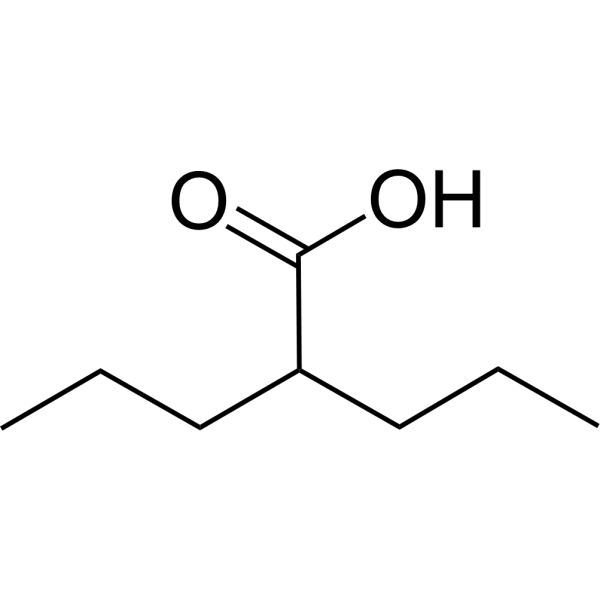
Art. -Nr.: HY-10585
CAS. Nr.: 99-66-1
Reinheit:  99.19%
Synonyms: VPA; 2-Propylpentanoic acid; Dipropylacetic acid
Valproic acid (VPA) is an orally active HDAC inhibitor, with IC50 in the range of 0.5 and 2 mM. Valproic acid inhibits HDAC1 (IC50, 400 μM), and induces proteasomal degradation of HDAC2. Valproic acid activates Notch1 signaling and inhibits proliferation in small cell lung cancer (SCLC) cells. Valproic acid is used in the epilepsy, bipolar disorder, metabolic disease, HIV infection and prevention of migraine headaches .
loading...
    loading...
69
69 Publications Verification
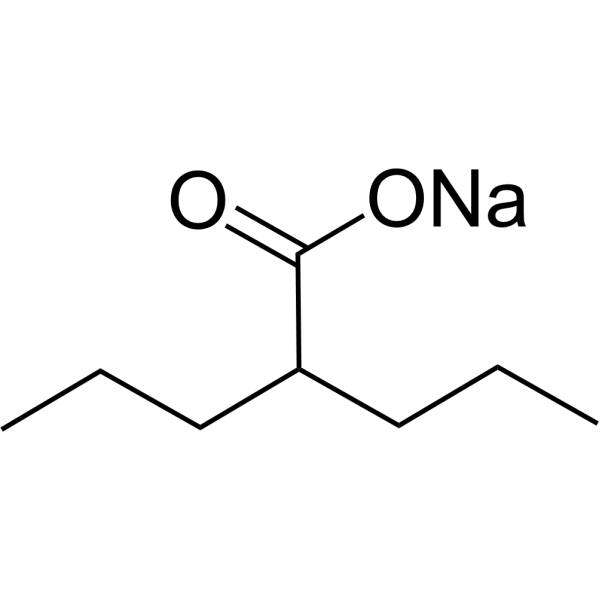
Art. -Nr.: HY-10585A
CAS. Nr.: 1069-66-5
Reinheit:  98.14%
Synonyms: Sodium Valproate; VPA sodium; 2-Propylpentanoic acid sodium
Valproic acid (Sodium Valproate) sodium is an orally active HDAC inhibitor, with IC50 in the range of 0.5 and 2 mM, also inhibits HDAC1 (IC50, 400 μM), and induces proteasomal degradation of HDAC2. Valproic acid sodium activates Notch1 signaling and inhibits proliferation in small cell lung cancer (SCLC) cells. Valproic acid sodium is used in the treatment of epilepsy, bipolar disorder, metabolic disease, HIV infection and prevention of migraine headaches .
loading...
    loading...
43
43 Cited Publications
Art. -Nr.: HY-137790
CAS. Nr.: 38641-83-7
Reinheit:  99.35%
Synonyms: (-)-Bicuculline methochloride
Target:  

GABA Receptor

Forschungsgebiete:  

Neurological Disease

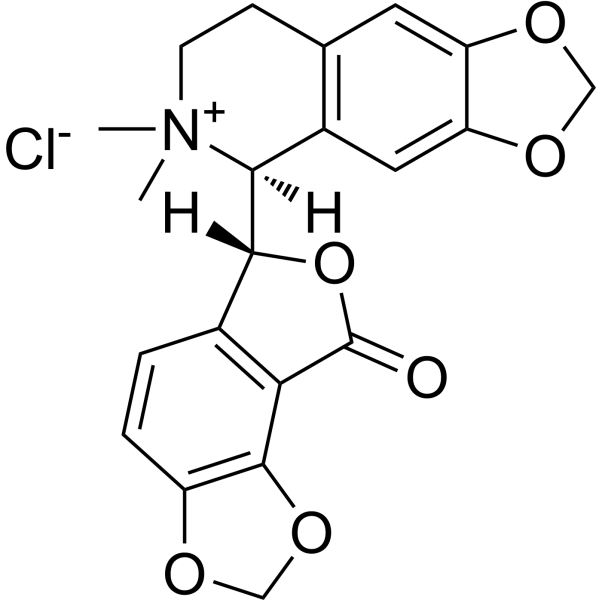
Bicuculline ((+)-Bicuculline; d-Bicuculline) methochloride is a selective GABAA receptor antagonist with an IC50 value of 3 μM. Bicuculline methochloride induces clonic tonic convulsions in mammals and can also be used to block Ca 2+ activated potassium channels. Bicuculline methochloride can be used in studies of epilepsy and other related psychiatric disorders .
loading...
    loading...
19
19 Cited Publications
Art. -Nr.: HY-N0115
CAS. Nr.: 62499-27-8
Synonyms: Gastrodine
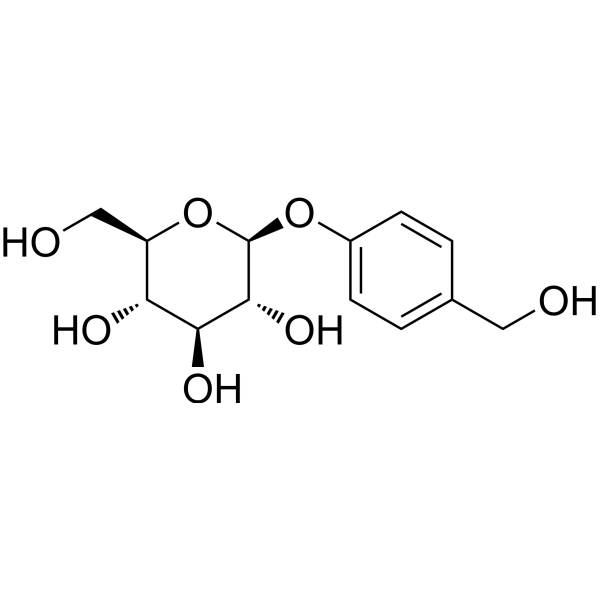
Gastrodin, a main constituent of a Chinese herbal medicine Tianma, has been known to display anti-inflammatory effects. Gastrodin inhibits ethanol-induced hepatocellular apoptosis. Gastrodin inhibits H2O2-induced ferroptosis through its antioxidative effect. Gastrodin can be used for study of dizziness, epilepsy, stroke and dementia .
loading...
    loading...
18
18 Cited Publications
Art. -Nr.: HY-B0246
CAS. Nr.: 298-46-4
Synonyms: CBZ; NSC 169864
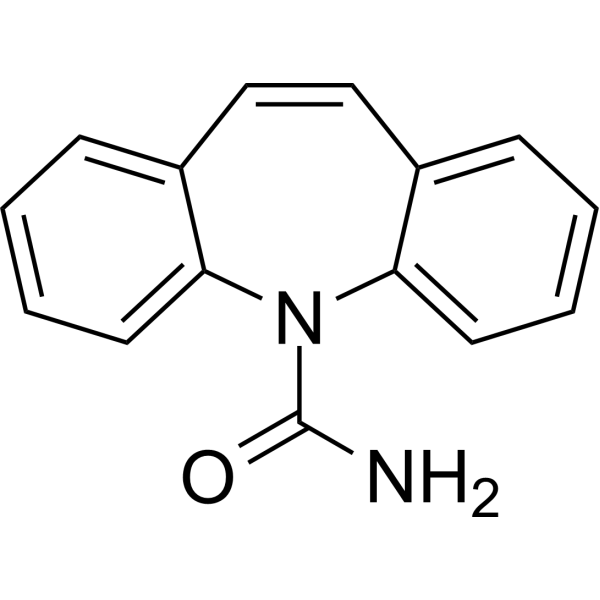
Carbamazepine is an orally active pressure-sensitive sodium ion channel blocker with an IC50 of 131 μM. Carbamazepine blocks voltage gated Na +, Ca 2+, and K + channels, and is also a HDAC inhibitor (IC50: 2 μM). Carbamazepine is an anticonvulsant and can be used for research of epilepsy and neuropathic pain .
loading...
    loading...
7
7 Cited Publications
Art. -Nr.: HY-B0495
CAS. Nr.: 84057-84-1
Synonyms: LTG; BW430C
Forschungsgebiete:  

Neurological Disease Cancer

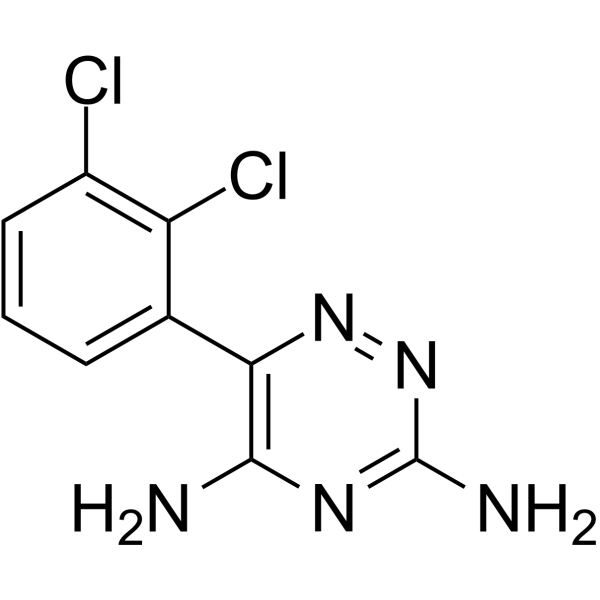
Lamotrigine (BW430C) is a potent and orally active anticonvulsant or antiepileptic agent. Lamotrigine selectively blocks voltage-gated Na + channels, stabilizing presynaptic neuronal membranes and inhibiting glutamate release. Lamotrigine can be used for the research of epilepsy, focal seizure, et al .
loading...
    loading...
7
7 Cited Publications
Art. -Nr.: HY-110032
CAS. Nr.: 113170-86-8
Synonyms: LTG isethionate; BW430C isethionate
Forschungsgebiete:  

Neurological Disease Cancer

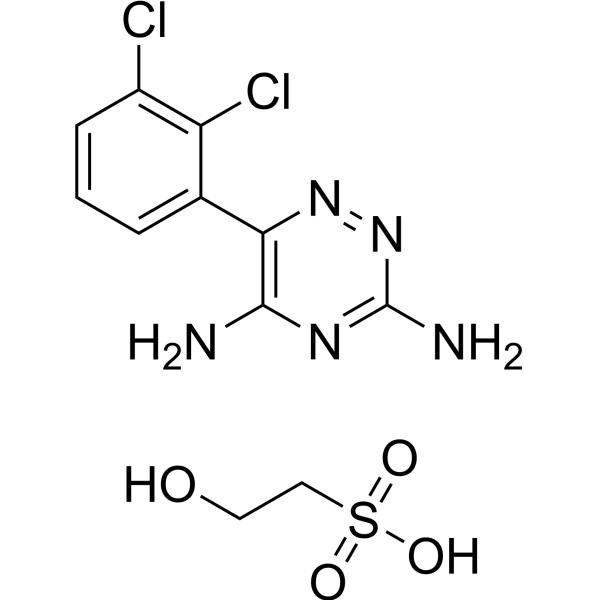
Lamotrigine (BW430C) isethionate is a potent and orally active anticonvulsant or antiepileptic agent. Lamotrigine isethionate selectively blocks voltage-gated Na + channels, stabilizing presynaptic neuronal membranes and inhibiting glutamate release. Lamotrigine isethionate can be used for the research of epilepsy, focal seizure, et al .
loading...
    loading...
5
5 Cited Publications
Art. -Nr.: HY-N0666
CAS. Nr.: 56-84-8
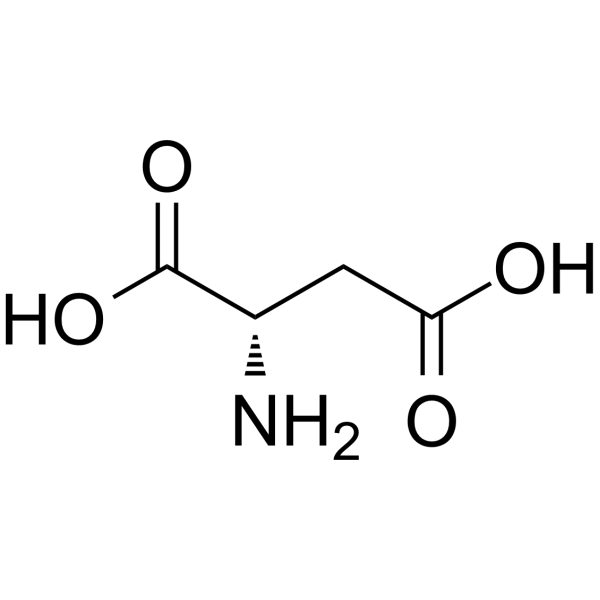
L-Aspartic acid is a NMDA receptor agonist and acidic amino acid. L-Aspartic acid has no independent analgesic activity. L-Aspartic acid can antagonize the analgesic effects of D-Aspartic acid and Morphine. L-Aspartic acid regulates polymorph transformation, crystal growth/aggregation and nucleation processes of calcium carbonate, and can serve as a biomineralization template. L-Aspartic acid promotes burst firing of central neurons. L-Aspartic acid can be used in studies related to cerebral ischemia and epilepsy .
loading...
    loading...
5
5 Cited Publications
Art. -Nr.: HY-N0666A
CAS. Nr.: 1115-63-5
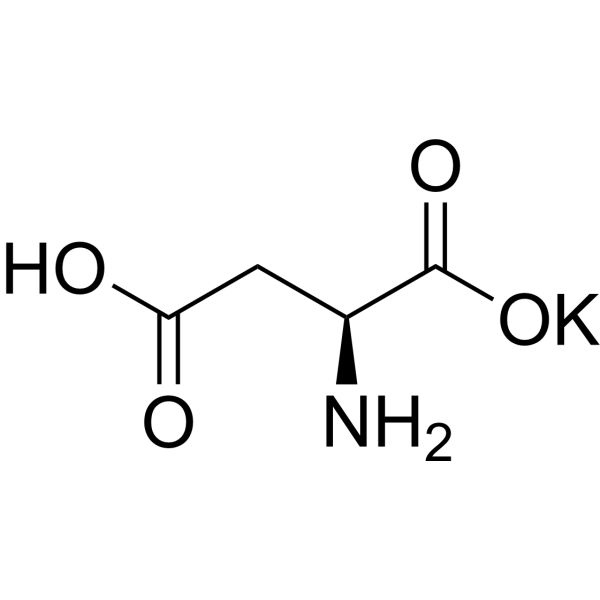
L-Aspartic acid potassium (potassium L-aspartate) is a NMDA receptor agonist and acidic amino acid. L-Aspartic acid potassium has no independent analgesic activity. L-Aspartic acid potassium can antagonize the analgesic effects of D-Aspartic acid and Morphine. L-Aspartic acid potassium regulates polymorph transformation, crystal growth/aggregation and nucleation processes of calcium carbonate, and can serve as a biomineralization template. L-Aspartic acid potassium promotes burst firing of central neurons. L-Aspartic acid potassium can be used in studies related to cerebral ischemia and epilepsy .
loading...
    loading...
5
5 Cited Publications
Art. -Nr.: HY-N0666B
CAS. Nr.: 10389-09-0
Synonyms: Calcium L-aspartate
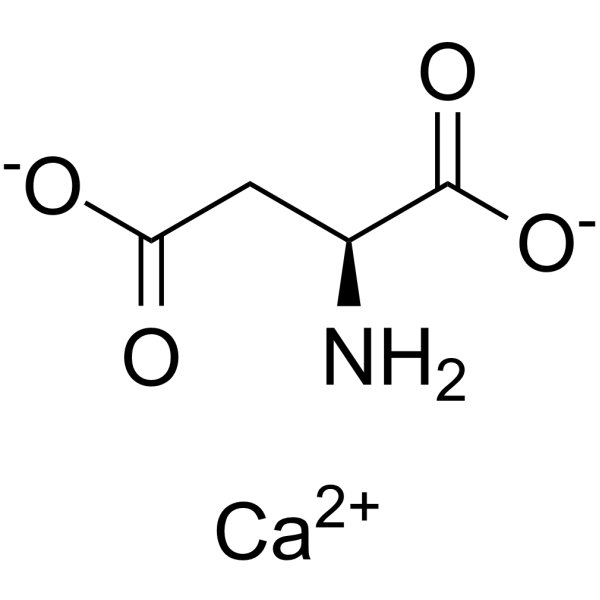
Aspartic acid calcium (calcium L-aspartate) is a NMDA receptor agonist and acidic amino acid. Aspartic acid calcium has no independent analgesic activity. Aspartic acid calcium can antagonize the analgesic effects of D-Aspartic acid and Morphine. Aspartic acid calcium regulates polymorph transformation, crystal growth/aggregation and nucleation processes of calcium carbonate, and can serve as a biomineralization template. Aspartic acid calcium promotes burst firing of central neurons. Aspartic acid calcium can be used in studies related to cerebral ischemia and epilepsy .
loading...
    loading...
5
5 Cited Publications
Art. -Nr.: HY-N0666C
CAS. Nr.: 3792-50-5
Synonyms: Sodium L-aspartate
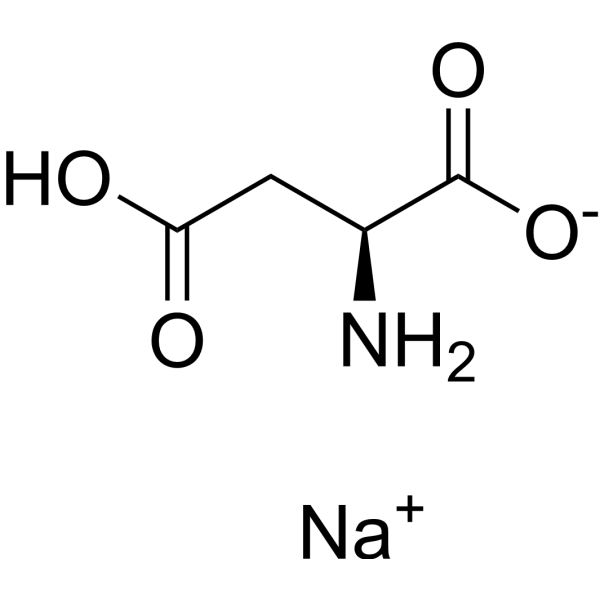
L-Aspartic acid sodium (Sodium L-aspartate) is a NMDA receptor agonist and acidic amino acid. L-Aspartic acid sodium has no independent analgesic activity. L-Aspartic acid sodium can antagonize the analgesic effects of D-Aspartic acid and Morphine. L-Aspartic acid sodium regulates polymorph transformation, crystal growth/aggregation and nucleation processes of calcium carbonate, and can serve as a biomineralization template. L-Aspartic acid sodium promotes burst firing of central neurons. L-Aspartic acid sodium can be used in studies related to cerebral ischemia and epilepsy .
loading...
    loading...
5
5 Cited Publications
Art. -Nr.: HY-N0666D
CAS. Nr.: 5598-53-8
Synonyms: Disodium L-aspartate
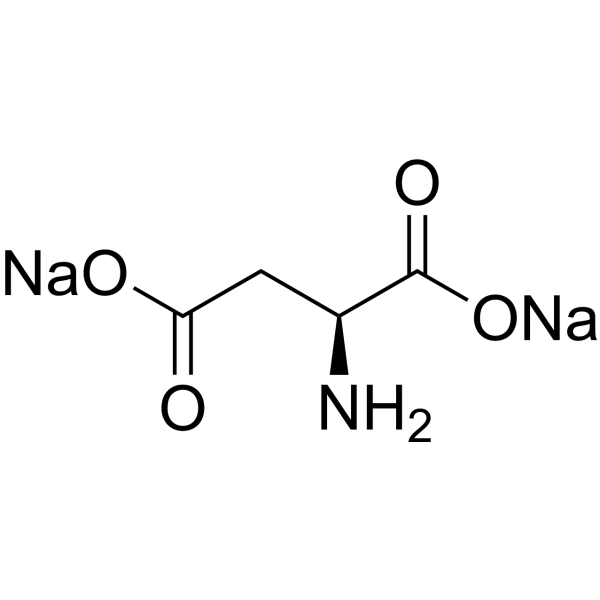
L-Aspartic acid disodium (disodium L-aspartate) is a NMDA receptor agonist and acidic amino acid. L-Aspartic acid disodium has no independent analgesic activity. L-Aspartic acid disodium can antagonize the analgesic effects of D-Aspartic acid and Morphine. L-Aspartic acid disodium regulates polymorph transformation, crystal growth/aggregation and nucleation processes of calcium carbonate, and can serve as a biomineralization template. L-Aspartic acid disodium promotes burst firing of central neurons. L-Aspartic acid disodium can be used in studies related to cerebral ischemia and epilepsy .
loading...
    loading...
5
5 Cited Publications
Art. -Nr.: HY-B0321
CAS. Nr.: 1508-75-4
Synonyms: Ro 1-7683
Target:  

mAChR

Forschungsgebiete:  

Neurological Disease

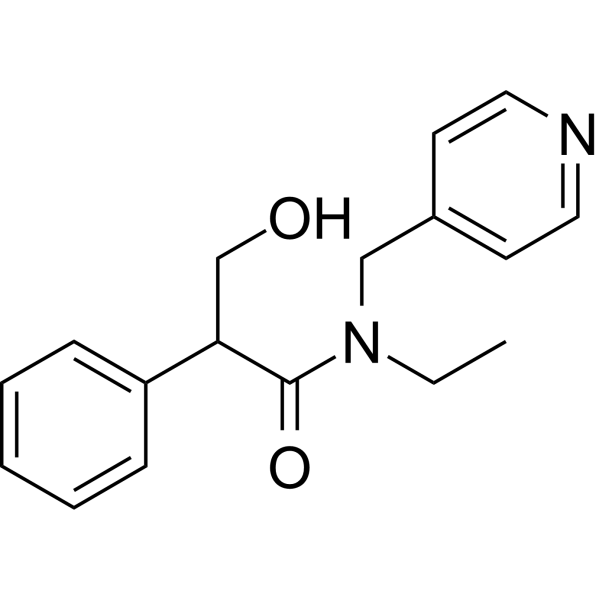
Tropicamide (Ro 1-7683) is a selective M4 muscarinic acetylcholine receptor antagonist. When used as an eye drop, Tropicamide causes short-term mydriasis (pupil dilation) and cycloplegia. Tropicamide can be used in the research of neurological diseases, such as epilepsy .
loading...
    loading...
4
4 Cited Publications
Art. -Nr.: HY-W015309
CAS. Nr.: 334-48-5
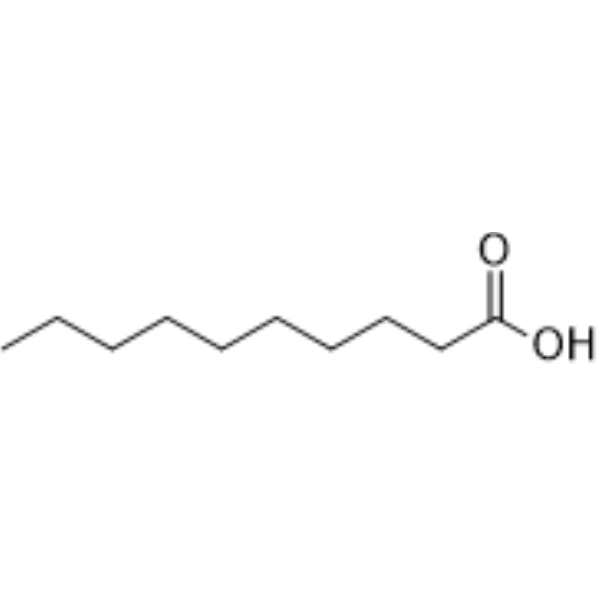
Decanoic acid is a key component of the medium-chain triglyceride (MCT) found in coconut oil. Decanoic acid is a brain-penetrant and non-competitive inhibitor of AMPA receptor showing antiseizure activity in rats. Decanoic acid reduces tyrosinase activity and inhibits melanosome maturation. Decanoic acid suppresses the phosphorylation of c-Met and induced apoptosis in hepatocellular carcinoma (HCC) cells by inhibiting the expression of various oncogenic proteins, which is promising for research in the field of mTORC1 signaling, HCC and epilepsy .
loading...
    loading...
4
4 Cited Publications
Art. -Nr.: HY-101985
CAS. Nr.: 292870-53-2
Reinheit:  99.75%
BV02 is a 14-3-3 inhibitor and an antibacterial agent. BV02 enhances the cleavage of PARP and caspase-3. BV02 induces Apoptosis, Autophagy, and enhances Akt activation. BV02 has anti-B. melitensis infection and epilepsy-promoting effects. BV02 can also be used in colitis research.
loading...
    loading...
4
4 Cited Publications
Art. -Nr.: HY-B1752
CAS. Nr.: 80373-22-4
Synonyms: LY 171555; (-)-LY 141865
Quinpirole (LY 171555; (-)-LY 141865) is a D2/D3 dopamine receptor agonist and a CaV1.3 calcium channel modulator. Quinpirole normalizes dendritic spine density in dopamine-depleted striatum, upregulates the protein expression of BCL2 and GluR2, downregulates the protein expression of BAX, and delays the onset of seizures. Quinpirole enhances learning and memory, inhibits neuronal apoptosis (apoptosis), and induces anxiety-like, stereotyped, and compulsive behaviors. Quinpirole disrupts prepulse inhibition in rhesus monkeys, enhances the activity of paraventricular thalamic neurons to promote recovery from Isoflurane anesthesia, and alters the composition of the gut microbiota in rats. Quinpirole can be used in research related to dyskinesia, pain, epilepsy, and neurological disorders including anxiety disorder, obsessive-compulsive disorder, and schizophrenia .
loading...
    loading...
3
3 Cited Publications
Art. -Nr.: HY-B0419
CAS. Nr.: 89226-50-6
Manidipine is an orally active calcium channel antagonist. Manidipine regulates the expression of cytokines (IL-1β, IL-6). Manidipine has a hypotensive effect. Manidipine can be used in the study of cardiovascular diseases (such as hypertension, myocardial ischemia-reperfusion injury, ventricular hypertrophy), kidney diseases (such as glomerular diseases), and epilepsy .
loading...
    loading...
3
3 Cited Publications
Art. -Nr.: HY-107515
CAS. Nr.: 198419-91-9
Reinheit:  ≥99.0%
Target:  

mGluR

Forschungsgebiete:  

Neurological Disease

LY367385 is a highly selective and potent mGluR1a antagonist. LY367385 has an IC50 of 8.8 μM for inhibiting of quisqualate-induced phosphoinositide (PI) hydrolysis, compared with >100 μM for mGlu5a. LY367385 has neuroprotective, anticonvulsant and antiepileptic effects .
loading...
    loading...
3
3 Cited Publications
Art. -Nr.: HY-107515A
CAS. Nr.: 2829282-00-8
Reinheit:  99.47%
Target:  

mGluR

Forschungsgebiete:  

Neurological Disease

LY367385 hydrochloride is a highly selective and potent mGluR1a antagonist. LY367385 hydrochloride has an IC50 of 8.8 μM for inhibiting of quisqualate-induced phosphoinositide (PI) hydrolysis, compared with >100 μM for mGlu5a. LY367385 hydrochloride has neuroprotective, anticonvulsant and antiepileptic effects .
loading...
    loading...
3
3 Cited Publications
Art. -Nr.: HY-33549
CAS. Nr.: 658-48-0
Target:  

Tyrosine Hydroxylase

Forschungsgebiete:  

Neurological Disease Cancer

α-Methyl-p-tyrosine is a competitive inhibitor of tyrosine hydroxylase, which converts tyrosine into DOPA. α-Methyl-p-tyrosine is also an orally active inhibitor of catecholamine synthesis, inhibiting the hydroxylation of tyrosine into DOPA. α-Methyl-p-tyrosine can be used in research related to epilepsy, glaucoma, cancer, and other related diseases .
loading...
    loading...

