

1. Search Result
Search Result
Results for "

livers

" in MedChemExpress (MCE) Product Catalog:

2673

Inhibitors & Agonists

17

Screening Libraries

31

Fluorescent Dyes

87

Biochemical Assay Reagents

87

Peptides

7

MCE Kits

27

Inhibitory Antibodies

625

Natural
Products

170

Isotope-Labeled Compounds

6

Click Chemistry

79

Oligonucleotides

Cat. No. Product Name Target Research Areas Chemical Structure
  • HY-42682
    D(+)-Galactosamine hydrochloride
    3 Publications Verification

    D-Galactosamine HCl

    Drug Derivative Inflammation/Immunology
    D(+)-Galactosamine (D-Galactosamine) hydrochloride, which is an established experimental toxin, primarily causes liver injury by the generation of free radicals and depletion of UTP nucleotides. D(+)-Galactosamine hydrochloride intoxication also induces renal dysfunction thus, renal failure is often associated with the end-stage of the liver damage. Lipopolysaccharide/D(+)-Galactosamine-induced acute liver injury is a known animal model of fulminant hepatic failure .
    D(+)-Galactosamine hydrochloride
  • HY-152860

    HRX-0215

    p38 MAPK JNK NF-κB MDM-2/p53 Cancer
    Darizmetinib (HRX-0215) is an orally active, potent and selective inhibitor of mitogen-activated protein kinase kinase 4 (MKK4). Darizmetinib leads to enhancement of the MKK7 and JNK1 signaling pathways, thereby activating the transcription factors ATF2 and ELK1, promoting cell proliferation and liver regeneration. Darizmetinib is promising for research of preventing liver failure after extensive oncological liver resections or transplantation of small liver grafts .
    Darizmetinib
  • HY-124899
    Hh-Ag1.5
    1 Publications Verification

    SAg1.5

    Hedgehog Metabolic Disease
    Hh-Ag1.5 (SAg1.5) is a potent Hedgehog (Hh) agonist with an EC50 of 1 nM . Hh-Ag1.5 mediated reprogramming breaks the quiescence of noninjured liver stem cells for rescuing liver failure .
    Hh-Ag1.5
  • HY-126306

    Glycosidase Others
    Deoxyfuconojirimycin hydrochloride is a highly specific α-L-fucosidase inhibitor, with a Ki value of 10 nM against human liver lysosomal α-L-fucosidase and a Ki value of 140 nM against Charonia lampas α-L-fucosidase. Deoxyfuconojirimycin hydrochloride completely inhibits the activity of all soluble α-L-fucosidases in human liver, including multiple post-translationally generated enzyme forms. Deoxyfuconojirimycin hydrochloride exhibits no anti-human immunodeficiency virus activity .
    Deoxyfuconojirimycin hydrochloride
  • HY-10327

    TGF-β Receptor Metabolic Disease
    GW-6604 is an ALK5 inhibitor with an IC50 value of 140 nM for inhibiting its autophosphorylation, and can be used in the study of liver fibrosis .
    GW-6604
  • HY-D0075

    Fluorescent Dye Others
    DHPDS disodium salt is a pH-sensitive fluorescent dye. DHPDS disodium salt is used to measure intracellular pH (pHi) from the surface fluorescence of the isolated perfused rat liver .
    DHPDS disodium salt
  • HY-145801
    XT2
    2 Publications Verification

    NF-κB Inflammation/Immunology
    XT2 is a potent, orally active, and selective inhibitor of NF-κB-inducing kinase (NIK) with an IC50 of 9.1 nM. XT2 suppresses CCl4-induced upregulation of ALT, a key biomarker of acute liver injury. XT2 also decreases immune cell infiltration into the injured liver tissue. XT2 has the potential for the research of liver inflammatory diseases . XT2 is a click chemistry reagent, it contains an Alkyne group and can undergo copper-catalyzed azide-alkyne cycloaddition (CuAAc) with molecules containing Azide groups.
    XT2
  • HY-N7390

    Endogenous Metabolite Metabolic Disease
    Cholesterol glucuronide is an endogenous metabolite of lipid generated in the liver by UDP glucuonyltransferase .
    Cholesterol glucuronide
  • HY-16718

    PF-00251802

    Glucocorticoid Receptor Cytochrome P450 Inflammation/Immunology Endocrinology
    Dagrocorat (PF-00251802) is an orally active and selective high-affinity partial agonist of the glucocorticoid receptor. Dagrocorat is also a time-dependent reversible inhibitor of CYP3A (IC50=1.3 μM in human liver microsomes) and CYP2D6 (Ki=0.57 μM in human liver microsomes). Dagrocorat can be used for the research of rheumatoid arthritis .
    Dagrocorat
  • HY-N4031

    Anaplastic lymphoma kinase (ALK) METTL3 Inflammation/Immunology
    Humantenine is a highly toxic indole alkaloid from Gelsemium elegans (Gardn. & Champ.) Benth. that binds to RNA m6A modification regulatory proteins (ALKBH5, METTL). Humantenine stably binds via hydrogen bonding and hydrophobic interactions and disrupts the m6A methylation level of target genes, thereby impairing the expression of intestinal epithelial cell tight junction and cytoskeleton-related genes, causing intestinal barrier dysfunction and significant intestinal cytotoxicity. The intraperitoneal injection LD50 values of Humantenine are <1 mg/kg in mice, 1.2 mg/kg in male rats and 1.5 mg/kg in female rats, respectively. Species differences exist in the metabolism of Humantenine in human, porcine, goat and rat liver microsomes, and demethylation, dehydrogenation and oxidation occur in liver microsomes .
    Humantenine
  • HY-W414823

    LXR HMG-CoA Reductase (HMGCR) Metabolic Disease
    24,25-Epoxycholesterol is an oxysterol agonist of the liver X receptor that can inhibit the activity of 3-hydroxy-3-methylglutaryl-CoA reductase (HMG-CoA reductase) in liver cells. 24,25-Epoxycholesterol regulates cholesterol metabolism in the liver .
    24,25-Epoxycholesterol
  • HY-P2985A

    Endogenous Metabolite Inflammation/Immunology
    Alanine aminotransferase, human liver is an enzyme mainly produced in the liver. It is a pyridoxalase that catalyzes the reversible interconversion of L-alanine and 2-oxoglutamate to pyruvate and L-glutamate. Alanine aminotransferase, human liver is elevated in active anti-HMGCR myopathy. Alanine aminotransferase, human liver can be used in studies related to immune-mediated necrotizing myopathy and non-alcoholic fatty liver disease .
    Alanine aminotransferase, Human liver
  • HY-N7541

    Others Inflammation/Immunology
    Antrodin A is one of the main active ingredients in the solid-state fermented A. camphorate mycelium. Antrodin A protects the liver from alcohol damage by improving the antioxidant and anti-inflammatory capacity of the liver and maintaining the stability of the intestinal flora .
    Antrodin A
  • HY-141749A

    CLPM; SR 26334

    Endogenous Metabolite Metabolic Disease
    Clopidogrel carboxylic acid (CLPM) is the inactive liver metabolite of anti platelet agent, Clopidogrel (HY-15283), in human serum .
    Clopidogrel carboxylic acid
  • HY-108571

    PPAR Cardiovascular Disease Metabolic Disease
    CP-775146 is a selective PPARα agonist (Ki of 24.5 nM) that binds strongly to the PPARα ligand. CP-775146 has no observable affinity for PPARβ and PPARγ.CP-775146 shows hypolipidemic activity. CP-775146 efficiently alleviates obesity-induced liver damage, prevents lipid accumulation by activating the liver fatty acid β-oxidation pathway .
    CP-775146
  • HY-133860

    Drug Derivative Others
    Chrysoobtusin is an anthraquinone derivative isolated from Semen Cassiae. Semen Cassiae has long been used to protect liver, brighten eyes, and relieve constipation .
    Chrysoobtusin
  • HY-119669

    Bacterial Others
    Furylfuramide is a food preservative that exhibits mutagenic activity. Furylfuramide can be degraded through the aerobic metabolism by liver microsomes .
    Furylfuramide
  • HY-169004

    TGF-beta/Smad Interleukin Related Neurological Disease Inflammation/Immunology
    CBT-295 is an orally active autotaxin (ATX) inhibitor. CBT-295 exhibits a significant reduction in inflammatory cytokines like TGF-β, TNF-α and IL-6 levels, also reduced bile duct proliferation marker CK-19 and lowered liver fibrosis. The reversal of liver fibrosis with CBT-295 led to a reduction in blood and brain ammonia levels. CBT-295 also reduced neuroinflammation induced by ammonia. CBT-295 is promising for research of liver cirrhosis and associated encephalopathy .
    CBT-295
  • HY-N16751

    Others Metabolic Disease
    Notoginsenoside D is a dammarane-type triterpene oligoglycoside. Notoginsenoside D can be isolated from the dried roots of Panax notoginseng (BURK.) F. H. CHEN. Notoginsenoside D can be used in the research of liver injury .
    Notoginsenoside D
  • HY-42682R

    D-Galactosamine HCl (Standard)

    Reference Standards Inflammation/Immunology
    D(+)-Galactosamine (hydrochloride) (Standard) is the analytical standard of D(+)-Galactosamine (hydrochloride). This product is intended for research and analytical applications. D(+)-Galactosamine (D-Galactosamine) hydrochloride, which is an established experimental toxin, primarily causes liver injury by the generation of free radicals and depletion of UTP nucleotides. D(+)-Galactosamine hydrochloride intoxication also induces renal dysfunction thus, renal failure is often associated with the end-stage of the liver damage. Lipopolysaccharide/D(+)-Galactosamine-induced acute liver injury is a known animal model of fulminant hepatic failure .
    D(+)-Galactosamine hydrochloride (Standard)
  • HY-173235

    Galectin Cardiovascular Disease Inflammation/Immunology Cancer
    Galectin-3-IN-6 is a human and murine galectin-3 (Gal-3) inhibitor, with an IC50 of 12 nM against human galectin-3, an IC50 of 12.6 nM against mutant murine galectin-3 (V160A), and a Kd of 13 nM for human galectin-3, as well as oral bioavailability. Galectin-3-IN-6 reduces the levels of liver fibrosis markers type I collagen and α-smooth muscle actin in mouse models of acute liver injury and fibrosis. Galectin-3-IN-6 can be used for the research of acute liver injury and fibrosis .
    Galectin-3-IN-6
  • HY-143259

    LXR Cancer
    BE1218 is a liver X receptor (LXR) inverse agonist with IC50 values of 9 nM and 7 nM against LXRα and LXRβ, respectively .
    BE1218
  • HY-180450

    Biochemical Assay Reagents Cancer
    Gadoxetate disodium is a liver-specific magnetic resonance imaging (MRI) contrast agent, can be used for detecting and identifying liver tumors .
    Caloxetate trisodium
  • HY-134221

    Adrenergic Receptor Reactive Oxygen Species (ROS) Cardiovascular Disease
    S-Nitroso-N-acetylcysteine is a nitric oxide donor. S-Nitroso-N-acetylcysteine has a tissue vascular dilation effect, which can enhance liver microcirculation and effectively prevent ischemia-reperfusion injury in fatty liver. S-Nitroso-N-acetylcysteine can reduce liver fibrosis in rats with cirrhosis .
    S-Nitroso-N-acetylcysteine
  • HY-135739

    Cytochrome P450 Cardiovascular Disease Metabolic Disease
    Benzobarbital is an active low-toxicity inductor of the liver monooxygenase system. Benzobarbital raises cytochrome P-450 concentration. Benzobarbital can be used in the research of post-ischemic liver disease .
    Benzobarbital
  • HY-45131

    Drug Intermediate Metabolic Disease
    Cholesterol absorption inhibitor 1 (compound 21) is a cholesterol absorption inhibitor that reduces liver cholesteryl ester .
    Cholesterol absorption inhibitor 1
  • HY-123899

    HIV Others
    Cleomiscosin B, a coumarinolignoid, is could isloted from the seeds of Hyoscyamus niger. Cleomiscosin B has potent liver protective .
    Cleomiscosin B
  • HY-138942

    Acyltransferase Metabolic Disease Inflammation/Immunology
    PF-06427878 is an orally active, selective liver-targeted diacylglycerol acyltransferase 2 (DGAT2) inhibitor with IC50s of 99 nM and 202 nM for human and rat DGAT2, respectively. PF-06427878 shows greater than 470-fold selectivity for DGAT2 over DGAT1, MGAT1, MGAT2 and MGAT3. PF-06427878 can improve liver steatosis and function. PF-06427878 can be used for the study of nonalcoholic fatty liver diseases .
    PF-06427878
  • HY-N9515

    Apoptosis Reactive Oxygen Species (ROS) Neurological Disease Metabolic Disease
    Diallyl tetrasulfide is an orally active diallyl tetrasulfide. Diallyl tetrasulfide ameliorates cadmium-induced changes in acetylcholinesterase and adenosine triphosphatase activities as well as oxidative stress injury in the brain of rats . Diallyl tetrasulfide inhibits lipid peroxidation in rat liver microsomes . Diallyl tetrasulfide ameliorates cadmium-induced oxidative liver injury in rats . Diallyl tetrasulfide protects cells against cadmium-induced loss of cell viability, reduces apoptosis rate and ROS production. Diallyl tetrasulfide is applicable to research related to cadmium-induced neurotoxicity and cadmium-induced oxidative liver injury .
    Diallyl tetrasulfide
  • HY-16718A

    PF-00251802 hydrochloride

    Glucocorticoid Receptor Cytochrome P450 Inflammation/Immunology Endocrinology
    Dagrocorat (PF-00251802) hydrochloride is an orally active and selective high-affinity partial agonist of the glucocorticoid receptor. Dagrocorat hydrochloride is also a time-dependent reversible inhibitor of CYP3A (IC50=1.3 μM in human liver microsomes) and CYP2D6 (Ki=0.57 μM in human liver microsomes). Dagrocorat hydrochloride can be used for the research of rheumatoid arthritis .
    Dagrocorat hydrochloride
  • HY-127166

    O10-Demethylcolchicine

    Microtubule/Tubulin Inflammation/Immunology
    Colchiceine is one of several metabolites of the anti-gout medication Colchicine (HY-16569). Colchicine is a tubulin inhibitor and a microtubule disrupting agent, and may protect rats from developing liver injury and fibrosis .
    Colchiceine
  • HY-D3000

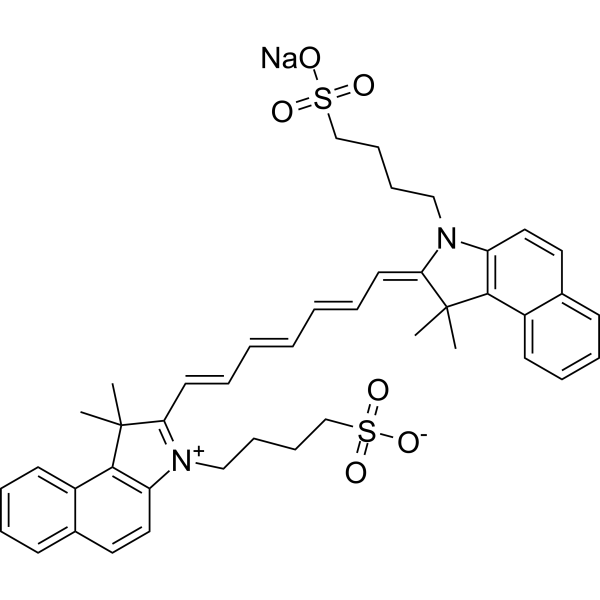
    Fluorescent Dye Metabolic Disease
    NIR-RED ROS-H2O2 Probe is a near-infrared fluorescent probe used for detecting hydrogen peroxide (H₂O₂) and featuring dual-modal fluorescence/photoacoustic imaging capabilities. NIR-RED ROS-H2O2 Probe successfully detects the upregulated fluorescence signal of H₂O₂ in HepG2 cells and a mouse liver injury model. NIR-RED ROS-H2O2 Probe can be used as a biomarker detection tool for drug-induced liver injury (DILI) .
    NIR-RED ROS-H2O2 Probe
  • HY-139607

    Monoamine Oxidase Inflammation/Immunology
    SSAO inhibitor-1 is a semicarbazide-sensitive amine oxidase (SSAO) inhibitor. SSAO inhibitor-1 has anti-inflammatory activity and can be used for liver diseases research .
    SSAO inhibitor-1
  • HY-101473A

    Integrin Cancer
    EMD527040 (hydrochloride) is a highly potent and selective αvβ6 antagonist with anti-fibrotic activity. EMD527040 (hydrochloride) is used in the research of liver cancer and liver fibrosis .
    EMD527040 hydrochloride
  • HY-157650

    17β-HSD Metabolic Disease
    HSD17B13-IN-38 (Compound 18.02) is an inhibitor of hydroxysteroid 17β-dehydrogenase 13 (HSD17B13). HSD17B13-IN-38 can be used in the research of liver diseases such as hepatitis, liver fibrosis, liver cirrhosis, and hepatocellular carcinoma .
    HSD17B13-IN-20
  • HY-157653

    17β-HSD Metabolic Disease
    HSD17B13-IN-22 (Compound 18.03) is an inhibitor of hydroxysteroid 17β-dehydrogenase 13 (HSD17B13). HSD17B13-IN-22 can be used in the research of liver diseases such as hepatitis, liver fibrosis, liver cirrhosis, and hepatocellular carcinoma .
    HSD17B13-IN-22
  • HY-157654

    17β-HSD Metabolic Disease
    HSD17B13-IN-26 (Compound 18.04) is an inhibitor of hydroxysteroid 17β-dehydrogenase 13 (HSD17B13). HSD17B13-IN-26 can be used in the research of liver diseases such as hepatitis, liver fibrosis, liver cirrhosis, and hepatocellular carcinoma .
    HSD17B13-IN-26
  • HY-160064

    DNA Alkylator/Crosslinker Cancer
    SW1-A aptamer sodium is an optimized aptamer based on SW1 aptamer (HY-160063) that specifically targets liver cancer SMMC-7721 cells (Kd: 133.73 nM). SW1-A aptamer maintains strong affinity to liver cancer tissues and cells .
    SW1-A aptamer sodium
  • HY-168332

    FXR Metabolic Disease
    FXR agonist 11 (Compound 14) is an FXR agonist with an EC50 of 1.2 μM and a maximum effect of 73.7%. FXR agonist 11 can significantly increase GSH levels in the liver and is used to study drug-induced liver injury diseases .
    FXR agonist 11
  • HY-W587771

    MECPTP

    Drug Metabolite Metabolic Disease
    Mono-2-ethyl-5-carboxypentyl terephthalate (MECPTP) is a major metabolite of Di-2-ethylhexyl terephthalate (DEHTP). Mono-2-ethyl-5-carboxypentyl terephthalate is promising for research of metabolic liver diseases, such as nonalcoholic fatty liver disease (NAFLD) .
    Mono-2-ethyl-5-carboxypentyl terephthalate
  • HY-D3008

    Phosphatase Fluorescent Dye Metabolic Disease
    ALP Green (Probe 4) is an amphiphilic ALP fluorescent probe (Em = 550 nm). ALP Green can be used in the research of APAP (HY-66005)-induced liver injury .
    ALP Green
  • HY-172087

    VD/VDR Inflammation/Immunology
    VDR agonist 3 (Compound E15) is a potent vitamin D receptor (VDR) agonist. VDR agonist 3 can effectively inhibit HSC activation through VDR. VDR agonist 3 significantly reduces liver fibrosis without causing hypercalcemia in a CCl4-induced mouse liver fibrosis model .
    VDR agonist 3
  • HY-162220

    Estrogen Receptor/ERR 17β-HSD Metabolic Disease
    HSD17B13-IN-94 (Compound 12) is an effective inhibitor of hydroxysteroid 17β-dehydrogenase 13 (HSD17B13) with an IC50 value of ≤ 0.1 μM for Estradiol (HY-B0141). HSD17B13-IN-94 can be used for research on liver diseases, metabolic diseases, or cardiovascular diseases, such as NAFLD, NASH, or drug-induced liver injury (DILI) .
    HSD17B13-IN-94
  • HY-149835

    Fluorescent Dye Others
    TTX-P is a fluorescent probe. TTX-P responds in situ to the overexpressed alkaline phosphatase (ALP) in liver, imaging of diabetic liver injury in the near-infrared second-window (NIR-II) region .
    TTX-P
  • HY-122916

    Others Metabolic Disease Inflammation/Immunology
    7-Acetyllycopsamine, a pyrrolizidine alkaloid, is a mild hepatotoxin. 7-Acetyllycopsamine can induce liver inflammation in mice .
    7-Acetyllycopsamine
  • HY-162378

    HDAC Inflammation/Immunology
    LT-630 is a HDAC6 inhibitor. LT-630 ameliorates liver injury by reducing oxidative damage .
    LT-630
  • HY-161851

    Phosphodiesterase (PDE) Metabolic Disease
    MDL3 is a novel inhibitor of PDE4B and PDE5A. MDL3 against liver injury and inflammation and inhibits the pathological remodeling of adipose tissue .
    MDL3
  • HY-19586

    A 81-3138; HWA-138

    Phosphodiesterase (PDE) Endocrinology
    Albifylline (A 81-3138; HWA-138) is a Xanthine (HY-W017389) derivate. Albifylline reduces the shock-induced leukocyte adhesions to the sinusoidal endothelium in the liver after hemorrhagic shock and improves microvascular blood flow in the liver .
    Albifylline
  • HY-174253

    17β-HSD Metabolic Disease
    HSD17B13-IN-105 (Compound EX.87) is a selective 17β-hydroxysteroid dehydrogenase 13 (17BHSD13) inhibitor with an IC50 value of 0.036 μM, showing high selectivity over 17BHSD4 (with an IC50 value of 31.5 μM). HSD17B13-IN-105 is promising for research of liver diseases such as non-alcoholic fatty liver disease (NAFLD) and non-alcoholic steatohepatitis (NASH) .
    HSD17B13-IN-105
  • HY-N12069

    Others Inflammation/Immunology
    Praeroside IV can be isolated from the roots of Angelica furcijuga. Praeroside IV can be used for research of D-GalN/LPS-induced liver injury .
    Praeroside IV

Inquiry Online

Your information is safe with us. * Required Fields.

Salutation


Country or Region *

Applicant Name *


Organization Name *

Department *


Email Address *


Product Name *

Cat. No.


Requested quantity *

Phone Number *


Remarks

Inquiry Online

Inquiry Information

Product Name:
Cat. No.:
Quantity:
MCE Japan Authorized Agent:

