7 Results for "

long-chain fatty acid formation

" in MedChemExpress (MCE) Product Catalog:
Products (7)

7 Results for "long-chain fatty acid formation" in MCE Product Catalog:

Cat. No.: HY-148009
CAS No.: 2260669-35-8
Synonyms: 16:0-18:1 Cardiolipin sodium
Research Areas:  

Others

Cardiolipin (16:0/18:1/16:0/18:1) (16:0-18:1 Cardiolipin) sodium is a di-saturated mitochondrial-specific anionic phospholipid sodium salt containing the long-chain fatty acid palmitic acid (HY-N0830) and the monounsaturated fatty acid oleic acid (HY-N1446). Cardiolipin (16:0/18:1/16:0/18:1) sodium undergoes in-source fragmentation via diglyceride (DG)-H2O fragment formation and (DG-H2O) fragment loss pathways. Cardiolipin (16:0/18:1/16:0/18:1) sodium can be used in the synthesis of lipid nanodiscs for application in in situ mass spectrometry .
loading...
    loading...
Cat. No.: HY-113353
CAS No.: 583-08-4
Purity:  99.93%
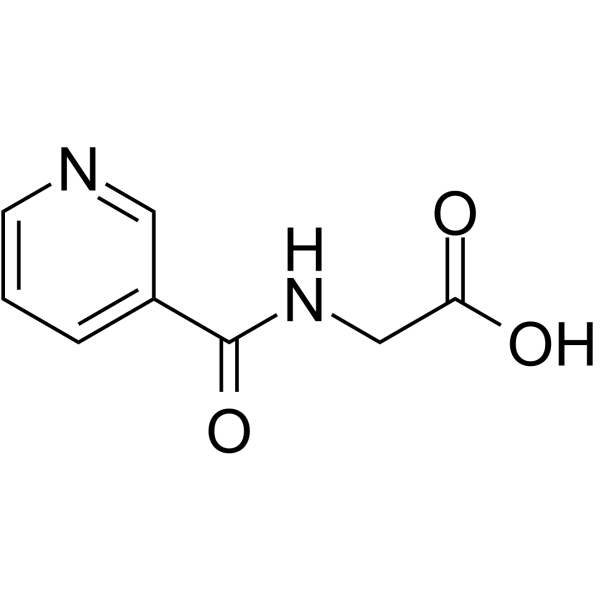
Nicotinuric acid is an acylglycine and the major catabolite of nicotinic acid (HY-B0143). Its urinary levels correlate with body mass index, blood pressure, blood lipid parameters, and high-sensitivity C-reactive protein. Nicotinuric acid participates in coenzyme-related activities including glycolysis, gluconeogenesis, the citric acid cycle, oxidation, and long-chain fatty acid synthesis in various tissues. Nicotinuric acid is associated with the progression of metabolic syndrome to diabetes and atherosclerotic cardiovascular disease [1]
loading...
    loading...
Cat. No.: HY-107396
CAS No.: 138046-43-2
Purity:  99.95%
Target:  

Acyltransferase

Research Areas:  

Cardiovascular Disease

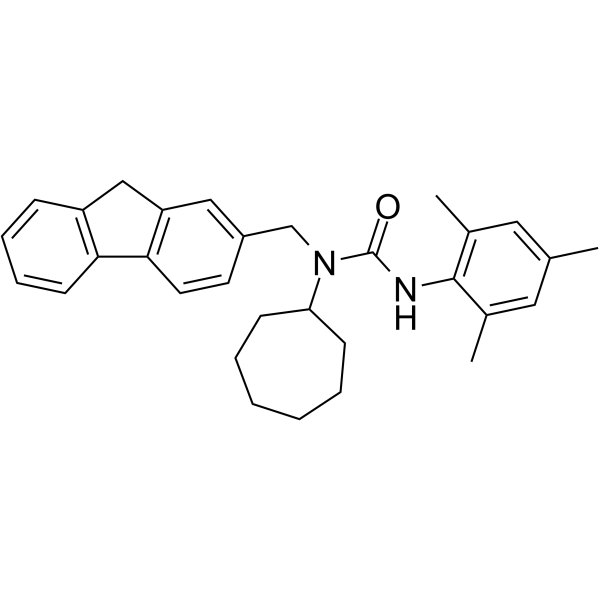
YM-750 is a potent acyl-CoA:cholesterol acyltransferase (ACAT) inhibitor (IC50=0.18 μM). ACAT catalyzes the formation of cholesteryl esters from cholesterol and long-chain fatty-acyl-coenzyme A .
loading...
    loading...
Cat. No.: HY-113353S
CAS No.: 1216737-36-8
Purity:  99.07%
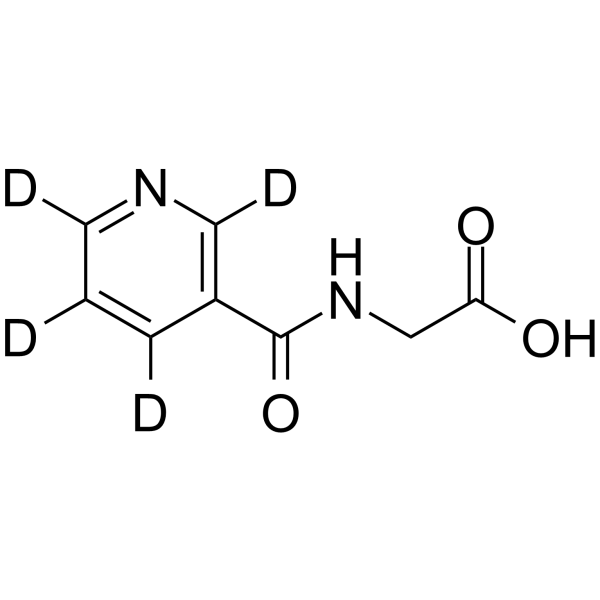
Nicotinuric acid-d4 is the 4-labeled Nicotinuric acid (HY-113353). Nicotinuric acid is an acylglycine and the major catabolite of nicotinic acid (HY-B0143). Its urinary levels correlate with body mass index, blood pressure, blood lipid parameters, and high-sensitivity C-reactive protein. Nicotinuric acid participates in coenzyme-related activities including glycolysis, gluconeogenesis, the citric acid cycle, oxidation, and long-chain fatty acid synthesis in various tissues. Nicotinuric acid is associated with the progression of metabolic syndrome to diabetes and atherosclerotic cardiovascular disease [1]
loading...
    loading...
Cat. No.: HY-113353R
CAS No.: 583-08-4
Nicotinuric acid (Standard) is the analytical standard of Nicotinuric acid (HY-113353). This product is intended for research and analytical applications. Nicotinuric acid is an acylglycine and the major catabolite of nicotinic acid (HY-B0143). Its urinary levels correlate with body mass index, blood pressure, blood lipid parameters, and high-sensitivity C-reactive protein. Nicotinuric acid participates in coenzyme-related activities including glycolysis, gluconeogenesis, the citric acid cycle, oxidation, and long-chain fatty acid synthesis in various tissues. Nicotinuric acid is associated with the progression of metabolic syndrome to diabetes and atherosclerotic cardiovascular disease [1]
loading...
    loading...
Cat. No.: HY-W127487
CAS No.: 479050-96-9
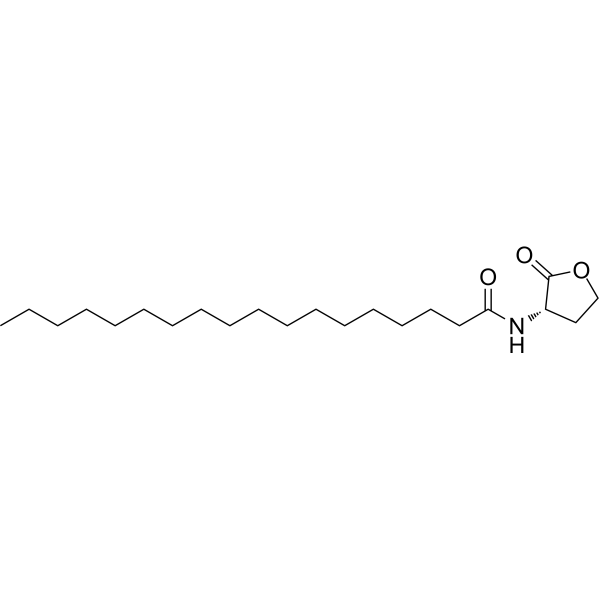
Quorum sensing is a regulatory system used by bacteria to control gene expression in response to increased cell density. This regulatory process manifests itself in a variety of phenotypes, including biofilm formation and virulence factor production. Coordinated gene expression is achieved through the production, release and detection of small diffusible signaling molecules called autoinducers. N-acylated homoserine lactones (AHLs) comprise a class of such autoinducers, each of which generally consists of a fatty acid coupled to a homoserine lactone (HSL). Modulation of bacterial quorum-sensing signaling systems to suppress pathogenesis represents a new approach to antimicrobial research for infectious diseases. AHLs differ in acyl length (C4-C18), C3 substitution (hydrogen, hydroxyl, or oxo group), and the presence or absence of one or more carbon-carbon double bonds in the fatty acid chain. These differences confer signaling specificity through the affinity of the LuxR family of transcriptional regulators. C18-HSL, one of four lipophilic long acyl side chain AHLs produced by the LuxI AHL synthase homolog SinI, is involved in quorum-sensing signaling in strains of Rhizobium meliloti (a nitrogen-fixing bacterial symbiont of the legume M. sativa) . C18-HSL and other hydrophobic AHLs tend to localize in the relatively lipophilic environment of bacterial cells and cannot diffuse freely across the cell membrane. Long-chain N-acyl homoserine lactones can be exported from cells by efflux pumps, or can be transported between communicating cells by extracellular outer membrane vesicles.
loading...
    loading...
Cat. No.: HY-107396R
CAS No.: 138046-43-2
YM-750 (Standard) is the analytical standard of YM-750 (HY-107396). This product is intended for research and analytical applications. YM-750 is a potent acyl-CoA:cholesterol acyltransferase (ACAT) inhibitor (IC50=0.18 μM). ACAT catalyzes the formation of cholesteryl esters from cholesterol and long-chain fatty-acyl-coenzyme A .
loading...
    loading...

