

1. Search Result
Search Result
Results for "

microorganisms

" in MedChemExpress (MCE) Product Catalog:

422

Inhibitors & Agonists

11

Screening Libraries

190

Fluorescent Dye

30

Biochemical Assay Reagents

14

Peptides

67

Natural
Products

21

Isotope-Labeled Compounds

9

Click Chemistry

4

Oligonucleotides

Cat. No. Product Name Target Research Areas Chemical Structure
  • HY-Y0882
    Hydroxylamine hydrochloride
    1 Publications Verification

    Monoamine Oxidase Cardiovascular Disease
    Hydroxylamine hydrochloride is a selective Monoamine oxidase (MAO) inhibitor used for inhibiting of platelet aggregation. Hydroxylamine hydrochloride is an intermediate of nitrogen cycle in aerobic ammonium oxidizers microorganisms, such as ammonium oxidizing bacteria (AOB), ammonium oxidizing archaea (AOA) and complete ammonium oxidizing bacteria (comammox). Hydroxylamine hydrochloride impacts NO and N2O emissions by aerobic ammonium oxidizers microorganisms and inhibits nitrite oxidizing bacteria (NOB) activity .
    Hydroxylamine hydrochloride
  • HY-P2890

    Denilite IIS

    Endogenous Metabolite Others
    Laccase, Microorganisms (Denilite IIS) is a multi-copper oxidase (MCOs), which widely exists in microorganisms, plants and fungi, and can catalyze the oxidation of one electron of various phenolic compounds. Laccase can promote the oxidative coupling of single lignin, which plays an important role in the formation and biodegradation of lignin, and also has the potential to cross-link food polymers .
    Laccase, Microorganisms
  • HY-N2325

    Endogenous Metabolite Others
    D-(+)-Cellobiose is a water-soluble disaccharide and an important intermediate product in the degradation process of cellulose and hemicellulose. D-(+)-cellobiose is used as a carbon source by microorganisms in fermentation processes, where it is converted into ethanol or other metabolic products. D-(+)-Cellobiose has significant application value in biofuel production, such as bioethanol .
    D-(+)-Cellobiose
  • HY-E70013

    endo-1,3:1,4-β-D-Glucanase

    Endogenous Metabolite Metabolic Disease
    Lichenase, Microorganism (endo-1,3:1,4-β-D-Glucanase) is a specific, endo-(1-3),(1-4)-β-D-glucan 4-glucanohydrolase. Lichenase, Microorganism solubilizes β-glucans from cereal grains and gives gluco-oligosaccharides (GOS). Lichenase, Microorganism can be used in the degradation of polysaccharides in the cell walls .
    Lichenase, Microorganism
  • HY-P2755
    Xanthine oxidase, Microorganism
    5+ Cited Publications

    XO; XOD

    Reactive Oxygen Species (ROS) Inflammation/Immunology Endocrinology
    Xanthine oxidase, Microorganism (XO) is a xanthine oxidoreductase enzyme that generates reactive oxygen species (ROS), catalyzes the oxidation of hypoxanthine to xanthine, and further catalyzes the oxidation of xanthine to uric acid .
    Xanthine oxidase, Microorganism
  • HY-126386

    EC 3.2.1.15

    Biochemical Assay Reagents Others
    Pectinase (EC 3.2.1.15) is a mixed enzymes that hydrolyze pectic substances, it mostly presents in microorganisms and higher plants. Pectinase is involved in the metabolism of the cell wall as well as in the growth of the cell, senescence, ripening of fruits, pathogenesis and abscission process .
    Pectinase, aspergillus niger
  • HY-P2979

    β-D-Fructofuranosidase

    Endogenous Metabolite Others
    Invertase, baker's yeast (S. cerevisiae) is a major enzyme present in plants and microorganisms, is often used in biochemical studies. Invertase catalyzes the hydrolysis of the disaccharide sucrose into glucose and fructose .
    Invertase, baker's yeast (S. cerevisiae)
  • HY-125863

    G6PD

    Endogenous Metabolite Metabolic Disease Cancer
    Glucose-6-phosphate dehydrogenase, Microorganism (G6PD) is the rate-limiting enzyme of the pentose phosphate pathway. Glucose-6-phosphate dehydrogenase, Microorganism is a primary source of NADPH in antioxidant pathways, nitric oxide synthase, NADPH oxidase, cytochrome p450 systems, and others. Glucose-6-phosphate dehydrogenase, Microorganism is applicable in research related to diabetes, endothelial dysfunction, cancer, and cardiomyopathy .
    Glucose-6-phosphate dehydrogenase, Microorganism
  • HY-P2917

    GyK

    Nuclear Hormone Receptor 4A/NR4A Metabolic Disease Inflammation/Immunology
    Glycerol kinase, microorganism (GyK) acts as a NR4A1 inhibitor with enzymatic activity. It directly binds to and inhibits the transcription factor NR4A1, thereby negatively regulating hepatic gluconeogenesis and reducing blood glucose levels. Glycerol kinase, microorganism positively regulates UCP1 expression via partial dependence on the β-adrenergic receptor-cAMP-CREB pathway, promotes browning of white adipose tissue and thermogenesis, and further modulates intracellular fatty acid composition and energy metabolism. In diabetic mouse models, overexpression of Glycerol kinase effectively antagonizes NR4A1-induced hyperglycemia, demonstrating potential for improving glucose homeostasis. Glycerol kinase, microorganism can be used for studies on diabetes and obesity .
    Glycerol kinase, microorganism
  • HY-W017758

    Environmental Pollutants Others
    1,3-Propanediol is produced in nature by the fermentation of glycerol in microorganism, which has orally active .
    1,3-Propanediol
  • HY-119809

    Apoptosis Endogenous Metabolite Cancer
    Violacein, a secondary metabolite produced by several microorganisms, possesses potent anticancer and low side effects. Violacein possesses antioxidant properties. Apoptosis inducer .
    Violacein
  • HY-100584

    Erythromycin Cyclocarbonate

    Bacterial Antibiotic Infection
    Davercin (Erythromycin Cyclocarbonate), derivative of Erythromycin, which is active against Gram-positive and some Gram-negative microorganisms.
    Davercin
  • HY-B1289

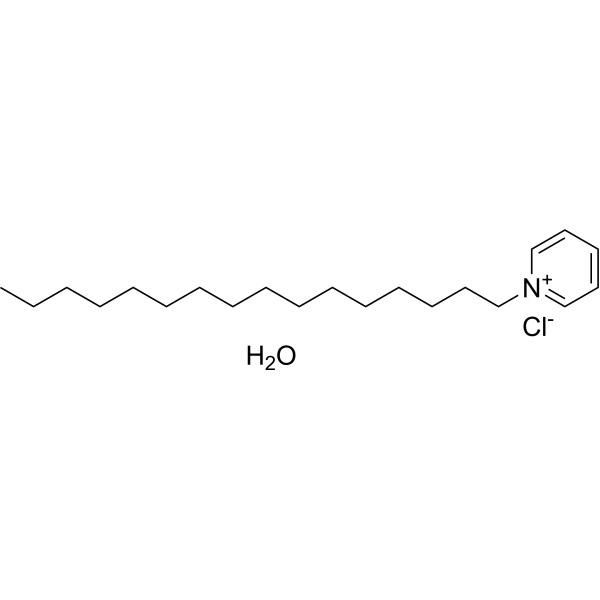
    Hexadecylpyridinium chloride monohydrate

    Bacterial Infection
    Cetylpyridinium chloride monohydrate is a cationic quaternary ammonium compound used in some types of mouthwashes, toothpastes, and throat and nasal sprays as an antiseptic that kills bacteria and other microorganisms. Effectively prevents plaque and reduces gingivitis.
    Cetylpyridinium chloride monohydrate
  • HY-P2806

    PK; Fluorokinase

    Endogenous Metabolite Metabolic Disease Cancer
    Pyruvate Kinase, Microorganism (PK) is a glycolytic enzyme that catalyzes the conversion of phosphoenolpyruvate and ADP to pyruvate and ATP .
    Pyruvate Kinase, Microorganism
  • HY-138650

    Glyceryl monocaprylate; Sefsol 318

    Environmental Pollutants Bacterial Inflammation/Immunology
    Monocaprylin (Glyceryl monocaprylate), a monoglyceride of caprylic acid, exhibits an excellent antibacterial activity. Monocaprylin inhibits a variety of foodborne pathogenic and spoilage microorganisms and has the potential for an alternative food preservative research .
    Monocaprylin
  • HY-P2921

    Uox, Microorganism

    Endogenous Metabolite Metabolic Disease Inflammation/Immunology
    Uricase, Microorganism (Uox, Microorganism) is a uricase (urate oxidase) derived from Microorganism. Uricase, Microorganism converts uric acid into allantoin. The absence of Uricase in mammals causes kidney diseases resulting from uric acid accumulation. Uricase, Microorganism can be used for research on chronic refractory gout and hyperuricemia .
    Uricase, Microorganism
  • HY-P2818C
    Alkaline phosphatase, microorganism
    1 Publications Verification

    Apase, microorganism

    Endogenous Metabolite Phosphatase Glutathione Peroxidase Bacterial Infection Inflammation/Immunology
    Alkaline Phosphatase (Apase), microorganism is an alkaline phosphatase from microorganism, and is one of the most active alkaline phosphatases. Alkaline phosphatase, microorganism is an orally active membrane-bound glycoprotein that catalyzes the hydrolysis of phosphate monoesters at alkaline pH. Alkaline phosphatase, microorganism reduces myeloperoxidase activity and bacterial translocation. Alkaline phosphatase, microorganism improves survival rate of mice infected with E. coli. Alkaline phosphatase, microorganism improves TNBS-induced colon inflammation .
    Alkaline phosphatase, microorganism
  • HY-14957

    T-3912

    Bacterial Antibiotic Infection
    Ozenoxacin is a nonfluorinated quinolone antibacterial, which shows potent activities against the main microorganisms isolated from skin and soft tissue infections.
    Ozenoxacin
  • HY-P3186

    Endogenous Metabolite Metabolic Disease
    Glucose dehydrogenase, recombinant Microorganisms is a FDA-dependent oxidoreductase. Glucose dehydrogenase (GDH) catalyzes the oxidation of β-D-glucose to β-D-glucono-1,5-lactone with simultaneous reduction of the cofactor NADP + to NADPH or, to a lesser extent, NAD + to NADH. Glucose dehydrogenase (GDH) accepts both NAD + and NADP + as cofactors and can be used for the regeneration of NADH and NADPH .
    Glucose dehydrogenase, recombinant Microorganisms
  • HY-D0016

    CTC

    Fluorescent Dye Cancer
    5-Cyano-2,3-di-(p-tolyl)tetrazolium chloride (CTC) is a redox-sensitive red fluorescent dye. 5-Cyano-2,3-di-(p-tolyl)tetrazolium chloride can be used for detecting metabolic activity in microorganisms. The emission maximum of 5-Cyano-2,3-di-(p-tolyl)tetrazolium chloride is 602 nm .
    5-Cyano-2,3-di-(p-tolyl)tetrazolium chloride
  • HY-P1629

    Bacterial Fungal Antibiotic Infection
    Temporin A is a short alpha-helical antimicrobial peptide isolated from the skin of the frog Rana temporaria. Temporin A is effective against a broad spectrum of Gram-positive bacteria. Temporin A interacts directly with the cell membrane of the microorganism and it is non-toxic to erythrocytes at concentrations that are antimicrobial. Temporin A also has antifungal activities (against yeast-like Candida albicans) .
    Temporin A
  • HY-N8060A
    Orotidine 5′-monophosphate trisodium
    1 Publications Verification

    Orotidine monophosphate trisodium; Orotidylic acid trisodium

    Endogenous Metabolite DNA/RNA Synthesis Metabolic Disease
    Orotidine 5'-monophosphate trisodium is a pyrimidine nucleotide. Orotidine 5'-monophosphate trisodium is synthesized via the de novo synthesis pathway for DNA synthesis in a large number of microorganisms including M. tuberculosis, S. cerevisiae, S. typhimurium and P. falciparum to name a few. The synthesis of orotidine 5'-monophosphate trisodium uses phosphoribosyl pyrophosphate (PRPP) and orotic acid (OA) as the substrates catalyzed by orotate phosphoribosyltransferase (OPRT) .
    Orotidine 5′-monophosphate trisodium
  • HY-P2779

    Endogenous Metabolite Metabolic Disease
    Microsomal aminopeptidase, Microorganism is first reported from C. elegans. The Microsomal aminopeptidase, Microorganism is beneficial for the development of molecular vaccines against parasitic nematodes .
    Microsomal aminopeptidase, Microorganism
  • HY-P2893B

    Creatine amidinohydrolase, microorganism

    Endogenous Metabolite Metabolic Disease
    Creatine amidinohydrolase, microorganism is a hydrolytic enzyme that catalyzes the hydrolysis of creatine into creatinine and urea, playing a crucial role in the measurement of creatinine concentration. Creatine amidinohydrolase, microorganism can be used in the development of biosensors for measuring serum creatinine levels .
    Creatinase, microorganism
  • HY-E70004

    Biochemical Assay Reagents Others
    Microbial neutral proteinase is a neutral proteinase from microorganisms and is useful for cell isolation and tissue dissociation .
    Microbial neutral proteinase
  • HY-E70517

    Histamine Receptor Others
    Histamine dehydrogenase, Microorganism (EC 1.4.99) is a homodimeric enzyme which catalyzes oxidative deamination of histamine in the presence of electron carrier .
    Histamine dehydrogenase, Microorganism
  • HY-Y0882S1

    Monoamine Oxidase Cardiovascular Disease
    Hydroxylamine-d3 (hydrochloride) is the deuterium labeled Hydroxyamine hydrochloride. Hydroxylamine hydrochloride is a selective Monoamine oxidase (MAO) inhibitor used for inhibiting of platelet aggregation. Hydroxylamine hydrochloride is an intermediate of nitrogen cycle in aerobic ammonium oxidizers microorganisms, such as ammonium oxidizing bacteria (AOB), ammonium oxidizing archaea (AOA) and complete ammonium oxidizing bacteria (comammox). Hydroxylamine hydrochloride impacts NO and N2O emissions by aerobic ammonium oxidizers microorganisms and inhibits nitrite oxidizing bacteria (NOB) activity .
    Hydroxylamine-d3 hydrochloride
  • HY-108004

    Septefril; Decametoxin

    Bacterial Fungal Infection
    Decamethoxine (Septefril) is a cationic gemini surfactant. Decamethoxine exhibits strong bactericidal and fungicidal effects. Decamethoxine modifies the permeability of the microbial cell membrane, resulting in the destruction and death of diverse microorganisms .
    Decamethoxine
  • HY-126386B

    Macerozyme R-10

    Biochemical Assay Reagents Others
    Pectinase, rhizobia is a mixed enzymes that hydrolyze pectic substances, it mostly presents in microorganisms and higher plants. Pectinase is involved in the metabolism of the cell wall as well as in the growth of the cell, senescence, ripening of fruits, pathogenesis and abscission process .
    Pectinase, rhizobia
  • HY-P2148

    Bacterial Antibiotic Infection Inflammation/Immunology
    P-113 is an antimicrobial peptide (AMP) derived from the human salivary protein histatin 5. P-113 is active against clinically important microorganisms such as Pseudomonas spp., Staphylococcus spp., and C. albicans .
    P-113
  • HY-P2800

    Endogenous Metabolite Others
    Diaphorase, Recombinant microorganisms can be obtained from anaerobic sludge organisms. Diaphorase catalyzes biotransformation of hexahydro-1,3, 5-trinitro-1,3, 5-triazine (RDX) by denitrification .
    Diaphorase, Recombinant microorganisms
  • HY-P2891

    PoxB

    Pyruvate Oxidase Others
    Pyruvate Oxidase, Microorganisms (PoxB) is a thiamine pyrophosphate-dependent oxidase that catalyzes the oxidative decarboxylation of pyruvate to acetyl phosphate, carbon dioxide and water. Pyruvate oxidase is an important enzyme in bacterial metabolism and is often used in biochemical research .
    Pyruvate Oxidase, Microorganisms
  • HY-157374

    Biochemical Assay Reagents Others
    Beef Heart Infusion is a non-selective microbial culture medium formulation. Beef Heart Infusion provides nutrients for microbial growth. Beef Heart Infusion can be used for the culture, transplantation and rejuvenation of microorganisms.
    Beef Heart Infusion
  • HY-E70519

    Monoamine Oxidase Cardiovascular Disease Neurological Disease
    Tyramine oxidase, Microorganism (EC 1.4.3.4) is a copper enzyme found in the cytoplasm of animal cells that catalyzes the oxidation of phenolic amine substrates. Tyramine oxidase, Microorganism involves in the metabolism and clearance of phenolamine compounds and has an important role in maintaining homeostasis in vivo. Tyramine oxidase, Microorganism is promising for research of hypertension, asthma, and depression .
    Tyramine oxidase, Microorganism
  • HY-132177
    α-L-Fucosidase, Microorganism
    1 Publications Verification

    EC 3.2.1.51; FUC

    Endogenous Metabolite Cancer
    α-L-Fucosidase, Microorganism (EC 3.2.1.51) is an enzyme that catalyzes the chemical reaction. Serum activity of α-L-Fucosidase, Microorganism, a lysosomal enzyme present in all mammalian cells, has been proposed as a marker of hepatocellular carcinoma (HCC) .
    α-L-Fucosidase, Microorganism
  • HY-157346A

    Biochemical Assay Reagents Infection
    LB Agar is a growth media for the cultivation of a wide variety of microorganisms .
    LB Agar
  • HY-165772

    Drug Derivative Metabolic Disease
    10-Hydroxy-12(Z)-octadecenoic acid is a hydroxy-unsaturated fatty acid that can be found in microorganisms such as lactic acid bacteria.
    10-Hydroxy-12(Z)-octadecenoic acid
  • HY-W009350

    Environmental Pollutants Bacterial Infection
    Diazolidinyl urea is a broad-spectrum preservative commonly used in cosmetics. Diazolidinyl urea exerts antibacterial effects by decomposing and releasing formaldehyde. Diazolidinyl urea is effective against most contaminating microorganisms, especially Pseudomonas .
    Diazolidinyl urea
  • HY-157344

    Biochemical Assay Reagents Others
    Nutrient Broth is an important formula Broth medium and it can be used to culture microorganisms, bacteria and other organisms .
    Nutrient Broth
  • HY-W035051

    MOFs Fluorescent Dye Infection Cancer
    TSPP tetrasodium is a photosensitizer that has shown impressive effects in in vivo regression of cancer and microorganism infections (Ex: 413 nm, Em: 640 nm) .
    TSPP tetrasodium
  • HY-157363

    Biochemical Assay Reagents Others
    Tryptone Soya Agar is a general-purpose culture medium for the isolation and cultivation of fastidious and non-fastidious microorganisms or the maintenance of stock culture.
    Tryptone Soya Agar
  • HY-P3190

    L-Arginine amidinase

    Endogenous Metabolite Metabolic Disease
    Arginase, Microorganism immobilized (L-Arginine amidinase) is an enzyme of the urea cycle. Arginase catalyzes the hydrolysis of L-arginine to L-ornithine and urea .
    Arginase, Microorganism (immobilized)
  • HY-P2323

    LfcinB (20–30) TFA

    Bacterial Inflammation/Immunology Cancer
    Lactoferricin B (4-14), bovine (TFA), a peptide corresponding to residues 4-14 of bovine lactoferrin, has antimicrobial activity against a wide range of microorganisms .
    Lactoferricin B (4-14), bovine TFA
  • HY-P3260

    CD73; 5′-NT

    Endogenous Metabolite Metabolic Disease Cancer
    5′-Nucleotidase, Microorganism (CD73) is an intrinsic membrane glycoprotein present as an ectoenzyme. 5′-Nucleotidase catalyzes hydrolysis of 5-nucleotides to their corresponding nucleosides .
    5'-Nucleotidase, Microorganism
  • HY-E70079

    CBL

    Biochemical Assay Reagents Infection
    Cystathionine β-lyase, Recombinant Microorganisms (CBL) is an enzyme that catalyzes the breakdown of cystathionine to homocysteine, the penultimate step in methionine biosynthesis. Cystathionine β-lyase is important for bacterial virulence .
    Cystathionine β-lyase, Recombinant Microorganisms
  • HY-W017758R

    Reference Standards Others Others
    1,3-Propanediol (Standard) is the analytical standard of 1,3-Propanediol. This product is intended for research and analytical applications. 1,3-Propanediol is produced in nature by the fermentation of glycerol in microorganism, which has orally active .
    1,3-Propanediol (Standard)
  • HY-P2825

    TDC; TyrDC

    Endogenous Metabolite Others
    Tyrosine decarboxylase, Microorganism (TDC) is a tyrosine decarboxylase produced by microorganisms. Tyrosine decarboxylase is a PLP-dependent enzyme that catalyzes the decarboxylation of L-tyrosine, L-phenylalanine, and L-dopa to produce tyramine, 2-phenethylamine, and dopamine, respectively. Tyrosine decarboxylase mediates acid stress resistance, maintains intracellular pH homeostasis, and generates proton motive force .
    Tyrosine decarboxylase, Microorganism
  • HY-135399

    FXR Inflammation/Immunology
    Tauro-obeticholic acid is an active metabolite of Obeticholic acid. Obeticholic acid is an orally bioavailable farnesoid-X receptor (FXR) agonist .
    Tauro-obeticholic acid
  • HY-P2765A

    GPDH, microorganism; α-Glycerophosphate dehydrogenase, microorganism; Glycerol phosphate dehydrogenase, microorganism

    Endogenous Metabolite Metabolic Disease
    Glycerol-3-phosphate dehydrogenase, microorganism (GPDH, microorganism) is an enzyme that catalyzes the reversible redox conversion of dihydroxyacetone phosphate to sn-glycerol 3-phosphate.Glycerol-3-phosphate dehydrogenase is a glycolytic enzyme and is responsible for the re-oxidation of NADH to NAD + and energy supply .
    Glycerol-3-phosphate dehydrogenase, microorganism
  • HY-W018653

    Endogenous Metabolite Metabolic Disease
    Cyclohexaneacetic acid is recognized as an intermediate of the metabolism of n-alkylcyclohexanes (nACH) in microorganisms. Cyclohexaneacetic acid can be transformed to monohydroxycyclohexaneacetic acids in two Chlorella pyrenoidosa strains .
    Cyclohexaneacetic acid

Inquiry Online

Your information is safe with us. * Required Fields.

Salutation


Country or Region *

Applicant Name *


Organization Name *

Department *


Email Address *


Product Name *

Cat. No.


Requested quantity *

Phone Number *


Remarks

Inquiry Online

Inquiry Information

Product Name:
Cat. No.:
Quantity:
MCE Japan Authorized Agent:

