1. Search Result
Search Result
Results for "

nerve

" in MedChemExpress (MCE) Product Catalog:

428

Inhibitors & Agonists

6

Screening Libraries

6

Fluorescent Dye

13

Biochemical Assay Reagents

40

Peptides

5

Inhibitory Antibodies

82

Natural
Products

30

Recombinant Proteins

17

Isotope-Labeled Compounds

13

Antibodies

5

Oligonucleotides

Cat. No. Product Name Target Research Areas Chemical Structure
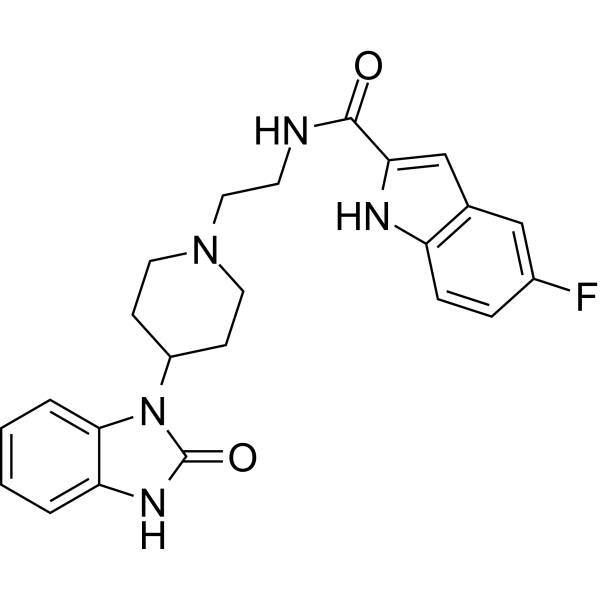
  • HY-110220
    CIM0216
    3 Publications Verification

    TRP Channel Neurological Disease
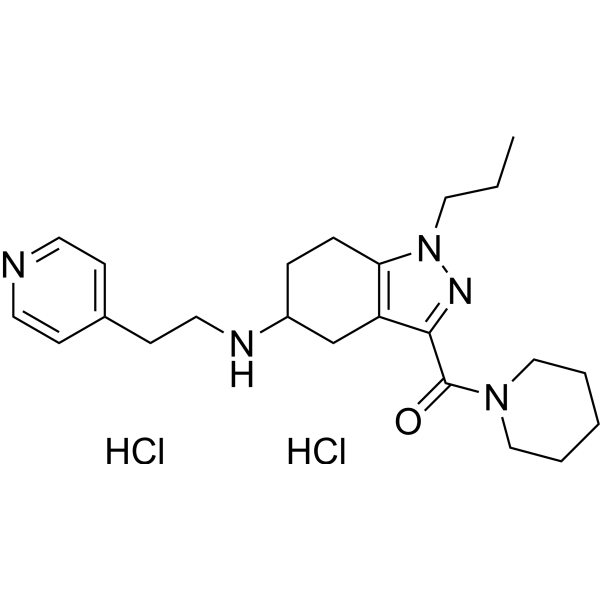
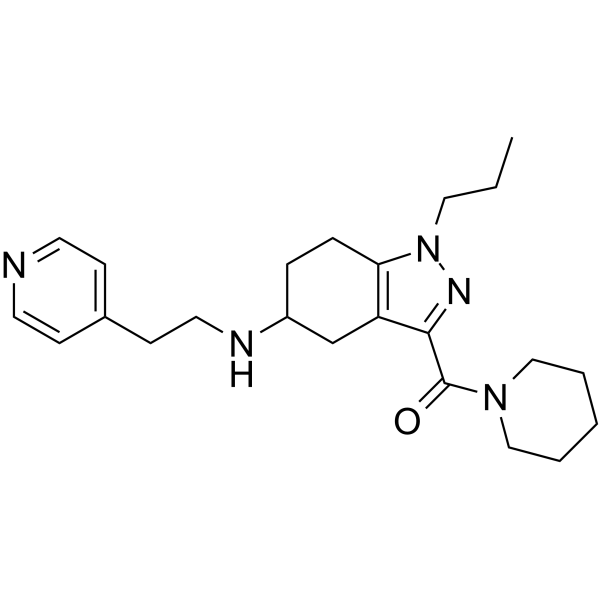
    CIM0216, a synthetic TRPM3 ligand, acts as a potent and selective agonist of TRPM3. CIM0216 exhibits selectivity for TRPM3 over TRPM1, TRPM2 and TRPM4-8. CIM0216 acts in a TRPM3-dependent manner to induce pain and evoke neuropeptide release from sensory nerve terminals in vitro. CIM0216 is a powerful tool for studies of the physiological functions of TRPM3, and can be used for neurogenic inflammation research .
    CIM0216
  • HY-Y0850

    Environmental Pollutants Biochemical Assay Reagents Neurological Disease
    Polyvinyl alcohol (Mw 146000-186000, 99+% hydrolyzed) is a non-biodegradable, hydrophilic, odorless biomedical polymer with cell adhesion/proliferation inhibition, peripheral nerve regeneration induction, dissolution enhancement, and non-toxic, biocompatible properties .
    Polyvinyl alcohol (Mw 146000-186000, 99+% hydrolyzed)
  • HY-108466
    Ro 08-2750
    4 Publications Verification

    Apoptosis Neurological Disease Cancer
    Ro 08-2750 is a non-peptide and reversible nerve growth factor (NGF) inhibitor which binds to NGF, and with an IC50 of ~ 1 μM. Ro 08-2750 inhibits NGF binding to p75 NTR selectively over TRKA . Ro 08-2750 is a selective MSI RNA-binding activity inhibitor, with an IC50 of 2.7 μM .
    Ro 08-2750
  • HY-154848
    UCL-TRO-1938
    3 Publications Verification

    PI3K Akt Cardiovascular Disease Neurological Disease Cancer
    UCL-TRO-1938 is a potent small molecule allosteric activator of PI3Kα with an EC50 value of approximately 60 μM. UCL-TRO-1938 can induce cell proliferation and has cardioprotective effects from ischaemia reperfusion injury and enhances nerve regeneration following nerve crush .
    UCL-TRO-1938
  • HY-18314
    GW 441756
    5+ Cited Publications

    Trk Receptor Apoptosis Neurological Disease Cancer
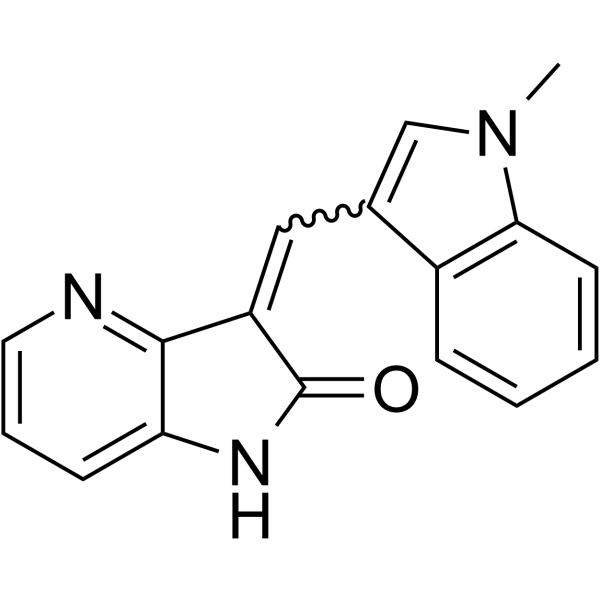
    GW 441756 is a potent and specific nerve growth factor (NGF) receptor tyrosine kinases A (TrkA) inhibitor (IC50=2 nM), which eliminates the BmK NSPK-induced neurite outgrowth .
    GW 441756
  • HY-110155
    LM11A-31 dihydrochloride
    5+ Cited Publications

    Neurotensin Receptor Neurological Disease
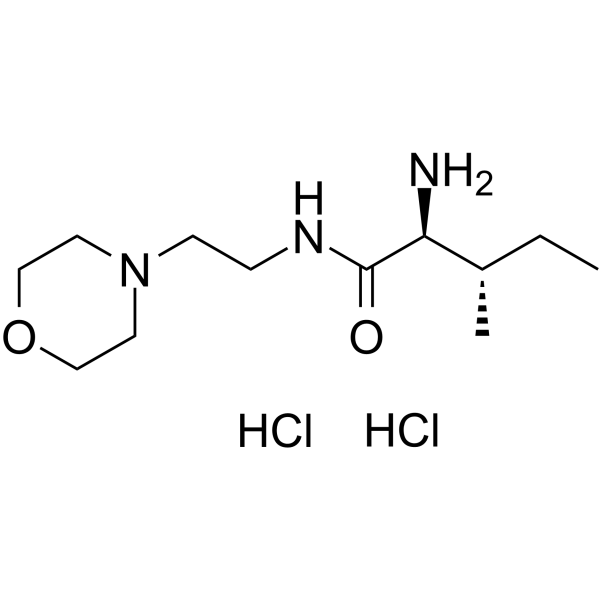
    LM11A-31 dihydrochloride, a non-peptide p75 NTR (neurotrophin receptor p75) modulator, is an orally active and potent proNGF (nerve growth factor) antagonist. LM11A-31 dihydrochloride is an amino acid derivative with high blood-brain barrier permeability and blocks p75-mediated cell death. LM11A-31 dihydrochloride reverses cholinergic neurite dystrophy in Alzheimer's disease mouse models with mid- to late-stage disease progression .
    LM11A-31 dihydrochloride
  • HY-116152

    Ciprofol; HSK3486

    GABA Receptor Sirtuin Keap1-Nrf2 Apoptosis Cardiovascular Disease Neurological Disease Metabolic Disease Inflammation/Immunology Cancer
    Cipepofol (Ciprofol), a novel 2,6-disubstituted phenol derivative, is a positive allosteric modulator and direct agonist of the GABAA receptor. Cipepofol can cause the central nerve inhibition and promote sleep based on the structural modification of Propofol (HY-B0649). Cipepofol can activate the sirtuin1 (Sirt1)/Nrf2 pathway. Cipepofol protects the heart against Isoproterenol (ISO; HY-B0468)-induced myocardial infarction by reducing cardiac oxidative stress, inflammatory response and cardiomyocyte apoptosis .
    Cipepofol
  • HY-B0800
    Guanethidine sulfate
    3 Publications Verification

    Guanethidine monosulfate

    Adrenergic Receptor Cardiovascular Disease Neurological Disease
    Guanethidine sulfate (Guanethidine monosulfate), an antihypertensive agent, is an adrenergic neurone blocking agent. Guanethidine sulfate enters noradrenergic nerve terminals by the neuronal amine carrier .
    Guanethidine sulfate
  • HY-P4154

    ALM-488

    Fluorescent Dye Neurological Disease Cancer
    Bevonescein (ALM-488) is a fluorescein-conjugated peptide that facilitates the targeted delivery of a fluorescent moiety (5-FAM (HY-66022)) to nerves after intravenous (IV) administration. Bevonescein binds nerve-associated connective tissue, labels peripheral nerves under real-time fluorescence imaging (FL) in living mice and human ex vivo nerve tissue. Bevonescein is a peptide-linked tracer which fluorescently labeled both intact and degenerated nerves (Ex/Em = 480/530 nm) .
    Bevonescein
  • HY-B1200
    Pralidoxime chloride
    2 Publications Verification

    2-PAM chloride

    Cholinesterase (ChE) Neurological Disease
    Pralidoxime chloride is a potent reactivator of acetylcholinesterase (AChE). Pralidoxime chloride reactivates nerve agent-inhibited AChE via direct nucleophilic attack by the oxime moiety on the phosphorus center of the bound nerve agent. Pralidoxime chloride is an antidote for organophosphate poisoning .
    Pralidoxime chloride
  • HY-147557
    PA-915
    1 Publications Verification

    PAC1R antagonist 1

    PACAP Receptor Neurological Disease
    PA-915 (PAC1R antagonist 1) is a potent and orally active antagonist of PAC1 receptor. PA-915 inhibits pituitary adenylate cyclase-activating polypeptide (PACAP)-induced CREB phosphorylation. PA-915 can inhibit PACAP- and nerve injury-induced allodynia. PA-915 can be used for the research of neuropathic pain .
    PA-915
  • HY-P10638

    CaMK Cardiovascular Disease Neurological Disease
    TAT-CN21 is a potent CaMKII inhibitor with an IC50 of 77.2 nM. TAT-CN21 inhibits both calcium/calmodulin-dependent and autonomously activated CaMKII, blocks glutamate-induced translocation of CaMK IIα, and reverses the enhanced phosphorylation of CaMKII at Thr286 following excitotoxic injury. TAT-CN21 shows application potential in studies related to ischemic stroke by reducing neuronal excitotoxicity and exacerbating pre-existing long-term neuronal death prior to injury. TAT-CN21 improves definitive behaviors in rats with residual nerve injury without altering indicators such as mechanical/thermal hyperalgesia or spatial memory. TAT-CN21 can also be used in studies related to neuropathic pain .
    TAT-CN21
  • HY-B1007
    Butacaine
    2 Publications Verification

    Sodium Channel Neurological Disease
    Butacaine is a reversible nerve conduction blocker. Butacaine acts on the nervous system and nerve fibers, can cause both sensory and motor paralysis. Butacaine inhibits the NavBh currents. Butacaine can form inclusion complexes with α-cyclodextrin (α-CD) and β-cyclodextrin (β-CD). Butacaine is commonly used as a negative control for other local anesthetics .
    Butacaine
  • HY-B1738A

    Cholinesterase (ChE) Neurological Disease
    Pralidoxime iodide is a potent reactivator of acetylcholinesterase (AChE). Pralidoxime iodide reactivates nerve agent-inhibited AChE via direct nucleophilic attack by the oxime moiety on the phosphorus center of the bound nerve agent. Pralidoxime iodide is an antidote for organophosphate poisoning .
    Pralidoxime iodide
  • HY-N8028
    Quercetin 3-O-sambubioside
    1 Publications Verification

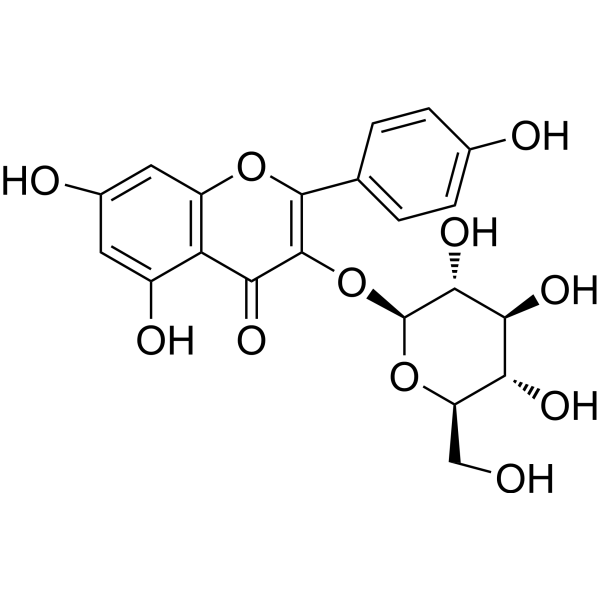
    Others Cancer
    Quercetin-3-O-sambubioside is a monomeric compound found in Eucommia ulmoides male flowers. Quercetin-3-O-sambubioside promotes the stimulation of the nerve center. Antioxidant and anticancer activities .
    Quercetin 3-O-sambubioside
  • HY-17622
    Tavilermide
    2 Publications Verification

    MIM-D3

    Trk Receptor Inflammation/Immunology
    Tavilermide is a selective, partial agonist of TrkA, or a nerve growth factor (NGF) mimetic.
    Tavilermide
  • HY-NP143

    Biochemical Assay Reagents Neurological Disease
    Nerve Growth Factor 2.5S, murine submaxillary gland is a neurotrophic polypeptide required for normal growth and development of sympathetic and embryonic sensory neurons and certain cholinergic neurons in the central nervous system. Nerve Growth Factor 2.5S, murine submaxillary gland has only β-subunit , and shows nerve growth-promoting activity .
    Nerve Growth Factor 2.5S,murine submaxillary gland
  • HY-P99195

    REGN-475; SAR-164877

    Trk Receptor Inflammation/Immunology
    Fasinumab (Anti-Human NGF) is a human IgG4 monoclonal antibody to nerve growth factor (NGF). Fasinumab can be used in acute sciatica and knee osteoarthritis (OA) studies .
    Fasinumab
  • HY-B1288

    Benoxinate hydrochloride

    Sodium Channel Neurological Disease
    Oxybuprocaine hydrochloride (Benoxinate hydrochloride) reversibly blocks sodium channels and prevents propagation of painful nerve impulses in the cornea, conjunctiva, and sclera. Oxybuprocaine hydrochloride is used especially in ophthalmology and otolaryngology .
    Oxybuprocaine hydrochloride
  • HY-122376

    D-Trans-Allethrin; Esbiol

    Environmental Pollutants Sodium Channel Neurological Disease
    S-Bioallethrin (D-Trans-Allethrin) is a pyrethroid insecticide. S-Bioallethrin disrupts nerve function by modifying the gating kinetics of transitions between the conducting and nonconducting states of voltage-gated sodium channels. S-Bioallethrin also causes inhibition of lymphocyte proliferation and induces histamine release from human basophils .
    S-Bioallethrin
  • HY-B1319

    Pramoxine hydrochloride

    Sodium Channel Neurological Disease
    Pramocaine hydrochloride decreases the permeability of neuronal membranes to sodium ions, blocking both initiation and conduction of nerve impulses.
    Pramocaine hydrochloride
  • HY-A0079

    Amethocaine

    Sodium Channel Calcium Channel Neurological Disease
    Tetracaine (Amethocaine) is a sodium channel inhibitor and ryanodine receptor (RyR) inhibitor. Tetracaine blocks sodium conduction across nerve cell membranes, preventing rapid sodium ion influx and depolarization. Tetracaine exhibits biphasic effects on spontaneous sarcoplasmic reticulum Ca 2+ release in Ca 2+-overloaded ventricular myocytes, and increases sarcoplasmic reticulum Ca 2+ load. Tetracaine can be used in research related to eye diseases .
    Tetracaine
  • HY-P1079

    Calcium Channel Neurological Disease
    ω-Agatoxin TK, a peptidyl toxin of the venom of Agelenopsis aperta, is a potent and selective P/Q type Ca 2+ channel blocker. ω-Agatoxin TK inhibits the high K + depolarisation-induced rise in internal Ca 2+ in cerebral isolated nerve endings with an IC50 of of 60 nM. ω-Agatoxin TK has no effect on L-type, N-type, or T-type calcium channels .
    ω-Agatoxin TK
  • HY-110155A

    Drug Isomer Neurological Disease
    (Rac)-LM11A-31 dihydrochloride is an isomer of LM11A-31 dihydrochloride. LM11A-31 dihydrochloride, a non-peptide p75 NTR (neurotrophin receptor p75) modulator, is an orally active and potent proNGF (nerve growth factor) antagonist .
    (Rac)-LM11A-31 dihydrochloride
  • HY-101253
    AM-92016 hydrochloride
    1 Publications Verification

    Potassium Channel Cardiovascular Disease
    AM-92016 hydrochloride is a specific blocker of rectifier potassium current (IK). AM-92016 hydrochloride delays rectifier potassium channel (IK), repolarizes the membrane thereby restricting the duration of the nerve impulse thereby restricting the duration of the nerve impulse .
    AM-92016 hydrochloride
  • HY-W009754

    5-HT Receptor Neurological Disease
    Antidepressant agent 10 (Compound 4) is an orally active compound. Antidepressant agent 10 has IC50 values of 190 nM and 110 nM for 5-HT1A and 5-HT2, respectively. Antidepressant agent 10 can be used in the research of mental disorders .
    Antidepressant agent 10
  • HY-B1604

    2-Chloroprocaine hydrochloride

    Na+/K+ ATPase Neurological Disease
    Chloroprocaine hydrochloride (2-Chloroprocaine hydrochloride) is a potent inhibitor of Na,K-ATPase activity with an IC50 of 13 mM. Chloroprocaine hydrochloride blocks peripheral nerve .
    Chloroprocaine hydrochloride
  • HY-N2276

    Others Inflammation/Immunology
    Nodakenetin, isolated from Angelica decursiva, possesses antioxidant anti-inflammatory activities. Nodakenetin has the potential to be an antiarthritic and nerve tonic .
    Nodakenetin
  • HY-W010869

    5-HT Receptor Neurological Disease
    GR 55562 hydrochloride is a selective 5-HT1B receptor antagonist. GR 55562 hydrochloride can be used for the research of nerve disease .
    GR 55562 hydrochloride
  • HY-NP144

    Biochemical Assay Reagents Neurological Disease
    Nerve Growth Factor 7S, murine submaxillary gland is an α2β2γ2 complex in which the β-NGF dimer (the active neurotrophin) is associated with two α-NGF and two γ-NGF subunits .
    Nerve Growth Factor 7S,murine submaxillary gland
  • HY-148796

    GE3126

    Fluorescent Dye Others
    Rizedisben (GE3126) is a fluorophore that can be used in fluorescence image-guided surgery. Rizedisben reduces non-specific adipose tissue fluorescence intensity and enhances nerve visibility .
    Rizedisben
  • HY-107527

    GlyT Neurological Disease
    Org 25543 hydrochloride is a selective and irreversible GlyT2 inhibitor (IC50: 16 nM). Org 25543 hydrochloride has analgesia effect. Org 25543 hydrochloride ameliorates mechanical allodynia after partial sciatic nerve ligation injury in mice .
    Org 25543 hydrochloride
  • HY-117517

    Trk Receptor Cancer
    NG-012, potentiator of nerve growth factor (NGF), were isolated from the culture broth of Penicillium verruculosum F-4542. NG-012 potentiates the neurite outgrowth induced by NGF in rat pheochromocytoma cell line (PC12) .
    NG-012
  • HY-N14827

    SM-216289

    Drug Derivative Neurological Disease
    Xanthofulvin (SM-216289) is an inhibitor of semaphorin 3A. Xanthofulvin blocks its binding to receptors, inhibits growth cone collapse, and accelerates olfactory nerve regeneration in rats in vivo. Xanthofulvin can be used in studies related to traumatic neuronal injury .
    Xanthofulvin
  • HY-B1604A

    2-Chloroprocaine

    Na+/K+ ATPase Neurological Disease
    Chloroprocaine (2-Chloroprocaine) is a potent inhibitor of Na,K-ATPase activity with an IC50 of 13 mM. Chloroprocaine blocks peripheral nerve .
    Chloroprocaine
  • HY-P3095

    Endogenous Metabolite Neurological Disease
    α-Latrotoxin, a potent neurotoxin from black widow spider venom, triggers synaptic vesicle exocytosis from presynaptic nerve terminals .
    α-Latrotoxin
  • HY-B1348

    Drug Metabolite Neurological Disease
    Dimethadione is the primary metabolite of trimethadione. Dimethadione causes depression of neuromuscular transmission. Dimethadione primarily decreases transmitter release from the nerve terminal .
    Dimethadione
  • HY-W129456

    Biochemical Assay Reagents Neurological Disease
    Isaxonine acts as a modifier of the surface pH of the bilayer . Isaxonine accelerates the rate of peripheral nerve regeneration, stimulate axonal sprouting and promote motor and sensory function recovery . Isaxonine is a neurotrophic agent .
    Isaxonine
  • HY-N15385

    Lipase Metabolic Disease
    Hericenone D, an orally active pancreatic lipase inhibitor, can be found in Hericium erinaceus. Hericenone D reduces lipid absorption and stimulates nerve growth factor NGF gene expression. Hericenone D can be used for the research of menopausal obesity .
    Hericenone D
  • HY-16094

    BW 467C60

    Adrenergic Receptor Cardiovascular Disease Neurological Disease
    Bethanidine sulfate is an orally active antihypertensive agent and adrenergic neuron blocker. Bethanidine sulfate exerts its antihypertensive effect by inhibiting the release of norepinephrine from sympathetic nerve terminals. Bethanidine sulfate exhibits anti-ventricular arrhythmic activity. Bethanidine sulfate can be used in research related to hypertension, ventricular tachycardia, and ventricular fibrillation .
    Bethanidine sulfate
  • HY-Z6848

    Sodium Channel Neurological Disease
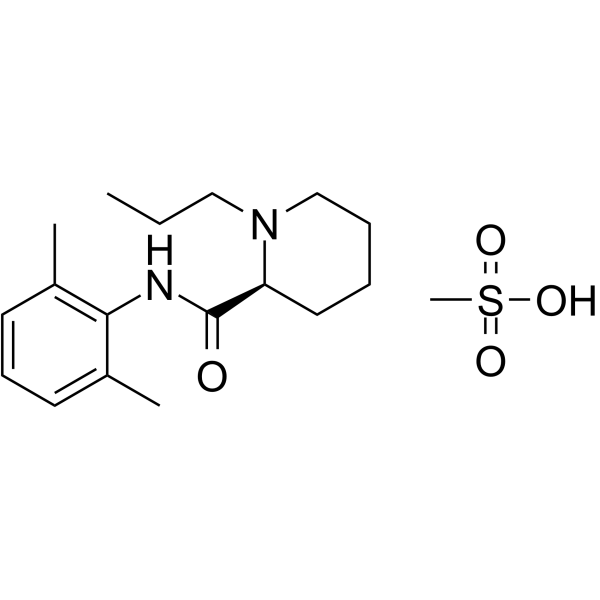
    (R)-(+)-Bupivacaine hydrochloride is a voltage-gated sodium channel inhibitor. (R)-(+)-Bupivacaine hydrochloride can selectively block the voltage-gated sodium channels on nerve cell membranes, inhibit the influx of sodium ions, and thus prevent the generation and conduction of nerve impulses, exerting local anesthetic activity. (R)-(+)-Bupivacaine hydrochloride can be used in research of acute pains .
    (R)-(+)-Bupivacaine hydrochloride
  • HY-B1251

    Adrenergic Receptor Cardiovascular Disease Neurological Disease
    Guanethidine sulphate was synthesized in 1959. Guanethidine is thought to lowing blood pressure by interfering with the metabolism of chemical transmitter substances in post-ganglionic sympathetic nerve fibres.
    Guanethidine
  • HY-145482

    Drug Metabolite Neurological Disease
    W3601 is the impurity of Lidocaine. W3601 exhibits nerve blocking activity with the pKa of 7.4 .
    W36017
  • HY-P99200

    Trk Receptor Neurological Disease
    Fulranumab is a human IgG2 monoclonal antibody against nerve growth factor (NGF) and can be used for the research of pain .
    Fulranumab
  • HY-B1738

    Cholinesterase (ChE) Neurological Disease
    Pralidoxime is a potent reactivator of acetylcholinesterase (AChE). Pralidoxime reactivates nerve agent-inhibited AChE via direct nucleophilic attack by the oxime moiety on the phosphorus center of the bound nerve agent. Pralidoxime is an antidote for organophosphate poisoning .
    Pralidoxime
  • HY-P5890

    Interleukin Related Caspase Neurological Disease Inflammation/Immunology
    YVAD-CHO is an interleukin-1β converting enzyme (ICE, caspase 1) inhibitor (Ki: 0.76 nM). YVAD-CHO inhibits mature IL-1β production. YVAD-CHO partially delays motoneurone death in lesioned facial nerve mice .
    YVAD-CHO
  • HY-106928

    5-HT Receptor Neurological Disease
    U93385 is a 5-HT₁A receptor agonist. U93385 exhibits no significant α₂ adrenergic, D₂ dopamine, or other receptor activities. U93385 has a heart rate regulating effect, stimulating the vagus nerve to induce bradycardia. U93385 can be used to study the 5-HT₁A receptor-mediated vagal nerve tolerance mechanism .
    U 93385
  • HY-P5890A

    Caspase Interleukin Related Neurological Disease Inflammation/Immunology
    YVAD-CHO TFA is an interleukin-1β converting enzyme (ICE, caspase 1) inhibitor (Ki: 0.76 nM). YVAD-CHO TFA inhibits mature IL-1β production. YVAD-CHO TFA partially delays motoneurone death in lesioned facial nerve mice .
    YVAD-CHO TFA
  • HY-154829A

    Neuropeptide FF Receptor Inflammation/Immunology
    AC-099 hydrochloride (compound 3) is a selective NPFF2R full agonist (EC50=1189 nM) and NPFF1R partial agonist (EC50=2370 nM). AC-099 hydrochloride attenuates spinal nerve ligation-induced hypersensitivity in rats .
    AC-099 hydrochloride
  • HY-175482

    PARP Neurological Disease Cancer
    PARP1-IN-43 (Compound 5350) is a blood-brain barrier (BBB) permeable PARP1 inhibitor, with an IC50 of 5 nM. PARP1-IN-43 can be used for the study of homologous recombination (HR)-deficient central nerve system (CNS) cancers .
    PARP1-IN-43

Inquiry Online

Your information is safe with us. * Required Fields.

Salutation


Country or Region *

Applicant Name *


Organization Name *

Department *


Email Address *


Product Name *

Cat. No.


Requested quantity *

Phone Number *


Remarks

Inquiry Online

Inquiry Information

Product Name:
Cat. No.:
Quantity:
MCE Japan Authorized Agent:

