
1. Search Result
Search Result
Results for "

repeat

" in MedChemExpress (MCE) Product Catalog:

72

Inhibitors & Agonists

1

Biochemical Assay Reagents

27

Peptides

2

Inhibitory Antibodies

1

Natural
Products

74

Recombinant Proteins

69

Antibodies

1

Oligonucleotides

Cat. No. Product Name Target Research Areas Chemical Structure
  • HY-P0319
    3X FLAG peptide
    20+ Cited Publications

    Biochemical Assay Reagents Others
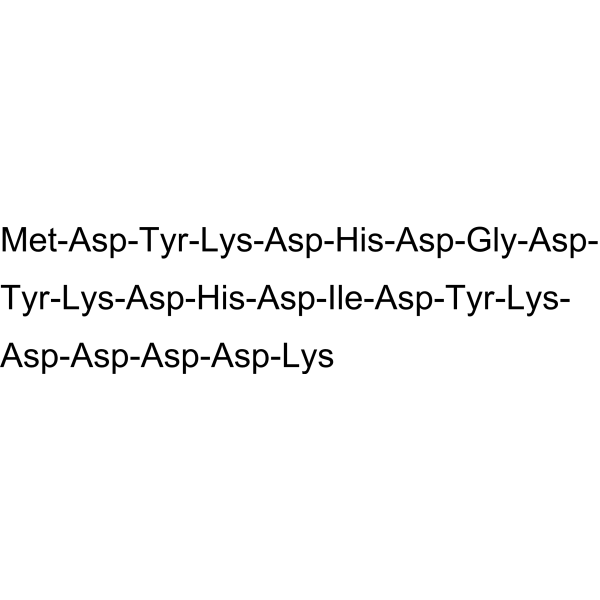
    3X FLAG peptides are FLAG-tagged peptides containing three repeats of the Asp-Tyr-Lys-Xaa-Xaa-Asp motif. 3X FLAG peptide can be used for protein separation and purification, and competitive elution with target proteins.
    3X FLAG peptide
  • HY-16993
    OICR-9429
    10+ Cited Publications

    Apoptosis WDR5 Cancer
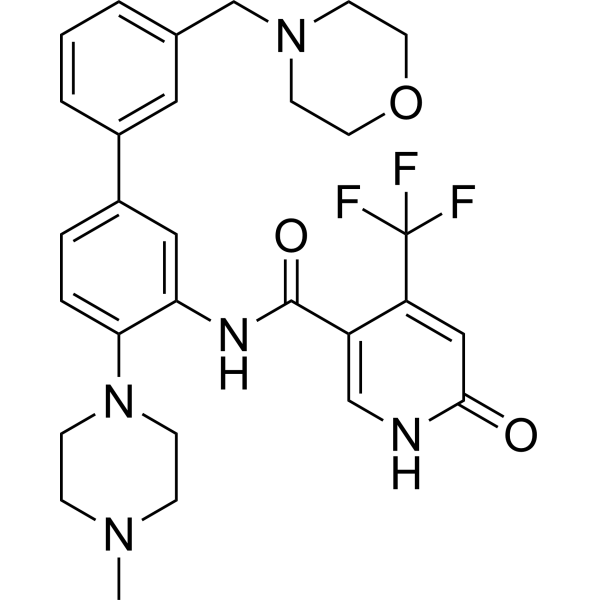
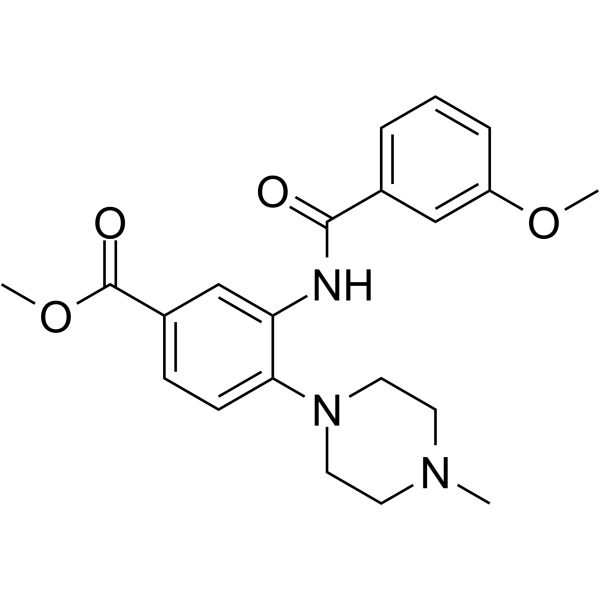
    OICR-9429, a chemical probe, is high affinity WD repeat domain 5 (WDR5) inhibitor, competitively blocks WDR5 interaction with MLL protein via binding the central peptide-binding pocket of WDR5. OICR-9429 can suppress histone H3K4 trimethylation and can be used for the research of various cancers including non-MLL-rearranged leukaemia, colon, pancreatic, prostate cancer and bladder cancer (BCa) .
    OICR-9429
  • HY-141796

    PROTACs WDR5 Cancer
    MS67 is a potent and selective WD40 repeat domain protein 5 (WDR5) degrader with a Kd of 63 nM. MS67 is inactive against other protein methyltransferases, kinases, GPCRs, ion channels, and transporters. MS67 shows potent acticancer effects .
    MS67
  • HY-141799

    Ligands for Target Protein for PROTAC WDR5 Cancer
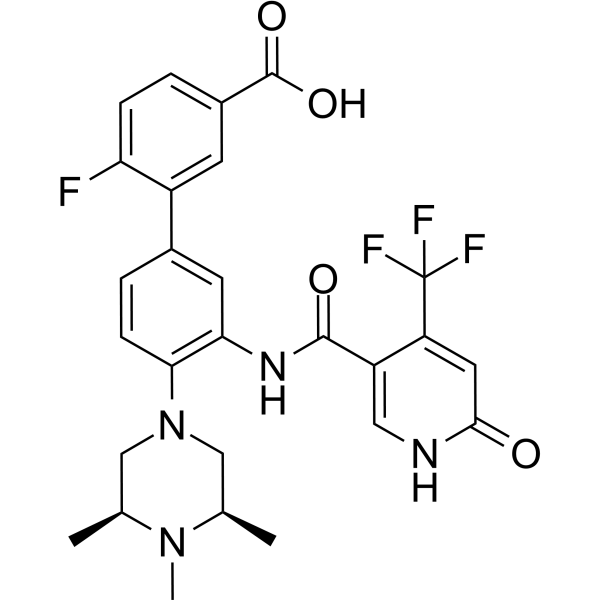
    Dimethyl-F-OICR-9429-COOH a ligand for WD40 repeat domain protein 5 (WDR5) extracted from patent WO2019246570A1 intermediate 19. Dimethyl-F-OICR-9429-COOH can be used in the synthesis of PROTACs .
    Dimethyl-F-OICR-9429-COOH
  • HY-19347
    WDR5-0103
    1 Publications Verification

    WD-repeat Protein 5-0103

    WDR5 Neurological Disease Cancer
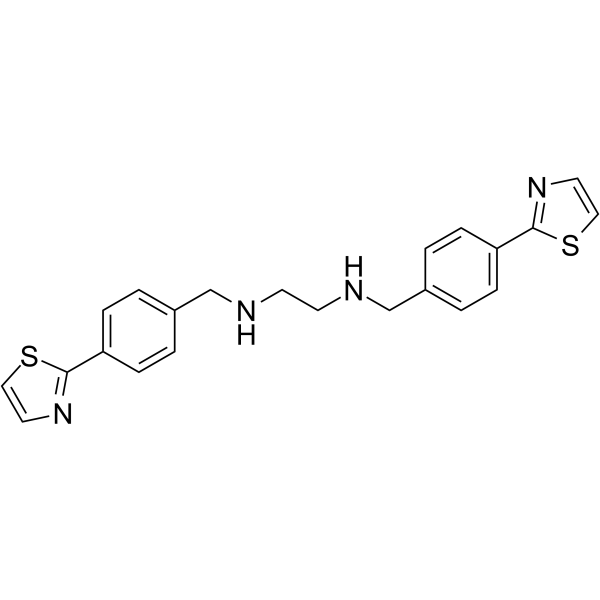
    WDR5-0103 (WD-Repeat Protein 5-0103) is a potent and selective WD repeat-containing protein 5 (WDR5) antagonist with a Kd of 450 nM. WDR5-0103 competitively binds to the peptide-binding pocket of WDR5, blocking the interaction between WDR5 and mixed-lineage leukemia (MLL) protein and inhibiting the methyltransferase activity of MLL. WDR5-0103 is mainly used in the research of cancer and neurodegenerative diseases .
    WDR5-0103
  • HY-P4808

    Amyloid-β Autophagy Neurological Disease
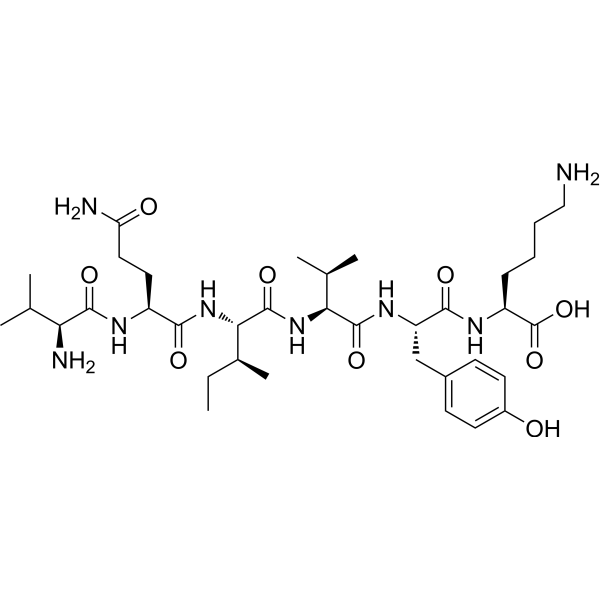
    PHF6 (VQIVYK) is a self-assembly sequence capable of initiating the full-length tau protein aggregation and is mapped to the third microtubule-binding repeat region of the tau protein .
    PHF6
  • HY-120085
    PFE-360
    3 Publications Verification

    PF-06685360

    LRRK2 Neurological Disease
    PFE-360 (PF-06685360) is a potent, selective, brain penetrated and orally active leucine-rich repeat kinase 2 (LRRK2) inhibitor with a mean IC50 of 2.3 nM in vivo .
    PFE-360
  • HY-12282

    LRRK2 Neurological Disease
    GNE-9605 is a potent, orally active, selective Leucine-rich repeat kinase 2 (LRRK2) inhibitor with an IC50 value of 18.7 nM. GNE-9605 inhibits LRRK2 Ser1292 autophosphorylation. GNE-9605 can be used in research of Parkinson's disease (PD) .
    GNE-9605
  • HY-15839
    UNC 669
    2 Publications Verification

    Epigenetic Reader Domain Cancer
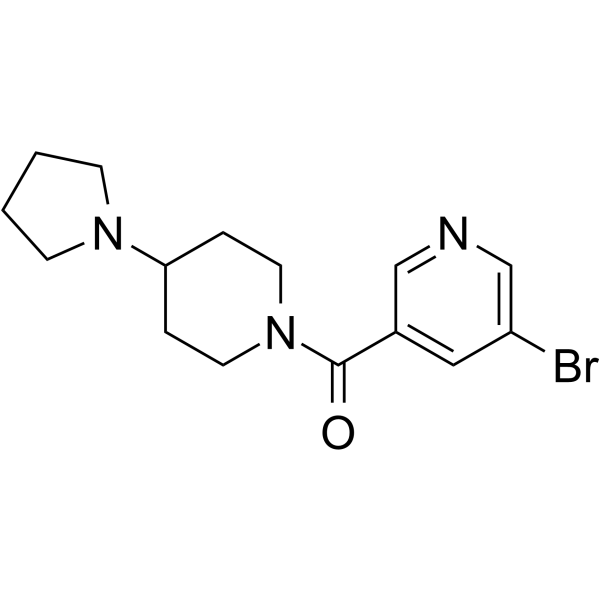
    UNC 669, a ligand for a methyl-lysine binding domain, is a potent L3MBTL1 (IC50=4.2 uM) and L3MBTL3 (3.1 uM) inhibitor .
    UNC 669
  • HY-P99237

    MMUC 1206A

    Mucin Cancer
    Sofituzumab (MMUC 1206A) is an anti-MUC16 antibody with a Kd of 0.3-0.9 nM. Sofituzumab can bind multiple adjacent antibody molecules to the repeat sequences of the same MUC16 molecule. Sofituzumab exhibits no anti-tumor activity in the HPAC pancreatic adenocarcinoma xenograft model .
    Sofituzumab
  • HY-141482

    E1/E2/E3 Enzyme Cancer
    WSB1 Degrader 1 is a poten and orally active WSB1 (WD repeat and SOCS box-containing 1) degrader. WSB1 Degrader 1 has anticancer metastatic effects .
    WSB1 Degrader 1
  • HY-153898

    Amyloid-β Neurological Disease
    rTRD01 is an orally active, specific TDP-43 binder that targets the RRM1 and RRM2 domains of TDP-43. rTRD01 partially disrupts the interaction between TDP-43 and c9orf72 repeat RNA, but does not affect the binding of TDP-43 to canonical binding sequences. rTRD01 exhibits significant neuroprotective effects in zebrafish models, improves motor function and protects against paraquat (a widely used herbicide)-induced neurodegeneration, with no teratogenicity at high concentrations. rTRD01 is not a general antioxidant and cannot counteract Rotenone (HY-B1756)-induced neuronal death. rTRD01 can be used to study amyotrophic lateral sclerosis and other TDP-43 proteinopathies .
    rTRD01
  • HY-P5979

    LRRK2 Neurological Disease
    LRRKtide is a polypeptide substrate. LRRKtide is a specific phosphorylation substrate of LRRK2, a kinase associated with Parkinson's disease, and its phosphorylation site is a threonine residue. LRRKtide can be used for characterization of the catalytic properties of LRRK2, as well as studies on kinase activity and inhibition. LRRKtide is applicable to research related to Parkinson's disease .
    LRRKtide
  • HY-111753
    WDR5-IN-4
    4 Publications Verification

    WDR5 Apoptosis Cancer
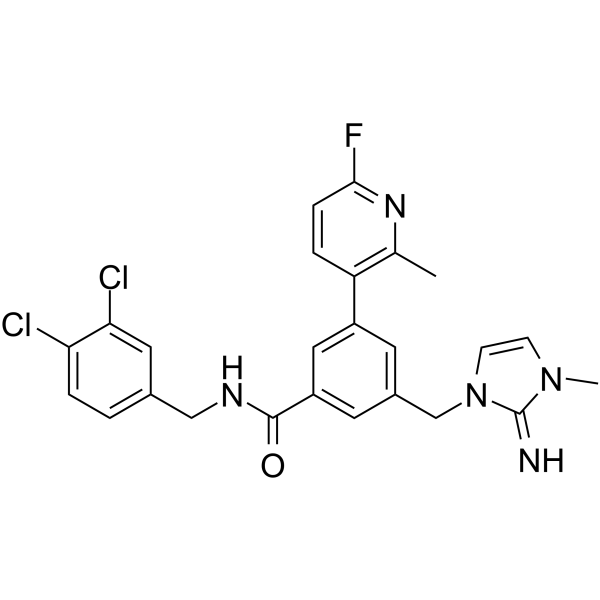
    WDR5-IN-4 (Compound C6) is a WIN site inhibitor of chromatin-associated WD repeat domain 5 protein (WDR5), Kd The value is 0.1 nM. WDR5-IN-4 is able to displace WDR5 from chromatin and reduce the expression of related genes, causing translation inhibition and nucleolar stress. Has anti-cancer effects .
    WDR5-IN-4
  • HY-150654

    WDR5 Cancer
    WDR5-IN-5 is an orally active and selective inhibitor of WIN site of WD repeat domain 5 (WDR5). WDR5-IN-5 exhibits anti-proliferative activity towards cancer cells and good pharmacokinetics profile in mice. WDR5-IN-5 shows high affinity to WDR5 and the binding affinity Ki value <0.02 nM .
    WDR5-IN-5
  • HY-141878

    DNA/RNA Synthesis Neurological Disease
    di-Ellipticine-RIBOTAC is a RNase recruiting chimera (RIBOTAC) degrader, capable of specifically binding and degrading expanded G4C2 RNA repeat (r(G4C2) exp). di-Ellipticine-RIBOTAC selectively binds the three-dimensional (3D) structure formed by r(G4C2) exp and that recruits an endogenous ribonuclease (RNase) to cleave r(G4C2) exp. di-Ellipticine-RIBOTAC selectively degrades the mutant chromosome 9 open reading frame 72 (C9orf72) allele and reduces quantities of toxic dipeptide repeat proteins (DPRs) translated from r(G4C2) exp. di-Ellipticine-RIBOTAC significantly improves the pathological phenotype of amyotrophic lateral sclerosis/ frontotemporal dementia (c9ALS/FTD) in cells and mouse models. di-Ellipticine-RIBOTAC can be used for the study of amyotrophic lateral sclerosis (ALS) and frontotemporal dementia (FTD) .
    di-Ellipticine-RIBOTAC
  • HY-P1985

    Notch Cardiovascular Disease Cancer
    Notch 1 (Notch homolog 1, translocation-associated) can encode a member of the NOTCH family of proteins. Members of this Type I transmembrane protein family share structural characteristics including an extracellular domain consisting of multiple epidermal growth factor-like (EGF) repeats, and an intracellular domain consisting of multiple different domain types .
    Notch 1
  • HY-163942

    DNA/RNA Synthesis Cancer
    GSK_WRN4 is an orally active WRN helicase inhibitor (pIC50=7.6). GSK_WRN4 induces DNA damage markers (p21, p-γH2AX, p-KAP1). GSK_WRN4 selectively inhibits microsatellite-unstable tumor growth in vitro and in vivo by inducing DNA double-strand breaks, particularly at expanded TA repeats and regions of DNA damage .
    GSK_WRN4
  • HY-133121

    Apoptosis WDR5 Cancer
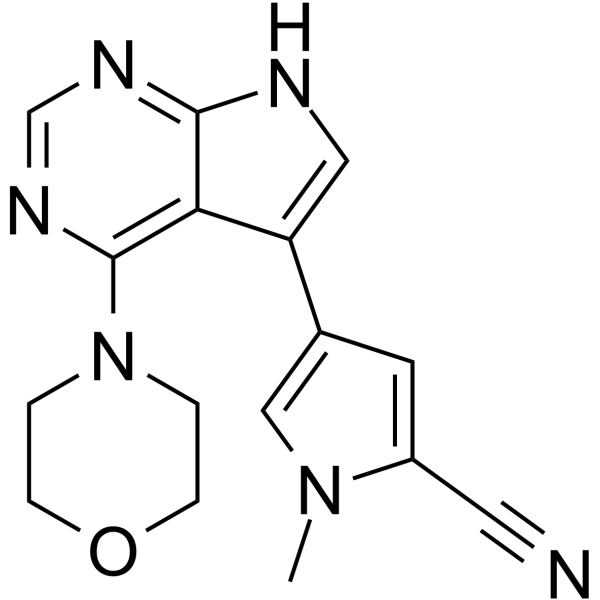
    WDR5-IN-1 is a potent and selective WD repeat domain 5 (WDR5) inhibitor, with a Kd of <0.02 nM. WDR5-IN-1 inhibits MLL1 histone methyltransferase (HMT) activity with an IC50 of 2.2 nM. WDR5-IN-1 diminishes MYC recruitment at WDR5-displaced genes and exhibits potent anti-proliferative effects in CHP-134 (neuroblastoma) and Ramos (Burkitt’s lymphoma) lines .
    WDR5-IN-1
  • HY-P10100

    CDK Others
    RS Repeat peptide is a substrate peptide for Clk1 .
    RS Repeat peptide
  • HY-P4933

    Tau-F protein (255-314)

    Tau Protein Neurological Disease
    Tau Peptide (255-314) (Repeat 2 Domain) (human) (Tau-F protein (255-314)) is a polypeptide. Tau Peptide (255-314) (human) is the 255-314 fragment of Tau-F (also known as Tau-4, the 2N4 isoform), a major isoform of the Tau protein. Tau Peptide (255-314) (human) contains two core driving sequences for Tau aggregation, namely PHF6* (275-280, VQIINK) and PHF6 (306-311, VQIVYK), and spans the C-terminal half of repeat domain R1, the entire repeat domain R2, and the N-terminal half of repeat domain R3 within the microtubule-binding region (MTBR).
    Tau Peptide (255-314) (Repeat 2 Domain) (human)
  • HY-157332

    WDR5 Cancer
    WDR5-IN-7 (Compound 22) is an orally bioavailable benzoxazepinone-based WD repeat domain 5 (WDR5) inhibitor. WDR5-IN-7 can be used for the research of anti-cancer .
    WDR5-IN-7
  • HY-160227A

    Toll-like Receptor (TLR) Inflammation/Immunology
    ORN 06 (sodium) s a synthetic single-stranded U-rich RNA and contains 6 repeats of the UUGU sequence motif. The GU-rich oligoribonucleotides (ORNs) are able to stimulate TLR7 .
    ORN 06 sodium
  • HY-P4808A

    Amyloid-β Autophagy Neurological Disease
    PHF6 (VQIVYK) TFA is a self-assembly sequence capable of initiating the full-length tau protein aggregation. PHF6 TFA is mapped to the third microtubule-binding repeat region of the tau protein .
    PHF6 TFA
  • HY-111753A
    WDR5-IN-4 TFA
    4 Publications Verification

    WDR5 Apoptosis Cancer
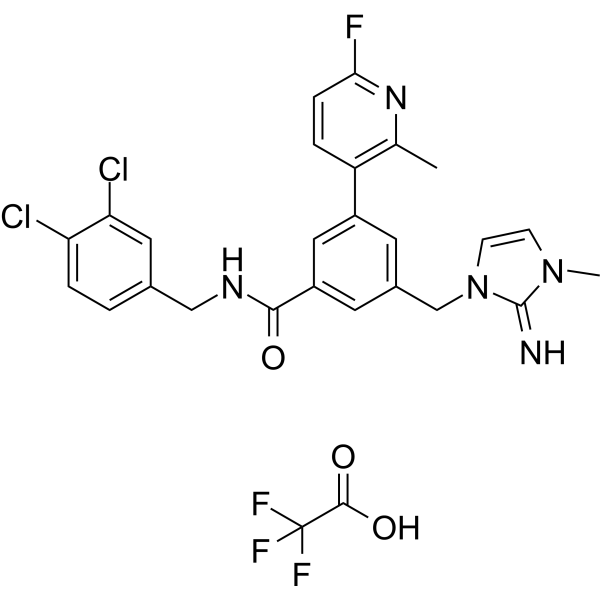
    WDR5-IN-4 TFA (Compound C6) is an inhibitor of the WIN site of chromatin-associated WD repeat-containing protein 5 (WDR5), with a Kd of 0.1 nM. WDR5-IN-4 TFA displaces WDR5 from chromatin and decreases the expression of associated genes, causing translational inhibition, nucleolar stress. Anti-cancer activity .
    WDR5-IN-4 TFA
  • HY-169120

    Telomerase Cancer
    FKB04 is a telomeric repeat binding factor 2 (TRF2) inhibitor that exerts its antitumor activity by disrupting the telomere maintenance mechanism in liver cancer cells, leading to T-loop defects, telomere shortening, and cellular senescence. Additionally, FKB04 can inhibit tumor growth in a human liver cancer xenograft mouse model (with Huh-7 cells implanted in BALB/c mice). FKB04 can be used in liver cancer research .
    FKB04
  • HY-129087
    BC-​1258
    1 Publications Verification

    Apoptosis Cancer
    BC-1258,an F-box/LRR-repeat protein 2 (FBXL2) activator,can stabilize and upregulate FBXL2 levels. BC-1258 induces apoptosis of tumorigenic cells,and profoundly inhibits tumor formation in mice .
    BC-​1258
  • HY-134562

    LRRK2 Neurological Disease
    PF-06371900 is a potent and highly selective leucine rich repeat kinase 2 (LRRK2) inhibitor .
    PF-06371900
  • HY-100869

    WDR5 Cancer
    MM-589 is a potent inhibitor of WD repeat domain 5 (WDR5) and mixed lineage leukemia (MLL) protein-protein interaction. MM-589 binds to WDR5 with an IC50 of 0.90 nM and inhibits the MLL H3K4 methyltransferase activity with an IC50 of 12.7 nM .
    MM-589
  • HY-W141374

    DNA/RNA Synthesis Neurological Disease
    CB096 is an r(G4C2) exp RNA binder with EC50 values of 19 μM, 20 μM and 33 μM. CB096 selectively interacts with the 5′CGG/3′GGC 1×1 GG internal loop motif of folded r(G4C2) exp RNA, alters motif dynamics and closed base pairs, and rescues disease-related pathways. CB096 can be used for research on inherited amyotrophic lateral sclerosis/frontotemporal dementia (c9ALS/FTD) .
    CB096
  • HY-P2516

    Tau Protein Neurological Disease
    Tau Peptide (275-305) (Repeat 2 domain) is the Alzheimer's Tau fragment R2, corresponding to the second repeat unit of the microtubule-binding domain, which is believed to be pivotal to the biochemical properties of full tau protein. Tau Peptide (275-305) specifically coordinates with group IIB metal ions (Zn²⁺, Cd²⁺, Hg²⁺), which can induce their conformational changes and significantly promote their pathological accumulation. Tau Peptide (275-305) can be used to study the role of heavy metals in neurodegenerative diseases .
    Tau Peptide (275-305) (Repeat 2 domain)
  • HY-19820

    Akt Ser/Thr Protease Neurological Disease Cancer
    NSC45586 is an inhibitor of pleckstrin homology domain and leucine-rich repeat protein phosphatase (PHLPP). NSC45586 targets the PP2C phosphatase domain in PHLPP1 and PHLPP2. NSC45586 can activate AKT in neurons .
    NSC45586
  • HY-148353

    LRRK2 Neurological Disease
    PF-06455943 is a leucine rich repeat kinase 2 (LRRK2) inhibitor with IC50 value of 3 nM. PF-06455943 also is a PET radioligand. PF-06455943 can be used for the research of ADME/neuro PK characterization and Parkinson disease (PD) .
    PF-06455943
  • HY-P1985A

    Notch Cardiovascular Disease Cancer
    Notch 1 TFA (Notch homolog 1, translocation-associated) can encode a member of the NOTCH family of proteins. Members of this Type I transmembrane protein family share structural characteristics including an extracellular domain consisting of multiple epidermal growth factor-like (EGF) repeats, and an intracellular domain consisting of multiple different domain types .
    Notch 1 TFA
  • HY-W107722

    LRRK2 Endocrinology
    IN04 is a inhibitor of leucine-rich repeat kinase 1 (LRRK1). IN04 can completely block the binding of ATP to the human LRRK1 kinase domain, thereby inhibiting the kinase activity of LRRK1. IN04 can significantly impair the bone resorption ability of osteoclasts, with an IC50 value of 5.72 μM. IN04 can be used for the study of osteoporosis .
    IN04
  • HY-P11012

    SARS-CoV Infection
    EK1 is a peptide-based fusion inhibitor of coronaviruses (CoVs) with broad spectrum inhibition to a number of CoV species. EK1 shows substantially improved pan-CoV fusion inhibitory activity. EK1 potently inhibits SARS-CoV-2. EK1 can form a stable six-helix bundle (6HB) structure with both short α-hCoV and long β-hCoV N-terminal heptad repeats .
    EK1
  • HY-150403

    PROTACs WDR5 Cancer
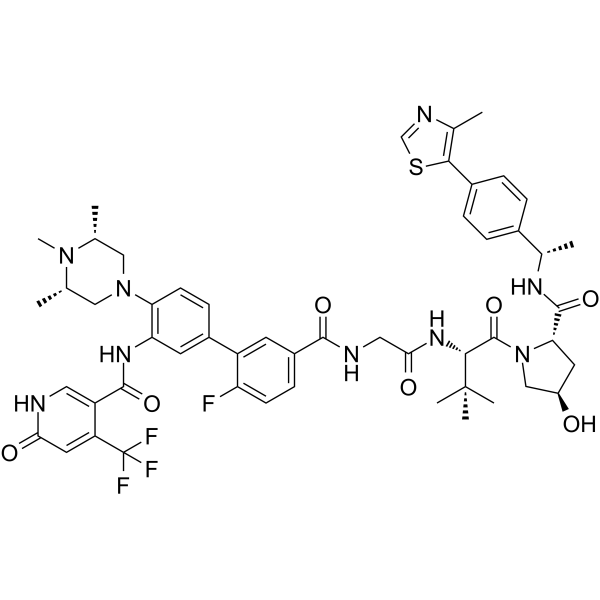
    XF067-68 (example 132) is a PROTAC for targeted degradation of WD40 repeat domain protein 5 (WDR5). XF067-68 can be usde for the study of WDR5-mediated diseases. (Pink: target protein ligand (HY-141799); Blue: E3 ligase ligand (HY-173627); Black: linker (HY-Y0966); E3 ligase ligand + linker: HY-176517) .
    XF067-68
  • HY-P4968

    Tau Protein Others
    Tau Peptide (337-368) (Repeat 4 Domain) is a polypeptide that can be found by peptide screening. Peptide screening is a research tool that pools active peptides primarily by immunoassay. Peptide screening can be used for protein interaction, functional analysis, epitope screening, especially in the field of agent research and development .
    Tau Peptide (337-368) (Repeat 4 Domain)
  • HY-141798

    Ligands for Target Protein for PROTAC WDR5 Cancer
    OICR-9429-N-C2-NH2 is a ligand for Wd40 repeat domain protein 5 (WDR5) extracted from patent WO2019246570A1, intermediate 2. OICR-9429-N-C2-NH2 can be used in the synthesis of PROTACs .
    OICR-9429-N-C2-NH2
  • HY-P10636

    LRRK2 Others
    Nictide is a peptide substrate of LRRK2 (leucine-rich repeat protein kinase-2). Nictide can be phosphorylated by the activated LRRK2[G2019S] with a Km of 10 μM .
    Nictide
  • HY-N4192

    Others Cardiovascular Disease Cancer
    Toringin, a bioflavonoid, is isolated from the bark of Docyniopsis tschonoski. Toringin progressively decreases not only the cis-effect of the expanded CTG repeats but cytotoxicity as well. Exposure to isosakuranetin, Toringin rescues PC12 neuronal cells. Flavonoids are efficacious for ameliorating the RNA gain of function caused by expanded CTG repeats, and have various biological activities and beneficial actions against cancers, coronary heart disease, among other pathologies .
    Toringin
  • HY-144074

    LRRK2 Neurological Disease
    LRRK2-IN-4 is a potent, selective, CNS-penetran and orally active leucine-rich repeat kinase 2 (LRRK2) inhobitor with an IC50 of 2.6 nM. LRRK2-IN-4 has the potential for the research of Parkinson’s disease .
    LRRK2-IN-4
  • HY-124824

    Glyoxalase (GLO) Others
    Methyl gerfelin inhibits osteoclast differentiation by binding 3 major cellular proteins: glyoxalase 1 (GLO1), sterol binding protein 2 (SCP2), and small glutamine-rich tetratricopeptide repeat containing protein A (SGTA). Methyl gerfelin is a potent GLO1 inhibitor related to the flavonoid class .
    Methyl gerfelin
  • HY-100869A

    WDR5 Cancer
    MM-589 TFA is a potent inhibitor of WD repeat domain 5 (WDR5) and mixed lineage leukemia (MLL) protein-protein interaction. MM-589 binds to WDR5 with an IC50 of 0.90 nM and inhibits the MLL H3K4 methyltransferase activity with an IC50 of 12.7 nM .
    MM-589 TFA
  • HY-160227

    Toll-like Receptor (TLR) Inflammation/Immunology
    ORN 06 (Compound R-0006), a U-rich single-stranded RNA (containing 6 repeats of the UUG sequence motif), is a TLR7/8 agonist. ORN 06 stimulates human TLR7/8-mediated or murine TLR7-mediated immunity .
    ORN 06
  • HY-P5497

    HIV Others
    C34 peptide is a biological active peptide. (This C34 peptide, also known as HR2, belongs to the helical region of gp41 of HIV, C-terminal heptad repeat 2 (HR2) defined as C helix or C peptide. It is known that HIV-1 enters cells by membrane fusion, C34 gp41 peptide is a potent inhibitors of HIV-1 fusion.)
    C34 peptide
  • HY-P10984

    Integrin Metabolic Disease Inflammation/Immunology Cancer
    FNIII14 is derived from the 14th fibronectin (FN) type III-like (FN-III) repeat of FN molecule. FNIII14 is capable of inhibiting cell adhesion to the extracellular matrix (ECM). FNIII14 induces a conformational change in β1-integrin from the active to the inactive form, and blocks integrin-mediated signaling. FNIII14 has anti-fibrotic, anti-cancer effect. FNIII14 can be used for research of metabolic diseases, organ fibrosis, and malignant tumors .
    FNIII14
  • HY-161571

    LRRK2 Neurological Disease
    LRRK2-IN-13 (Compound 13) is an inhibitor of LRRK2 (IC50=0.57 nM). LRRK2-IN-13 has brain penetrating properties .
    LRRK2-IN-13
  • HY-174499

    mRNA Others
    Cas9 Nickase D10A mRNA expresses a version of the Streptococcus pyogenes SF370 Cas9 protein (CRISPR Associated Protein 9) that contains a D10A amino acid substitution. This mRNA also contains a C-terminal nuclear localization signal followed by a HA tag.Cas9 functions as part of the CRISPR (clustered regularly interspaced short palindromic repeats) genome editing system. In the CRISPR system, an RNA guide sequence targets the site of interest and the Cas9 protein is employed to perform the DNA cleavage. While wild-type Cas9 creates a double-stranded break at the target site, Cas9 nickase creates a single-stranded break. This favors homology-directed repair and decreases the occurrence of non-homologous end joining.
    Cas9 Nickase D10A mRNA (5moU)
  • HY-P4966

    Tau Protein Neurological Disease
    Tau Peptide (306-336) (Repeat 3 Domain) is aTau fragment.
    Tau Peptide (306-336) (Repeat 3 Domain)

Inquiry Online

Your information is safe with us. * Required Fields.

Salutation


Country or Region *

Applicant Name *


Organization Name *

Department *


Email Address *


Product Name *

Cat. No.


Requested quantity *

Phone Number *


Remarks

Inquiry Online

Inquiry Information

Product Name:
Cat. No.:
Quantity:
MCE Japan Authorized Agent:

