

1. Search Result
Search Result
Results for "

super

" in MedChemExpress (MCE) Product Catalog:

41

Inhibitors & Agonists

17

Fluorescent Dyes

6

Peptides

3

Natural
Products

1

Recombinant Proteins

1

Isotope-Labeled Compounds

2

Antibodies

2

Click Chemistry

Cat. No. Product Name Target Research Areas Chemical Structure
  • HY-N1214

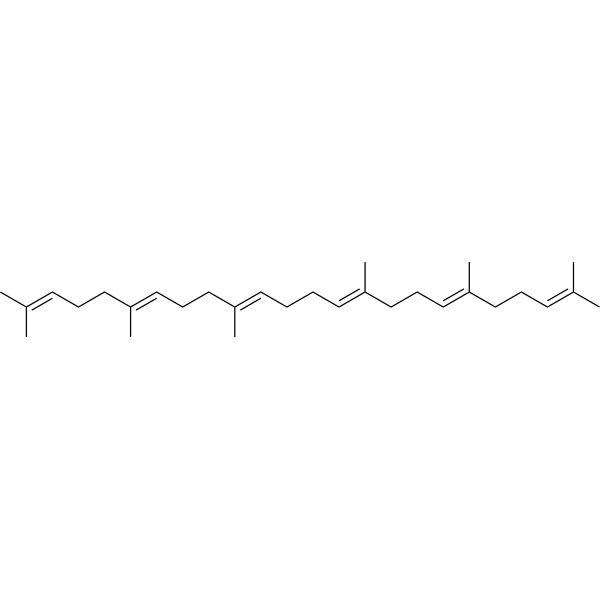
    super Squalene; trans-Squalene; AddaVax

    Endogenous Metabolite Reactive Oxygen Species (ROS) Fungal Infection Cardiovascular Disease Cancer
    Squalene (Super Squalene) is an intermediate product in the synthesis of cholesterol, and shows several pharmacological properties such as hypolipidemic, hepatoprotective, antiatherosclerotic, cardioprotective, antioxidant, and antitumour activity .
    Squalene
  • HY-11062
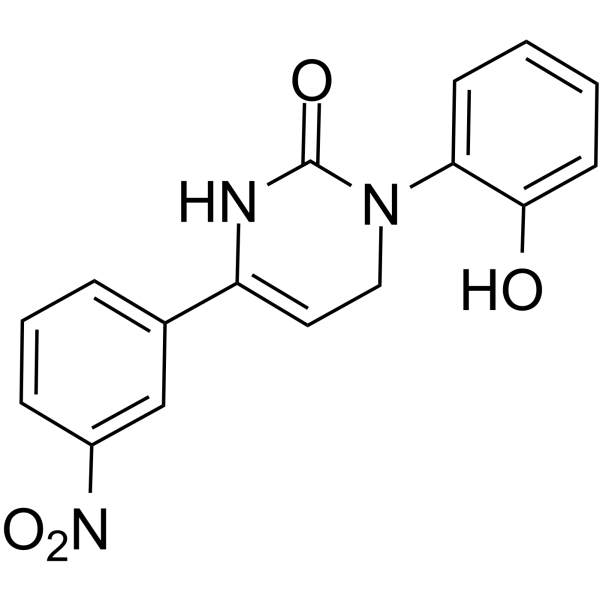
    Icilin
    1 Publications Verification

    AG-3-5

    TRP Channel Neurological Disease Inflammation/Immunology
    Icilin (AG-3-5) is a super-agonist of the transient receptor potential M8 (TRPM8) ion channel. Icilin activates TRPM8 in EGTA in a dose-dependent manner (EC50=1.4 μM). Icilin is a "super-cooling agent" . Icilin attenuates autoimmune neuroinflammation through modulation of the T-cell response .
    Icilin
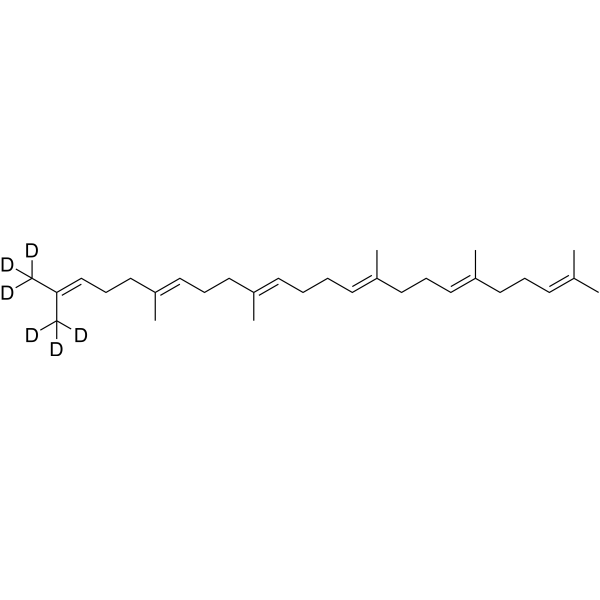
  • HY-N1214S

    super Squalene-d6; trans-Squalene-d6; AddaVax-d6

    Isotope-Labeled Compounds Others
    Squalene-d6 (Super Squalene-d6) is a deuterium labeled Squalene. Squalene (Super Squalene) is an intermediate product in the synthesis of cholesterol, and shows several pharmacological properties such as hypolipidemic, hepatoprotective, antiatherosclerotic, cardioprotective, antioxidant, and antitumour activity .
    Squalene-d6
  • HY-D2348A

    Fluorescent Dye Infection
    ACE TFA is a low-background, photostable fluorophore with nanomolar binding affinity for the Okra RNA aptamer. ACE TFA enables clear visualization of mRNA in live bacteria and mammalian cells, including tracking the trafficking of mRNA to stress granules and dual-color super-resolution imaging of RNA in live cells. (Ex=488 nm, Em=555 nm) .
    ACE TFA
  • HY-19625

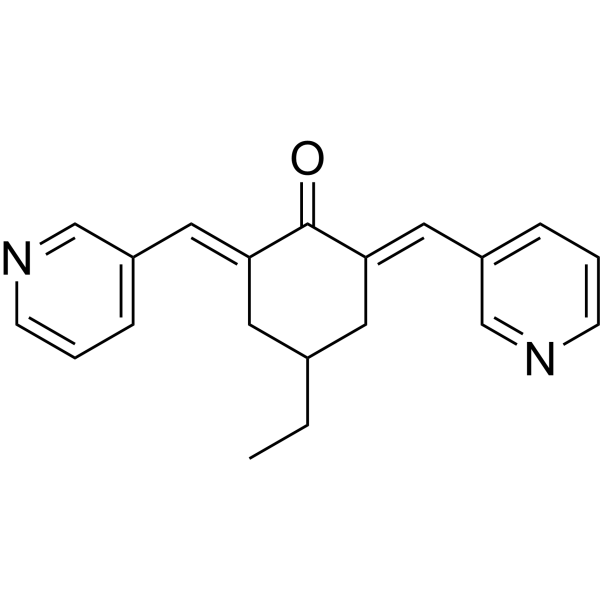
    Reactive Oxygen Species (ROS) Paraptosis Cancer
    MCB-613 is a potent Steroid receptor coactivator SRC small molecule ‘stimulator’ (SMS), super-stimulates SRCs’ transcriptional activity. MCB-613 increases SRCs’ interactions with other coactivators and markedly induces ER stress coupled to the generation of reactive oxygen species (ROS). MCB-613 is a SMS that target oncogenes can be exploited as anti-cancer agents by over-stimulating the SRC oncogenic program .
    MCB-613
  • HY-123972
    SEC inhibitor KL-2
    1 Publications Verification

    KL-2

    DNA/RNA Synthesis Cancer
    SEC inhibitor KL-2 (KL-2), a peptidomimetic lead compound, is a potent, selective super elongation complex (SEC) inhibitor and disrupts the interaction between the SEC scaffolding protein AFF4 and P-TEFb, resulting in impaired release of Pol II from promoter-proximal pause sites and a reduced average rate of processive transcription elongation. SEC inhibitor KL-2 exhibits an dose-dependent inhibitory effect on AFF4-CCNT1 interaction with a Ki of 1.50 μM .
    SEC inhibitor KL-2
  • HY-P1727
    Super-TDU
    5+ Cited Publications

    YAP Cancer
    Super-TDU is a specific YAP antagonist targeting YAP-TEADs interaction. Super-TDU suppresses tumor growth in gastric cancer mouse model .
    Super-TDU
  • HY-133535
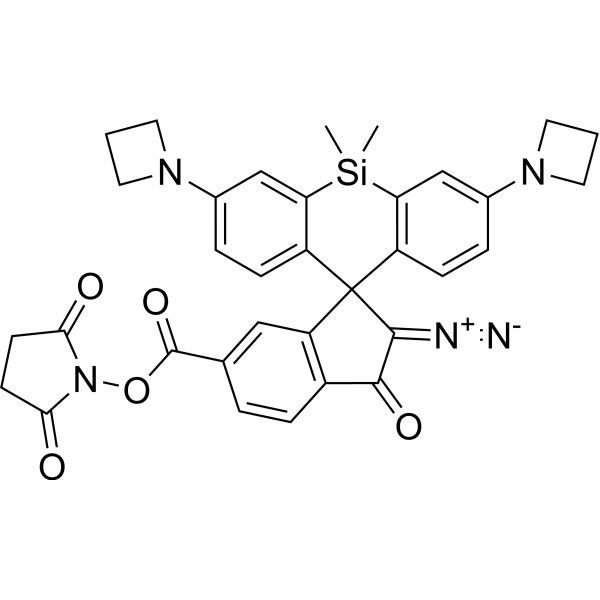
    PA Janelia Fluor® 646, SE
    1 Publications Verification

    PA-JF646-NHS

    Fluorescent Dye Others
    PA Janelia Fluor® 646, SE (PA-JF646-NHS) is a photo-activatable fluorescent dye. PA Janelia Fluor® 646, SE is a far-red light-excited, 405nm-activated NHS ester-based dye (λex/em = 650/664 nm). PA Janelia Fluor® 646, SE can achieve extremely low background and single-molecule-level ultra-high-resolution imaging through photo-controlled switching, making it a powerful tool for live cell super-resolution microscopy technology.
    PA Janelia Fluor® 646, SE
  • HY-148739

    PROTACs Epigenetic Reader Domain Apoptosis Cancer
    dBRD 9-A is a selective BRD9 PROTAC degrader. dBRD 9-A induces near complete BRD9 degradation dependent on E3 ubiquitin ligase CRBN and BRD9 bromodomain engagement, and drives loss of BRD9 chromatin binding genome-wide. dBRD 9-A downregulates oncogenic SS18-SSX-driven transcriptional programs, super enhancer-associated gene expression, and SS18-SSX1 super enhancer binding, and depletes GBAF complex members GLTSCR1/1L from SS18-SSX complexes. dBRD 9-A induces cell cycle arrest and increases apoptosis in synovial sarcoma cells. dBRD 9-A can be used for the research of synovial sarcoma .
    dBRD 9-A
  • HY-D2348

    Fluorescent Dye Infection Others
    ACE is a low-background, photostable fluorophore with nanomolar binding affinity for the Okra RNA aptamer. ACE enables clear visualization of mRNA in live bacteria and mammalian cells, including tracking the trafficking of mRNA to stress granules and dual-color super-resolution imaging of RNA in live cells. (Ex=488 nm, Em=555 nm) .
    ACE
  • HY-W784030

    Amino Acid Derivatives Biochemical Assay Reagents Fluorescent Dye Others
    N-TCO-L-lysine is a non-canonical amino acid. N-TCO-L-lysine contains a trans-cyclooctene (TCO) bioorthogonal reactive linker. N-TCO-L-lysine undergoes a bioorthogonal click reaction with SiR-Tz to enable fluorescent labeling of endogenously expressed proteins with site-specific incorporation. When used in combination with SiR-Tz, N-TCO-L-lysine allows super-resolution and live-cell imaging of endogenous proteins .
    N-TCO-L-lysine
  • HY-N1214R

    super Squalene (Standard); trans-Squalene (Standard); AddaVax (Standard)

    Reference Standards Endogenous Metabolite Reactive Oxygen Species (ROS) Fungal Infection Cardiovascular Disease
    Squalene (Standard) is the analytical standard of Squalene. This product is intended for research and analytical applications. Squalene (Super Squalene) is an intermediate product in the synthesis of cholesterol, and shows several pharmacological properties such as hypolipidemic, hepatoprotective, antiatherosclerotic, cardioprotective, antioxidant, and antitumour activity .
    Squalene (Standard)
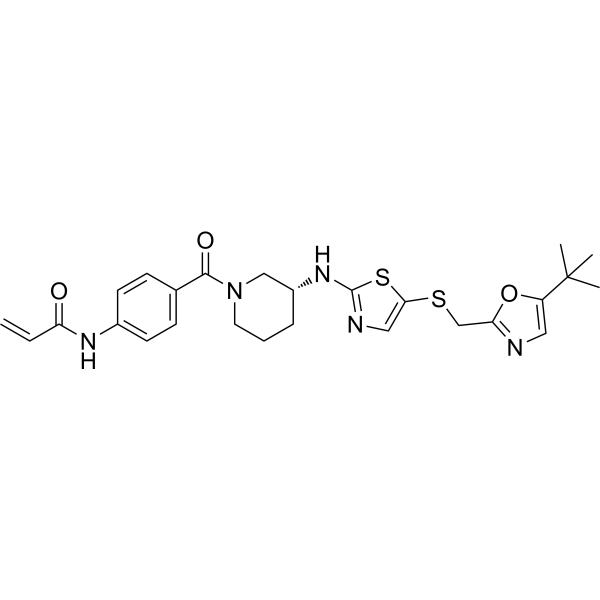
  • HY-163087

    Orphan GPCR Neurological Disease Metabolic Disease
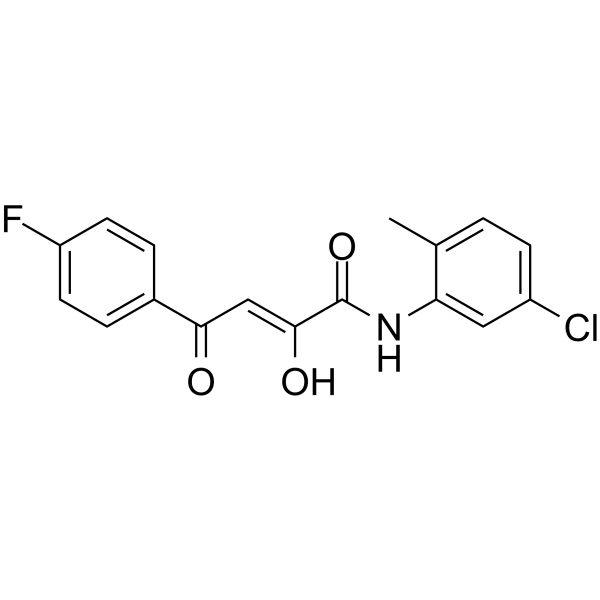
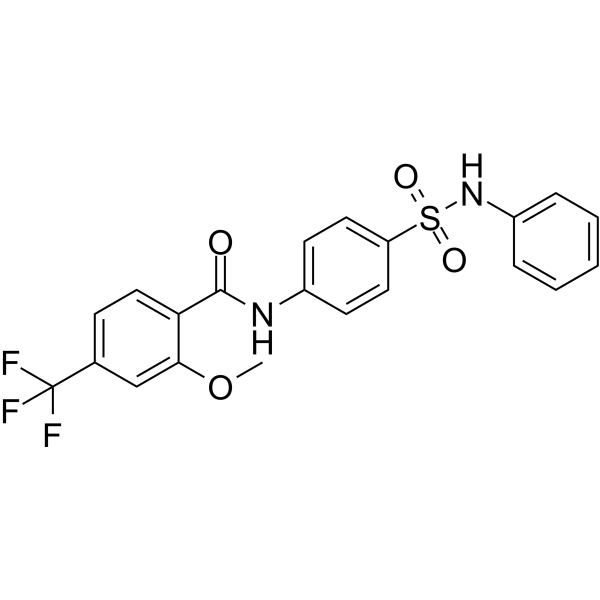
    PT-91 is an agonist of GPR27. PT-91 exhibits high metabolic stability and brain exposure in mice .
    PT-91
  • HY-114250

    TRX-E-002-1

    Apoptosis Cancer
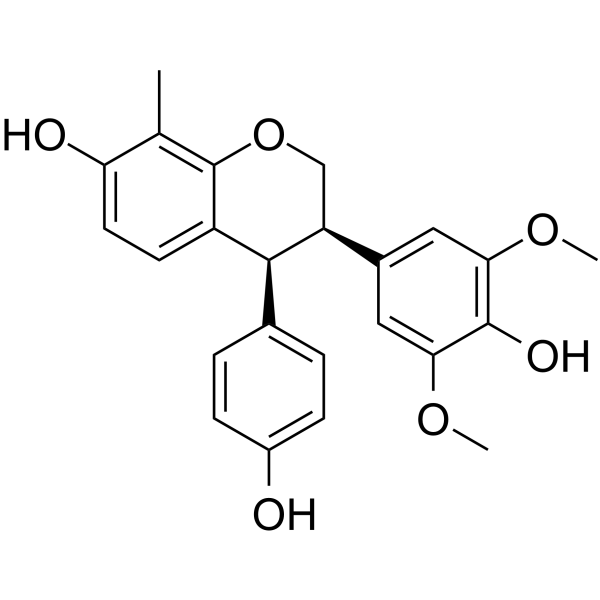
    Cantrixil (TRX-E-002-1), an active enantiomer of TRX-E-002, is a second-generation super-benzopyran (SBP) compound. Cantrixil increases phosphorylated c-Jun levels resulting in caspase-mediated apoptosis in ovarian cancer cells. Cantrixil has potent pan anti-cancer activity against a broad range of cancer phenotypes .
    Cantrixil
  • HY-D2417

    Fluorescent Dye Others
    SiRA 2 is a fluorescent inducer with a Kd value of 430 nM for binding to the SiRA RNA aptamer. When used in combination with the SiRA aptamer, SiRA 2 enables live-cell RNA imaging of aptamer-labeled mRNA as well as stimulated emission depletion super-resolution microscopy imaging. SiRA 2 has high photostability and forms a bright far-red light-up aptamer system upon binding to SiRA .
    SiRA 2
  • HY-D2002

    Fluorescent Dye Neurological Disease
    ATTO 488 maleimide is a thiol-reactive fluorescent labeling reagent that forms a covalent bond via its maleimide group with the thiol group of the C-terminal cysteine residue of α-synGC. ATTO 488 maleimide enables α-syn fiber imaging via super-resolution stimulated emission depletion (STED) fluorescence microscopy. ATTO 488 maleimide is applicable to research related to Parkinson's disease (Ex/Em = 488/592nm) .
    ATTO 488 maleimide
  • HY-136522

    Histone Demethylase Apoptosis Cancer
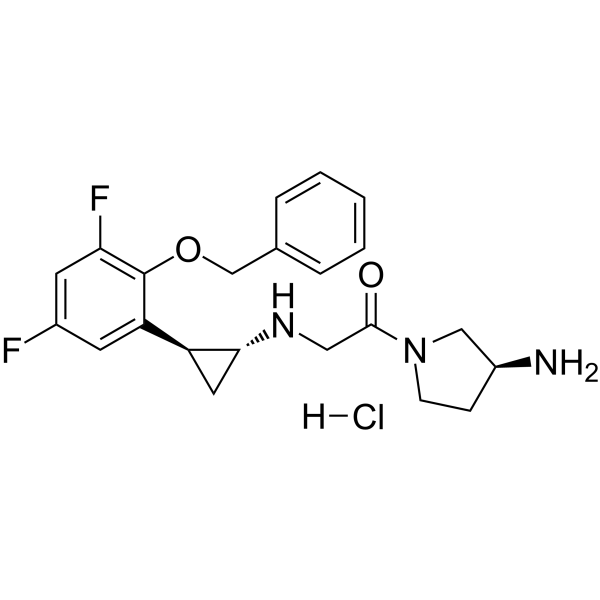
    S2116, a N-alkylated tranylcypromine (TCP) derivative, is a potent lysine-specific demethylase 1 (LSD1) inhibitor. S2116 increases H3K9 methylation and reciprocal H3K27 deacetylation at super-enhancer regions. S2116 induces apoptosis in TCP-resistant T-cell acute lymphoblastic leukemia (T-ALL) cells by repressing transcription of the NOTCH3 and TAL1 genes. S2116 significantly retardes the growth of T-ALL cells in xenotransplanted mice .
    S2116
  • HY-152901

    Fluorescent Dye Others
    Chol-N3 is a bioorthogonal-based chol probe. Chol-N3 can combine with super-resolution fluorescence microscopy (SRM), providing direct visualization of nanoscale lipid heterogeneity in the cell surface of resting living cells . Chol-N3 is a click chemistry reagent, it contains an Azide group and can undergo copper-catalyzed azide-alkyne cycloaddition reaction (CuAAc) with molecules containing Alkyne groups. It can also undergo strain-promoted alkyne-azide cycloaddition (SPAAC) reactions with molecules containing DBCO or BCN groups.
    Chol-N3
  • HY-P1728

    YAP Cancer
    Super-TDU (1-31) is a peptide fragment of Super-TDU. Super-TDU (1-31) is an inhibitor of YAP-TEAD complex. Super-TDU shows potent anti-tumor activity and suppresses tumor growth in gastric cancer mouse model .
    Super-TDU (1-31)
  • HY-D2923

    Fluorescent Dye Others
    PA-JF549-Halo ligand is a covalently linked conjugate comprising the photoactivatable fluorescent dye PA-JF549 and a ligand for the HaloTag protein. PA-JF549-Halo ligand exhibts inherent structural properties and predispose it to localize within mitochondria. PA-JF549-Halo ligand combines the exceptional brightness, photostability, and cell permeability of the JF549 dye with photoactivation capabilities and the high specificity characteristic of HaloTag protein labeling technology. PA-JF549-Halo ligand enables high-quality single-molecule imaging and super-resolution imaging of specific proteins within live cells .
    PA-JF549-Halo ligand
  • HY-P1728A
    Super-TDU (1-31) TFA
    2 Publications Verification

    YAP Cancer
    Super-TDU (1-31) TFA is a peptide fragment of Super-TDU. Super-TDU (1-31) TFA is an inhibitor of YAP-TEAD complex. Super-TDU TFA shows potent anti-tumor activity and suppresses tumor growth in gastric cancer mouse model .
    Super-TDU (1-31) TFA
  • HY-D2771

    Fluorescent Dye Others
    BP Fluor 405 NHS Ester is a water-soluble, blue-fluorescent dye that is often used in multi-color applications, including flow cytometry and super-resolution microscopy using STORM. Its excitation is ideally suited for the 407 nm spectral line of the krypton laser or the 408 nm violet laser diode. BP Fluor 405 conjugates are pH-insensitive from pH 4 to pH 10. The NHS ester (or succinimidyl ester) is the most popular amine reactive group for labeling with the primary amines of proteins (Lys), amine-modified oligonucleotides, and other amine-containing molecules. Proteins can be labeled with BP Fluor 405 NHS Ester at high molar ratios without significant self-quenching, leading to brighter conjugates and more sensitive detection. BP Fluor 405 conjugates can also be used for the detection of abundance targets.
    BP Fluor 405 NHS ester
  • HY-N1214A

    (E/Z)-super Squalene; (E/Z)-AddaVax

    Apoptosis Cancer
    (E/Z)-Squalene ((E/Z)-Super Squalene; (E/Z)-AddaVax) is a triterpenic compound. (E/Z)-Squalene accumulates and reduces liver cholesterol and triglycerides in the liver. (E/Z)-Squalen regulates the production of intracellular active oxidants (ROS) and induces apoptosis and necrosis in a concentration-and time-dependent manner .
    (E/Z)-Squalene
  • HY-D1386

    Fluorescent Dye Others
    JF526-Taxol (TFA) is a versatile scaffold for fluorogenic probes including ligands for self-labeling tags, stains for endogenous structures, and spontaneously blinking labels for super-resolution immunofluorescence .
    JF526-Taxol TFA
  • HY-136523

    Histone Demethylase Apoptosis Cancer
    S2157, a N-alkylated tranylcypromine (TCP) derivative, is a potent lysine-specific demethylase 1 (LSD1) inhibitor. S2157 increases H3K9 methylation and reciprocal H3K27 deacetylation at super-enhancer regions. S2157 induces apoptosis in TCP-resistant T-cell acute lymphoblastic leukemia (T-ALL) cells by repressing transcription of the NOTCH3 and TAL1 genes. S2157 efficiently pass through the blood-brain barrier and can almost completely eradicate CNS leukemia in mice transplanted with T-ALL cells .
    S2157
  • HY-P1727A

    YAP Cancer
    Super-TDU TFA is a specific YAP antagonist targeting YAP-TEADs interaction. Super-TDU TFA suppresses tumor growth in gastric cancer mouse model .
    Super-TDU TFA
  • HY-P10713

    Biochemical Assay Reagents Others
    PTZ-GFFY is a super-gelator that can form a hydrogel at the ultra-low concentration .
    PTZ-GFFY
  • HY-137407

    Bacterial Infection
    N-Phenylacetyl-L-homoserine lactone is a small diffusible signaling molecule that strongly antagonizes or super-activates the quorum sensing of Vibrio fischeri .
    N-Phenylacetyl-L-homoserine lactone
  • HY-117868

    CP-Dpm-GA

    Fluorescent Dye Others
    NC-174 is a super-strong guanidine compound that is sweeter than sucrose. NC-174 is more than 300,000 times sweeter than sucrose and has the potential to be a probe for sweet taste receptors .
    NC-174
  • HY-D2183

    Fluorescent Dye Others
    6-Carboxy-JF5252 is a fluorophore. 6-Carboxy-JF5252 can be used as probes, dyes, tags. 6-Carboxy-JF5252 can be used for the research of super-resolution imaging .
    6-Carboxy-JF5252
  • HY-D2954

    CLIP-PEG-NH2

    Drug Intermediate Others
    BC-PEG-NH2 (CLIP-PEG-NH2) is a chemical building block specifically designed for the CLIP-tag system, featuring enhanced water solubility and reactivity. BC-PEG-NH2 can be used for the synthesis of super-resolution imaging probes .
    BC-PEG-NH2
  • HY-D2953

    CLIP-CPY

    Fluorescent Dye Others
    BC-CPY is a CLIP-tagged probe based on the pyridine-benzoanthrone (CPY) fluorophore (Ex/Em: 580 nm/610 nm). BC-CPY has excellent cell membrane permeability, enabling deep imaging, low phototoxicity and high signal-to-noise ratio. BC-CPY can be used for super-resolution microscopy imaging of living cells .
    BC-CPY
  • HY-D2765

    Biochemical Assay Reagents Others
    BP Fluor 405 Cadaverine is a carbonyl-reactive building block used to modify carboxylic groups in the presence of activators (e.g. EDC or DCC) or activated esters (e.g. NHS esters) through a stable amide bond. Another common application for BP Fluor 405 Cadaverine is cell fixing by treatment with formaldehyde or glutaraldehyde. BP Fluor 405 is a water-soluble, blue-fluorescent dye that is often used in multi-color applications, including flow cytometry and super-resolution microscopy using STORM. Its excitation is ideally suited for the 407 nm spectral line of the krypton laser or the 408 nm violet laser diode.
    BP Fluor 405 cadaverine
  • HY-D2768

    Fluorescent Dye Others
    BP Fluor 430 NHS Ester is a water-soluble, green-fluorescent dye that is often used in multi-color applications, including flow cytometry and super-resolution microscopy using STORM. Its excitation is ideally suited for the 407 nm spectral line of the krypton laser or the 408 nm violet laser diode. BP Fluor 405 conjugates are pH-insensitive from pH 4 to pH 10. The NHS ester (or succinimidyl ester) is the most popular amine reactive group for labeling the primary amines of proteins (Lys), amine-modified oligonucleotides, and other amine-containing molecules. Proteins can be labeled with BP Fluor 430 NHS Ester at high molar ratios without significant self-quenching, leading to brighter conjugates and more sensitive detection.
    BP Fluor 430 NHS ester
  • HY-D2747

    Fluorescent Dye Others
    BP Fluor 405 acid is a water-soluble, blue-fluorescent dye that is often used in multi-color applications, including flow cytometry and super-resolution microscopy using STORM. Its excitation is ideally suited for the 407 nm spectral line of the krypton laser or the 408 nm violet laser diode. BP Fluor 405 conjugates are pH-insensitive from pH 4 to pH 10. The carboxylic acid of BP Fluor 405 is a reagent of choice for the preparation of custom activated esters that often are not commercially available. Examples of such activated esters include sulfo-NHS, TFP (2,3,5,6-Tetrafluorophenol), and STP (4-Sulfo-2,3,5,6-Tetrafluorophenol, Sodium Salt). Another common application for the non-activated carboxylic acid is peptide modification during solid phase synthesis, which usually requires in-situ activation with peptide coupling regents, e.g. HATU. BP Fluor 405 acid is also often used for control experiments, and for calibration.
    BP Fluor 405 acid
  • HY-W800695

    Fluorescent Dye Others
    BP Fluor 405 DBCO is a blue-fluorescent dye that often used in multi-color applications, including flow cytometry and super-resolution microscopy using STORM. Its excitation is ideally suited for the 407 nm spectral line of the krypton laser or the 408 nm violet laser diode. BP Fluor 405 DBCO reacts with azides via a copper-free click chemistry reaction to form a stable triazole and does not require a Cu-catalyst or elevated temperatures.
    BP Fluor 405 DBCO
  • HY-183202

    Histone Demethylase Apoptosis Cancer
    NCD38 is a Lysine-specific demethylase 1 (LSD1) inhibitor with a target IC50 of 0.59 μM. NCD38 selectively disrupts LSD1-GFI1B interactions, dissociates LSD1 and CoREST from the ERG super-enhancer. NCD38 increases apoptosis-related protein levels, induces apoptosis and reduces SOX2 and Oct4 levels. NCD38 can be used for the research of acute myeloid leukemia .
    NCD38
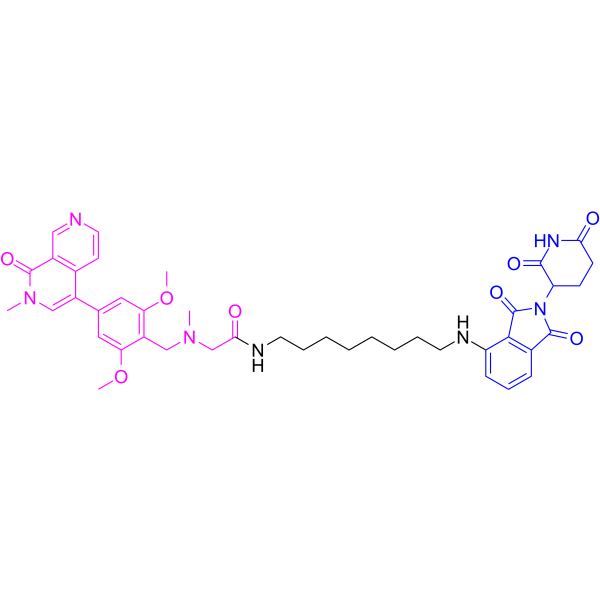
  • HY-184124

    Androgen Receptor Histone Acetyltransferase Cancer
    JYZ3032 is an orally active super inhibitor of androgen receptor (AR) and p300/CBP. JYZ3032 redirects the catalytic activity of p300 and locks the complex in a transcriptionally inactive state, thereby inhibiting AR-driven transcription and proliferation. JYZ3032 induces deep and durable tumor regression in castration-resistant and patient-derived xenograft models, and exhibits good tolerability. JYZ3032 can be used in research related to metastatic castration-resistant prostate cancer and prostate cancer .
    JZY3032
  • HY-W800694

    Fluorescent Dye Others
    BP Fluor 405 alkyne triTEA is a blue-fluorescent dye that often used in multi-color applications, including flow cytometry and super-resolution microscopy using STORM. Its excitation is ideally suited for the 407 nm spectral line of the krypton laser or the 408 nm violet laser diode. BP Fluor 405 alkyne triTEA reacts with azides via a copper-catalyzed click reaction (CuAAC) to form a stable triazole linker. A probe for copper-less detection (BP Fluor 405 DBCO) is also available for application where the presence of copper is not acceptable.
    BP Fluor 405 alkyne triTEA
  • HY-D3240

    Fluorescent Dye Others
    Photoactive NTR probe (Compound 1) is a covalent crosslinker and Fluorescent indicator targeting Nitroreductase. The Photoactive NTR probe undergoes a sequential activation process: it is first activated via nitroreductase-mediated nitro-to-amino conversion, and then forms a fluorescent product upon photoactivation. The Photoactive NTR probe can form covalent adducts with the side chains of cysteine, tyrosine, lysine and histidine in adjacent proteins to reduce fluorophore diffusion. The Photoactive NTR probe enables super-resolution (STORM) imaging of active mitochondrial nitroreductase microdomains in living cells .
    Photoactive NTR probe
  • HY-107446

    Ligands for Target Protein for PROTAC Epigenetic Reader Domain Others
    BI-7273 acid, BI-7273 (HY-100351) derivative, is a BRD9 PROTAC ligand. BI-7273 acid can be conjugated with E3 ligase Ligand Thalidomide (HY-14658) and linker to synthesize BRD9 PROTAC degrader dBRD 9-A (HY-148739) .
    BI-7273 acid

Inquiry Online

Your information is safe with us. * Required Fields.

Salutation


Country or Region *

Applicant Name *


Organization Name *

Department *


Email Address *


Product Name *

Cat. No.


Requested quantity *

Phone Number *


Remarks

Inquiry Online

Inquiry Information

Product Name:
Cat. No.:
Quantity:
MCE Japan Authorized Agent:

