
1. Search Result
Search Result
Results for "

support

" in MedChemExpress (MCE) Product Catalog:

269

Inhibitors & Agonists

12

Screening Libraries

18

Fluorescent Dyes

60

Biochemical Assay Reagents

26

Peptides

12

MCE Kits

4

Inhibitory Antibodies

43

Natural
Products

21

Isotope-Labeled Compounds

2

Click Chemistry

19

Oligonucleotides

1

GMP Molecules

Cat. No. Product Name Target Research Areas Chemical Structure
  • HY-139411

    Paraffin oil

    Environmental Pollutants Biochemical Assay Reagents Infection
    White mineral oil is the highly refined mineral oil, and is composed of saturated aliphatic and alicyclic nonpolar hydrocarbons. White mineral oil is biologically and chemically stable, and doesn’t support pathogenic bacterial growth. White mineral oil can resist moisture, extend, soften, smoothen, and lubricate .
    White mineral oil
  • HY-W002327

    Biochemical Assay Reagents Others
    Fmoc-Asn (Trt)-OH is an Fmoc-protected asparagine derivative. Fmoc-Asn (Trt)-OH supports solid-phase peptide synthesis .
    Fmoc-Asn(Trt)-OH
  • HY-P99908

    NT-17

    Interleukin Related Cancer
    Efineptakin alfa (NT-17) is a long-acting recombinant human IL-7. Efineptakin alfa supports the proliferation and survival CD4 + and CD8 + cells in both human and mice. Efineptakin alfa can be used for glioblastoma research .
    Efineptakin alfa
  • HY-B0853
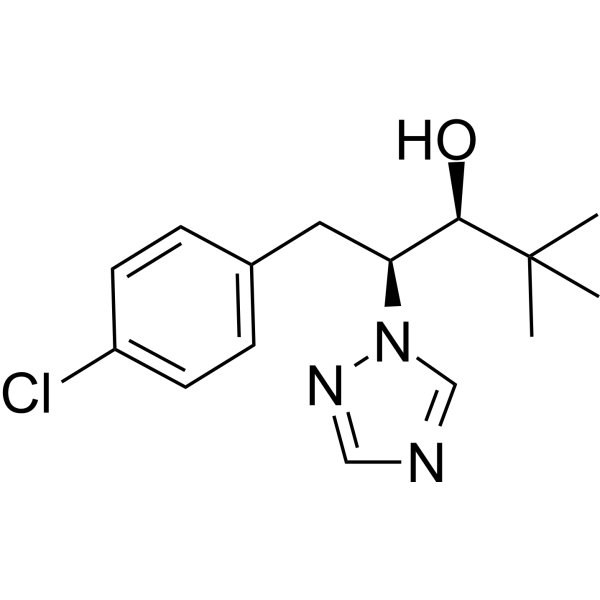
    Paclobutrazol
    2 Publications Verification

    Environmental Pollutants Fungal Infection
    Paclobutrazol is a triazole-containing plant growth retardant that is known to inhibit the biosynthesis of gibberellins. Paclobutrazol also has antifungal activities. Paclobutrazol, transported acropetally in plants, can also suppress the synthesis of abscisic acid and induce chilling tolerance in plants. Paclobutrazol is typically used to support research on the role of gibberellins in plant biology .
    Paclobutrazol
  • HY-W110542J

    PEGDA (MW 700)

    Biochemical Assay Reagents Others
    Poly(ethylene glycol) diacrylate (PEGDA) (MW 700) is a versatile polymer material that is widely used as a building material for hydrogel scaffolds, especially in the fields of tissue engineering and regenerative medicine. Poly(ethylene glycol) diacrylate (MW 700) mimics the extracellular matrix (ECM), providing support and growth space for cells .
    Poly(ethylene glycol) diacrylate (MW 700)
  • HY-143202

    Liposome Biochemical Assay Reagents Others
    DPhPC is a phospholipid compound characterized by high mechanical and chemical stability, broad temperature phase stability, and high electrical resistance. DPhPC readily forms unilamellar vesicles and solid-supported bilayers. DPhPC is commonly used as a component of nanoliposomal drug carriers or as a model membrane material for studies on membrane proteins/ion channels .
    DPhPC
  • HY-W002112

    Nornicotine

    Endogenous Metabolite Drug Metabolite nAChR β-catenin Cardiovascular Disease Neurological Disease
    (±)-Nornicotine is a major metabolite of Nicotine. (±)-Nornicotine is a partial nAChRs agonist, specifically activating receptor subtypes containing α7 and α6 subunits. (±)-Nornicotine disrupts β-catenin and ZO-1, and induces F-actin depolymerization. (±)-Nornicotine supports self-administration behavior. (±)-Nornicotine can be used in the research of atherosclerosis, Alzheimer's disease, and schizophrenia .
    (±)-Nornicotine
  • HY-175023A

    Phosphatase Cancer
    OncoACP3 TFA is a small-molecule ligand of prostatic acid phosphatase (ACP3) with an IC50 of 0.30 nM. OncoACP3 TFA has a modular structure that supports flexible payload delivery. After radiolabeling with Lu-177 it selectively accumulates in ACP3-expressing tumors with a long retention time, enabling targeted radiation delivery. OncoACP3 TFA is applicable to research related to prostate cancer .
    OncoACP3 TFA
  • HY-113371

    Methylcitric acid

    Endogenous Metabolite Metabolic Disease
    2-Methylcitric acid (Methylcitric acid) is an endogenous metabolite in the 2-methylcitric acid cycle. 2-Methylcitric acid accumulates in methylmalonic and propionic acidemias and acts as a marker metabolite. 2-Methylcitric acid markedly inhibits ADP-stimulated and uncoupled respiration in mitochondria supported by glutamate .
    2-Methylcitric acid
  • HY-Y1110H

    Magnogene, suitable for insect cell culture

    Environmental Pollutants Biochemical Assay Reagents Others
    Magnesium chloride anhydrous, suitable for insect cell culture is an inorganic salt and cell culture medium component that can be used to prepare Tris buffer. Magnesium chloride anhydrous, suitable for insect cell culture is a component of Hunter's Thrips medium, which supports the in vitro culture of western flower thrip embryonic cells, and promotes the adhesion of tissue fragments/cells as well as the growth of fibroblast-like and epithelial-like cells .
    Magnesium chloride anhydrous, suitable for insect cell culture
  • HY-114169
    WRG-28
    2 Publications Verification

    Discoidin Domain Receptor Inflammation/Immunology Cancer
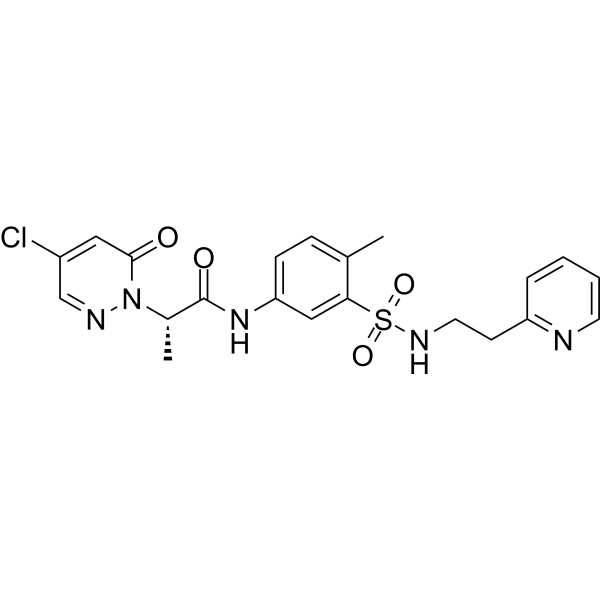
    WRG-28 is a selective, extracellularly acting DDR2 allosteric inhibitor, with an IC50 of 230 nM. WRG-28 inhibits tumor invasion, migration and tumor-supporting effects of cancer-associated fibroblasts (CAFs). WRG-28 inhibits metastatic breast tumor cell colonization in the lungs. WRG-28 also shows good activity of relieving rheumatoid arthritis in CAIA model of mice .
    WRG-28
  • HY-D2919

    Fluorescent Dye Infection
    DMN-Tre is a conjugate of a solvatochromic fluorescent dye and trehalose. DMN-Tre takes advantage of the substrate promiscuity of the endogenous antigen 85 protein complex in mycobacteria to be metabolically integrated into the hydrophobic mycobacterial membrane. Once entering this hydrophobic environment, the linked DMN dye fluorescence is "turned on", enabling specific labeling . DMN-Tre can be used to reflect bacterial metabolic activity and support physiological studies of Mycobacterium tuberculosis .
    DMN-Tre
  • HY-P5366

    Liposome Others
    PEP1 is an amphipathic α-helical peptide containing 31 residues. The interaction of PEP1 with POPC-supported lipid bilayers (SLBs) is concentration-dependent: at low concentrations, it inserts into SLBs to generate compressive stress; at medium concentrations, it saturates the membrane surface to maintain constant stress; and at high concentrations, it solubilizes SLBs. PEP1 can be used for research on the mechanism of membrane-peptide interactions .
    PEP1
  • HY-N16040

    Liposome Others
    DMG-pSar25 is a double lipid-tailed polysarcosine lipid with 25 sarcosine moieties, serving as a PEG lipid substitute in lipid nanoparticle formulations for mRNA delivery. DMG-pSar25 supports mRNA delivery in lipid nanoparticle formulations .
    DMG-pSar25
  • HY-150287A

    ITS-X

    Biochemical Assay Reagents Others
    Insulin-Transferrin-Selenium-Ethanolamine (ITS-X) is a cell culture supplement as well as a cell growth and adhesion promoter. Insulin-Transferrin-Selenium-Ethanolamine supports adhesion, pseudopodium formation, pseudopodium elongation and proliferation of adherent cancer cells in serum-free culture systems .
    Insulin-Transferrin-Selenium-Ethanolamine
  • HY-N4170
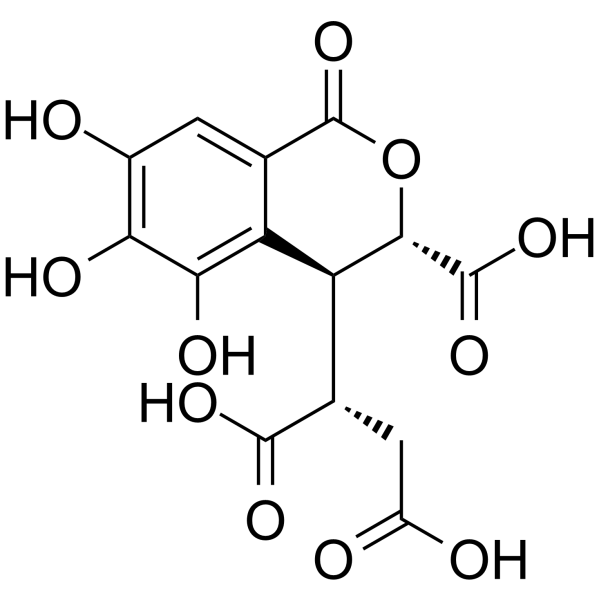
    Chebulic acid
    2 Publications Verification

    Keap1-Nrf2 Reactive Oxygen Species (ROS) Metabolic Disease
    Chebulic acid is a phenolic acid compound isolated from Terminalia chebula with strong antioxidant activity, which breaks protein cross-links induced by advanced glycation end products (AGEs) and inhibits the formation of AGEs. Chebulic acid is effective in controlling elevated metabolic parameters, oxidative stress, and liver damage, supporting its beneficial role in asthma, diabetes, and liver protection .
    Chebulic acid
  • HY-132180A

    ADC Payload DNA/RNA Synthesis Inflammation/Immunology Cancer
    Seco-DUBA hydrochloride is a DNA-targeting cytotoxic agent. Seco-DUBA hydrochloride binds to the minor groove of A-T-rich DNA regions, alkylates the adenine N3 residue, and undergoes spontaneous spirocyclization to generate active DUBA (HY-160969). Seco-DUBA hydrochloride exerts cytotoxic activity against human cancer cells. The reduced hydrophobicity of Seco-DUBA hydrochloride supports the development of antibody-drug conjugates .
    Seco-DUBA
  • HY-P2975

    Mouse laminin (Engelbreth-Holm-Swarm murine sarcoma basement membrane)

    Endogenous Metabolite Biochemical Assay Reagents Neurological Disease
    Laminin (Engelbreth-Holm-Swarm murine sarcoma basement membrane) is a crucial structural element in animal tissues, forming part of the scaffolding that supports tissue architecture. It interacts with type IV collagen through entactin and perlecan, connects to cell membranes via integrin receptors, dystroglycan complexes, and Lutheran blood group glycoproteins, and contains functional domains that facilitate collagen binding, cell adhesion, heparin interaction, and promote neurite outgrowth.
    Laminin (Engelbreth-Holm-Swarm murine sarcoma basement membrane)
  • HY-152231

    Fluorescent Dye Ligands for E3 Ligase Others
    BODIPY FL thalidomide is a high-affinity and selective human cereblon (CRBN)-targeting fluorescent probe with a Kd of 3.6 nM. BODIPY FL thalidomide enables use as a probe in time-resolved fluorescence resonance energy transfer (TR-FRET) binding assays for cereblon ligands. BODIPY FL thalidomide supports development of highly sensitive, selective, stable cereblon TR-FRET binding assays (Ex/Em = 502/510 nm) .
    BODIPY FL thalidomide
  • HY-W008888

    4,6-Bis(diphenylphosphino)phenoxazine

    Biochemical Assay Reagents Others
    N-Xantphos (4,6-Bis(diphenylphosphino)phenoxazine) is a biochemical reagent that can be used as a biological material or organic compound for life science related research. N-Xantphos is a functionalized analog of the Xantphos ligand. N-Xantphos can be used as supporting ligand for Pd-mediated carbonylation .
    N-Xantphos
  • HY-175023

    Phosphatase Cancer
    OncoACP3 is a small-molecule ligand of prostatic acid phosphatase (ACP3) with an IC50 of 0.30 nM. OncoACP3 has a modular structure that supports flexible payload delivery. After radiolabeling with Lu-177 it selectively accumulates in ACP3-expressing tumors with a long retention time, enabling targeted radiation delivery. OncoACP3 is applicable to research related to prostate cancer .
    OncoACP3
  • HY-131095

    Amino Acid Derivatives Others
    Z-Glu-Tyr-OH can be used for synthesis of peptides on a solid support .
    Z-Glu-Tyr-OH
  • HY-120122

    MDM-2/p53 Cancer
    PK7088 is a pyrazole and a specific peptide. PK7088 supports the reactivation of mutant p53 by converting it to a form exhibiting wild-type properties. PK7088 exhibit anticancer activity in cancer research .
    PK7088
  • HY-13973A
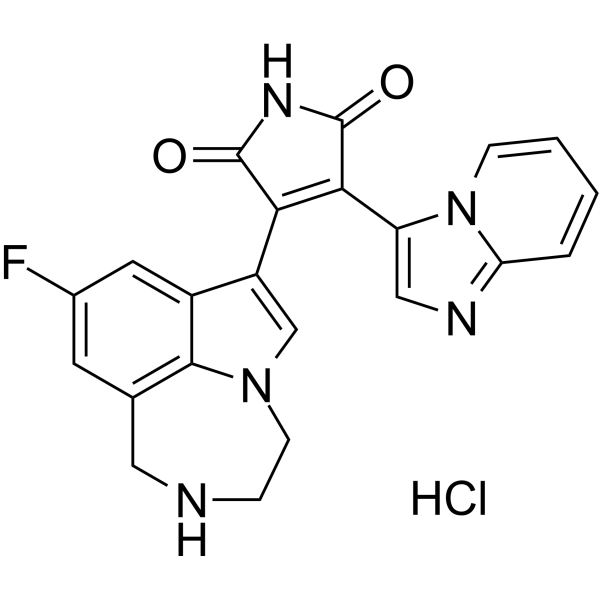
    GSK-3 inhibitor 1
    1 Publications Verification

    GSK-3 Metabolic Disease
    GSK-3 inhibitor 1 (compound core 3) is a GSK-3 inhibitor that induces stem/progenitor cell self-renewal (e.g. induces stem/progenitor cell proliferation while maintaining the ability to differentiate into tissue cells in the progeny) .
    GSK-3 inhibitor 1
  • HY-132309
    BRD0639
    1 Publications Verification

    Histone Methyltransferase Cancer
    BRD0639 is a first-in-class inhibitor of the PRMT5-substrate adaptor interaction. BRD0639 is a PRMT5 binding motif (PBM)-competitive agent that can support studies of PBM dependent PRMT5 activities .
    BRD0639
  • HY-DY3004

    Biochemical Assay Reagents Others
    Frozen Section Embedding Medium is a water-soluble mixture of polyethylene glycol and polyvinyl alcohol, widely used in immunohistochemistry experiments. Frozen Section Embedding Medium supports tissue during frozen sectioning, increasing tissue continuity and reducing wrinkling and fragmentation.
    Frozen Section Embedding Medium
  • HY-B0962

    mAChR Cardiovascular Disease
    Piperidolate hydrochloride is a cholinergic antagonist. Piperidolate hydrochloride prevents ventricular fibrillation during hypothermic cardiac manipulations to support cardiac procedures post-preoperative defibrillation. Piperidolate hydrochloride causes dose-dependent cardiac depression. Piperidolate hydrochloride can be used for the research of ventricular fibrillation .
    Piperidolate hydrochloride
  • HY-B0962A

    mAChR Cardiovascular Disease
    Piperidolate is a cholinergic antagonist. Piperidolate prevents ventricular fibrillation during hypothermic cardiac manipulations to support cardiac procedures post-preoperative defibrillation. Piperidolate causes dose-dependent cardiac depression. Piperidolate can be used for the research of ventricular fibrillation .
    Piperidolate
  • HY-121206

    Environmental Pollutants Antibiotic Infection
    (-)-Isopulegol is prepared directly from the treatment of essential oil of citronella under solid supported acid catalysis and solvent-free microwave assisted ene-cyclisation. (-)-Isopulegol shows high activity in reacting with carbonyl compounds. (-)-Isopulegol can be used for antiviral activity research .
    (-)-Isopulegol
  • HY-138559
    GW604714X
    1 Publications Verification

    Mitochondrial Metabolism Neurological Disease
    GW604714X is a potent inhibitor of mitochondrial respiration supported by pyruvate but not other substrates. GW604714X is a highly specific mitochondrial pyruvate carrier (MPC) inhibitor with a Ki <0.1 nM. GW604714X also inhibits L-lactate transport by the plasma membrane monocarboxylate transporter (MCT1), but at concentrations more than 4 orders of magnitude greater than the MPC .
    GW604714X
  • HY-158229

    HepMA

    Biochemical Assay Reagents Others
    Heparin Methacrylate (HepMA) is methacrylated heparin and is an ideal tissue engineering scaffold material and 3D printing bioink . Heparin Methacrylate needs to self-assemble into fibrous hydrogel under the action of photoinitiator LAP (HY-44076), and target bioactive adhesion sites, play an inherent supporting role for tissue cells and biodegradable activity.
    Application: cell culture, biological 3D printing, tissue engineering, etc.
    Heparin Methacrylate
  • HY-23408

    PROTAC Linkers Cancer
    Tos-PEG3 is a PEG-based PROTAC linker can be used in the synthesis of PROTACs. Tos-PEG3 (structure 1) can be used for the synthesis of 3'-aminooxy oligonucleotides solid supports .
    Tos-PEG3
  • HY-171158

    Liposome Cancer
    Glycerophosphoglycerol is a precursor for phospholipid biosynthesis. Glycerophosphoglycerol supports tumor cell membrane reconstruction and proliferation by promoting phospholipid synthesis. Glycerophosphoglycerol is promising for research of breast cancers .
    Glycerophosphoglycerol
  • HY-114558

    Benzofuroline; Isathrine; Resmethrin(mixture of isomers)

    Environmental Pollutants Insecticide Others
    Resmethrin (Benzofuroline) is a reproductively toxic compound that inhibits spermatogenesis and induces apoptosis of germ cells in mouse testis culture in vitro, but has no significant toxicity to supporting cells and interstitial cells.
    Resmethrin
  • HY-W134423B

    Biochemical Assay Reagents Others
    Agar, meets USP testing specifications is a high-quality selective growth support and substrate for non-adherent cells. Agar, meets USP testing specifications effectively supports the growth, colony formation and metachromatic matrix production of chondrocytes, and also facilitates the isolation and differentiation of pure chondrocyte strains by restricting the proliferation of fibroblast-like cells. Chondrocytes grown in Agar, meets USP testing specifications can be successfully transferred to a liquid suspension culture system, where they continue to proliferate while retaining the characteristics exhibited during growth in agar .
    Agar, meets USP testing specifications
  • HY-121462

    Quinoline Blue

    Fluorescent Dye Cancer
    Cyanine is an excellent fluorescent core scaffold for constructing fluorescent probes. Covalent conjugation of Cyanine with other potent compounds can not only enhance their efficacy but also expand their application modes. Cyanine supports the development of cancer theranostic agents. Cyanine can be used in cancer research .
    Cyanine
  • HY-135782

    Poly(ADP-ribose) Glycohydrolase (PARG) Cancer
    iso-ADP ribose is the small-molecule ligand for protein nucleic acid modification, comprising parts of two consecutive ADP-ribosyl units within the PAR chain. iso-ADP ribose specifically binds WWE, FHA and OB-fold domains, enabling PAR-dependent functional responses like ubiquitylation and supporting DNA damage signaling and repair. iso-ADP ribose can be used for cancer research .
    iso-ADP ribose
  • HY-W250310

    L-Arginine alpha-ketoglutarate

    Biochemical Assay Reagents Others
    L-Arginine α-ketoglutarate, often abbreviated as AAKG, is a dietary supplement that combines arginine L-Arginine and α-ketoglutarate, a key intermediate in the Krebs cycle. L-arginine is a precursor of nitric oxide, which regulates blood flow and promotes vasodilation, while α-ketoglutarate is involved in energy production and protein synthesis. Together, these compounds are thought to support improved muscle recovery, increased endurance, and enhanced athletic performance.
    L-Arginine α-ketoglutarate
  • HY-W033573

    Biochemical Assay Reagents Others
    Hexaammineruthenium(II) chloride is a non-corrosive redox probe. Hexaammineruthenium(II) chloride avoids gold electrode corrosion and degradation to enable stable electrochemical impedance spectroscopy measurements. Hexaammineruthenium(II) chloride supports detection of human-IgG with a defined diagnostic concentration range .
    Hexaammineruthenium(II) chloride
  • HY-113371A

    Methylcitric acid trisodium

    Endogenous Metabolite Metabolic Disease
    2-Methylcitric acid trisodium (Methylcitric acid trisodium) is an endogenous metabolite in the 2-methylcitric acid cycle. 2-Methylcitric acid trisodium accumulates in methylmalonic and propionic acidemias and acts as a marker metabolite. 2-Methylcitric acid trisodium markedly inhibits ADP-stimulated and uncoupled respiration in mitochondria supported by glutamate .
    2-Methylcitric acid trisodium
  • HY-N6612B
    Glucuronic acid sodium
    1 Publications Verification

    Bacterial Inflammation/Immunology
    Glucuronic acid sodium is a polysaccharide that exhibits anti-inflammatory activity, supporting the healing of ulcerative colitis. Glucuronic acid sodium also enhances the intestinal barrier by upregulating tight junction proteins like ZO-1 and Occludin. Furthermore, Glucuronic acid sodium plays a role in modulating gut microbiota by increasing beneficial bacterial populations while suppressing harmful ones.
    Glucuronic acid sodium
  • HY-113371S

    Methylcitric acid-d3

    Endogenous Metabolite Metabolic Disease
    2-Methylcitric acid-d3 is the deuterium labeled 2-Methylcitric acid. 2-Methylcitric acid (Methylcitric acid) is an endogenous metabolite in the 2-methylcitric acid cycle. 2-Methylcitric acid accumulates in methylmalonic and propionic acidemias and acts as a marker metabolite. 2-Methylcitric acid markedly inhibits ADP-stimulated and uncoupled respiration in mitochondria supported by glutamate .
    2-Methylcitric acid-d3
  • HY-B0853R

    Reference Standards Fungal Infection
    Paclobutrazol (Standard) is the analytical standard of Paclobutrazol. This product is intended for research and analytical applications. Paclobutrazol is a triazole-containing plant growth retardant that is known to inhibit the biosynthesis of gibberellins. Paclobutrazol also has antifungal activities. Paclobutrazol, transported acropetally in plants, can also suppress the synthesis of abscisic acid and induce chilling tolerance in plants. Paclobutrazol is typically used to support research on the role of gibberellins in plant biology .
    Paclobutrazol (Standard)
  • HY-N9785

    Others Neurological Disease
    1-O-trans-p-Coumaroylglycerol is a compound found in certain plants that has neuroprotective activity. 1-O-trans-p-Coumaroylglycerol has shown potential in protecting against neurodegenerative diseases. 1-O-trans-p-Coumaroylglycerol is also believed to act as a natural antioxidant, and its applications may include improving cognitive function and supporting neurological health .
    1-O-trans-p-Coumaroylglycerol
  • HY-21170E

    Zinc(II) Triflate

    Biochemical Assay Reagents Others
    Zinc trifluoromethanesulfonate (Zinc (II) Triflate) is a Zn 2+ salt commonly used in potentiometric titration to determine the stability constants of Zn 2+-quinoline sulfonamide complexes. Aqueous solutions of Zinc trifluoromethanesulfonate form micellar structures, which result in poor desolvation kinetics of Zn 2+ and induce dendrite growth on zinc anodes, failing to support long-term cycling of zinc anodes .
    Zinc trifluoromethanesulfonate
  • HY-D1460

    Bacterial β-glucuronidase Infection
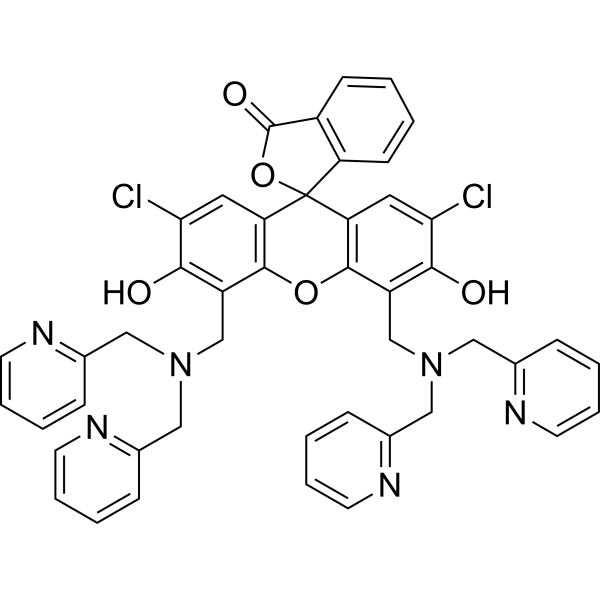
    Fluorescein Di-β-D-Glucuronide is an orally active fluorescent probe substrate and an indicator of β-glucuronidase (βG) activity in intestinal bacteria. Fluorescein Di-β-D-Glucuronide can be used for non-invasive time-lapse optical imaging of βG activity in intestinal bacteria in nude mice. Fluorescein Di-β-D-Glucuronide supports the quantitative analysis of bacterial βG enzyme activity and inhibition .
    Fluorescein Di-β-D-Glucuronide
  • HY-W127671

    Biochemical Assay Reagents Others
    Tetramethylammonium perchlorate is used as an intermediate in organic and chemical synthesis. It is used as mobile phase in HPLC analysis and quantification of olanzapine, clozapine and N-desmethylclozapine. It acts as a supporting electrolyte in the electrochemical reduction of 1-bromodecane, 1-iodododecane, 2-iodooctane, and 2-bromooctane on a mercury cathode.
    Tetramethylammonium perchlorate
  • HY-157281

    PLIII

    Endogenous Metabolite Drug Derivative MHC Inflammation/Immunology
    Photolumazine III (PLIII) is a microbial metabolite and derivative of Riboflavin (HY-B0456). Photolumazine III binds MR1 with high specificity. Photolumazine III supports efficient TCR binding. Photolumazine III acts as an antigen to activate cells. Responses to Photolumazine III trigger immune reactions .
    Photolumazine III
  • HY-147116

    Biochemical Assay Reagents Others
    4-[3-(Trifluoromethyl)diazirin-3-yl] benzoic acid N-hydroxysuccinimide ester is a photoactivated bifunctional cross-linker. 4-[3-(Trifluoromethyl)diazirin-3-yl] benzoic acid N-hydroxysuccinimide ester can be used for researching a strategy of rapid and accurate structure generation in support of antigen engineering programs .
    4-[3-(Trifluoromethyl)diazirin-3-yl] benzoic acid N-hydroxysuccinimide ester
  • HY-135782A

    Poly(ADP-ribose) Glycohydrolase (PARG) Cancer
    iso-ADP ribose TEA is the small-molecule ligand for protein nucleic acid modification, comprising parts of two consecutive ADP-ribosyl units within the PAR chain. iso-ADP ribose TEA specifically binds WWE, FHA and OB-fold domains, enabling PAR-dependent functional responses like ubiquitylation and supporting DNA damage signaling and repair. iso-ADP ribose TEA can be used for cancer research .
    iso-ADP ribose TEA

Inquiry Online

Your information is safe with us. * Required Fields.

Salutation


Country or Region *

Applicant Name *


Organization Name *

Department *


Email Address *


Product Name *

Cat. No.


Requested quantity *

Phone Number *


Remarks

Inquiry Online

Inquiry Information

Product Name:
Cat. No.:
Quantity:
MCE Japan Authorized Agent: