


1. Search Result
Search Result
Results for "

surface

" in MedChemExpress (MCE) Product Catalog:

1015

Inhibitors & Agonists

15

Screening Libraries

68

Fluorescent Dye

321

Biochemical Assay Reagents

102

Peptides

1

MCE Kits

102

Inhibitory Antibodies

72

Natural
Products

251

Recombinant Proteins

20

Isotope-Labeled Compounds

128

Antibodies

32

Click Chemistry

116

Oligonucleotides

1

GMP Molecules

Cat. No. Product Name Target Research Areas Chemical Structure
  • HY-108847
    Etanercept
    Maximum Cited Publications
    15 Publications Verification

    TNF Receptor Bacterial Inflammation/Immunology Cancer
    Etanercept, a dimeric fusion protein that binds TNF, acts as a TNF inhibitor. Etanercept competitively inhibits the binding of both TNF-α and TNF-β to cell surface TNF receptors, rendering TNF biologically inactive. Etanercept shows efficacy against rheumatoid arthritis, juvenile idiopathic arthritis, and plaque psoriasis .
    Etanercept
  • HY-D0802
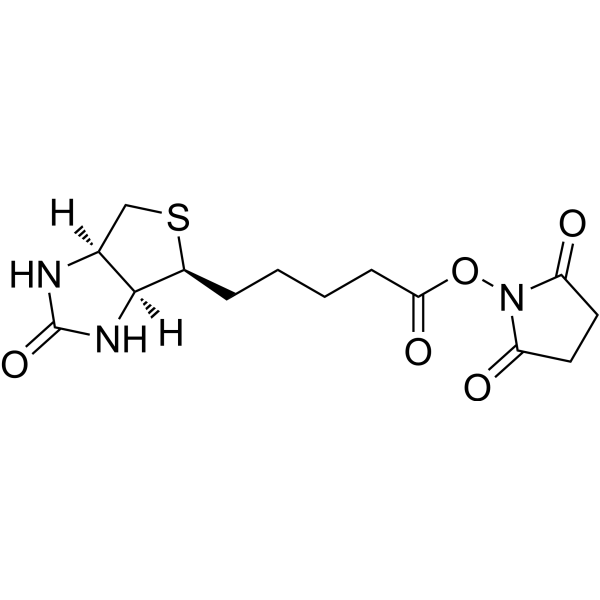
    Biotin NHS
    Maximum Cited Publications
    19 Publications Verification

    Biotin N-hydroxysuccinimide ester; NHS-Biotin

    Fluorescent Dye Others
    Biotin NHS is an amino reactive biotin reagent used in the preparation of biotinylated surfaces or polypeptides.
    Biotin NHS
  • HY-W099535

    Biochemical Assay Reagents Others
    Lithium dodecyl sulfate is an anionic hydrocarbon surfactant with both surface tension reduction and interfacial adsorption capabilities. Lithium dodecyl sulfate induces low surface viscosity; it forms micelles in aqueous solutions through entropy-driven (low temperature) and enthalpy-driven (high temperature) mechanisms. When acting synergistically with tetrabutylammonium bromide, Lithium dodecyl sulfate exhibits cloud point behavior due to micelle aggregation and phase separation. Lithium dodecyl sulfate can form an adsorption layer at the air-water interface with quantifiable surface excess and minimum area per molecule, and it has higher equilibrium surface tension and foamability compared to other dodecyl sulfate counterion variants. The foam stability of Lithium dodecyl sulfate above its critical micelle concentration is low, and its dynamic surface tension pattern changes dynamically with bubble frequency .
    Lithium dodecyl sulfate
  • HY-125920

    Sarkosyl NL sodium

    Environmental Pollutants Biochemical Assay Reagents Others
    Lauroylsarcosine sodium is a surfactant commonly used in personal care and cosmetics such as shampoos, facial cleansers and toothpaste. It works by lowering the surface tension of water, allowing it to better penetrate and clean surfaces. Lauroylsarcosine sodium is considered safe for cosmetic use and is approved for use in several countries. However, it can cause skin irritation in high concentrations or with prolonged exposure.
    Lauroylsarcosine sodium
  • HY-W105426

    [3-(Methacryloyloxy)propyl]trimethoxysilane

    Biochemical Assay Reagents Others
    3-(Trimethoxysilyl)propyl methacrylate is a reactive monomer and silane coupling agent with C=C and O-C=O functional groups, acting as a surface modifier and anti-agglomeration agent. 3-(Trimethoxysilyl)propyl methacrylate can be used to prepare nanoparticles .
    3-(Trimethoxysilyl)propyl methacrylate
  • HY-E70234
    Sortase A, S. aureus
    1 Publications Verification

    SrtA

    Bacterial Others
    Sortase A, S. aureus (SrtA), a transpeptidase enzyme is present in many Gram-positive bacteria and helps in the recruitment of the cell surface proteins. Sortase A, S. aureus plays an important part in ligation of various molecules on the cell surfaces .
    Sortase A, S. aureus
  • HY-147105

    Orphan Nuclear Receptor Interleukin Related Inflammation/Immunology
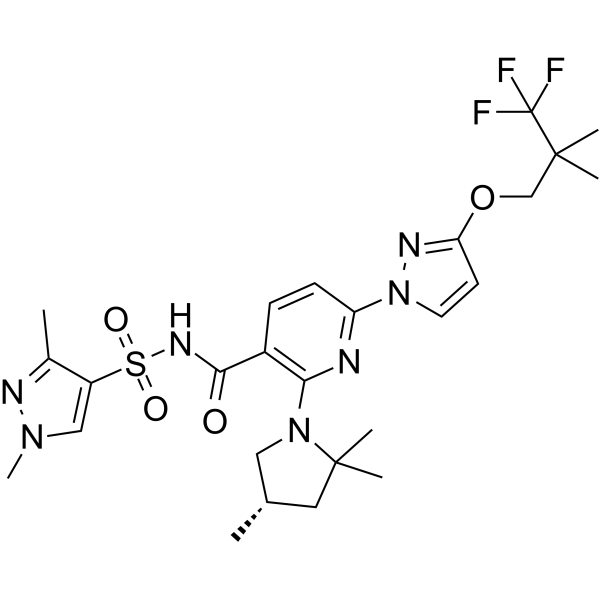
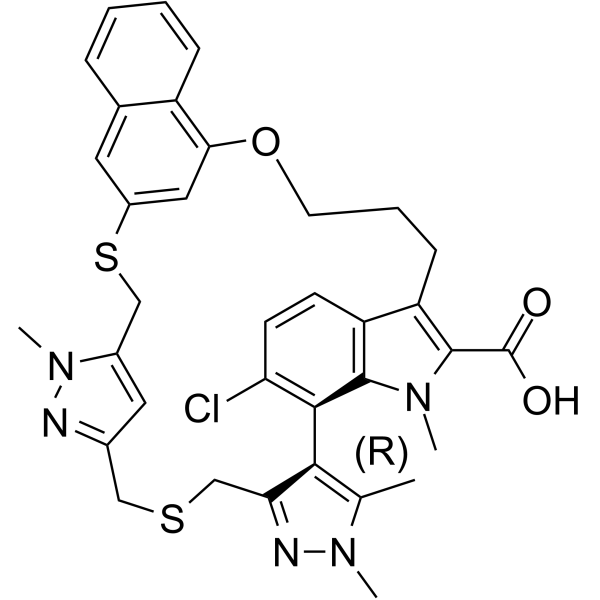
    LRH-1 agonist-2 (Compound 6N) is a selective, full LRH-1 agonist with an EC50 of 15.7 nM. LRH-1 agonist-2 directly interacts with the Thr352 and His390 residues in the LRH-1 binding pocket, promotes allosteric signaling to the activation function surface (AFS), stabilizes the AFS and enhances coactivator recruitment. LRH-1 agonist-2 induces the anti-inflammatory cytokine IL-10, and reduces the pro-inflammatory cytokines IL-1β and TNFα. LRH-1 modulator-1 exerts anti-inflammatory effects in intestinal organoids. LRH-1 modulator-1 can be used in studies related to inflammatory bowel disease .
    LRH-1 agonist-2
  • HY-N0699
    Daphnoretin
    3 Publications Verification

    Dephnoretin; Thymelol

    PKC Influenza Virus NOD-like Receptor (NLR) Apoptosis HBV JNK PI3K Akt CDK Caspase Bcl-2 Family Infection Inflammation/Immunology Cancer
    Daphnoretin (Dephnoretin; Thymelol) is a protein kinase C (PKC) activator that inhibits the expression of hepatitis B virus (HBV) surface antigen (HBsAg) and exhibits antiviral activity. Daphnoretin exerts its antitumor effects by inhibiting the activation of the PI3K/AKT signaling pathway and triggers the mitochondrial apoptosis pathway. Daphnoretin alleviates chondrocyte apoptosis and inflammatory responses by inhibiting endoplasmic reticulum stress and activation of the NLRP3 inflammasome. Daphnoretin regulates the differentiation and maturation of dendritic cells, inhibits their immunostimulatory function by downregulating the phosphorylation level of JNK, and thus exerts a protective effect in skin graft rejection .
    Daphnoretin
  • HY-W440823A

    DSPE-PEG1000-NH2 ammonium

    Liposome Cancer
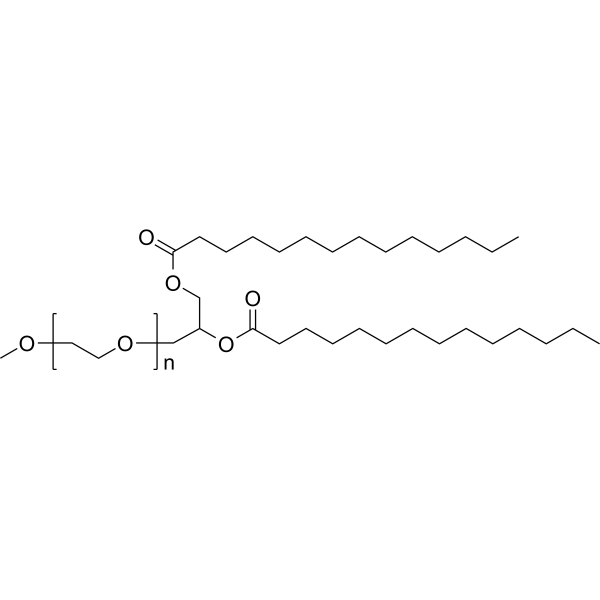
    DSPE-PEG1000-Amine (DSPE-PEG1000-NH2) ammonium is a 1,2-distearoyl-sn-glycero-3-phosphoethanolamine-polyethylene glycol conjugate with a terminal amino group. DSPE-PEG1000-Amine ammonium can functionalize the surface of PLGA-lecithin-PEG core-shell nanoparticles to introduce positive surface charges. The amino group of DSPE-PEG1000-Amine ammonium can be converted into an aromatic aldehyde to react with the acetone-protected aromatic hydrazide on the surface of bovine carbonic anhydrase (BCA) molecules .
    DSPE-PEG1000-Amine ammonium
  • HY-130086

    ADC Linker Cancer
    Bis-PEG4-NHS ester is a crosslinking reagent and amine-reactive modulator .Bis-PEG4-NHS ester reacts with primary amine groups on liposome surfaces via amide bond formation to covalently attach dibenzylcyclooctyne groups, with a hydrophilic PEG4 spacer reducing steric hindrance for subsequent click chemistry .Bis-PEG4-NHS ester enables site-specific antibody coupling to liposome surfaces via copper-free strain-promoted alkyne-azide cycloaddition click chemistry without disrupting liposome structure in minimal organic solvent volumes .Bis-PEG4-NHS ester undergoes hydrolysis during annealing to form -COOH groups that interact with PbI and FAI to enhance perovskite structural integrity, passivate defects, and modulate nucleation kinetics to regulate crystal growth .Bis-PEG4-NHS ester enhances device efficiency and long-term stability when used as an antisolvent additive for p-i-n perovskite solar cells .
    Bis-​PEG4-​NHS ester
  • HY-16657A

    MMP mAChR Neurological Disease Inflammation/Immunology Cancer
    (S,S)-TAPI-1 is an isomer of TAPI-1. TAPI-1 is a TACE (ADAM17) inhibitor and blocks the shedding of several cell surface proteins. TAPI-1 is also a metalloproteinase (MMP) inhibitor .
    (S,S)-TAPI-1
  • HY-P991734

    TREM receptor Syk Calcium Channel Neurological Disease Inflammation/Immunology
    VHB937 is a potent and selective TREM2 agonist, a human monoclonal antibody, with sub-nanomolar affinity. VHB937 enhances TREM2 surface expression and downstream signaling, such as Syk phosphorylation and calcium mobilization. VHB937 exhibits robust neuroprotective effects in vivo, significantly reducing pathology and pro-inflammatory markers across a broad range of animal models of neuroinflammation and neurodegeneration. VHB937 can be used for neurodegenerative diseases research .
    VHB937
  • HY-401383

    Environmental Pollutants Biochemical Assay Reagents Others
    Poly (acrylic acid) (MW 10000-60000) is a type of polyacrylic acid with a molecular weight of 10000-60000. Poly (acrylic acid) (MW 10000-60000) is an anionic polymer. Poly (acrylic acid) (MW 10000-60000) can be used as a corrosion inhibitor and surface stabilizer.
    Poly(acrylic acid) (MW 10000~60000)
  • HY-P990060

    Mim8

    Factor Xa Cardiovascular Disease
    Denecimig (Mim8) is a factor VIII-mimetic bispecific antibody with micromolar human binding affinity for Factor X and Factor IXa. Denecimig binds Factor X and Factor IXa, localizes both to the phospholipid surface, enhances the Factor IXa-mediated activation of Factor X to Factor Xa, and stimulates the proteolytic activity of Factor IXa via its monovalent anti-Factor IXa arm. Denecimig is applicable to research related to hemophilia A .
    Denecimig
  • HY-W133920

    PPG 2000

    Environmental Pollutants Biochemical Assay Reagents Others
    Polypropylene glycol 2000 (PPG 2000) is a polyether produced by ring-opening polymerization of propylene oxide. Polypropylene glycol 2000 has low toxicity, and acts as a dispersant for leather finishing materials, as well as a surfactant and wetting agent for pharmaceutical preparations .
    Polypropylene glycol 2000
  • HY-W014728
    N-Methyldopamine hydrochloride
    1 Publications Verification

    Dopamine Receptor Cardiovascular Disease Neurological Disease
    N-Methyldopamine hydrochloride is a precursor of adrenaline in the adrenal medulla. N-Methyldopamine hydrochloride is a modification of the dopamine (DA), and retains agonist activity at the DA1 receptor. N-Methyldopamine hydrochloride remains capable of universal surface coating and secondary reactions using the surface catechols. N-Methyldopamine hydrochloride can be used for heart failure research .
    N-Methyldopamine hydrochloride
  • HY-W332335

    Biochemical Assay Reagents Others
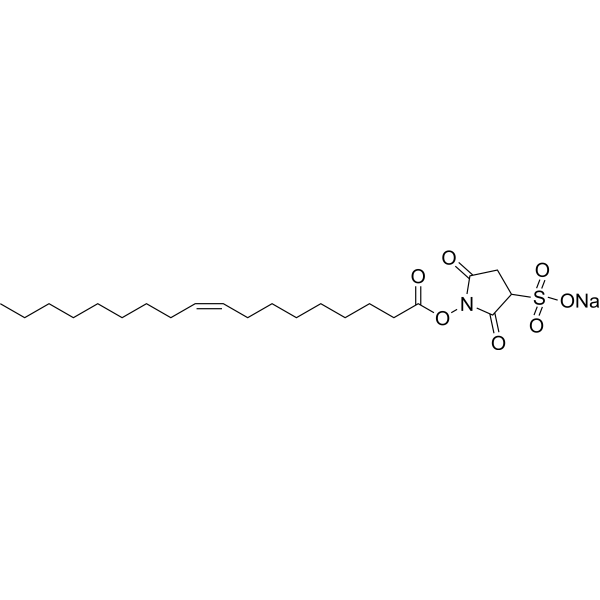
    Sulfosuccinimidyl-6-(biotinamido)hexanoate sodium is a protein crosslinker, and is a biotinylation reagentcan for labeling cell surface proteins .
    Sulfosuccinimidyl-6-(biotinamido)hexanoate sodium
  • HY-147266

    VIR-2218 sodium

    Small Interfering RNA (siRNA) HBV Infection
    Elebsiran (VIR-2218) sodium is a siRNA that targets and degrades hepatitis B virus (HBV) and hepatitis D virus (HDV) RNA transcripts. Elebsiran sodium leads to a significant decrease in HBV surface antigen (HBsAg) and a reduction in viral load. Elebsiran sodium binds to the sialic acid-depleted glycoprotein receptor (ASGPR) on the surface of liver cells through the GalNAc ligand, achieving liver-targeted delivery and demonstrating improved liver safety. Elebsiran sodium can be used for the study of chronic HBV/HDV infections .
    Elebsiran sodium
  • HY-P11111

    Drug Derivative Others
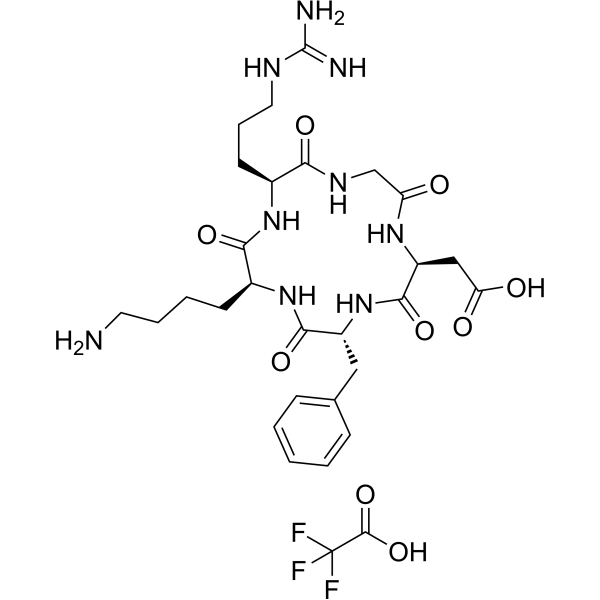
    QP5 is an Amelogenin (HY-P71627)-derived peptide. QP5 binds on the hydroxyapatite and demineralized tooth enamel surfaces, transitorily stabilize the amorphous calcium phosphate (ACP), control the crystallization of hydroxyapatite and promote the remineralization of caries lesions. QP5 promotes remineralization in rat caries models. QP5 can be used for oral diseases like dental caries research .
    QP5
  • HY-156404
    PM-1
    2 Publications Verification

    Fluorescent Dye Others
    PM-1, a derivative of Thioflavin-T (ThT; HY-D0218), is a small but highly specific plasma membrane (PM) fluorescent dye for specific and long-time membrane imaging of living and fixed cells. PM-1 is embedded directly into the cell membrane and exhibits a very long retention time on the plasma membrane with a half-life of approximately 15 h. PM-1 can be used in combination with protein labeling probes to study ectodomain shedding and endocytosis processes of cell surface proteins .
    PM-1
  • HY-75070

    Biochemical Assay Reagents Others
    (+)-1-(1-Naphthyl)ethylamine ((+)-1-(1-NEA)) is a chiral modifier used to introduce enantioselectivity in catalytic hydrogenation reactions. 1-NEA can undergo H-D exchange with D2 in solution to form N?D bonds. That is, 1-NEA can complete Pt surface adsorption and protonation through amine N atoms, indicating that NEA molecules have the potential to impart enantioselectivity to Pt hydrogenation catalysts .
    (+)-1-(1-Naphthyl)ethylamine
  • HY-W075766

    Nickel difluoride

    Biochemical Assay Reagents Others
    Nickel(II) fluoride (Nickel difluoride) is a fluorinating agent and catalyst suitable for surface treatment of aluminum profiles and the production of inks, fluorescent lamps, and organic synthesis. Nickel(II) fluoride is a kind of biological materials or organic compounds that are widely used in life science research .
    Nickel(II) fluoride
  • HY-160477

    PIKfyve NF-κB IKK Inflammation/Immunology
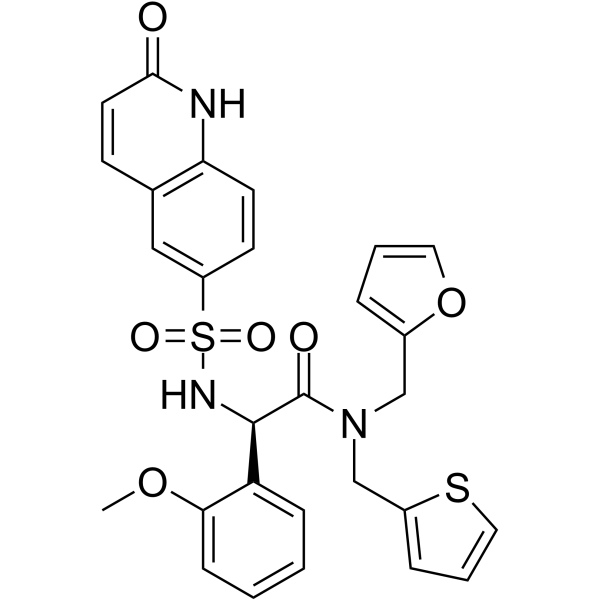
    DC-SX029 is a potent SNX10 protein-protein interaction (PPI) inhibitor with oral activity with an estimated KD constant of ~0.935 μM by surface plasmon resonance (SPR). DC-SX029 blocks the SNX10-PIKfyve interaction, thereby decreased the TBK1/c-Rel signaling activation. DC-SX029 does not affect the protein level of SNX10. DC-SX029 has the potential for inflammatory bowel disease (IBD) research .
    DC-SX029
  • HY-P991674

    BJT-778

    HBV Infection Inflammation/Immunology
    Brelovitug (BJT-778) is a humanized IgG1 neutralizing monoclonal antibody targeting hepatitis B surface antigen (HBsAg). Brelovitug binds with high affinity to HBsAg purified from HBV serotypes ad and ay, with Kd values of 0.22 nM and 0.39 nM, respectively. Brelovitug binds with high affinity to HBsAg of HBV genotypes A, B, C and D, with IC50 values of 0.07, 0.02, 0.02 and 0.07 nM, respectively. Brelovitug can be used in research related to chronic hepatitis B and chronic hepatitis D .
    Brelovitug
  • HY-W014861

    Tetramethyl-ammoniuiodide

    Biochemical Assay Reagents Others
    Tetramethylammonium iodide (Tetramethyl-ammoniuiodide) is a capillary active agent and weakly capillary active quasi-simple salt. Tetramethylammonium iodide decreases aqueous solution surface tension with increasing concentration and exhibits surface accumulation of constituent ions at liquid-vapor interfaces .
    Tetramethylammonium iodide
  • HY-139201C

    PDLHB (MW 1000-5000)

    CaSR Others
    Poly-D-lysine hydrobromide (MW 1000-5000) (PDLHB (MW 1000-5000)) is a synthetic cationic polypeptide polymer commonly used as a cell adhesion promoter and surface coating molecule. Poly-D-lysine hydrobromide is also known as a calcium-sensing receptor (CaSR) agonist peptide .
    Poly-D-lysine hydrobromide (MW 1000-5000)
  • HY-D2170

    Fluorescent Dye Others
    AF488 streptavidin is a fluorescently labeled streptavidin. AF488 streptavidin is a streptavidin conjugated to Alexa Fluor 488, with 4 fluorophores per protein molecule, enabling stoichiometric fluorescent labeling of cell surface targets. AF488 streptavidin can form a complex with biotinylated E07 aptamer to stain cells expressing EGFR, and the staining is reversible after treatment with mA9 detoxifying oligonucleotides (Ex/Em = 470/520 nm) .
    AF488 streptavidin
  • HY-E70234A

    Bacterial Infection Inflammation/Immunology
    Sortase A, S. aureus (non-Ca 2+-dependent), a transpeptidase enzyme is present in many Gram-positive bacteria and helps in the recruitment of the cell surface proteins. Sortase A, S. aureus (non-Ca 2+-dependent) plays an important part in ligation of various molecules on the cell surfaces .
    Sortase A, S. aureus (non-Ca<sup>2+</sup>-dependent)
  • HY-147266A

    VIR-2218

    HBV Small Interfering RNA (siRNA) Infection
    Elebsiran (VIR-2218) is a siRNA that targets and degrades hepatitis B virus (HBV) and hepatitis D virus (HDV) RNA transcripts. Elebsiran leads to a significant decrease in HBV surface antigen (HBsAg) and a reduction in viral load. Elebsiran binds to the sialic acid-depleted glycoprotein receptor (ASGPR) on the surface of liver cells through the GalNAc ligand, achieving liver-targeted delivery and demonstrating improved liver safety. Elebsiran can be used for the study of chronic HBV/HDV infections .
    Elebsiran
  • HY-W102545

    Biochemical Assay Reagents Others
    Diaza-15-crown-5 extends the lifetime of M intermediates in BR membranes. Diaza-15-crown-5 is a crown ether compound that alters the surface charge of BR membranes. Diaza-15-crown-5 changes the surface charge of the BR film. and overall membrane stability. Diaza-15-crown-5 allows the M state to be maintained for a longer period of time .
    Diaza-15-crown-5
  • HY-160052

    Interleukin Related Inflammation/Immunology Cancer
    IL-6 aptamer sodium is an aptamer that specifically binds to IL-6, and can serve as a biological recognition receptor for high-sensitivity detection. IL-6 aptamer sodium enables label-free specific detection through changes in electrical signals of carbon nanotube microarrays or alterations in capacitive impedance on the surface of gold sensors. IL-6 aptamer sodium still maintains high selectivity even below the gray zone threshold for cancer diagnosis, and shows no significant non-specific binding to bovine serum albumin. IL-6 aptamer sodium can form an ordered self-assembled monolayer with 6-mercapto-1-hexanol on gold surfaces, making it suitable for reagent-free capacitive impedance biosensing platforms. IL-6 aptamer sodium is widely used in research related to fields such as cancer, inflammatory diseases, myeloma, liver cancer and glioma .
    IL-6 aptamer sodium
  • HY-W012887

    Biochemical Assay Reagents Others
    Oxalyldihydrazide is a crosslinking agent in proteomics research. Oxalyldihydrazide can capture carbonylated proteins on the surface of a microchip .
    Oxalyldihydrazide
  • HY-N0241

    Cholinesterase (ChE) Lipase Bacterial Cytochrome P450 Infection Metabolic Disease
    Rhodionin is an orally active, multifunctional antivirulence and cytoprotective agent that targets and inhibits Lipase, sortase A (SrtA), CYP2D6 (IC50=0.761 μM), AChE (IC50=2.43-57.5 μM), and DPPH free radicals (IC50=19.49 μM). Rhodionin is isolable from the roots of Rhodiola crenulata. Rhodionin reduces postprandial serum triglyceride levels in mice by inhibiting lipase activity. Rhodionin also binds directly to SrtA to inhibit its transpeptidase activity, thereby reducing the fibrinogen adhesion and surface protein A levels of MRSA, effectively inhibiting biofilm formation and protecting against MRSA-induced cell damage. Rhodionin improves the survival rate of infected mice without affecting MRSA growth, and finds wide application in studies related to hyperlipidemia, exogenous obesity, and pneumonia induced by methicillin-resistant Staphylococcus aureus (MRSA) .
    Rhodionin
  • HY-W129456

    Biochemical Assay Reagents Neurological Disease
    Isaxonine acts as a modifier of the surface pH of the bilayer . Isaxonine accelerates the rate of peripheral nerve regeneration, stimulate axonal sprouting and promote motor and sensory function recovery . Isaxonine is a neurotrophic agent .
    Isaxonine
  • HY-P991708

    REGN-4336

    PSMA CD3 Cancer
    Olsutamig is a bivalent humanized IgG4κ monoclonal antibody inhibitor targeting FOLH1/PSMA and CD3E. Olsutamig simultaneously binds to PSMA on the tumor cell surface and CD3E on the T cell surface, markedly activating T cells and thereby specifically killing prostate cancer cells .
    Olsutamig
  • HY-D0384

    Fluorescent Dye
    Pigment Red 144 is a commonly used commercial dye for bulk coloring of plastics and synthetic fibers and for surface coatings such as paints and inks.
    Pigment Red 144
  • HY-D0345

    Fluorescent Dye
    Pigment Red 178 is a commonly used commercial dye for bulk coloring of plastics and synthetic fibers and for surface coatings such as paints and inks.
    Pigment Red 178
  • HY-108299

    Perfluorotripropylamine; FTPA; Tris(perfluoropropyl)amine

    Biochemical Assay Reagents Others
    Perfluamine (Perfluorotripropylamine), a hydrophobic carrier fluid, is used in the surface modification of droplet polymeric microfluidic devices. Perfluamine has a role as a blood substitute .
    Perfluamine
  • HY-P11204

    Peptide-Drug Conjugates (PDCs) Others
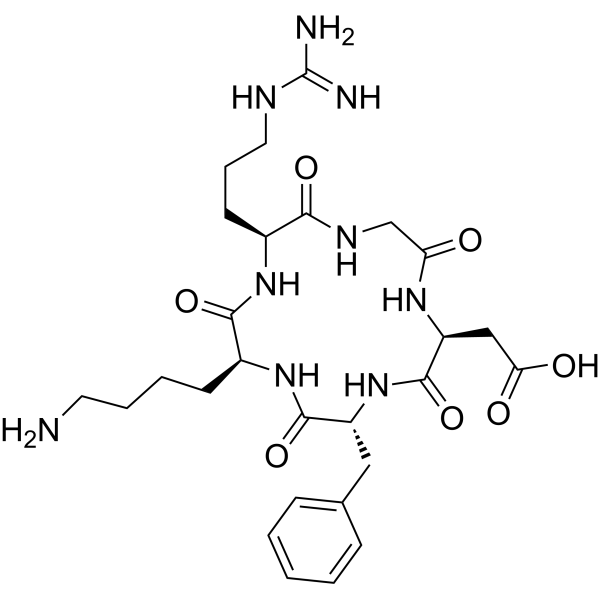
    DDDEEKC is a bioinspired peptide sequence that can selectively adsorb onto the enamel surface (mimicking the role of salivary acquired pellicle protein statherin), acting as a "target - guiding agent" for tooth enamel remineralization. DDDEEKC enhances the regeneration of hydroxyapatite (HAP). DDDEEKC is promising for research of in-situ remineralization repair of enamel demineralization damage (such as dental caries) .
    DDDEEKC
  • HY-126970

    HBV Infection
    HBF-0259 is a potent and selective inhibitor of hepatitis B virus (HBV) surface antigen (HBsAg) secretion, with an EC50 of 1.5 μM in HepG2.2.15 cells. HBF-0259 has no effect on HBV DNA synthesis .
    HBF-0259
  • HY-E70886

    Influenza Virus Infection
    Neuraminidase A is a major glycoprotein on the surface of the influenza virus .
    Neuraminidase A
  • HY-172478

    Liposome Cancer
    DSPE-PEG1000-F3 is a PEG compound which composed of DSPE and a nucleolin targeting peptide (F3). F3 peptide can specifically bind to cell surface nucleolin and undergo an effective cell surface to nucleus transport. DSPE-PEG1000-F3 can be used for drug delivery .
    DSPE-PEG1000-F3
  • HY-D0383

    Fluorescent Dye
    Pigment Red 146 is a commonly used commercial dye for bulk coloring of plastics and synthetic fibers and for surface coatings such as paints and inks.
    Pigment Red 146
  • HY-D0596

    Fluorescent Dye
    Pigment Red 188 is a commonly used commercial dye for bulk coloring of plastics and synthetic fibers and for surface coatings such as paints and inks.
    Pigment Red 188
  • HY-P10306

    Bacterial Infection
    Cys-LL37 is a biomaterial with antimicrobial properties developed by covalently fixing to the surface of titanium. Cys-LL37 uses a flexible hydrophilic polyethylene glycol spacer and selective n-terminal coupling LL37, a surface peptide layer that kills bacteria on contact is formed. Cys-LL37 can be used in research to develop new antimicrobial biomaterials .
    Cys-LL37
  • HY-171181

    HBV Infection
    ZINC20451377 is a small molecule targeting hepatitis B (HBV) surface antigen (HBsAg) and can effectively inhibit wild-type hepatitis B and tenofovir (HY-13910)-resistant hepatitis B .
    ZINC20451377
  • HY-145052

    HBV Infection
    HBV-IN-9 is a potent HBsAg (HBV Surface antigen) inhibitor (IC50=10 nM) and HBV DNA production inhibitor (IC50=0.15 nM in HepG2.2.15 cells) . From patent WO2018001952A1, example 20.
    HBV-IN-9
  • HY-N2427R

    Reference Standards Others Others
    Adamantane (Standard) is the analytical standard of Adamantane. This product is intended for research and analytical applications. Adamantane, a polycyclic cage molecule with high symmetry and remarkable properties. Adamantane can be incorporated into a lipophilic part of the lipid bilayer that constitutes membranes and as an anchor in the lipid bilayer of liposomes. Adamantane can be used in research of surface recognition and drug delivery .
    Adamantane (Standard)
  • HY-P5228

    Biochemical Assay Reagents Others
    KSDSC is a penta-peptide, correlated positively with hairpin DNA with tetramer loops. Therefore, KSDSC joins hands with hairpin DNA (hpDNA) with improved selectivity as sensing materials in the detection system, used for surface plasmon resonance imaging (SPRi) .
    KSDSC
  • HY-W127651

    Dioctyldimethylammonium bromide

    Biochemical Assay Reagents Others
    Dimethyldioctylammonium bromide is an organic compound containing ammonium and bromide ions. It is commonly used in the production of detergents, emulsifiers and surfactants for various industrial applications. Dimethyldioctylammonium bromide is highly surface active and reduces the surface tension of aqueous solutions, so it can be used to clean and wet surfaces. In addition, it can also be used as an intermediate in the synthesis of other quaternary ammonium compounds.
    Dimethyldioctylammonium bromide

Inquiry Online

Your information is safe with us. * Required Fields.

Salutation


Country or Region *

Applicant Name *


Organization Name *

Department *


Email Address *


Product Name *

Cat. No.


Requested quantity *

Phone Number *


Remarks

Inquiry Online

Inquiry Information

Product Name:
Cat. No.:
Quantity:
MCE Japan Authorized Agent:

