


1. Search Result
Search Result
Results for "

temperature

" in MedChemExpress (MCE) Product Catalog:

208

Inhibitors & Agonists

2

Screening Libraries

18

Fluorescent Dye

50

Biochemical Assay Reagents

4

Peptides

1

MCE Kits

1

Inhibitory Antibodies

21

Natural
Products

1

Recombinant Proteins

15

Isotope-Labeled Compounds

4

Antibodies

6

Click Chemistry

8

Oligonucleotides

Cat. No. Product Name Target Research Areas Chemical Structure
  • HY-108717
    Proteinase K
    Maximum Cited Publications
    23 Publications Verification

    Protease K

    Ser/Thr Protease Others
    Proteinase K (Protease K) is a nonspecific serine protease that is useful for general digestion of proteins. Proteinase K is active in the presence of SDS or urea and over a wide range of pH (4-12), salt concentrations, and temperatures. Proteinase K can be use for promoting methods of viral nucleic acid extraction, and detection .
    Proteinase K
  • HY-P1748

    EC 3.4.24.27; TML

    Endogenous Metabolite Infection
    Thermolysin, Bacillus thermoproteolyticus rokko (EC 3.4.24.27) (TML) is a thermostable neutral metalloproteinase enzyme secreted by the Gram-positive bacteria Bacillus thermoproteolyticus. Thermolysin catalyzes the hydrolysis of peptide bonds containing hydrophobic residues .

    Optimal pH: 8.0. Considerably stable from pH 5 to 9.5.
    Optimal temperature : 70 °C
    Thermolysin, Bacillus thermoproteolyticus rokko
  • HY-W099535

    Biochemical Assay Reagents Others
    Lithium dodecyl sulfate is an anionic hydrocarbon surfactant with both surface tension reduction and interfacial adsorption capabilities. Lithium dodecyl sulfate induces low surface viscosity; it forms micelles in aqueous solutions through entropy-driven (low temperature) and enthalpy-driven (high temperature) mechanisms. When acting synergistically with tetrabutylammonium bromide, Lithium dodecyl sulfate exhibits cloud point behavior due to micelle aggregation and phase separation. Lithium dodecyl sulfate can form an adsorption layer at the air-water interface with quantifiable surface excess and minimum area per molecule, and it has higher equilibrium surface tension and foamability compared to other dodecyl sulfate counterion variants. The foam stability of Lithium dodecyl sulfate above its critical micelle concentration is low, and its dynamic surface tension pattern changes dynamically with bubble frequency .
    Lithium dodecyl sulfate
  • HY-143202

    Liposome Biochemical Assay Reagents Others
    DPhPC is a phospholipid compound characterized by high mechanical and chemical stability, broad temperature phase stability, and high electrical resistance. DPhPC readily forms unilamellar vesicles and solid-supported bilayers. DPhPC is commonly used as a component of nanoliposomal drug carriers or as a model membrane material for studies on membrane proteins/ion channels .
    DPhPC
  • HY-135484

    Biochemical Assay Reagents Metabolic Disease
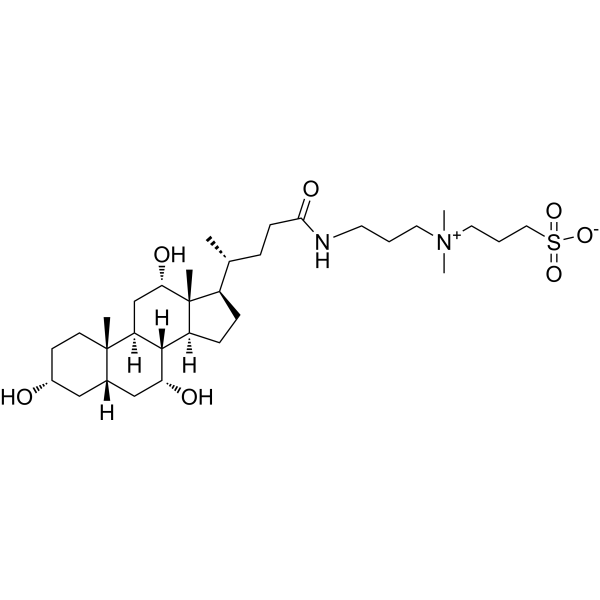
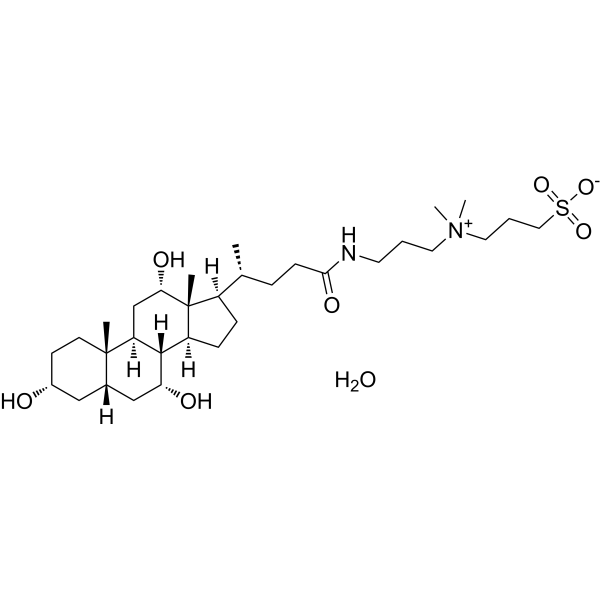
    NDSB-195 is protein stabilizer that enhances the dynamics of the β4-α2 loop of ubiquitin. NDSB-195 stabilizes Saccharomyces cerevisiae ubiquitin against guanidium chloride denaturation, increasing the onset temperature of heat denaturation in the presence of the denaturant .
    NDSB-195
  • HY-A0104D

    Hypromellose (Type I,Viscosity:4000mPa.s); (Hydroxypropyl)methyl cellulose (Type I,Viscosity:4000mPa.s); Celacol HPM 5000 (Type I,Viscosity:4000mPa.s)

    Environmental Pollutants Biochemical Assay Reagents Others
    HPMC (Hypromellose) (Type I, Viscosity: 4000mPa.s) is a primary sodium alginate and controlled release hydrophilic polymer with an average viscosity of 4000mPa.s. The viscosity of HPMC may change due to concentration, pH, temperature or the presence of metal ions. When the pH is above 10, the viscosity decreases .
    HPMC (Type I,Viscosity:4000mPa.s)
  • HY-163690

    Ser/Thr Protease Neurological Disease Inflammation/Immunology
    HTRA1-IN-1 is a potent and selective high temperature requirement A serine peptid 1 (HTRA1) inhibitor with an IC50 of 13 nM. HTRA1-IN-1 can be used for the research of HTRA1-related diseases, such as age-related macular degeneration (AMD), osteoarthritis, and rheumatoid arthritis .
    HTRA1-IN-1
  • HY-D1553

    Fluorescent Dye Others
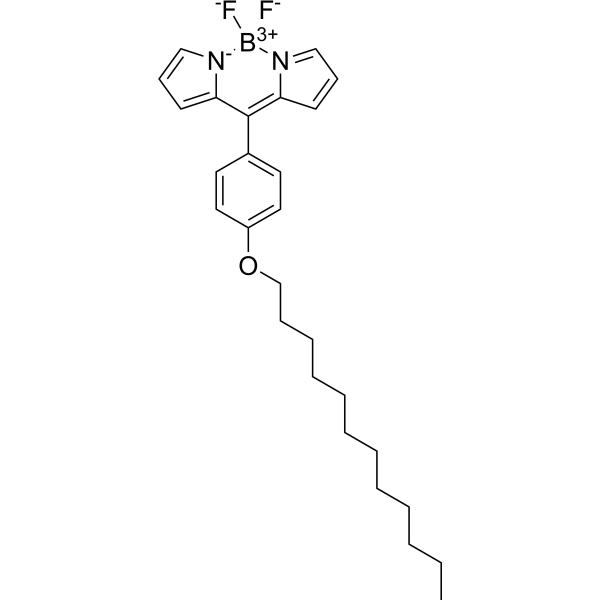
    BODIPY-C12 is a boron-dipyrromethene derivative containing a lipophilic tail (excitation 490 nm). BODIPY-C12 is a hydrophobic molecular and sensitivity to the surrounding environment and can be used to quantify viscosity, critical micelle concentration, and critical micelle temperature .
    BODIPY-C12
  • HY-133675

    MECPP

    Drug Metabolite Others
    Mono (5-carboxy-2-ethylpentyl) phthalate (MECPP) is a metabolite of di-(2-ethylhexyl) phthalate (DEHP). Di (2-ethylhexyl) phthalate is the primary plasticizer added to rigid polyvinyl chloride (PVC), and it imparts flexibility, temperature resistance, optical transparency, strength, and kink resistance .
    Mono(5-carboxy-2-ethylpentyl) phthalate
  • HY-B1199

    Monoamine Oxidase Reactive Oxygen Species (ROS) Cardiovascular Disease Neurological Disease Inflammation/Immunology
    Nialamide is a non-selective monoamine oxidase (MAO) inhibitor. Nialamide inhibits MAO and regulates ROS production. Nialamide induces hyperkinesis in animals, enhances the anticonvulsant effect of Diphenylhydantoin in mice, increases rectal temperature, and enhances the pressor effect of Norepinephrine. Nialamide can be used in the research of depression, inflammatory diseases, neurodegenerative diseases, and hypertension .
    Nialamide
  • HY-156262

    Biochemical Assay Reagents Others
    DEPC-Treated Water is ultrapure water that has been sterilized by high temperature and high pressure and does not contain nuclease. It can avoid contamination by non-specific endonucleases and exonucleases and does not affect RNase activity .
    DEPC-Treated Water
  • HY-W094846

    n-Tetradecane

    Environmental Pollutants Biochemical Assay Reagents Others
    Tetradecane (n-Tetradecane) is a low-temperature phase change material with a phase change temperature of 5°C and a latent heat of phase change of 220 J/g. Tetradecane undergoes solid-liquid phase transition around 5°C, and achieves temperature regulation by absorbing or releasing latent heat .
    Tetradecane
  • HY-W096983

    Dodecyltrimethylammonium chloride,for IPC,≥99%

    Environmental Pollutants Biochemical Assay Reagents Others
    DTAC (Dodecyltrimethylammonium chloride), for IPC, ≥99% is a quaternary ammonium cationic surfactant. DTAC, for IPC, ≥99% can form micelles in aqueous media, which interact with and encapsulate Diclofenac sodium (HY-15037) molecules; the micellization process is entropy-driven at lower temperatures and enthalpy-driven at higher temperatures .
    DTAC,for IPC,≥99%
  • HY-W034344

    Biochemical Assay Reagents Others
    Sodium methanesulfonate is a hygroscopic atmospheric aerosol, which typically forms from the reaction of methanesulfonic acid with sodium chloride or sea salt particles. Sodium methanesulfonate can serve as a substrate for oxidation reactions, undergoing heterogeneous oxidation by hydroxyl radicals at the air-aerosol interface, thereby initiating subsequent aerosol-phase chain reactions. Sodium methanesulfonate exhibits significant temperature-dependent deliquescence and efflorescence properties; particularly at lower temperatures relevant to the troposphere, its deliquescence and efflorescence relative humidity increase accordingly .
    Sodium methanesulfonate
  • HY-N6600

    Environmental Pollutants Biochemical Assay Reagents Others
    Octadecane is an alkane used as a phase change material for storing thermal energy at ambient temperature. Octadecane can endow pesticide formulations with environmental responsiveness in the field of agricultural nanomaterials, enabling precise and safe pesticide application .
    Octadecane
  • HY-W011548

    Nucleoside Antimetabolite/Analog Others
    2-Aminoadenosine is a modified adenine base and adenosine analog that stabilizes RNA duplexes and enhances template-directed nucleotide condensation reactions. 2-Aminoadenosine forms three hydrogen bonds with uracil to increase the melting temperature of hybrid strands, thereby stabilizing uracil-containing RNA duplexes .
    2-Aminoadenosine
  • HY-Z0283
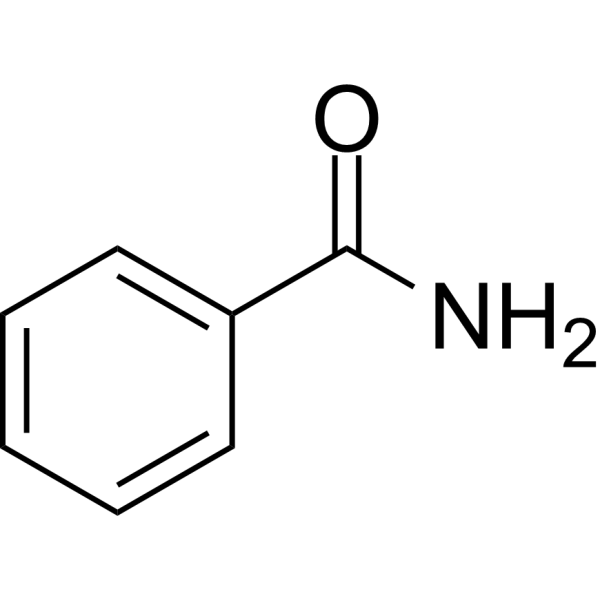
    Benzamide
    1 Publications Verification

    Benzenecarboxamide; Phenylamide

    Endogenous Metabolite PARP Others
    Benzamide (Benzenecarboxamide) is a potent poly(ADP-ribose) polymerase (PARP) inhibitor. Benzamide has protective activity against both glutamate- and methamphetamine (METH)-induced neurotoxicity in vitro. Benzamide can attenuate the METH-induced dopamine depletions and exhibits neuroprotective activity in mice, also has no acute effect on striatal dopamine metabolism and does not reduce body temperature .
    Benzamide
  • HY-D1422

    BDNCA-346

    Fluorescent Dye Others
    ER Tracker Yellow is an endoplasmic reticulum-targeted temperature-visible fluorescent probe. ER Tracker Yellow has high temperature sensitivity (3.9%/°C) and is not affected by pH and Ca 2+ interference. ER Tracker Yellow can be used for real-time monitoring of local temperature changes in the ER area. ER Tracker Yellow maintains its function in fixed cells. ER Tracker Yellow is suitable for various cell lines and primary cells, such as HeLa cells, MEF cells, and other cells .
    ER Tracker Yellow
  • HY-156829B

    Biochemical Assay Reagents Others
    PLGA-PEG-PLGA (hydrogel) (LA:GA 7:1) is a biodegradable thermosensitive hydrogel product that can undergo phase transition at a specific temperature. PLGA-PEG-PLGA (hydrogel) (LA:GA 7:1) can be widely used in drug delivery systems, tissue engineering, wound dressings, and biosensors. The gelation temperature varies with concentration. The gelation temperature varies with the concentration; the higher the concentration, the lower the gelation temperature .
    PLGA-PEG-PLGA (hydrogel) (LA:GA 7:1)
  • HY-156829I

    Biochemical Assay Reagents Others
    PLGA-PEG-PLGA (hydrogel) (LA:GA 3:1) (15% solution) is a biodegradable thermosensitive hydrogel product that can undergo phase transition at a specific temperature. PLGA-PEG-PLGA (hydrogel) (LA:GA 3:1) (15% solution) can be widely used in drug delivery systems, tissue engineering, wound dressings, and biosensors . The gelation temperature varies with the concentration; the higher the concentration, the lower the gelation temperature.
    PLGA-PEG-PLGA (hydrogel) (LA:GA 3:1) (15% solution)
  • HY-W010929

    Biochemical Assay Reagents Others
    PYR14-TFSI is a room temperature ionic liquid (RTIL) with a wide electrochemical window (5.5V) and a high viscosity, making it a useful candidate for electrochemical energy applications .
    PYR14-TFSI
  • HY-116772

    Irganox 1790

    Biochemical Assay Reagents Others
    Cyanox CY 1790 (Irganox 1790) is a synthetic phenolic antioxidant. Cyanox CY 1790 is mainly used to protect polyolefin materials such as polypropylene and polyethylene from thermo-oxidative degradation during processing (high temperature) and service .
    Cyanox CY 1790
  • HY-156829J

    Biochemical Assay Reagents Others
    PLGA-PEG-PLGA (hydrogel) (LA:GA 3:1) (20% solution) is a biodegradable thermosensitive hydrogel product that can undergo phase transition at a specific temperature. PLGA-PEG-PLGA (hydrogel) (LA:GA 3:1) (20% solution) can be widely used in drug delivery systems, tissue engineering, wound dressings, and biosensors. The gelation temperature varies with the concentration; the higher the concentration, the lower the gelation temperature .
    PLGA-PEG-PLGA (hydrogel) (LA:GA 3:1) (20% solution)
  • HY-179669C

    Biochemical Assay Reagents Others
    1M Tris-HCl Buffer, pH 7.6 is a buffer solution commonly used in various biochemical and molecular biological applications to maintain a stable pH environment. The pH value of Tris-HCl changes with temperature; generally, the pH decreases by 0.03 units for every degree Celsius increase in temperature. The pH values indicated on the product are the pH values of the Tris-HCl buffer solution at 25°C.
    1M Tris-HCl Buffer, pH 7.6
  • HY-179669

    Biochemical Assay Reagents Others
    1M Tris-HCl Buffer, pH 6.8 is a buffer solution commonly used in various biochemical and molecular biological applications to maintain a stable pH environment. The pH value of Tris-HCl changes with temperature; generally, the pH decreases by 0.03 units for every degree Celsius increase in temperature. The pH values indicated on the product are the pH values of the Tris-HCl buffer solution at 25°C.
    1M Tris-HCl Buffer, pH 6.8
  • HY-179669I

    Biochemical Assay Reagents Others
    1M Tris-HCl Buffer, pH 8.8 is a buffer solution commonly used in various biochemical and molecular biological applications to maintain a stable pH environment. The pH value of Tris-HCl changes with temperature; generally, the pH decreases by 0.03 units for every degree Celsius increase in temperature. The pH values indicated on the product are the pH values of the Tris-HCl buffer solution at 25°C.
    1.5M Tris-HCl Buffer, pH 8.8
  • HY-119936

    CFTR Autophagy Inflammation/Immunology
    GLPG2451 is a cystic fibrosis transmembrane conductance regulator (CFTR) potentiator, which effectively potentiates low temperature rescued F508del CFTR with an EC50 of 11.1 nM .
    GLPG2451
  • HY-N4072
    6''-O-Acetylglycitin
    4 Publications Verification

    Others Metabolic Disease
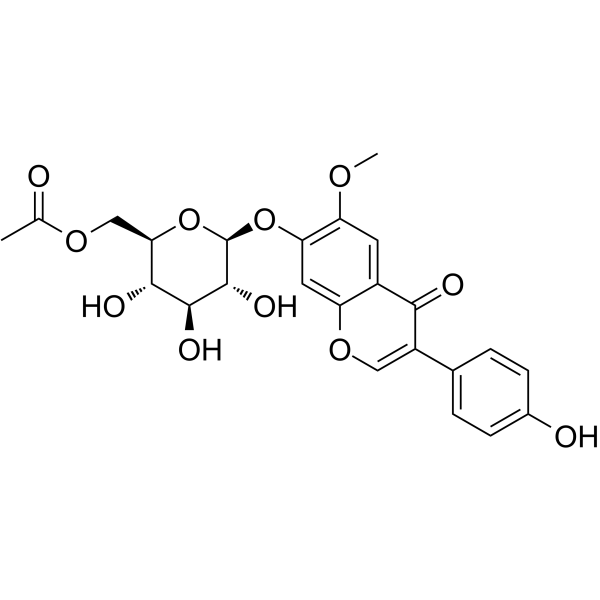
    6''-O-Acetylglycitin, a acetyl glucoside, is one of the isoflavone isomer in soybeans, shows various extents of content reduction dependent on storage temperature, packaging condition, and its isoflavone isomer kind .
    6''-O-Acetylglycitin
  • HY-135775
    BMVC
    1 Publications Verification

    G-quadruplex Telomerase DNA/RNA Synthesis Cancer
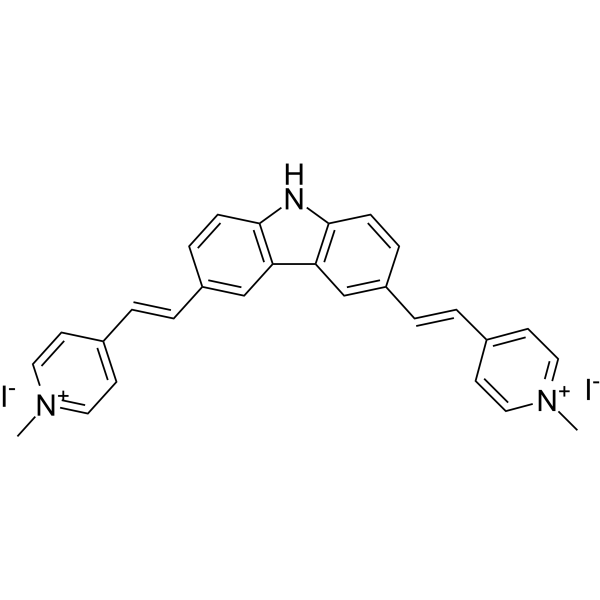
    BMVC is a potent G-quadruplex (G4) stabilizer and a selective telomerase inhibitor with an IC50 of ~0.2 μM. BMVC inhibits Taq DNA polymerase with an IC50 of ~2.5 μM. BMVC increases the melting temperature of G4 structure of telomere and accelerates telomere length shortening. Anticancer activities .
    BMVC
  • HY-E70308

    Endogenous Metabolite Others
    Glucose isomerase (immobilized) is glucose isomerase, which catalyzes the reversible isomerization of D-glucose and D-xylose into D-fructose and D-xylulose, respectively. Glucose isomerase (immobilized) can be used to produce fructose syrup under high-temperature conditions above 90 ℃. Glucose isomerase (immobilized) is widely distributed in prokaryotes .
    Glucose isomerase (immobilized)
  • HY-W012954B

    Tetramethylammonium chloride, for molecular biology, 99%(T)

    Biochemical Assay Reagents Others
    TMA chloride, for molecular biology, 99%(T) (Tetramethylammonium chloride, for molecular biology, 99%(T)) can increase the specificity of hybridization and raise the DNA denaturation temperature in PCR.
    TMA chloride, for molecular biology, 99%(T)
  • HY-144820

    Ser/Thr Protease Infection
    JO146 is a Chlamydia trachomatis high temperature requirement A (CtHtrA) protease inhibitor with IC50s of 21.86 and 1.15 μM for CtHtrA and human neutrophil elastase (HNE), respectively. JO146 can be used to inhibits bacterial infections .
    JO146
  • HY-135555

    5-CT

    5-HT Receptor Neurological Disease
    5-Carboxamidotryptamine (5-CT) is a 5-HT1A, 5-HT1B, 5-HT1D, 5-HT5A, 5-HT7 receptor agonist . 5-Carboxamidotryptamine has a Ki value of 4.6 nM for cloned human 5-HT5A receptor. 5-Carboxamidotryptamine causes a dose-dependent reduction in rectal temperature of mice .
    5-Carboxamidotryptamine
  • HY-179669E

    Biochemical Assay Reagents Others
    1M Tris-HCl Buffer, pH 8.0 is a buffer solution commonly used in various biochemical and molecular biological applications to maintain a stable pH environment. The pH value of Tris-HCl changes with temperature; generally, the pH decreases by 0.03 units for every degree Celsius increase in temperature. The pH values indicated on the product are the pH values of the Tris-HCl buffer solution at 25°C.
    1M Tris-HCl Buffer, pH 8.0
  • HY-179669A

    Biochemical Assay Reagents Others
    1M Tris-HCl Buffer, pH 7.0 is a buffer solution commonly used in various biochemical and molecular biological applications to maintain a stable pH environment. The pH value of Tris-HCl changes with temperature; generally, the pH decreases by 0.03 units for every degree Celsius increase in temperature. The pH values indicated on the product are the pH values of the Tris-HCl buffer solution at 25°C.
    1M Tris-HCl Buffer, pH 7.0
  • HY-150137

    Biochemical Assay Reagents Others
    Iomeprol is a nonionic X-ray contrast agent with low osmotic pressure, stable chemical properties, and can withstand high temperature sterilization. Iomeprol can be widely used in vascular, body cavity, and gastrointestinal angiography examinations .
    Iomeprol
  • HY-W015003

    N-Ethylcarbazole

    Biochemical Assay Reagents Others
    9-Ethylcarbazole (N-Ethylcarbazole) serves as a hydrogen storage material. The introduction of nitrogen (N) into 9-ethylcarbazole can reduce the endothermic nature of the reaction and decrease the dehydrogenation temperature, thereby facilitating the process of hydrogen storage and release .
    9-Ethylcarbazole
  • HY-P2467

    Fluorescent Dye Metabolic Disease
    Biotin-TAT (47-57), a biotin tagged TAT, is a transactivator of transcription. Biotin-TAT (47-57) is one of the most widely used protein transduction domains (PTDs) into different primary cells is ATP- and temperature-dependent, indicating the involvement of endocytosis .
    Biotin-TAT (47-57)
  • HY-W017050

    Biochemical Assay Reagents Others
    2-Hydroxypropyl acrylate (HPA) is a severe irritant and corrosive to the skin. 2-Hydroxypropyl acrylate (HPA) is extensively applied in fibre, adhesives, rubber industry, paints and coatings industry .
    2-Hydroxypropyl acrylate
  • HY-148124

    Drug Isomer Parasite Bacterial MMP Others
    6-Epi-doxycycline is the C-6 epimer of Doxycycline (HY-N0565), formed as a degradation impurity through epimerization of Doxycycline under abnormal conditions (e.g., high temperature, pH changes, or humidity). 6-Epi-doxycycline is commonly used for the detection and analysis of impurity levels in pharmaceutical formulations .
    6-epi Doxycycline
  • HY-144867

    HSP Cancer
    CCT245232 is a potent inhibitor of heat shock factor 1 (HSF1). HSF1 is the master regulator of the heat shock response, in which multiple genes are induced in response to temperature increase and other stresses. CCT245232 has the potential for the research of proliferative diseases, such as cancer (extracted from patent WO2015049535A1) .
    CCT245232
  • HY-156829H

    Biochemical Assay Reagents Others
    PLGA-PEG-PLGA (hydrogel) (LA:GA 7:1) (20% solution) is a biodegradable thermosensitive hydrogel product that can undergo phase transition at a specific temperature. PLGA-PEG-PLGA (hydrogel) (LA:GA 7:1) (20% solution) can be widely used in drug delivery systems, tissue engineering, wound dressings, and biosensors. The gelation temperature varies with concentration. The gelation temperature varies with the concentration; the higher the concentration, the lower the gelation temperature .
    PLGA-PEG-PLGA (hydrogel) (LA:GA 7:1) (20% solution)
  • HY-W094846S

    n-Tetradecane-d30

    Isotope-Labeled Compounds Others
    Tetradecane-d30 (n-Tetradecane-d30) is the deuterium labeled Tetradecane (HY-W094846). Tetradecane (n-Tetradecane) is a low-temperature phase change material with a phase change temperature of 5°C and a latent heat of phase change of 220 J/g. Tetradecane undergoes solid-liquid phase transition around 5°C, and achieves temperature regulation by absorbing or releasing latent heat .
    Tetradecane-d30
  • HY-179669J

    Biochemical Assay Reagents Others
    1M Tris-HCl Buffer, pH 6.8 is a buffer solution commonly used in various biochemical and molecular biological applications to maintain a stable pH environment. The pH value of Tris-HCl changes with temperature; generally, the pH decreases by 0.03 units for every degree Celsius increase in temperature. The pH values ??indicated on the product are the pH values ??of the Tris-HCl buffer solution at 25°C.
    1.5M Tris-HCl Buffer, pH 6.8
  • HY-179669H

    Biochemical Assay Reagents Others
    1M Tris-HCl Buffer, pH 8.8 is a buffer solution commonly used in various biochemical and molecular biological applications to maintain a stable pH environment. The pH value of Tris-HCl changes with temperature; generally, the pH decreases by 0.03 units for every degree Celsius increase in temperature. The pH values indicated on the product are the pH values of the Tris-HCl buffer solution at 25°C.
    1M Tris-HCl Buffer, pH 8.8
  • HY-W088074A

    Environmental Pollutants Biochemical Assay Reagents Others
    Chromium(III)oxide, 99.9% trace metals basis is an important refractory material with its high melting point temperature and oxidation resistance .
    Chromium(III)oxide, 99.9% trace metals basis
  • HY-N6600S

    Isotope-Labeled Compounds Environmental Pollutants Biochemical Assay Reagents Others
    Octadecane-d38 is the deuterium labeled Octadecane. Octadecane is an alkane used as a phase change material for storing thermal energy at ambient temperature. Octadecane can endow pesticide formulations with environmental responsiveness in the field of agricultural nanomaterials, enabling precise and safe pesticide application .
    Octadecane-d38
  • HY-W004617

    4,4',4''-(1,3,5-Triazine-2,4,6-triyl)tribenzoic acid

    MOFs Others
    2,4,6-Tris(4-carboxyphenyl)-1,3,5-triazine (4,4',4''-(1,3,5-Triazine-2,4,6-triyl) tribenzoic acid) is a metal-organic framework. 2,4,6-Tris(4-carboxyphenyl)-1,3,5-triazine is a C3-symmetric organic ligand with temperature-sensitive ratioluminescent properties. Complexes derived from 2,4,6-Tris(4-carboxyphenyl)-1,3,5-triazine exhibit strong emissivity and can be used for highly sensitive ratiometric fluorescent temperature sensing .
    2,4,6-Tris(4-carboxyphenyl)-1,3,5-triazine
  • HY-D0015A

    Fluorescent Dye Others
    Cresol Red sodium is a triarylmethane dye. Cresol Red sodium can be used for indicating pH, temperatures and salinities .
    Cresol Red sodium
  • HY-D1545

    Acid Violet 9

    Fluorescent Dye Others
    Violamine R (Acid Violet 9) is a potent fluorophore. Violamine R shows environment and temperature-dependent photoluminescence (PL) intermittency in poly(vinyl alcohol) (PVOH) and potassium acid phthalate (KAP). Violamine R can be used to measure the temperatures spanning the glass-transition temperature (Tg) of the polymer host by the fluorescence intermittency or blinking in poly(vinyl alcohol) (PVA) .
    Violamine R

Inquiry Online

Your information is safe with us. * Required Fields.

Salutation


Country or Region *

Applicant Name *


Organization Name *

Department *


Email Address *


Product Name *

Cat. No.


Requested quantity *

Phone Number *


Remarks

Inquiry Online

Inquiry Information

Product Name:
Cat. No.:
Quantity:
MCE Japan Authorized Agent:

