1. Search Result
Search Result
Results for "

thyroid function

" in MedChemExpress (MCE) Product Catalog:

15

Inhibitors & Agonists

2

Screening Libraries

2

Peptides

4

Natural
Products

Cat. No. Product Name Target Research Areas Chemical Structure
  • HY-107916
    Thyrotropin
    1 Publications Verification

    TSH; Pretiron

    TSH Receptor PKC Apoptosis Metabolic Disease Inflammation/Immunology Endocrinology Cancer
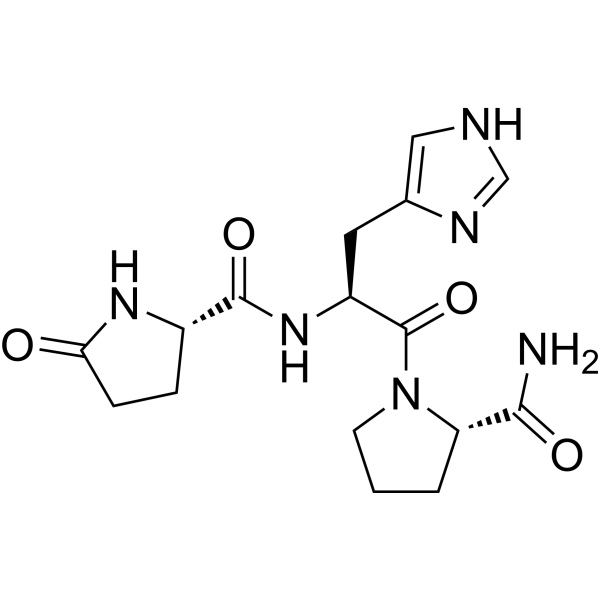
    Thyrotropin (TSH, Pretiron) is a thyroid-stimulating hormone produced by thyrotrope cells in the anterior pituitary gland. Thyrotropin regulates the endocrine function of the thyroid. Thyrotropin induces transcriptional regulation of TH-gatekeeper genes in tanycytes through the Tshr/Gαq/PKC pathway. Thyrotropin prevents Apoptosis. Thyrotropin has an association of low levels with increased bone remodeling, reduced bone mass and a high fracture risk in mice. Thyrotropin is promising for research of skeletal remodeling, hyperthyroidism .
    Thyrotropin
  • HY-P0002
    Protirelin
    4 Publications Verification

    Thyrotropin-releasing-hormone; TRH

    Thyroid Hormone Receptor Endogenous Metabolite Inflammation/Immunology Endocrinology
    Protirelin is a highly conserved neuropeptide that exerts the hormonal control of thyroid-stimulating hormone (TSH) levels as well as neuromodulatory functions.
    Protirelin
  • HY-B1162
    Sulisobenzone
    1 Publications Verification

    Benzophenone-4

    Environmental Pollutants Biochemical Assay Reagents Metabolic Disease
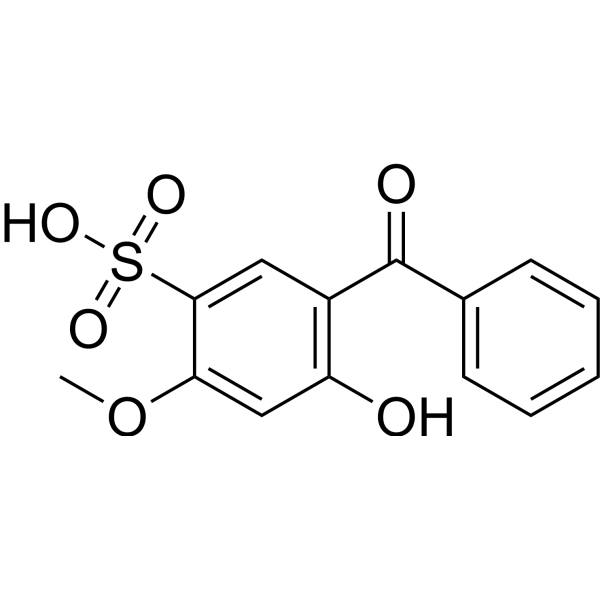
    Sulisobenzone (Benzophenone-4) is a benzophenone-type UV filter. Sulisobenzone can act as a endocrine disrupting compound. Sulisobenzone disrupts energy metabolism, nucleotide synthesis, oxidative stress response, and endocrine function. Sulisobenzone thyroid hormone biosynthesis and induces oxidative stress .
    Sulisobenzone
  • HY-34596

    Biochemical Assay Reagents Amyloid-β Neurological Disease Metabolic Disease
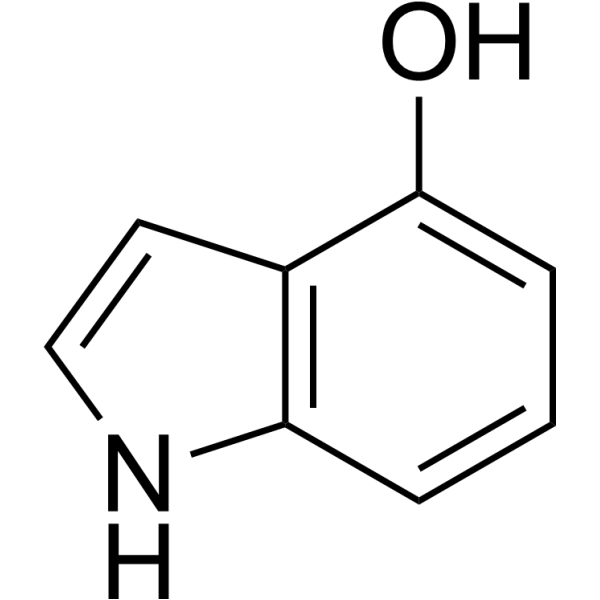
    4-Hydroxyindole is a type of hydroxyindole in which the 1H-indole at position 4 is substituted by a hydroxyl group. 4-Hydroxyindole serves as an important raw material or intermediate in the synthesis of pharmaceutical products and industrial polymers. 4-Hydroxyindole inhibits amyloid fibrillization and induces liver function impairment, thyroid abnormalities, and blood glucose fluctuations in mice. 4-Hydroxyindole holds potential for research in neurodegenerative diseases and metabolic disorders .
    4-Hydroxyindole
  • HY-145581
    Mitiperstat
    1 Publications Verification

    AZD4831

    Glutathione Peroxidase Cytochrome P450 Cardiovascular Disease Inflammation/Immunology
    Mitiperstat (AZD4831) is an effective oral inhibitor of myeloperoxidase (MPO). Mitiperstat inhibits MPO and thyroid peroxidase (TPO) with IC50s of 1.5 nM and 0.69 μM. Mitiperstat exhibits a weak inhibitory activity against CYP3A4 with an IC50 of 6 μM. Mitiperstat can reduce inflammation and improve microvascular function, and it can be used in studies related to heart failure, preserved or mildly reduced ejection fraction, non-alcoholic fatty liver disease, and chronic obstructive pulmonary disease .
    Mitiperstat
  • HY-114557

    3,5-Diiodo-L-thyronine

    JNK NF-κB Sirtuin PGC-1α COX TGF-β Receptor Collagen Metabolic Disease Inflammation/Immunology Endocrinology
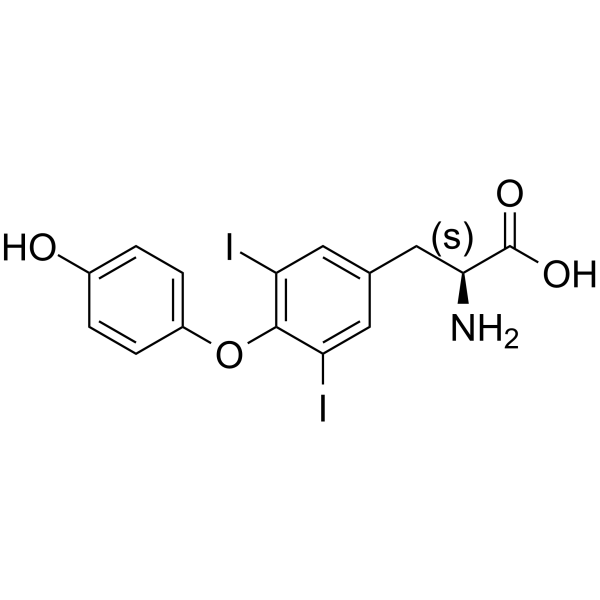
    NSC 90469 (3,5-Diiodo-L-thyronine) is an orally active thyroid hormone derivative. NSC 90469 inhibits JNK phosphorylation and NF-κB acetylation, blocks SIRT1 protein expression, induces elevated PGC-1α levels, and stimulates COX activity. NSC 90469 enhances UCP1-mediated thermogenesis, increases hepatic Dio1 activity, inhibits TSH levels and hypothalamic-pituitary-thyroid axis function, enhances lipid metabolism, and regulates energy metabolism via the mitochondrial pathway. NSC 90469 prevents blood glucose reduction, reduces urinary albumin excretion, inhibits renal matrix expansion, decreases TGF-β1 expression, and reduces renal fibronectin and type Ⅳ collagen deposition. NSC 90469 also increases energy expenditure and prevents diet-induced overweight. NSC 90469 can be used in studies related to diabetic nephropathy, hypothyroidism, non-alcoholic fatty liver disease, and diet-induced obesity .
    NSC 90469
  • HY-P0002A
    Protirelin acetate
    4 Publications Verification

    Thyrotropin-releasing-hormone acetate; TRH acetate

    Thyroid Hormone Receptor Inflammation/Immunology Endocrinology
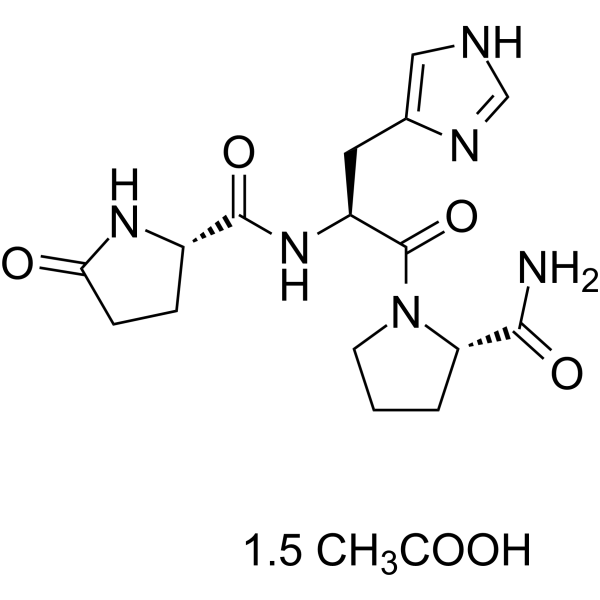
    Protirelin Acetate is a highly conserved neuropeptide that exerts the hormonal control of thyroid-stimulating hormone (TSH) levels as well as neuromodulatory functions.
    Protirelin acetate
  • HY-149132

    DDA

    LXR Cancer
    Dendrogenin A (DDA) is a ligand for liver X receptor (LXR), that induces the expression of sodium/iodine symporter, and increases iodine uptake. Dendrogenin A induces cell differentiation of MCF-7, and reactivates the function of lactating cells. Dendrogenin A induces the expressions of the TSH receptor, thyroid peroxidase, and thyroglobulin, and affects thyroid hormone generation. Dendrogenin A exhibits cytotoxicity in cancer cell B-CPAP and 8505c with IC50 of 4.1 and 6.2 µM. Dendrogenin A arrests the cell cycle at G0/G1 phase .
    Dendrogenin A
  • HY-Q04764

    Thyroid Hormone Receptor Apoptosis Cancer
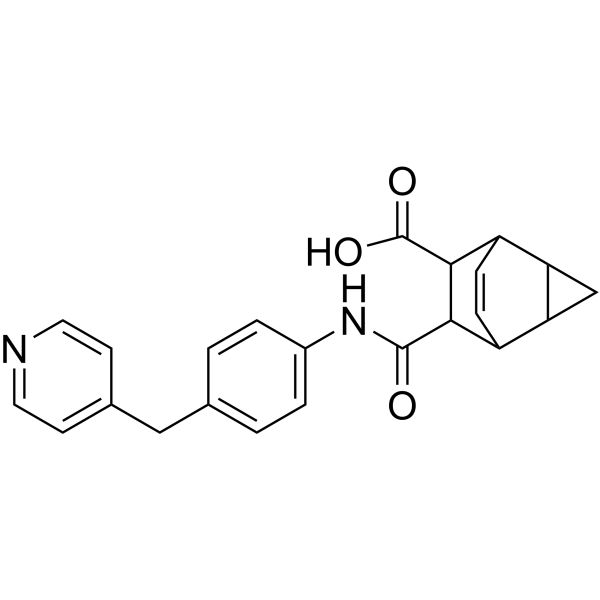
    TI17 is an inhibitor of the thyroid hormone receptor-interacting protein Trip13 and has anticancer activity. TI17 effectively inhibits multiple myeloma (MM) cell proliferation and induces cell cycle arrest and apoptosis. Trip13 is an AAA-ATPase that mediates double-strand break (DSB) repair; TI17 inhibits Trip13 function and increases DNA damage .
    TI17
  • HY-153001

    Estrogen Receptor/ERR Endocrinology
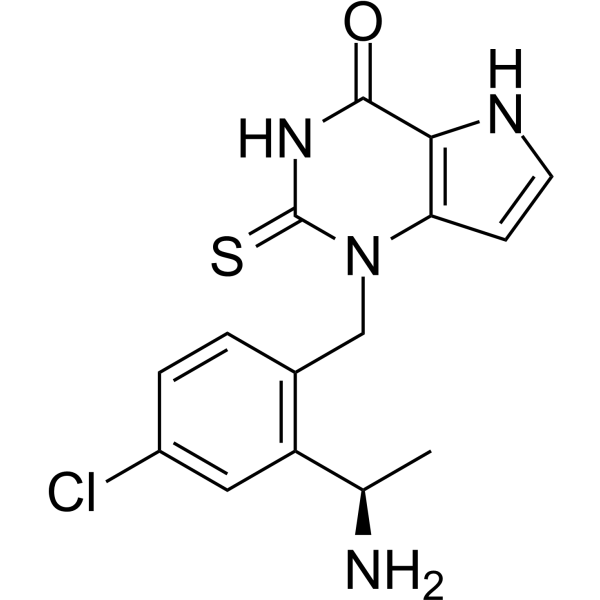
    MK-8389 is an orally active LMW allosteric FSH receptor agonist. MK-8389 affects thyroid function .
    MK-8389
  • HY-129995

    TSH Receptor Endocrinology
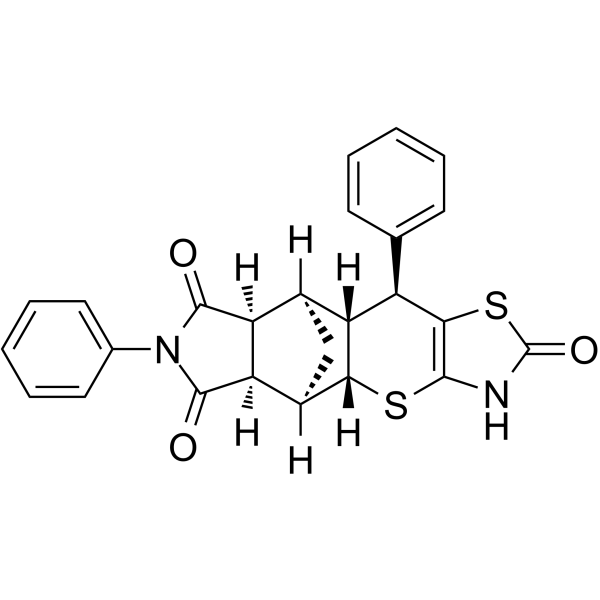
    TSHR antagonist S37b is the less effective enantiomer of TSHR antagonist S37a (HY-129995A). TSHR antagonist S37b shows only a minor effect for thyrotropin receptor (TSHR) inhibition. TSHR antagonist S37b can be used for the research of thyroid function .
    TSHR antagonist S37b
  • HY-14998

    MK 185

    β-catenin PPAR Wnt Endocrinology
    Halofenate, structurally akin to clofibrate, was evaluated in hypertriglyceridemic patients over 6-week periods in a controlled, double-blind crossover trial. It effectively reduced serum triglycerides by 50%, with minimal impact on serum cholesterol levels. Additionally, it lowered serum uric acid by 30% and exhibited uricosuric effects independent of glomerular filtration rate. Halofenate was associated with a significant increase in plasma thyroxine (T4), accompanied by a decrease in protein-bound iodine and T4 by column. In vitro studies confirmed its ability to displace T4 from thyroid-binding proteins, suggesting a thyroxine-displacing effect, which could influence thyroid function in vivo .
    Halofenate
  • HY-B1162R

    Benzophenone-4 (Standard)

    Biochemical Assay Reagents Reference Standards Metabolic Disease
    Sulisobenzone (Benzophenone-4) (Standard) is the analytical standard of Sulisobenzone (HY-B1162). This product is intended for research and analytical applications. Sulisobenzone is a benzophenone-type UV filter. Sulisobenzone can act as a endocrine disrupting compound. Sulisobenzone disrupts energy metabolism, nucleotide synthesis, oxidative stress response, and endocrine function. Sulisobenzone thyroid hormone biosynthesis and induces oxidative stress .
    Sulisobenzone (Standard)
  • HY-114557R

    3,5-Diiodo-L-thyronine (Standard)

    Reference Standards Endogenous Metabolite Metabolic Disease
    NSC 90469 (Standard) is the analytical standard of NSC 90469. This product is intended for research and analytical applications. NSC 90469 (3,5-Diiodo-L-thyronine) is an orally active thyroid hormone derivative. NSC 90469 inhibits JNK phosphorylation and NF-κB acetylation, blocks SIRT1 protein expression, induces elevated PGC-1α levels, and stimulates COX activity. NSC 90469 enhances UCP1-mediated thermogenesis, increases hepatic Dio1 activity, inhibits TSH levels and hypothalamic-pituitary-thyroid axis function, enhances lipid metabolism, and regulates energy metabolism via the mitochondrial pathway. NSC 90469 prevents blood glucose reduction, reduces urinary albumin excretion, inhibits renal matrix expansion, decreases TGF-β1 expression, and reduces renal fibronectin and type Ⅳ collagen deposition. NSC 90469 also increases energy expenditure and prevents diet-induced overweight. NSC 90469 can be used in studies related to diabetic nephropathy, hypothyroidism, non-alcoholic fatty liver disease, and diet-induced obesity .
    NSC 90469 (Standard)
  • HY-105636

    ICI 33828; Methallibure

    Drug Derivative GnRH Receptor Endocrinology
    Methallibure (ICI 33828) is a dithiocarbamoylhydrazine derivative and gonadotropic function blocker. Methallibure can block the action of pituitary gonadotropins in teleost fishes and inhibit germ cell maturation. Methallibure does not affect the histological structure of the thyroid gland but reduces the nuclear volume of thyroid epithelial cells. Methallibure can be used in the research of endocrine diseases .
    Metallibure

Inquiry Online

Your information is safe with us. * Required Fields.

Salutation


Country or Region *

Applicant Name *


Organization Name *

Department *


Email Address *


Product Name *

Cat. No.


Requested quantity *

Phone Number *


Remarks

Inquiry Online

Inquiry Information

Product Name:
Cat. No.:
Quantity:
MCE Japan Authorized Agent:

