



3-Hydroxyanthranilic acid
Based on 2 publication(s) in Google Scholar
3-Hydroxyanthranilic acid is a tryptophan metabolite in the kynurenine pathway.3-hydroxyanthranilic acid has anti-inflammatory, neuroprotective, and lipid-lowering effects. 3-hydroxyanthranilic acid can be used for researches of cardiovascular diseases, tumors, and metabolic diseases.
For research use only. We do not sell to patients.
- Purity : 99.79%
- CAS No.: 548-93-6
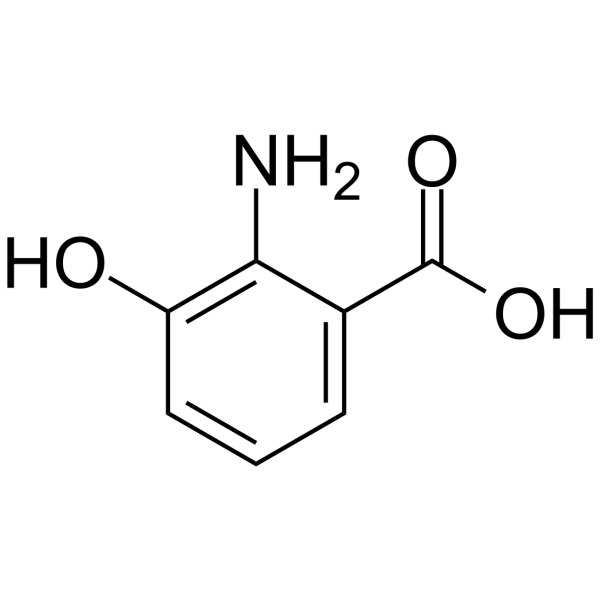
- Formula: C7H7NO3
- Molecular Weight:153.14
-
Storage:Powder -20°C, 3 years , 4°C, 2 years ; In solvent -80°C, 6 months , -20°C, 1 month

To place orders, for customer services and technical support, please contact: MedChemExpress USA
Tel: 609-228-6898 E-mail: [email protected] [email protected]


-
 Biological Activity
-
Chemical Information
-
Solvent & Solubility
- Protocols
- Purity & Documentation
- References
-
 Help & FAQs


-
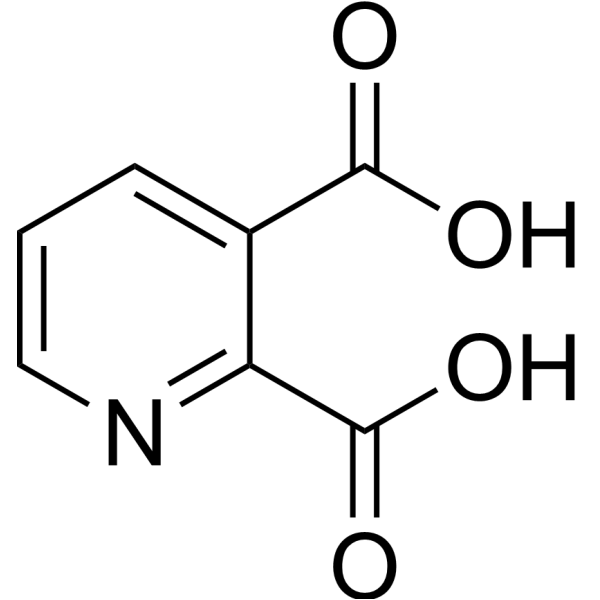
HY-100807
Quinolinic acidNMDA Receptor Agonist -
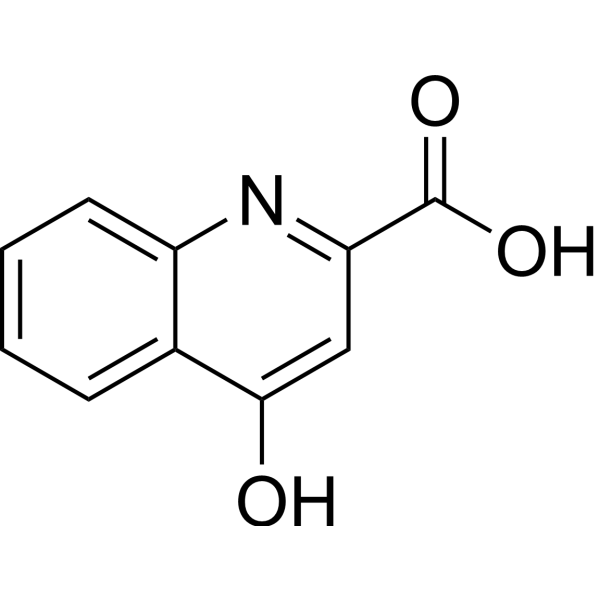
HY-100806
Kynurenic acidiGluR/α7 nAChR Antagonist -
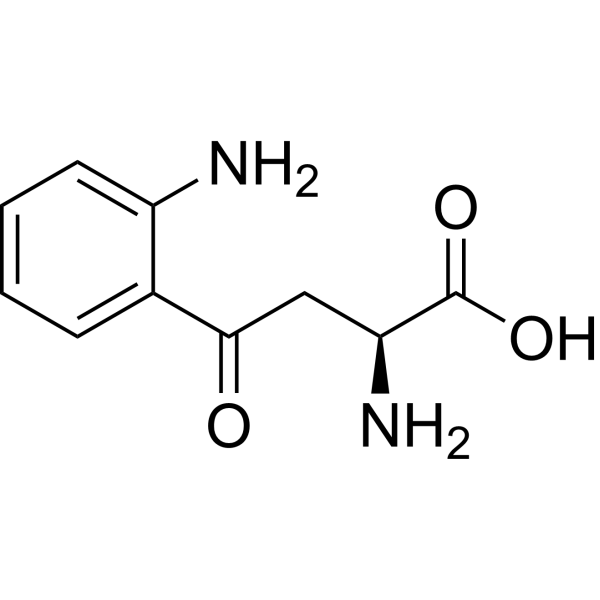
HY-104026
L-KynurenineAryl Hydrocarbon Receptor Agonist -
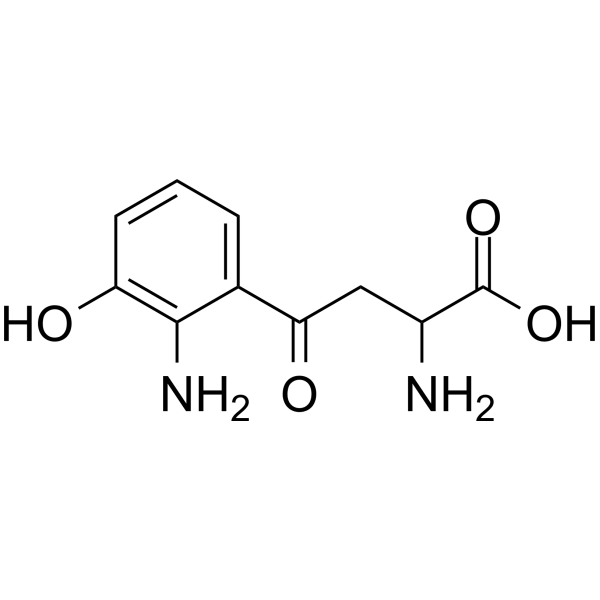
HY-113294
3-HydroxykynurenineEndogenous Neurotoxin -
HY-B0143
NiacinB3 vitamin -
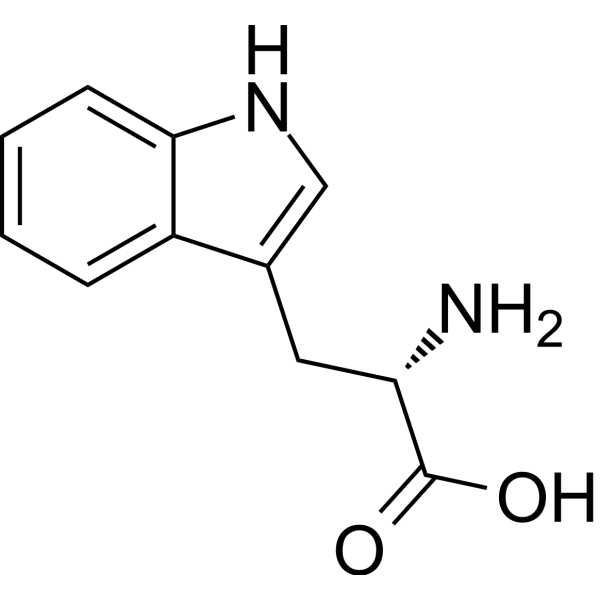
HY-N0623
L-TryptophanEssential Amino Acid -
HY-W014666
Xanthurenic acid -
HY-113099
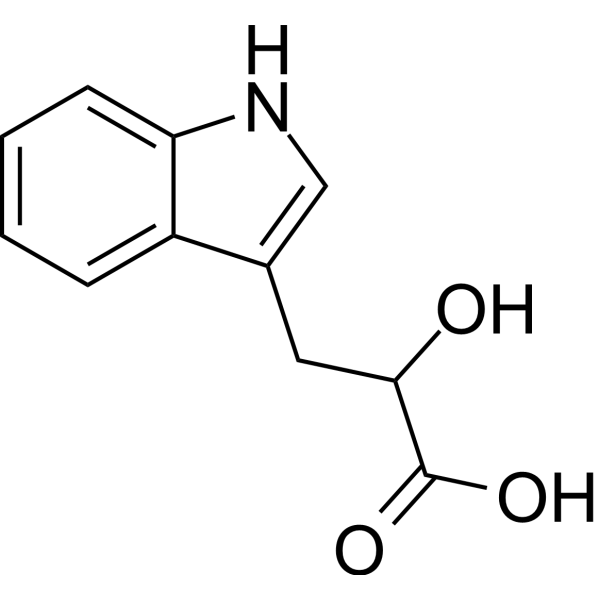
Indolelactic acidTryptophan Catabolite -
HY-W001171R
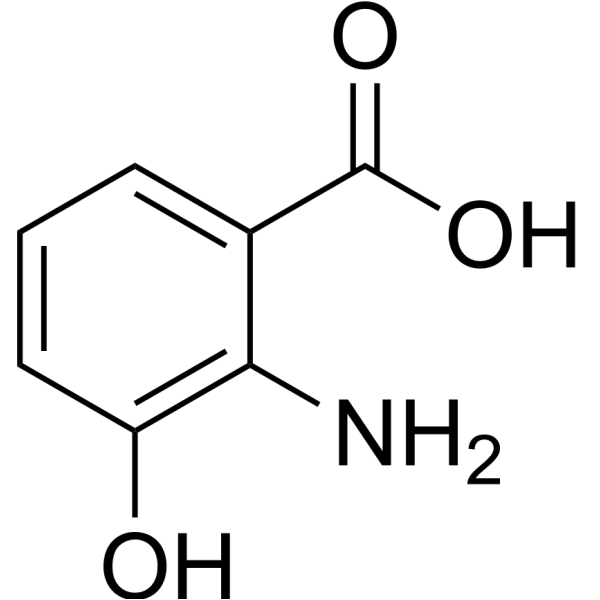
3-Hydroxyanthranilic acid (Standard) -
HY-W008253
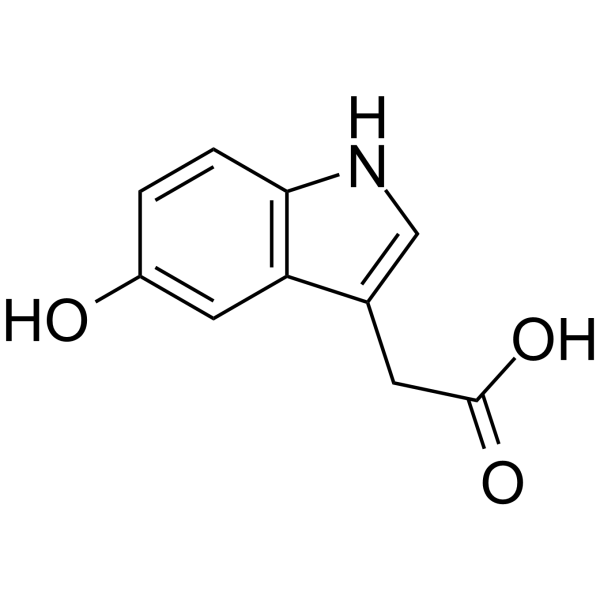
5-Hydroxyindole-3-acetic acid -
HY-18569
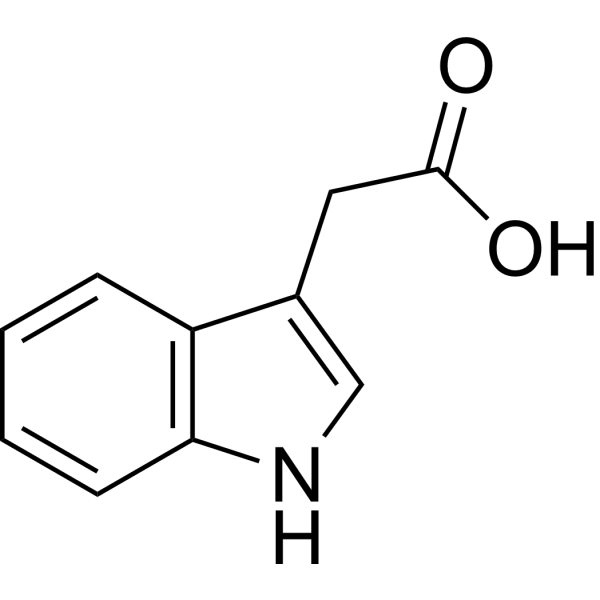
3-Indoleacetic acidPlant Growth Regulator -
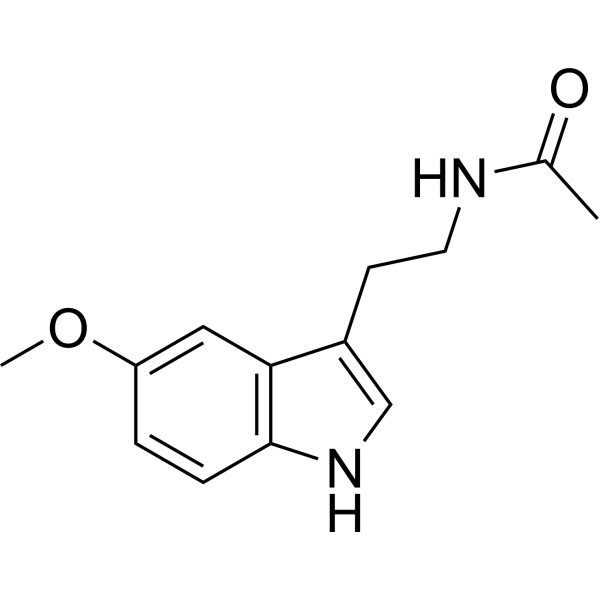
HY-B0075
MelatoninMelatonin Receptor Activator
Publications Citing Use of MedChemExpress (MCE) 3-Hydroxyanthranilic acid
MoreAll Endogenous Metabolite Isoforms
More

Biological Activity
Description
IC50 & Target
|
Human Endogenous Metabolite |
In Vitro
3-hydroxyanthranilic acid (12.5-100 μM, 24-72 h) selectively induces activated T cell death via intracellular GSH depletion[2].
3-hydroxyanthranilic acid (100-200 μM, 6 h) reduces ability of BMDCs stimulated with LPS to produce cytokines (IL-12, IL-6, and TNF-α) and DC maturation[3].
3-hydroxyanthranilic acid (0-100 μM, 1-72 h) plays anti-inflammatory and neuroprotective roles via Hemeoxygenase-1 in primary human fetal central nervous system cultures[4].
3-hydroxyanthranilic acid (1-50 μM, 6 h) inhibits monocyte chemoattractant protein-1 secretion and vascular cell adhesion molecule-1 expression via heme oxygenase-1 induction in human umbilical vein endothelial cells[6].
MedChemExpress (MCE) has not independently confirmed the accuracy of these methods. They are for reference only. Further protocols information, click here.
In Vivo
3-hydroxyanthranilic acid (200 mg/kg, i.p., three times a week, 8 weeks) lowers plasma lipids and decreases atherosclerosis in hypercholesterolaemic mice[5].
3-hydroxyanthranilic acid (200 mg/kg, i.p., 6 weeks) contributes to angiotensin II–induced abdominal aortic aneurysm formation in mice[7].
3-hydroxyanthranilic acid (120 mg/kg, tail vein injection, once weekly, 12 weeks) combines with Butyricicoccus pullicaecorum to prevent postmenopausal osteoporosis in rats by modulating gut microbiota and Th17/Treg[8].
MedChemExpress (MCE) has not independently confirmed the accuracy of these methods. They are for reference only.


Chemical Information
-
CAS No. 548-93-6
-
Appearance Solid
-
Molecular Weight 153.14
-
Formula C7H7NO3
-
Color White to light brown
-
SMILES
O=C(O)C1=CC=CC(O)=C1N
-
Structure Classification
-
Initial Source
-
Shipping
Room temperature in continental US; may vary elsewhere.
-
Storage
Powder -20°C 3 years 4°C 2 years In solvent -80°C 6 months -20°C 1 month


Publications (2)
-
Journal Impact Factor
-
Most Recent
-
Nature
2025 Jul;643(8070):192-200. PMID: 39695227 -


Solvent & Solubility
In Vitro:
DMSO : 50 mg/mL (326.50 mM; Need ultrasonic; Hygroscopic DMSO has a significant impact on the solubility of product, please use newly opened DMSO)
Please refer to the solubility information to select the appropriate solvent. Once prepared, please aliquot and store the solution to prevent product inactivation from repeated freeze-thaw cycles.
Storage method and period of stock solution: -80°C, 6 months; -20°C, 1 month. When stored at -80°C, please use it within 6 months. When stored at -20°C, please use it within 1 month.
Please refer to the solubility information to select the appropriate solvent. Once prepared, please aliquot and store the solution to prevent product inactivation from repeated freeze-thaw cycles.
Storage method and period of stock solution: -80°C, 6 months; -20°C, 1 month. When stored at -80°C, please use it within 6 months. When stored at -20°C, please use it within 1 month.
Concentration (start) × Volume (start) = Concentration (final) × Volume (final)
In Vivo:
Select the appropriate dissolution method based on your experimental animal and administration route.
- For the following dissolution methods, please ensure to first prepare a clear stock solution using an In Vitro approach and then sequentially add co-solvents:
- To ensure reliable experimental results, the clarified stock solution can be appropriately stored based on storage conditions. As for the working solution for In Vivo experiments, it is recommended to prepare freshly and use it on the same day.
- The percentages shown for the solvents indicate their volumetric ratio in the final prepared solution. If precipitation or phase separation occurs during preparation, heat and/or sonication can be used to aid dissolution.
Add each solvent one by one: 10% DMSO 40% PEG300 5% Tween-80 45% Saline
Solubility: 2.5 mg/mL (16.32 mM); Suspended solution; Need ultrasonic
This protocol yields a suspended solution of 2.5 mg/mL. Suspended solution can be used for oral and intraperitoneal injection.
Taking 1 mL working solution as an example, add 100 μL DMSO stock solution (25.0 mg/mL) to 400 μL PEG300, and mix evenly; then add 50 μL Tween-80 and mix evenly; then add 450 μL Saline to adjust the volume to 1 mL.
Preparation of Saline: Dissolve 0.9 g sodium chloride in ddH₂O and dilute to 100 mL to obtain a clear Saline solution.
Add each solvent one by one: 10% DMSO 90% (20% SBE-β-CD in Saline)
Solubility: ≥ 2.5 mg/mL (16.32 mM); Clear solution
This protocol yields a clear solution of ≥ 2.5 mg/mL (saturation unknown).
Taking 1 mL working solution as an example, add 100 μL DMSO stock solution (25.0 mg/mL) to 900 μL 20% SBE-β-CD in Saline, and mix evenly.
Preparation of 20% SBE-β-CD in Saline (4°C, storage for one week): 2 g SBE-β-CD powder is dissolved in 10 mL Saline, completely dissolve until clear.
For the following dissolution methods, please prepare the working solution directly:
It is recommended to prepare fresh solutions and use them promptly within a short period of time.
The percentages shown for the solvents indicate their volumetric ratio in the final prepared solution. If precipitation or phase separation occurs during preparation, heat and/or sonication can be used to aid dissolution.
In Vivo Dissolution Calculator
Please enter the basic information of animal experiments:
-
-
-
-
Recommended: Prepare an additional quantity of animals to account for potential losses during experiments.
Please enter your animal formula composition:
-
%DMSO +
Recommended: Keep the proportion of DMSO in working solution below 2% if your animal is weak.
-
%+
-
+%Tween-80 + +
-
%Saline +
The co-solvents required include: DMSO, . All of co-solvents are available by MedChemExpress (MCE). , Tween 80. All of co-solvents are available by MedChemExpress (MCE).
Working solution concentration: 0.22 mg/mL
Method for preparing stock solution: mg drug dissolved in μL DMSO. Stock solution concentration: mg/mL.
1. Take μL DMSO stock solution;
2. Add μL .
μL , mix evenly;
3. Then add μL Tween 80, mix evenly;
4. Then add μL
Please ensure that the stock solution in the first step is dissolved to a clear state, and add co-solvents in sequence. You can use ultrasonic heating (ultrasonic cleaner, recommended frequency 20-40 kHz), vortexing, etc. to assist dissolution.

Protocols
-
Research Protocol for Inflammation-related Diseases
The NLRP3 inflammasome is a cytosolic innate immune signaling platform that integrates priming signals and danger-signal activation to promote caspase-1 activation, maturation of IL-1β and IL-18, and gasdermin D-mediated pyroptotic cell death. The core experimental logic is to determine whether inflammatory disease phenotypes are driven by increased NLRP3 expression, ASC-containing inflammasome assembly, caspase-1 cleavage, GSDMD cleavage, and extracellular release of IL-1β/IL-18 rather than by nonspecific cell injury alone. The pathway is strongly linked to inflammation-related disease phenotypes because monosodium urate crystals activate NALP3/NLRP3 inflammasome signaling in gout-like crystal inflammation, cholesterol crystals activate NLRP3 inflammasomes in atherogenesis models, and DSS-induced intestinal inflammation has been reported to involve NLRP3 inflammasome activity. However, experimental colitis studies also show context-dependent protective effects of NLRP3 inflammasome co


Purity & Documentation
-
Data Sheet (278 KB)
-
SDS (558 KB)
- English - EN (558 KB)
- Français - FR (558 KB)
- Deutsch - DE (558 KB)
- Norwegian - NO (558 KB)
- Español - ES (558 KB)
- Swedish - SV (558 KB)
- Italian - IT (558 KB)
- Korean - KR (558 KB)
- Portuguese - PT (558 KB)
-
Handling Instructions (2659 KB)
References
[1]. Lee WS, et al. The tryptophan metabolite 3-hydroxyanthranilic acid suppresses T cell responses by inhibiting dendritic cell activation. Int Immunopharmacol. 2013 Nov;17(3):721-6. [Content Brief]
[2]. Lee SM, et al. Tryptophan metabolite 3-hydroxyanthranilic acid selectively induces activated T cell death via intracellular GSH depletion. Immunol Lett. 2010 Aug 16;132(1-2):53-60. [Content Brief]
[3]. Lee WS, et al. The tryptophan metabolite 3-hydroxyanthranilic acid suppresses T cell responses by inhibiting dendritic cell activation. Int Immunopharmacol. 2013 Nov;17(3):721-6. [Content Brief]
[4]. Krause D, et al. The tryptophan metabolite 3-hydroxyanthranilic acid plays anti-inflammatory and neuroprotective roles during inflammation: role of hemeoxygenase-1. Am J Pathol. 2011 Sep;179(3):1360-72. [Content Brief]
[5]. Zhang L, et al. The tryptophan metabolite 3-hydroxyanthranilic acid lowers plasma lipids and decreases atherosclerosis in hypercholesterolaemic mice. Eur Heart J. 2012 Aug;33(16):2025-34. [Content Brief]
[6]. Pae HO, et al. 3-Hydroxyanthranilic acid, one of L-tryptophan metabolites, inhibits monocyte chemoattractant protein-1 secretion and vascular cell adhesion molecule-1 expression via heme oxygenase-1 induction in human umbilical vein endothelial cells. Atherosclerosis. 2006 Aug;187(2):274-84. [Content Brief]
[7]. Wang Q, et al. Tryptophan-Derived 3-Hydroxyanthranilic Acid Contributes to Angiotensin II-Induced Abdominal Aortic Aneurysm Formation in Mice In Vivo. Circulation. 2017 Dec 5;136(23):2271-2283. [Content Brief]
[8]. Zhu F, et al. The combination of Butyricicoccus pullicaecorum and 3-hydroxyanthranilic acid prevents postmenopausal osteoporosis by modulating gut microbiota and Th17/Treg. Eur J Nutr. 2024 Aug;63(5):1945-1959. [Content Brief]


Complete Stock Solution Preparation Table
Please refer to the solubility information to select the appropriate solvent. Once prepared, please aliquot and store the solution to prevent product inactivation from repeated freeze-thaw cycles.
Storage method and period of stock solution: -80°C, 6 months; -20°C, 1 month. When stored at -80°C, please use it within 6 months. When stored at -20°C, please use it within 1 month.
| Optional Solvent | Concentration Solvent Mass | 1 mg | 5 mg | 10 mg | 25 mg |
|---|---|---|---|---|---|
| DMSO | 1 mM | 6.5300 mL | 32.6499 mL | 65.2997 mL | 163.2493 mL |
| 5 mM | 1.3060 mL | 6.5300 mL | 13.0599 mL | 32.6499 mL | |
| 10 mM | 0.6530 mL | 3.2650 mL | 6.5300 mL | 16.3249 mL | |
| 15 mM | 0.4353 mL | 2.1767 mL | 4.3533 mL | 10.8833 mL | |
| 20 mM | 0.3265 mL | 1.6325 mL | 3.2650 mL | 8.1625 mL | |
| 25 mM | 0.2612 mL | 1.3060 mL | 2.6120 mL | 6.5300 mL | |
| 30 mM | 0.2177 mL | 1.0883 mL | 2.1767 mL | 5.4416 mL | |
| 40 mM | 0.1632 mL | 0.8162 mL | 1.6325 mL | 4.0812 mL | |
| 50 mM | 0.1306 mL | 0.6530 mL | 1.3060 mL | 3.2650 mL | |
| 60 mM | 0.1088 mL | 0.5442 mL | 1.0883 mL | 2.7208 mL | |
| 80 mM | 0.0816 mL | 0.4081 mL | 0.8162 mL | 2.0406 mL | |
| 100 mM | 0.0653 mL | 0.3265 mL | 0.6530 mL | 1.6325 mL |


3-Hydroxyanthranilic acid Related Classifications
HY-W001171 Related Classifications
 Powered by Bioz