



3MB-PP1
Based on 1 publication(s) in Google Scholar
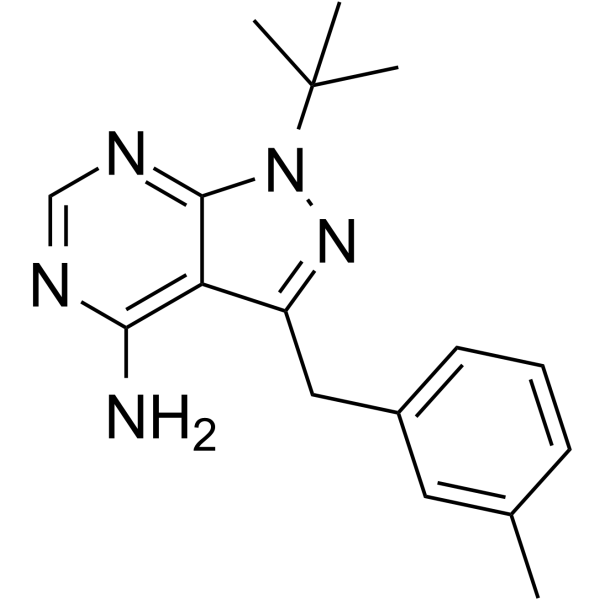
3MB-PP1, a bulky purine analog, is a Polo-like kinase 1 (Plk1) inhibitor. 3MB-PP1 blocks mitotic progression and cell division arise through target Plk1 in in cells expressing analog-sensitive Plk1 alleles. 3MB-PP1 specifically inhibits the activity of analog-sensitive Ssn3 (Cdk8). 3MB-PP1 inhibits Leu93 Mutant Zipper-interacting protein kinase (Leu93-ZIPK; IC50=2 μM). 3MB-PP1 can be used for the research of hypha formation of Candida albicans and cell division.
For research use only. We do not sell to patients.
- Purity : 99.66%
- CAS No.: 956025-83-5
- Formula: C17H21N5
- Molecular Weight:295.38
-
Storage:Powder -20°C, 3 years , 4°C, 2 years ; In solvent -80°C, 6 months , -20°C, 1 month

To place orders, for customer services and technical support, please contact: MedChemExpress USA
Tel: 609-228-6898 E-mail: [email protected] [email protected]


-
 Biological Activity
-
Chemical Information
-
Solvent & Solubility
- Protocols
- Purity & Documentation
- References
-
 Help & FAQs


-
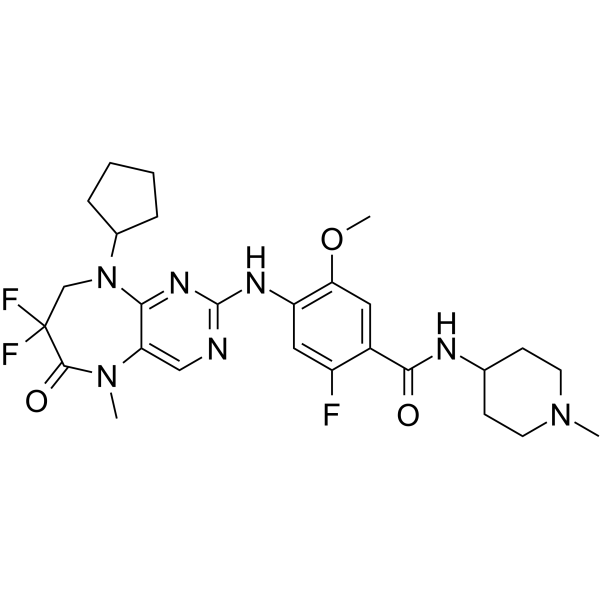
HY-15160
TAK-960PLK1 Inhibitor -
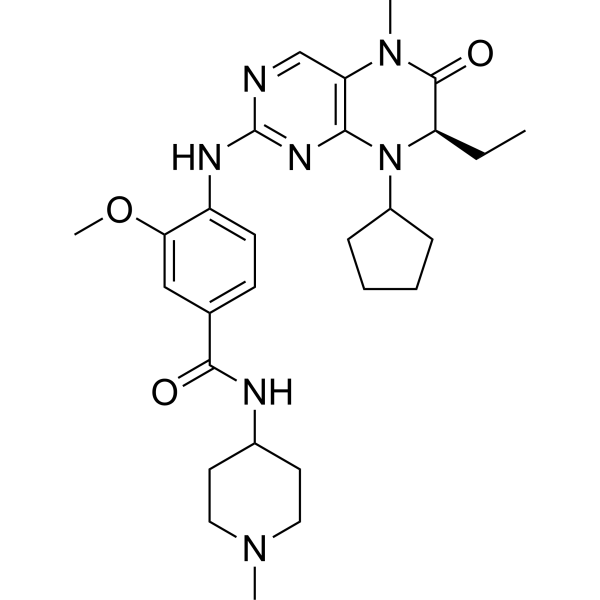
HY-50698
BI 2536PLK1 Inhibitor -
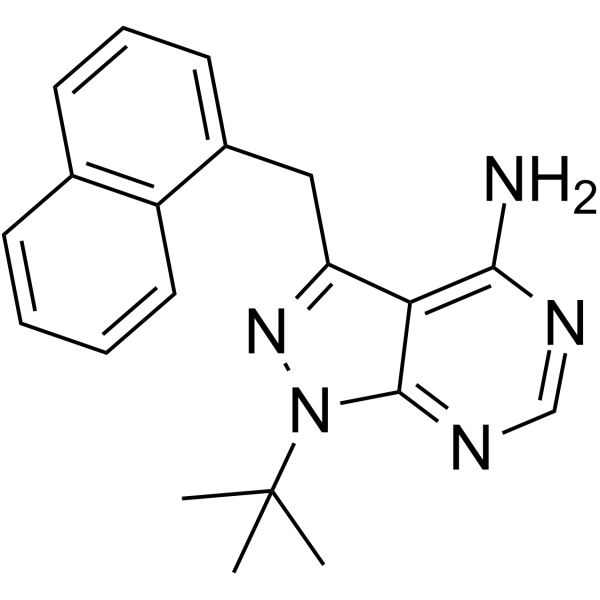
HY-13942
1-NM-PP1Src Inhibitor -
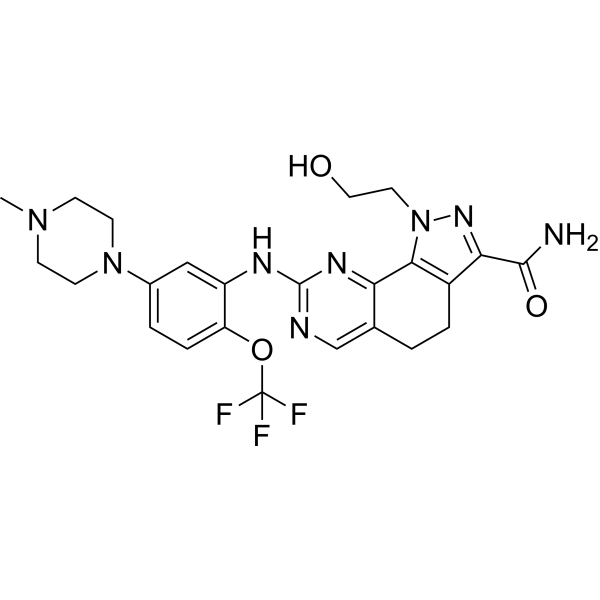
HY-15828
OnvansertibPLK1 Inhibitor -
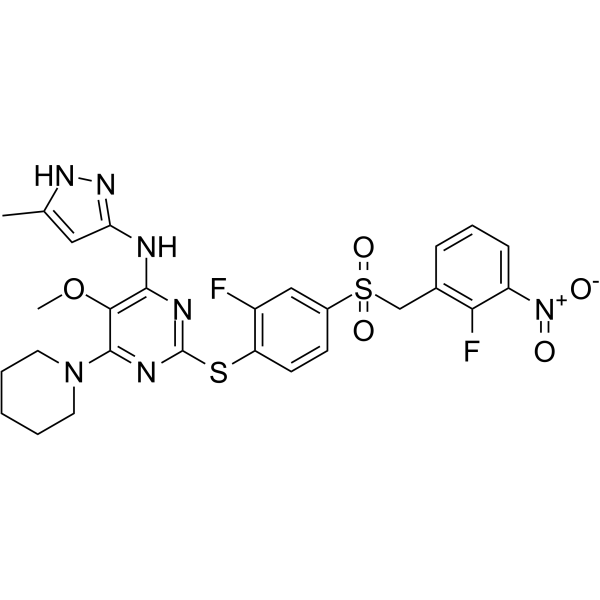
HY-18683
Centrinone-BPLK4 Inhibitor -
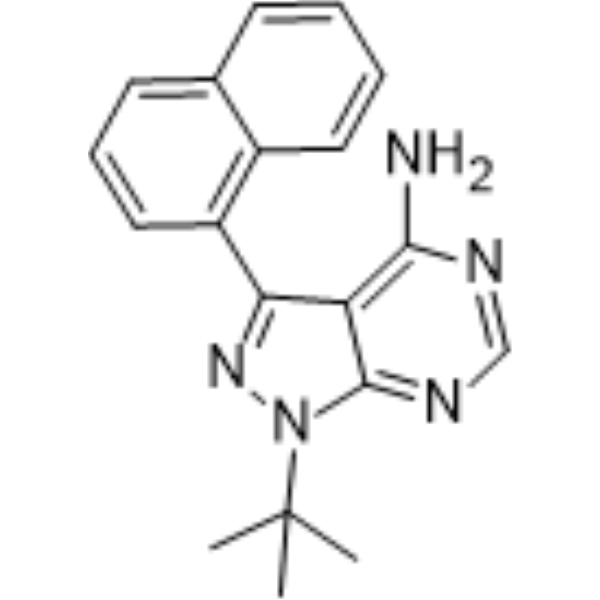
HY-13941
1-Naphthyl PP1Src Inhibitor -

HY-102069R
3MB-PP1 (Standard)Reference Standard -
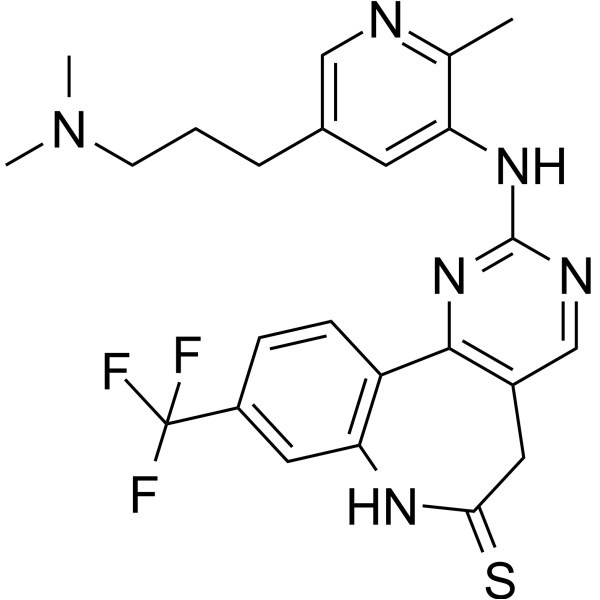
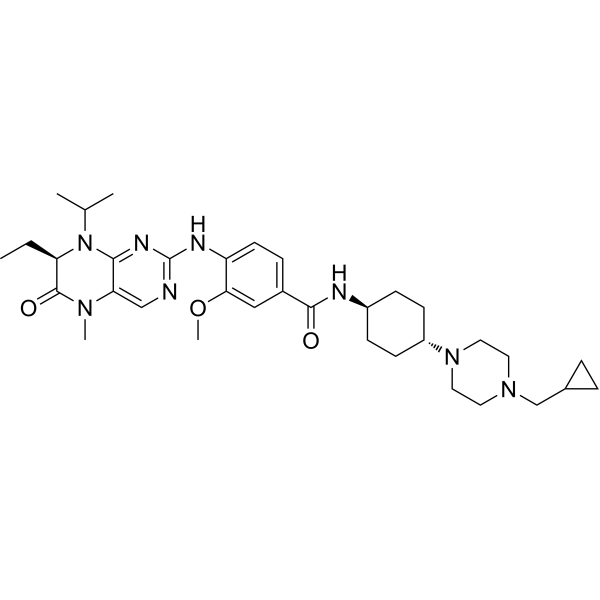
HY-15155
MLN0905PLK1 Inhibitor -
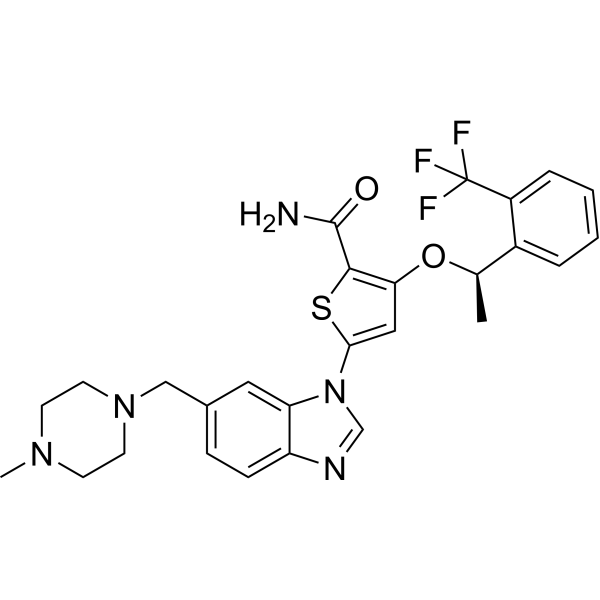
HY-12137
VolasertibPLK1 Inhibitor -
HY-50877
GSK461364PLK1 Inhibitor -
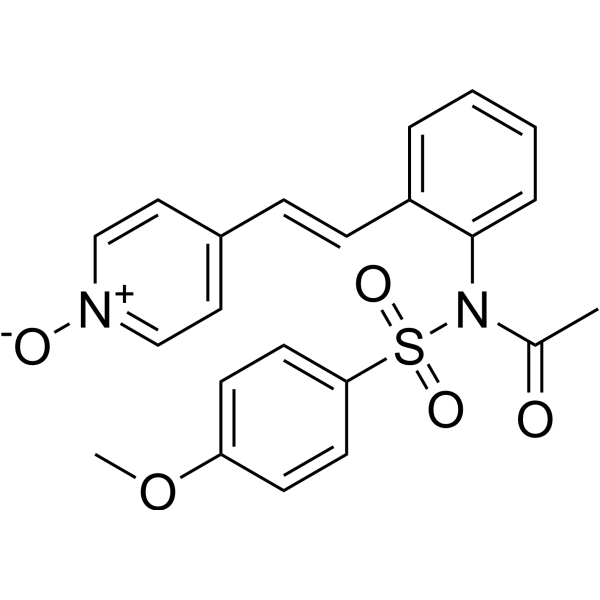
HY-12045
HMN-214PLK1 Inhibitor -
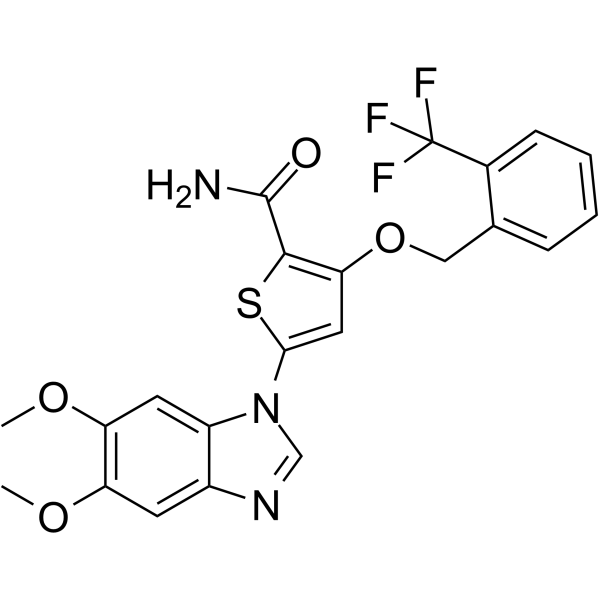
HY-11003
GW843682XPLK Inhibitor
Publications Citing Use of MedChemExpress (MCE) 3MB-PP1
More

Biological Activity
Description
IC50 & Target
[3]|
Leu93-ZIPK 2 μM (IC50) |
Cellular Effect
|
Cell Line

|
Type | Value | Description | References |
|---|---|---|---|---|
| HFF | EC50 |
0.1 μM
Compound: 1
|
Antiparasitic activity against tachyzoites of Toxoplasma gondii RH type 1 infected in HFF cells incubated for 4 hrs followed by compound washout measured after 72 hrs by beta-galactoside reporter assay
Antiparasitic activity against tachyzoites of Toxoplasma gondii RH type 1 infected in HFF cells incubated for 4 hrs followed by compound washout measured after 72 hrs by beta-galactoside reporter assay
|
[PMID: 23470217] |
| HFF | EC50 |
0.11 μM
Compound: 1
|
Antiparasitic activity against wild type tachyzoites of Toxoplasma gondii RH type 1 infected in HFF cells incubated for 20 mins prior to inoculation followed by compound washout at 4 hrs measured after 72 hrs by beta-galactoside reporter assay
Antiparasitic activity against wild type tachyzoites of Toxoplasma gondii RH type 1 infected in HFF cells incubated for 20 mins prior to inoculation followed by compound washout at 4 hrs measured after 72 hrs by beta-galactoside reporter assay
|
[PMID: 23470217] |
In Vitro
3MB-PP1 (5 μM; 3 hours) stimulates hyphal growth in a strain bearing analog-sensitive alleles of SSN3[1].
MedChemExpress (MCE) has not independently confirmed the accuracy of these methods. They are for reference only. Further protocols information, click here.


Chemical Information
-
CAS No. 956025-83-5
-
Appearance Solid
-
Molecular Weight 295.38
-
Formula C17H21N5
-
Color Off-white to pink
-
SMILES
NC1=C2C(N(C(C)(C)C)N=C2CC3=CC=CC(C)=C3)=NC=N1
-
Shipping
Room temperature in continental US; may vary elsewhere.
-
Storage
Powder -20°C 3 years 4°C 2 years In solvent -80°C 6 months -20°C 1 month


Publications (1)
-
Journal Impact Factor
-
Most Recent


Solvent & Solubility
In Vitro:
DMSO : 100 mg/mL (338.55 mM; ultrasonic and warming and heat to 60°C; Hygroscopic DMSO has a significant impact on the solubility of product, please use newly opened DMSO)
Please refer to the solubility information to select the appropriate solvent. Once prepared, please aliquot and store the solution to prevent product inactivation from repeated freeze-thaw cycles.
Storage method and period of stock solution: -80°C, 6 months; -20°C, 1 month. When stored at -80°C, please use it within 6 months. When stored at -20°C, please use it within 1 month.
Please refer to the solubility information to select the appropriate solvent. Once prepared, please aliquot and store the solution to prevent product inactivation from repeated freeze-thaw cycles.
Storage method and period of stock solution: -80°C, 6 months; -20°C, 1 month. When stored at -80°C, please use it within 6 months. When stored at -20°C, please use it within 1 month.
Concentration (start) × Volume (start) = Concentration (final) × Volume (final)
In Vivo:
Select the appropriate dissolution method based on your experimental animal and administration route.
- For the following dissolution methods, please ensure to first prepare a clear stock solution using an In Vitro approach and then sequentially add co-solvents:
- To ensure reliable experimental results, the clarified stock solution can be appropriately stored based on storage conditions. As for the working solution for In Vivo experiments, it is recommended to prepare freshly and use it on the same day.
- The percentages shown for the solvents indicate their volumetric ratio in the final prepared solution. If precipitation or phase separation occurs during preparation, heat and/or sonication can be used to aid dissolution.
Add each solvent one by one: 10% DMSO 40% PEG300 5% Tween-80 45% Saline
Solubility: ≥ 2.5 mg/mL (8.46 mM); Clear solution
This protocol yields a clear solution of ≥ 2.5 mg/mL (saturation unknown).
Taking 1 mL working solution as an example, add 100 μL DMSO stock solution (25.0 mg/mL) to 400 μL PEG300, and mix evenly; then add 50 μL Tween-80 and mix evenly; then add 450 μL Saline to adjust the volume to 1 mL.
Preparation of Saline: Dissolve 0.9 g sodium chloride in ddH₂O and dilute to 100 mL to obtain a clear Saline solution.
Add each solvent one by one: 10% DMSO 90% (20% SBE-β-CD in Saline)
Solubility: ≥ 2.5 mg/mL (8.46 mM); Clear solution
This protocol yields a clear solution of ≥ 2.5 mg/mL (saturation unknown).
Taking 1 mL working solution as an example, add 100 μL DMSO stock solution (25.0 mg/mL) to 900 μL 20% SBE-β-CD in Saline, and mix evenly.
Preparation of 20% SBE-β-CD in Saline (4°C, storage for one week): 2 g SBE-β-CD powder is dissolved in 10 mL Saline, completely dissolve until clear.
In Vivo Dissolution Calculator
Please enter the basic information of animal experiments:
-
-
-
-
Recommended: Prepare an additional quantity of animals to account for potential losses during experiments.
Please enter your animal formula composition:
-
%DMSO +
Recommended: Keep the proportion of DMSO in working solution below 2% if your animal is weak.
-
%+
-
+%Tween-80 + +
-
%Saline +
The co-solvents required include: DMSO, . All of co-solvents are available by MedChemExpress (MCE). , Tween 80. All of co-solvents are available by MedChemExpress (MCE).
Working solution concentration: 0.22 mg/mL
Method for preparing stock solution: mg drug dissolved in μL DMSO. Stock solution concentration: mg/mL.
1. Take μL DMSO stock solution;
2. Add μL .
μL , mix evenly;
3. Then add μL Tween 80, mix evenly;
4. Then add μL
Please ensure that the stock solution in the first step is dissolved to a clear state, and add co-solvents in sequence. You can use ultrasonic heating (ultrasonic cleaner, recommended frequency 20-40 kHz), vortexing, etc. to assist dissolution.

Protocols
-
Cell Cytotoxicity Assay
Cytotoxicity assays are usually based on the assessment of cell membrane damage, which can also be indirectly detected by measuring cell viability. Detection methods include MTT assay, CKK-8 assay, LDH assay and ATP assay, etc.
-
CFSE Dye Dilution Proliferation Assay
The CFSE (carboxyfluorescein diacetate succinimidyl ester) dye dilution proliferation assay is based on the covalent labeling of intracellular proteins by a cell-permeant fluorescent dye that becomes fluorescent upon intracellular ester cleavage and then is stably retained within cells. As labeled cells divide, the dye is partitioned equally between daughter cells, resulting in a stepwise halving of fluorescence intensity that can be quantified by flow cytometry to determine the number of cell divisions undergone by each cell population. This fluorescence dilution approach enables quantitative tracking of lymphocyte proliferation at the single-cell level over multiple rounds of division. CFSE-based proliferation analysis has been widely applied to measure antigen-driven lymphocyte expansion in vitro, where discrete fluorescence peaks correspond to successive cell divisions and allow reconstruction of proliferative history within heterogeneous populations.
-
Dye-dilution cell tracking and proliferation staining
Dye-dilution cell tracking assays quantify cell proliferation by covalently labeling intracellular proteins with a stable fluorescent dye that is equally partitioned between daughter cells during mitosis, resulting in stepwise halving of fluorescence intensity with each cell division as measured by flow cytometry histograms. Carboxyfluorescein diacetate succinimidyl ester (CFSE) is a prototypical dye that diffuses into cells, is enzymatically converted into a fluorescent compound, and then covalently binds intracellular amine groups, producing long-lived fluorescence suitable for tracking multiple rounds of division in vitro and in vivo. Successive generations of dividing cells form discrete peaks of decreasing fluorescence intensity, enabling estimation of proliferation history, precursor frequency, and division index within heterogeneous populations. Alternative dyes such as CellTrace Violet (CTV) and far-red membrane dyes (e. g. , PKH26) follow the same dilution principle but differ


Purity & Documentation
-
Data Sheet (279 KB)
-
SDS (393 KB)
- English - EN (393 KB)
- Français - FR (393 KB)
- Deutsch - DE (393 KB)
- Norwegian - NO (393 KB)
- Español - ES (393 KB)
- Swedish - SV (393 KB)
- Italian - IT (393 KB)
- Korean - KR (393 KB)
- Portuguese - PT (393 KB)
-
Handling Instructions (2659 KB)
References
[1]. Burkard ME, et al. Enabling and disabling polo-like kinase 1 inhibition through chemical genetics. ACS Chem Biol. 2012 Jun 15;7(6):978-81. [Content Brief]
[2]. Hollomon JM, et al. The Candida albicans Cdk8-dependent phosphoproteome reveals repression of hyphal growth through a Flo8-dependent pathway. PLoS Genet. 2022;18(1):e1009622. Published 2022 Jan 4. [Content Brief]
[3]. Al-Ghabkari A, et al. Validation of chemical genetics for the study of zipper-interacting protein kinase signaling. Proteins. 2018 Nov;86(11):1211-1217. [Content Brief]


Complete Stock Solution Preparation Table
Please refer to the solubility information to select the appropriate solvent. Once prepared, please aliquot and store the solution to prevent product inactivation from repeated freeze-thaw cycles.
Storage method and period of stock solution: -80°C, 6 months; -20°C, 1 month. When stored at -80°C, please use it within 6 months. When stored at -20°C, please use it within 1 month.
| Optional Solvent | Concentration Solvent Mass | 1 mg | 5 mg | 10 mg | 25 mg |
|---|---|---|---|---|---|
| DMSO | 1 mM | 3.3855 mL | 16.9273 mL | 33.8547 mL | 84.6367 mL |
| 5 mM | 0.6771 mL | 3.3855 mL | 6.7709 mL | 16.9273 mL | |
| 10 mM | 0.3385 mL | 1.6927 mL | 3.3855 mL | 8.4637 mL | |
| 15 mM | 0.2257 mL | 1.1285 mL | 2.2570 mL | 5.6424 mL | |
| 20 mM | 0.1693 mL | 0.8464 mL | 1.6927 mL | 4.2318 mL | |
| 25 mM | 0.1354 mL | 0.6771 mL | 1.3542 mL | 3.3855 mL | |
| 30 mM | 0.1128 mL | 0.5642 mL | 1.1285 mL | 2.8212 mL | |
| 40 mM | 0.0846 mL | 0.4232 mL | 0.8464 mL | 2.1159 mL | |
| 50 mM | 0.0677 mL | 0.3385 mL | 0.6771 mL | 1.6927 mL | |
| 60 mM | 0.0564 mL | 0.2821 mL | 0.5642 mL | 1.4106 mL | |
| 80 mM | 0.0423 mL | 0.2116 mL | 0.4232 mL | 1.0580 mL | |
| 100 mM | 0.0339 mL | 0.1693 mL | 0.3385 mL | 0.8464 mL |


3MB-PP1 Related Classifications
HY-102069 Related Classifications
 Powered by Bioz