



Apoptosis
Apoptosis
Apoptosis is a distinctive form of cell death exhibiting specific morphological and biochemical characteristics, including cell membrane blebbing, chromatin condensation, genomic DNA fragmentation, and exposure of specific phagocytosis signaling molecules on the cell surface. Cells undergoing apoptosis differ from those dying through necrosis. Necrotic cells are usually recognized by the immune system as a danger signal and, thus, resulting in inflammation; in contrast, apoptotic death is quiet and orderly.
There are two major pathways of apoptotic cell death induction: The intrinsic pathway, also called the Bcl-2-regulated or mitochondrial pathway, is activated by various developmental cues or cytotoxic insults, such as viral infection, DNA damage and growth-factor deprivation, and is strictly controlled by the BCL-2 family of proteins. The extrinsic or death-receptor pathway is triggered by ligation of death receptors (members of the tumor necrosis factor (TNF) receptor family, such as Fas or TNF receptor-1 (TNFR1)) that contain an intracellular death domain, which can recruit and activate caspase-8 through the adaptor protein Fas-associated death domain (FADD; also known as MORT1) at the cell surface. This recruitment causes subsequent activation of downstream (effector) caspases, such as caspase-3, -6 or -7, without any involvement of the BCL-2 family.
Studies suggest that alterations in cell survival contribute to the pathogenesis of a number of human diseases, including cancer, viral infections, autoimmune diseases, neurodegenerative disorders, and AIDS (acquired immunodeficiency syndrome). Treatments designed to specifically alter the apoptotic threshold may have the potential to change the natural progression of some of these diseases.
All Product Categories
-
Apoptosis Inhibitors
(904)
View all products
-
Apoptosis Agonists
(7)
View all products
-
Apoptosis Antagonists
(9)
View all products
-
Apoptosis Activators
(363)
View all products
-
Apoptosis Modulators
(60)
View all products
-
Apoptosis Inducers
(7944)
View all products
-
Apoptosis Degrader
(1)
View all products
-
Apoptosis Controls
(33)
View all products
-
Apoptosis Produits associés (9888)
Produits associés (9888)

-
Anticorps (120)
-
ZS3-046
 0 ImagesCat. No.: HY-176457CAS No.: 3087879-97-5ZS3-046 is a potent TAF1 PROTAC degrader with a DC50 < 10 nM. ZS3-046 recruits the CRBN E3 ubiquitin ligase, promotes polyubiquitination and proteasomal degradation of TAF1, thereby activating p53 and downregulating c-Myc, and ultimately induces apoptosis of tumor cells. ZS3-046 can be used in research related to acute myeloid leukemia.
-
Thalidomide-NH-C4-NH2 TFA
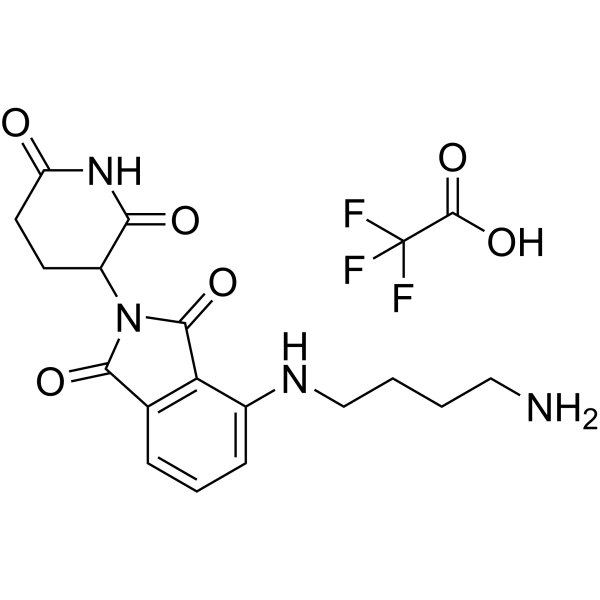 0 ImagesCat. No.: HY-130814CAS No.: 2093387-50-7Thalidomide-NH-C4-NH2 TFA (compound 29c) is an E3 ligase ligand-linker conjugate, and incorporates the Thalidomide based cereblon ligand and a linker. Thalidomide-NH-C4-NH2 TFA is used in PROTAC BRD2/BRD4 degrader-1 (HY-130612). PROTAC BRD2/BRD4 degrader-1 is a potent and selective BET protein BRD4 and BRD2 degrader.
-
BAG3/HSP70-IN-1
 0 ImagesCat. No.: HY-170944BAG3/HSP70-IN-1 (compound 16) is the first-in-class BAG3 and HSP70 dual inhibitor. BAG3/HSP70-IN-1 binds to BAG3 full-length, BAG3-BD, and HSP70 proteins with Kds of 33.10 μM, 27.90 μM, and 33.80 μM, respectively. BAG3/HSP70-IN-1 inhibits HeLa cells with an IC50 of 49.46 μM. BAG3/HSP70-IN-1 induces apoptosis by activating caspase 3 and caspase 9 levels in HeLa cells. BAG3/HSP70-IN-1 elevates p21 levels while reduces FOXM1 expression in HeLa cells. BAG3/HSP70-IN-1 decreases ATPase activity.
-
Myricetin-13C3
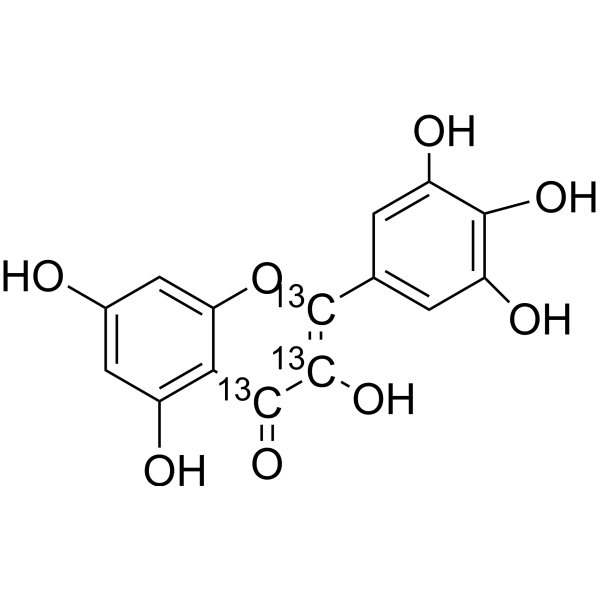 0 ImagesCat. No.: HY-15097SCAS No.: 2687960-15-0Synonyms: Cannabiscetin-13C3Myricetin-13C3 is the 13C-labeled Myricetin. Myricetin is a common plant-derived flavonoid with a wide range of activities including strong anti-oxidant, anticancer, antidiabetic and anti-inflammatory activities.
-
CPTH2 hydrochloride
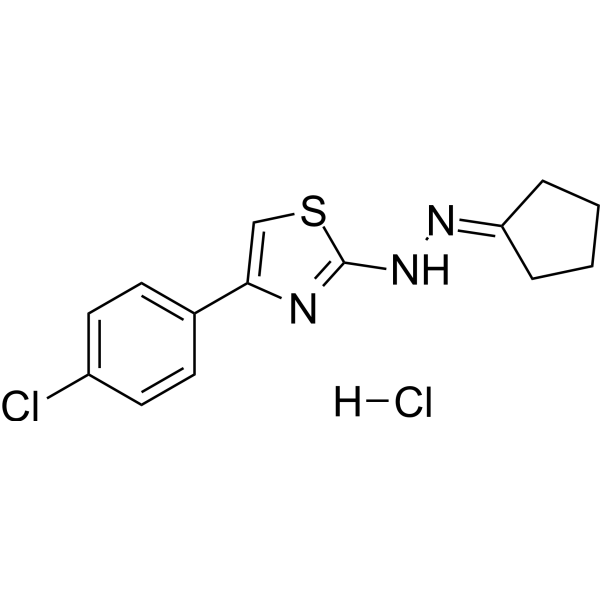 0 ImagesCat. No.: HY-W013274ACAS No.: 2108899-91-6CPTH2 hydrochloride is a potent histone acetyltransferase (HAT) inhibitor. CPTH2 hydrochloride selectively inhibits the acetylation of histone H3 by Gcn5. CPTH2 hydrochloride induces apoptosis and decreases the invasiveness of a clear cell renal carcinoma (ccRCC) cell line through the inhibition of acetyltransferase p300 (KAT3B).
-
Thalidomide-O-amido-C3-NH2
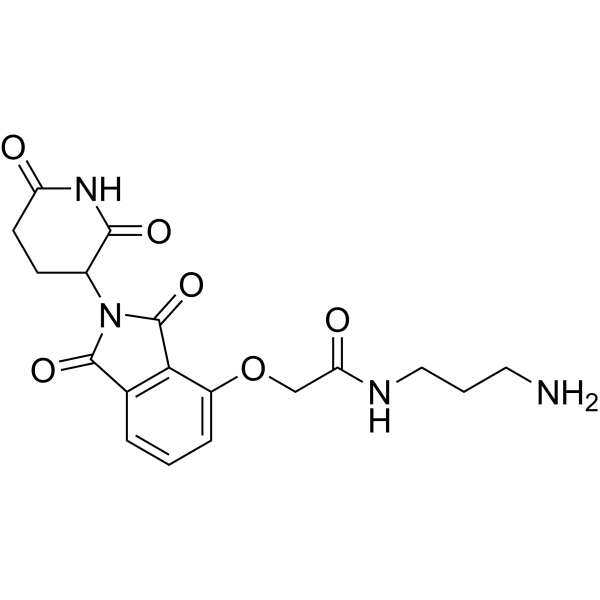 0 ImagesCat. No.: HY-115560CAS No.: 2022182-57-4Synonyms: Cereblon Ligand-Linker Conjugates 16; E3 Ligase Ligand-Linker Conjugates 52Thalidomide-O-amido-C3-NH2 is a synthesized E3 ligase ligand-linker conjugate that incorporates the Thalidomide based cereblon ligand and a linker used in PROTAC technology.
-
Doxycycline-d3 (hydrochloride)
 0 ImagesCat. No.: HY-N0565ASDoxycycline-d3 hydrochloride is deuterium labeled Doxycycline hydrochloride (HY-N0565A). Doxycycline hydrochloride is an orally active highly lipophilic, tissue-permeable MMP inhibitor with broad-spectrum antibacterial activity. Doxycycline hydrochloride is also a semi-synthetic antibiotic with chelating properties, which blocks bacterial protein synthesis and inhibits extracellular matrix degradation through interactions with zinc and calcium atoms. Doxycycline hydrochloride also inhibits mitochondrial biogenesis, translation, and the expression of respiratory chain proteins. Doxycycline hydrochloride induces apoptosis, inhibits autophagy and EMT, downregulates stem cell markers, and activates the PI3K-AKT pathway, thereby effectively inhibiting the viability and proliferation of cancer cells such as breast cancer cells. Doxycycline hydrochloride also promotes the survival and self-renewal of embryonic stem cells and neural stem cells, and reduces the frequency of medium changes in culture. Doxycycline hydrochloride has been applied in studies related to breast cancer, prostate cancer, bladder cancer, and other cancers.
-
cRIPGBM
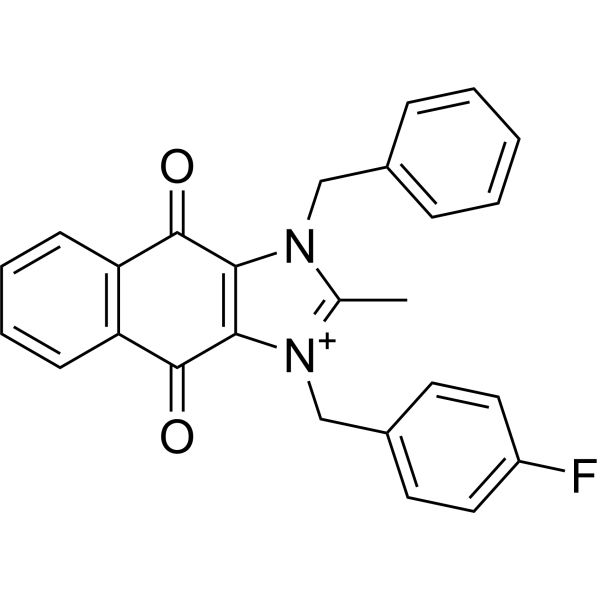 0 ImagesCat. No.: HY-125466CAS No.: 2361988-76-1cRIPGBM, a proapoptotic derivative of RIPGBM, a cell type-selective inducer of apoptosis in GBM cancer stem cells (CSCs) by binding to receptor-interacting protein kinase 2 (RIPK2), with an EC50 of 68 nM in GBM-1 cells.
-
Thalidomide-NH-PEG7
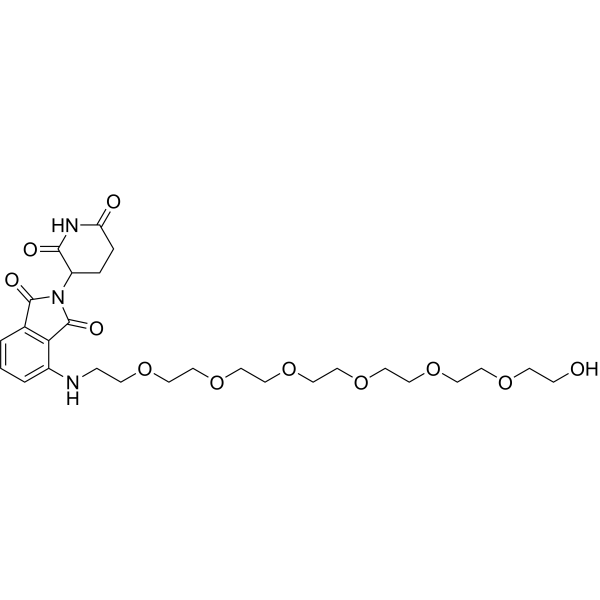 0 ImagesCat. No.: HY-130648CAS No.: 2641838-98-2Thalidomide-NH-PEG7 is a synthesized E3 ligase ligand-linker conjugate for ADC. Thalidomide-NH-PEG7 can be connected to the ligand for protein by a linker to form PROTAC iRucaparib-AP6, a highly specific PARP1 degrader.
-
ZSL-M028
 0 ImagesCat. No.: HY-187506ZSL-M028 is an orally active and selective Polo-like kinase 4 (PLK4) inhibitor with an IC50 value of 1.1 nM. ZSL-M028 exhibits anti-tumor activity against TRIM37-amplified neuroblastoma, downregulates SAS6, upregulates FBXW5, induces G2-phase cell cycle arrest and apoptosis, activates the p53 signaling pathway, and inhibits tumor cell colony formation and migration. ZSL-M028 shows significant tumor growth inhibitory activity in the IMR-32 neuroblastoma xenograft model. ZSL-M028 can be used in neuroblastoma-related research.
-
Thalidomide-O-amido-C8-NH2 hydrochloride
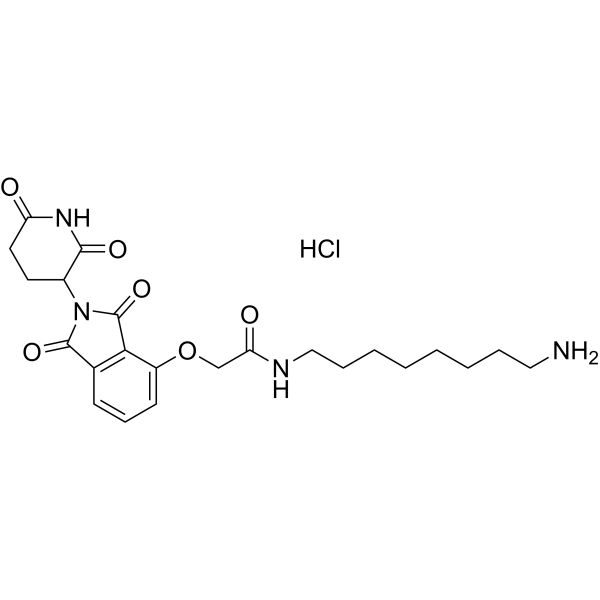 0 ImagesCat. No.: HY-107439ACAS No.: 2415263-07-7Thalidomide-O-amido-C8-NH2 hydrochloride, a synthesized E3 ligase ligand-linker conjugate that incorporates the Thalidomide based cereblon ligand and a linker, can be used in the synthesis of PROTACs.
-
FLT3/TrKA-IN-1
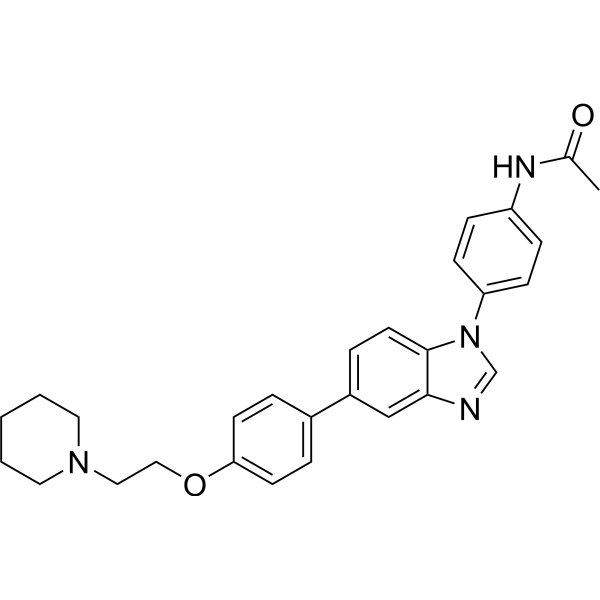 0 ImagesCat. No.: HY-146749FLT3/TrKA-IN-1 is a potent FLT3/TrKA dual kinase inhibitor with the IC50s of 43.8 nM, 97.2 nM, 92.5 nM and 23.6 nM for FLT3, FLT3-ITD, FLT3-TKD and TrKA, respectively. FLT3/TrKA-IN-1 induces cell cycle arrest at the G0/G1 phase as well as apoptosis and shows antiproliferative activity in vitro. FLT3/TrKA-IN-1 has the potential for the research of Acute myeloid leukemia (AML).
-
Doxycycline-13C,d3
 0 ImagesCat. No.: HY-N0565S3CAS No.: 1902958-13-7Doxycycline-13C,d3 is 13C and deuterium labeled Doxycycline (HY-N0565). Doxycycline is an orally active highly lipophilic, tissue-permeable MMP inhibitor with broad-spectrum antibacterial activity. Doxycycline is also a semi-synthetic antibiotic with chelating properties, which blocks bacterial protein synthesis and inhibits extracellular matrix degradation through interactions with zinc and calcium atoms. Doxycycline also inhibits mitochondrial biogenesis, translation, and the expression of respiratory chain proteins. Doxycycline induces apoptosis, inhibits autophagy and EMT, downregulates stem cell markers, and activates the PI3K-AKT pathway, thereby effectively inhibiting the viability and proliferation of cancer cells such as breast cancer cells. Doxycycline also promotes the survival and self-renewal of embryonic stem cells and neural stem cells, and reduces the frequency of medium changes in culture. Doxycycline has been applied in studies related to breast cancer, prostate cancer, bladder cancer, and other cancers.
-
Etoposide phosphate disodium
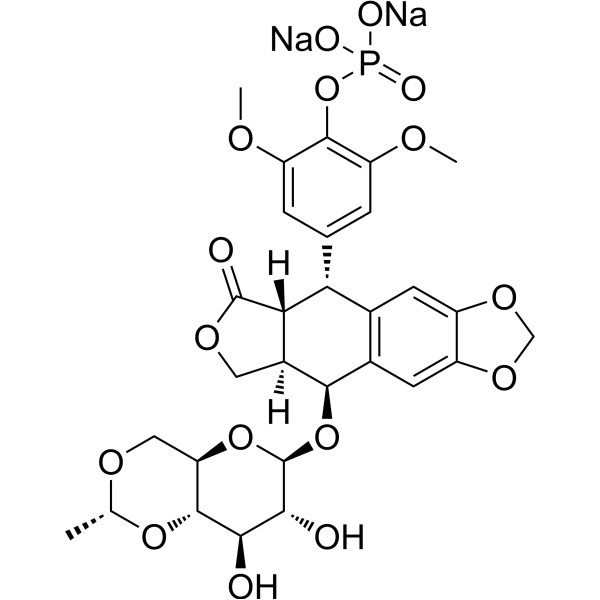 0 ImagesCat. No.: HY-13630ACAS No.: 122405-33-8Synonyms: BMY-40481 disodiumEtoposide phosphate disodium (BMY-40481 disodium) is a potent anti-cancer chemotherapy agent and a selective topoisomerase II inhibitor to prevent re-ligation of DNA strands. Etoposide phosphate disodium is the phosphate ester proagent of etoposide and is considered as active equivalent to Etoposide. Etoposide phosphate disodium induces cell cycle arrest, apoptosis, and autophagy.

-
Thalidomide-Piperazine-PEG3-NH2
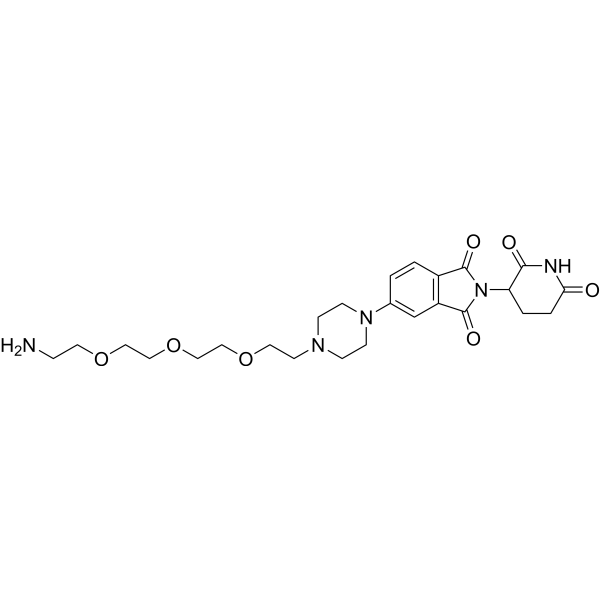 0 ImagesCat. No.: HY-138787CAS No.: 2357113-68-7Thalidomide-Piperazine-PEG3-NH2 is a synthesized E3 ligase ligand-linker conjugate that incorporates the Thalidomide based cereblon ligand and a linker used in PROTAC technology.
-
ACT001 hydrochloride
 0 ImagesCat. No.: HY-128861BCAS No.: 1403357-80-1Synonyms: Dimethylaminomicheliolide hydrochloride; DMAMCL hydrochlorideACT001 (Dimethylaminomicheliolide; DMAMCL) hydrochloride is an orally active, blood-brain barrier-permeable anti-inflammatory and anti-tumor agent. ACT001 hydrochloride exerts microglia-mediated neuroanti-inflammatory effects by inhibiting the AKT/NF-κB/NLRP3 axis and suppressing apoptosis (apoptosis). ACT001 hydrochloride inhibits tumor proliferation by upregulating NKTR and inhibiting AKT. ACT001 hydrochloride alleviates metabolic-associated fatty liver disease by regulating gut microbiota and inhibiting ileal FXR. ACT001 hydrochloride inhibits pyroptosis (pyroptosis) and pro-inflammatory cytokine release by activating PPAR-γ and inhibiting NF-κB/NLRP3.
-
Adenosine-2′-13C
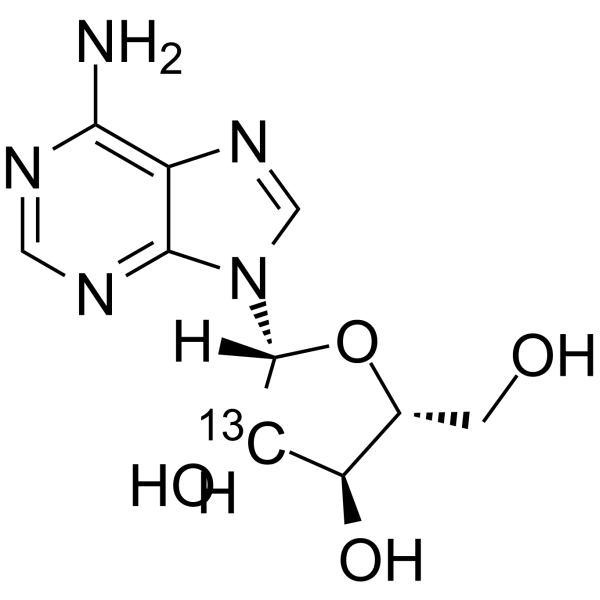 0 ImagesSynonyms: Adenine riboside-2′-13C; D-Adenosine-2′-13C
-
Thalidomide-PEG2-C2-NH2
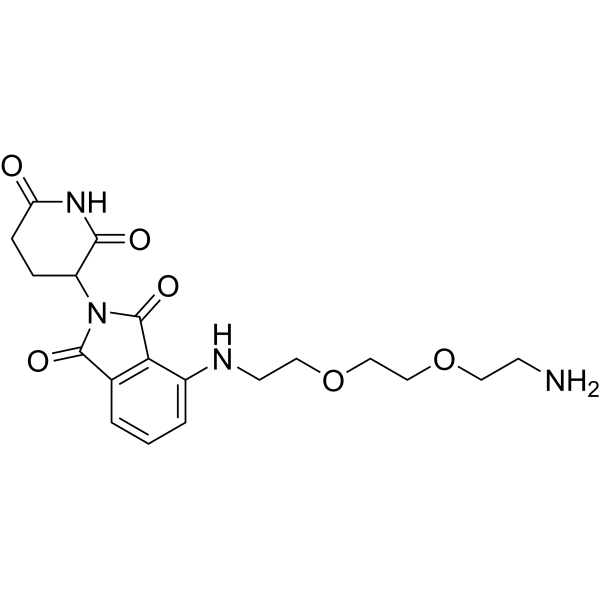 0 ImagesCat. No.: HY-129703CAS No.: 2093416-32-9Synonyms: Thalidomide-NH-PEG2-C2-NH2Thalidomide-PEG2-C2-NH2 is a synthesized E3 ligase ligand-linker conjugate that incorporates the Thalidomide based cereblon ligand and 2-unit PEG linker used in PROTAC technology.
-
Erucin (Standard)
 0 ImagesCat. No.: HY-121323RCAS No.: 4430-36-8Acarbose (Standard) is the analytical standard of Acarbose. This product is intended for research and analytical applications. Acarbose (BAY g 5421), antihyperglycemic agent, is an orally active alpha-glucosidase inhibitor (IC50=11 nM). Acarbose can potentiate the hypoglycemic effects of sulfonylureas or insulin.




