



Apoptosis Inducer
-
MK-886 (Standard)
 0 ImagesCat. No.: HY-14166RCAS No.: 118414-82-7Synonyms: L 663536 (Standard)
MK-886 (Standard) is the analytical standard of MK-886. This product is intended for research and analytical applications. MK-886 (L 663536) is a potent, cell-permeable and orally active FLAP (IC50 of 30 nM) and leukotriene biosynthesis (IC50s of 3 nM and 1.1 μM in intact leukocytes and human whole blood, respectively) inhibitor. MK-886 is also a non-competitive PPARα antagonist and can induce apoptosis.
-
Apoptosis inducer 33
 0 ImagesCat. No.: HY-170394
Apoptosis inducer 33 (Compound H2) is a hydrazone derivative. Apoptosis inducer 33 has antioxidant and antibacterial activity that inhibits the growth of Staphylococcus aureus, Escherichia coli and Candida albicans. Apoptosis inducer 33 inhibits tumor cells proliferation and induces apoptosis, which can be used in the study of cancer.
-
Indinavir-13C4,15N
 0 ImagesCat. No.: HY-B0689S1Synonyms: MK-639 free base-13C4,15N; L-735524 free base-13C4,15N
Indinavir-13C4,15N (MK-639 (free base)-13C4,15N) is 13C and 15N labeled Indinavir. Indinavir (MK-639 free base) is an orally active and selective HIV-1 protease inhibitor with a Ki of 0.54 nM for PR. Indinavir exhibits anticancer activity by inhibiting the activation of MMPs-2 hydrolysis, anti-angiogenesis and inducing apoptosis. Indinavir is also a SARS-CoV 3CLpro inhibitor.
-
STAT3-IN-1 (Standard)
 0 ImagesCat. No.: HY-100753RCAS No.: 2059952-75-7
STAT3-IN-1 (Standard) is the analytical standard of STAT3-IN-1 (HY-100753). This product is intended for research and analytical applications. STAT3-IN-1 (compound 7d) is an excellent, selective and orally active STAT3 inhibitor, with IC50 values of 1.82 μM and 2.14 μM in HT29 and MDA-MB 231 cells, respectively. STAT3-IN-1 (compound 7d) induces tumor cells apoptosis.
-
DCZ3112
 0 ImagesCat. No.: HY-187653CAS No.: 2556837-25-1
DCZ3112 is a Hsp90/Cdc37 protein-protein interaction inhibitor, with a Kd value of 4.98 µM against human Hsp90. DCZ3112 binds to the N-terminal domain of Hsp90, disrupts the Hsp90-Cdc37 interaction, and does not inhibit the ATPase activity of Hsp90. DCZ3112 induces G1 phase cell cycle arrest, apoptosis, reduces the phosphorylation levels of AKT and ERK, and inhibits the proliferation of HER2-positive breast cancer cells. DCZ3112 can be used in breast cancer-related research.
-
1,3,5-Tricaffeoylquinic acid
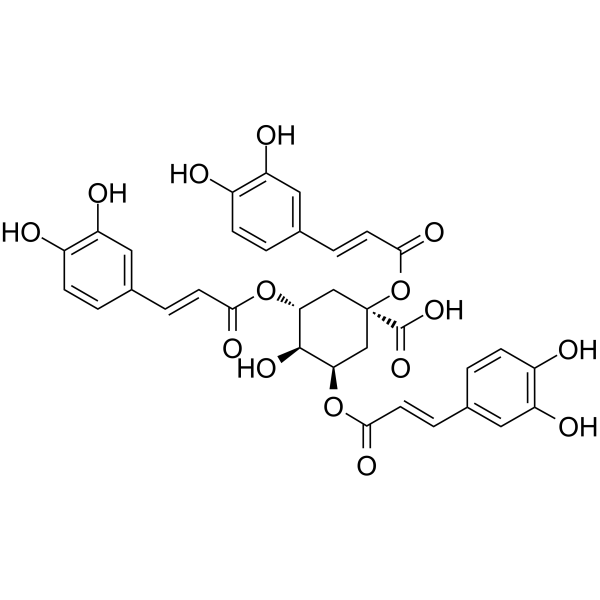 0 ImagesCat. No.: HY-N6926CAS No.: 1073897-80-9
1,3,5-Tricaffeoylquinic acid acts as an angiogenesis inhibitor and apoptosis inducer, and exhibits anti-HIV activity. 1,3,5-Tricaffeoylquinic acid inhibits the phosphorylation of VEGFR2, ERK, PI3K, Akt and mTOR in the angiogenesis signaling pathway. 1,3,5-Tricaffeoylquinic acid regulates apoptosis-related proteins, upregulates the levels of activated caspase-8, Bax, activated PARP and caspase-3/9, while downregulates the level of Bcl-2. 1,3,5-Tricaffeoylquinic acid inhibits tube formation and shows cytotoxicity against ovarian cancer cells. 1,3,5-Tricaffeoylquinic acid can be used in studies related to ovarian cancer.
-
SKI II hydrochloride
 0 ImagesCat. No.: HY-112364CAS No.: 1177741-83-1
SKI-II hydrochloride is an orally active dual-target inhibitor of SphK1/2 and DES1, with Ki values of 16 µM and 0.3 µM against SphK1 and DES1, respectively. SKI-II hydrochloride activates the PERK-Nrf2 antioxidant pathway by stabilizing Nrf2, and synergizes with Temozolomide (HY-17364) to induce oxidative/endoplasmic reticulum stress and cancer cell death under hypoxic conditions. SKI-II hydrochloride inhibits SphK activity, promotes ceramide accumulation and apoptosis, and synergizes with Cisplatin (HY-17394) to reverse drug resistance via the ras/MAPK pathway in vivo. SKI-II hydrochloride reduces measles virus replication by inhibiting mTORC1 activity. SKI-II hydrochloride binds to VCP to induce M1 polarization, enhances host tolerance to Staphylococcus aureus infection, and exerts radioprotective effects through Nrf2 activation and accelerated DNA repair. SKI-II hydrochloride can be used in research related to glioblastoma, acute myeloid leukemia, gastric cancer, measles virus infection, Staphylococcus aureus infection, and acute radiation syndrome.
-
Thalidomide-O-amido-PEG3-C2-NH2 TFA (Standard)
 0 ImagesCat. No.: HY-103611RCAS No.: 1957236-21-3Synonyms: Cereblon Ligand-Linker Conjugates 3 TFA (Standard); E3 ligase Ligand-Linker Conjugates 14 TFA (Standard)
Thalidomide-O-amido-PEG3-C2-NH2 TFA (Standard) is the analytical standard of Thalidomide-O-amido-PEG3-C2-NH2 TFA (HY-103611). This product is intended for research and analytical applications. Thalidomide-O-amido-PEG3-C2-NH2 TFA is a synthesized E3 ligase ligand-linker conjugate that incorporates the Thalidomide based cereblon ligand and 3-unit PEG linker used in PROTAC technology.
-
4-(Dodecylamino)phenol
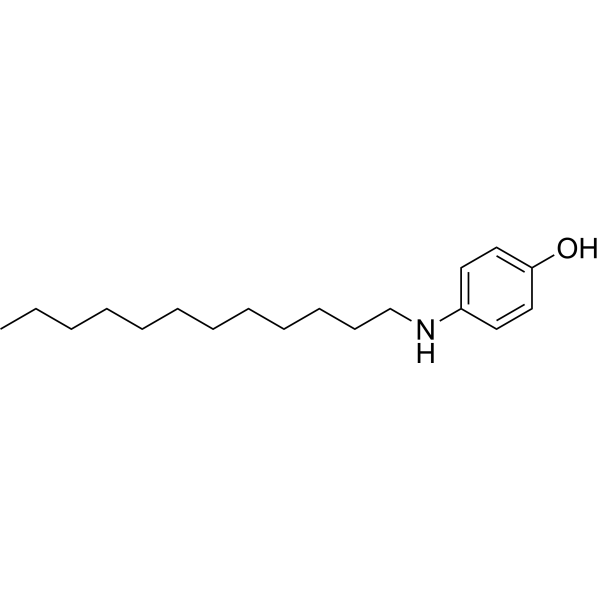 0 ImagesCat. No.: HY-131724CAS No.: 25848-37-7Synonyms: p-DDAP; p-Dodecylaminophenol
4-(Dodecylamino)phenol (p-DDAP) is an anticancer agent. 4-(Dodecylamino)phenol has anti-tumor activity and can suppress proliferation, arrest the cell cycle and induce apoptotic cell death. 4-(Dodecylamino)phenol can be used for the research of cancer, such as prostate cancer.
-
Pectolinarigenin (Standard)
 0 Images
Pectolinarigenin (Standard) is the analytical standard of Pectolinarigenin. This product is intended for research and analytical applications. Pectolinarigenin is an orally active dual inhibitor of COX-2/5-LOX with anti-inflammatory, antioxidant, antitumor and neuroprotective activities. Pectolinarigenin exerts neuroprotective and anti-inflammatory effects on astrocyte inflammation via the NFκB and MAPK pathways. Pectolinarigenin inhibits LPS-induced phosphorylation of ERK1/2, N-FκB and p38MAPK, directly inhibits the enzymatic activity or binding of COX-2, 5-LOX and HIF-1α, and reduces the level of XIAP. Pectolinarigenin modifies Keap1 to promote nuclear accumulation of Nrf2, induces ARE-mediated antioxidant enzyme expression, and possesses direct free radical scavenging activity. Pectolinarigenin reduces the release of NO, proinflammatory mediators and leukotrienes, and increases the level of IL-10. Pectolinarigenin induces G2/M cell cycle arrest, apoptosis (Apoptosis) and autophagy (Autophagy) via the PI3K/AKT/mTOR signaling pathway. Pectolinarigenin reduces renal crystal deposition and inhibits melanin synthesis. Pectolinarigenin inhibits inflammation and alleviates allergy in mouse models of inflammation. Pectolinarigenin alleviates renal injury, inflammation and oxidative stress in mice by inhibiting HIF-1α activity. Pectolinarigenin can be used for the research of neurodegenerative diseases, inflammatory/allergic diseases, calcium oxalate nephrocalcinosis, gastric cancer, melasma, post-inflammatory diseases and chloasma.
-
Momilactone B
 0 Images
Momilactone B is an inhibitor of α-amylase and α-glucosidase, with an IC50 of 146.85 μg/mL against Aspergillus oryzae α-amylase and an IC50 of 612.03 μg/mL against Saccharomyces cerevisiae α-glucosidase. Momilactone B upregulates the expression of p21Waf1/Cip1, reduces the kinase activity of Cdk4 and Cdk6, induces cell cycle arrest and apoptosis in cancer cells, and triggers irreversible cell death via cell membrane damage. Momilactone B inhibits the growth of neighboring plant species and serves as a major contributing factor to the allelopathy of rice. Momilactone B can be used in studies related to rice allelopathy, type 2 diabetes, colon cancer and leukemia.
-
Nampt-IN-3 (Standard)
 0 ImagesCat. No.: HY-108701RCAS No.: 2121591-52-2
Nampt-IN-3 (Standard) is the analytical standard of Nampt-IN-3 (HY-108701). This product is intended for research and analytical applications. Nampt-IN-3 (Compound 35) simultaneously inhibit nicotinamide phosphoribosyltransferase (NAMPT) and HDAC with IC50s of 31 nM and 55 nM, respectively. Nampt-IN-3 effectively induces cell apoptosis and autophagy and ultimately leads to cell death.
-
(E)-Methyl 4-coumarate (Standard)
 0 ImagesSynonyms: Methyl trans-p-coumarate (Standard)
(E)-Methyl 4-coumarate (Standard) is the analytical standard of (E)-Methyl 4-coumarate (HY-N2492). This product is intended for research and analytical applications. (E)-Methyl 4-coumarate (Methyl 4-hydroxycinnamate) is a phenolic compound and derivative of Cinnamic acid (HY-N0610A). (E)-Methyl 4-coumarate can be found in several plants, such as the leaves of Allium cepa and Morinda citrifolia L. (E)-Methyl 4-coumarate, when combined with Carnosic acid (HY-N0644), induces Apoptosis. (E)-Methyl 4-coumarate inhibits GSK3β activity and modulates inflammatory cytokine levels (increasing IL-10 and decreasing IL-4). (E)-Methyl 4-coumarate combined with Carnosic acid exhibits anticancer effects against acute myeloid leukemia. (E)-Methyl 4-coumarate ameliorates Plasmodium berghei NK65 infection.
-
PI3K-IN-7
 0 ImagesCat. No.: HY-121672CAS No.: 1502813-63-9
PI3K-IN-7 (Compound C96) is a PI3K inhibitor. PI3K-IN-7 inhibits phosphorylation of AKT and the activation of an AKT downstream protein. PI3K-IN-7 induces apoptosis of the tumor cells. PI3K-IN-7 has low toxicity for normal cells. PI3K-IN-7 can be used for research of acute and chronic leukemia, multiple myeloma, lymphoma.
-
Rosolic acid
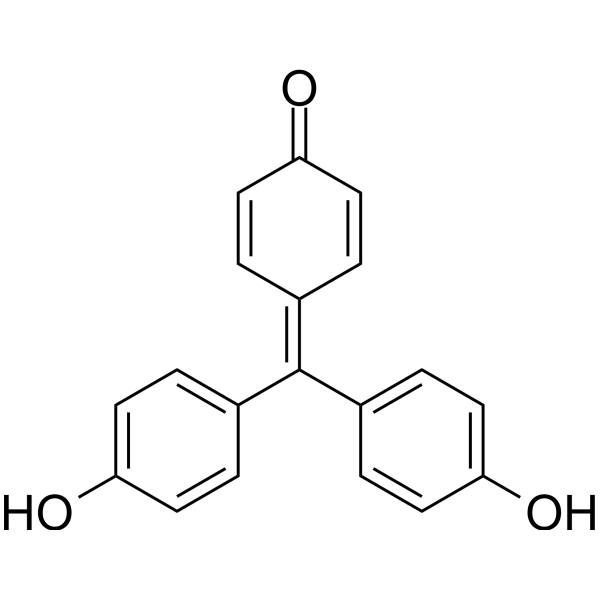 0 ImagesCat. No.: HY-W104821CAS No.: 603-45-2
Rosolic acid is a Michael acceptor molecule isolated from the rhizomes of Plantago asiatica L. Rosolic acid inhibits Keap1, promotes Nrf2 nuclear translocation, and upregulates HO-1 and NQO-1. Rosolic acid reduces ER stress markers PERK, ATF-6, GRP78, and CHOP, as well as oxidative stress, ROS production, inflammation, and apoptosis. Rosolic acid upregulates SOD, CAT, and GPx activities, induces angiogenesis and insulin secretion, and restores endothelial function and pancreatic beta cell protection under ER stress. Rosolic acid can be used in research on diabetes and endothelial dysfunction.
-
Malabaricone C (Standard)
 0 ImagesCat. No.: HY-N8518RCAS No.: 63335-25-1
Malabaricone C is an orally active and noncompetitive sphingomyelin synthase (SMS) inhibitor with IC50 values of 3 μM and 1.5 μM for SMS 1 and SMS 2, respectively. Malabaricone C reduces body weight gain, improves glucose tolerance, and decreases lipid accumulation in the liver, showing significant prevention of high fat diet-induced fatty liver in mice. Malabaricone C has anti-inflammatory effects, which is found in the fruits of Myristica cinnamomea King. Malabaricone C is promising for research of obesity and immunological disorders caused due to hyper-activation of T-cells.
-
PI-273 (Standard)
 0 ImagesCat. No.: HY-103489RCAS No.: 925069-34-7
PI-273 (Standard) is the analytical standard of PI-273 (HY-103489). This product is intended for research and analytical applications. PI-273 is a first reversibly and specific phosphatidylinositol 4-kinase (PI4KIIα) inhibitor with an IC50 of 0.47 μM. PI-273 can inhibit breast cancer cell proliferation, block the cell cycle and induce cell apoptosis.
-
L-Histidine-15N3 hydrochloride hydrate
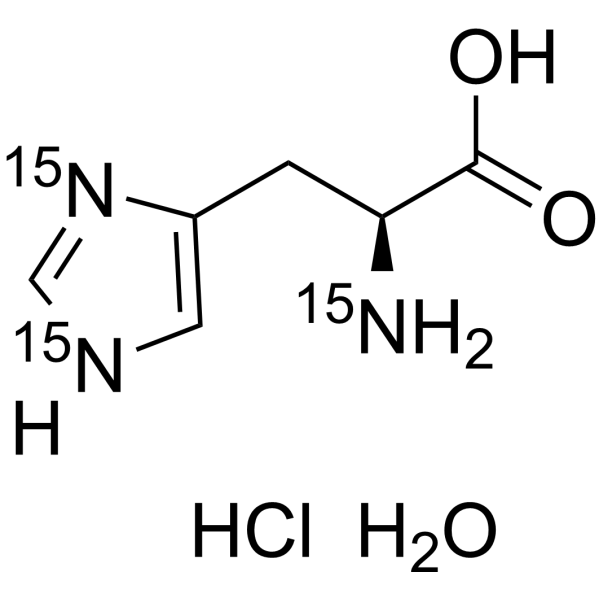 0 ImagesCat. No.: HY-W014423S5Synonyms: H-His-OH-15N3 hydrochloride hydrate
L-Histidine-15N3 hydrochloride hydrate is the 15N-labeled L-Histidine hydrochloride hydrate (HY-W014423). L-Histidine hydrochloride hydrate is an endogenous metabolite. L-Histidine hydrochloride hydrate scavenges hydroxyl radicals and singlet oxygen, regulate the absorption of zinc, copper and iron, exhibits anti-inflammatory and antioxidant activities. L-Histidine hydrochloride hydrate is blood brain barrier penetrable.

-
Olsalazine Disodium (Standard)
 0 Images
Olsalazine Disodium (Standard) is an orally active prodrug of 5-ASA (HY-15027). Olsalazine Disodium (Standard) can inhibit cells proliferation and induce apoptosis. Olsalazine Disodium (Standard) can reduce DAI and MPO activity and inhibit inflammatory cytokines levels. Olsalazine Disodium (Standard) can be used for the researches of cancer, inflammation and metabolic disease, such as colorectal cancer, inflammatory bowel disease (IBD) and hyperuricemic.



