



COX
Cyclooxygenase
Cyclooxygenase (COX), officially known as prostaglandin-endoperoxide synthase (PTGS), is an enzyme that is responsible for formation of important biological mediators called prostanoids, including prostaglandins, prostacyclin and thromboxane. Pharmacological inhibition of COX can provide relief from the symptoms of inflammation and pain. Drugs, like Aspirin, that inhibit cyclooxygenase activity have been available to the public for about 100 years. Two cyclooxygenase isoforms have been identified and are referred to as COX-1 and COX-2. Under many circumstances the COX-1 enzyme is produced constitutively (i.e., gastric mucosa) whereas COX-2 is inducible (i.e., sites of inflammation). Non-steroidal anti-inflammatory drugs (NSAID), such as aspirin and ibuprofen, exert their effects through inhibition of COX. The main COX inhibitors are the non-steroidal anti-inflammatory drugs (NSAIDs).
COX Isoform Specific Products
All Product Categories
-
COX Related Products (1315)
Related Products (1315)

-
Antibodies (6)
-
COX Isoform Comparison
-
2'-Hydroxy-4-methoxychalcone
 0 Images2'-Hydroxy-4-methoxychalcone is a PPARγ agonist. 2'-Hydroxy-4-methoxychalcone also exhibits inhibitory activity against gelatinase/collagenase and human glutathione S-transferase (GST), with an IC50 of 5.2 μM and a Ki of 15.36 μM against GST. 2'-Hydroxy-4-methoxychalcone inhibits both the NF-κB and AP-1 signaling pathways, exerting anti-inflammatory activity; it also inhibits COX-2, conferring anti-cancer/anti-angiogenic activity. 2'-Hydroxy-4-methoxychalcone can be used in studies related to atherosclerosis, inflammatory diseases and cancer.
-
AChE-IN-82
 0 ImagesCat. No.: HY-170938AChE-IN-82 (compound 49) is an acetylcholinesterase (AChE) inhibitor. AChE-IN-82 inhibits eeAChE, eqBChE, hMAO-A, hMAO-B, and BACE-1 with IC50s of 0.072, 9.81, 14.52, 0.024, 2.42 μM, respectively. AChE-IN-82 inhibits COX-1, COX-2 and 5-LOX with IC50s of 60.41, 0.187, 0.18 μM, respectively. AChE-IN-82 shows an excellent neuroprotective effect by significantly reducing oxidative stress induced by H2 O2.
-
Akt/NF-κB/MAPK-IN-1
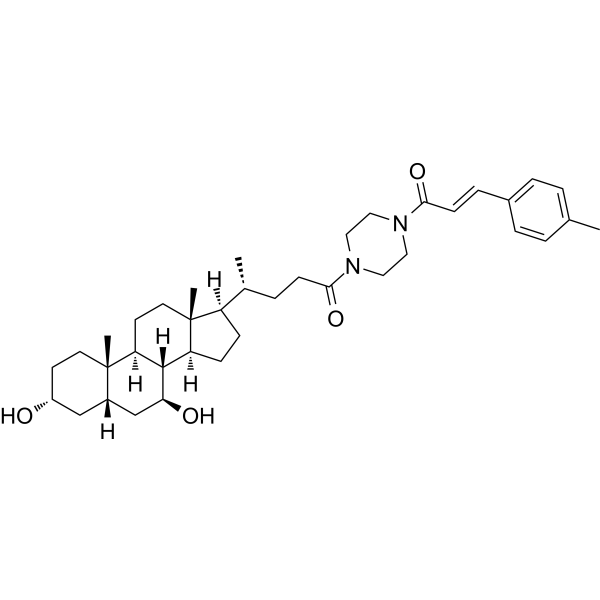 0 ImagesCat. No.: HY-149496CAS No.: 2994215-72-2Akt/NF-κB/MAPK-IN-1 (compound 2m) is a potent and orally active inhibitor against NO (IC50=7.70 μM) with no significant toxicity. Akt/NF-κB/MAPK-IN-1 shows anti-inflammatory activity by inhibiting Akt/NF-κB and MAPK signaling pathways.
-
Talmetacin
 0 ImagesCat. No.: HY-107085CAS No.: 67489-39-8Talmetacin exhibits anti-inflammatory and analgesic efficacy.
-
Pulegone-d8
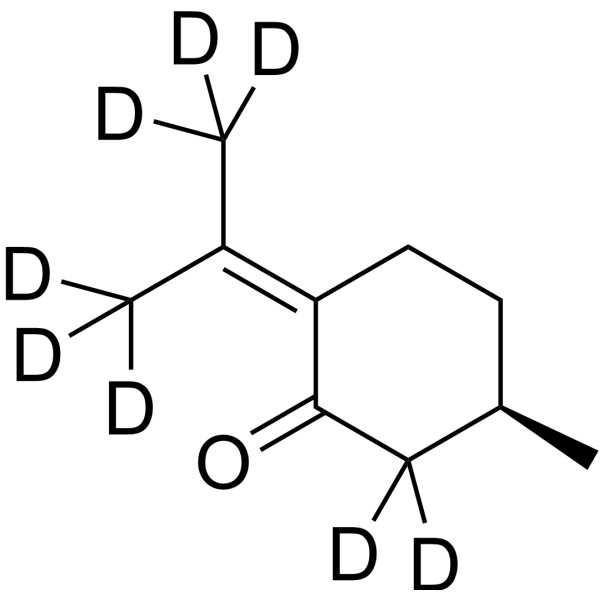 0 ImagesCat. No.: HY-N1500S1CAS No.: 62385-90-4Pulegone-d8 is deuterated labeled Pulegone (HY-N1500). Pulegone is a monoterpene ketone compound widely present in the essential oils of many plants. Pulegone can also be used as a bird repellent. Pulegone has multiple activities such as anti-inflammatory, antibacterial, antifungal, and anti-hyperalgesic effects. Pulegone is particularly effective against bacteria of the Salmonella species.
-
(-)-Catechin gallate (Standard)
 0 ImagesCat. No.: HY-N0356RCAS No.: 130405-40-2Synonyms: (-)-Catechin 3-gallate (Standard); (-)-Catechin 3-O-gallate (Standard)
-
DPAP
 0 ImagesCat. No.: HY-182899DPAP is a p-ERK1/2 inhibitor with an IC50 of 7.85 μM against p-ERK1/2. DPAP inhibits the expression of p-MEK1/2 and disrupts the Ras-ERK signaling pathway. DPAP inhibits the expression of COX-2 in nerve cells. DPAP damages DNA and mitochondria, induces Apoptosis via the mitochondrial pathway, and upregulates PD-L1. DPAP inhibits melanoma metastasis and angiogenesis, and inactivates spinal microglia and astrocytes. DPAP exhibits anti-melanoma activity and can be combined with anti-PD-1 monoclonal antibodies to modify anti-tumor effects. DPAP is applicable for the research of melanoma.
-
N1-Acetyl-5-methoxykynuramine hydrochloride
 0 ImagesCat. No.: HY-W587743CAS No.: 1215711-91-3Synonyms: AMK hydrochlorideN1-Acetyl-5-methoxykynuramine hydrochloride (AMK hydrochloride) is an active metabolite of Melatonin (HY-B0075) with antioxidant activity and blood-brain barrier permeability. N1-Acetyl-5-methoxykynuramine hydrochloride inhibits LPS-induced activation of inducible nitric oxide synthase and COX-2, scavenges ROS, hydroxyl radicals, carbonate radicals and ABTS cation radicals, and protects bovine serum albumin from peroxyl radical-mediated damage. N1-Acetyl-5-methoxykynuramine hydrochloride reduces the increase in cytoplasmic and mitochondrial lipid peroxidation in the substantia nigra and striatum in MPTP (HY-15608)-induced mouse models of Parkinson's disease. N1-Acetyl-5-methoxykynuramine hydrochloride can be used in studies related to Parkinson's disease, metabolism-related diseases and oxidative stress.
-
Cafestol (Standard)
 0 ImagesCafestol (Standard) is the analytical standard of Cafestol. This product is intended for research and analytical applications. Cafestol is an orally active diterpenoid and an inhibitor of ERK2. Cafestol has elevated blood lipids, anti-inflammatory, anti-angiogenic and anti-diabetic activities. In addition, Cafestol induces tumor cell apoptosis and autophagy, which can be used in the study of cancer.
-
CI-986
 0 ImagesCat. No.: HY-105504CAS No.: 130116-16-4CI-986 is a dual inhibitor of COX and 5-LOX. CI-986 can prevent the coronary vasoconstriction and the increased production of LTB(4) and LTC(4). CI-986 also has anti-inflammatory and analgesic effects. CI-986 can be used for the researches of inflammation and cardiovascular disease, such as arthritis.
-
Lofemizole
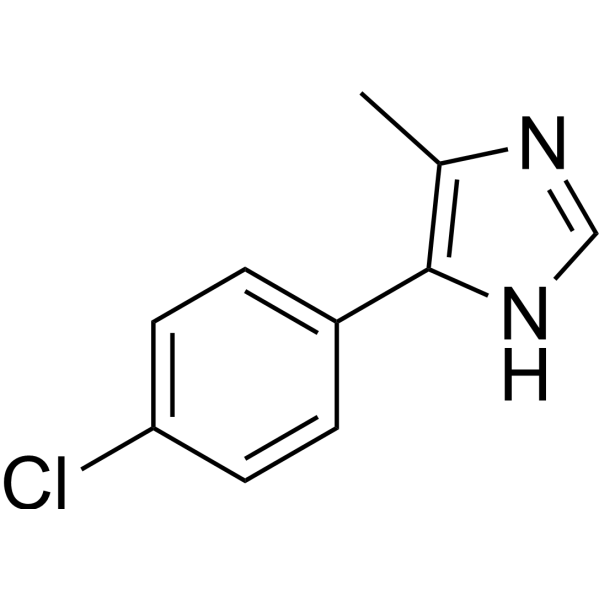 0 ImagesLofemizole is a non-steroidal anti-inflammatory agent.

-
(±)-Methotrexate-13C,d3 disodium
 0 ImagesCat. No.: HY-121151S2Synonyms: (±)-Amethopterin-13C,d3 disodium; (±)-CL14377-13C,d3 disodium; (±)-WR19039-13C,d3 disodium(±)-Methotrexate-13C,d3 disodium ((±)-Amethopterin-13C,d3 disodium; (±)-CL14377-13C,d3 disodium; (±)-WR19039-13C,d3 disodium) is the deuterated, 13C-labeled (±)-Methotrexate (HY-121151). (±)-Methotrexate is the racemate of Methotrexate (HY-14519). Methotrexate is an orally active antifolate (Antifolate). Methotrexate inhibits dihydrofolate reductase (DHFR), blocks tetrahydrofolate production, suppresses purine/pyrimidine synthesis and transmethylation, and causes intracellular accumulation of AICAR. Methotrexate promotes extracellular adenosine release, regulates the cytokine network, and inhibits the alarmin function of HMGB1. Methotrexate induces apoptosis and cytotoxicity, upregulates the expression of iNOS and COX-2, suppresses hippocampal neurogenesis, and induces pulmonary fibrosis. Methotrexate is used in the research of various immune and inflammation-related diseases such as arthritis, psoriasis, systemic lupus erythematosus, as well as pulmonary fibrosis and breast cancer.
-
(+)-Lariciresinol 4,4’-O-bis-β-D-glucopyranoside
 0 ImagesCat. No.: HY-N21854CAS No.: 936331-98-5(+)-Lariciresinol 4,4'-O-bis-β-D-glucopyranoside is a COX-2 inhibitor. (+)-Lariciresinol 4,4'-O-bis-β-D-glucopyranoside exhibits inhibitory effects on LPS (HY-D1056)-induced COX-2 activity in mouse peritoneal macrophages and reduces PGE2 levels in the supernatant. (+)-Lariciresinol 4,4'-O-bis-β-D-glucopyranoside can be used for inflammation-related research.
-
COX-2/5-LOX-IN-1
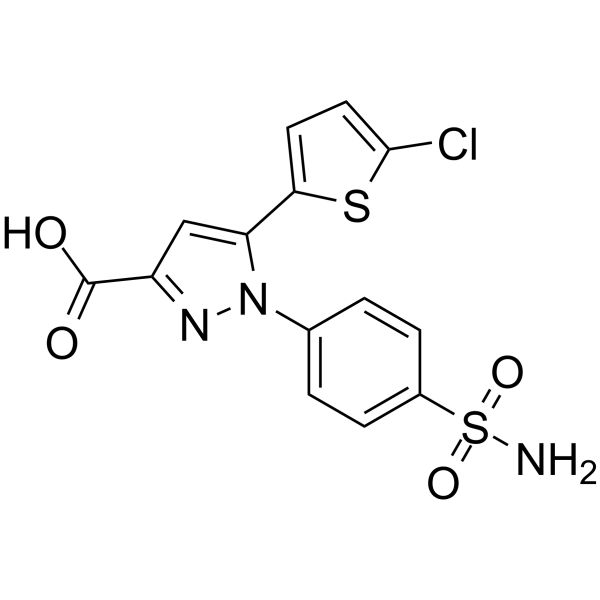 0 ImagesCat. No.: HY-146294CAS No.: 2410384-50-6COX-2/5-LOX-IN-1 (compound 3a) is a potent and dual inhibitor of COX-2/5-LOX. COX-2/5-LOX-IN-1 is a benzothiophen-2-yl pyrazole carboxylic acid derivative. COX-2/5-LOX-IN-1 shows the most potent analgesic and anti-inflammatory activities surpassing that of Celecoxib and Indomethacin. COX-2/5-LOX-IN-1 shows potent COX-1, COX-2 and 5-LOX inhibitory activity with IC50s of 12.13, 0.4 and 4.96 μM, respectively.
-
2,5-Di-tert-butylhydroquinone (Standard)
 0 Images2,5-Di-tert-butylhydroquinone (Standard) is the analytical standard of 2,5-Di-tert-butylhydroquinone. This product is intended for research and analytical applications. 2,5-Di-tert-butylhydroquinone (BHQ) (Compound 2), an indirect food additive, is a Sarco/endoplasmic reticulum Ca2+ ATPase (SERCA) inhibitor with an IC50 of 400 nM. 2,5-Di-tert-butylhydroquinone disrupts the gating function of the residue Glu309 which prevents Ca2+ from reaching their binding site. 2,5-Di-tert-butylhydroquinone regulates the activity of 5-lipoxygenase and COX-2 (IC50: 1.8 and 14.1 μM for 5-LO and COX-2, respectively).
-
1-(2,5-Dihydroxyphenyl)-3-hydroxybutan-1-one
 0 ImagesCat. No.: HY-N19110CAS No.: 1083202-40-71-(2,5-Dihydroxyphenyl)-3-hydroxybutan-1-one is an inhibitor of iNOS and COX-2. 1-(2,5-Dihydroxyphenyl)-3-hydroxybutan-1-one inhibits LPS-induced excessive production of NO and PGE2, as well as the mRNA expression of pro-inflammatory cytokines TNF-α, IL-1β, IL-6 and IL-12. 1-(2,5-Dihydroxyphenyl)-3-hydroxybutan-1-one can be used in inflammation-related research.

-
Clofenamic acid
 0 ImagesCat. No.: HY-W333234CAS No.: 13278-36-9Synonyms: 2-(3-Chloroanilino)benzoic acidClofenamic acid (2-(3-Chloroanilino)benzoic acid) is a nonsteroidal anti-inflammatory drug. Clofenamic acid can be used for the research of rheumatoid arthritis.
-
Celecoxib (GMP)
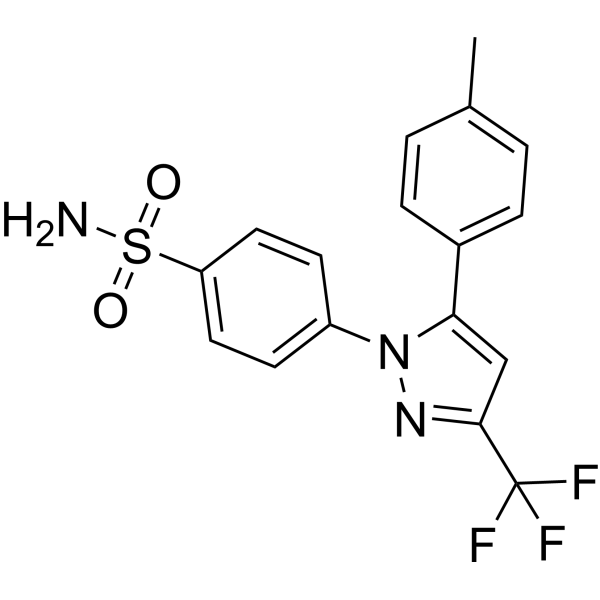 0 ImagesCat. No.: HY-14398GCAS No.: 169590-42-5Synonyms: SC 58635 (GMP)




