



Eukaryotic Initiation Factor (eIF)
Eukaryotic initiation factors (eIFs) are proteins involved in the initiation phase of eukaryotic translation. These proteins help stabilize the formation of the functional ribosome around the start codon and also provide regulatory mechanisms in translation initiation.
Eukaryotic initiation factor 2B (eIF2B) is a guanine nucleotide-exchange factor which mediates the exchange of GDP (bound to initiation factor eIF2) for GTP, thus regenerating the active [eIF2.GTP] complex that is required for peptide-chain initiation. The activity of eIF2B is a key control point for eukaryotic protein synthesis and is altered in response to viral infection, hormones, nutrients, growth factors and certain stresses.
Eukaryotic translation initiation factor 4E (eIF4E) is best known for its function in the initiation of protein synthesis on capped mRNAs in the cytoplasm. Eukaryotic initiation factor (elF) 4A functions as a subunit of the initiation factor complex elF4F, which mediates the binding of mRNA to the ribosome.
All Product Categories
-
Eukaryotic Initiation Factor (eIF) Inhibitors
(78)
View all products
-
Eukaryotic Initiation Factor (eIF) Antagonist
(1)
View all products
-
Eukaryotic Initiation Factor (eIF) Activators
(34)
View all products
-
Eukaryotic Initiation Factor (eIF) Modulators
(13)
View all products
-
Eukaryotic Initiation Factor (eIF) Chemicals
(3)
View all products
-
Eukaryotic Initiation Factor (eIF) Degraders
(2)
View all products
-
Eukaryotic Initiation Factor (eIF) Control
(1)
View all products
-
Eukaryotic Initiation Factor (eIF) Ligands
(3)
View all products
-
Eukaryotic Initiation Factor (eIF) Related Products (145)
Related Products (145)

-
Antibodies (15)
-
NVS1.1
 0 ImagesCat. No.: HY-177569NVS1.1 is an orally active, blood-brain barrier-penetrant eRF1 degrader. NVS1.1 induces ubiquitination of eRF1 at Lys279, mediates proteasomal degradation via the E3 ubiquitin ligases RNF14 and RNF25 as well as the translational stress sensor GCN1, traps eRF1 at the ribosomal A-site, inhibits translation termination and triggers ribosome collision. As a readthrough enhancer, NVS1.1 enables near-cognate tRNA incorporation at premature termination codons by reducing intracellular eRF1 levels. NVS1.1 activates ribosome-associated quality control pathways via ribosome collision, including ubiquitination of small subunit ribosomal proteins. NVS1.1 restores functional full-length CFTR and IDUA proteins and reduces glycosaminoglycan accumulation in relevant models. NVS1.1 can be used in the research of cystic fibrosis and Hurler syndrome (mucopolysaccharidosis type I, MPS I).
-
APL-4098
 0 ImagesAPL-4098 is an orally active, selective, ATP-competitive GCN2 inhibitor with a Ki of 4.39 nM and a Kd of 2.9 nM. APL-4098 reduces the phosphorylation level of eIF2α and the expression level of ATF4. APL-4098 impairs mitochondrial function and exerts cytotoxic effects on primary acute myeloid leukemia cells. APL-4098 is applicable to research related to acute myeloid leukemia.
-
eIF4A3-IN-9
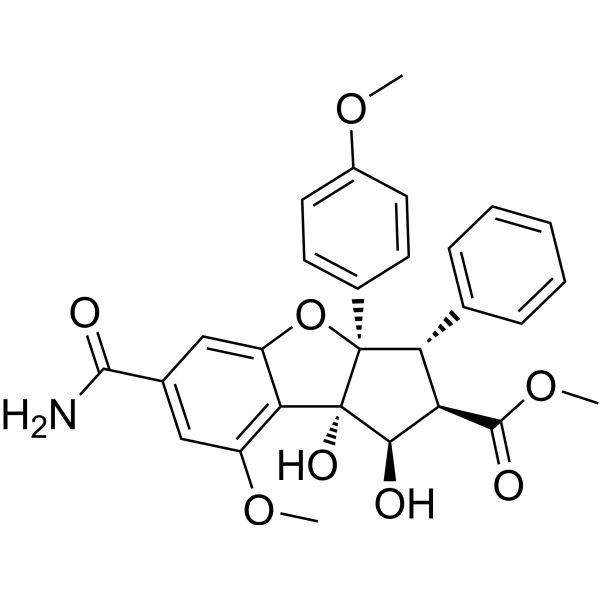 0 ImageseIF4A3-IN-9 is a Rocaglate analog. eIF4A3-IN-9 interferes with the assembly of the eIF4F translation complex, with EC50 values of 29 and 450 nM against myc-LUC and tub-LUC, respectively. eIF4A3-IN-9 can be used for the research of tumor pathogenesis.
-
eIF4A3-IN-4
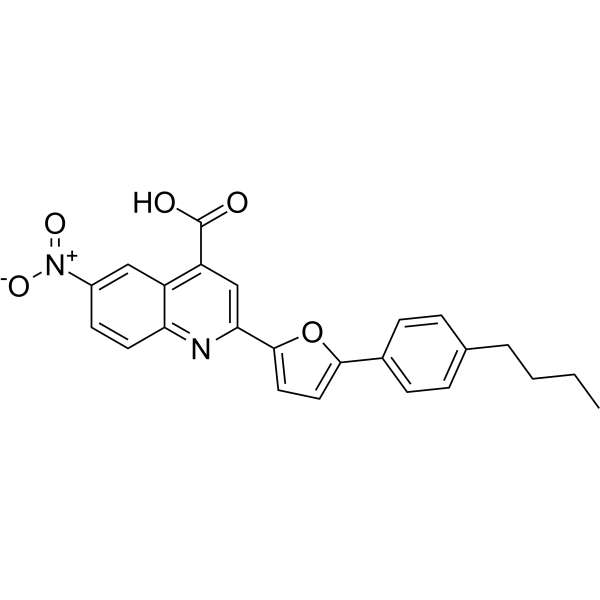 0 ImageseIF4A3-IN-4 is a novel eIF4A inhibitor with an IC50 value of 8.6 μM.
-
eIF4A3-IN-10
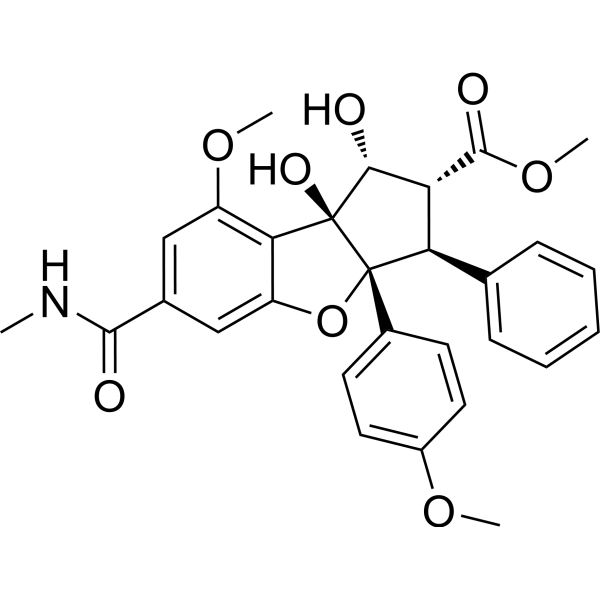 0 ImagesCat. No.: HY-148444CAS No.: 1402931-72-9eIF4A3-IN-10 (compound 58) is a Silvestrol (HY-13251) analogue. eIF4A3-IN-10 interferes the assembling of eIF4F translation complex with EC50s of 35 and 100 nM for myc-LUC and the growth inhibition for MBA-MB-231 cells. eIF4A3-IN-10 can be used for the research of human cancer pathogenesis.
-
BQZ-485
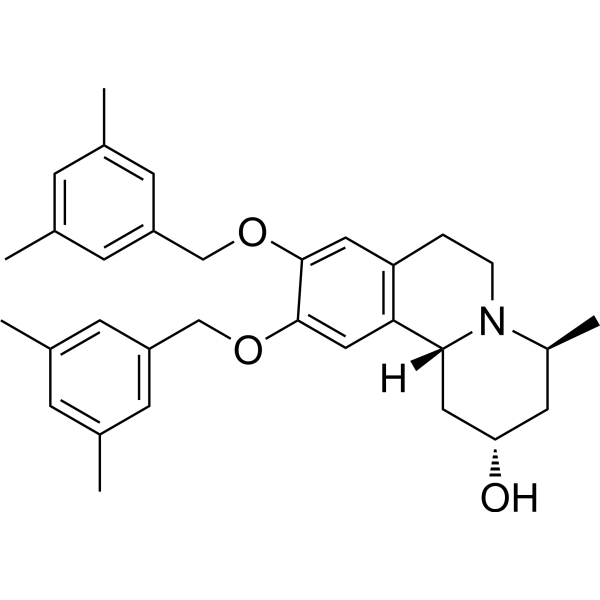 0 ImagesCat. No.: HY-156242CAS No.: 1906915-49-8BQZ-485 is a GDI2 inhibitor and a paraptosis inducer with antitumor activity. BQZ-485 binds to the Rab-binding platform domain of GDI2, disrupts the interaction between GDI2 and Rab1A, and impairs the membrane recycling of Rab1A. BQZ-485 blocks vesicle trafficking from the endoplasmic reticulum to the Golgi apparatus, and induces endoplasmic reticulum expansion, endoplasmic reticulum fusion, endoplasmic reticulum stress, unfolded protein response and cytoplasmic vacuolization. BQZ-485 is applicable to pancreatic cancer-related research.
-
eIF4A3-IN-17
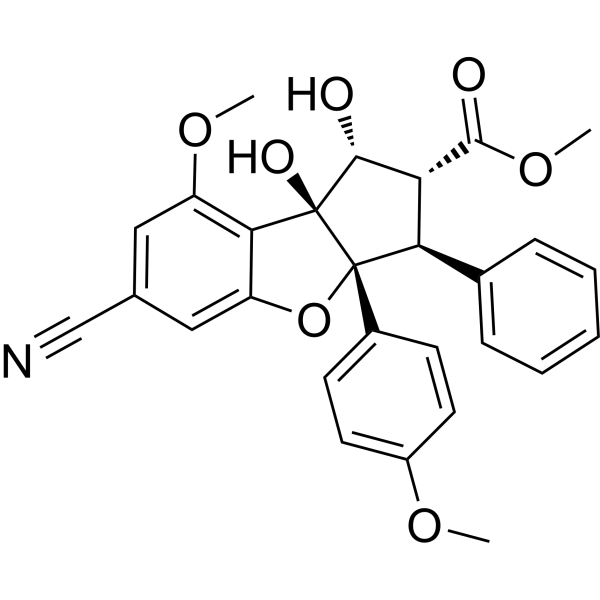 0 ImagesCat. No.: HY-148451CAS No.: 1402931-75-2eIF4A3-IN-17 (compound 61) is a Silvestrol (HY-13251) analogue. eIF4A3-IN-17 interferes the assembling of eIF4F translation complex with EC50s of 0.9, 15 and 1.8 nM for myc-LUC, tub-LUC and the growth inhibition for MBA-MB-231 cells. eIF4A3-IN-17 can be used for the research of human cancer pathogenesis.
-
IDB-001
 0 ImagesIDB-001 is a human ribosomal peptidyl transferase center (PTC) inhibitor that induces conformational changes and blocks translational elongation in specific sequence contexts through complementary interactions with Asp/Glu residues in nascent polypeptides. IDB-001 preferentially stalls ribosomes at positions containing acidic peptide motifs, thereby inhibiting cancer cell proliferation, and activates the integrated stress response via eIF2α phosphorylation at high concentrations. In addition, IDB-001 mildly triggers ribotoxic stress responses through phosphorylation of JNK and p38. IDB-001 has been applied to mechanistic studies of triple-negative breast cancer.
-
NVS2.1
 0 ImagesNVS2.1 is a potent, orally active and brain-penetrant readthrough promoter. NVS2.1 triggers the degradation of eRF1 by activating the ribosome-related quality control pathways (involving GCN1, RNF14, and RNF25), thereby facilitating the reading through of premature termination codons. NVS2.1 can be used for the research of genetic diseases caused by nonsense mutations.
-
eIF4A3-IN-16
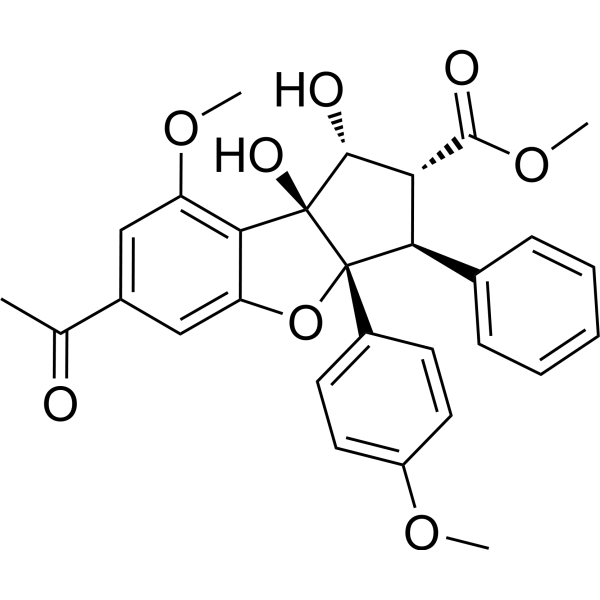 0 ImageseIF4A3-IN-16 (compound 60) is a Silvestrol (HY-13251) analogue. eIF4A3-IN-16 inhibits MBA-MB-231cell growth with an EC50 value of 1 nM. eIF4A3-IN-16 interferes the assembling of eIF4F translation complex with a myc-LUC EC50 value of 1 nM and a tub-LUC EC50 value of 30 nM. eIF4A3-IN-16 can be used for triple negative breast cancer (TNBC) research.
-
eIF4A-IN-3
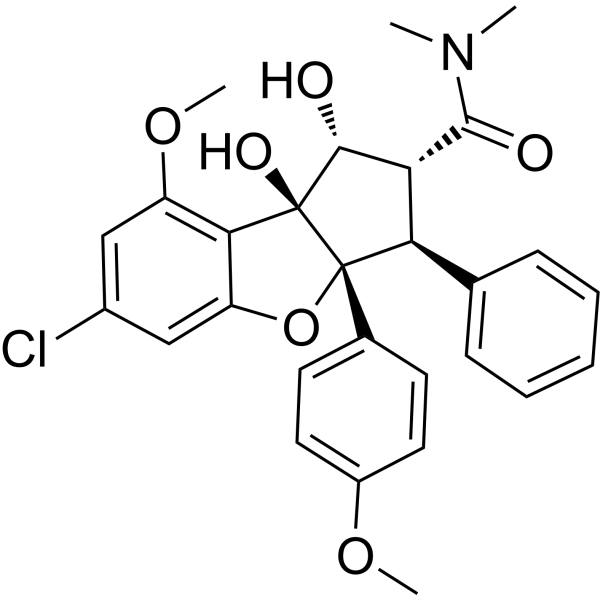 0 ImageseIF4A-IN-3, Silvestrol (HY-13251) analogue, is an eIF4A inhibitor. eIF4A-IN-3 blocks protein translation initiation by interfering with eIF4F complex assembly, preferentially inhibiting translation of mRNAs with long, highly structured 5'-untranslated regions. eIF4A-IN-3 inhibits proliferation of human breast cancer cells. eIF4A-IN-3 has moderate apical to basolateral permeability in intestinal cell monolayers and a low efflux ratio.
-
eIF4A3-IN-11
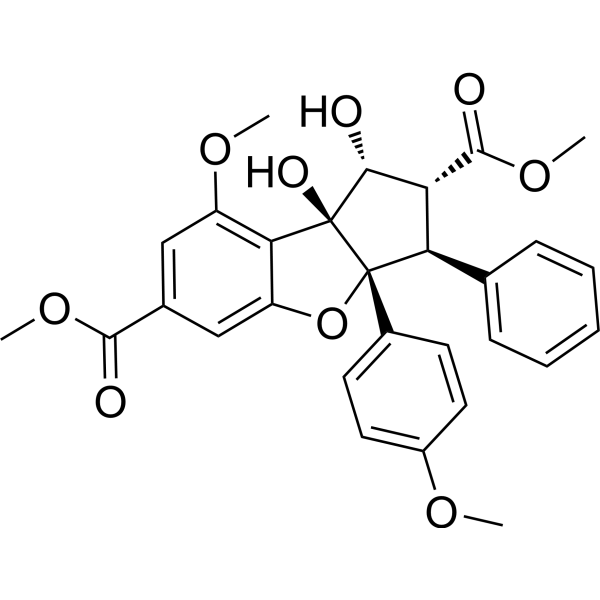 0 ImagesCat. No.: HY-148445CAS No.: 1402931-70-7eIF4A3-IN-11 (compound 56) is a Silvestrol (HY-13251) analogue. eIF4A3-IN-11 interferes the assembling of eIF4F translation complex with EC50s of 0.2, 4 and 0.3 nM for myc-LUC, tub-LUC and the growth inhibition for MBA-MB-231 cells. eIF4A3-IN-11 can be used for the research of human cancer pathogenesis.
-
β-S-ARCA
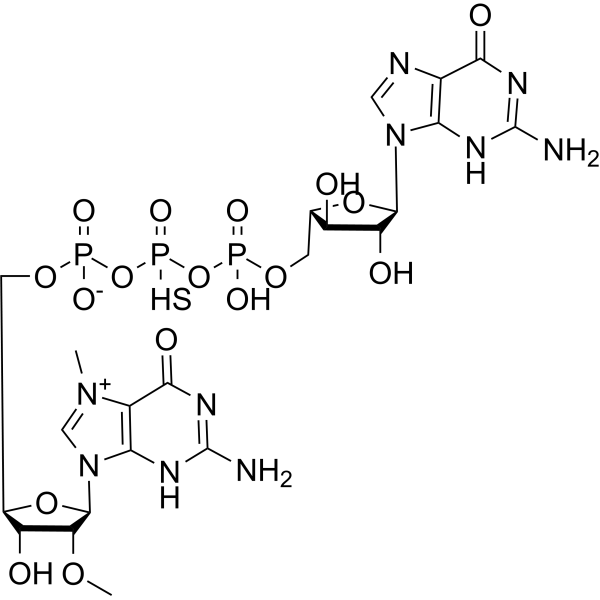 0 ImagesCat. No.: HY-145969CAS No.: 1093268-63-3Synonyms: 3'-O-Me-m7G(5')ppp(5')Gβ-S-ARCA (3'-O-Me-m7G(5')ppp(5')G) is a mRNA 7-methylguanosine (m7G) cap analog carrying a phosphorothioate (PS) moiety. β-S-ARCA binds eIF4E via electrostatic interactions between its β-sulfur atom and positively charged Arg and Lys residues in the protein binding site. β-S-ARCA prevents the decapping by Dcp2, increases the mRNA half-life, enhances cap-dependent translation, and increases protein expression in cells. β-S-ARCA has been applied in researching experimental mRNA-based anticancer vaccines.
-
eIF4A3-IN-14
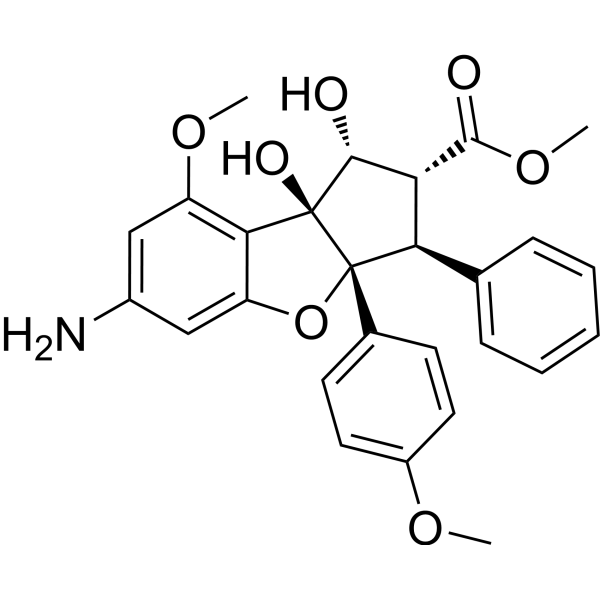 0 ImageseIF4A3-IN-9 is a Rocaglate analog. eIF4A3-IN-9 interferes with the assembly of the eIF4F translation complex, with EC50 values of 40 nM and > 2000 nM against myc-LUC and tub-LUC, respectively. eIF4A3-IN-9 can be used for the research of tumor pathogenesis.
-
CMLD012612
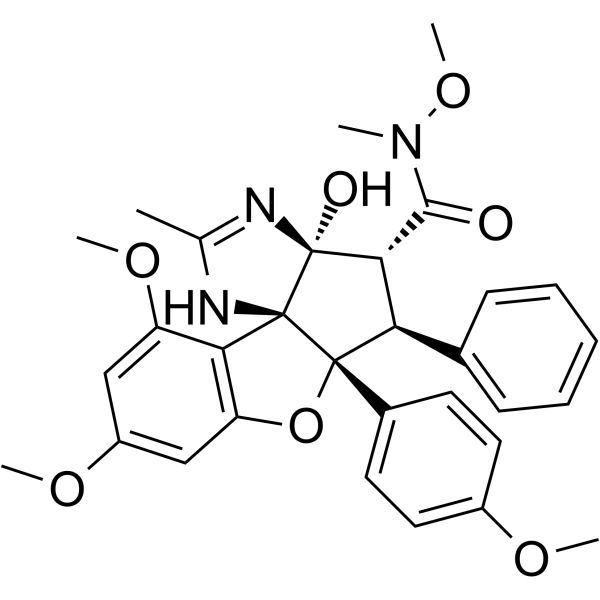 0 ImagesCat. No.: HY-129767CAS No.: 2368900-35-8CMLD012612 is an amidino-rocaglate containing a hydroxamate group and is a potent eukaryotic initiation factor 4A (eIF4A) inhibitor. CMLD012612 inhibits cell translation and is cytotoxic to NIH/3T3 cells with an IC50 value of 2 nM. CMLD012612 inhibits eukaryotic translation initiation by modifying the behavior of the RNA helicase (eIF4A) and possesses potent anti-neoplastic activity.
-
Plecstatin-1
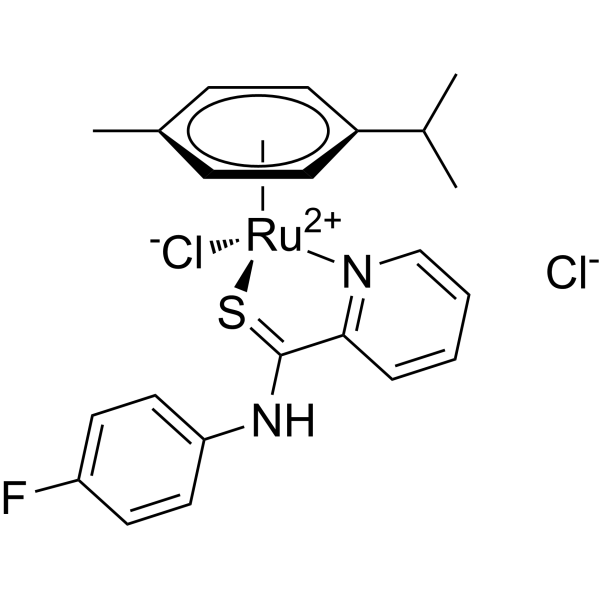 0 ImagesCat. No.: HY-156675CAS No.: 2119725-22-1Plecstatin‑1 is a metal complex that drives the aggregation and collapse of the plectin network, and disrupts the cytoskeletal structures of α‑tubulin and F‑actin. Plecstatin-1 triggers oxidative stress, mediates the phosphorylation of eIF2α, and induces molecular features associated with immunogenic cell death, including calreticulin membrane exposure, membrane localization of HSP70/HSP90, ATP secretion, and HMGB‑1 release. Plecstatin-1 induces apoptosis via the intrinsic mitochondrial pathway and exerts anti-invasive activity. Plecstatin‑1 inhibits sphere proliferation and reduces clonogenicity in the 3D tumor spheroid model of colon cancer cells. Plecstatin-1 is applicable to relevant research on colorectal cancer.
-
VT00065
 0 ImagesCat. No.: HY-W141446CAS No.: 144163-68-8VT00065 is a covalent DHS inhibitor. VT00065 forms a redox-dependent covalent bond with the catalytic lysine K329 of DHS, locking the enzyme in an inactive state.

-
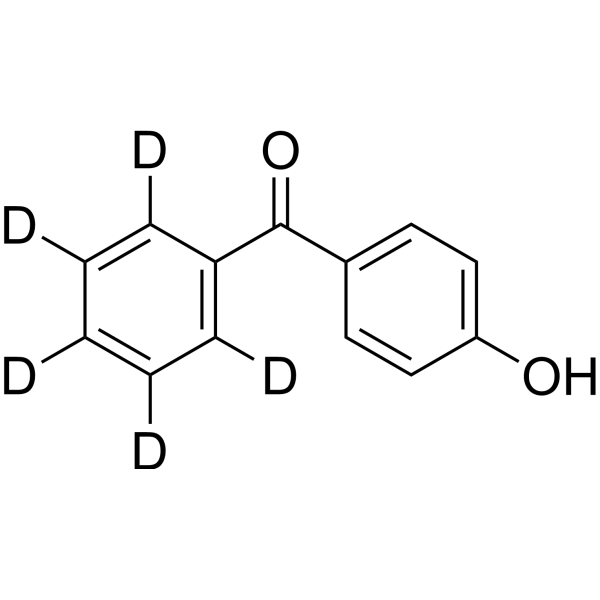
4-Hydroxybenzophenone-d5
 0 ImagesSynonyms: 4HBP-d54-Hydroxybenzophenone-d5 (4HBP-d5) is the deuterated-labeled 4-Hydroxybenzophenone (HY-W014937). 4‑Hydroxybenzophenone (4HBP) is a major metabolite of Benzophenone (HY-Y0546) and is orally active. 4-Hydroxybenzophenone triggers endoplasmic reticulum stress and activates the PERK-eIF2α-ATF4-CHOP and IRE1α-XBP1s pathways, and inhibits IκB translation. 4-Hydroxybenzophenone induces endoplasmic reticulum stress, unfolded protein response activation, protein homeostasis imbalance, protein aggregation, oxidative stress, ROS accumulation, mitochondrial membrane potential decrease, ATP depletion, and cytotoxicity. 4-Hydroxybenzophenone induces neural stem cell apoptosis (apoptosis) and affects neuronal differentiation. 4-Hydroxybenzophenone promotes malignant proliferation of hepatocellular carcinoma cells and xenograft tumor growth in nude mice. 4-Hydroxybenzophenone can be used in research related to neurodevelopmental toxicity and hepatocellular carcinoma.




