



TBK1
TANK-binding kinase 1 (TBK1) is a serine/threonine kinase central to innate immune signaling, mediating phosphorylation of IRF3/7 to induce type I interferon (IFN) and interferon-stimulated genes (ISGs)[1][2]. Mechanistically, TBK1 participates in antiviral defense via the RIG-I-like receptor (RLR) and TLR pathways, promoting IRF3 nuclear translocation and IFN-β production[3][4][5]. Alternative splicing generates TBK1 isoforms that can negatively regulate antiviral responses by disrupting TBK1-IRF3 interactions, facilitating proteasomal degradation of TBK1 and lysosomal degradation of IRF3[3][4][6][5]. TBK1 also supports AKT/mTORC1 pathway activation in cancer, influencing cellular proliferation and survival, with context-dependent effects in KRAS-mutant lung cancers[7][2]. Dysregulated TBK1 activity is associated with autoimmune diseases, interferonopathies, and cancer, highlighting its therapeutic relevance[1][8][9]. Pharmacological inhibition using small molecules such as BX795 and amlexanox modulates TBK1-mediated signaling, suppressing inflammation, cellular senescence, and IFN production in disease models, while agonists of downstream effectors like IRF3 can enhance antiviral responses[10][11][8]. Compared with related kinases, TBK1 demonstrates isoform-specific regulation of IFN signaling and unique interactions with viral or cellular substrates, distinguishing its function from IKKε and other IKK family members[12][13]. High-throughput assays and computational QSAR models have facilitated the discovery of selective TBK1 inhibitors, providing tools for experimental modulation of innate immune and oncogenic pathways[12][14]. Collectively, TBK1 acts as a central hub in innate immunity, cancer biology, and inflammatory regulation, with isoform-specific roles and pharmacological manipulability informing research design[2][15].
References:
- [1]. Zhang J, et al. A Novel Transcript Isoform of TBK1 Negatively Regulates Type I IFN Production by Promoting Proteasomal Degradation of TBK1 and Lysosomal Degradation of IRF3. Front Immunol. 2020 Sep 30;11:580864. [Content Brief]
- [2]. Hu YW, et al. TANK-Binding Kinase 1 (TBK1) Isoforms Negatively Regulate Type I Interferon Induction by Inhibiting TBK1-IRF3 Interaction and IRF3 Phosphorylation. Front Immunol. 2018 Jan 30;9:84. [Content Brief]
- [3]. Zhang J, et al. TBK1 Isoform Inhibits Grass Carp Reovirus Infection by Targeting the Degradation of Viral Nonstructural Proteins NS80 and NS38. J Immunol. 2023 Jan 15;210(2):191-203. [Content Brief]
- [4]. Hasan M, et al. Therapeutic potential of targeting TBK1 in autoimmune diseases and interferonopathies. Pharmacol Res. 2016 Sep;111:336-342. [Content Brief]
- [5]. Ji W, et al. TBK1 and IRF3 are potential therapeutic targets in Enterovirus A71-associated diseases. PLoS Negl Trop Dis. 2023 Jan 10;17(1):e0011001. [Content Brief]
- [6]. Zhang M, et al. Inhibitory targeting cGAS-STING-TBK1 axis: Emerging strategies for autoimmune diseases therapy. Front Immunol. 2022 Sep 12;13:954129. [Content Brief]
- [7]. Cooper JM, et al. TBK1 Provides Context-Selective Support of the Activated AKT/mTOR Pathway in Lung Cancer. Cancer Res. 2017 Sep 15;77(18):5077-5094. [Content Brief]
- [8]. Hutti JE, et al. Development of a high-throughput assay for identifying inhibitors of TBK1 and IKKε. PLoS One. 2012;7(7):e41494. [Content Brief]
- [9]. Yeo SK, et al. AZI2 mediates TBK1 activation at unresolved selective autophagy cargo receptor complexes with implications for CD8 T-cell infiltration in breast cancer. Autophagy. 2024 Mar;20(3):525-540. [Content Brief]
- [10]. Deng W, et al. Negative regulation of virus-triggered IFN-beta signaling pathway by alternative splicing of TBK1. J Biol Chem. 2008 Dec 19;283(51):35590-7. [Content Brief]
- [11]. Runde AP, et al. The role of TBK1 in cancer pathogenesis and anticancer immunity. J Exp Clin Cancer Res. 2022 Apr 9;41(1):135. [Content Brief]
- [12]. Ivanov JM, et al. In Silico Insights: QSAR Modeling of TBK1 Kinase Inhibitors for Enhanced Drug Discovery. J Chem Inf Model. 2024 Oct 14;64(19):7488-7502. [Content Brief]
- [13]. Lu R, et al. TBK1 pharmacological inhibition mitigates osteoarthritis through attenuating inflammation and cellular senescence in chondrocytes. J Orthop Translat. 2024 Jun 28;47:207-222. [Content Brief]
- [14]. Hui L, et al. Amlexanox targeted inhibition of TBK1 regulates immune cell function to exacerbate DSS-induced inflammatory bowel disease. Clin Exp Immunol. 2025 Jan 21;219(1):uxae082. [Content Brief]
- [15]. Ding C, et al. Small molecules targeting the innate immune cGAS‒STING‒TBK1 signaling pathway. Acta Pharm Sin B. 2020 Dec;10(12):2272-2298. [Content Brief]
-
TBK1 Related Products (33)
Related Products (33)

-
Antibodies (2)
- 1
- 2
-
Pam2CSK4
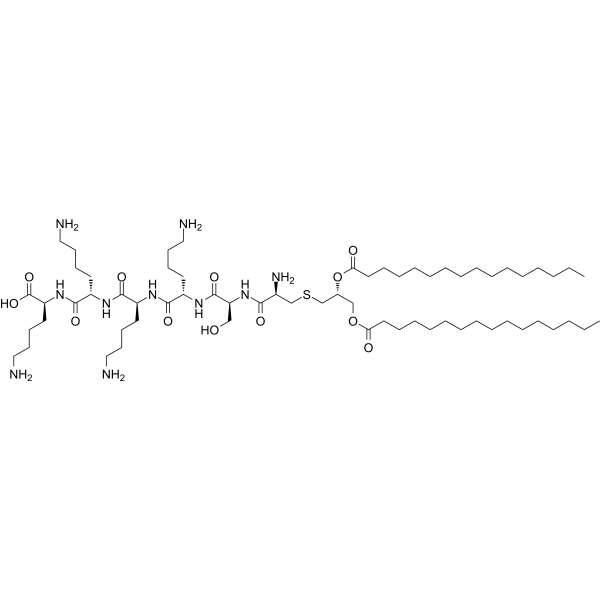 0 ImagesCat. No.: HY-P1181CAS No.: 868247-72-7Pam2CSK4 is a TLR2 agonist. Pam2CSK4 induces the expression of iNOS and NO in macrophage cell lines via TBK1 and MyD88 molecules. Pam2CSK4 activates the NF-κB and Bruton's tyrosine kinase signaling pathways in platelets, and promotes platelet-endothelial cell interactions. TLR2 activation triggered by Pam2CSK4 expands myeloid-derived suppressor cells (MDSCs) and suppresses anti-tumor immune responses in the tumor microenvironment. Pam2CSK4 acts as a Th2-polarizing adjuvant in mouse vaccine models against Leishmania major and Brugia malayi. Pam2CSK4 can be used in the research of various diseases, including thromboinflammatory diseases, sepsis, atherosclerosis, heart failure, influenza, lymphoma, melanoma, cutaneous leishmaniasis and lymphatic filariasis.
-
STING-IN-17
 0 ImagesCat. No.: HY-178951CAS No.: 3069635-58-8STING-IN-17 (compound 10a) is an orally active STING (human STING IC50 = 29 nM, mouse STING IC50 = 15 nM) inhibitor. STING-IN-17 can inhibit the phosphorylation of STING, TBK1 and IRF3. STING-IN-17 dose dependently inhibits the mRNA expression of IP10, IFNB1 and ISG56. STING-IN-17 can reduce ROS and inhibit the expression of cleaved-PARP/caspase-3. STING-IN-17 can improve kidney function. STING-IN-17 can be used for research on inflammatory conditions such as acute kidney injury.
-
UM-203
 0 ImagesCat. No.: HY-180120UM-203 is a reversible covalent STING antagonist. UM-203 is effective against both mouse and human STING, and in particular, it inhibits the most common human STING R232 variant. UM-203 can inhibit STING oligomerization and reduce phosphorylation of downstream TBK1 and IRF3, thereby blocking the IRF3 and NF-κB-mediated signaling pathways and inhibiting IFNβ and IL-6 secretion. UM-203 can be used for the research of inflammation and immunology, such as systemic lupus erythematosus.

-
ITA-5
 0 ImagesCat. No.: HY-178915CAS No.: 2374162-36-2
-
DN203316
 0 ImagesCat. No.: HY-162963CAS No.: 2982696-04-6Synonyms: PPARδ agonist 11DN203316 (PPARδ agonist 11) is a potent, selective, orally active PPARδ agonist (EC50 = 20 nM) with high selectivity over PPARα and PPARγ. DN203316 suppresses NF-κB-mediated inflammatory signaling, inhibits ferroptosis by upregulating xCT and GPX4, and attenuates STING-TBK1-IRF3-driven fibrogenic responses. DN203316 is useful for research on inflammatory disorders, metabolic dysfunction-associated steatohepatitis (MASH), and liver fibrosis.
-
KSI-028
 0 ImagesCat. No.: HY-183537KSI-028 is a STING inhibitor. KSI-028 disrupts STING-mediated signal transduction, reduces IFN-β and pro-inflammatory cytokine (IL-6, IL-1β and TNF-α) production. KSI-028 inhibits the phosphorylation of STING, TBK1, IRF3, and STAT1. KSI-028 attenuates renal and hepatic injury in a Cisplatin (HY-17394)-induced acute kidney injury mouse model.

-
LIB3S0280
 0 ImagesCat. No.: HY-172620Purity: 99.89%LIB3S0280 is a potent TBK1 inhibitor with an IC50 value of 493.9 nM. LIB3S0280 exhibits better anticancer effects in pancreatic cancer cell lines with high TBK1 expression. LIB3S0280 inhibits TBK1 downstream signaling pathways, including PI3K/AKT and NF-κB. LIB3S0280 induces G2/M arrest, apoptosis and cellular senescence. LIB3S0280 can be used for pancreatic ductal adenocarcinoma (PDAC) research.
-
STING Degrader-3
 0 ImagesCat. No.: HY-168554STING Degrader-3 is a PROTAC-like STING degrader with a DC50 of 2.58 μM in THP-1 cells. STING Degrader-3 degrades STING protein via the lysosomal pathway. STING Degrader-3 functions as a non-degradative inhibitor in macrophages. STING Degrader-3 reduces the phosphorylation levels of TBK1 and IRF3, and downregulates the expression of IFN-β, CXCL10, IL-6, TNFα, IL-1β, ISG15 and ISG56. STING Degrader-3 exhibits renoprotective properties in a cisplatin-induced acute kidney injury model. STING Degrader-3 can be used in studies related to acute kidney injury. ((Pink: STING ligand (HY-168676); Blue: CRBN ligand (HY-126457); Black: linker (HY-W123015); CRBN ligand + linker: (HY-168677)).
-
Polθ-IN-11
 0 ImagesCat. No.: HY-183748CAS No.: 3082173-75-6Polθ-IN-11 is an orally active DNA polymerase θ (Polθ) ATPase inhibitor with an IC50 of 4.3 nM against human targets. Polθ-IN-11 activates the cGAS-STING pathway. Polθ-IN-11 upregulates the expression of PD-L1 in HR-deficient cancer cells. Polθ-IN-11 acts synergistically with PARP inhibition in HR-deficient cancer cells and in vivo xenograft models. Polθ-IN-11 can be used in studies related to HR-deficient cancers.

-
TBK1/IKKε-IN-1
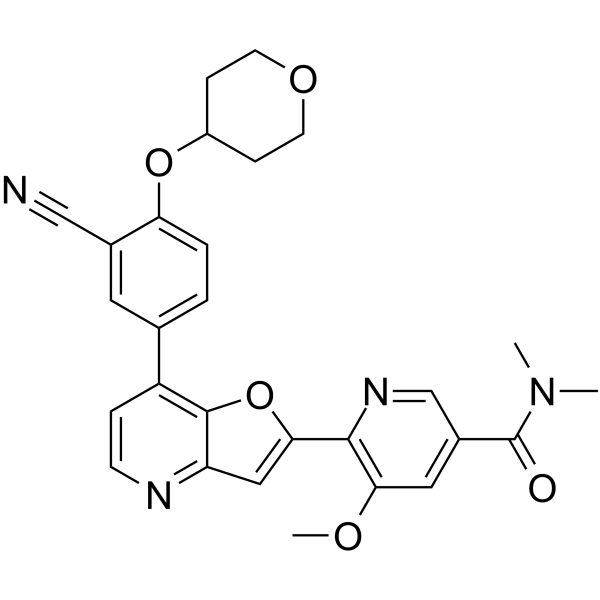 0 ImagesCat. No.: HY-U00457CAS No.: 2058264-32-5
- 1
- 2




