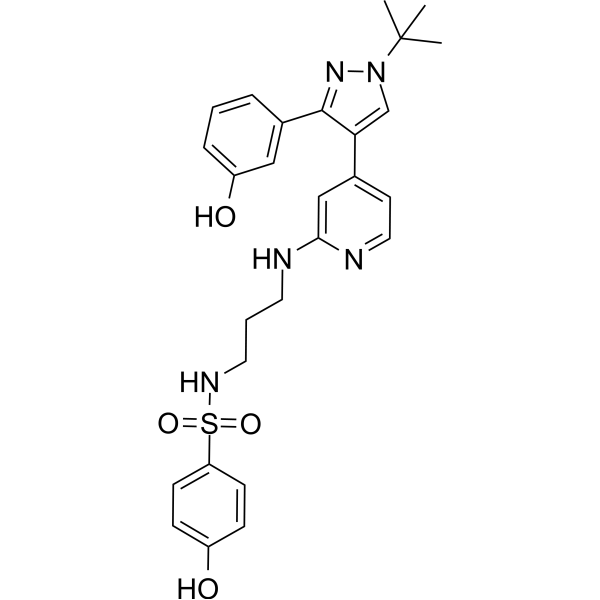
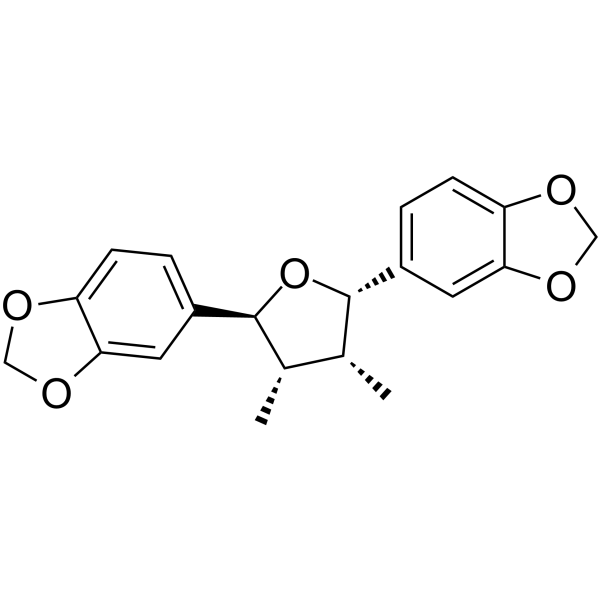
JNK1
c-Jun N-terminal kinase 1 (JNK1) is a mitogen-activated protein kinase (MAPK) that regulates autophagy, apoptosis, and cell proliferation across diverse tissues[1][2]. Mechanistically, JNK1 integrates stress signals from cytokines, reactive oxygen species, and metabolic cues to modulate downstream transcription factors and cytoplasmic substrates, influencing cell survival and differentiation[3][4]. In oligodendrocyte progenitor cells, JNK1 controls branching architecture, proliferation, and myelination, indicating a critical role in central nervous system development[5]. Compared with JNK2 and JNK3, JNK1 uniquely mediates inflammatory responses in arthritis and contributes to hepatic steatosis under high-fat diet conditions[6][7]. In disease models, JNK1 inhibition reduces hypoxia-induced autophagy and sensitizes cancer cells to chemotherapeutic agents, demonstrating isoform-specific therapeutic potential[8]. The development of JNK1-selective inhibitors remains challenging due to conserved ATP-binding sites among JNK isoforms; however, computational approaches using molecular descriptors have been applied to predict candidate inhibitors targeting autophagy regulation in cancer[1]. Collectively, JNK1 functions as a central regulator of stress signaling, with distinct contributions to metabolic, inflammatory, and neurological disease models, setting it apart from its isoform counterparts and informing experimental design for isoform-specific modulation[1][2][6][7][8].
References:
- [1]. Chetna Kumari, et al. Predicting JNK1 Inhibitors Regulating Autophagy in Cancer using Random Forest Classifier. bioRxiv November 01, 2018
- [2]. Kumar A, et al. JNK pathway signaling: a novel and smarter therapeutic targets for various biological diseases. Future Med Chem. 2015;7(15):2065-86. [Content Brief]
- [3]. Seki E, et al. A liver full of JNK: signaling in regulation of cell function and disease pathogenesis, and clinical approaches. Gastroenterology. 2012 Aug;143(2):307-20. [Content Brief]
- [4]. Shashikanth N, et al. Role of C-Jun N-Terminal Kinases on a Stressed Epithelium: Time for Testing Isoform Specificity. Biology (Basel). 2025 Jun 3;14(6):649. [Content Brief]
- [5]. Lorenzati M, et al. c-Jun N-terminal kinase 1 (JNK1) modulates oligodendrocyte progenitor cell architecture, proliferation and myelination. Sci Rep. 2021 Mar 31;11(1):7264. [Content Brief]
- [6]. Singh R, et al. Differential effects of JNK1 and JNK2 inhibition on murine steatohepatitis and insulin resistance. Hepatology. 2009 Jan;49(1):87-96. [Content Brief]
- [7]. Denninger K, et al. JNK1, but not JNK2, is required in two mechanistically distinct models of inflammatory arthritis. Am J Pathol. 2011 Oct;179(4):1884-93. [Content Brief]
- [8]. Vasilevskaya IA, et al. JNK1 Inhibition Attenuates Hypoxia-Induced Autophagy and Sensitizes to Chemotherapy. Mol Cancer Res. 2016 Aug;14(8):753-63. [Content Brief]
-
JNK1 Related Products (59)
Related Products (59)

-
Antibodies (4)
-
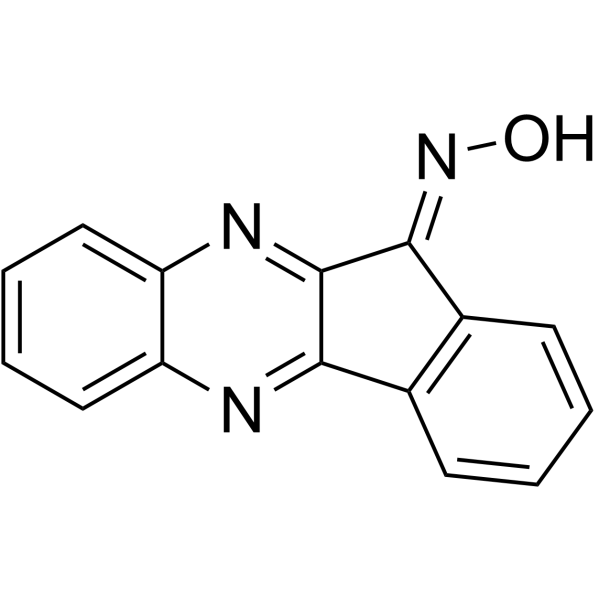
Indirubin-3′-oxime
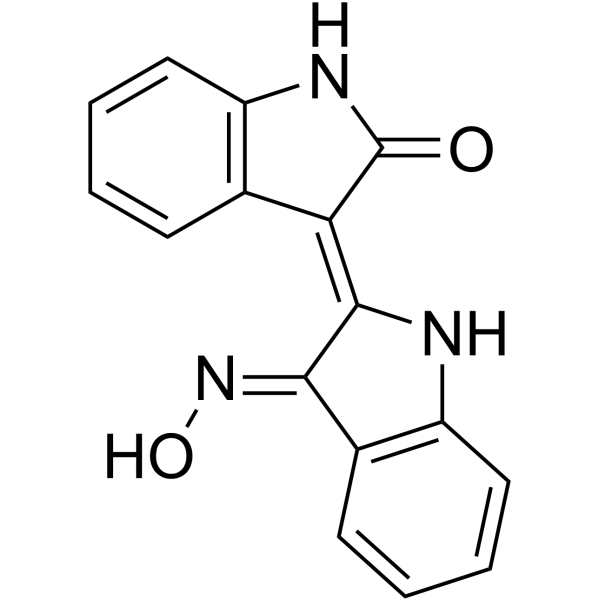 0 ImagesSynonyms: IDR3O; I3OIndirubin-3′-oxime (IDR3O), a synthetic derivative of indirubin, is a potent inhibitor of cyclin-dependent kinases (CDKs) and glycogen synthase kinase 3β (GSK3β). Indirubin-3′-oxime directly inhibits the activity of all three isoforms of JNK (JNK1, JNK2, and JNK3), with IC50s of 0.8 μM, 1.4 μM, and 1.0 μM, respectively. Indirubin-3′-oxime can enhance height growth via activation of Wnt/β-catenin signaling in chondrocytes.
-
PT109
 0 ImagesPT109 is an orally active, blood-brain barrier permeable multi-kinase inhibitor. By inhibiting PTBP1, PT109 promotes the switch of pyruvate kinase isoform from PKM2 to PKM1, thereby effectively inhibiting the proliferation and migration of glioblastoma multiforme and inducing its reprogramming into oligodendrocytes. PT109 also targets and regulates key signaling molecules such as JNK, SGK1, GSK3β to exert neuroprotective effects including promoting neurogenesis, inducing synapse formation and alleviating neuroinflammation. In Alzheimer's disease models, PT109 exhibits significant efficacy in improving spatial learning ability, along with excellent in vivo pharmacokinetic properties. PT109 can be used to investigate metabolic reprogramming of glioblastoma multiforme and neuroprotective mechanisms of Alzheimer's disease.
-
Quin-C7
 0 ImagesQuin-C7 is an orally active FPR2/ALX antagonist. Quin-C7 binds to the orthosteric ligand-binding pocket of FPR2/ALX, modulates receptor activation, and inhibits pro-inflammatory ERK signaling mediated by serum amyloid A (SAA). Quin-C7 reduces pro-inflammatory mediators TNF-α levels, increases anti-inflammatory IL-10, decreases inflammatory neutrophils and pro-inflammatory M1 macrophages, downregulates ERK1/2 phosphorylation, and upregulates JNK1/2/3 phosphorylation. Quin-C7 blocks FPR2/mFpr2 signaling, reduces brain lesion volume. Quin-C7 can be used for the research of inflammatory bowel disease and neuromyelitis optica spectrum disorder.
-
JNK3 inhibitor-4
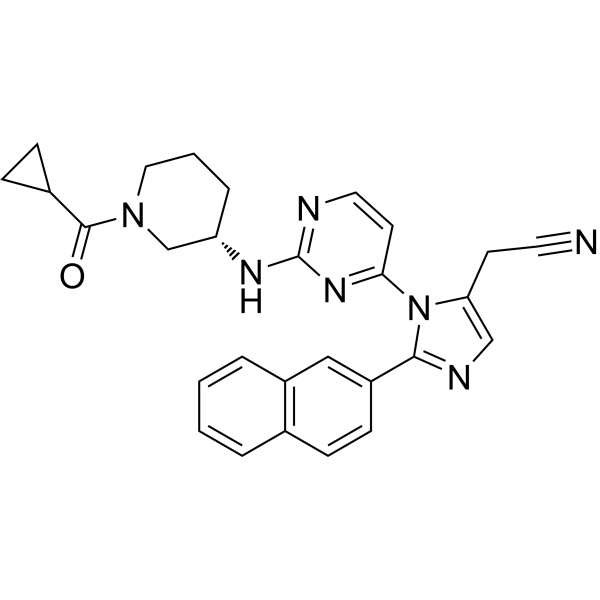 0 ImagesJNK3 inhibitor-4 is a potent and BBB-permeable inhibitor of JNK3 (IC50=1.0 nM) based on 2-aryl-1-pyrimidinyl-1H-imidazole-5-yl acetonitrile. JNK3 inhibitor-4 shows excellent selectivity over other protein kinases including isoforms JNK1 (IC50=143.9 nM) and JNK2 (IC50=298.2 nM). JNK3 inhibitor-4 has neuroprotective effect and predicated blood-brain barrier permeability.
-
Ombuoside
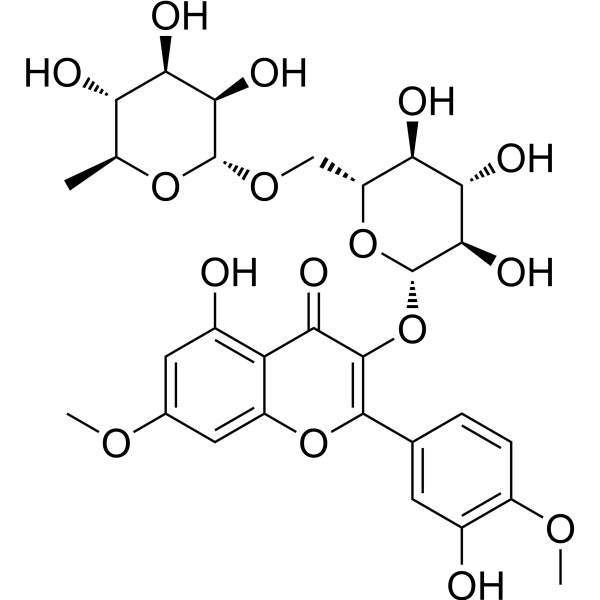 0 ImagesOmbuoside has antioxidant properties, inhibiting ROS production and apoptosis. Ombuoside exerts neuroprotective effects through the ERK-JNK-caspase-3 system. Ombuoside promotes Dopamine biosynthesis through TH and CREB activation. Ombuoside exhibits antimicrobial activity against several Gram-positive and Gram-negative bacteria, as well as Candida albicans
-
CEP-1347
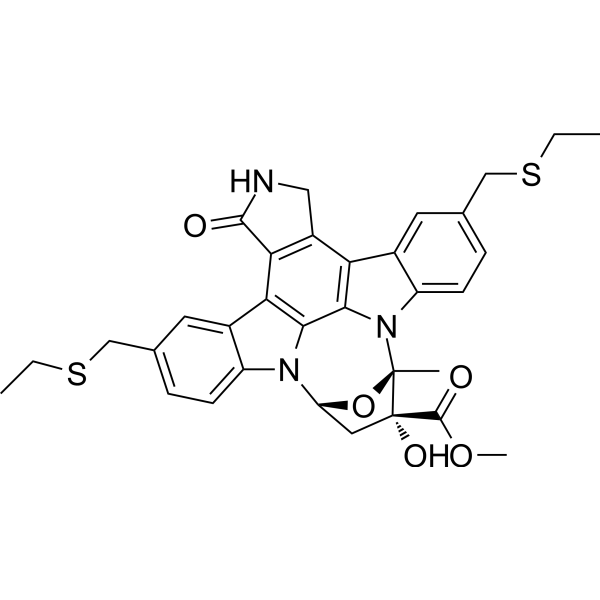 0 ImagesSynonyms: KT7515CEP-1347 is an inhibitor of the JNK/SAPK pathway with neuroprotective effects. CEP-1347 blocks JNK1 activation induced by members of the mixed lineage kinase (MLK) family (MLK3, MLK2, MLK1, dual leucine zipper kinase, and leucine zipper kinase). As an inhibitor of MDM4, CEP-1347 can more effectively inhibit the growth of glioma cells expressing wild-type p53.
-
Sugiol
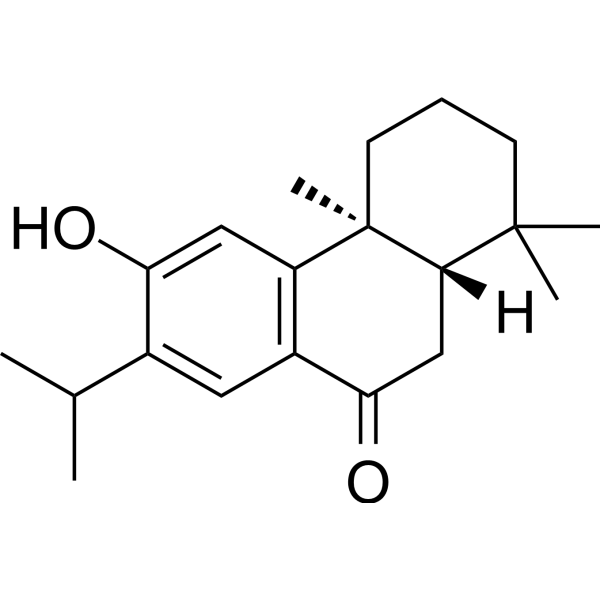 0 ImagesSugiol is an abietane diterpenoid, can be isolated from Calocedrus formosana bark. Sugiol has anti-inflammatory activity, could effectively reduce intracellular reactive oxygen species (ROS) production in lipopolysaccharide (LPS)-stimulated macrophages.

-
15(R)-Lipoxin A4
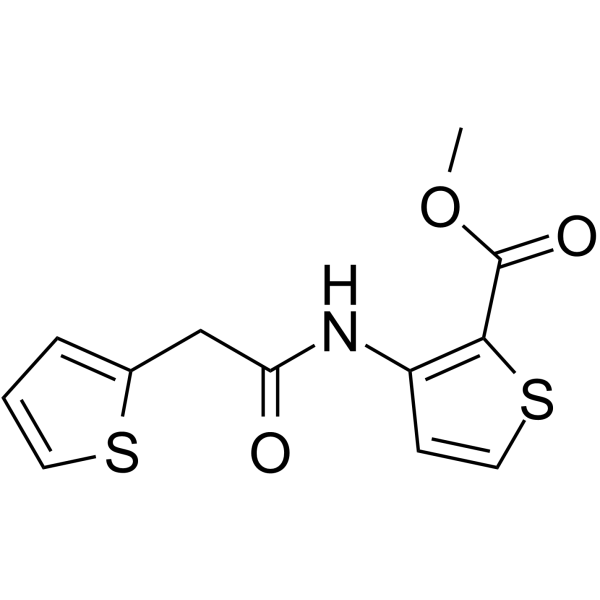
 0 ImagesSynonyms: 15-epi-LXA415 (R)-Lipoxin A4 (15-epi-LXA4) is a specialized pro-resolving mediator and an acetylated derivative of COX2. 15 (R)-Lipoxin A4 is present in neurons. 15 (R)-Lipoxin A4 induces the SPM synthases ALOX12 and ALOX15, as well as the pro-resolving receptor ALX. 15 (R)-Lipoxin A4 inhibits protein kinases, including JNK1/2/3, Lyn, STAT-3 and STAT-6. 15 (R)-Lipoxin A4 enhances the release of pro-resolving mediators. 15 (R)-Lipoxin A4 alleviates the pro-inflammatory phenotype of tendon-derived stromal cells. 15 (R)-Lipoxin A4 promotes the resolution of neuroinflammation. 15 (R)-Lipoxin A4 is applicable to research related to achilles tendinitis, achilles tendon rupture and Alzheimer’s disease.
-
JNK-9L
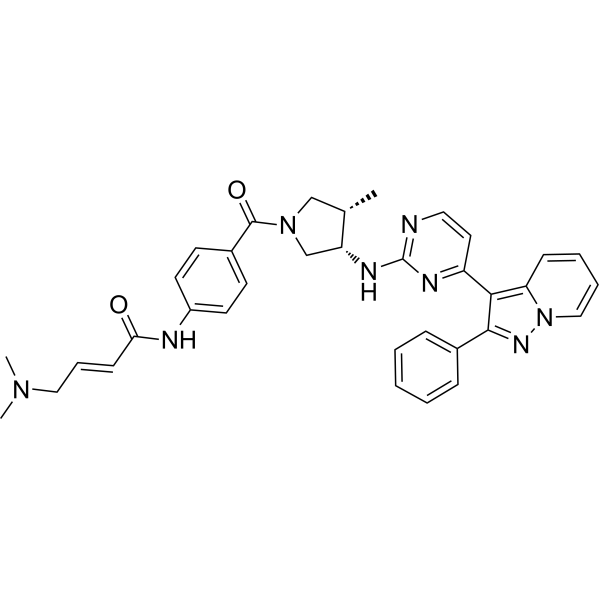
 0 ImagesJNK-9L (Compound 9l) is a BBB-penetrable and ATP-competitive JNK inhibitor with IC50s of 0.099 and 0.148 μM for JNK1 and JNK3, respectively. JNK-9L significantly inhibits c-jun phosphorylation and Streptozotocin (HY-13753)-induced ROS generation with an IC50 of 0.8 nM. JNK-9L can be used for neurodegenerative disorders like Parkinson’s disease research.
-
CMIT/MIT (2.0-2.5% in water)
 0 ImagesCat. No.: HY-W017982ACAS No.: 55965-84-9Synonyms: CMI/MI (2.0-2.5% in water)CMIT/MIT (2.0-2.5% in water) (CMI/MI (2.0-2.5% in water)) is a mixture of CMIT and MIT, and is also a preservative and skin sensitizer. CMIT/MIT (2.0-2.5% in water) increases the levels of phosphorylated ERK1/2, p38, JNK1/2, p53, p21 and Bax, decreases the level of Bcl-2, and activates the Nrf-2/HO-1 signaling pathway. CMIT/MIT (2.0-2.5% in water) increases LDH release and lipid peroxidation levels, impairs antioxidant defense capacity, promotes pro-inflammatory cytokine release, induces apoptosis, triggers cell cycle arrest, exhibits neurotoxicity in neuroblastoma cells, and causes dysregulation of Th2/Th17 immune responses. CMIT/MIT (2.0-2.5% in water) can be used in studies related to allergy, atopic dermatitis and lung injury.