



TGF-beta/Smad
All Product Categories
-
TGF-beta/Smad Related Products (207)
Related Products (207)

-
Mongersen sodium scrambled negative control
 0 ImagesCat. No.: HY-145721CMongersen sodium scrambled negative control is the sequence scrambled negative control of Mongersen sodium.
-
Anti-SOSTDC1 Antibody
 0 ImagesCat. No.: HY-P992304Anti-SOSTDC1 Antibody is a monoclonal antibody that targets SOSTDC1. Anti-SOSTDC1 Antibody can be used in ELISA, FACS, and functional assays.
-
AZD8701 sodium scrambled negative control
 0 ImagesCat. No.: HY-159692CAZD8701 sodium scrambled negative control is the sequence scrambled negative control of AZD8701 sodium.
-
Perfluoroundecanoic acid-13C7
 0 ImagesCat. No.: HY-W142432SPerfluoroundecanoic acid-13C7 is the 13C-labeled Perfluoroundecanoic acid (HY-W142432). Perfluoroundecanoic acid is a perfluoroalkyl substance (PFAS). Perfluoroundecanoic acid is an orally active oxidative stress inducer. Perfluoroundecanoic acid promotes macrophage M2 polarization, activates Wnt/β-catenin signaling and enhances β-catenin nuclear accumulation. Perfluoroundecanoic acid -induced M2 phenotype macrophage accelerates tumor progression in vitro and in vivo. Perfluoroundecanoic acid induces DNA damage, reproductive and pathophysiological dysfunctions via oxidative stress in male Swiss mice. Perfluoroundecanoic acid inhibits Leydig cell development in pubertal male rats via inducing oxidative stress and autophagy. Perfluoroundecanoic acid accelerates insulitis development in a mouse model of type 1 diabetes. Perfluoroundecanoic acid can be used for the study of ovarian cancer, type 1 diabetes and inflammation.
-
MEDI-579
 0 ImagesCat. No.: HY-P992410MEDI-579 is a fully human monoclonal antibody against PAI-1, with a KD value of 6 pM for human PAI-1 and 105 pM for rat PAI-1. MEDI-579 restores renal plasmin activity and inhibits PAI-1-mediated intracellular signal transduction. MEDI-579 reduces albuminuria, glomerulosclerosis severity, TGF-β1 expression level, and phosphorylated Smad2 level induced in diabetic mice. MEDI-579 decreases the levels of active PAI-1 in plasma and kidneys, and increases plasma plasmin level in a mouse model of lupus nephritis. MEDI-579 can be used in research related to diabetic nephropathy and lupus nephritis. The recommended isotype control is human IgG1 kappa (HY-P99001).
-
Halofuginone hydrochloride (Standard)
 0 ImagesCat. No.: HY-N1584BRCAS No.: 1217623-74-9Synonyms: RU-19110 hydrochloride (Standard)Halofuginone hydrochloride (Standard) (RU-19110 hydrochloride (Standard)) is the analytical standard of Halofuginone hydrochloride (HY-N1584B). This product is intended for research and analytical applications. Halofuginone hydrochloride (RU-19110 hydrochloride), a Febrifugine derivative, is a competitive prolyl-tRNA synthetase inhibitor with a Ki of 18.3 nM. Halofuginone hydrochloride is a specific inhibitor of type-I collagen synthesis and attenuates osteoarthritis (OA) by inhibition of TGF-β activity. Halofuginone hydrochloride is also a potent pulmonary vasodilator by activating Kv channels and blocking voltage-gated, receptor-operated and store-operated Ca2+ channels. Halofuginone hydrochloride has anti-malaria, anti-inflammatory, anti-cancer, anti-fibrosis effects.
-
TGF-β1/Smad-IN-1
 0 ImagesCat. No.: HY-176737CAS No.: 3097194-50-5TGF-β1/Smad-IN-1 (compound C9) is a potent TGF-β1/Smad inhibitor. TGF-β1/Smad-IN-1 inhibits the expression of fibrosis markers (α-SMA and COL1A1) induced by TGF-β1. TGF-β1/Smad-IN-1 shows antifibrotic effects. TGF-β1/Smad-IN-1 has the potential for the research of hepatic fibrosis.
-
HOXA1-IN-1
 0 ImagesCat. No.: HY-181823CAS No.: 3118854-61-5HOXA1-IN-1 is a HOXA1 inhibitor. HOXA1-IN-1 downregulates HOXA1 protein levels, suppresses its transcriptional activity, and alters the expression of its downstream target genes. HOXA1-IN-1 induces DNA damage and apoptosis in cancer cells. HOXA1-IN-1 exhibits antitumor efficacy in xenograft models of colorectal cancer and triple-negative breast cancer. HOXA1-IN-1 shows synergistic activity in combination with Cisplatin (HY-17394). HOXA1-IN-1 can be used for the research of colorectal cancer and triple-negative breast cancer.
-
AS2863619 (GMP)
 0 ImagesCat. No.: HY-126675GCAS No.: 2241300-51-4AS2863619 GMP is AS2863619 (HY-126675) produced by using GMP guidelines. GMP small molecules works appropriately as an auxiliary reagent for cell therapy manufacture. AS2863619 is an orally active CDK8/19 inhibitor that also inhibits BMP2, MDA5 and RIG-I receptors. AS2863619 targets Stat5a-CDK8/19 to promote the differentiation of CD4+ T cells into regulatory T cells and induce FOXP3 expression, thereby restoring immune homeostasis and establishing transplant immune tolerance. AS2863619 also enhances the BMP2/SMAD signaling pathway to promote osteogenic differentiation and inhibit adipogenic differentiation. AS2863619 exerts osteoprotective effects by alleviating inflammation-induced impairment of osteogenic function and inducing neutrophil apoptosis (apoptosis). AS2863619 can be applied to research in related fields such as periodontitis-induced bone defects.
-
H-Leu-Ser-Lys-Leu-OH
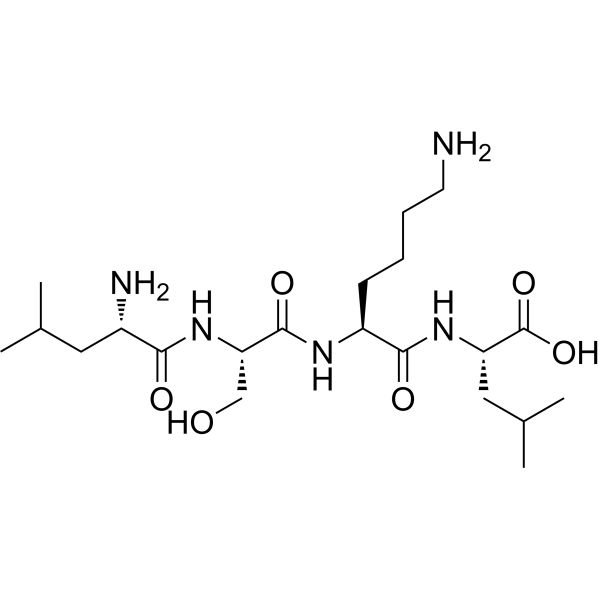 0 ImagesCat. No.: HY-P3971CAS No.: 162559-45-7
-
Hydrochlorothiazide-15N2,13C,d2
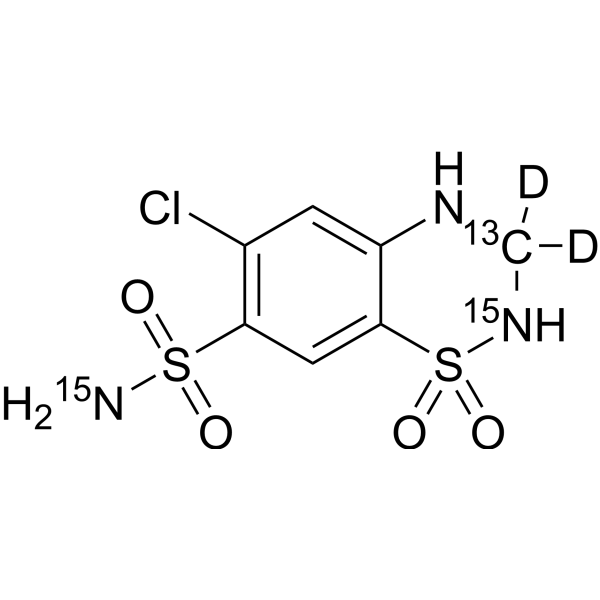 0 ImagesCat. No.: HY-B0252S3CAS No.: 2140316-81-8Synonyms: HCTZ-15N2,13C,d2Hydrochlorothiazide-15N2,13C,d2 is 15N and deuterated labeled Hydrochlorothiazide (HY-B0252). Hydrochlorothiazide (HCTZ), an orally active diuretic agent of the thiazide class, inhibits transforming TGF-β/Smad signaling pathway. Hydrochlorothiazide has direct vascular relaxant effects via opening of the calcium-activated potassium (KCA) channel. Hydrochlorothiazide improves cardiac function, reduces fibrosis and has antihypertensive effect.

-
DCN1-IN-2
 0 ImagesCat. No.: HY-169026CAS No.: 2543578-57-8DCN1-IN-2 is a DCN1 inhibitor with an IC50 value of 2.96 nM. DCN1-IN-2 can alleviate Ang II/TGFβ-induced activation of cardiac fibroblasts. DCN1-IN-2 can reduce ISO-induced cardiac fibrosis and remodeling in mice by selectively inhibiting cullin 3.
-
TGF-β1/Smad3-IN-2
 0 ImagesCat. No.: HY-182038TGF-β1/Smad3-IN-2 is an orally active antifibrotic agent. TGF-β1/Smad3-IN-2 has high affinity for VDR and can inhibit the TGFβ/SMAD3 signaling pathway. TGF-β1/Smad3-IN-2 inhibits hepatic stellate cell activation, reduces extracellular matrix deposition, and alleviates liver fibrosis in a bile duct ligation mouse model. TGF-β1/Smad3-IN-2 can be used for the research of liver fibrosis.
-
TAT-QFNP12
 0 ImagesCat. No.: HY-P10359TAT-QFNP12 is a peptide that blocks the NDRG2-PPM1A binding and reduces Smad2/3 phosphorylation, decreases astrocytic MMP-9 production and BBB disruption after subarachnoid hemorrhage (SAH).
-
Sphingosylphosphorylcholine-d9
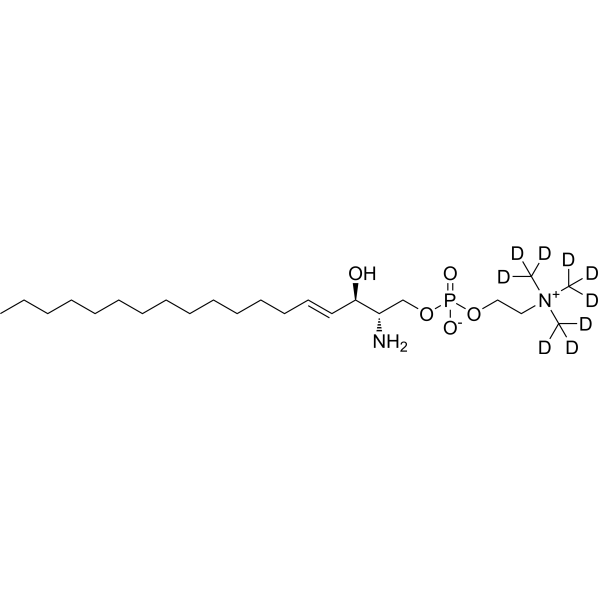 0 ImagesSphingosylphosphorylcholine-d9 is deuterium labeled Sphingosylphosphorylcholine.
-
PXS 64
 0 ImagesCat. No.: HY-181431CAS No.: 1253691-50-7PXS 64, a mannose-6-phosphate (M6P) analogue. a lipophilic prodrug of PXS 25 (HY-181430). PXS 64 is an effective anti-fibrotic agent by inhibiting the activation of latent TGF-β1. PXS64, inhibits fibrosis via TGF-β1 pathway in human lung fibroblasts. PXS 64 reduces TGFβ-mediated collagen IV, fibronectin, MCP-1, and phospho-smad2 expression in kidney cells. PXS 64 reduces collagen deposition in dermal scar fibroblasts. PXS 64 can be used for the research of chronic kidney disease, idiopathic pulmonary fibrosis, scarring.
-
(Rac)-Hesperetin (Standard)
 0 ImagesCat. No.: HY-N0168ARCAS No.: 69097-99-0(Rac)-Hesperetin (Standard) is the analytical standard of (Rac)-Hesperetin. This product is intended for research and analytical applications. (Rac)-Hesperetin is the racemate of Hesperetin (HY-N0168), an orally active multi-target inhibitor. (Rac)-Hesperetin exhibits significant anti-tumor and anti-inflammatory activities by blocking the TGF-β1-mediated Fyn/RhoA signaling axis and the TLR4-MyD88-NF-κB inflammatory pathway. (Rac)-Hesperetin inhibits the formation of actin stress fibers and the migration and invasion of cancer cells, and is suitable for triple-negative breast cancer research. In inflammation models, (Rac)-Hesperetin effectively alleviates lung injury by reducing the release of pro-inflammatory mediators and regulating the activity of oxidative stress enzymes, and is suitable for acute lung injury research. (Rac)-Hesperetin also interferes with the entry and early replication processes of channel catfish virus, inhibits viral gene expression and progeny virus production, thereby protecting cells from virus-induced cytopathic effects.
-
Tertomotide hydrochloride
 0 ImagesCat. No.: HY-105067ACAS No.: 922174-60-5Synonyms: GV-1001 hydrochlorideTertomotide hydrochloride (GV-1001 hydrochloride) is a 16-amino acid peptide derived from hTERT, with both cell-penetrating and immunostimulatory activities, and it can cross the blood-brain barrier. Tertomotide hydrochloride binds to STING, HO-1, eHSP70, eHSP90, bradykinin receptor 1, VEGFR-2, NF-κB, p38 MAPK and Smad2. Tertomotide hydrochloride induces type I interferon production, mitochondrial DNA stress and T-cell responses; inhibits HBV replication, angiogenesis, TGF-β signaling pathway, NF-κB activation, endothelial-mesenchymal transition (EndMT) and fibrosis; regulates microglia; and exerts neuroprotective, anti-inflammatory, antioxidant, anti-apoptotic and anti-tumor effects. Tertomotide hydrochloride can be used in research related to hepatitis B virus infection, Alzheimer's disease, non-small cell lung cancer, atherosclerosis and depression.
-
Myostatin inhibitory peptide 2 TFA
 0 ImagesCat. No.: HY-P10476AMyostatin inhibitory peptide 2 (compd 2) TFA is a myostatin inhibitor with a Kd of 35.9 nM. Myostatin inhibitory peptide 2 TFA can be used for researches of muscle atrophic disorders.



