



Wnt
The Wnt signaling pathways are a group of signal transduction pathways made of proteins that pass signals from outside of a cell through cell surface receptors to the inside of the cell. Three Wnt signaling pathways have been characterized: the canonical Wnt pathway, the noncanonical planar cell polarity pathway, and the noncanonical Wnt/calcium pathway. All three Wnt signaling pathways are activated by the binding of a Wnt-protein ligand to a Frizzled family receptor, which passes the biological signal to the protein Dishevelled inside the cell. The canonical Wnt pathway leads to regulation of gene transcription, the noncanonical planar cell polarity pathway regulates the cytoskeleton that is responsible for the shape of the cell, and the noncanonical Wnt/calcium pathway regulates calcium inside the cell. The clinical importance of Wnt signaling pathway has been demonstrated by mutations that lead to a variety of diseases, including breast and prostate cancer, glioblastoma, type II diabetes.
Wnt Isoform Specific Products
All Product Categories
-
Wnt Related Products (456)
Related Products (456)

-
Antibodies (26)
-
Wnt Isoform Comparison


-
GSK-3β inhibitor 8
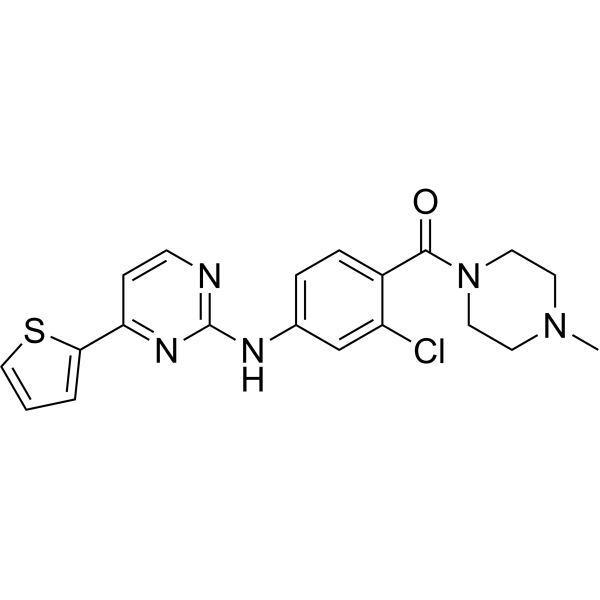 0 ImagesGSK-3β inhibitor 8, a thiophenacil derivative, is an effective and selective inhibitor of GSK-3β (IC50=64 nM). GSK-3β inhibitor 8 negatively regulated Wnt signaling pathway and stimulated β cell proliferation.
-
Hordenine hydrochloride
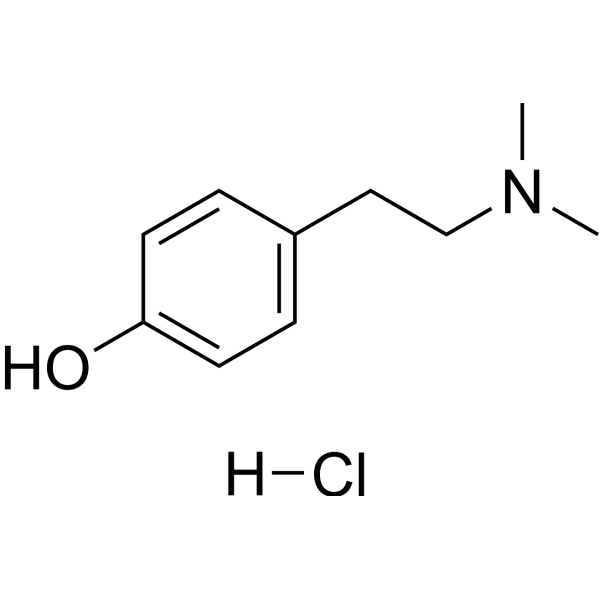 0 ImagesSynonyms: Ordenina hydrochloride; Peyocactine hydrochlorideHordenine hydrochloride (Ordenina hydrochloride; Peyocactine hydrochloride) is a multifunctional alkaloid with oral activity and blood-brain barrier penetration. Hordenine hydrochloride inhibits LPS-induced phosphorylation of p38, JNK, ERK1/2, p65, IκB, and AKT, prevents p65 nuclear translocation, and suppresses inflammatory cytokines and mediators. Hordenine hydrochloride promotes M2 macrophage polarization, restores blood-milk barrier integrity, alleviates oxidative stress by reducing ROS and MDA, and attenuates LPS-induced lung injury and pulmonary edema. Hordenine hydrochloride inhibits cAMP production, CREB phosphorylation, and MITF expression, thereby suppressing melanin synthesis in melanocytes and reconstructed epidermis. Hordenine hydrochloride activates the Wnt/β-catenin signaling pathway, promotes dermal papilla cell proliferation and hair shaft elongation, and accelerates hair regeneration. Hordenine hydrochloride activates DRD2, acts as a D3R partial agonist, α2A-AR full agonist, and 5-HT2A-R antagonist, and inhibits SERT and DAT. Hordenine hydrochloride inhibits α-synuclein accumulation and ameliorates motor deficits in Parkinson's disease models. Hordenine hydrochloride limits alcohol intake, reduces relapse drinking behavior, and modulates alcohol-induced conditioned place preference. Hordenine hydrochloride can be used for research on mastitis, skin pigmentation, acute lung injury, foodborne diseases, hair loss, Parkinson's disease, bacterial infections, and alcohol use disorder.
-
2,5-Hexanedione-d10
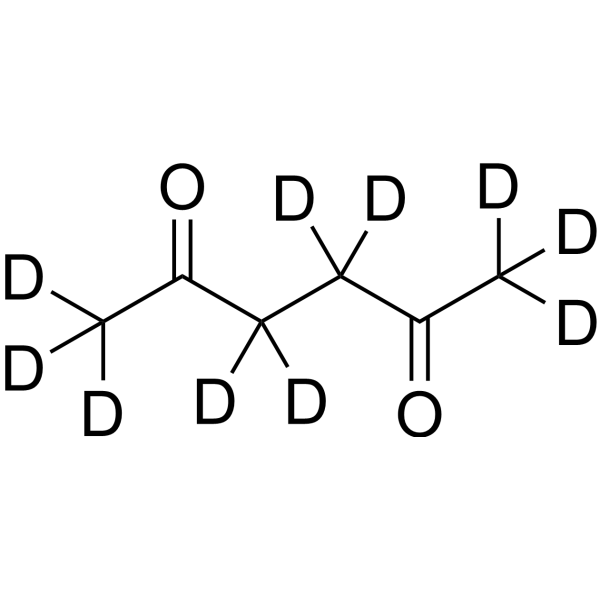 0 ImagesSynonyms: 2,5-HD-d102,5-Hexanedione-d10 (2,5-HD-d10) is the deuterium labeled 2,5-Hexanedione. Hexane-2,5-dione (2,5-HD) is an orally active, CNS-penetrant cytotoxic agent. Hexane-2,5-dione reduces BCL-2 and β-catenin/TCF transcriptional activity, increases BAX and active caspase-3 expression, and promotes apoptosis. Hexane-2,5-dione causes an accumulation of neurofilaments within axons in rats. Hexane-2,5-dione can be used for the research of neurodegenerative diseases.
-
Hordenine-d6
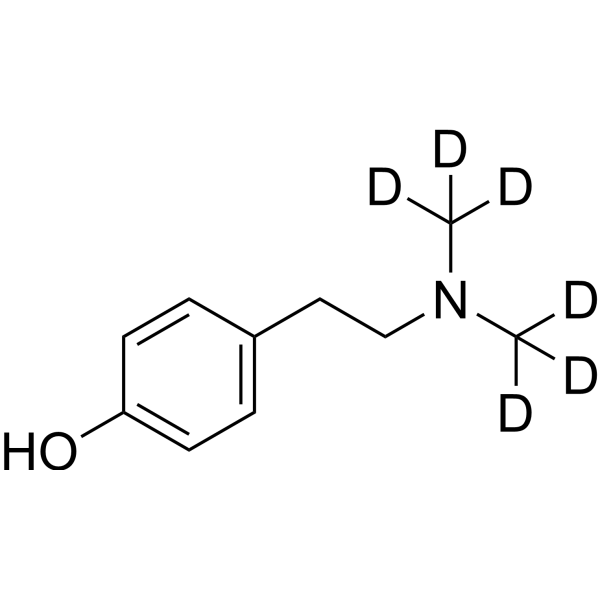 0 ImagesSynonyms: Ordenina-d6; Peyocactine-d6Hordenine-d6 (Ordenina-d6; Peyocactine-d6) is the deuterated-labeled Hordenine (HY-N0113). Hordenine (Ordenina; Peyocactine) is a multifunctional alkaloid with oral activity and blood-brain barrier penetration. Hordenine inhibits LPS-induced phosphorylation of p38, JNK, ERK1/2, p65, IκB, and AKT, prevents p65 nuclear translocation, and suppresses inflammatory cytokines and mediators. Hordenine promotes M2 macrophage polarization, restores blood-milk barrier integrity, alleviates oxidative stress by reducing ROS and MDA, and attenuates LPS-induced lung injury and pulmonary edema. Hordenine inhibits cAMP production, CREB phosphorylation, and MITF expression, thereby suppressing melanin synthesis in melanocytes and reconstructed epidermis. Hordenine activates the Wnt/β-catenin signaling pathway, promotes dermal papilla cell proliferation and hair shaft elongation, and accelerates hair regeneration. Hordenine activates DRD2, acts as a D3R partial agonist, α2A-AR full agonist, and 5-HT2A-R antagonist, and inhibits SERT and DAT. Hordenine inhibits α-synuclein accumulation and ameliorates motor deficits in Parkinson's disease models. Hordenine limits alcohol intake, reduces relapse drinking behavior, and modulates alcohol-induced conditioned place preference. Hordenine can be used for research on mastitis, skin pigmentation, acute lung injury, foodborne diseases, hair loss, Parkinson's disease, bacterial infections, and alcohol use disorder.
-
N-(3-Methoxybenzyl)-(9Z,12Z,15Z)-octadecatrienamide
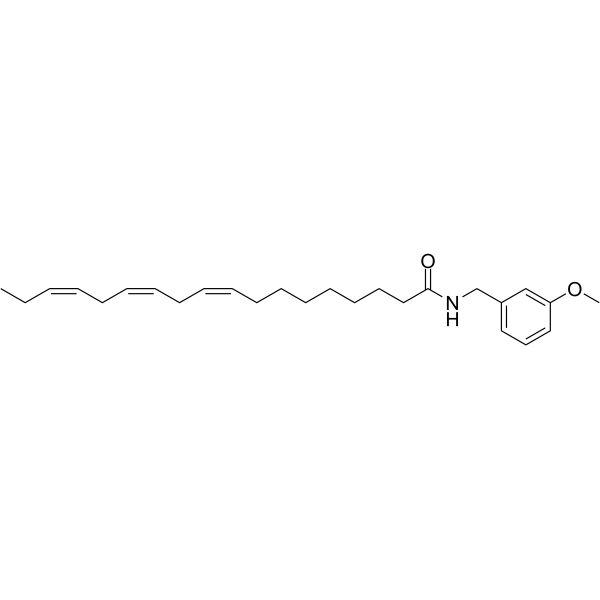 0 ImagesN-(3-Methoxybenzyl)-(9Z,12Z,15Z)-octadecatrienamide is a macamide isolated from Maca (Lepidium meyenii Walp.) N-(3-Methoxybenzyl)-(9Z,12Z,15Z)-octadecatrienamide induces mesenchymal stem cells osteogenic differentiation and consequent bone formation through activating the canonical Wnt/β‐catenin signaling pathway. N-(3-Methoxybenzyl)-(9Z,12Z,15Z)-octadecatrienamide can be used for the research of osteoporosis.
-
Anti-LGR5/GPR49 Antibody (18G7H6A3)
 0 ImagesCat. No.: HY-P991454Purity: 98.64%
-
β-catenin-IN-37
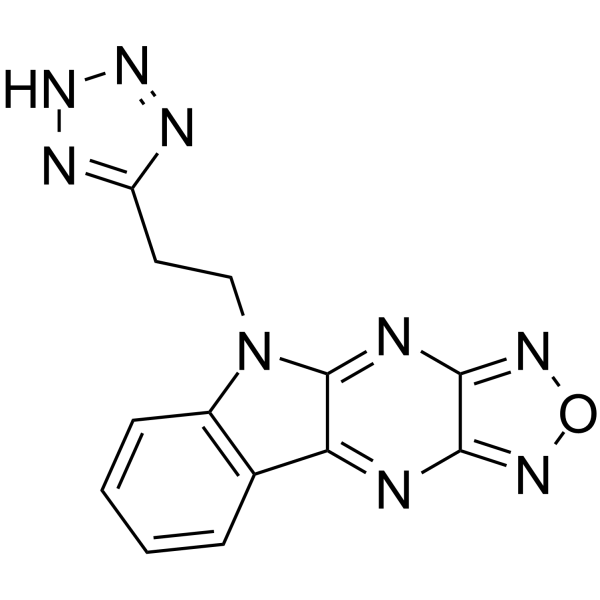 0 Imagesβ-catenin-IN-37 is a selective β-Catenin/T-cell factor protein-protein interaction (β-catenin/Tcf PPI) inhibitor. β-catenin-IN-37 inhibits canonical Wnt signaling and the growth of colorectal cancer cells SW480 and HCT116 with the IC50 values of 20 μM and 31 μM, respectively.
-
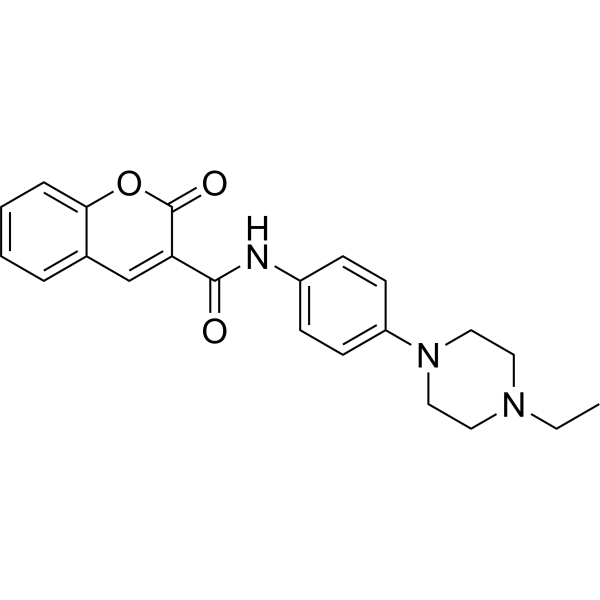
G-631
 0 ImagesG-631 is an orally active tankyrase(TNKS1/TNKS2) inhibitor. G-631 stabilizes AXIN and inhibits the Wnt/β-catenin signaling pathway. G-631 can be used in studies related to cancers such as colorectal cancer.
-
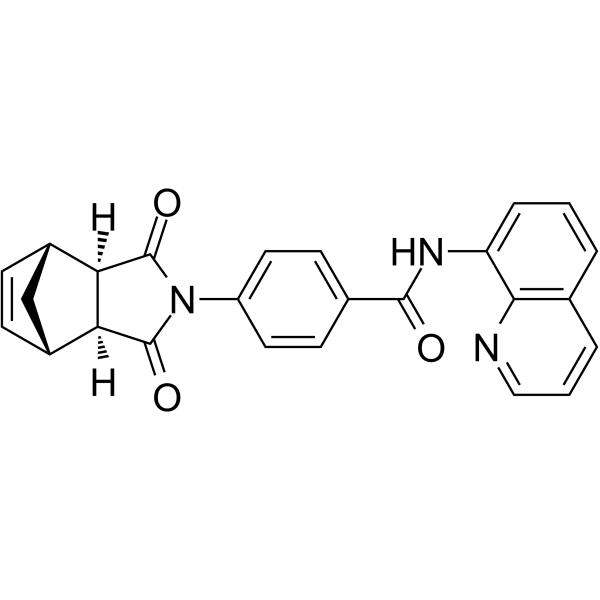
Elaidic acid-d9
 0 ImagesElaidic acid-d9 is deuterium labeled Elaidic acid (HY-113016). Elaidic acid is an orally active trans fatty acid. Elaidic acid enhances the stemness of colorectal cancer cells by activating the Wnt/ERK1/2 pathway, thereby promoting cell proliferation, invasion and metastasis, and inhibiting apoptosis. Elaidic acid also inhibits the growth of Lactobacillus and alters the cell surface hydrophobicity of Lactobacillus. Elaidic acid reduces basal 2-deoxyglucose uptake in muscle cells and adipocytes. Elaidic acid can be used in research on colorectal cancer, insulin and other related areas.
-
APHS
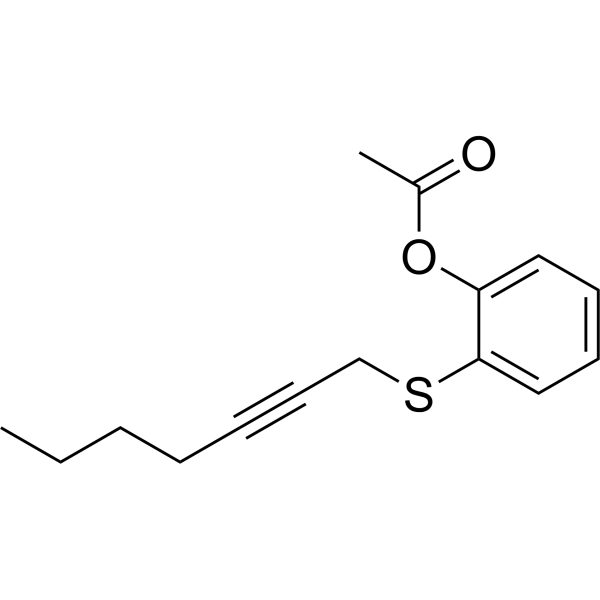 0 ImagesAPHS is a specific and covalent COX-2 inhibitor with neuroprotective effects. COX-2 is a prostaglandin (PG) synthetase overexpressed in colorectal cancer (CRC) and has pleiotropic cancer-promoting effects. APHS modifies COX-2 by acetylating the active site (serine 516), thereby inhibiting prostaglandin production. The neuroprotective activity of APHS is inhibited by prostaglandin E2. APHS also co-inhibits the WNT pathway, an anti-tumor mechanism in addition to COX-2 inhibition.
-
fStAx-35R TFA
 0 ImagesCat. No.: HY-P10392AFfStAx-35R TFA is the hydrocarbon-stapled peptide. fStAx-35R TFA inhibits Wnt/β-catenin signaling pathway by disrupting the β-catenin-TCF interaction. fStAx-35R TFA can be used in cancer research.
-
PTD-DBM
 0 ImagesCat. No.: HY-P11112CAS No.: 1609454-11-6PTD-DBM is a CXXC5-Dvl protein-protein interaction inhibitor and also a Wnt/β-catenin pathway activator. PTD-DBM interferes with the Dvl-binding function of CXXC5, disrupts the negative feedback regulation of the Wnt/β-catenin pathway, induces β-catenin expression and nuclear translocation, and increases the production of type I collagen, α-smooth muscle actin and endothelin-1. PTD-DBM is applicable to studies related to androgenetic alopecia and skin wound healing.
-
Remigromig
 0 ImagesCat. No.: HY-P992126CAS No.: 3059389-31-7Synonyms: EYE-103; MK-3000Remigromig (EYE-103; MK-3000) is a humanized dual-target monoclonal antibody that targets LRP5 and FZD4. Remigromig activates the Wnt/β-catenin signaling pathway by mimicking the natural ligand Norrin, induces tight junction formation and restores blood-retinal barrier function. Administered via intravitreal injection, Remigromig reduces retinal vascular leakage, and demonstrates improvements in best-corrected visual acuity and reductions in retinal thickness in studies of diabetic macular edema. Remigromig can be used for research related to macular degeneration.
-
iCRT-5
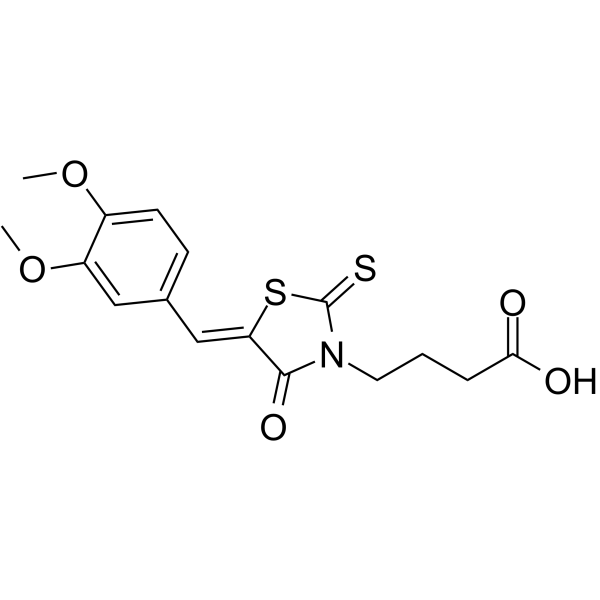 0 ImagesiCRT-5 is a β-catenin-regulated transcription (CRT) inhibitor. iCRT-5 can block Wnt/β-catenin reporter activity and down regulate β-catenin expression. iCRT-5 can be used for the research of multiple myeloma.




