



AG14361
Based on 7 publication(s) in Google Scholar
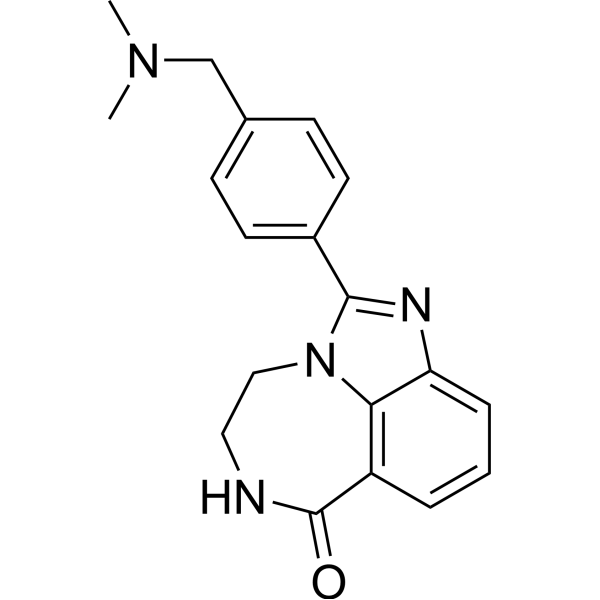
AG14361 is a potent PARP-1 inhibitor, with a Ki of < 5 nM, and in permeabilized SW620 and intact SW620 cells, the IC50s are 29 nM and 14 nM, respectively.
Nur für Forschungszwecke. Wir verkaufen nicht an Patienten.
- Reinheit : 99.42%
- CAS. Nr.: 328543-09-5
- Formel: C19H20N4O
- Molecular Weight:320.39
-
Speicherung:Powder -20°C, 3 years , 4°C, 2 years ; In solvent -80°C, 2 years , -20°C, 1 year

To place orders, for customer services and technical support, please contact: MedChemExpress USA
Tel: 609-228-6898 E-mail: [email protected] [email protected]


-
 Biologische Aktivität
-
Chemical Information
-
Lösungsmittel & Löslichkeit
- Reinheit & Dokumentation
- Verweise
-
 Help & FAQs


-
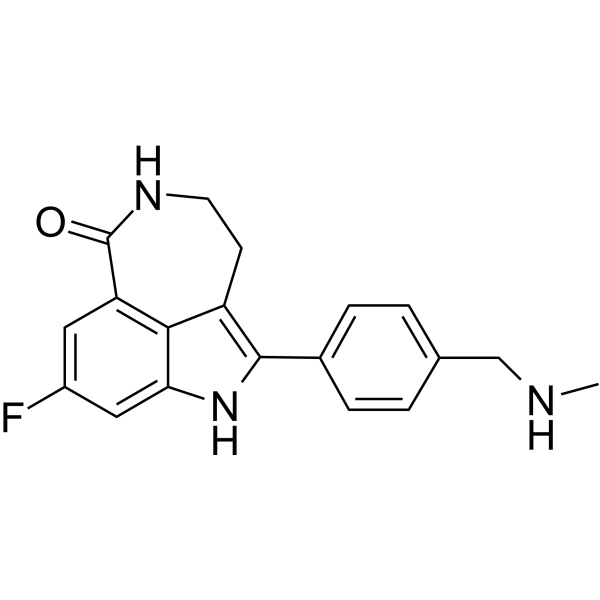
HY-10617A
RucaparibPARP Inhibitor -
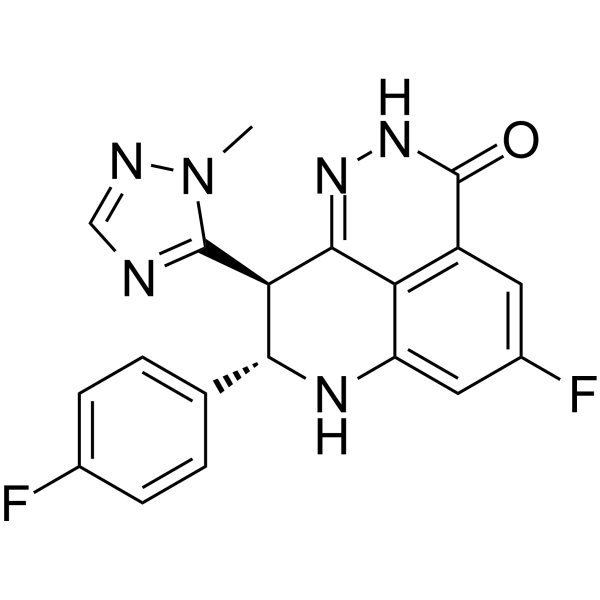
HY-16106
TalazoparibPARP Inhibitor -
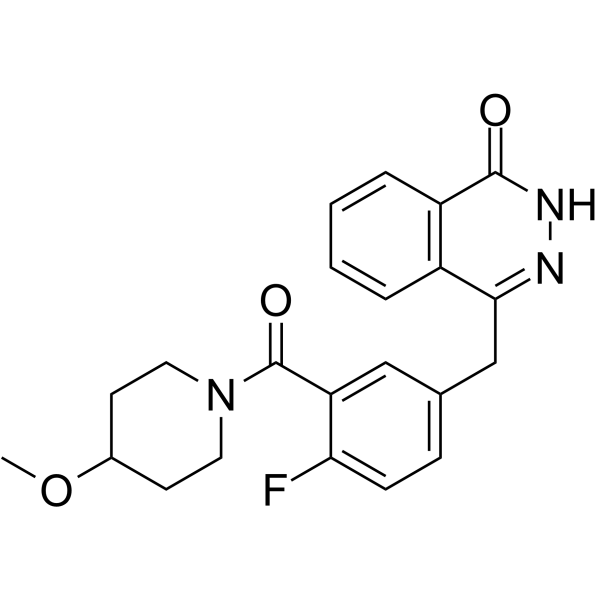
HY-13536
AZD-2461PARP Inhibitor -
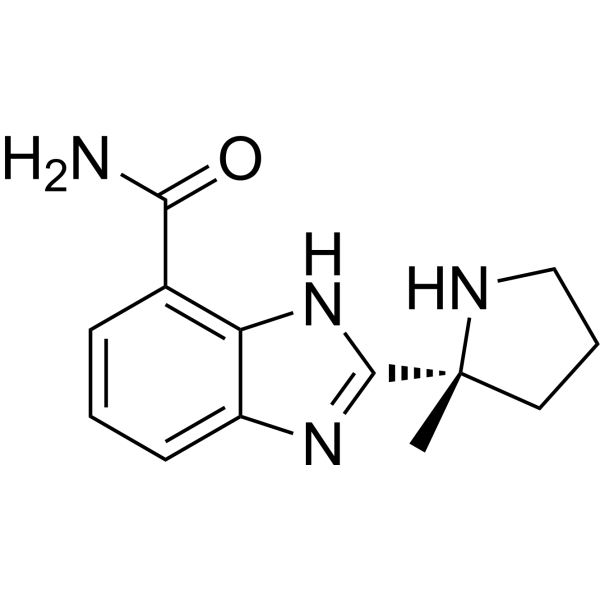
HY-10129
VeliparibPARP Inhibitor -
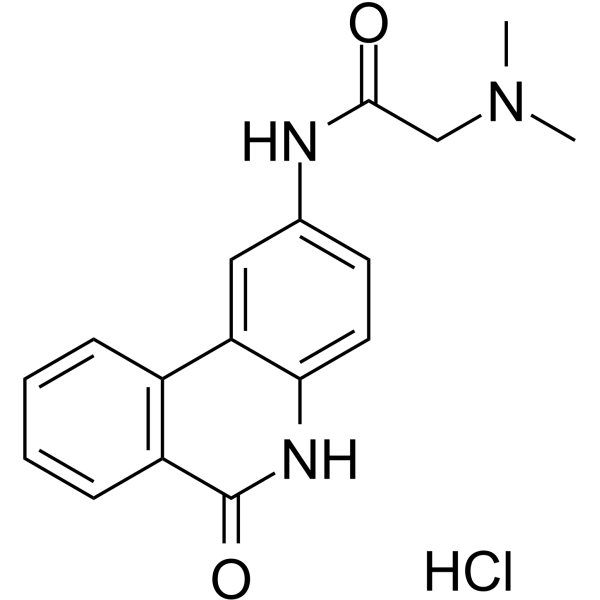
HY-13688
PJ34 hydrochloridePARP Inhibitor -
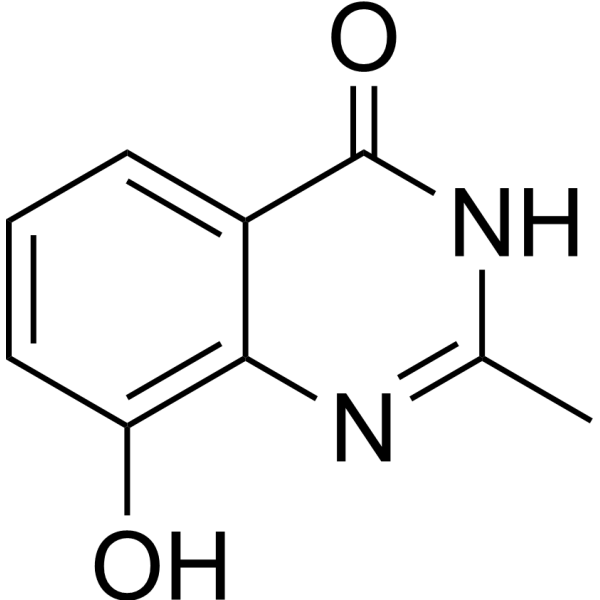
HY-15044
NU1025PARP Inhibitor -
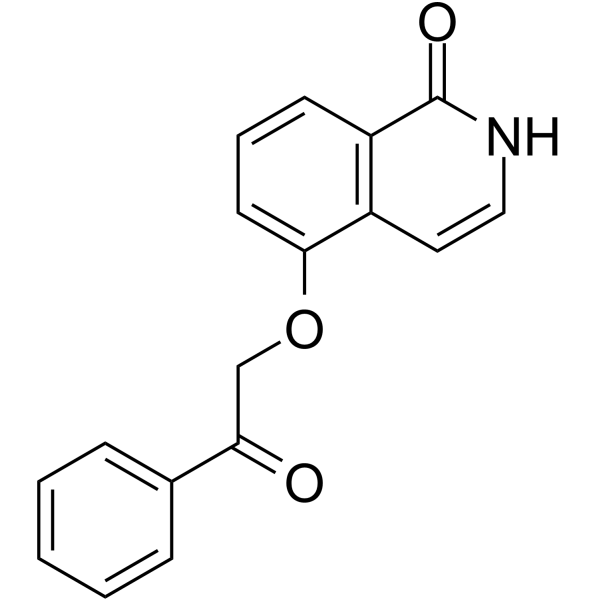
HY-14478
UPF 1069PARP Inhibitor -
HY-10614
A-966492PARP1/2 Inhibitor -
HY-101872
GSK-872RIPK3 Inhibitor -
HY-15763
ErastinFerroptosis Inducer -
HY-18935
CBL0137FACT Inhibitor -
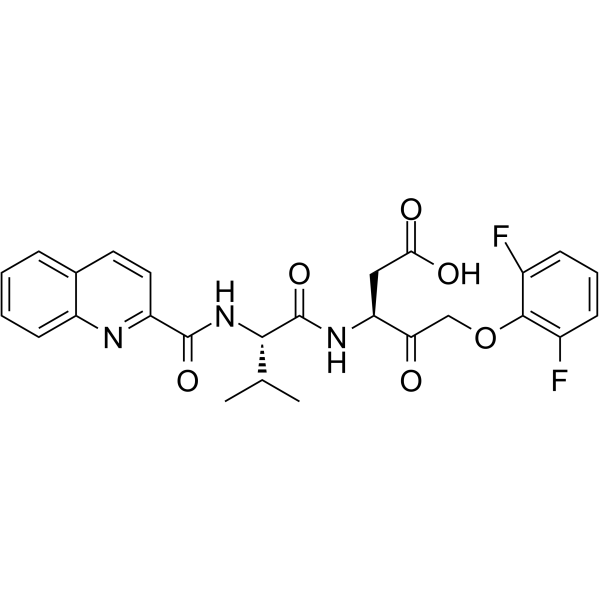
HY-12305
Q-VD-OPhPan-caspase Inhibitor
Publications Citing Use of MedChemExpress (MCE) AG14361
More- Nat Methods. 2023 Sep;20(9):1388-1399. [Abstract]
- Breast Cancer Res. 2025 Oct 23;27(1):184. [Abstract]
- Eur J Pharmacol. 2024 Sep 5:978:176765. [Abstract]
- J Mol Med (Berl). 2019 Aug;97(8):1183-1193. [Abstract]
- Sci Rep. 2026 Mar 5;16(1):12110. [Abstract]
- EJNMMI Res. 2025 Apr 29;15(1):50. [Abstract]
- Patent. US20180263995A1.


Biologische Aktivität
Beschreibung
IC50 & Target
[1]|
PARP-1 0.5 nM (Ki) |
Cellular Effect
|
Cell Line

|
Type | Value | Description | References |
|---|---|---|---|---|
| LoVo | GI50 |
11.2 μM
Compound: 22
|
Concentration that gives 50% growth inhibition in LoVo cells, activity expressed as GI50
Concentration that gives 50% growth inhibition in LoVo cells, activity expressed as GI50
|
[PMID: 12519059] |
In Vitro
AG14361 is a potent PARP-1 inhibitor, with a Ki of < 5 nM, and in permeabilized SW620 and intact SW620 cells, the IC50s are 29 nM and 14 nM, respectively. AG14361 inhibits the proliferation of human cancer cells, such as A549, LoVo, and SW620 cells, with GI50s of 14 μM, 11.2 μM and 20 μM, respectively. Furthermore, AG14361 in combination with NSC 362856 markedly reduces the GI50 value of NSC 362856 in LoVo and A549 cells, but does not exert such an effect in SW620 cells[1]. AG14361 suppresses breast cancer cells with IC50s of 17 μM and 25 μM for 92 J-wt-BRCA1 and 92 J-sh-BRCA1 cells, respectively. AG14361 induces caspase 3/7 activation and cell cycle abnormalities, and also inhibits NF-κB signaling[2]. AG14361 (0.4 μM) enhances the growth-inhibitory and cytotoxic effects of topoisomerase I poisons, with no obvious effect on the formation and reversal of cleavable complexes, and increases the persistence of camptothecin-induced DNA single-strand breaks[3].
MedChemExpress (MCE) has not independently confirmed the accuracy of these methods. They are for reference only. .
In Vivo
MedChemExpress (MCE) has not independently confirmed the accuracy of these methods. They are for reference only.


Chemical Information
-
CAS. Nr. 328543-09-5
-
Appearance Solid
-
Molecular Weight 320.39
-
Formel C19H20N4O
-
Color White to off-white
-
SMILES
O=C1NCCN2C3=C1C=CC=C3N=C2C4=CC=C(C=C4)CN(C)C
-
Versand
Room temperature in continental US; may vary elsewhere.
-
Speicherung
Powder -20°C 3 years 4°C 2 years In solvent -80°C 2 years -20°C 1 year


Publications (7)
-
Journal Impact Factor
-
Most Recent
-
Nat Methods
2023 Sep;20(9):1388-1399. PMID: 37474806 -
Breast Cancer Res
Modulating phosphodiesterase-5 activity to suppress the immunosuppressive mechanisms of myeloid-derived suppressor cells in breast cancer. [Abstract]2025 Oct 23;27(1):184. PMID: 41131545 -
Eur J Pharmacol
PARP-1 dependent cell death pathway (Parthanatos) mediates early brain injury after subarachnoid hemorrhage. [Abstract]2024 Sep 5:978:176765. PMID: 38906236 -
J Mol Med (Berl)
2019 Aug;97(8):1183-1193. PMID: 31201471 -
Sci Rep
Propofol regulates METTL3-mediated PARP-1 m6A modification to promote Parthanatos to improve NSCLC chemotherapy resistance. [Abstract]2026 Mar 5;16(1):12110. PMID: 41781454 -
EJNMMI Res
Evaluation of a simplified radiolabeling method for a PARP inhibitor in an animal model of breast cancer. [Abstract]2025 Apr 29;15(1):50. PMID: 40301197 -


Lösungsmittel & Löslichkeit
In Vitro:
DMSO : 10 mg/mL (31.21 mM; ultrasonic and warming and heat to 60°C; Hygroscopic DMSO has a significant impact on the solubility of product, please use newly opened DMSO)
Please refer to the solubility information to select the appropriate solvent. Once prepared, please aliquot and store the solution to prevent product inactivation from repeated freeze-thaw cycles.
Storage method and period of stock solution: -80°C, 2 years; -20°C, 1 year. When stored at -80°C, please use it within 2 years. When stored at -20°C, please use it within 1 year.
Please refer to the solubility information to select the appropriate solvent. Once prepared, please aliquot and store the solution to prevent product inactivation from repeated freeze-thaw cycles.
Storage method and period of stock solution: -80°C, 2 years; -20°C, 1 year. When stored at -80°C, please use it within 2 years. When stored at -20°C, please use it within 1 year.
Konzentration (Stammlösung) × Volumen (Stammlösung) = Konzentration (Ziellösung) × Volumen (Ziellösung)
In Vivo:
Select the appropriate dissolution method based on your experimental animal and administration route.
- For the following dissolution methods, please ensure to first prepare a clear stock solution using an In Vitro approach and then sequentially add co-solvents:
- To ensure reliable experimental results, the clarified stock solution can be appropriately stored based on storage conditions. As for the working solution for In Vivo experiments, it is recommended to prepare freshly and use it on the same day.
- The percentages shown for the solvents indicate their volumetric ratio in the final prepared solution. If precipitation or phase separation occurs during preparation, heat and/or sonication can be used to aid dissolution.
Add each solvent one by one: 10% DMSO 40% PEG300 5% Tween-80 45% Saline
Solubility: ≥ 1 mg/mL (3.12 mM); Clear solution
This protocol yields a clear solution of ≥ 1 mg/mL (saturation unknown).
Taking 1 mL working solution as an example, add 100 μL DMSO stock solution (10.0 mg/mL) to 400 μL PEG300, and mix evenly; then add 50 μL Tween-80 and mix evenly; then add 450 μL Saline to adjust the volume to 1 mL.
Preparation of Saline: Dissolve 0.9 g sodium chloride in ddH₂O and dilute to 100 mL to obtain a clear Saline solution.
Add each solvent one by one: 10% DMSO 90% (20% SBE-β-CD in Saline)
Solubility: ≥ 1 mg/mL (3.12 mM); Clear solution
This protocol yields a clear solution of ≥ 1 mg/mL (saturation unknown).
Taking 1 mL working solution as an example, add 100 μL DMSO stock solution (10.0 mg/mL) to 900 μL 20% SBE-β-CD in Saline, and mix evenly.
Preparation of 20% SBE-β-CD in Saline (4°C, storage for one week): 2 g SBE-β-CD powder is dissolved in 10 mL Saline, completely dissolve until clear.
In Vivo Dissolution Calculator
Please enter the basic information of animal experiments:
-
-
-
-
Recommended: Prepare an additional quantity of animals to account for potential losses during experiments.
Please enter your animal formula composition:
-
%DMSO +
Recommended: Keep the proportion of DMSO in working solution below 2% if your animal is weak.
-
%+
-
+%Tween-80 + +
-
%Saline +
The co-solvents required include: DMSO, . All of co-solvents are available by MedChemExpress (MCE). , Tween 80. All of co-solvents are available by MedChemExpress (MCE).
Working solution concentration: 0.22 mg/mL
Method for preparing stock solution: mg drug dissolved in μL DMSO. Stock solution concentration: mg/mL.
1. Take μL DMSO stock solution;
2. Add μL .
μL , mix evenly;
3. Then add μL Tween 80, mix evenly;
4. Then add μL
Please ensure that the stock solution in the first step is dissolved to a clear state, and add co-solvents in sequence. You can use ultrasonic heating (ultrasonic cleaner, recommended frequency 20-40 kHz), vortexing, etc. to assist dissolution.


Reinheit & Dokumentation
-
Data Sheet (283 KB)
-
SDS (251 KB)
- English - EN (251 KB)
- Français - FR (251 KB)
- Deutsch - DE (251 KB)
- Norwegian - NO (251 KB)
- Español - ES (251 KB)
- Swedish - SV (251 KB)
- Italian - IT (251 KB)
- Korean - KR (251 KB)
- Portuguese - PT (251 KB)
-
Handling Instructions (2659 KB)
Verweise
[1]. Calabrese CR, et al. Anticancer chemosensitization and radiosensitization by the novel poly(ADP-ribose) polymerase-1 inhibitor AG14361. J Natl Cancer Inst. 2004 Jan 7;96(1):56-67. [Content Brief]
[2]. Vazquez-Ortiz G, et al. Drug repurposing screen identifies lestaurtinib amplifies the ability of the poly (ADP-ribose) polymerase 1 inhibitor AG14361 to kill breast cancer associated gene-1 mutant and wild type breast cancer cells. Breast Cancer Res. 2014 Jun 24;16(3):R67. [Content Brief]
[3]. Smith LM, et al. The novel poly(ADP-Ribose) polymerase inhibitor, AG14361, sensitizes cells to topoisomerase I poisons by increasing the persistence of DNA strand breaks. Clin Cancer Res. 2005 Dec 1;11(23):8449-57. [Content Brief]


Complete Stock Solution Preparation Table
Please refer to the solubility information to select the appropriate solvent. Once prepared, please aliquot and store the solution to prevent product inactivation from repeated freeze-thaw cycles.
Storage method and period of stock solution: -80°C, 2 years; -20°C, 1 year. When stored at -80°C, please use it within 2 years. When stored at -20°C, please use it within 1 year.
| Optional Solvent | Concentration Solvent Mass | 1 mg | 5 mg | 10 mg | 25 mg |
|---|---|---|---|---|---|
| DMSO | 1 mM | 3.1212 mL | 15.6060 mL | 31.2120 mL | 78.0299 mL |
| 5 mM | 0.6242 mL | 3.1212 mL | 6.2424 mL | 15.6060 mL | |
| 10 mM | 0.3121 mL | 1.5606 mL | 3.1212 mL | 7.8030 mL | |
| 15 mM | 0.2081 mL | 1.0404 mL | 2.0808 mL | 5.2020 mL | |
| 20 mM | 0.1561 mL | 0.7803 mL | 1.5606 mL | 3.9015 mL | |
| 25 mM | 0.1248 mL | 0.6242 mL | 1.2485 mL | 3.1212 mL | |
| 30 mM | 0.1040 mL | 0.5202 mL | 1.0404 mL | 2.6010 mL |


AG14361 Related Classifications
HY-12032 Related Classifications
 Powered by Bioz