



C16-Dihydroceramide

Based on 1 Customer Validation
C16-Dihydroceramide (N-Palmitoyl sphinganine; (2S,3R)-2-N-Palmitoyloctadecasphinganine) is a de novo sphingolipid metabolite and ceramide precursor. C16-Dihydroceramide has dual activities of modulating TRPV1 sensitization and promoting apoptosis. C16-Dihydroceramide attenuates TRPV1-mediated calcium transients in primary sensory neurons and inhibits capsaicin (HY-10448)-induced CGRP release and thermal hyperalgesia. C16-Dihydroceramide increases membrane rigidity, promotes membrane permeabilization and induces apoptosis, inhibits ceramide channel formation on mitochondrial membranes and liposomes, and blocks ceramide-induced cytochrome c (HY-125857) release. C16-Dihydroceramide can be used for research on neuropathic pain, head and neck squamous cell carcinoma, colorectal cancer, Sarcoma 180, B16 melanoma and Lewis lung carcinoma.
연구목적의 판매만을 진행합니다. 환자를 대상으로 한 판매는 하지 않습니다.
- Purity : 99.75%
- CAS No.: 5966-29-0
- 화학식: C34H69NO3
- 분자량:539.92
-
보관:Powder -20°C, 3 years ; In solvent -80°C, 6 months , -20°C, 1 month


To place orders, for customer services and technical support, please contact: MedChemExpress USA
Tel: 609-228-6898 E-mail: [email protected] [email protected]


-
 Biological Activity
-
Chemical Information
-
용액&용해도
- Protocol
- 순도&문서
- References
-
 Help & FAQs


-
HY-154831
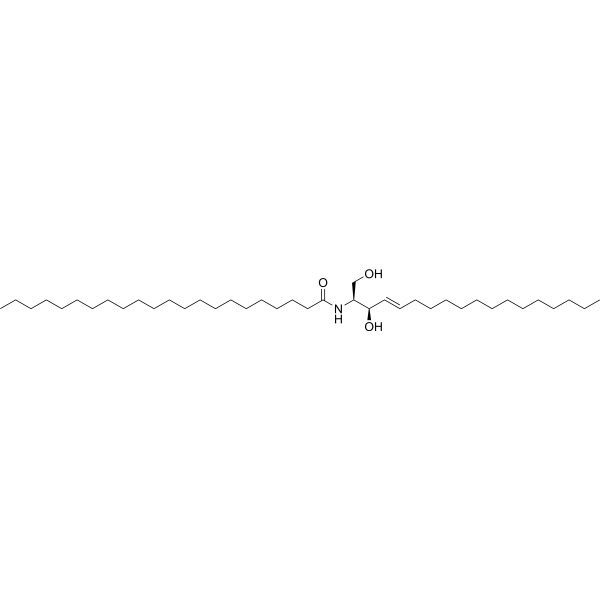
C22-Ceramide (d18:1/22:0)Ceramide -

HY-156206
C24 Dihydro ceramide (d18:0/24:0)Ester Product -

HY-141580
C18 DihydroceramideEster Product -
HY-141629
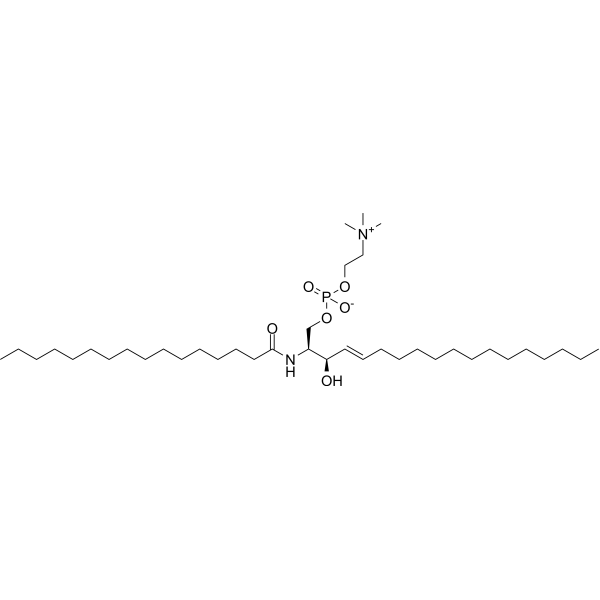
N-Palmitoyl-D-sphingomyelinComponent Of Liposomes -

HY-W923646
C24:1-Dihydro-ceramideEster Product -
HY-136976
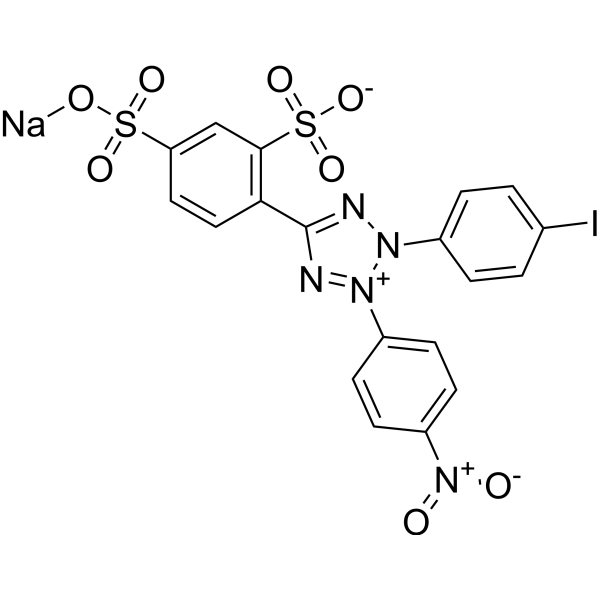
WST-1Cell Proliferation Assay Reagent -

HY-DY1100
WST-1 (solution)Cell Proliferation Assay Reagent


Biological Activity
제품 설명
IC50 & Target
[4]|
TRPV1 |
In Vitro
C16-Dihydroceramide (0.1-0.5 µM; 16 h) induces apoptosis in HCT-116 cells, but its potency is lower than that of C16-ceramide at lower concentrations[5].
C16-Dihydroceramide (20-40 nmol; 30 min) is formed by Sarcoma 180 tumor microsomal dihydroceramide synthase, with a sphinganine Km of 3.35 µM and a catalytic efficiency approximately 3-fold that of healthy mouse liver microsomes[6].
C16-Dihydroceramide (100 mg protein) is formed by dihydroceramide synthase from Sarcoma 180 tumor blocks and appears as a 1,300-kDa species by gel filtration, whereas the healthy mouse liver enzyme is 333 kDa[6].
C16-Dihydroceramide (2-24 h) accumulation levels in SCC19 cells increase at both the 2 h and 24 h time points after exposure to Foscan-PDT combined with 2.5 μM HPR[7].
C16-Dihydroceramide (15 min) reduces capsaicin-evoked CGRP release from mouse DRG sensory neurons in a concentration-dependent manner[4].
C16-Dihydroceramide (15-30 µM; 5-24 h) does not activate any of 314 GPCRs in β-arrestin, cAMP, or RhoA reporter gene assays[4].
C16-Dihydroceramide (0.25-5 µM; preincubation for 2 min) does not sensitize TRPA1 in mouse DRG sensory neurons and does not alter P2X3-mediated calcium transients in mouse DRG sensory neurons[4].
C16-Dihydroceramide (1-10 µM) alone does not activate calcium channels in mouse DRG sensory neurons[4].
MedChemExpress (MCE) has not independently confirmed the accuracy of these methods. They are for reference only.
-
Cell Line:HCT-116 colorectal carcinoma cells
-
Concentration:0.1, 0.2, 0.5 µM
-
Incubation Time:16 h
-
Result:Caused apoptosis in HCT-116 cells.
C16-ceramide showed higher potency at lower concentrations.
-
Cell Line:CCD-112 non-cancer colon fibroblasts
-
Concentration:0.1, 0.2, 0.5 µM
-
Incubation Time:16 h
-
Result:Did not produce the pronounced viability loss observed in HCT-116 cells under the same add-back conditions.
In Vivo
MedChemExpress (MCE) has not independently confirmed the accuracy of these methods. They are for reference only.
-
Animal Model:C57BL/NRj (wild-type; male; 8-10 weeks)[5]
-
Dosage:50 μM
-
Administration:Intraplantar; single administration; co-injected with Capsaicin 400 μM
-
Result:After capsaicin exposure, vehicle-treated ipsilateral paws showed reduced paw withdrawal latency from 0.5 to 4 h.
Ipsilateral paws did not develop this thermal hypersensitivity and remained near baseline/contralateral paw withdrawal latencies at 0.5, 1, 2, 3, and 4 h.


Chemical Information
-
CAS No. 5966-29-0
-
Appearance Solid
-
분자량 539.92
-
화학식 C34H69NO3
-
Color White to off-white
-
SMILES
CCCCCCCCCCCCCCCC(N[C@@H](CO)[C@H](O)CCCCCCCCCCCCCCC)=O
-
Synonyms
N-Palmitoyl sphinganine; (2S,3R)-2-N-Palmitoyloctadecasphinganine
-
선적
Room temperature in continental US; may vary elsewhere.
-
보관
Powder -20°C 3 years In solvent -80°C 6 months -20°C 1 month


용액&용해도
In Vitro:
Ethanol : 2 mg/mL (3.70 mM; ultrasonic and warming and heat to 60°C)
Please refer to the solubility information to select the appropriate solvent. Once prepared, please aliquot and store the solution to prevent product inactivation from repeated freeze-thaw cycles.
Storage method and period of stock solution: -80°C, 6 months; -20°C, 1 month. When stored at -80°C, please use it within 6 months. When stored at -20°C, please use it within 1 month.
Concentration (start) × Volume (start) = Concentration (final) × Volume (final)
In Vivo Dissolution Calculator
Please enter the basic information of animal experiments:
-
-
-
-
Recommended: Prepare an additional quantity of animals to account for potential losses during experiments.
Working solution concentration: 0.22 mg/mL


순도&문서
-
Data Sheet (278 KB)
-
SDS (396 KB)
- English - EN (396 KB)
- Français - FR (396 KB)
- Deutsch - DE (396 KB)
- Norwegian - NO (396 KB)
- Español - ES (396 KB)
- Swedish - SV (396 KB)
- Italian - IT (396 KB)
- Korean - KR (396 KB)
- Portuguese - PT (396 KB)
-
Handling Instructions (2659 KB)
References


Complete Stock Solution Preparation Table
Please refer to the solubility information to select the appropriate solvent. Once prepared, please aliquot and store the solution to prevent product inactivation from repeated freeze-thaw cycles.
Storage method and period of stock solution: -80°C, 6 months; -20°C, 1 month. When stored at -80°C, please use it within 6 months. When stored at -20°C, please use it within 1 month.
| Optional Solvent | Concentration Solvent Mass | 1 mg | 5 mg | 10 mg | 25 mg |
|---|---|---|---|---|---|
| Ethanol | 1 mM | 1.8521 mL | 9.2606 mL | 18.5213 mL | 46.3032 mL |


C16-Dihydroceramide Related Classifications
HY-W590669 Related Classifications
 Powered by Bioz
Keywords
- C16-Dihydroceramide
- 5966-29-0
- N-Palmitoyl sphinganine
- (2S,3R)-2-N-Palmitoyloctadecasphinganine
- TRP Channel
- Apoptosis
- CGRP Receptor
- Transient receptor potential channels
- Calcitonin gene-related peptide receptor
- CGRP release
- TRPV1
- apoptosis
- calcium transients
- ceramide channel formation
- ceramide precursor
- membrane rigidification
- primary sensory neurons
- sphingolipid biosynthesis
- thermal hypersensitivity
- Inhibitor
- inhibitor
- inhibit