



CAY10603
Based on 7 publication(s) in Google Scholar
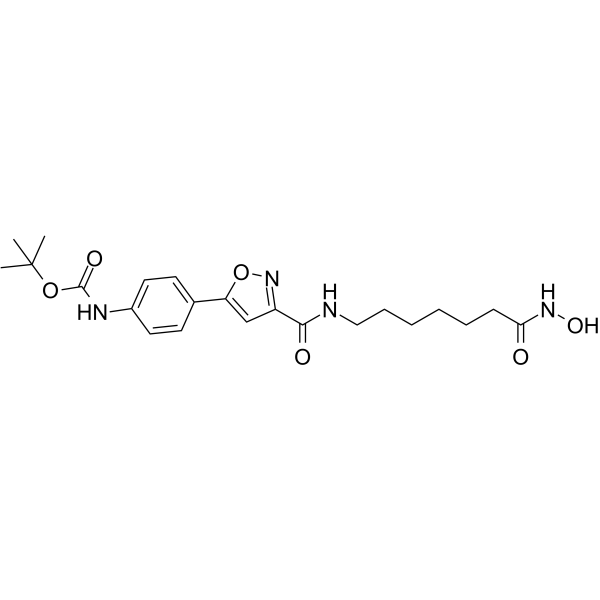
CAY10603 (BML-281) is a potent and selective HDAC6 inhibitor, with an IC50 of 2 pM; CAY10603 (BML-281) also inhibits HDAC1, HDAC2, HDAC3, HDAC8, HDAC10, with IC50s of 271, 252, 0.42, 6851, 90.7 nM.
Nos produits utilisent uniquement pour la recherche. Nous ne vendons pas aux patients.
- Pureté : 99.76%
- CAS No.: 1045792-66-2
- Formule: C22H30N4O6
- Masse moléculaire:446.50
-
Stockage:Powder -20°C, 3 years ; In solvent -80°C, 6 months , -20°C, 1 month

To place orders, for customer services and technical support, please contact: MedChemExpress USA
Tel: 609-228-6898 E-mail: [email protected] [email protected]


-
 Activité biologique
-
Chemical Information
-
Solvant et solubilité
- Protocole
- Pureté et documentation
- Références
-
 Help & FAQs


-
HY-15224
PCI-34051Apoptosis Inducer -
HY-13428
TubacinHDAC6 Inhibitor -
HY-13909
RGFP966HDAC3 Inhibitor -
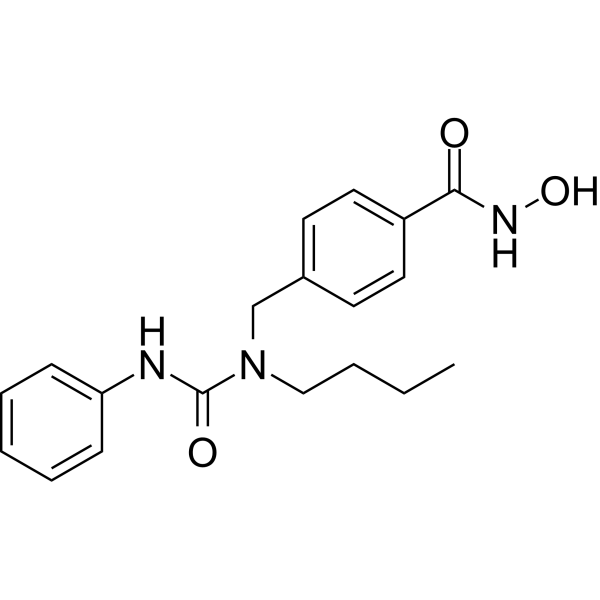
HY-16699
Nexturastat AHDAC6 Inhibitor -
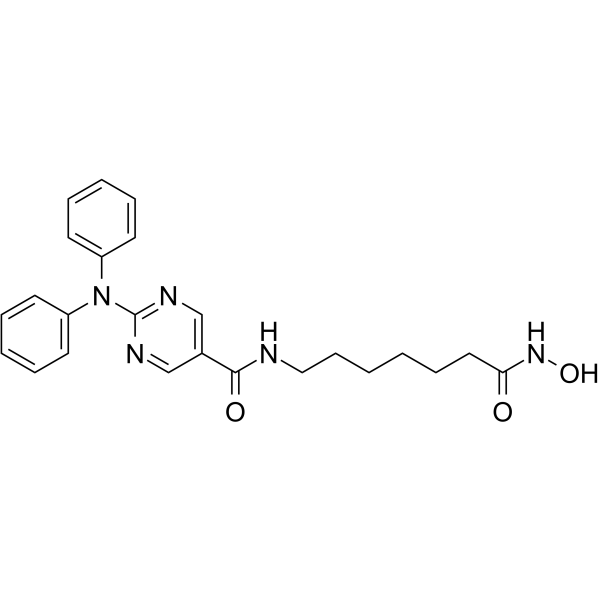
HY-16026
RicolinostatHDAC6 Inhibitor -
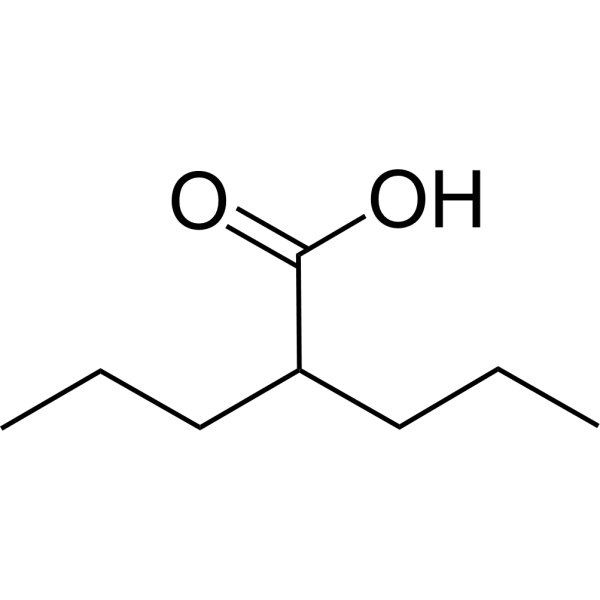
HY-10585
Valproic acidHDAC Inhibitor -
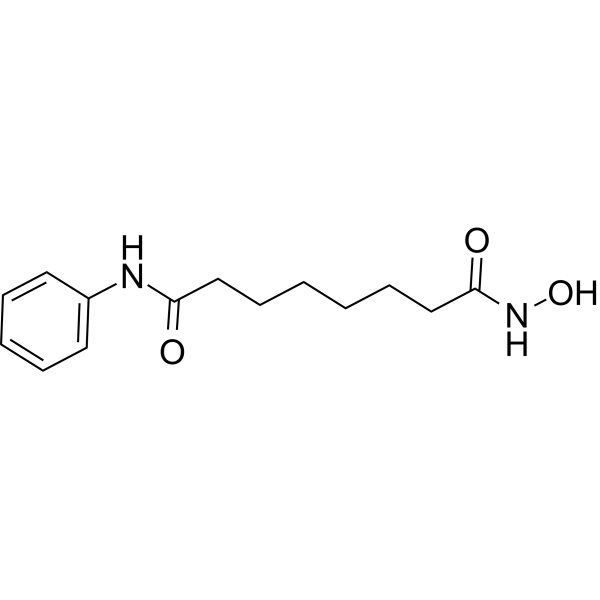
HY-10221
VorinostatHDAC Inhibitor -
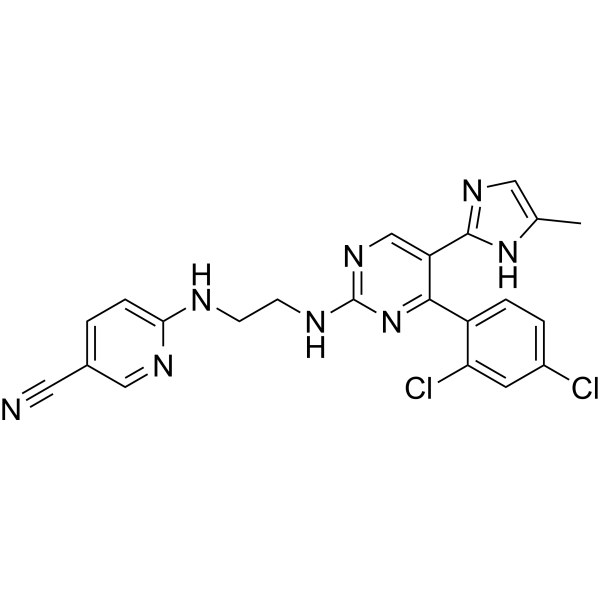
HY-10182
LaduviglusibGSK-3 Inhibitor -
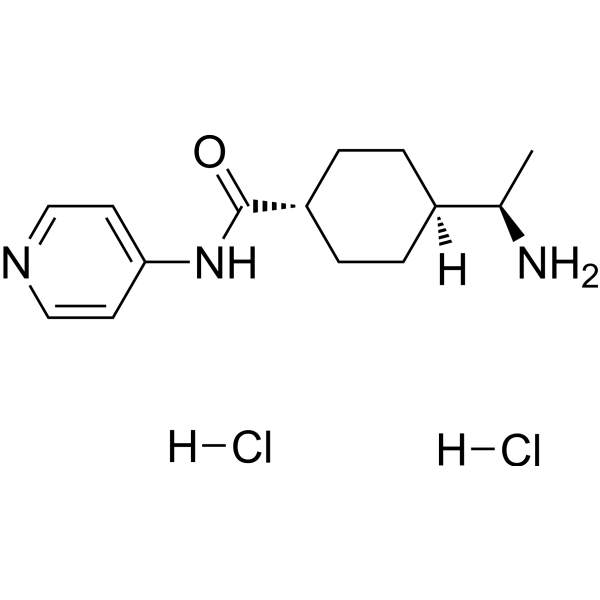
HY-10583
Y-27632 dihydrochlorideROCK Inhibitor -
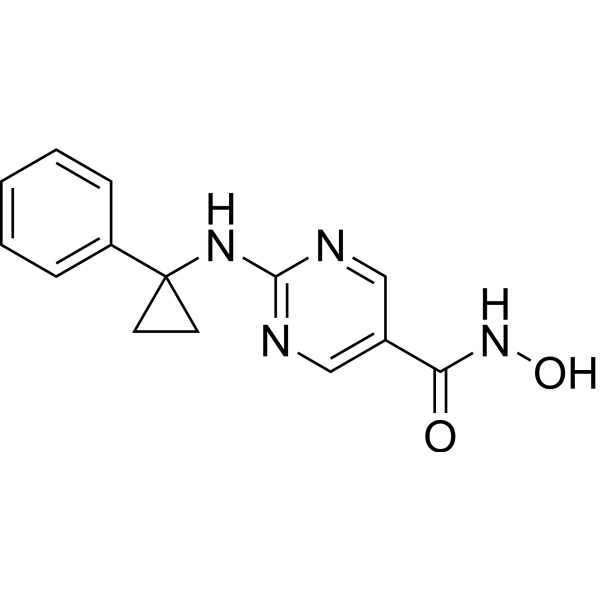
HY-19327
ACY-738HDAC6 Inhibitor -
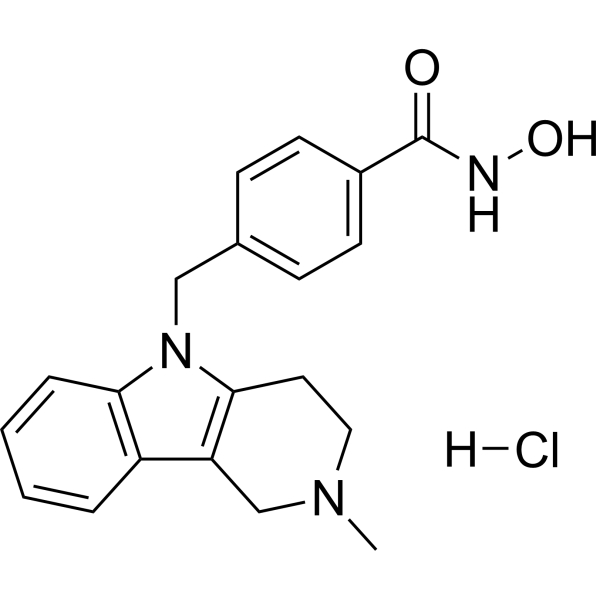
HY-13271
Tubastatin A HydrochlorideHDAC6 Inhibitor -
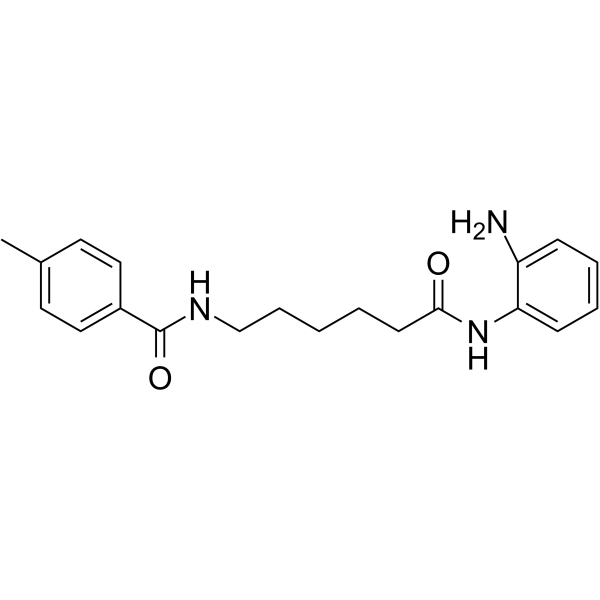
HY-16425
RG2833HDAC1/3 Inhibitor
Publications Citing Use of MedChemExpress (MCE) CAY10603
More- J Transl Med. 2024 Jan 16;22(1):66. [Abstract]
- Clin Transl Med. 2021 Sep;11(9):e545. [Abstract]
- Cancer Cell Int. 2021 Jun 5;21(1):291. [Abstract]
- Commun Biol. 2024 Oct 4;7(1):1257. [Abstract]
- Int J Parasitol Drugs Drug Resist. 2026 May 17;31:100649.
- Arch Biochem Biophys. 2024 Jun:756:110009. [Abstract]
- Patent. US20180263995A1.


Activité biologique
Description
IC50 & Target
[1]|
HDAC6 0.002 nM (IC50) |
HDAC3 0.42 nM (IC50) |
HDAC10 90.7 nM (IC50) |
HDAC2 252 nM (IC50) |
HDAC1 271 nM (IC50) |
HDAC8 6851 nM (IC50) |
Cellular Effect
|
Cell Line

|
Type | Value | Description | References |
|---|---|---|---|---|
| A549 | IC50 |
>10 μM
Compound: CAY10603
|
Antiproliferative activity against human A549 cells assessed as inhibition of cell proliferation measured after 48 hrs by MTT assay
Antiproliferative activity against human A549 cells assessed as inhibition of cell proliferation measured after 48 hrs by MTT assay
|
[PMID: 35043615] |
| B16-F10 | IC50 |
9.41 μM
Compound: CAY10603
|
Antiproliferative activity against mouse B16-F10 cells assessed as inhibition of cell proliferation measured after 48 hrs by MTT assay
Antiproliferative activity against mouse B16-F10 cells assessed as inhibition of cell proliferation measured after 48 hrs by MTT assay
|
[PMID: 35043615] |
| BXPC-3 | IC50 |
1 μM
Compound: 7
|
Antiproliferative activity against human BxPC3 cells after 72 hrs by MTT assay
Antiproliferative activity against human BxPC3 cells after 72 hrs by MTT assay
|
[PMID: 18642892] |
| HCT-116 | IC50 |
1.47 μM
Compound: CAY10603
|
Antiproliferative activity against human HCT-116 cells assessed as inhibition of cell proliferation measured after 48 hrs by MTT assay
Antiproliferative activity against human HCT-116 cells assessed as inhibition of cell proliferation measured after 48 hrs by MTT assay
|
[PMID: 35043615] |
| HL-60 | IC50 |
594 nM
Compound: CAY10603
|
Antiproliferative activity against human HL-60 cells assessed as reduction in cell viability for 72 hrs by Celltitre-Glo luminescent assay
Antiproliferative activity against human HL-60 cells assessed as reduction in cell viability for 72 hrs by Celltitre-Glo luminescent assay
|
[PMID: 33360560] |
| HMEC | IC50 |
<1 μM
Compound: 7
|
Cytotoxicity against HMEC after 72 hrs by MTT assay
Cytotoxicity against HMEC after 72 hrs by MTT assay
|
[PMID: 18642892] |
| HuP-T3 | IC50 |
0.3 μM
Compound: 7
|
Antiproliferative activity against human HupT3 cells after 72 hrs by MTT assay
Antiproliferative activity against human HupT3 cells after 72 hrs by MTT assay
|
[PMID: 18642892] |
| Jurkat | IC50 |
0.61 μM
Compound: CAY10603
|
Cytotoxicity against human Jurkat cells assessed as reduction in cell viability incubated for 72 hrs by CCK-8 assay
Cytotoxicity against human Jurkat cells assessed as reduction in cell viability incubated for 72 hrs by CCK-8 assay
|
[PMID: 35043615] |
| MCF7 | IC50 |
2.82 μM
Compound: CAY10603
|
Antiproliferative activity against human MCF7 cells assessed as inhibition of cell proliferation measured after 48 hrs by MTT assay
Antiproliferative activity against human MCF7 cells assessed as inhibition of cell proliferation measured after 48 hrs by MTT assay
|
[PMID: 35043615] |
| MIA PaCa-2 | IC50 |
0.1 μM
Compound: 7
|
Antiproliferative activity against human MiaPaca2 cells after 72 hrs by MTT assay
Antiproliferative activity against human MiaPaca2 cells after 72 hrs by MTT assay
|
[PMID: 18642892] |
| Sf9 | IC50 |
13.8 nM
Compound: 1b
|
Inhibition of recombinant N-terminal GST-tagged human HDAC6 (1 to 1215 residues) expressed in baculovirus infected sf9 insect cells using p53 (379 to 382 residues) derived fluorogenic peptide RHKKAc as substrate preincubated for 5 to 10 mins followed by s
Inhibition of recombinant N-terminal GST-tagged human HDAC6 (1 to 1215 residues) expressed in baculovirus infected sf9 insect cells using p53 (379 to 382 residues) derived fluorogenic peptide RHKKAc as substrate preincubated for 5 to 10 mins followed by s
|
[PMID: 31414801] |
| Sf9 | IC50 |
3.2 nM
Compound: 1b
|
Inhibition of recombinant full length C-terminal His/FLAG tagged human HDAC1 (1 to 482 residues) expressed in baculovirus infected sf9 insect cells using p53 (379 to 382 residues) derived fluorogenic peptide RHKKAc as substrate preincubated for 5 to 10 mi
Inhibition of recombinant full length C-terminal His/FLAG tagged human HDAC1 (1 to 482 residues) expressed in baculovirus infected sf9 insect cells using p53 (379 to 382 residues) derived fluorogenic peptide RHKKAc as substrate preincubated for 5 to 10 mi
|
[PMID: 31414801] |
| SU.86.86 | IC50 |
0.6 μM
Compound: 7
|
Antiproliferative activity against human SU.86.86 cells after 72 hrs by MTT assay
Antiproliferative activity against human SU.86.86 cells after 72 hrs by MTT assay
|
[PMID: 18642892] |
In Vitro
CAY10603 (Compound 7) shows potent inhibitory activities against pancreatic cancer cell lines, with IC50s of 1, 0.3, 0.1, 0.1, 0.6, <1, 0.5 μM for BxPC-3, HupT3, Mia Paca-2, Panc 04.03, SU.86.86, HMEC, HPDE6c7, respectively. CAY10603 (100 nM, 200-300 nM) is active against both the Mia Paca-2 and Panc04.03 cell lines[1]. CAY10603 inhibits HDAC6 deacetylase activity, and supresses the proliferation of lung adenocarcinoma cells. CAY10603 also induces apoptosis of lung adenocarcinoma cells. Furthermore, CAY10603 synergizes with gefitinib to induce apoptosis in lung adenocarcinoma cell lines, partly through the destabilization of EGFR and inactivation of the EGFR pathway[2].
MedChemExpress (MCE) has not independently confirmed the accuracy of these methods. They are for reference only. Further protocols information, click here.


Chemical Information
-
CAS No. 1045792-66-2
-
Appearance Solid
-
Masse moléculaire 446.50
-
Formule C22H30N4O6
-
Color White to light yellow
-
SMILES
O=C(OC(C)(C)C)NC1=CC=C(C2=CC(C(NCCCCCCC(NO)=O)=O)=NO2)C=C1
-
Synonyms
BML-281
-
Livraison
Room temperature in continental US; may vary elsewhere.
-
Stockage
Powder -20°C 3 years In solvent -80°C 6 months -20°C 1 month


Publications (7)
-
Journal Impact Factor
-
Most Recent
-
J Transl Med
Construction of an ER stress-related prognostic signature for predicting prognosis and screening the effective anti-tumor drug in osteosarcoma. [Abstract]2024 Jan 16;22(1):66. PMID: 38229155 -
Clin Transl Med
A methyltransferase-like 14/miR-99a-5p/tribble 2 positive feedback circuit promotes cancer stem cell persistence and radioresistance via histone deacetylase 2-mediated epigenetic modulation in esophageal squamous cell carcinoma. [Abstract]2021 Sep;11(9):e545. PMID: 34586732 -
Cancer Cell Int
Construction of a prognostic model with histone modification-related genes and identification of potential drugs in pancreatic cancer. [Abstract]2021 Jun 5;21(1):291. PMID: 34090418 -
Commun Biol
Selective inhibition of HDAC class IIA as therapeutic intervention for KMT2A-rearranged acute lymphoblastic leukemia. [Abstract]2024 Oct 4;7(1):1257. PMID: 39362994 -
-
Arch Biochem Biophys
Inhibition of HDAC6 with CAY10603 alleviates acute and chronic kidney injury by suppressing the ATF6 branch of UPR. [Abstract]2024 Jun:756:110009. PMID: 38642631 -


Solvant et solubilité
In Vitro:
DMSO : ≥ 50 mg/mL (111.98 mM; Hygroscopic DMSO has a significant impact on the solubility of product, please use newly opened DMSO)
* "≥" means soluble, but saturation unknown.
Please refer to the solubility information to select the appropriate solvent. Once prepared, please aliquot and store the solution to prevent product inactivation from repeated freeze-thaw cycles.
Storage method and period of stock solution: -80°C, 6 months; -20°C, 1 month. When stored at -80°C, please use it within 6 months. When stored at -20°C, please use it within 1 month.
Please refer to the solubility information to select the appropriate solvent. Once prepared, please aliquot and store the solution to prevent product inactivation from repeated freeze-thaw cycles.
Storage method and period of stock solution: -80°C, 6 months; -20°C, 1 month. When stored at -80°C, please use it within 6 months. When stored at -20°C, please use it within 1 month.
Concentration (start) × Volume (start) = Concentration (final) × Volume (final)
In Vivo:
Select the appropriate dissolution method based on your experimental animal and administration route.
- For the following dissolution methods, please ensure to first prepare a clear stock solution using an In Vitro approach and then sequentially add co-solvents:
- To ensure reliable experimental results, the clarified stock solution can be appropriately stored based on storage conditions. As for the working solution for In Vivo experiments, it is recommended to prepare freshly and use it on the same day.
- The percentages shown for the solvents indicate their volumetric ratio in the final prepared solution. If precipitation or phase separation occurs during preparation, heat and/or sonication can be used to aid dissolution.
Add each solvent one by one: 10% DMSO 40% PEG300 5% Tween-80 45% Saline
Solubility: ≥ 2.5 mg/mL (5.60 mM); Clear solution
This protocol yields a clear solution of ≥ 2.5 mg/mL (saturation unknown).
Taking 1 mL working solution as an example, add 100 μL DMSO stock solution (25.0 mg/mL) to 400 μL PEG300, and mix evenly; then add 50 μL Tween-80 and mix evenly; then add 450 μL Saline to adjust the volume to 1 mL.
Preparation of Saline: Dissolve 0.9 g sodium chloride in ddH₂O and dilute to 100 mL to obtain a clear Saline solution.
Add each solvent one by one: 10% DMSO 90% (20% SBE-β-CD in Saline)
Solubility: ≥ 2.5 mg/mL (5.60 mM); Clear solution
This protocol yields a clear solution of ≥ 2.5 mg/mL (saturation unknown).
Taking 1 mL working solution as an example, add 100 μL DMSO stock solution (25.0 mg/mL) to 900 μL 20% SBE-β-CD in Saline, and mix evenly.
Preparation of 20% SBE-β-CD in Saline (4°C, storage for one week): 2 g SBE-β-CD powder is dissolved in 10 mL Saline, completely dissolve until clear.
For the following dissolution methods, please prepare the working solution directly:
It is recommended to prepare fresh solutions and use them promptly within a short period of time.
The percentages shown for the solvents indicate their volumetric ratio in the final prepared solution. If precipitation or phase separation occurs during preparation, heat and/or sonication can be used to aid dissolution.
Add each solvent one by one: 50% PEG300 50% Saline
Solubility: 5 mg/mL (11.20 mM); Suspended solution; Need ultrasonic and warming and heat to 42°C
In Vivo Dissolution Calculator
Please enter the basic information of animal experiments:
-
-
-
-
Recommended: Prepare an additional quantity of animals to account for potential losses during experiments.
Please enter your animal formula composition:
-
%DMSO +
Recommended: Keep the proportion of DMSO in working solution below 2% if your animal is weak.
-
%+
-
+%Tween-80 + +
-
%Saline +
The co-solvents required include: DMSO, . All of co-solvents are available by MedChemExpress (MCE). , Tween 80. All of co-solvents are available by MedChemExpress (MCE).
Working solution concentration: 0.22 mg/mL
Method for preparing stock solution: mg drug dissolved in μL DMSO. Stock solution concentration: mg/mL.
1. Take μL DMSO stock solution;
2. Add μL .
μL , mix evenly;
3. Then add μL Tween 80, mix evenly;
4. Then add μL
Please ensure that the stock solution in the first step is dissolved to a clear state, and add co-solvents in sequence. You can use ultrasonic heating (ultrasonic cleaner, recommended frequency 20-40 kHz), vortexing, etc. to assist dissolution.

Protocole
-
Cell Cytotoxicity Assay
Cytotoxicity assays are usually based on the assessment of cell membrane damage, which can also be indirectly detected by measuring cell viability. Detection methods include MTT assay, CKK-8 assay, LDH assay and ATP assay, etc.


Pureté et documentation
-
Fiche technique (276 KB)
-
SDS (396 KB)
- English - EN (396 KB)
- Français - FR (396 KB)
- Deutsch - DE (396 KB)
- Norwegian - NO (396 KB)
- Español - ES (396 KB)
- Swedish - SV (396 KB)
- Italian - IT (396 KB)
- Korean - KR (396 KB)
- Portuguese - PT (396 KB)
-
Instruction de manipulation (2659 KB)
Références
[1]. Kozikowski AP, et al. Use of the nitrile oxide cycloaddition (NOC) reaction for molecular probe generation: a new class of enzyme selective histone deacetylase inhibitors (HDACIs) showing picomolar activity at HDAC6. J Med Chem. 2008 Aug 14;51(15):4370-3. [Content Brief]
[2]. Wang Z, et al. HDAC6 promotes cell proliferation and confers resistance to gefitinib in lung adenocarcinoma. Oncol Rep. 2016 Jul;36(1):589-97. [Content Brief]


Complete Stock Solution Preparation Table
Please refer to the solubility information to select the appropriate solvent. Once prepared, please aliquot and store the solution to prevent product inactivation from repeated freeze-thaw cycles.
Storage method and period of stock solution: -80°C, 6 months; -20°C, 1 month. When stored at -80°C, please use it within 6 months. When stored at -20°C, please use it within 1 month.
| Optional Solvent | Concentration Solvent Mass | 1 mg | 5 mg | 10 mg | 25 mg |
|---|---|---|---|---|---|
| DMSO | 1 mM | 2.2396 mL | 11.1982 mL | 22.3964 mL | 55.9910 mL |
| 5 mM | 0.4479 mL | 2.2396 mL | 4.4793 mL | 11.1982 mL | |
| 10 mM | 0.2240 mL | 1.1198 mL | 2.2396 mL | 5.5991 mL | |
| 15 mM | 0.1493 mL | 0.7465 mL | 1.4931 mL | 3.7327 mL | |
| 20 mM | 0.1120 mL | 0.5599 mL | 1.1198 mL | 2.7996 mL | |
| 25 mM | 0.0896 mL | 0.4479 mL | 0.8959 mL | 2.2396 mL | |
| 30 mM | 0.0747 mL | 0.3733 mL | 0.7465 mL | 1.8664 mL | |
| 40 mM | 0.0560 mL | 0.2800 mL | 0.5599 mL | 1.3998 mL | |
| 50 mM | 0.0448 mL | 0.2240 mL | 0.4479 mL | 1.1198 mL | |
| 60 mM | 0.0373 mL | 0.1866 mL | 0.3733 mL | 0.9332 mL | |
| 80 mM | 0.0280 mL | 0.1400 mL | 0.2800 mL | 0.6999 mL | |
| 100 mM | 0.0224 mL | 0.1120 mL | 0.2240 mL | 0.5599 mL |


CAY10603 Related Classifications
HY-18613 Related Classifications
 Powered by Bioz