



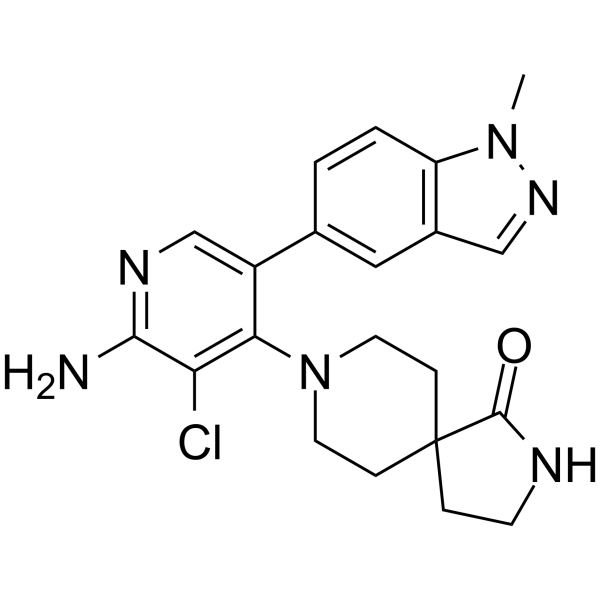
CCT-251921
Based on 7 publication(s) in Google Scholar
CCT-251921 is a potent, selective, and orally bioavailable CDK8 inhibitor with an IC50 of 2.3 nM.
Nos produits utilisent uniquement pour la recherche. Nous ne vendons pas aux patients.
- Pureté : 99.12%
- CAS No.: 1607837-31-9
- Formule: C21H23ClN6O
- Masse moléculaire:410.90
-
Stockage:Powder -20°C, 3 years , 4°C, 2 years ; In solvent -80°C, 2 years , -20°C, 1 year

To place orders, for customer services and technical support, please contact: MedChemExpress USA
Tel: 609-228-6898 E-mail: [email protected] [email protected]


-
 Activité biologique
-
Chemical Information
-
Solvant et solubilité
- Pureté et documentation
- Références
-
 Help & FAQs


-
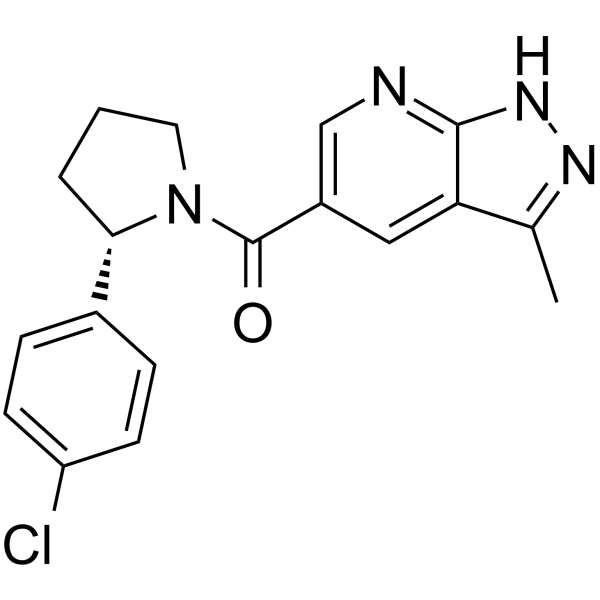
HY-101611
MSC2530818CDK8 Inhibitor -
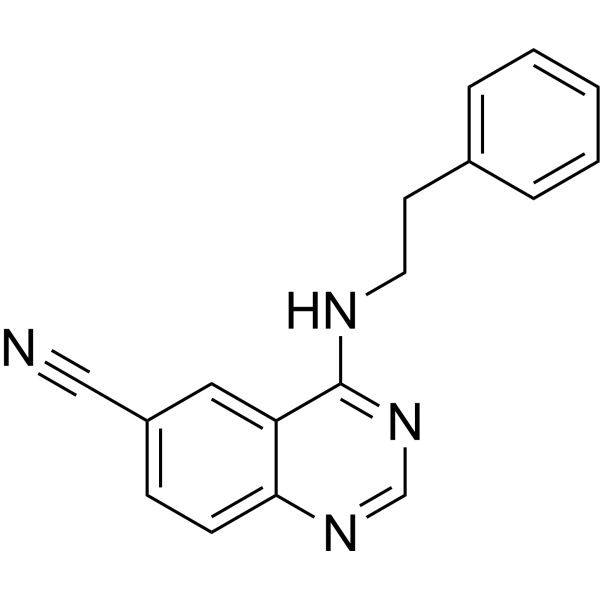
HY-15681
Senexin ACDK8/19 Inhibitor -
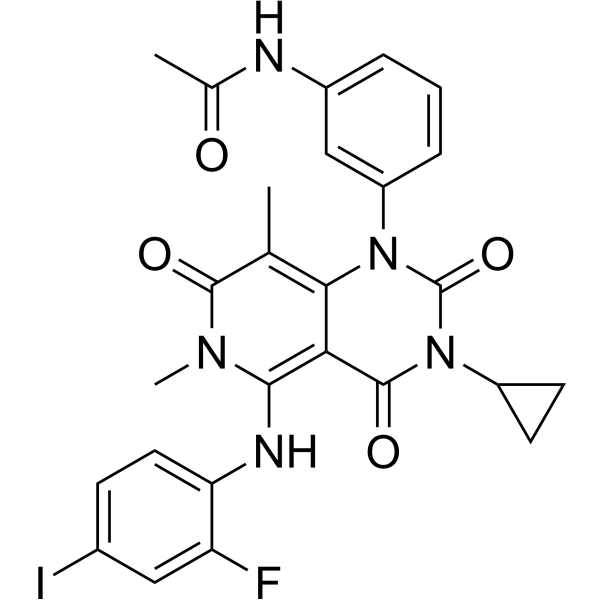
HY-10999
TrametinibMEK Inhibitor -
HY-120350
BI-1347CDK8 Inhibitor -
HY-101800
Senexin BCDK8/19 Inhibitor -
HY-17420
CyclophosphamideAlkylating Agent -
HY-10431
SB-431542TGF-β Receptor Kinase Inhibitor -
HY-126675A
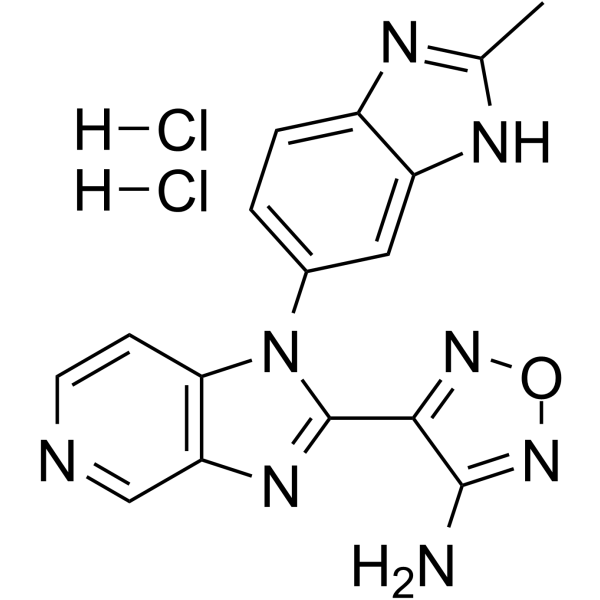
AS2863619CDK8/19 Inhibitor -
HY-K0011
Protease Inhibitor Cocktail, mini-Tablet (EDTA-Free) -
HY-139875
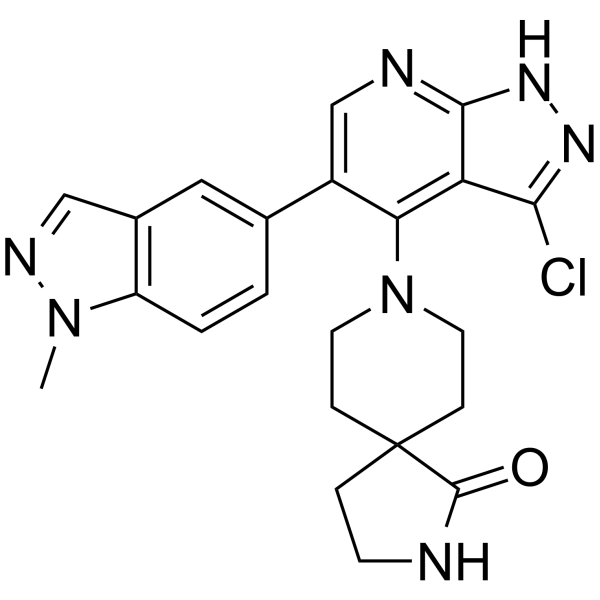
JH-XVI-178CDK Inhibitor -
HY-145121
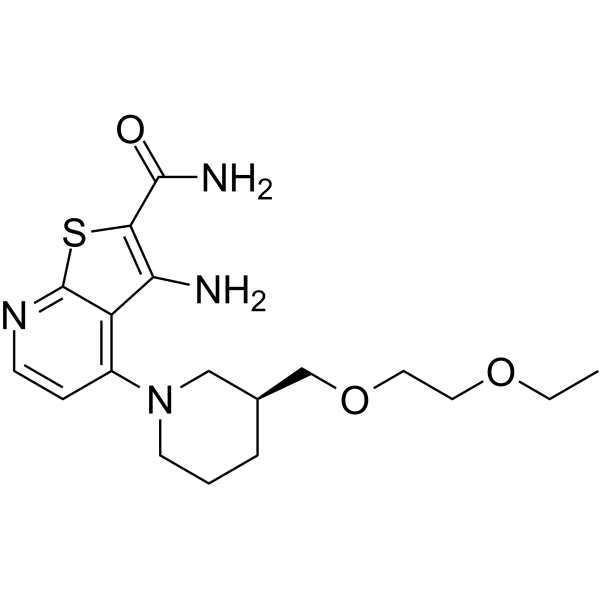
DS96432529CDK8 Inhibitor
Publications Citing Use of MedChemExpress (MCE) CCT-251921
More

Activité biologique
Description
IC50 & Target
[1]|
CDK8 2.3 nM (IC50) |
CDK19 2.6 nM (IC50) |
Cellular Effect
|
Cell Line

|
Type | Value | Description | References |
|---|---|---|---|---|
| COLO 205 | IC50 |
15 nM
Compound: 109
|
Inhibition of WNT pathway activation in human COLO205 cells expressing APC mutant
Inhibition of WNT pathway activation in human COLO205 cells expressing APC mutant
|
[PMID: 26796641] |
| LS174T | IC50 |
33 nM
Compound: 109
|
Inhibition of WNT pathway activation in human LS174T cells expressing beta-catenin mutant
Inhibition of WNT pathway activation in human LS174T cells expressing beta-catenin mutant
|
[PMID: 26796641] |
| MV4-11 | GI50 |
0.05 μM
Compound: CCT251921
|
Antiproliferative activity against human MV4-11 cells assessed as growth inhibition after 72 hrs by resazurin assay
Antiproliferative activity against human MV4-11 cells assessed as growth inhibition after 72 hrs by resazurin assay
|
[PMID: 33823391] |
| PA-1 | IC50 |
64 nM
Compound: 109
|
Inhibition of WNT ligand dependent WNT pathway activation in human PA1 cells
Inhibition of WNT ligand dependent WNT pathway activation in human PA1 cells
|
[PMID: 26796641] |
| SW480 | IC50 |
22 nM
Compound: 109
|
Inhibition of WNT pathway activation in human SW480 cells expressing APC mutant
Inhibition of WNT pathway activation in human SW480 cells expressing APC mutant
|
[PMID: 26796641] |
In Vitro
CCT-251921 has acceptable aqueous solubility and demonstrates minimal activity when tested in a panel of 55 receptors, ion channels, and enzymes at 1 μM and in a panel of 279 kinases; weak inhibition of CYPs is observed. CCT-251921 demonstrates potent inhibition of reporter-based readouts measuring basal WNT pathway activity in human cancer cell lines that have constitutively activated WNT pathway signaling: LS174T (β-catenin mutant), SW480 and Colo205 (APC mutant) or PA-1 human teratocarcinoma cells that are WNT ligand dependent[1].
MedChemExpress (MCE) has not independently confirmed the accuracy of these methods. They are for reference only.
In Vivo
MedChemExpress (MCE) has not independently confirmed the accuracy of these methods. They are for reference only.


Chemical Information
-
CAS No. 1607837-31-9
-
Appearance Solid
-
Masse moléculaire 410.90
-
Formule C21H23ClN6O
-
Color White to off-white
-
SMILES
O=C1NCCC12CCN(C3=C(Cl)C(N)=NC=C3C4=CC5=C(N(C)N=C5)C=C4)CC2
-
Livraison
Room temperature in continental US; may vary elsewhere.
-
Stockage
Powder -20°C 3 years 4°C 2 years In solvent -80°C 2 years -20°C 1 year


Publications (7)
-
Journal Impact Factor
-
Most Recent
-
Nucleic Acids Res
2021 Jul 21;49(13):7476-7491. PMID: 34197614 -
-
Pharmaceuticals (Basel)
New Assay Systems to Characterize the Broad-Spectrum Antiherpesviral and Non-Herpesviral Activity of Cyclin-Dependent Kinase (CDK) 8 Inhibitors. [Abstract]2025 Oct 16;18(10):1560. PMID: 41155676 -
-
-
-


Solvant et solubilité
In Vitro:
DMSO : 25 mg/mL (60.84 mM; ultrasonic and warming and heat to 60°C; Hygroscopic DMSO has a significant impact on the solubility of product, please use newly opened DMSO)
Please refer to the solubility information to select the appropriate solvent. Once prepared, please aliquot and store the solution to prevent product inactivation from repeated freeze-thaw cycles.
Storage method and period of stock solution: -80°C, 2 years; -20°C, 1 year. When stored at -80°C, please use it within 2 years. When stored at -20°C, please use it within 1 year.
Please refer to the solubility information to select the appropriate solvent. Once prepared, please aliquot and store the solution to prevent product inactivation from repeated freeze-thaw cycles.
Storage method and period of stock solution: -80°C, 2 years; -20°C, 1 year. When stored at -80°C, please use it within 2 years. When stored at -20°C, please use it within 1 year.
Concentration (start) × Volume (start) = Concentration (final) × Volume (final)
In Vivo:
Select the appropriate dissolution method based on your experimental animal and administration route.
- For the following dissolution methods, please ensure to first prepare a clear stock solution using an In Vitro approach and then sequentially add co-solvents:
- To ensure reliable experimental results, the clarified stock solution can be appropriately stored based on storage conditions. As for the working solution for In Vivo experiments, it is recommended to prepare freshly and use it on the same day.
- The percentages shown for the solvents indicate their volumetric ratio in the final prepared solution. If precipitation or phase separation occurs during preparation, heat and/or sonication can be used to aid dissolution.
Add each solvent one by one: 10% DMSO 40% PEG300 5% Tween-80 45% Saline
Solubility: ≥ 2.5 mg/mL (6.08 mM); Clear solution
This protocol yields a clear solution of ≥ 2.5 mg/mL (saturation unknown).
Taking 1 mL working solution as an example, add 100 μL DMSO stock solution (25.0 mg/mL) to 400 μL PEG300, and mix evenly; then add 50 μL Tween-80 and mix evenly; then add 450 μL Saline to adjust the volume to 1 mL.
Preparation of Saline: Dissolve 0.9 g sodium chloride in ddH₂O and dilute to 100 mL to obtain a clear Saline solution.
Add each solvent one by one: 10% DMSO 90% (20% SBE-β-CD in Saline)
Solubility: ≥ 2.5 mg/mL (6.08 mM); Clear solution
This protocol yields a clear solution of ≥ 2.5 mg/mL (saturation unknown).
Taking 1 mL working solution as an example, add 100 μL DMSO stock solution (25.0 mg/mL) to 900 μL 20% SBE-β-CD in Saline, and mix evenly.
Preparation of 20% SBE-β-CD in Saline (4°C, storage for one week): 2 g SBE-β-CD powder is dissolved in 10 mL Saline, completely dissolve until clear.
In Vivo Dissolution Calculator
Please enter the basic information of animal experiments:
-
-
-
-
Recommended: Prepare an additional quantity of animals to account for potential losses during experiments.
Please enter your animal formula composition:
-
%DMSO +
Recommended: Keep the proportion of DMSO in working solution below 2% if your animal is weak.
-
%+
-
+%Tween-80 + +
-
%Saline +
The co-solvents required include: DMSO, . All of co-solvents are available by MedChemExpress (MCE). , Tween 80. All of co-solvents are available by MedChemExpress (MCE).
Working solution concentration: 0.22 mg/mL
Method for preparing stock solution: mg drug dissolved in μL DMSO. Stock solution concentration: mg/mL.
1. Take μL DMSO stock solution;
2. Add μL .
μL , mix evenly;
3. Then add μL Tween 80, mix evenly;
4. Then add μL
Please ensure that the stock solution in the first step is dissolved to a clear state, and add co-solvents in sequence. You can use ultrasonic heating (ultrasonic cleaner, recommended frequency 20-40 kHz), vortexing, etc. to assist dissolution.


Pureté et documentation
-
Fiche technique (280 KB)
-
SDS (251 KB)
- English - EN (251 KB)
- Français - FR (251 KB)
- Deutsch - DE (251 KB)
- Norwegian - NO (251 KB)
- Español - ES (251 KB)
- Swedish - SV (251 KB)
- Italian - IT (251 KB)
- Korean - KR (251 KB)
- Portuguese - PT (251 KB)
-
Instruction de manipulation (2659 KB)
Références


Complete Stock Solution Preparation Table
Please refer to the solubility information to select the appropriate solvent. Once prepared, please aliquot and store the solution to prevent product inactivation from repeated freeze-thaw cycles.
Storage method and period of stock solution: -80°C, 2 years; -20°C, 1 year. When stored at -80°C, please use it within 2 years. When stored at -20°C, please use it within 1 year.
| Optional Solvent | Concentration Solvent Mass | 1 mg | 5 mg | 10 mg | 25 mg |
|---|---|---|---|---|---|
| DMSO | 1 mM | 2.4337 mL | 12.1684 mL | 24.3368 mL | 60.8421 mL |
| 5 mM | 0.4867 mL | 2.4337 mL | 4.8674 mL | 12.1684 mL | |
| 10 mM | 0.2434 mL | 1.2168 mL | 2.4337 mL | 6.0842 mL | |
| 15 mM | 0.1622 mL | 0.8112 mL | 1.6225 mL | 4.0561 mL | |
| 20 mM | 0.1217 mL | 0.6084 mL | 1.2168 mL | 3.0421 mL | |
| 25 mM | 0.0973 mL | 0.4867 mL | 0.9735 mL | 2.4337 mL | |
| 30 mM | 0.0811 mL | 0.4056 mL | 0.8112 mL | 2.0281 mL | |
| 40 mM | 0.0608 mL | 0.3042 mL | 0.6084 mL | 1.5211 mL | |
| 50 mM | 0.0487 mL | 0.2434 mL | 0.4867 mL | 1.2168 mL | |
| 60 mM | 0.0406 mL | 0.2028 mL | 0.4056 mL | 1.0140 mL |


CCT-251921 Related Classifications
HY-19984 Related Classifications
 Powered by Bioz