



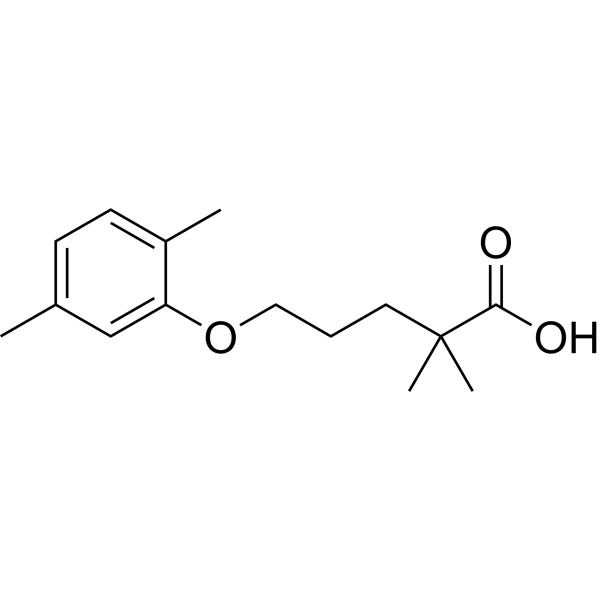
Gemfibrozil
Based on 7 publication(s) in Google Scholar
Gemfibrozil is an activator of PPAR-α, used as a lipid-lowering agent; Gemfibrozil is also a nonselective inhibitor of several P450 isoforms, with Ki values for CYP2C9, 2C19, 2C8, and 1A2 of 5.8, 24, 69, and 82 μM, respectively.
Nos produits utilisent uniquement pour la recherche. Nous ne vendons pas aux patients.
- Pureté : 99.89%
- CAS No.: 25812-30-0
- Formule: C15H22O3
- Masse moléculaire:250.33
-
Stockage:Powder -20°C, 3 years , 4°C, 2 years ; In solvent -80°C, 2 years , -20°C, 1 year

To place orders, for customer services and technical support, please contact: MedChemExpress USA
Tel: 609-228-6898 E-mail: [email protected] [email protected]


-
 Activité biologique
-
Chemical Information
-
Solvant et solubilité
- Pureté et documentation
- Références
-
 Help & FAQs


-
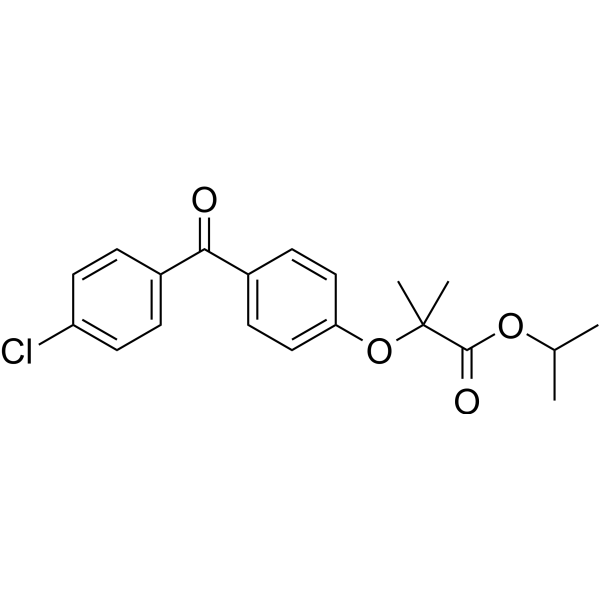
HY-17356
Fenofibrate -
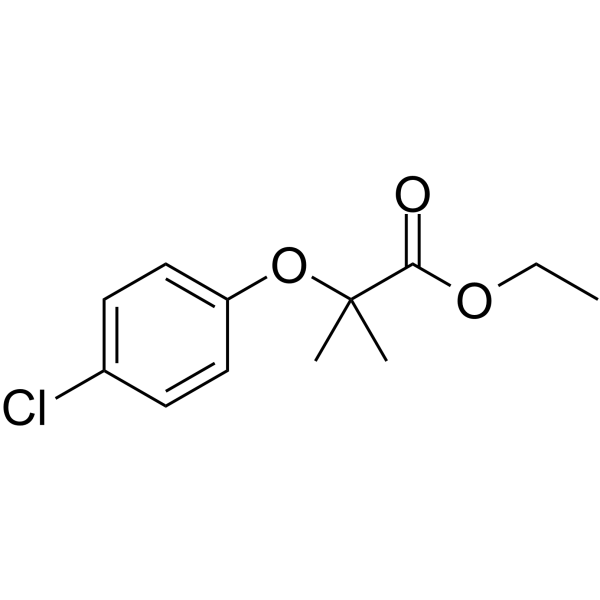
HY-B0287
ClofibratePPAR Agonist -
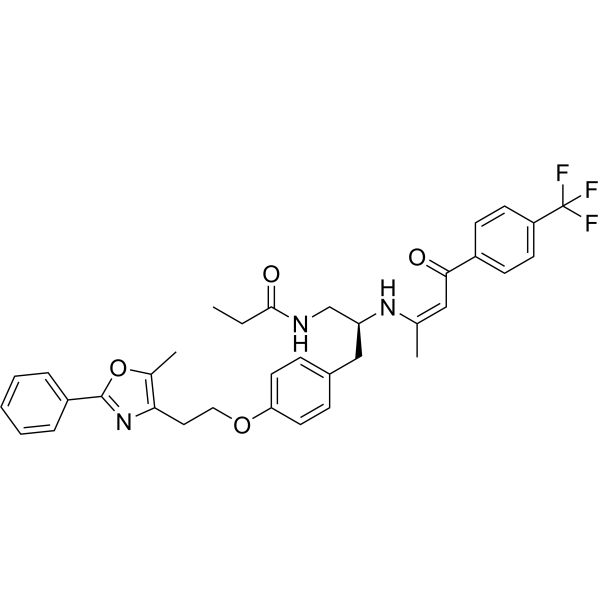
HY-15372
GW6471PPARα Antagonist -
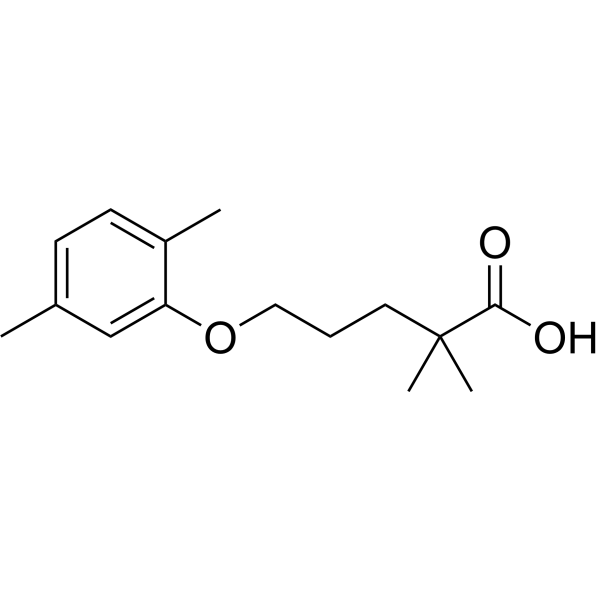
HY-B0258R
Gemfibrozil (Standard) -
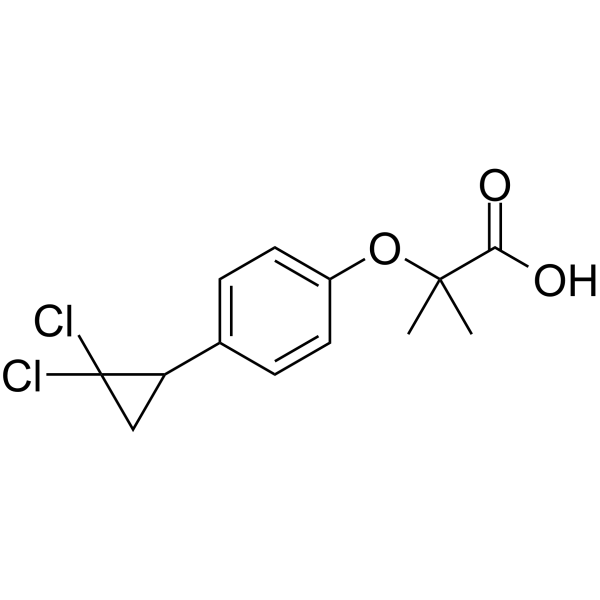
HY-B0664
CiprofibratePeroxisome Proliferator -
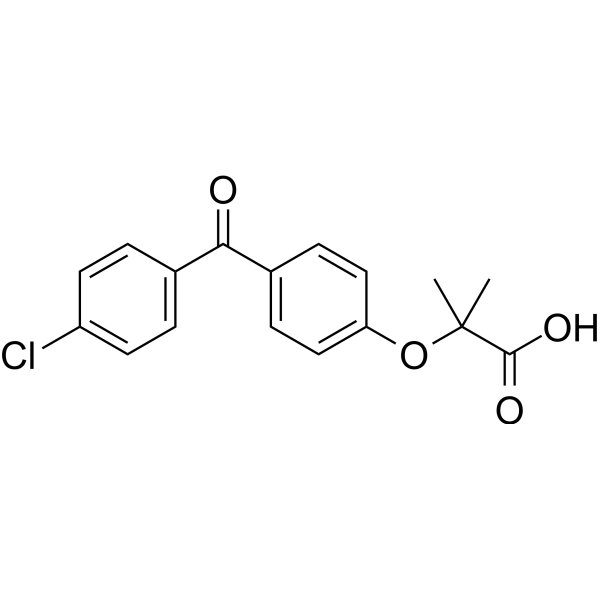
HY-B0760
Fenofibric acid -
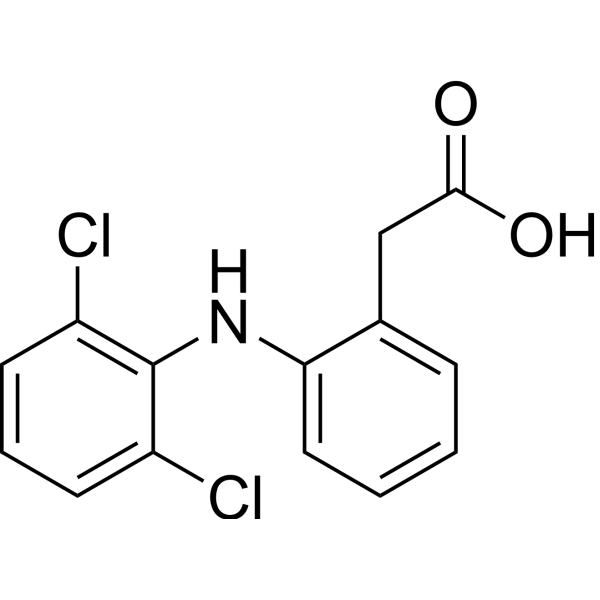
HY-15036
DiclofenacCOX Inhibitor -
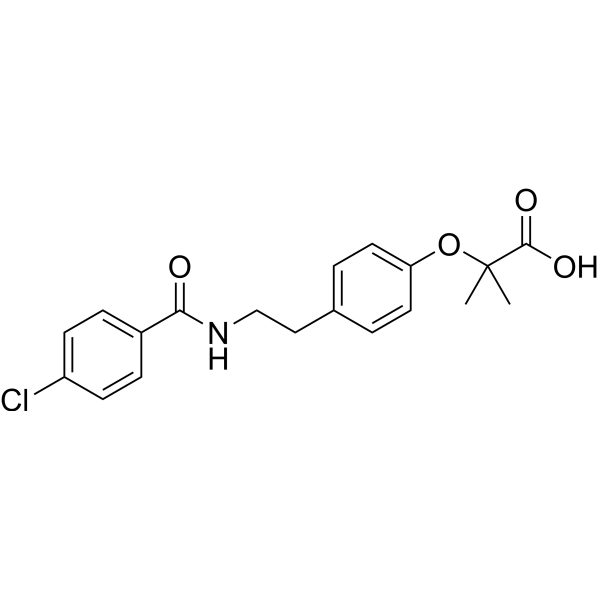
HY-B0637
BezafibratePPAR Agonist -
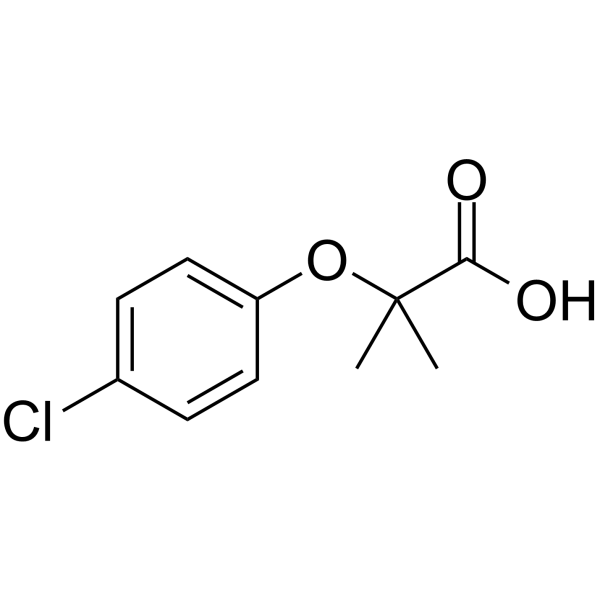
HY-B1415
Clofibric acidPPARα Agonist -
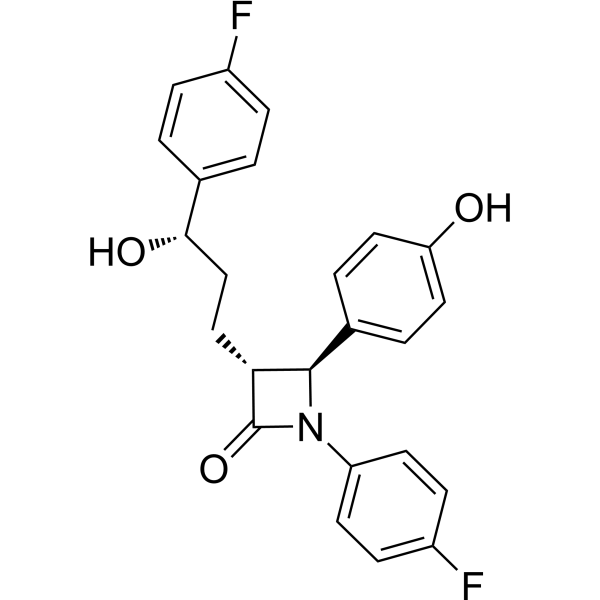
HY-17376
EzetimibeCholesterol Absorption Inhibitor -
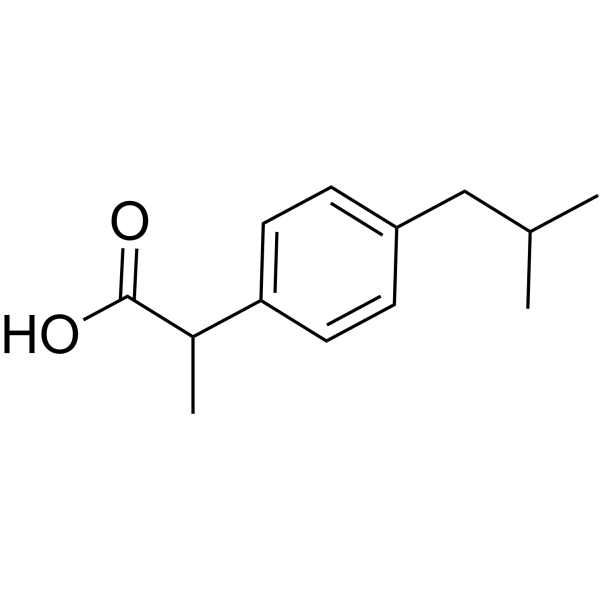
HY-78131
IbuprofenCOX-1 Inhibitor -
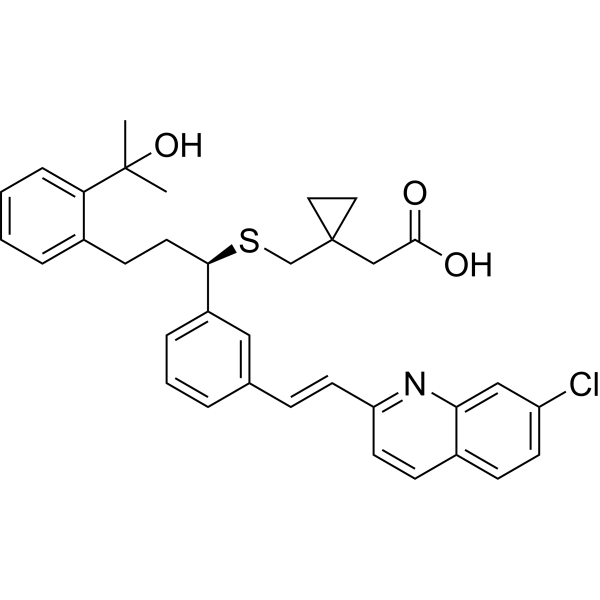
HY-13315A
MontelukastCysLT1 Antagonist
Publications Citing Use of MedChemExpress (MCE) Gemfibrozil
More- Acta Pharmacol Sin. 2025 Jun 11. [Abstract]
- Int J Biol Macromol. 2026 Mar:352:151224. [Abstract]
- Emerg Contam. 2026 Feb 23.
- Drug Metab Dispos. 2026 Jul 14;54(8):100365.
- Npj Viruses. 2026 Feb 16;4(1):10. [Abstract]
- Clin Exp Pharmacol Physiol. 2026 Feb;53(2):e70106. [Abstract]
- Chemosphere. 2019 Jun:225:378-387. [Abstract]
 Customer Validation & Images

-
Cell Imaging/Staining

-
WB


Activité biologique
Description
IC50 & Target
[1]|
PPAR-α |
CYP2C9 5.8 μM (Ki) |
CYP2C19 24 μM (Ki) |
CYP2C8 69 μM (Ki) |
CYP1A2 82 μM (Ki) |
Cellular Effect
|
Cell Line

|
Type | Value | Description | References |
|---|---|---|---|---|
| BHK-21 | EC50 |
>100 μM
Compound: Gemfibrozil
|
Antiviral activity against YFV infected in BHK-21 cells assessed as inhibition of virus-induced cytopathogenicity after 3 to 4 days by MTT assay
Antiviral activity against YFV infected in BHK-21 cells assessed as inhibition of virus-induced cytopathogenicity after 3 to 4 days by MTT assay
|
[PMID: 26443549] |
| CV-1 | EC50 |
147.8 μM
Compound: gemfibrozil
|
Agonist activity at human PPARgamma in CV1 cells by GAL4 transactivation assay after 24 hrs
Agonist activity at human PPARgamma in CV1 cells by GAL4 transactivation assay after 24 hrs
|
[PMID: 17507225] |
| CV-1 | EC50 |
147.8 μM
Compound: gemfibrozil
|
Agonist activity at human PPARgamma ligand binding domain expressed in african green monkey CV1 cells co-transfected with fused Gal4-DBD by transactivation assay
Agonist activity at human PPARgamma ligand binding domain expressed in african green monkey CV1 cells co-transfected with fused Gal4-DBD by transactivation assay
|
[PMID: 18826205] |
| CV-1 | EC50 |
193.3 μM
Compound: gemfibrozil
|
Agonist activity at human PPARalpha in CV1 cells by GAL4 transactivation assay after 24 hrs
Agonist activity at human PPARalpha in CV1 cells by GAL4 transactivation assay after 24 hrs
|
[PMID: 17507225] |
| CV-1 | EC50 |
193.3 μM
Compound: gemfibrozil
|
Agonist activity at human PPARalpha ligand binding domain expressed in african green monkey CV1 cells co-transfected with fused Gal4-DBD by transactivation assay
Agonist activity at human PPARalpha ligand binding domain expressed in african green monkey CV1 cells co-transfected with fused Gal4-DBD by transactivation assay
|
[PMID: 18826205] |
| HEK293 | EC50 |
59 μM
Compound: Gemfibrozil
|
Agonist activity at Gal4-fused PPARalpha expressed in HEK293 cells after 18 hrs by dual luciferase reporter gene assay
Agonist activity at Gal4-fused PPARalpha expressed in HEK293 cells after 18 hrs by dual luciferase reporter gene assay
|
[PMID: 21889235] |
| HEK293 | EC50 |
59 μM
Compound: Gemfibrozil
|
Transactivation of human PPARalpha expressed in HEK293 cells incubated for 18 hrs by dual luciferase reporter gene assay
Transactivation of human PPARalpha expressed in HEK293 cells incubated for 18 hrs by dual luciferase reporter gene assay
|
10.1039/C5MD00151J |
| HEK293 | IC50 |
11 μM
Compound: Gemfibrozil
|
Inhibition of OATP1B1 (unknown origin) expressed in HEK293 cells using estradiol-17beta-glucuronide substrate
Inhibition of OATP1B1 (unknown origin) expressed in HEK293 cells using estradiol-17beta-glucuronide substrate
|
[PMID: 22587986] |
| HEK293 | IC50 |
130 μM
Compound: Gemfibrozil
|
Inhibition of OATP1B1 (unknown origin) expressed in HEK293 cells using estrone-3-sulfate substrate
Inhibition of OATP1B1 (unknown origin) expressed in HEK293 cells using estrone-3-sulfate substrate
|
[PMID: 22587986] |
| HEK293 | IC50 |
38 μM
Compound: Gemfibrozil
|
Inhibition of OATP1B1 (unknown origin) expressed in HEK293 cells using pitavastatin substrate
Inhibition of OATP1B1 (unknown origin) expressed in HEK293 cells using pitavastatin substrate
|
[PMID: 22587986] |
| MT4 | CC50 |
>100 μM
Compound: Gemfibrozil
|
Cytotoxicity against human MT4 cells assessed as cell viability after 96 hrs by MTT assay
Cytotoxicity against human MT4 cells assessed as cell viability after 96 hrs by MTT assay
|
[PMID: 26443549] |
| Vero 76 | CC50 |
>100 μM
Compound: Gemfibrozil
|
Cytotoxicity against african green monkey Vero 76 cells assessed as cell viability after 48 to 96 hrs by crystal violet staining method
Cytotoxicity against african green monkey Vero 76 cells assessed as cell viability after 48 to 96 hrs by crystal violet staining method
|
[PMID: 26443549] |
| Vero 76 | EC50 |
>100 μM
Compound: Gemfibrozil
|
Antiviral activity against human CVB5 infected in african green monkey Vero76 cells assessed as inhibition of virus-induced cytopathogenicity after 3 days by plaque reduction assay
Antiviral activity against human CVB5 infected in african green monkey Vero76 cells assessed as inhibition of virus-induced cytopathogenicity after 3 days by plaque reduction assay
|
[PMID: 26443549] |
| Vero 76 | EC50 |
>100 μM
Compound: Gemfibrozil
|
Antiviral activity against Human poliovirus 1 Sabin infected in african green monkey Vero76 cells assessed as inhibition of virus-induced cytopathogenicity by plaque reduction assay
Antiviral activity against Human poliovirus 1 Sabin infected in african green monkey Vero76 cells assessed as inhibition of virus-induced cytopathogenicity by plaque reduction assay
|
[PMID: 26443549] |
| Vero 76 | EC50 |
>100 μM
Compound: Gemfibrozil
|
Antiviral activity against human RSV infected in african green monkey Vero76 cells assessed as inhibition of virus-induced cytopathogenicity after 5 days by plaque reduction assay
Antiviral activity against human RSV infected in african green monkey Vero76 cells assessed as inhibition of virus-induced cytopathogenicity after 5 days by plaque reduction assay
|
[PMID: 26443549] |
In Vitro
Gemfibrozil is an activator of PPAR-α, used as a lipid-lowering drug[1]; also a nonselective inhibitor of several P450 isoforms, with Ki values for CYP2C9, 2C19, 2C8, and 1A2 of 5.8, 24, 69, and 82 μM, respectively[3]. Gemfibrozil (100, 150, 200 μM) inhibits the cytokine-induced NO production in a concentration dependent manner in human U373MG astroglial cells, and such effects are not due to any change of the stability of iNOS mRNA. Gemfibrozil (50, 100, 200 μM) inhibits human iNOS promoter-derived luciferase activity in cytokine-stimulated human U373MG astroglial cells. Furthermore, Gemfibrozil (50, 100, 150, and 200 μM) shows no effects on the viability of the cells[1]. Gemfibrozil considerably inhibits both M-23 and M-1 formation (catalyzed by CYP2C8 and CYP3A4), with Ki (IC50) values of 69 μM (95 μM) and 273 μM (>250 μM), respectively, in human liver microsomes. Gemfibrozil (0-250 μM) dose dependently inhibits the formation of M-23 (IC50, 68 μM) and M-1 (IC50, 78 μM) in recombinant CYP2C8, but shows no appreciable effect on the formation of these metabolites in recombinant CYP3A4[3].
MedChemExpress (MCE) has not independently confirmed the accuracy of these methods. They are for reference only. .
In Vivo
MedChemExpress (MCE) has not independently confirmed the accuracy of these methods. They are for reference only.
Essai clinique
| NCT Number | Sponsor | Condition | Start Date |
Phase
|
|---|---|---|---|---|
| NCT01329991 | Plexxikon| | 2011-05 | PHASE1 |


Chemical Information
-
CAS No. 25812-30-0
-
Appearance Solid
-
Masse moléculaire 250.33
-
Formule C15H22O3
-
Color White to off-white
-
SMILES
O=C(O)C(C)(C)CCCOC1=CC(C)=CC=C1C
-
Synonyms
CI-719
-
Livraison
Room temperature in continental US; may vary elsewhere.
-
Stockage
Powder -20°C 3 years 4°C 2 years In solvent -80°C 2 years -20°C 1 year


Publications (7)
-
Journal Impact Factor
-
Most Recent
-
Acta Pharmacol Sin
Targeting PPARα activation sensitizes glioblastoma cells to temozolomide and reverses acquired resistance by inhibiting H3K18 lactylation. [Abstract]2025 Jun 11. PMID: 40500345 -
Int J Biol Macromol
Reticuline isomerase AKR1B1 with aldo-keto reductase activity and detoxification function from the insect Blaps rhynchopetera. [Abstract]2026 Mar:352:151224. PMID: 41791543 -
-
-
Npj Viruses
STAT1 signaling controls cholesterol metabolism in epithelial cells and RSV-induced syncytia formation. [Abstract]2026 Feb 16;4(1):10. PMID: 41699197
Gemfibrozil purchased from MedChemExpress. Usage Cited in: Npj Viruses. 2026 Feb 16;4(1):10. [Abstract]
Ep-2 cells (MOI 0.05) at 48 hpi. Cells were left untreated (first row), treated with 50 μM Gemfibrozil (GFZ, second row), treated with 5 μM methyl-β-cyclodextrin (MβCD) and 50 μM GFZ (third row), or with 10 μM 25-hydroxycholesterol (25-HC, bottom panel). Free cholesterol in plasma membranes was visualized by Filipin III staining (0.05 mg/ml), and DNA was visualized by Propidium iodide (PI) staining (5 μg/ml).
Gemfibrozil purchased from MedChemExpress. Usage Cited in: Npj Viruses. 2026 Feb 16;4(1):10. [Abstract]
HEp-2 cells at 48 hpi. Infected cells were left untreated, treated with 50 μM Gemfibrozil (GFZ), treated with 5 μM methyl-β-cyclodextrin (MβCD) and 50 μM GFZ, or with 10 μM 25-hydroxycholesterol (25-HC). Membrane fractions were stained for prefusion F protein, postfusion F protein, and Na+-K+-ATPase (loading control).
-
Clin Exp Pharmacol Physiol
Gemfibrozil Prevents Myocardial Ischemia-Reperfusion Injury in Mice Through AMPK Activation. [Abstract]2026 Feb;53(2):e70106. PMID: 41702849 -
Chemosphere
Mass-balance-model-based evaluation of sewage treatment plant contribution to residual pharmaceuticals in environmental waters. [Abstract]2019 Jun:225:378-387. PMID: 30884299


Solvant et solubilité
In Vitro:
DMSO : 100 mg/mL (399.47 mM; Need ultrasonic; Hygroscopic DMSO has a significant impact on the solubility of product, please use newly opened DMSO)
Please refer to the solubility information to select the appropriate solvent. Once prepared, please aliquot and store the solution to prevent product inactivation from repeated freeze-thaw cycles.
Storage method and period of stock solution: -80°C, 2 years; -20°C, 1 year. When stored at -80°C, please use it within 2 years. When stored at -20°C, please use it within 1 year.
Please refer to the solubility information to select the appropriate solvent. Once prepared, please aliquot and store the solution to prevent product inactivation from repeated freeze-thaw cycles.
Storage method and period of stock solution: -80°C, 2 years; -20°C, 1 year. When stored at -80°C, please use it within 2 years. When stored at -20°C, please use it within 1 year.
Concentration (start) × Volume (start) = Concentration (final) × Volume (final)
In Vivo:
Select the appropriate dissolution method based on your experimental animal and administration route.
- For the following dissolution methods, please ensure to first prepare a clear stock solution using an In Vitro approach and then sequentially add co-solvents:
- To ensure reliable experimental results, the clarified stock solution can be appropriately stored based on storage conditions. As for the working solution for In Vivo experiments, it is recommended to prepare freshly and use it on the same day.
- The percentages shown for the solvents indicate their volumetric ratio in the final prepared solution. If precipitation or phase separation occurs during preparation, heat and/or sonication can be used to aid dissolution.
Add each solvent one by one: 10% DMSO 40% PEG300 5% Tween-80 45% Saline
Solubility: ≥ 2.5 mg/mL (9.99 mM); Clear solution
This protocol yields a clear solution of ≥ 2.5 mg/mL (saturation unknown).
Taking 1 mL working solution as an example, add 100 μL DMSO stock solution (25.0 mg/mL) to 400 μL PEG300, and mix evenly; then add 50 μL Tween-80 and mix evenly; then add 450 μL Saline to adjust the volume to 1 mL.
Preparation of Saline: Dissolve 0.9 g sodium chloride in ddH₂O and dilute to 100 mL to obtain a clear Saline solution.
Add each solvent one by one: 10% DMSO 90% (20% SBE-β-CD in Saline)
Solubility: ≥ 2.5 mg/mL (9.99 mM); Clear solution
This protocol yields a clear solution of ≥ 2.5 mg/mL (saturation unknown).
Taking 1 mL working solution as an example, add 100 μL DMSO stock solution (25.0 mg/mL) to 900 μL 20% SBE-β-CD in Saline, and mix evenly.
Preparation of 20% SBE-β-CD in Saline (4°C, storage for one week): 2 g SBE-β-CD powder is dissolved in 10 mL Saline, completely dissolve until clear.
In Vivo Dissolution Calculator
Please enter the basic information of animal experiments:
-
-
-
-
Recommended: Prepare an additional quantity of animals to account for potential losses during experiments.
Please enter your animal formula composition:
-
%DMSO +
Recommended: Keep the proportion of DMSO in working solution below 2% if your animal is weak.
-
%+
-
+%Tween-80 + +
-
%Saline +
The co-solvents required include: DMSO, . All of co-solvents are available by MedChemExpress (MCE). , Tween 80. All of co-solvents are available by MedChemExpress (MCE).
Working solution concentration: 0.22 mg/mL
Method for preparing stock solution: mg drug dissolved in μL DMSO. Stock solution concentration: mg/mL.
1. Take μL DMSO stock solution;
2. Add μL .
μL , mix evenly;
3. Then add μL Tween 80, mix evenly;
4. Then add μL
Please ensure that the stock solution in the first step is dissolved to a clear state, and add co-solvents in sequence. You can use ultrasonic heating (ultrasonic cleaner, recommended frequency 20-40 kHz), vortexing, etc. to assist dissolution.


Pureté et documentation
-
Fiche technique (278 KB)
-
SDS (392 KB)
- English - EN (392 KB)
- Français - FR (392 KB)
- Deutsch - DE (392 KB)
- Norwegian - NO (392 KB)
- Español - ES (392 KB)
- Swedish - SV (392 KB)
- Italian - IT (392 KB)
- Korean - KR (392 KB)
- Portuguese - PT (392 KB)
-
Instruction de manipulation (2659 KB)
Références
[1]. Pahan K, et al. Gemfibrozil, a lipid-lowering drug, inhibits the induction of nitric-oxide synthase in human astrocytes. J Biol Chem. 2002 Nov 29;277(48):45984-91. Epub 2002 Sep 18. [Content Brief]
[2]. Almad A, et al. The PPAR alpha agonist gemfibrozil is an ineffective treatment for spinal cord injured mice. Exp Neurol. 2011 Dec;232(2):309-17. [Content Brief]
[3]. Wang JS, et al. Gemfibrozil inhibits CYP2C8-mediated cerivastatin metabolism in human liver microsomes. Drug Metab Dispos. 2002 Dec;30(12):1352-6. [Content Brief]


Complete Stock Solution Preparation Table
Please refer to the solubility information to select the appropriate solvent. Once prepared, please aliquot and store the solution to prevent product inactivation from repeated freeze-thaw cycles.
Storage method and period of stock solution: -80°C, 2 years; -20°C, 1 year. When stored at -80°C, please use it within 2 years. When stored at -20°C, please use it within 1 year.
| Optional Solvent | Concentration Solvent Mass | 1 mg | 5 mg | 10 mg | 25 mg |
|---|---|---|---|---|---|
| DMSO | 1 mM | 3.9947 mL | 19.9736 mL | 39.9473 mL | 99.8682 mL |
| 5 mM | 0.7989 mL | 3.9947 mL | 7.9895 mL | 19.9736 mL | |
| 10 mM | 0.3995 mL | 1.9974 mL | 3.9947 mL | 9.9868 mL | |
| 15 mM | 0.2663 mL | 1.3316 mL | 2.6632 mL | 6.6579 mL | |
| 20 mM | 0.1997 mL | 0.9987 mL | 1.9974 mL | 4.9934 mL | |
| 25 mM | 0.1598 mL | 0.7989 mL | 1.5979 mL | 3.9947 mL | |
| 30 mM | 0.1332 mL | 0.6658 mL | 1.3316 mL | 3.3289 mL | |
| 40 mM | 0.0999 mL | 0.4993 mL | 0.9987 mL | 2.4967 mL | |
| 50 mM | 0.0799 mL | 0.3995 mL | 0.7989 mL | 1.9974 mL | |
| 60 mM | 0.0666 mL | 0.3329 mL | 0.6658 mL | 1.6645 mL | |
| 80 mM | 0.0499 mL | 0.2497 mL | 0.4993 mL | 1.2484 mL | |
| 100 mM | 0.0399 mL | 0.1997 mL | 0.3995 mL | 0.9987 mL |


Gemfibrozil Related Classifications
HY-B0258 Related Classifications
 Powered by Bioz