



Pentadecane

Based on 1 Customer Validation
Pentadecane is an orally active natural plant volatile alkane with anti-inflammatory, analgesic, antipyretic and anti-leishmanial activities. Pentadecane presents IC50 values of 65.3 μM, 60.5 μM and 194.8 μM against Leishmania infantum promastigotes, amastigotes and intracellular amastigotes, respectively. Pentadecane downregulates the mRNA expression of TNF-α and IL-12 and inhibits the release of inflammatory mediators. Pentadecane arrests the cell cycle of Leishmania infantum and induces apoptosis. Pentadecane can be applied to the research of inflammation and leishmaniasis.
For research use only. We do not sell to patients.
- Purity : 99.12%
- CAS No.: 629-62-9
- Formula: C15H32
- Molecular Weight:212.41
-
Storage:
Store at room temperature 3 years.
In solvent -80°C, 2 years , -20°C, 1 year


To place orders, for customer services and technical support, please contact: MedChemExpress USA
Tel: 609-228-6898 E-mail: [email protected] [email protected]


-
 Biological Activity
-
Chemical Information
-
Solvent & Solubility
- Protocols
- Purity & Documentation
- References
-
 Help & FAQs


-

HY-N8593
UndecanecAMP Agonist -

HY-N7926R
Pentadecane (Standard)Antimalarial Agent -

HY-W131351
N-HeptadecaneEster Product -

HY-W099580
HexadecaneAlkane -

HY-N6600
OctadecaneTemperature-Responsive Material -
HY-Y0989
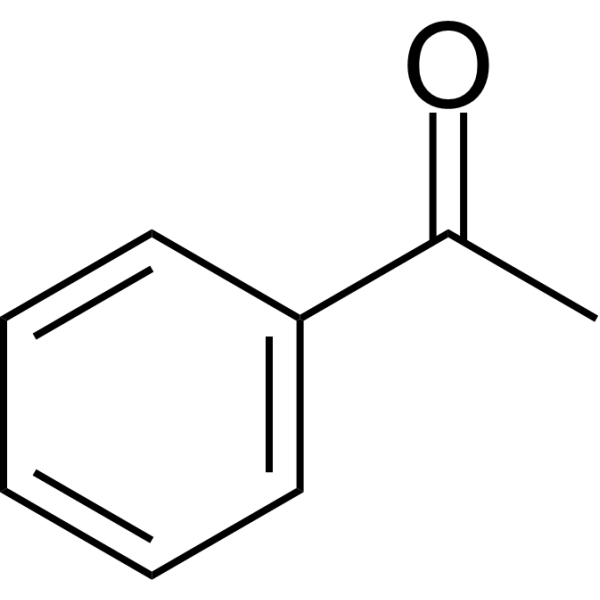
AcetophenoneOrganic Compound -

HY-W142855
TriacontaneEster Product -

HY-W094846
TetradecaneLow-temperature Phase Change Material -

HY-W089845
HeneicosaneSex Pheromone -

HY-N8593R
Undecane (Standard)Standard of Undecane
All Parasite Isoforms
More

Biological Activity
Description
|
IL-12 |
TNF-α |
Leishmania |
In Vitro
Pentadecane (10-60 µg/mL; overnight) does not inhibit the growth of Staphylococcus aureus, Bacillus subtilis, Escherichia coli, or Pseudomonas aeruginosa[1].
Pentadecane (60 µg/mL; 8 h) temporarily inhibits the growth of Staphylococcus aureus, Bacillus subtilis, Escherichia coli, and Pseudomonas aeruginosa over an 8-hour period, but does not prevent long-term bacterial growth[1].
Pentadecane (10-70 µg/mL; 48 h pre-incubation, followed by 48 h LPS/IFN-γ stimulation) significantly downregulates TNF-α and IL-12 mRNA expression in LPS/IFN-γ-induced M1 phenotype U937 macrophages, with the most potent TNF-α inhibition seen at 10 µg/mL in hexane[1].
Pentadecane (50-300 μM; 48 h) inhibits the viability of Leishmania infantum promastigotes (IC50 = 65.3 μM) and axenic amastigotes (IC50 = 60.5 μM) in a dose-dependent manner[3].
Pentadecane (65.3-300 μM; 48 h) induces apoptotic-like morphological changes (loss of cell volume, nuclear condensation) in Leishmania infantum promastigotes[3].
Pentadecane (65.3 μM; 24 h) induces cell cycle arrest in Leishmania infantum promastigotes, increasing the proportion of cells in the sub-G0/G1 phase and eliminating cells in the G2/M phase[3].
Pentadecane (50-300 μM; 48 h) causes negligible cytotoxicity in DH82 dog macrophage cells, U937 human histiocytic lymphoma cells, and normal CPE primary epithelial cells[3].
Pentadecane (300 μM; 48 h) inhibits the growth of Leishmania infantum intracellular amastigotes in U937-derived macrophages, reducing infection by 77% at 300 μM and exhibiting an IC50 of 194.8 μM[3].
MedChemExpress (MCE) has not independently confirmed the accuracy of these methods. They are for reference only. Further protocols information, click here.
-
Cell Line:LPS/IFN-γ-induced M1 phenotype U937 human monocytic macrophages
-
Concentration:10, 70 µg/mL
-
Incubation Time:48 h pre-incubation, followed by 48 h LPS/IFN-γ stimulation
-
Result:Showed the most significant downregulation of TNF-α mRNA expression at 10 µg/mL (hexane) compared to the LPS-treated M1 control.
Significantly downregulated IL-12 mRNA expression at all tested concentrations compared to the LPS-treated M1 control.
Showed no significant difference in IL-12 mRNA expression from the 10% hexane control group at 70 µg/mL (hexane).
-
Cell Line:human dermal fibroblast (HDF) cells
-
Concentration:10, 20, 30, 40, 50, 60, 70 µg/mL
-
Incubation Time:48 h
-
Result:Resulted in average cell viability between 58% and 103%, with viability averagely higher than cells treated with palmitic acid.
-
Cell Line:DH82 dog macrophage cells, U937 human histiocytic lymphoma cells, primary epidermal cells of CPE
-
Concentration:50 μM, 100 μM, 150 μM, 200 μM, 250 μM, 300 μM
-
Incubation Time:48 h
-
Result:Maintained DH82 cell viability between ~78% and ~94%.
Maintained CPE cell viability between ~84% and ~122%.
Maintained U937 cell viability between ~86% and ~137%.
Resulted in all tested cell lines showing viability higher than 60% across all concentrations, indicating negligible cytotoxicity.
In Vivo
Pentadecane (5, 10 mg/kg; p.o.; single dose) exhibits significant dose-dependent analgesic activity in the acetic acid-induced writhing model in Sprague-Dawley rats[2].
Pentadecane (5, 10 mg/kg; p.o.; single dose) exhibits significant analgesic activity targeting inflammatory nociception in the formalin-induced paw licking model in Sprague-Dawley rats[2].
Pentadecane (5, 10 mg/kg; p.o.; single dose) exhibits significant anti-inflammatory activity in the carrageenan-induced paw edema model in Sprague-Dawley rats[2].
MedChemExpress (MCE) has not independently confirmed the accuracy of these methods. They are for reference only.


Chemical Information
-
CAS No. 629-62-9
-
Appearance Liquid (Density: 0.769 g/cm3)
-
Molecular Weight 212.41
-
Formula C15H32
-
Color Colorless to off-white
-
SMILES
CCCCCCCCCCCCCCC
-
Structure Classification
-
Initial Source
-
Shipping
Room temperature in continental US; may vary elsewhere.
-
Storage
Store at room temperature 3 years
In solvent -80°C 2 years -20°C 1 year


Solvent & Solubility
In Vitro:
DMSO : 100 mg/mL (470.79 mM; Need ultrasonic; Hygroscopic DMSO has a significant impact on the solubility of product, please use newly opened DMSO)
Please refer to the solubility information to select the appropriate solvent. Once prepared, please aliquot and store the solution to prevent product inactivation from repeated freeze-thaw cycles.
Storage method and period of stock solution: -80°C, 2 years; -20°C, 1 year. When stored at -80°C, please use it within 2 years. When stored at -20°C, please use it within 1 year.
Please refer to the solubility information to select the appropriate solvent. Once prepared, please aliquot and store the solution to prevent product inactivation from repeated freeze-thaw cycles.
Storage method and period of stock solution: -80°C, 2 years; -20°C, 1 year. When stored at -80°C, please use it within 2 years. When stored at -20°C, please use it within 1 year.
Concentration (start) × Volume (start) = Concentration (final) × Volume (final)
In Vivo:
Select the appropriate dissolution method based on your experimental animal and administration route.
- For the following dissolution methods, please ensure to first prepare a clear stock solution using an In Vitro approach and then sequentially add co-solvents:
- To ensure reliable experimental results, the clarified stock solution can be appropriately stored based on storage conditions. As for the working solution for In Vivo experiments, it is recommended to prepare freshly and use it on the same day.
- The percentages shown for the solvents indicate their volumetric ratio in the final prepared solution. If precipitation or phase separation occurs during preparation, heat and/or sonication can be used to aid dissolution.
Add each solvent one by one: 10% DMSO 40% PEG300 5% Tween-80 45% Saline
Solubility: ≥ 2.5 mg/mL (11.77 mM); Clear solution
This protocol yields a clear solution of ≥ 2.5 mg/mL (saturation unknown).
Taking 1 mL working solution as an example, add 100 μL DMSO stock solution (25.0 mg/mL) to 400 μL PEG300, and mix evenly; then add 50 μL Tween-80 and mix evenly; then add 450 μL Saline to adjust the volume to 1 mL.
Preparation of Saline: Dissolve 0.9 g sodium chloride in ddH₂O and dilute to 100 mL to obtain a clear Saline solution.
Add each solvent one by one: 10% DMSO 90% (20% SBE-β-CD in Saline)
Solubility: ≥ 2.5 mg/mL (11.77 mM); Clear solution
This protocol yields a clear solution of ≥ 2.5 mg/mL (saturation unknown).
Taking 1 mL working solution as an example, add 100 μL DMSO stock solution (25.0 mg/mL) to 900 μL 20% SBE-β-CD in Saline, and mix evenly.
Preparation of 20% SBE-β-CD in Saline (4°C, storage for one week): 2 g SBE-β-CD powder is dissolved in 10 mL Saline, completely dissolve until clear.
In Vivo Dissolution Calculator
Please enter the basic information of animal experiments:
-
-
-
-
Recommended: Prepare an additional quantity of animals to account for potential losses during experiments.
Please enter your animal formula composition:
-
%DMSO +
Recommended: Keep the proportion of DMSO in working solution below 2% if your animal is weak.
-
%+
-
+%Tween-80 + +
-
%Saline +
The co-solvents required include: DMSO, . All of co-solvents are available by MedChemExpress (MCE). , Tween 80. All of co-solvents are available by MedChemExpress (MCE).
Working solution concentration: 0.22 mg/mL
Method for preparing stock solution: mg drug dissolved in μL DMSO. Stock solution concentration: mg/mL.
1. Take μL DMSO stock solution;
2. Add μL .
μL , mix evenly;
3. Then add μL Tween 80, mix evenly;
4. Then add μL
Please ensure that the stock solution in the first step is dissolved to a clear state, and add co-solvents in sequence. You can use ultrasonic heating (ultrasonic cleaner, recommended frequency 20-40 kHz), vortexing, etc. to assist dissolution.

Protocols
-
RT-PCR
Reverse transcription technology uses RNA as a template to synthesize DNA. RT-PCR is simple, specific and sensitive, and can be used to detect gene expression levels and expression differences in cells; detect RNA virus content; clone cDNA sequences of specific genes.
-
RNA extraction experimental
By lysing cells, releasing RNA, and removing impurities such as proteins and DNA, high-purity RNA products are finally obtained. The commonly used traditional method is the guanidine isothiocyanate/phenol/chloroform method (Trizol), which is suitable for a variety of animal materials including animal tissues, microorganisms, cultured cells, etc., and most plant materials.
-
Apoptosis
Apoptosis, also called programmed cell death, is generally characterized by distinct morphological characteristics.
-
TUNEL staining for apoptotic DNA fragmentation
TUNEL staining detects DNA strand breaks by using terminal deoxynucleotidyl transferase to add labeled nucleotides to exposed 3′-OH DNA termini, generating either microscopic staining in fixed cells or tissue sections, or fluorescence/cytometric signal in cell suspensions. TUNEL positivity reflects DNA fragmentation but should not be interpreted alone as definitive apoptosis, because TUNEL can also label necrotic, autolytic, mechanically damaged, or DNA-repair-associated DNA breaks.
-
Flow cytometric DNA-content cell-cycle staining
Flow cytometric DNA-content cell-cycle staining measures the fluorescence intensity of DNA-bound fluorochromes in single cells or nuclei to estimate DNA content distributions, allowing assignment of populations to G0/G1, S, and G2/M phases by DNA histogram deconvolution. Propidium iodide (PI) intercalates into DNA, and PI fluorescence is proportional to cellular DNA content when staining is performed under conditions that make DNA accessible and minimize non-DNA signal. Cells with G2/M DNA content are expected to show approximately twice the fluorescence intensity of G0/G1 cells, while S-phase cells occupy intermediate fluorescence values. PI-based DNA-content analysis can also detect cells with fractional DNA content, often reported as sub-G1, when DNA fragmentation and extraction during staining reduce retained DNA signal in apoptotic cells. DAPI is an alternative DNA fluorochrome for univariate DNA-content analysis, while bivariate approaches combining DNA content with proliferation
-
Annexin V plus membrane-impermeant dye apoptosis staining
Annexin V-based apoptosis assays rely on the detection of phosphatidylserine (PS) externalization from the inner leaflet of the plasma membrane to the outer leaflet, an early biochemical hallmark of apoptosis. Fluorescently labeled Annexin V binds PS in a calcium-dependent manner, enabling identification of early apoptotic cells by flow cytometry or fluorescence microscopy. When combined with a membrane-impermeant DNA-binding dye (e. g. , propidium iodide), this approach allows discrimination between viable (Annexin V−/dye−), early apoptotic (Annexin V+/dye−), and late apoptotic or necrotic (Annexin V+/dye+) cell populations by assessing membrane integrity and PS exposure.
-
BrdU Incorporation Assay
Bromodeoxyuridine (BrdU) incorporation assay is based on the principle that BrdU, a thymidine analog, is incorporated into newly synthesized DNA during the S phase of the cell cycle, thereby serving as a marker of DNA replication and cellular proliferation. Incorporated BrdU can be detected using anti-BrdU antibodies following DNA denaturation, enabling visualization or quantification of proliferating cells through immunochemical detection methods such as immunofluorescence or immunohistochemistry.
-
Apoptosis Solutions
Apoptosis is a regulated, generally non-lytic cell-death pathway that removes unwanted, damaged, infected, or abnormal cells through coordinated morphological changes, caspase activation, DNA fragmentation, and membrane remodeling. The intrinsic apoptosis pathway is controlled mainly by mitochondrial outer membrane permeabilization, BCL-2 family proteins, cytochrome c release, apoptosome formation, caspase-9 activation, and downstream executioner caspase-3/7 activation. The extrinsic apoptosis pathway is initiated by death receptors such as Fas, TNFR, and TRAIL receptors, which recruit adaptor proteins and activate caspase-8 before engaging executioner caspases or mitochondrial amplification through BID cleavage. Apoptosis is linked to many phenotypes, including cancer cell killing, tissue homeostasis, immune regulation, neurodegeneration, infection response, and treatment-induced cytotoxicity; unresolved questions include how apoptosis interacts with necroptosis, pyroptosis, ferroptos
-
Protocol for Cell Cycle
Cell-cycle analysis by flow cytometry measures DNA content in single cells to estimate the fraction of cells in G0/G1, S, and G2/M phases. Propidium iodide intercalates into DNA, and after RNA removal with RNase, fluorescence intensity reflects cellular DNA content: 2N cells are assigned to G0/G1, cells between 2N and 4N to S phase, and 4N cells to G2/M. DNA-content analysis alone cannot reliably separate G0 from G1 or G2 from M. Ki-67 can distinguish quiescent G0 cells from cycling cells, EdU or BrdU incorporation marks active DNA synthesis in S phase, and phospho-histone H3 staining identifies mitotic cells within the 4N population.
-
Research Protocol for Inflammation-related Diseases
The NLRP3 inflammasome is a cytosolic innate immune signaling platform that integrates priming signals and danger-signal activation to promote caspase-1 activation, maturation of IL-1β and IL-18, and gasdermin D-mediated pyroptotic cell death. The core experimental logic is to determine whether inflammatory disease phenotypes are driven by increased NLRP3 expression, ASC-containing inflammasome assembly, caspase-1 cleavage, GSDMD cleavage, and extracellular release of IL-1β/IL-18 rather than by nonspecific cell injury alone. The pathway is strongly linked to inflammation-related disease phenotypes because monosodium urate crystals activate NALP3/NLRP3 inflammasome signaling in gout-like crystal inflammation, cholesterol crystals activate NLRP3 inflammasomes in atherogenesis models, and DSS-induced intestinal inflammation has been reported to involve NLRP3 inflammasome activity. However, experimental colitis studies also show context-dependent protective effects of NLRP3 inflammasome co
-
Real Time qPCR (Q-PCR)
Real-time quantitative PCR (qPCR) quantifies an amplifiable nucleic-acid target by monitoring fluorescence during PCR cycling rather than measuring product only after amplification. The increase in fluorescence tracks accumulation of PCR product, and the quantification cycle (Cq; historically also Ct/CP) is related to the initial amount of target: samples containing more starting target generally reach the defined fluorescence threshold in fewer cycles.


Purity & Documentation
-
Data Sheet (273 KB)
-
SDS (623 KB)
- English - EN (623 KB)
- Français - FR (623 KB)
- Deutsch - DE (623 KB)
- Norwegian - NO (623 KB)
- Español - ES (623 KB)
- Swedish - SV (623 KB)
- Italian - IT (623 KB)
- Korean - KR (623 KB)
- Portuguese - PT (623 KB)
-
Handling Instructions (2659 KB)
References


Complete Stock Solution Preparation Table
Please refer to the solubility information to select the appropriate solvent. Once prepared, please aliquot and store the solution to prevent product inactivation from repeated freeze-thaw cycles.
Storage method and period of stock solution: -80°C, 2 years; -20°C, 1 year. When stored at -80°C, please use it within 2 years. When stored at -20°C, please use it within 1 year.
| Optional Solvent | Concentration Solvent Mass | 1 mg | 5 mg | 10 mg | 25 mg |
|---|---|---|---|---|---|
| DMSO | 1 mM | 4.7079 mL | 23.5394 mL | 47.0788 mL | 117.6969 mL |
| 5 mM | 0.9416 mL | 4.7079 mL | 9.4158 mL | 23.5394 mL | |
| 10 mM | 0.4708 mL | 2.3539 mL | 4.7079 mL | 11.7697 mL | |
| 15 mM | 0.3139 mL | 1.5693 mL | 3.1386 mL | 7.8465 mL | |
| 20 mM | 0.2354 mL | 1.1770 mL | 2.3539 mL | 5.8848 mL | |
| 25 mM | 0.1883 mL | 0.9416 mL | 1.8832 mL | 4.7079 mL | |
| 30 mM | 0.1569 mL | 0.7846 mL | 1.5693 mL | 3.9232 mL | |
| 40 mM | 0.1177 mL | 0.5885 mL | 1.1770 mL | 2.9424 mL | |
| 50 mM | 0.0942 mL | 0.4708 mL | 0.9416 mL | 2.3539 mL | |
| 60 mM | 0.0785 mL | 0.3923 mL | 0.7846 mL | 1.9616 mL | |
| 80 mM | 0.0588 mL | 0.2942 mL | 0.5885 mL | 1.4712 mL | |
| 100 mM | 0.0471 mL | 0.2354 mL | 0.4708 mL | 1.1770 mL |


Pentadecane Related Classifications
HY-N7926 Related Classifications
 Powered by Bioz