



Triolein
Based on 2 publication(s) in Google Scholar
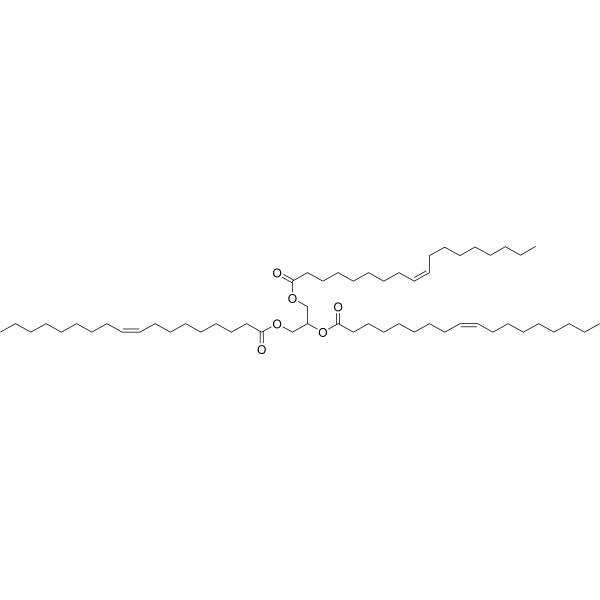
Triolein is a symmetric triacylglycerol that reduces upregulation of MMP-1 and has strong antioxidant and anti-inflammatory activities.
For research use only. We do not sell to patients.
- Purity : 99.00%
- CAS No.: 122-32-7
- Formula: C57H104O6
- Molecular Weight:885.43
-
Storage:
-20°C, protect from light, stored under nitrogen
* In solvent : -80°C, 6 months; -20°C, 1 month (protect from light, stored under nitrogen)

To place orders, for customer services and technical support, please contact: MedChemExpress USA
Tel: 609-228-6898 E-mail: [email protected] [email protected]


-
 Biological Activity
-
Chemical Information
-
Solvent & Solubility
- Protocols
- Purity & Documentation
- References
-
 Help & FAQs


-
HY-126573
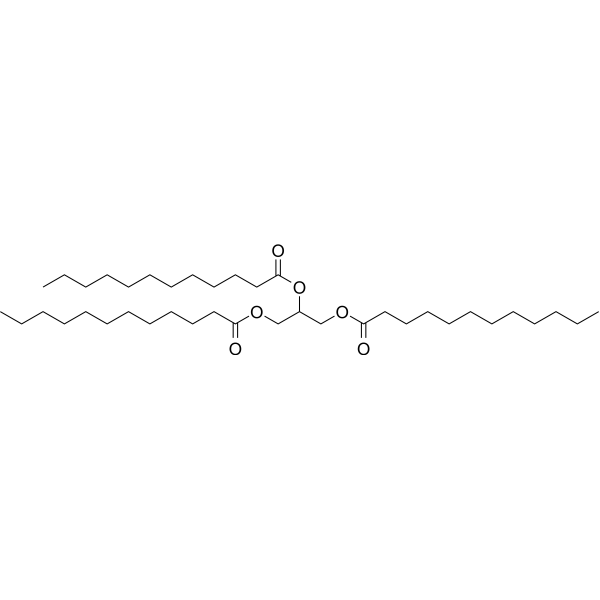
TrilaurinNeoplasm Inhibitor -
HY-N0830
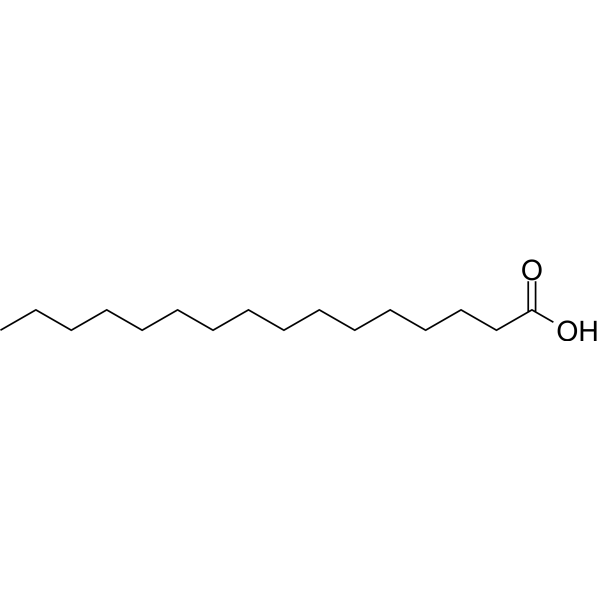
Palmitic acidEndogenous Metabolite -
HY-113217
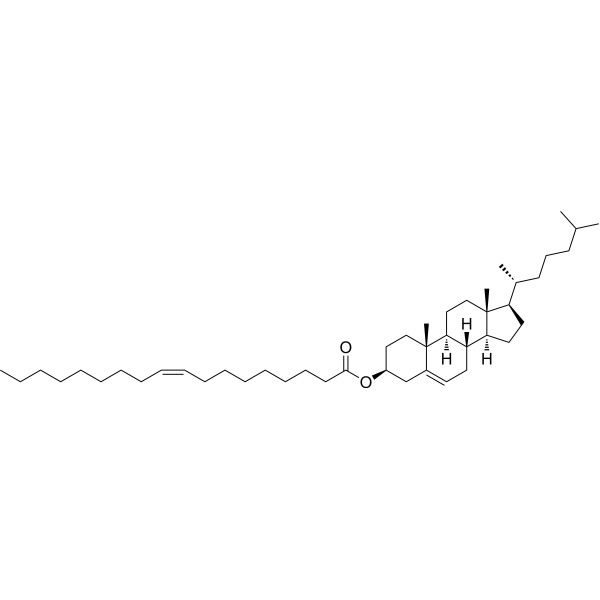
Cholesteryl oleateEndogenous Metabolite -
HY-B0141
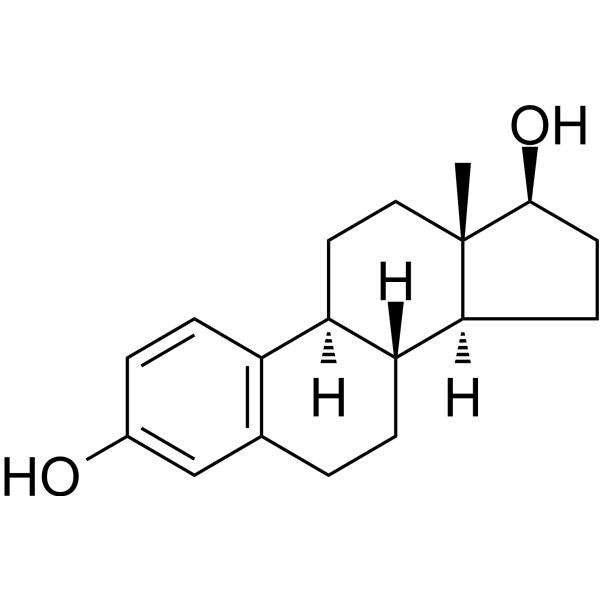
EstradiolHuman Endogenous Metabolite -
HY-B2176
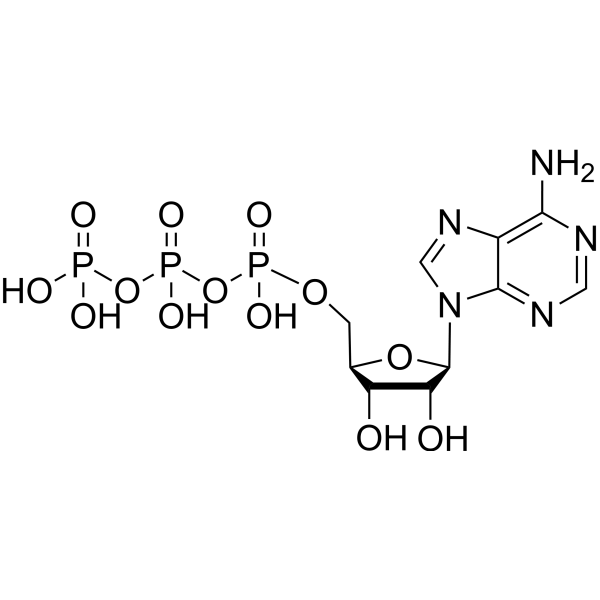
ATPEndogenous Metabolite -
HY-128393
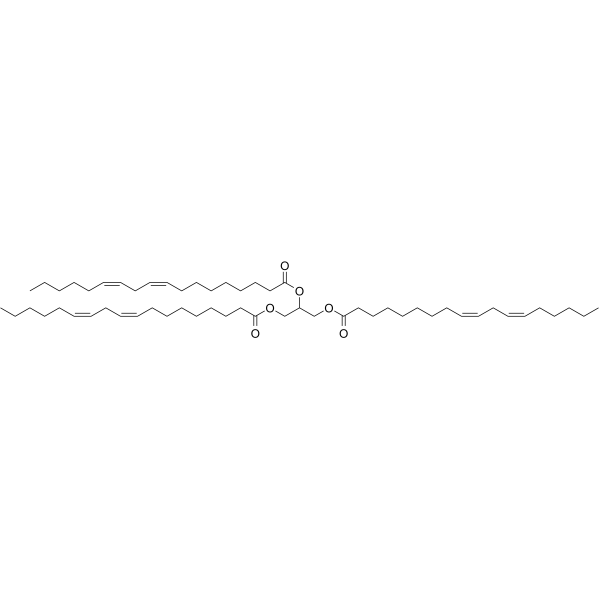
TrilinoleinAnticancer Agent -

HY-N1981R
Triolein (Standard)Monoacid Triglyceride -
HY-D0940
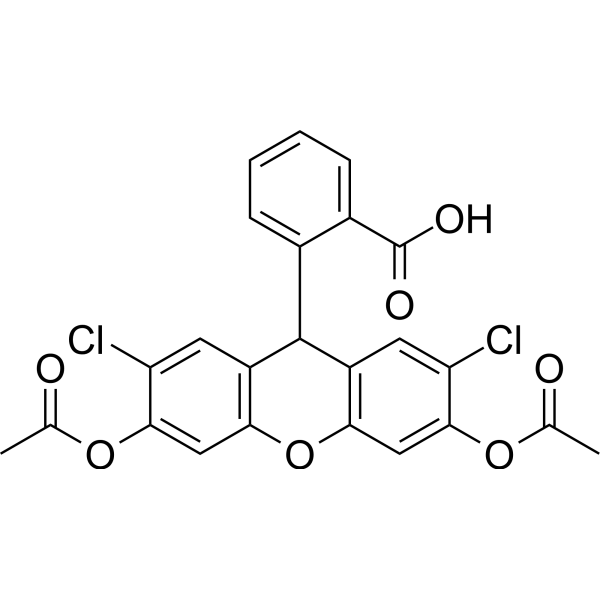
H2DCFDAROS-Sensitive Probe -
HY-142979
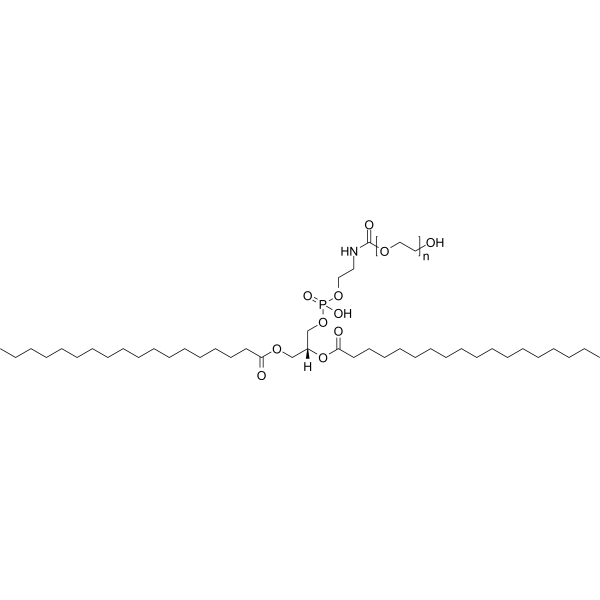
DSPE-PEG 2000PEG Lipid -
HY-10358
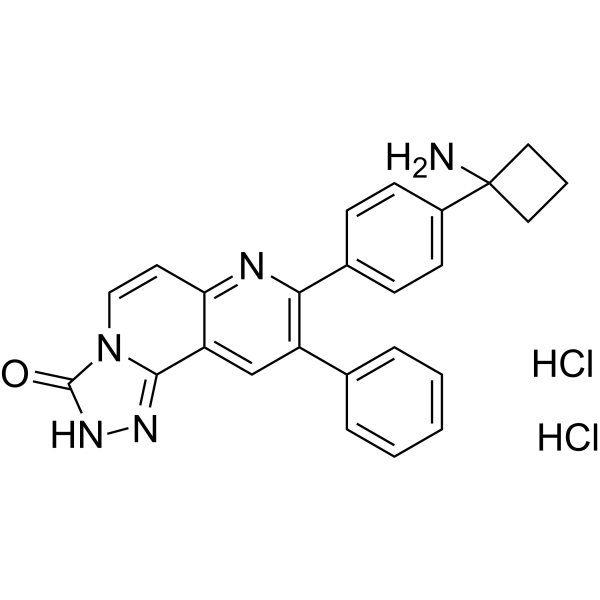
MK-2206 dihydrochlorideAllosteric Akt Inhibitor -
HY-W013061
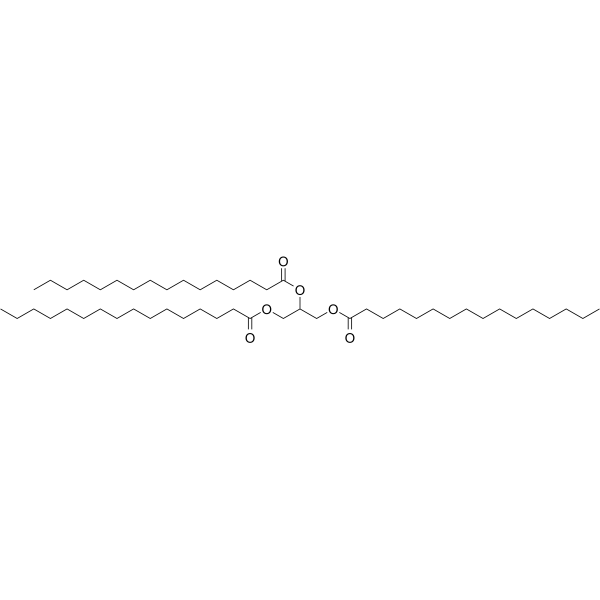
Propane-1,2,3-triyl tripalmitateGlycerol Tristearate Lymphatic Transport Promoter -
HY-125671
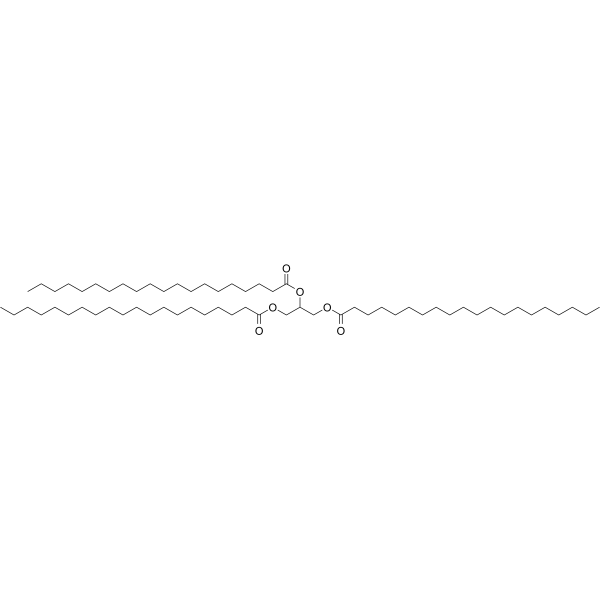
TriarachidinEndogenous Metabolite
Publications Citing Use of MedChemExpress (MCE) Triolein
More Customer Validation & Images

-
RT-PCR
-
IF
-
WB
-
In Vivo Efficacy Study
-
Histological Imaging/Staining
All Endogenous Metabolite Isoforms
More

Biological Activity
Description
IC50 & Target
|
Human Endogenous Metabolite |
In Vitro
Triolein (20 μM, 48 h) decreases the upregulation of MMP-1 in dermal fibroblasts produced by ROS[1].
Triolein (10 μM, 24 h) can improve the oxidative stress induced by oxidative low-density lipoprotein in endothelial cells[2].
MedChemExpress (MCE) has not independently confirmed the accuracy of these methods. They are for reference only. Further protocols information, click here.
-
Cell Line:Tel‐E6E7
-
Concentration:20 μM
-
Incubation Time:48 h
-
Result:Reduced the IL-6 expression and ROS generation.
Clinical Trial
| NCT Number | Sponsor | Condition | Start Date |
Phase

|
|---|---|---|---|---|
| NCT01329991 | Plexxikon| | 2011-05 | PHASE1 |


Chemical Information
-
CAS No. 122-32-7
-
Appearance Liquid (Density: 0.91 g/cm3)
-
Molecular Weight 885.43
-
Formula C57H104O6
-
Color Colorless to light yellow
-
SMILES
O=C(CCCCCCC/C=C\CCCCCCCC)OC(COC(CCCCCCC/C=C\CCCCCCCC)=O)COC(CCCCCCC/C=C\CCCCCCCC)=O
-
Structure Classification
-
Initial Source
-
Shipping
Room temperature in continental US; may vary elsewhere.
-
Storage
-20°C, protect from light, stored under nitrogen
* In solvent : -80°C, 6 months; -20°C, 1 month (protect from light, stored under nitrogen)


Publications (2)
-
Journal Impact Factor
-
Most Recent
-
Mol Med
Triolein alleviates ischemic stroke brain injury by regulating autophagy and inflammation through the AKT/mTOR signaling pathway. [Abstract]2024 Dec 6;30(1):242. PMID: 39639187
Triolein purchased from MedChemExpress. Usage Cited in: Mol Med. 2024 Dec 6;30(1):242. [Abstract]
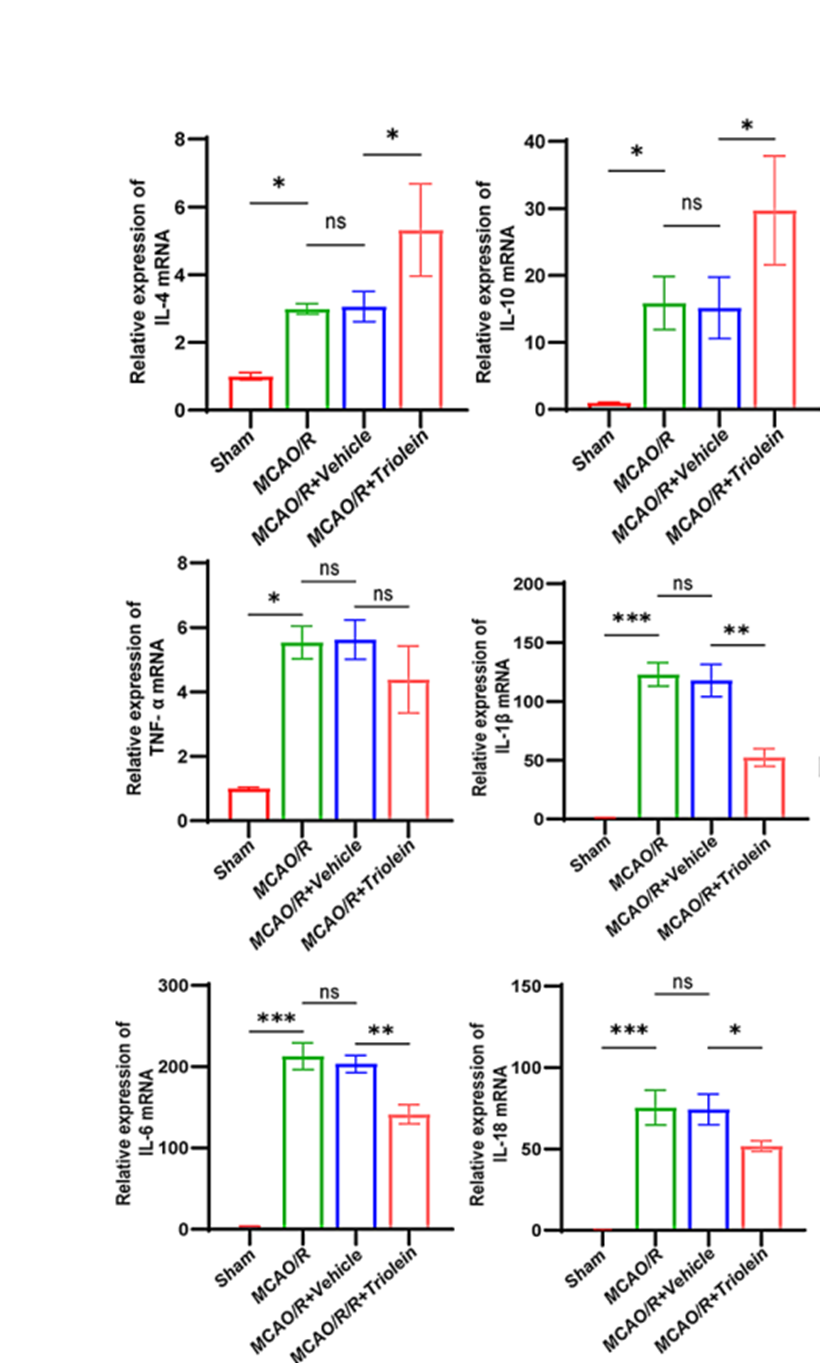
The expression of inflammatory cytokines IL-4, IL-10, TNF-α, IL-1β, IL-6, and IL-18 mRNAs in the ischemic penumbra treated with Triolein (40 mg/kg, p.o.).
Triolein purchased from MedChemExpress. Usage Cited in: Mol Med. 2024 Dec 6;30(1):242. [Abstract]
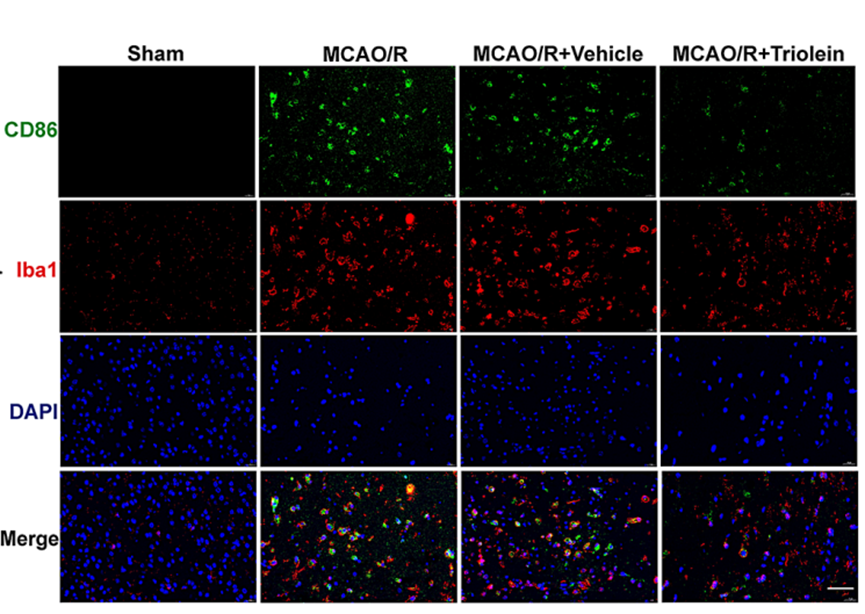
The effect of Triolein on activation of proinflammatory microglia after ischemic stroke. Iba1, red, a surface marker of microglia; CD86, green, the surface marker of M1 microglia; DAPI, blue, Nuclei treated with Triolein (40 mg/kg, p.o.).
Triolein purchased from MedChemExpress. Usage Cited in: Mol Med. 2024 Dec 6;30(1):242. [Abstract]
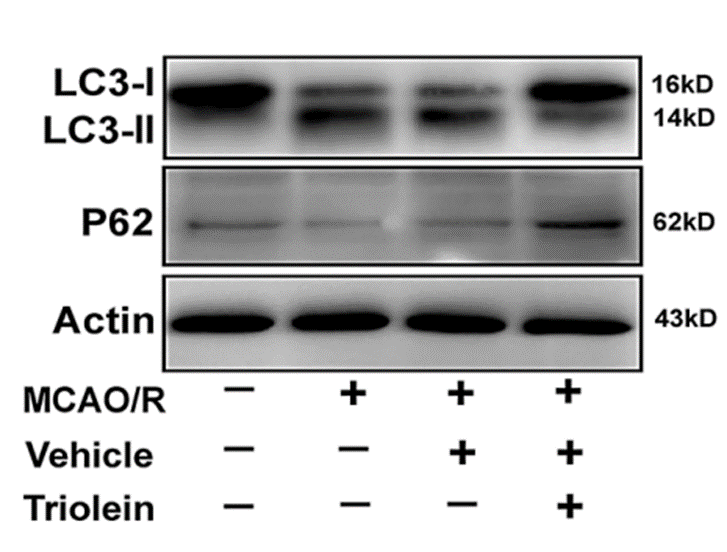
Western blot to detect the effect of Triolein (40 mg/kg, p.o.) on LC3-II/I and P62 protein expression in the C57BL/6J ipsilateral cortex after ischemic stroke brain injury.
Triolein purchased from MedChemExpress. Usage Cited in: Mol Med. 2024 Dec 6;30(1):242. [Abstract]
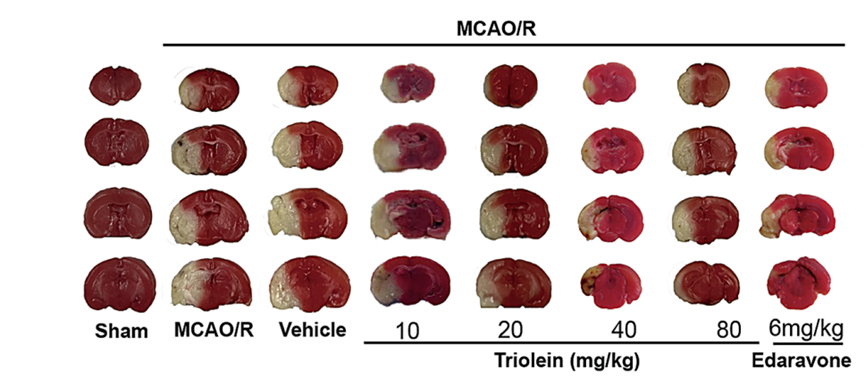
Representative TTC staining assay was performed to evaluate the infarct volume treated with Triolein (10, 20, 40, 80 mg/kg, p.o.).
Triolein purchased from MedChemExpress. Usage Cited in: Mol Med. 2024 Dec 6;30(1):242. [Abstract]
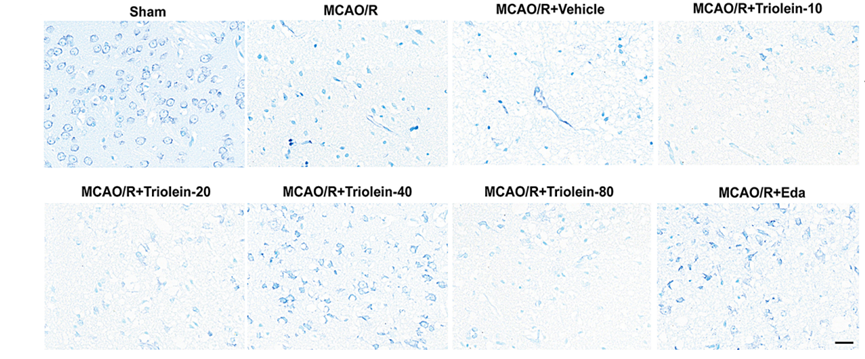
Nissl staining showing morphological neuronal changes in the ischemic penumbra 3 days after reperfusion treated with Triolein (10, 20, 40, 80 mg/kg, p.o.).
-


Solvent & Solubility
In Vitro:
DMSO : 100 mg/mL (112.94 mM; Need ultrasonic; Hygroscopic DMSO has a significant impact on the solubility of product, please use newly opened DMSO)
Please refer to the solubility information to select the appropriate solvent. Once prepared, please aliquot and store the solution to prevent product inactivation from repeated freeze-thaw cycles.
Storage method and period of stock solution: -80°C, 6 months; -20°C, 1 month (protect from light, stored under nitrogen). When stored at -80°C, please use it within 6 months. When stored at -20°C, please use it within 1 month.
Please refer to the solubility information to select the appropriate solvent. Once prepared, please aliquot and store the solution to prevent product inactivation from repeated freeze-thaw cycles.
Storage method and period of stock solution: -80°C, 6 months; -20°C, 1 month (protect from light, stored under nitrogen). When stored at -80°C, please use it within 6 months. When stored at -20°C, please use it within 1 month.
Concentration (start) × Volume (start) = Concentration (final) × Volume (final)
In Vivo:
Select the appropriate dissolution method based on your experimental animal and administration route.
- For the following dissolution methods, please ensure to first prepare a clear stock solution using an In Vitro approach and then sequentially add co-solvents:
- To ensure reliable experimental results, the clarified stock solution can be appropriately stored based on storage conditions. As for the working solution for In Vivo experiments, it is recommended to prepare freshly and use it on the same day.
- The percentages shown for the solvents indicate their volumetric ratio in the final prepared solution. If precipitation or phase separation occurs during preparation, heat and/or sonication can be used to aid dissolution.
Add each solvent one by one: 10% DMSO 40% PEG300 5% Tween-80 45% Saline
Solubility: ≥ 2.08 mg/mL (2.35 mM); Clear solution
This protocol yields a clear solution of ≥ 2.08 mg/mL (saturation unknown).
Taking 1 mL working solution as an example, add 100 μL DMSO stock solution (20.8 mg/mL) to 400 μL PEG300, and mix evenly; then add 50 μL Tween-80 and mix evenly; then add 450 μL Saline to adjust the volume to 1 mL.
Preparation of Saline: Dissolve 0.9 g sodium chloride in ddH₂O and dilute to 100 mL to obtain a clear Saline solution.
Add each solvent one by one: 10% DMSO 90% (20% SBE-β-CD in Saline)
Solubility: ≥ 2.08 mg/mL (2.35 mM); Clear solution
This protocol yields a clear solution of ≥ 2.08 mg/mL (saturation unknown).
Taking 1 mL working solution as an example, add 100 μL DMSO stock solution (20.8 mg/mL) to 900 μL 20% SBE-β-CD in Saline, and mix evenly.
Preparation of 20% SBE-β-CD in Saline (4°C, storage for one week): 2 g SBE-β-CD powder is dissolved in 10 mL Saline, completely dissolve until clear.
In Vivo Dissolution Calculator
Please enter the basic information of animal experiments:
-
-
-
-
Recommended: Prepare an additional quantity of animals to account for potential losses during experiments.
Please enter your animal formula composition:
-
%DMSO +
Recommended: Keep the proportion of DMSO in working solution below 2% if your animal is weak.
-
%+
-
+%Tween-80 + +
-
%Saline +
The co-solvents required include: DMSO, . All of co-solvents are available by MedChemExpress (MCE). , Tween 80. All of co-solvents are available by MedChemExpress (MCE).
Working solution concentration: 0.22 mg/mL
Method for preparing stock solution: mg drug dissolved in μL DMSO. Stock solution concentration: mg/mL. * In solvent : -80°C, 6 months; -20°C, 1 month (protect from light, stored under nitrogen)
1. Take μL DMSO stock solution;
2. Add μL .
μL , mix evenly;
3. Then add μL Tween 80, mix evenly;
4. Then add μL
Please ensure that the stock solution in the first step is dissolved to a clear state, and add co-solvents in sequence. You can use ultrasonic heating (ultrasonic cleaner, recommended frequency 20-40 kHz), vortexing, etc. to assist dissolution.

Protocols
-
Mitochondrial membrane-potential fluorescent assay
Mitochondrial membrane potential fluorescent assays estimate ΔΨm in living cells using lipophilic cationic dyes such as TMRM, TMRE, rhodamine 123, and JC-1, which accumulate in mitochondria according to membrane polarization; loss of signal after FCCP or CCCP treatment is interpreted as mitochondrial depolarization. TMRM/TMRE and rhodamine 123 are commonly used for semi-quantitative live-cell microscopy or flow cytometry, while JC-1 can report a shift from red aggregate fluorescence to green monomer fluorescence during depolarization; interpretation requires controls because dye concentration, quenching mode, cell type, dye efflux, and mitochondrial mass can affect fluorescence independently of ΔΨm.
-
Mitochondrial membrane-potential and mitochondrial mass staining
Mitochondrial membrane potential staining measures the electrochemical polarization across the mitochondrial inner membrane in live cells using lipophilic cationic fluorescent probes; early rhodamine-based work showed that selective mitochondrial dye accumulation is lost when the mitochondrial transmembrane potential is dissipated. JC-1 reports mitochondrial polarization by shifting from green monomer fluorescence to red J-aggregate fluorescence as dye concentration increases within energized mitochondria; therefore, the red/green fluorescence ratio is used as a relative readout of mitochondrial membrane potential. TMRE or TMRM staining provides a single-channel relative readout because these cationic rhodamine esters accumulate in polarized mitochondria, and lower fluorescence indicates reduced mitochondrial polarization when acquisition and dye-loading conditions are controlled. Mitochondrial mass staining is commonly performed with MitoTracker Green FM or related MitoTracker dyes as
-
Research Protocol for Inflammation-related Diseases
The NLRP3 inflammasome is a cytosolic innate immune signaling platform that integrates priming signals and danger-signal activation to promote caspase-1 activation, maturation of IL-1β and IL-18, and gasdermin D-mediated pyroptotic cell death. The core experimental logic is to determine whether inflammatory disease phenotypes are driven by increased NLRP3 expression, ASC-containing inflammasome assembly, caspase-1 cleavage, GSDMD cleavage, and extracellular release of IL-1β/IL-18 rather than by nonspecific cell injury alone. The pathway is strongly linked to inflammation-related disease phenotypes because monosodium urate crystals activate NALP3/NLRP3 inflammasome signaling in gout-like crystal inflammation, cholesterol crystals activate NLRP3 inflammasomes in atherogenesis models, and DSS-induced intestinal inflammation has been reported to involve NLRP3 inflammasome activity. However, experimental colitis studies also show context-dependent protective effects of NLRP3 inflammasome co


Purity & Documentation
-
Data Sheet (268 KB)
-
SDS (604 KB)
- English - EN (604 KB)
- Français - FR (604 KB)
- Deutsch - DE (604 KB)
- Norwegian - NO (604 KB)
- Español - ES (604 KB)
- Swedish - SV (604 KB)
- Italian - IT (604 KB)
- Korean - KR (604 KB)
- Portuguese - PT (604 KB)
-
Handling Instructions (2659 KB)
References
[1]. Leirós GJ, et al. Triolein reduces MMP-1 upregulation in dermal fibroblasts generated by ROS production in UVB-irradiated keratinocytes. J Dermatol Sci. 2017 Feb;85(2):124-130. [Content Brief]
[2]. Luo T, et al. Triolein and trilinolein ameliorate oxidized low-density lipoprotein-induced oxidative stress in endothelial cells. Lipids. 2014 May;49(5):495-504. [Content Brief]


Complete Stock Solution Preparation Table
Please refer to the solubility information to select the appropriate solvent. Once prepared, please aliquot and store the solution to prevent product inactivation from repeated freeze-thaw cycles.
Storage method and period of stock solution: -80°C, 6 months; -20°C, 1 month (protect from light, stored under nitrogen). When stored at -80°C, please use it within 6 months. When stored at -20°C, please use it within 1 month.
| Optional Solvent | Concentration Solvent Mass | 1 mg | 5 mg | 10 mg | 25 mg |
|---|---|---|---|---|---|
| DMSO | 1 mM | 1.1294 mL | 5.6470 mL | 11.2939 mL | 28.2349 mL |
| 5 mM | 0.2259 mL | 1.1294 mL | 2.2588 mL | 5.6470 mL | |
| 10 mM | 0.1129 mL | 0.5647 mL | 1.1294 mL | 2.8235 mL | |
| 15 mM | 0.0753 mL | 0.3765 mL | 0.7529 mL | 1.8823 mL | |
| 20 mM | 0.0565 mL | 0.2823 mL | 0.5647 mL | 1.4117 mL | |
| 25 mM | 0.0452 mL | 0.2259 mL | 0.4518 mL | 1.1294 mL | |
| 30 mM | 0.0376 mL | 0.1882 mL | 0.3765 mL | 0.9412 mL | |
| 40 mM | 0.0282 mL | 0.1412 mL | 0.2823 mL | 0.7059 mL | |
| 50 mM | 0.0226 mL | 0.1129 mL | 0.2259 mL | 0.5647 mL | |
| 60 mM | 0.0188 mL | 0.0941 mL | 0.1882 mL | 0.4706 mL | |
| 80 mM | 0.0141 mL | 0.0706 mL | 0.1412 mL | 0.3529 mL | |
| 100 mM | 0.0113 mL | 0.0565 mL | 0.1129 mL | 0.2823 mL |


Triolein Related Classifications
HY-N1981 Related Classifications
 Powered by Bioz