



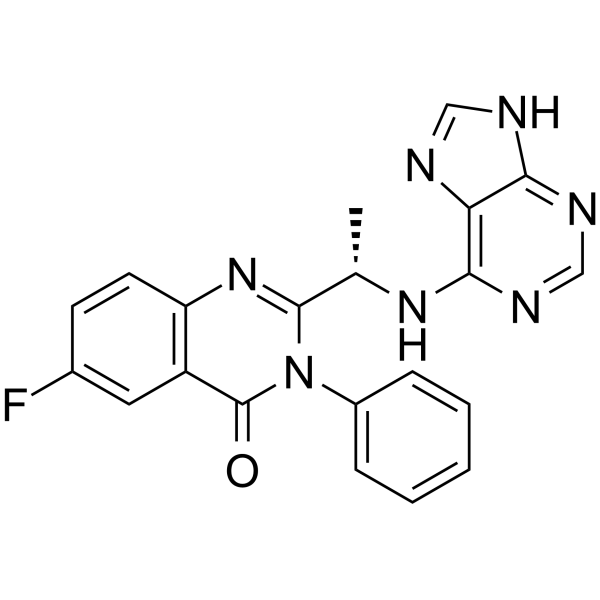
Acalisib
Based on 1 publication(s) in Google Scholar
Acalisib is a potent and selective PI3Kδ inhibitor with an IC50 of 12.7 nM.
Para uso exclusivo en investigación. No vendemos a pacientes.
- Pureza: 99.98%
- No. CAS: 870281-34-8
- Fòrmula: C21H16FN7O
- Peso molecular:401.40
-
Almacenamiento:
4°C, protect from light
* In solvent : -80°C, 6 months; -20°C, 1 month (protect from light)

To place orders, for customer services and technical support, please contact: MedChemExpress USA
Tel: 609-228-6898 E-mail: [email protected] [email protected]


-
 Actividad biológica
-
Chemical Information
-
Solvente y solubilidad
- Protocolo
- Pureza y Documentación
- Referencias
-
 Help & FAQs


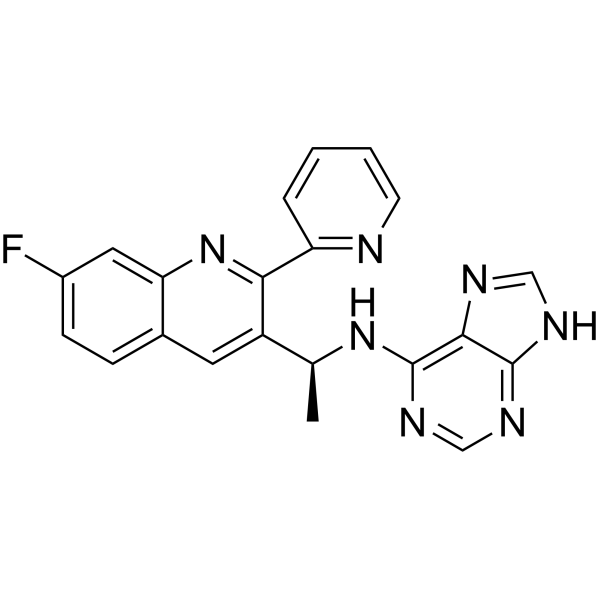
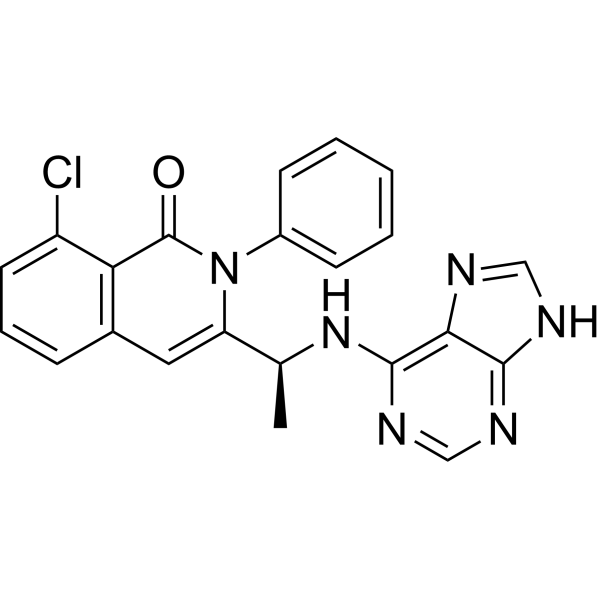
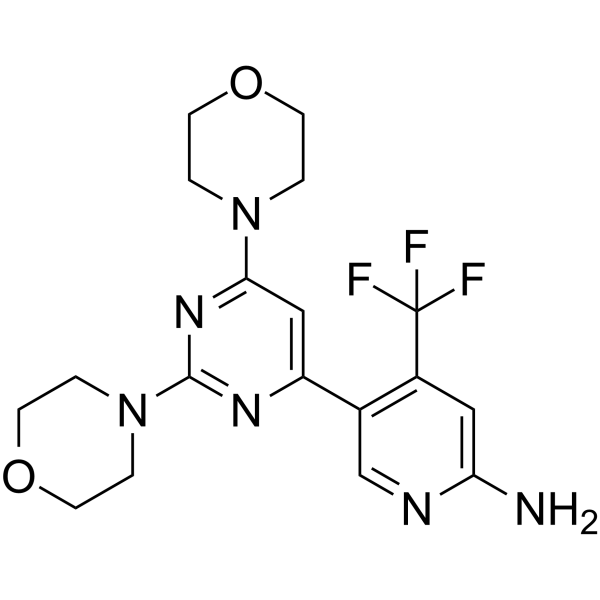
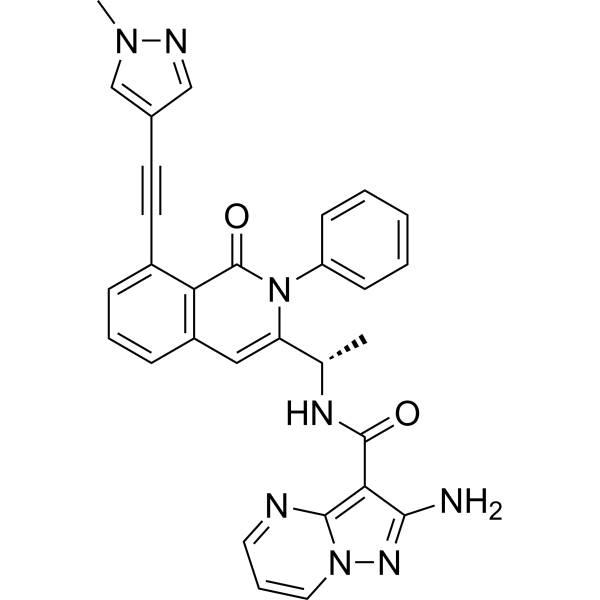
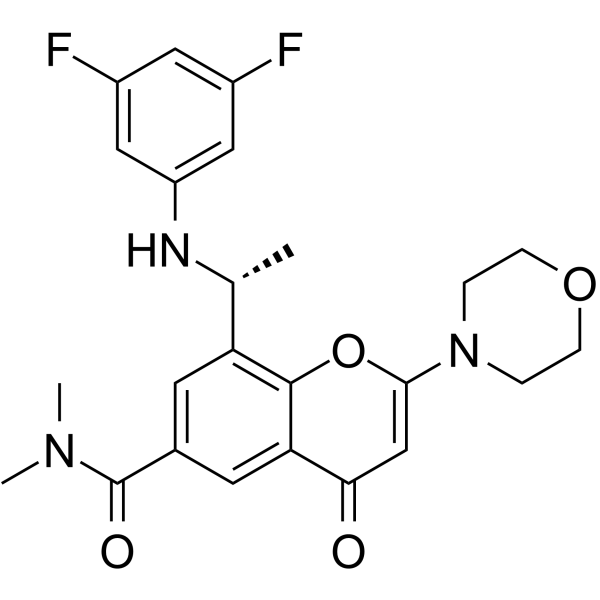
Publications Citing Use of MedChemExpress (MCE) Acalisib
More

Actividad biológica
Descripciòn
IC50 & Target
|
p110δ 12.7 nM (IC50) |
p110γ 1389 nM (IC50) |
p110β 3377 nM (IC50) |
p110α 5441 nM (IC50) |
hVps34 12682 nM (IC50) |
DNA-PK 18749 nM (IC50) |
In Vitro
Acalisib (GS-9820) is more selective for PI3Kδ (IC50=12.7 nM) relative to other PI3K class I enzymes (IC50: PI3Kα, 5,441 nM; PI3Kβ, 3,377 nM; PI3Kγ, 1,389 nM). Acalisib is also 103-fold more selective against PI3Kδ than against related kinases, such as PI3KCIIβ (IC50>10 nM), hVPS34 (IC50=12.7 μM), DNA-PK (IC50=18.7 μM), and mTOR (IC50>10 nM). In fibroblasts, the PDGF receptor signals through PI3Kα and the GPCR for lysophosphatidic acid (LPA) signals through PI3Kβ. Acalisib reduces PDGF-induced pAkt by only 50% at 11,585 nM, and LPA-induced pAkt by 50% at 2,069 nM.
MedChemExpress (MCE) has not independently confirmed the accuracy of these methods. They are for reference only.
In Vivo
MedChemExpress (MCE) has not independently confirmed the accuracy of these methods. They are for reference only.
Ensayo clínico
| NCT Number | Sponsor | Condition | Start Date |
Phase

|
|---|---|---|---|---|
| NCT01329991 | Plexxikon| | 2011-05 | PHASE1 |


Chemical Information
-
No. CAS 870281-34-8
-
Appearance Solid
-
Peso molecular 401.40
-
Fòrmula C21H16FN7O
-
Color White to off-white
-
SMILES
O=C1N(C2=CC=CC=C2)C([C@@H](NC3=C4N=CNC4=NC=N3)C)=NC5=C1C=C(F)C=C5
-
Synonyms
GS-9820; CAL-120
-
Envío
Room temperature in continental US; may vary elsewhere.
-
Almacenamiento
4°C, protect from light
* In solvent : -80°C, 6 months; -20°C, 1 month (protect from light)


Publications (1)
-
Journal Impact Factor
-
Most Recent
-
Sci Rep
Anti-tumor activity of selinexor in combination with antineoplastic agents in chronic lymphocytic leukemia. [Abstract]2023 Oct 7;13(1):16950. PMID: 37805613


Solvente y solubilidad
In Vitro:
DMSO : 125 mg/mL (311.41 mM; Need ultrasonic; Hygroscopic DMSO has a significant impact on the solubility of product, please use newly opened DMSO)
Please refer to the solubility information to select the appropriate solvent. Once prepared, please aliquot and store the solution to prevent product inactivation from repeated freeze-thaw cycles.
Storage method and period of stock solution: -80°C, 6 months; -20°C, 1 month (protect from light). When stored at -80°C, please use it within 6 months. When stored at -20°C, please use it within 1 month.
Please refer to the solubility information to select the appropriate solvent. Once prepared, please aliquot and store the solution to prevent product inactivation from repeated freeze-thaw cycles.
Storage method and period of stock solution: -80°C, 6 months; -20°C, 1 month (protect from light). When stored at -80°C, please use it within 6 months. When stored at -20°C, please use it within 1 month.
Concentration (start) × Volume (start) = Concentration (final) × Volume (final)
In Vivo:
Select the appropriate dissolution method based on your experimental animal and administration route.
- For the following dissolution methods, please ensure to first prepare a clear stock solution using an In Vitro approach and then sequentially add co-solvents:
- To ensure reliable experimental results, the clarified stock solution can be appropriately stored based on storage conditions. As for the working solution for In Vivo experiments, it is recommended to prepare freshly and use it on the same day.
- The percentages shown for the solvents indicate their volumetric ratio in the final prepared solution. If precipitation or phase separation occurs during preparation, heat and/or sonication can be used to aid dissolution.
Add each solvent one by one: 10% DMSO 40% PEG300 5% Tween-80 45% Saline
Solubility: ≥ 2.5 mg/mL (6.23 mM); Clear solution
This protocol yields a clear solution of ≥ 2.5 mg/mL (saturation unknown).
Taking 1 mL working solution as an example, add 100 μL DMSO stock solution (25.0 mg/mL) to 400 μL PEG300, and mix evenly; then add 50 μL Tween-80 and mix evenly; then add 450 μL Saline to adjust the volume to 1 mL.
Preparation of Saline: Dissolve 0.9 g sodium chloride in ddH₂O and dilute to 100 mL to obtain a clear Saline solution.
Add each solvent one by one: 10% DMSO 90% (20% SBE-β-CD in Saline)
Solubility: ≥ 2.5 mg/mL (6.23 mM); Clear solution
This protocol yields a clear solution of ≥ 2.5 mg/mL (saturation unknown).
Taking 1 mL working solution as an example, add 100 μL DMSO stock solution (25.0 mg/mL) to 900 μL 20% SBE-β-CD in Saline, and mix evenly.
Preparation of 20% SBE-β-CD in Saline (4°C, storage for one week): 2 g SBE-β-CD powder is dissolved in 10 mL Saline, completely dissolve until clear.
In Vivo Dissolution Calculator
Please enter the basic information of animal experiments:
-
-
-
-
Recommended: Prepare an additional quantity of animals to account for potential losses during experiments.
Please enter your animal formula composition:
-
%DMSO +
Recommended: Keep the proportion of DMSO in working solution below 2% if your animal is weak.
-
%+
-
+%Tween-80 + +
-
%Saline +
The co-solvents required include: DMSO, . All of co-solvents are available by MedChemExpress (MCE). , Tween 80. All of co-solvents are available by MedChemExpress (MCE).
Working solution concentration: 0.22 mg/mL
Method for preparing stock solution: mg drug dissolved in μL DMSO. Stock solution concentration: mg/mL. * In solvent : -80°C, 6 months; -20°C, 1 month (protect from light)
1. Take μL DMSO stock solution;
2. Add μL .
μL , mix evenly;
3. Then add μL Tween 80, mix evenly;
4. Then add μL
Please ensure that the stock solution in the first step is dissolved to a clear state, and add co-solvents in sequence. You can use ultrasonic heating (ultrasonic cleaner, recommended frequency 20-40 kHz), vortexing, etc. to assist dissolution.

Protocolo
Kinase Assay[1]
Biochemical in vitro lipid kinase assays are performed. A stock solution of Acalisib (GS-9820) is prepared in DMSO at a concentration of 10 mM. Ten-point kinase inhibitory activities are measured over a concentration range (5 to 104 nM) with ATP at a concentration consistent with the Km of each of the enzymes[1].
MedChemExpress (MCE) has not independently confirmed the accuracy of these methods. They are for reference only.
Cell Assay[1]
The effect of inhibitors on RAW264.7 cell survival is evaluated using the MTT assay. RAW264.7 cells are seeded in Falcon flat bottom 96-well plates at a density of 2.5-3×10⁴ cells/cm2 in 100 μL of DMEM with 10% FBS and 1% antibiotic solution. After seeding, the cells are allowed to attach for 24 h then exposed to control or Acalisib (GS-9820) (100 pM to 10 μM) for 24 h. After incubation at 37°C in 5% CO2, MTT substrate is added at a final concentration of 0.5 mg/mL for 4 h. Following a 4-h incubation, 100 μL of solubilization solution is added to each well to dissolve the formazan crystals and samples are analyzed after 24 h. Absorbance of the samples is assessed using a plate reader using a wavelength of 550 nm and a reference wavelength of 700 nm[1].
MedChemExpress (MCE) has not independently confirmed the accuracy of these methods. They are for reference only.
Animal Administration[2]
Mice[2]
Ob/ob C57BL6J mice and Wild-type C57BL6J/Ola.Hsd mice are housed under specific pathogen free (SPF) conditions, at 22°C, and with 12 hours dark/light cycles (light cycle from 8 am to 8 pm). All mice used are males of 20 weeks of age. Mice are fed with standard chow diet (18% of fat-based caloric content). PI3K inhibitors are administered daily by oral gavage during 15 or 16 days as follows, BYL-719 (5 and 10 mg/kg) and Acalisib (5 and 10 mg/kg), CNIO-PI3Ki (1 and 5 mg/kg), dissolved in PEG-300 and 10% N-methyl-2-pyrrolidone.
MedChemExpress (MCE) has not independently confirmed the accuracy of these methods. They are for reference only.


Pureza y Documentación
-
Ficha de datos (280 KB)
-
SDS (252 KB)
- English - EN (252 KB)
- Français - FR (252 KB)
- Deutsch - DE (252 KB)
- Norwegian - NO (252 KB)
- Español - ES (252 KB)
- Swedish - SV (252 KB)
- Italian - IT (252 KB)
- Korean - KR (252 KB)
- Portuguese - PT (252 KB)
-
Instrucciones de manejo (2659 KB)
Referencias
[1]. Shugg RP, et al. Effects of isoform-selective phosphatidylinositol 3-kinase inhibitors on osteoclasts: actions on cytoskeletal organization, survival, and resorption. J Biol Chem. 2013 Dec 6;288(49):35346-57. [Content Brief]
[2]. Lopez-Guadamillas E, et al. PI3Kα inhibition reduces obesity in mice. Aging (Albany NY). 2016 Nov 4;8(11):2747-2753. [Content Brief]


Complete Stock Solution Preparation Table
Please refer to the solubility information to select the appropriate solvent. Once prepared, please aliquot and store the solution to prevent product inactivation from repeated freeze-thaw cycles.
Storage method and period of stock solution: -80°C, 6 months; -20°C, 1 month (protect from light). When stored at -80°C, please use it within 6 months. When stored at -20°C, please use it within 1 month.
| Optional Solvent | Concentration Solvent Mass | 1 mg | 5 mg | 10 mg | 25 mg |
|---|---|---|---|---|---|
| DMSO | 1 mM | 2.4913 mL | 12.4564 mL | 24.9128 mL | 62.2820 mL |
| 5 mM | 0.4983 mL | 2.4913 mL | 4.9826 mL | 12.4564 mL | |
| 10 mM | 0.2491 mL | 1.2456 mL | 2.4913 mL | 6.2282 mL | |
| 15 mM | 0.1661 mL | 0.8304 mL | 1.6609 mL | 4.1521 mL | |
| 20 mM | 0.1246 mL | 0.6228 mL | 1.2456 mL | 3.1141 mL | |
| 25 mM | 0.0997 mL | 0.4983 mL | 0.9965 mL | 2.4913 mL | |
| 30 mM | 0.0830 mL | 0.4152 mL | 0.8304 mL | 2.0761 mL | |
| 40 mM | 0.0623 mL | 0.3114 mL | 0.6228 mL | 1.5571 mL | |
| 50 mM | 0.0498 mL | 0.2491 mL | 0.4983 mL | 1.2456 mL | |
| 60 mM | 0.0415 mL | 0.2076 mL | 0.4152 mL | 1.0380 mL | |
| 80 mM | 0.0311 mL | 0.1557 mL | 0.3114 mL | 0.7785 mL | |
| 100 mM | 0.0249 mL | 0.1246 mL | 0.2491 mL | 0.6228 mL |


Acalisib Related Classifications
HY-12644 Related Classifications
 Powered by Bioz